Growth Expectations in Cybersecurity

In an interview with CNBC’s “TechCheck”, George Kurtz, the CEO of CrowdStrike Holdings, Inc. said that there are a lot of companies in the cybersecurity space, with big valuations and big expectations. However, the company is taking the wait-and-see approach when it comes to mergers and acquisitions. The CEO believes that given the landscape in the industry, public cybersecurity firms are in a relatively good position, but private companies could be worth watching as their funding rounds are ahead, but their valuations are constricted.1

Source: Envato

Researchers at Columbia Engineering have developed a new system to prevent the microphones on smart devices from listening in on users. The system produces whisper-quiet sounds that users could play in any room or any situation to block smart devices from spying. The system is easy to implement on hardware like computers and smartphones. At its core, this system camouflages a person’s voice and hides it from listening devices.

Carl Vondrick, assistant professor of computer science at the university, said that the algorithm developed could block devices from hearing individuals 80% of the time, and works even when users don’t even know about rouge microphone listening.2

Updates on Leading Cybersecurity Companies

Cloud Security Company Zscaler’s Surging Revenue

Zscaler Inc. reported a 63% jump in revenue for its most recent quarter ended on January 31st, 2022. The company also reported robust cash flow, and solid increase in deferred revenue, as well as higher cash, cash equivalents, and short-term investments.

Explaining the financial performance and what’s ahead for Zscaler, the chairman and CEO of the company, Jay Chaudhry, said that revenue is the highest level in three years and surged past $1.0 billion in annualized revenue.

The CEO emphasized that Zscaler’s Zero Trust Exchange is proving many advantages beyond security to customers that are going through digital transformation. Through the Zero Trust Exchange, there are about 210 billion transactions being processed per day.3

For the entire fiscal year 2022, Zscaler expects total revenue to be between $1.045 billion and $1.05 billion and non-GAAP income from operations of $95.0 million to $98.0 million.

Depositphotos.com
Source: Depositphotos.com

Three Factors Driving Okta’s Growth in Cyber

Okta Inc. is a cybersecurity company with the focus on providing identity solutions in the U.S. and globally. The company reported total revenue of $1.30 billion for its fiscal year 2022 ending on January 31st. Revenue for the year jumped 56% year-over-year.

Todd McKinnon, CEO and Co-founder of Okta, stressed that in the ever-evolving cybersecurity environment, identity management is at the forefront, and C-level executives and developers are turning to solutions provided by Okta.

McKinnon provided a robust outlook for the company and said that Okta exited fiscal year 2022 with growing operational metrics and robust demand for products across the board. The three big factors driving Okta’s growth are cloud and hybrid IT, digital transformation, and Zero Trust security.4

Cyberark.com
Source: Cyberark.com

CYBR ETF: Diversified Investing in Cybersecurity

A cybersecurity ETF offers a great alternative to gaining exposure to this industry without being locked into any single security, and without the hassle of hand-picking individual stocks. ETFs allow you to diversify by investing in multiple companies in multiple markets, ensuring that a single market shock won’t tank your portfolio

If you’re interested in investing in a cybersecurity ETF, consider Canada’s first cybersecurity ETF, Evolve Cyber Security Index Fund (TSX Ticker: CYBR). CYBR ETF invests in global companies involved in the cyber security industry. For more information, visit the fund page here: https://evolveetfs.com/product/cybr/.

For the latest information on cybersecurity investing and industry updates on related investment products, sign up for our weekly newsletter here.


Sources:

  1. CNBC, “‘It’s kind of wait and see,’ for M&A in cybersecurity, says CrowdStrike CEO,” April 8, 2022; https://www.cnbc.com/video/2022/04/08/its-kind-of-wait-and-see-for-ma-in-cybersecurity-says-crowdstrike-ceo.html.
  2. Columbia University School of Engineering and Applied Science, “Stopping ‘them’ from spying on you: New AI can block rogue microphones,” TechXplore, April 18, 2022; https://techxplore.com/news/2022-04-spying-ai-block-rogue-microphones.html.
  3. “Zscaler Reports Second Quarter Fiscal 2022 Financial Results Zscaler Inc.,” February 28, 2022; https://ir.zscaler.com/static-files/f50149d3-3a1e-4ad0-b87d-f2c7bf00dfda.
  4. “Okta Announces Strong Fourth Quarter And Fiscal Year 2022 Results,” Okta Inc., March 2, 2022; https://investor.okta.com/news-releases/news-release-details/okta-announces-strong-fourth-quarter-and-fiscal-year-2022.


The contents of this blog are not to be used or construed as investment advice or as an endorsement or recommendation of any entity or security discussed. These contents are not an offer or solicitation of an offer or a recommendation to buy or sell any securities or financial instrument, nor shall it be deemed to provide investment, tax or accounting advice. The information contained herein is intended for informational purposes only.
Commissions, management fees and expenses all may be associated with exchange traded funds (ETFs) and mutual funds (funds). Please read the prospectus before investing. ETFs and mutual funds are not guaranteed, their values change frequently, and past performance may not be repeated. There are risks involved with investing in ETFs and mutual funds. Please read the prospectus for a complete description of risks relevant to ETFs and mutual funds. Investors may incur customary brokerage commissions in buying or selling ETF and mutual fund units.
Certain statements contained in this blog may constitute forward-looking information within the meaning of Canadian securities laws. Forward-looking information may relate to a future outlook and anticipated distributions, events or results and may include statements regarding future financial performance. In some cases, forward-looking information can be identified by terms such as “may”, “will”, “should”, “expect”, “anticipate”, “believe”, “intend” or other similar expressions concerning matters that are not historical facts. Actual results may vary from such forward-looking information. Evolve Funds undertakes no obligation to update publicly or otherwise revise any forward-looking statement whether as a result of new information, future events or other such factors which affect this information, except as required by law.

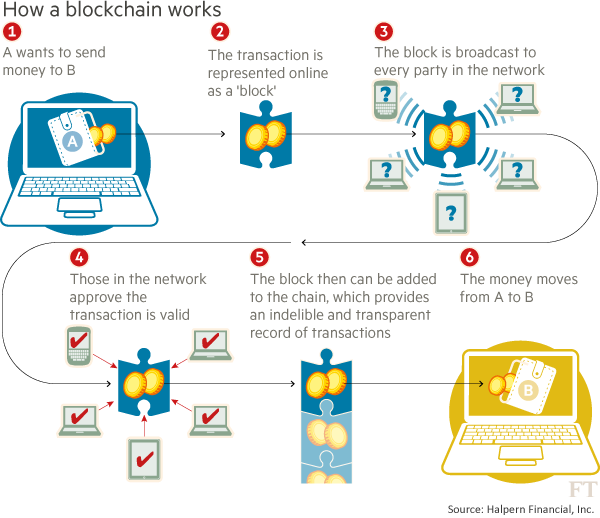
What Is Solana and How Does It Compare to Bitcoin and Ethereum?

There are, as of this writing, approximately 19,200 cryptocurrencies investors can choose from. The two most popular are Bitcoin and Ethereum, capturing 41.7% and 19.3% of the market respectively. But another cryptocurrency, Solana, is attracting a lot of attention. After launching in March 2020, Solana has grown to become the sixth largest crypto by market cap.

What Is Solana and Why Is It So Popular?

Solana is an open source blockchain platform designed to host decentralized scalable applications. While Ethereum is the most used blockchain in the world, Solana is the fastest blockchain in the world—it has faster transaction times and lower costs than Ethereum.

It’s also home to the fastest growing ecosystem in crypto, with thousands of projects spanning decentralized finance (DeFi), non-fungible tokens (NFTs), decentralized network (Web 3.0), and more.

Solana was first proposed in a white paper by computer engineer Anatoly Yakovenko in November of 2017. In it, he described Proof of History (PoH), a technique that verifies order and the passage of time between events.

Most blockchains do not rely on a standardized time. Instead, each node in their network relies on its own local clock. As a result, most blockchains do not have a trusted source of time, which means when a message timestamp is used to accept or reject a message, there is no guarantee every other participant in the network will make the exact same choice.

Solana solves this issue though its unique PoH algorithm and blazing fast synchronization engine. A version of proof-of-stake, the number of transactions per second (tps) on Solana’s PoH network is limited only by the network bandwidth.

How Does Solana Compare to Ethereum and Bitcoin?

Blockchain systems without synchronized clocks, like Bitcoin and Ethereum, have difficulty scaling beyond 15 transactions per second worldwide. That’s incredibly slow for a decentralized payment application that is continuously “on-chain.”

Solana’s PoH algorithm, meanwhile, can process a block every 400 milliseconds and an industry-leading 65,000 transactions per second. As hardware gets faster, so too will the network. This number far outpaces Ethereum and Visa. But it could do many more. Theoretically, the Solana network can process over 710,000 tps without the need of any scaling solutions.

Solana’s fees are miniscule too, on average, just $0.00025 per transaction. Because of its scalability, the fees will remain under $0.01 per transaction for both users and developers. With Ethereum, the average cost per transaction is $14.00. The mean transaction fee for Bitcoin is $2.06. The average cost of processing a payment with a credit card for businesses that do between just $10,000 and $250,000 in annual payment volumes is between 2.87% and 4.35%.

According to the Bank of America, given its speed, scalability, number of decentralized applications on its network, and low cost, Solana could beat out Ethereum to become the Visa of the digital asset ecosystem.

Like Bitcoin and Ethereum, Solana’s token, which is called Solana and SOL, is available in fractional amounts called a lamport. Each lamport has a value of 0.000000001 SOL. The Solana Foundation announced that a maximum of 489 million SOL tokens will eventually be created; 334 million are already in circulation.

What’s In Store for Solana in the Future?

The big question is whether Solana, which has a market cap of $31.7 billion, can overtake Ethereum, which has a market cap of $338.5 billion, as the destination for everyday digital transactions.

It certainly has the scale, speed, and price point. But there are tradeoffs. Solana is highly scalable but less decentralized and secure than Ethereum.

On September 17, 2021, following a surge in transaction volume that peaked at 400,000 tps, the Solana network suffered an outage that lasted for more than 17 hours. These kinds of issues could provide other networks with an opening to make headway in blockchain for decentralized finance and enterprises.

Like many emerging crypto currencies, Solana has seen large moves in price over the past two years. In November, Solana hit a record high of $260.00. That’s also 51,900% higher than its all-time of low $0.500801 on May 11, 2020. As of this writing, Solana is trading at $92.95.

Ultimately, though, there does not have to be one blockchain that rules everything. Each blockchain—Solana, Bitcoin, Ethereum, and others—provide different solutions for different applications.

Cryptocurrency Investing with Evolve ETFs

As of this moment, only Bitcoin and Ether exist in ETF form in Canada. Deciding which cryptocurrency to own and how much to allocate can be overwhelming for many investors. The Evolve Cryptocurrencies ETF (TSX: ETC) is Canada’s first multi-cryptocurrency ETF. ETC is designed to be a one ticket solution to cryptocurrency exposure. However, it currently holds only Bitcoin (TSX: EBIT) and Ether (TSX: ETHR). As regulators approve other crypto ETFs, they may be added into the fund as well. For more information on ETC, visit https://evolveetfs.com/etc/.

To stay updated with insights on investing in cryptocurrency and updates on related investment products, sign up for our weekly newsletter here.


The contents of this blog are not to be used or construed as investment advice or as an endorsement or recommendation of any entity or security discussed. These contents are not an offer or solicitation of an offer or a recommendation to buy or sell any securities or financial instrument, nor shall it be deemed to provide investment, tax or accounting advice. The information contained herein is intended for informational purposes only.
Commissions, management fees and expenses all may be associated with exchange traded funds (ETFs) and mutual funds (funds). Please read the prospectus before investing. ETFs and mutual funds are not guaranteed, their values change frequently, and past performance may not be repeated. There are risks involved with investing in ETFs and mutual funds. Please read the prospectus for a complete description of risks relevant to ETFs and mutual funds. Investors may incur customary brokerage commissions in buying or selling ETF and mutual fund units.
Certain statements contained in this blog may constitute forward-looking information within the meaning of Canadian securities laws. Forward-looking information may relate to a future outlook and anticipated distributions, events or results and may include statements regarding future financial performance. In some cases, forward-looking information can be identified by terms such as “may”, “will”, “should”, “expect”, “anticipate”, “believe”, “intend” or other similar expressions concerning matters that are not historical facts. Actual results may vary from such forward-looking information. Evolve Funds undertakes no obligation to update publicly or otherwise revise any forward-looking statement whether as a result of new information, future events or other such factors which affect this information, except as required by law.

Can Charging Stations Keep Up With Electric Cars?

Globally, the demand for electric vehicles remains robust, but the growth of charging stations is lagging behind. According to an in-depth study by Ryan Fisher at BNEF, the number of electric vehicles on the road per public charging point jumped to 9.2. At the end of 2020, this figure was 7.4.

China, one of the biggest and fastest-growing markets for electric vehicles, has done well when it comes to charging stations. Since 2018, the growth of charging stations has kept up with the increasing demand for electric cars. The country now has more than half of the world’s public charging points.

In the U.S., the number of chargers for every electric vehicle continues to decline. Europe is also lagging behind when it comes to charging infrastructure as electric vehicle sales in the region have surged since 2019. In Germany, for example, the ratio of electric vehicles per charging point in 2019 was eight. In 2021, it was at 20.1

Source: Oxfordshirelive.co.uk/news

The Canadian government announced an Incentives for Zero-Emission Vehicles (iZEV) program in May of 2019 to make a push towards the emission-free auto market and end sales of gas-powered vehicles by 2035. This program has now been extended to March 2025 and there are some adjustments that include a larger portion of the electric vehicle market.

Under the new iZEV, battery-electric cars with sticker prices between $55,000 and $65,000 would qualify for a $5,000 rebate. Also, electric pickup trucks, minivans, and SUVs with prices between $60,000 and $70,000 will also be eligible for a rebate. Previously, only electric vehicles priced between $45,000 and $55,000 were eligible for a rebate.

Furthermore, under the new iZEV, plug-in hybrid (PHEV) models with 50 km or more of electric driving range can get a rebate of $5,000.2


Tesla & BYD, Shifting Gears with Electric Vehicles

Tesla Inc.

Manufacturer of electric cars, Tesla Inc., announced robust 2022 first quarter earnings, beating analysts’ consensus with earnings per share at $3.22, and revenue jumping 87% to $18.76 billion.

With electric vehicle demand remaining solid globally, Tesla’s CFO and CEO Elon Musk said they remain confident that the company could grow 50% over 2021 numbers.

Elon Musk also said that the company will likely produce one and a half million cars this year, while also cautioning customers that those ordering now are facing long wait times and some orders won’t arrive until next year.3

Source: Tesla

BYD Co. Ltd.

BYD Co. is an electric car maker based in China that is backed by legendary investor Warren Buffett. The company announced that it has stopped production of fossil-fuelled vehicles since March.

On Twitter, the company said that it has become the first automotive manufacturer in the world to stop production of fuel-combusting vehicles. In the first quarter of 2022, the company electric vehicle production jumped 170% to 292,165 units.

According to advisory firm Sino Auto, which is based in Beijing, BYD will also make batteries for electric vehicles and it’s the first electric or plug-in hybrid vehicle maker in China to sell 100,000 units a month.4

Source: BYD Co. Ltd.

Investing in Electric Cars with CARS ETF

If you’re looking to invest in an electric vehicle ETF, consider Canada’s first automobile innovation ETF, Evolve Automobile Innovation Index Fund (TSX Ticker: CARS). CARS ETF invests in global companies that are directly or indirectly involved in developing electric drivetrains, autonomous driving or network connected services for automobiles. For more information on this fund, please click here: https://evolveetfs.com/cars/.

For the latest information on auto innovation investing and industry updates on related investment products, sign up for our weekly newsletter.

Sources:

  1. McKerracher, C. “Electric Vehicle Growth Outpaces Installation of Battery Chargers,” BNN Bloomberg, April 12, 2022; https://www.bnnbloomberg.ca/electric-vehicle-growth-outpaces-installation-of-battery-chargers-1.1751140.
  2.  Ilika, D. “Canadian Government Expands EV Rebate Program,” AutoTrader.ca, April 25, 2022; https://www.autotrader.ca/editorial/20220425/canadian-government-expands-ev-rebate-program/.
  3. Kolodny, L. “Tesla reports $18.76 billion in revenue and record margins in Q1,” CNBC, April 20, 2022; https://www.cnbc.com/2022/04/20/tesla-tsla-earnings-q1-2022.html.
  4. “China’s BYD to Stop Producing Fossil-Fueled Vehicles on EV Shift,” BNN Bloomberg, April 4, 2022; https://www.bnnbloomberg.ca/china-s-byd-to-stop-producing-fossil-fueled-vehicles-on-ev-shift-1.1747203.
The contents of this blog are not to be used or construed as investment advice or as an endorsement or recommendation of any entity or security discussed. These contents are not an offer or solicitation of an offer or a recommendation to buy or sell any securities or financial instrument, nor shall it be deemed to provide investment, tax or accounting advice. The information contained herein is intended for informational purposes only.
Commissions, management fees and expenses all may be associated with exchange traded funds (ETFs) and mutual funds (funds). Please read the prospectus before investing. ETFs and mutual funds are not guaranteed, their values change frequently, and past performance may not be repeated. There are risks involved with investing in ETFs and mutual funds. Please read the prospectus for a complete description of risks relevant to ETFs and mutual funds. Investors may incur customary brokerage commissions in buying or selling ETF and mutual fund units.
Certain statements contained in this blog may constitute forward-looking information within the meaning of Canadian securities laws. Forward-looking information may relate to a future outlook and anticipated distributions, events or results and may include statements regarding future financial performance. In some cases, forward-looking information can be identified by terms such as “may”, “will”, “should”, “expect”, “anticipate”, “believe”, “intend” or other similar expressions concerning matters that are not historical facts. Actual results may vary from such forward-looking information. Evolve Funds undertakes no obligation to update publicly or otherwise revise any forward-looking statement whether as a result of new information, future events or other such factors which affect this information, except as required by law.

The Effects of Inflation on the Global Economy

Investors entered 2022 with growing optimism. The Nasdaq, Dow Jones Industrial Average, S&P 500, and TSX were all trading at or near record levels. And major financial institutions remained bullish, with Goldman Sachs predicting the S&P 500 would rise an additional 10% in 2022 to end the year at 5,100.

The TSX, which finished 2021 up 20% was, according to strategists at BMO Capital Markets, expected to rally an additional 12% in 2022, exiting the year at a record high of 24,000. There was more than enough reason for the optimism. If a global pandemic and one of the sharpest economic contractions couldn’t derail the stock market, what could?

It turns out, so-called temporary inflation wasn’t as transitory as first thought. And it’s wreaking havoc on the stock market and global economy.

Over the opening weeks of 2022, all of the major North American indices began to slide on growing fears about rising inflation, higher interest rates in Canada and the U.S., and geopolitical tensions in Ukraine.

By late January, the S&P 500, Dow Jones and Nasdaq had fallen into correction territory, which is defined as a 10% drop from its most recent peak. The downtrend was exacerbated in February on the heels of Russia’s unprovoked attack on Ukraine.

In Canada, March inflation hit a 31-year high of 6.7%. In the U.S., March inflation jumped to 8.5%, the highest level since 1981. In Europe, which is the world’s largest economic region, inflation has soared to a record 7.5%.

How Exactly Does Inflation Affect the Global Economy?

Inflation and its damaging effects on the global economy was not an issue during the pandemic. In fact, Canadian inflation stood at just 1.4% in May 2020 with interest rates at record lows. Quarantine orders and the shuttering of the global economy meant there was little demand for many goods and services.

All of that changed in early 2021 with the successful roll-out of vaccines and opening of the economy. Inflation has been climbing steadily higher since then on supply chain issues and strong consumer demand. This makes everything more expensive, from food and energy to shelter costs and transportation.

Artificially low interest rates are a big part of the problem. When the economy is doing poorly, central banks, including the Bank of Canada and U.S. Federal Reserve, lower their lending rates. This encourages banks to lend and businesses and consumers to borrow and spend.

When the economy gets too hot, central banks raise their key lending rate making it more expensive to borrow. The hope is that this will slow down economic growth and curb inflation. When inflation is under control, between one and three percent, the economy can prosper.

There is concern that the Bank of Canada, Federal Reserve, and other central banks waited too long to raise their rates. Now they need to play catch-up.

In April, the Bank of Canada hiked its overnight lending rate to 1.0% from 0.5%. That’s the biggest one-time increase since 2000. The Bank of Canada typically adjusts its policy by 0.25% at a time. The Federal Reserve has signaled that it will raise interest rates by 0.5% too. A 0.75% hike isn’t off the table either.

A big concern, though, is that exceptionally strong interest rate hikes could put the brakes on the global economy, so much so that it tips into a recession.

Citing inflationary pressure and the economic fallout from the war in Ukraine, the International Monetary Fund has since cut its global GDP growth forecast to 3.6% in 2022 and 2023. The World Bank also cut its global GDP economic forecast for 2022 to 3.2% from a previous estimate of 4.1%.

Taken together, global inflationary pressure coupled with rising interest rates, and the war in Ukraine is undermining supply and demand metrics, cobbling consumer sentiment, and threatening global economic growth.

About Evolve ETFs

With over $2 billion in assets under management, Evolve is one of Canada’s fastest growing ETF providers since launching its first ETF in September 2017. Evolve is a leader in thematic ETFs and specializes in bringing disruptive innovation ETFs to Canadian investors. Evolve’s suite of ETFs provide investors with access to: (i) long term investment themes; (ii) index-based income strategies; and (iii) some of the world’s leading investment managers. Established by a team of industry veterans with a proven track record of success, Evolve creates investment products that make a difference.  For more information, please visit www.evolveetfs.com.

For more blogs like this, insight on investing, and updated on related investment products, sign up for our weekly newsletter here.


The contents of this blog are not to be used or construed as investment advice or as an endorsement or recommendation of any entity or security discussed. These contents are not an offer or solicitation of an offer or a recommendation to buy or sell any securities or financial instrument, nor shall it be deemed to provide investment, tax or accounting advice. The information contained herein is intended for informational purposes only.
Commissions, management fees and expenses all may be associated with exchange traded funds (ETFs) and mutual funds (funds). Please read the prospectus before investing. ETFs and mutual funds are not guaranteed, their values change frequently, and past performance may not be repeated. There are risks involved with investing in ETFs and mutual funds. Please read the prospectus for a complete description of risks relevant to ETFs and mutual funds. Investors may incur customary brokerage commissions in buying or selling ETF and mutual fund units.
Certain statements contained in this blog may constitute forward-looking information within the meaning of Canadian securities laws. Forward-looking information may relate to a future outlook and anticipated distributions, events or results and may include statements regarding future financial performance. In some cases, forward-looking information can be identified by terms such as “may”, “will”, “should”, “expect”, “anticipate”, “believe”, “intend” or other similar expressions concerning matters that are not historical facts. Actual results may vary from such forward-looking information. Evolve Funds undertakes no obligation to update publicly or otherwise revise any forward-looking statement whether as a result of new information, future events or other such factors which affect this information, except as required by law.

Refining Your Innovation Exposure: How to Access Tomorrow’s Opportunities

Automobile Innovation

The demand for electric cars in China remains robust. In February 2022, passenger vehicle sales in China grew 4.7% year-over-year to1.3 million. The boost in sales came on the back of new-energy vehicles.

In February, deliveries of electric cars jumped 180% to 272,000 units. BYD Co. Ltd, an electric carmaker backed by legendary investor Warren Buffett, shipped 87,473 hybrid and pure-electric vehicles (EVs) in February. Tesla Inc delivered 56,515 cars from its Shanghai factory—23,200 for the domestic market and 33,315 for export.1

Nickel, a key metal used in the lithium-ion battery cells of most EVs, has surged in price recently as Russia faces sanctions over its invasion of Ukraine. Russia is a key supplier of the metal. Not too long ago, the London Metal Exchange suspended nickel trading as its price more than doubled, surging past $100,000 a ton.

According to Morgan Stanley’s auto analyst, Adam Jonas, soaring nickel prices could result in a cost increase of $1,000 for the average EV in the U.S.2

Teslariti.com/tesla_@GIGAFACTORY_4/Twitter
Source: Teslariti.com/tesla_@GIGAFACTORY_4/Twitter

Cybersecurity

The U.S. Federal Bureau of Investigation (FBI) recently released its annual Internet Crime Report, which investigates the most prevalent internet scams. The report found that people lost more than $6.90 billion to internet crimes in 2021, up by more than $2.0 billion from 2020. The most prevalent cybercrimes in 2021 were phishing scams, non-payment/non-delivery and personal data breaches.

In 2021, a total of 847,376 internet crime complaints were filed to the FBI. This was seven percent higher than 2020 and 81% surge from 2019.3

As there’s need for more cybersecurity around the globe, there’s a huge workers’ shortage. According to research by Cybersecurity Ventures, there will be 3.5 million cybersecurity jobs open globally by 2025. Microsoft Corporation is looking to tackle this problem; last year, it launched a skilling initiative in the U.S. It partnered with 135 community colleges to skill and recruit workers into the cybersecurity industry.4

Shutterstock
Source: Shutterstock

Cloud Computing

According to data from Canalys, a technology research, analytics and marketing firm, total cloud infrastructure services spending in 2021 amassed to $191.7 billion. In 2020, this figure was $142.0 billion, representing a 35% increase in cloud infrastructure spending.

The top three market leaders during the fourth quarter of 2021 were Amazon Web Services (AWS), Microsoft Azure, and Google Cloud. All together, these three cloud providers reported growth of 45% and were 64% of the total customers’ spend during the quarter.

AWS accounted for 33% of total cloud infrastructure services spent in the fourth quarter of 2021. Recently, Meta Platforms, Inc. chose AWS as a long-term strategic cloud service provider, as the company moves away from social media and more towards metaverse over the next five years.

Canalys’ research analyst, Blake Murray, said that cloud services providers are well positioned as firms and individual developers are making strides into the metaverse. In the virtual and augmented reality environment, computing will be in high demand along with storage, machine learning, data analytics, and Internet of Things (IoT).5

Canalys.com
Source: Canalys.com

E-Gaming

According to a report from App Annie Research, 2021 was a record year for mobile app spending and playtime. Popular mobile games like Roblox and other hyper causal games triggered a surge in mobile video games sales during the year—sales soared 16% year-over-year in 2021 to $116.0 billion.

In 2021, 230 mobile apps and games registered annual customer spend of $100 million or more. Of these mobile apps and games, 13 reported customer spend of over $1.0 billion. This was up 20% year-over-year.

While mobile games spending was big in 2021, individuals are also spending on in-app stores. For the year, total mobile app store spending amounted to $170 billion, an increase of 19% year-over-year. In other words: $320,000 were spent in app stores per minute in 2021. Furthermore, new mobile app downloads grew five percent to 230 billion, or 435,000 apps downloaded per minute.

Users’ attention is there as well. Once apps and mobile games are downloaded, users are spending about 4.8 hours on them—up 30% from 2019. This is significant considering in 2021, the average American watched 3.1 hours of television each day.6

Source: Shutterstock

5G

According to a report by Stellar Market Research, a consulting firm focused on providing advisory services and long-term planning, the 5G services market is expected to reach $295.25 billion by 2027, representing a compound annual growth rate, or CAGR of 27.4% between 2021 and 2027.

In 2020, the 5G services market size was $54.2 billion.7

Martechube.com
Source: Martechube.com

Robotics & Automation

Nvidia Corp., a chipmaker held by the fund, recently invested $10.00 million in Serve Robotics. A spinout from Uber, this start-up will use the money from Nvidia to increase its sidewalk delivery robot service outside of Los Angeles and San Francisco.

This is Nvidia’s first investment in the sidewalk delivery space and part of a long-term collaboration between these two companies to advance their robotics technology.8

Iotworldtoday.com
Source: Iotworldtoday.com

Genomics

Mettler-Toledo International Inc., held by the fund, is a manufacturer and supplier of precision instruments and services globally. The company recently reported an 11% increase in revenue for the fourth quarter of 2021. Earnings at the company also jumped to $9.94 per share versus $9.03 in the previous year.

The growth for the company was strong in Americas and Asia/Rest of World. The company’s Laboratory and Industrial product lines witnessed strong growth, as well. While the market conditions are good for the company currently, challenges remain due to the global supply chain issues and COVID-19 pandemic and how both impact the global economy.9

Automationworld-Mettler Toledo C33 PlusLine Washdown Checkweigher
Source: Automationworld-Mettler Toledo C33 PlusLine Washdown Checkweigher

Investing in Disruptive Innovation with EDGE ETF

Looking for a more diversified investment solution? The Evolve Innovation Index Fund (EDGE ETF) is an 8-in-1 innovation fund that invests in disruptive innovation themes across a broad range of industries, including: cloud computing, cybersecurity, egaming & esports, automobile innovation, 5g, fintech, genomics, and robotics & automation. For more information on EDGE ETF, visit our website at https://evolveetfs.com/edge/ or  click here.

Stay updated with latest information on investing in innovation and industry updates on related investment products, sign up for our weekly newsletter.

Sources:

  1. “China’s February Auto Sales Get Boost From New-Energy Vehicles,” BNN Bloomberg, March 8, 2022; https://www.bnnbloomberg.ca/china-s-february-auto-sales-get-boost-from-new-energy-vehicles-1.1734151.
  2. Rosevear, J., “Nickel’s Price Surge Could Threaten Automakers’ Ambitious Electric-Vehicle Plans,” CNBC, March 8, 2022; https://www.cnbc.com/2022/03/08/nickel-price-surge-could-threaten-automakers-ev-plans.html.
  3. Anders, D. “Internet Crime Cost People More Than $6.9B in 2021, FBI Says,” Cnet, March 22, 2022; https://www.cnet.com/tech/computing/internet-crime-cost-people-more-than-6-9b-in-2021-fbi-says/.
  4. “Closing the cybersecurity skills gap – Microsoft expands efforts to 23 countries,” Microsoft, March 23, 2022; https://blogs.microsoft.com/blog/2022/03/23/closing-the-cybersecurity-skills-gap-microsoft-expands-efforts-to-23-countries.
  5. “Global cloud services spend exceeds US$50 billion in Q4 2021,” Canalys, last accessed April 8, 2022; https://www.canalys.com/newsroom/global-cloud-services-Q4-2021.
  6. “Two Gaming Acquisitions & The Growth of Mobile Gaming,” Evolve ETFs, February 28, 2022; https://evolveetfs.com/2022/02/two-gaming-acquisitions-the-growth-of-mobile-gaming/?utm_source=newsletter&utm_medium=email&utm_campaign=weekly+newsletter.
  7. “5G Services Market: Industry Overview (2021-2027) by Communication Type, End-Users, Enterprises and, Region,” Stellar Market Research, last accessed April 12, 2022;  https://www.stellarmr.com/report/req_sample/5G-Services-Market/316.
  8. Bellan, R. “Nvidia invests $10M in sidewalk robot delivery company Serve Robotics,” Tech Crunch, March 8, 2022; https://techcrunch.com/2022/03/08/nvidia-invests-10m-in-sidewalk-robot-delivery-company-serve-robotics/.
  9. “Mettler-Toledo International Inc. Reports Fourth Quarter 2021 Results,” Mettler-Toledo International Inc., February 11, 2022; https://www.mt.com/ca/en/home/site_content/investors.html?p=%2Fnews-releases%2Fnews-release-details%2Fmettler-toledo-international-inc-reports-fourth-quarter-2021.
The contents of this blog are not to be used or construed as investment advice or as an endorsement or recommendation of any entity or security discussed. These contents are not an offer or solicitation of an offer or a recommendation to buy or sell any securities or financial instrument, nor shall it be deemed to provide investment, tax or accounting advice. The information contained herein is intended for informational purposes only.
Commissions, management fees and expenses all may be associated with exchange traded funds (ETFs) and mutual funds (funds). Please read the prospectus before investing. ETFs and mutual funds are not guaranteed, their values change frequently, and past performance may not be repeated. There are risks involved with investing in ETFs and mutual funds. Please read the prospectus for a complete description of risks relevant to ETFs and mutual funds. Investors may incur customary brokerage commissions in buying or selling ETF and mutual fund units.
Certain statements contained in this blog may constitute forward-looking information within the meaning of Canadian securities laws. Forward-looking information may relate to a future outlook and anticipated distributions, events or results and may include statements regarding future financial performance. In some cases, forward-looking information can be identified by terms such as “may”, “will”, “should”, “expect”, “anticipate”, “believe”, “intend” or other similar expressions concerning matters that are not historical facts. Actual results may vary from such forward-looking information. Evolve Funds undertakes no obligation to update publicly or otherwise revise any forward-looking statement whether as a result of new information, future events or other such factors which affect this information, except as required by law.

Increased Spending on Mobile Video Games

According to a report from App Annie Research, 2021 was a record year for mobile app spending and playtime. Popular mobile games like Roblox and other hyper causal games triggered a surge in mobile video game sales during the year—sales soared 16% year-over-year in 2021 to $116.0 billion.

In 2021, 230 mobile apps and games registered annual customer spend of $100 million or more. Of these mobile apps and games, 13 reported customer spend of over $1.0 billion. This was up 20% year-over-year.

Rawpixel
Source: Rawpixel

While mobile game spending was big in 2021, individuals are also spending on in-app stores. For the year, total mobile app store spending amounted to $170 billion, an increase of 19% year-over-year. In other words: $320,000 were spent in app stores per minute in 2021. Furthermore, new mobile app downloads grew five percent to 230 billion, or 435,000 apps downloaded per minute.

Users’ attention is there as well. Once apps and mobile games are downloaded, users are spending about 4.8 hours on them—up 30% from 2019. This is significant considering in 2021, the average American watched 3.1 hours of television each day.1

Electronic Arts, Moving Esports Teams and Video Games Away From Russia

Electronic Arts Inc. engages in the developing, marketing, publishing, and distribution of well-known games such as Battlefield, The Sims, Apex Legends, Need for Speed, and Plants vs. Zombies. It also licenses games like FIFA, Madden, NFL, UFC, NHL, Formula 1, and Star Wars.

The company recently announced that it will remove all of Russia’s esports teams from its NHL 22 hockey game and three of its FIFA football games. In a tweet, the company said that they stand in solidarity with the Ukrainian people and, like many voices across the world of football, the company calls for peace and an end to the invasion of Ukraine.2 This move by the game publisher comes as major U.S. companies like Apple Inc., Nike Inc. and others have boycotted Russia.

Furthermore, Electronic Arts is also halting its sales of video games in Russia and Belarus from online stores and app.3

Theloadout.com/fifa-22
Source: Theloadout.com/fifa-22

Take-Two Interactive Software, Getting More Social with Mobile Games

Take-Two Interactive Software, Inc. is the publisher of games like PGA TOUR 2K, NBA 2K, Grand Theft Auto (GTA), Mafia, and many others. The company has been getting attention from well-known analysts regarding its recent announcement about acquiring Zynga, a developer of social games.

Zynga provides added scale, expertise and capabilities to Take-Two Interactive’s under-utilized mobile games portfolio. In addition, the company’s internally produced games could help generate stronger earnings, while Take-Two Interactive’s GTA IV and GTA V could be released in 2024.4

Take2games.com
Source: Take2games.com

HERO ETF: Diversified Investing in Video Games

Interested in a diversified approach to investing in video games? Evolve E-Gaming Index ETF (TSX Ticker: HERO) may be the right investment for you. HERO ETF gives investors access to equity securities of companies, listed domestically and globally, with business activities in the gaming industry. This ETF invests in companies involved in hardware, software and services relating to the electronic gaming industry. Learn more about this fund by clicking here.

For the latest information on investing in video games and industry updates on related investment products, sign up for our weekly newsletter here.


Sources:

  1. “Two Gaming Acquisitions & The Growth of Mobile Gaming,” Evolve ETFs, February 28, 2022; https://evolveetfs.com/2022/02/two-gaming-acquisitions-the-growth-of-mobile-gaming/?utm_source=newsletter&utm_medium=email&utm_campaign=weekly+newsletter.
  2. Peng, I. “Electronic Arts Removes Russian Teams From FIFA, NHL Games,” BNN Bloomberg, March 2, 2022; https://www.bnnbloomberg.ca/electronic-arts-removes-russian-teams-from-fifa-nhl-games-1.1731552.
  3. Needleman, S.E. “Electronic Arts Stops Selling Its Videogames in Russia,” The Wall Street Journal, March 4, 2022; https://www.wsj.com/livecoverage/russia-ukraine-latest-news-2022-03-04/card/electronic-arts-stops-selling-its-videogames-in-russia-fj0fuTPPdrwsReyRvZMD.
  4. Smith, C. “Buy Take-Two Interactive Stock, Analyst Says. There’s More Than Just the Zynga Deal to Like.” Barron’s, March 4, 2022; https://www.barrons.com/articles/take-two-interactive-stock-zynga-acquisition-51646418289


The contents of this blog are not to be used or construed as investment advice or as an endorsement or recommendation of any entity or security discussed. These contents are not an offer or solicitation of an offer or a recommendation to buy or sell any securities or financial instrument, nor shall it be deemed to provide investment, tax or accounting advice. The information contained herein is intended for informational purposes only.
Commissions, management fees and expenses all may be associated with exchange traded funds (ETFs) and mutual funds (funds). Please read the prospectus before investing. ETFs and mutual funds are not guaranteed, their values change frequently, and past performance may not be repeated. There are risks involved with investing in ETFs and mutual funds. Please read the prospectus for a complete description of risks relevant to ETFs and mutual funds. Investors may incur customary brokerage commissions in buying or selling ETF and mutual fund units.
Certain statements contained in this blog may constitute forward-looking information within the meaning of Canadian securities laws. Forward-looking information may relate to a future outlook and anticipated distributions, events or results and may include statements regarding future financial performance. In some cases, forward-looking information can be identified by terms such as “may”, “will”, “should”, “expect”, “anticipate”, “believe”, “intend” or other similar expressions concerning matters that are not historical facts. Actual results may vary from such forward-looking information. Evolve Funds undertakes no obligation to update publicly or otherwise revise any forward-looking statement whether as a result of new information, future events or other such factors which affect this information, except as required by law.

Investing in Healthcare During Recessionary Times

Few stocks or industries can weather the kind of volatility and economic shock and uncertainty associated with a recession. Though there are some industries that do well during bull and bear markets. One of the more resilient is healthcare.

In fact, the healthcare industry tends to be viewed as being relatively recession-proof. That’s because healthcare companies provide products and services people need all the time. This includes drugs and over-the-counter medicines, medical equipment, hospital supplies, and health insurance.

Healthcare stocks tend to be some of the top performers during recessions. Even during recessions, people get sick and need to see a doctor and buy medicine. As a result, healthcare companies are able to provide investors with reliable earnings, strong balance sheets, and reliable dividend payouts.

Case in point: during recessions many businesses often cut or suspend their dividends or share repurchase programs in an effort to strengthen their bottom lines, pay down debt, and shore up their sagging share price.

How Have Healthcare Stocks Performed During Recessions?

Since the start of 1980, there have been six recessions. Over that period of time, healthcare stocks like Johnson & Johnson not only saw their share price trend steadily higher but they also consistently raised their dividend payout. In fact, Johnson & Johnson, which is held by the fund, has raised its dividend payout every year since 1963.

That doesn’t mean healthcare stocks don’t face pressure during recessions. But, because of their in-demand products, huge international footprint, and strong balance sheets, the top healthcare stocks often fall less than other stocks and are the first to recover.

More recently, healthcare stocks have been some of the biggest winners since the COVID-19 recession, which was the steepest and shortest in history.

Unlike most recessions, which are a result of an economic slowdown, the 2020 recession was sparked by the global shutdown associated with the pandemic. Healthcare stocks performed well as the pandemic took its toll and government-funded research helped pharmaceutical companies develop vaccines in record time.

The North American and global economies have recovered significantly since the 2020 recession. Corporate profit margins are near record highs, the Canadian and U.S. economies are creating jobs, and unemployment is near record lows.

But there is growing consensus that the U.S. and Canada could be heading toward another recession.

Over the last 75 years, every time inflation has exceeded four percent and unemployment has gone below five percent, the U.S. economy has hit a brick wall within two years. Today, inflation is near eight percent and the jobless rate is 3.6%.

The yield curve inversion is another accurate predictor of a recession. The two-year/10-year yield curve inversion has predicted every recession since 1955, save for one false signal in the mid-1960s. There was a slowdown, but not an official recession.

Fears of a recession have led many investors to focus their attention on defensive stocks.

Longer term, the healthcare sector should enjoy a number of tailwinds, including the ongoing need for boosters, advancements in medical technology, an aging population, emerging global middle class, and industry mergers.

Some of the best healthcare stocks that have a history of performing well during recessions, bear markets, and bull markets, making them mostly recession-resistant, include Johnson & Johnson, Pfizer Inc, AbbVie, Bristol-Myers Squibb Co, and Medtronic PLC.

LIFE ETF: Investing in the Healthcare Industry

The Evolve Global Healthcare Enhanced Yield Fund (LIFE ETF) provides investors with exposure to twenty global blue-chip healthcare companies with a covered call strategy that is actively managed to provide increased yield potential while helping mitigate risk. The LIFE ETF is available in hedged, unhedged and USD classes.

Managed by an established team of industry veterans with a proven track record of success, Evolve ETFs creates investment products that make a difference. For more information, please visit www.evolveetfs.com or download our one-pager about LIFE ETF.

For the latest information on investing in healthcare and updates on related investment products, sign up for our weekly newsletter here.


The contents of this blog are not to be used or construed as investment advice or as an endorsement or recommendation of any entity or security discussed. These contents are not an offer or solicitation of an offer or a recommendation to buy or sell any securities or financial instrument, nor shall it be deemed to provide investment, tax or accounting advice. The information contained herein is intended for informational purposes only.
Commissions, management fees and expenses all may be associated with exchange traded funds (ETFs) and mutual funds (funds). Please read the prospectus before investing. ETFs and mutual funds are not guaranteed, their values change frequently, and past performance may not be repeated. There are risks involved with investing in ETFs and mutual funds. Please read the prospectus for a complete description of risks relevant to ETFs and mutual funds. Investors may incur customary brokerage commissions in buying or selling ETF and mutual fund units.
Certain statements contained in this blog may constitute forward-looking information within the meaning of Canadian securities laws. Forward-looking information may relate to a future outlook and anticipated distributions, events or results and may include statements regarding future financial performance. In some cases, forward-looking information can be identified by terms such as “may”, “will”, “should”, “expect”, “anticipate”, “believe”, “intend” or other similar expressions concerning matters that are not historical facts. Actual results may vary from such forward-looking information. Evolve Funds undertakes no obligation to update publicly or otherwise revise any forward-looking statement whether as a result of new information, future events or other such factors which affect this information, except as required by law.

Healthcare Industry Braces for Omicron Variants

Over the last number of years, the global healthcare industry has experienced unprecedented change: from the pandemic to COVID-19 vaccines, remote healthcare, and the digital transformation of the healthcare sector.

In light of the Russian/Ukrainian war, some of the biggest names in healthcare, including Eli Lilly and Co, Abbvie Inc, Pfizer Inc, Bayer, Abbot Laboratories, Johnston & Johnston, and Novartis have all announced plans to scale back operations in Russia, following Moscow’s unapproved attack on Ukraine.1 These companies, however, still pledge to continue to supply critical medicines and essential health products to the region.

For the time being, the war in Ukraine has diverted attention away from COVID-19. That doesn’t mean the pandemic has gone away. The United Kingdom has detected a new variant, omicron XE. It has only been detected in 637 patients, a number too small to determine its transmissibility or severity.2

Deadline.com covid virus particles
Source: Deadline.com-covid-virus-particles

What is known, though, is that it contains a mix of the highly infectious omicron BA.1 strain, which emerged in 2021 and the new BA.2 variant. Since first appearing in the UK in January, it has since been detected in Japan, India, Thailand, and Israel. No cases have yet been reported in the U.S.3

The rise of the XE variant could put pressure on the FDA to decide whether vaccine makers need to develop a new COVID-19 shot for this fall. It’s possible, the U.S. could face another wave of infection as the virus evolves and herd immunity wanes.

Unlike the seasonal predictability of the flu, the uncertainty over the spread and evolution of COVID-19, makes it difficult to determine how or if vaccine variants need to be updated.

In order for potential shots to be made in time for the fall, the FDA will need to decide by June.

Notable Healthcare Companies and Their Upcoming Products

Eli Lilly & Company, leading research-based pharmaceutical company

Eli Lilly & Company is one of the world’s largest research-based pharmaceutical companies. The company’s leading drugs include its diabetes products Trulicity and Humalog. But its best-known products include Prozac, Cymbalta, and Zyprexa (neuroscience), Cialis (erective dysfunction), Bamlanivimab, and Bebtelovimab (COVID-19).4

Over 145 years and nearly 100 medicines later, Eli Lilly continues to look for the next great discovery. And with the potential to launch five new products over the next two years, has entered into a robust new product cycle.5

Led by diabetes and obesity prospect tirzepatide, which is up for June approval, analysts believe Lilly could see its revenue advance 40% between 2022 and 2025.6

Bloomberg via Getty Images
Source: Bloomberg via Getty Images

Abbvie, launching first-in-kind healthcare products

AbbVie Inc. discovers, develops, manufactures, and sells pharmaceuticals worldwide. AbbVie’s biggest brand Humira, which is used to treat arthrosis and Crohn’s disease, generated more than $20 billion last year.7

Other well-known brands include Imbruvica, Venclexta, Botox, Juvederm, Restasis and other key products which include Mavyret, Creon, and Lupron.

Of the 74 products in its pipeline, 75% are first-in-kind.8 Of those, 23 are in Phase 3 while four have been submitted to the U.S. Food and Drug Administration (FDA) for approval.9

This should help AbbVie continue to report strong results. In 2021, it reported double digit revenue growth and triple digit earnings growth. Between 2013 and 2021, adjusted net revenues have expanded at a CAGR of 14.7% with adjusted earnings per share registering a CAGR of 19.0%.10

Thinkstock
Source: Thinkstock

Investing in Global Healthcare with LIFE ETF

The Evolve Global Healthcare Enhanced Yield Fund (LIFE ETF) provides investors with exposure to twenty global blue-chip healthcare companies with a covered call strategy that is actively managed to provide increased yield potential while helping mitigate risk. The LIFE ETF is available in hedged, unhedged and USD classes. For more information, please visit www.evolveetfs.com or download our one-pager about LIFE ETF.

For the latest information on investing in healthcare and updates on related investment products, sign up for our weekly newsletter here.


Sources:

  1. “Lily, Novartis join drugmakers in scaling back operations in Russia,” Reuters, March 15, 2022; https://www.reuters.com/business/healthcare-pharmaceuticals/lilly-stop-exporting-non-essential-drugs-russia-2022-03-15/.
  2. Gilchrist, K. “UK Covid has detected a new variant. Here’s what we know so far about omicron XE,” CNBC, April 6, 2022; https://www.cnbc.com/2022/04/06/uk-has-detected-a-new-covid-variant-heres-what-we-know-so-far-about-omicron-xe.html.
  3. Gilchrist, K. “New omicron XE Covid variant first detected in the UK spreads to Japan as cases rise,” CNBC, April 12, 2022; https://www.cnbc.com/2022/04/12/new-omicron-xe-variant-detected-in-japan-as-uk-cases-rise-.html.
  4. “About Lilly,” Eli Lilly and Company, last accessed April 12, 2022; https://www.lilly.com/who-we-are/about-lilly.
  5. “Medicines in Development,” Eli Lilly and Company, last accessed April 12, 2022; https://www.lilly.com/discovery/clinical-development-pipeline.
  6. Dunleavy, K. “Eli Lilly, AbbVie positioned for long-term growth, while Bristol Myers Squibb may struggle: analysts,” Fierce Pharma, April 7, 2022; https://www.fiercepharma.com/pharma/eli-lilly-abbvie-positioned-success-later-decade-while-bristol-myers-squibb-not-analysts.
  7. “AbbVie Reports Full-Year and Fourth-Quarter 2021 Financial Results,” AbbVie, February 2, 2022; https://news.abbvie.com/news/press-releases/abbvie-reports-full-year-and-fourth-quarter-2021-financial-results.htm.
  8. “Key Facts,” AbbVie, last accessed April 12, 2022; https://www.abbvie.com/our-company/key-facts.html.
  9. “AbbVie Pipeline Update,” AbbVie, February 2, 2022; https://investors.abbvie.com/static-files/886648b5-06d7-4c66-aaa3-7c01a0fd4cbe.
  10. “J.P. Morgan Healthcare Conference,” AbbVie, January 11, 2022; https://investors.abbvie.com/static-files/6eaf137c-4bee-4a5d-8047-33b9f299382d.


The contents of this blog are not to be used or construed as investment advice or as an endorsement or recommendation of any entity or security discussed. These contents are not an offer or solicitation of an offer or a recommendation to buy or sell any securities or financial instrument, nor shall it be deemed to provide investment, tax or accounting advice. The information contained herein is intended for informational purposes only.
Commissions, management fees and expenses all may be associated with exchange traded funds (ETFs) and mutual funds (funds). Please read the prospectus before investing. ETFs and mutual funds are not guaranteed, their values change frequently, and past performance may not be repeated. There are risks involved with investing in ETFs and mutual funds. Please read the prospectus for a complete description of risks relevant to ETFs and mutual funds. Investors may incur customary brokerage commissions in buying or selling ETF and mutual fund units.
Certain statements contained in this blog may constitute forward-looking information within the meaning of Canadian securities laws. Forward-looking information may relate to a future outlook and anticipated distributions, events or results and may include statements regarding future financial performance. In some cases, forward-looking information can be identified by terms such as “may”, “will”, “should”, “expect”, “anticipate”, “believe”, “intend” or other similar expressions concerning matters that are not historical facts. Actual results may vary from such forward-looking information. Evolve Funds undertakes no obligation to update publicly or otherwise revise any forward-looking statement whether as a result of new information, future events or other such factors which affect this information, except as required by law.

Cloud Is Well-Positioned for the Metaverse

According to data from Canalys, a technology research, analytics and marketing firm, total cloud infrastructure services spending in 2021 amassed to $191.7 billion. In 2020, this figure was $142.0 billion, representing a 35% increase in cloud infrastructure spending.

The top three market leaders during the fourth quarter of 2021 were Amazon Web Services (AWS), Microsoft Azure, and Google Cloud. All together, these three cloud providers reported growth of 45% and were 64% of the total customers’ spend during the quarter.

AWS accounted for 33% of total cloud infrastructure services spent in the fourth quarter of 2021. Recently, Meta Platforms, Inc. chose AWS as a long-term strategic cloud service provider, as the company moves away from social media and more towards metaverse over the next five years.

Canalys’ research analyst, Blake Murray, said that cloud services providers are well positioned as firms and individual developers are making strides into the metaverse. In the virtual and augmented reality environment, computing will be in high demand along with storage, machine learning, data analytics, and Internet of Things (IoT).1

Canalys
Source: Canalys

Amazon.com Inc, Leading Cloud Service AWS

Amazon.com, one of the largest holdings in the fund and the provider of Amazon Web Services (AWS), recently announced its first stock spilt since 1999, and fourth since the company did an initial public offering (IPO) in 1997.

The company’s board of directors has approved a 20-for-1 stock split. A stock split increases the number of shares in the company and reduces the share price. A 20-for-1 stock split means that each AMZN share will be worth 20 shares. Furthermore, the board of directors of Amazon has also authorized a share buyback plan that’s worth $10.0 billion.

In a statement, Amazon’s spokesperson said the stock split will give the company’s employees more flexibility in how they manage their equity, and it will make share price more accessible for people seeking to invest in Amazon.2

Beyond this, AWS is using a 3D metaverse-like game called AWS Cloud Quest: Cloud Practitioner to teach its users how to use its cloud computing platform. This free game with focus on teaching foundations of cloud computing and help early career or new-to-cloud adult learners develop practical cloud skill through interactive learning and hands-on activities using AWS services.3

Oracle Corp, Leading Cloud SaaS Provider

Oracle Corp., one of the top five holdings in the fund, is a leading cloud software-as-a-service (SaaS) provider. The company has recently suspended all of its operations in Russia. This announcement came as the Ukrainian minister of digital transformation tweeted at the company asking for support.4

Oracle also reported financial results for the third quarter of fiscal year 2022 ended on February 28th. In constant currency basis, revenue at Oracle increased seven percent year-over-year. This was the highest quarterly organic revenue growth since the company began transitioning to cloud.

The CEO of Oracle, Safra Catz, said that the overall revenue growth is being propelled by fast-growing cloud infrastructure and cloud applications businesses at the company.5

Oracle logo
Source: Oracle logo / Shutterstock -Svetlana Turchenick

Investing in Cloud Computing with DATA ETF

If you’re interested in investing in a cloud computing ETF, consider the Evolve Cloud Computing Index Fund (DATA ETF), Canada’s first cloud computing ETF. DATA ETF invests primarily in equity securities of companies located domestically or internationally that have business operations in the field of cloud computing. To learn more about DATA ETF, please click here: https://evolveetfs.com/data/.

For the latest information on investing in cloud computing and industry updates on related investment products, sign up for our weekly newsletter here.


Sources:

  1. “Global cloud services spend exceeds US$50 billion in Q4 2021,” Canalys, last accessed April 8, 2022; https://www.canalys.com/newsroom/global-cloud-services-Q4-2021.
  2. Palmer, A. “Amazon announces 20-for-1 stock split, $10 billion buyback,” CNBC, March 9, 2022; https://www.cnbc.com/2022/03/09/amazon-announces-20-for-1-stock-split-10-billion-buyback.html.
  3. Ramel, D. “AWS Uses Metaverse-Like Game for Cloud Training,” Virtulization & Cloud Review, March 17, 2022; https://virtualizationreview.com/articles/2022/03/17/cloud-quest.aspx.
  4. Dave, P. and Dang, S. “Oracle suspends operations in Russia, SAP pauses sales,” Reuters, , March 2, 2022; https://www.reuters.com/business/oracle-says-it-has-suspended-all-operations-russia-2022-03-02/.
  5. “Oracle Announces Fiscal 2022 Third Quarter Financial Results,” Cision PR Newswire, March 10, 2022; https://www.prnewswire.com/news-releases/oracle-announces-fiscal-2022-third-quarter-financial-results-301500517.html.


The contents of this blog are not to be used or construed as investment advice or as an endorsement or recommendation of any entity or security discussed. These contents are not an offer or solicitation of an offer or a recommendation to buy or sell any securities or financial instrument, nor shall it be deemed to provide investment, tax or accounting advice. The information contained herein is intended for informational purposes only.
Commissions, management fees and expenses all may be associated with exchange traded funds (ETFs) and mutual funds (funds). Please read the prospectus before investing. ETFs and mutual funds are not guaranteed, their values change frequently, and past performance may not be repeated. There are risks involved with investing in ETFs and mutual funds. Please read the prospectus for a complete description of risks relevant to ETFs and mutual funds. Investors may incur customary brokerage commissions in buying or selling ETF and mutual fund units.
Certain statements contained in this blog may constitute forward-looking information within the meaning of Canadian securities laws. Forward-looking information may relate to a future outlook and anticipated distributions, events or results and may include statements regarding future financial performance. In some cases, forward-looking information can be identified by terms such as “may”, “will”, “should”, “expect”, “anticipate”, “believe”, “intend” or other similar expressions concerning matters that are not historical facts. Actual results may vary from such forward-looking information. Evolve Funds undertakes no obligation to update publicly or otherwise revise any forward-looking statement whether as a result of new information, future events or other such factors which affect this information, except as required by law.

The U.S. Focuses on Cybersecurity

At the Business Roundtable Quarterly Meeting in Washington, President Biden told business leaders that Russia will likely use cyberattacks as way of retaliation against the U.S. He warned that Russia’s cyber capacity is significant, and it could be put to use.

President Biden also told business leaders that it’s their patriotic obligation to invest as much as they can in making sure that they have enough technological capacity to handle cybersecurity-related attacks.1

Hacking group Lapsus$ has been involved in a series of attacks against technology giants like Microsoft Corporation and Nvidia Corp. According to cybersecurity researchers, the mastermind of these attacks is a teenager, in Oxford, England. While the reason for these attacks has been unclear, researchers believe that the hacking group is motivated by money and fame.2

Credit,Card,Phishing,Attack
Source: Shutterstock

The U.S. Federal Bureau of Investigation (FBI) recently released its annual Internet Crime Report, which investigates the most prevalent internet scams. The report found that people lost more than $6.90 billion to internet crimes in 2021, up by more than $2.0 billion from 2020. The most prevalent cybercrimes in 2021 were phishing scams, non-payment/non-delivery and personal data breaches.

In 2021, a total of 847,376 internet crime complaints were filed to the FBI. This was seven percent higher than 2020 and 81% surge from 2019.3

Microsoft Corporation Announced Cybersecurity Skilling Campaign in the U.S.

Microsoft Corporation recently announced a national skilling campaign in the United States in an attempt to combat the workforce shortage for cybersecurity jobs. According to research by Cybersecurity Ventures, there will be 3.5 million cybersecurity jobs open globally by 2025.

Last year, Microsoft partnered with 135 community colleges to skill and recruit workers into the cybersecurity industry. Recently, the company announced that it is now expanding this initiative to 23 additional countries, including Australia, Brazil, Canada, and India due to their “elevated cyberthreat risk.” The company plans to work with local schools, non-profits, governments, and businesses in those countries to build programs that provide training in the cybersecurity market.4

CYBR image
Cpomagazine.com/cyber-security

Mandiant Inc Reported on U.S. State Government Hacking Incidents

Mandiant, a cybersecurity defense provider said that at least six U.S. state governments were hacked by a Chinese state-sponsored espionage campaign that capitalized on Log4j vulnerability.

Researcher at Mandiant said that a Chinese state-sponsored group called APT 41 was behind the attack. Hackers tied to this group were indicted by a federal grand jury in Washington in 2020. This group has been linked to China’s Ministry of State Security by U.S. officials and has been accused of targeting over 100 victims globally.5

Google, a unity of Alphabet Inc., announce that it plants to buy Mandiant for around $5.4 billion in order to protect its cloud customers. If the deal is approved by regulators, it will be the second largest acquisition Google has ever made after Motorola Mobility for $12.5 billion in 2012.

In a statement, Thomas Kurian, CEO of Google Cloud said that the world is facing unprecedented cybersecurity challenges and Mandiant could improve Google Cloud’s security operations suite and advisory services.6

CYBR image
Source: Mandiant.com

Investing in the Cybersecurity Industry with CYBR ETF

If you’re looking to invest in a cybersecurity ETF, consider Canada’s first cybersecurity ETF, Evolve Cyber Security Index Fund (TSX Ticker: CYBR). CYBR ETF invests in global companies involved in the cyber security industry. For more information, visit the fund page here: https://evolveetfs.com/product/cybr/.

For the latest information on investing in cybersecurity and industry updates on related investment products, sign up for our weekly newsletter.


Sources:

  1. Vazquez, M. “Biden warns business leaders to prepare for Russian cyber attacks,” CNN, March 21, 2022; https://www.cnn.com/2022/03/21/politics/biden-russia-cyber-activity/index.html.
  2. Turton, W. “Teen Suspected by Cyber Researchers of Being Lapsus$ Mastermind,” BNN Bloomberg, March 23, 2022; https://www.bnnbloomberg.ca/teen-suspected-by-cyber-researchers-of-being-lapsus-mastermind-1.1742079.
  3. Anders, D. “Internet Crime Cost People More Than $6.9B in 2021, FBI Says,” Cnet, March 22, 2022; https://www.cnet.com/tech/computing/internet-crime-cost-people-more-than-6-9b-in-2021-fbi-says/.
  4. “Closing the cybersecurity skills gap – Microsoft expands efforts to 23 countries,” Microsoft, March 23, 2022; https://blogs.microsoft.com/blog/2022/03/23/closing-the-cybersecurity-skills-gap-microsoft-expands-efforts-to-23-countries.
  5. Gillum, J. “Chinese Spies Hacked Six U.S. State Government Networks, Report Finds,” BNN Bloomberg, March 8, 2022; https://www.bnnbloomberg.ca/chinese-spies-hacked-six-u-s-state-government-networks-report-finds-1.1734409.
  6. Shead, S. “Google to acquire cybersecurity firm Mandiant for $5.4 billion,” CNBC, March 8, 2022; https://www.cnbc.com/2022/03/08/google-plans-to-acquire-mandiant-for-5point4-billion.html?__source=androidappshare.


The contents of this blog are not to be used or construed as investment advice or as an endorsement or recommendation of any entity or security discussed. These contents are not an offer or solicitation of an offer or a recommendation to buy or sell any securities or financial instrument, nor shall it be deemed to provide investment, tax or accounting advice. The information contained herein is intended for informational purposes only.
Commissions, management fees and expenses all may be associated with exchange traded funds (ETFs) and mutual funds (funds). Please read the prospectus before investing. ETFs and mutual funds are not guaranteed, their values change frequently, and past performance may not be repeated. There are risks involved with investing in ETFs and mutual funds. Please read the prospectus for a complete description of risks relevant to ETFs and mutual funds. Investors may incur customary brokerage commissions in buying or selling ETF and mutual fund units.
Certain statements contained in this blog may constitute forward-looking information within the meaning of Canadian securities laws. Forward-looking information may relate to a future outlook and anticipated distributions, events or results and may include statements regarding future financial performance. In some cases, forward-looking information can be identified by terms such as “may”, “will”, “should”, “expect”, “anticipate”, “believe”, “intend” or other similar expressions concerning matters that are not historical facts. Actual results may vary from such forward-looking information. Evolve Funds undertakes no obligation to update publicly or otherwise revise any forward-looking statement whether as a result of new information, future events or other such factors which affect this information, except as required by law.

Growth of Electric Vehicles in China

The demand for electric cars in China remains robust. In February 2022, passenger vehicle sales in China grew 4.7% year-over-year to1.3 million. The boost in sales came on the back of new-energy vehicles.

In February, deliveries of electric cars jumped 180% to 272,000 units. BYD Co. Ltd, an electric carmaker backed by legendary investor Warren Buffett, shipped 87,473 hybrid and pure-electric vehicles (EVs) in February. Tesla Inc delivered 56,515 cars from its Shanghai factory—23,200 for the domestic market and 33,315 for export.1

Starbucks locations could become another place to charge your electric vehicle. Starbucks Corporation, in a pilot program this year, is partnering with Volvo and Chargepoint Holdings Inc to install electric charging stations in its parking lots along a 1,350-mile route from Denver to Seattle. The EV charging stations will be available every 100 miles, as this route is considered a “charging desert.” There could be as many as 26 million electric cars on U.S. roads by 2030.2

CARS image
Source: CNBC.COM/STARBUCKS-VOLVO test ev charging

Nickel, a key metal used in the lithium-ion battery cells of most EVs, has surged in price recently as Russia faces sanctions over its invasion of Ukraine. Russia is a key supplier of the metal. Not too long ago, the London Metal Exchange suspended nickel trading as its price more than doubled, surging past $100,000 a ton.

According to Morgan Stanley’s auto analyst, Adam Jonas, soaring nickel prices could result in a cost increase of $1,000 for the average EV in the U.S.3

Tesla Inc, increasing global EV reach

Leading U.S. electric car manufacturer Tesla Inc, opened a Gigafactory in Berlin, Germany. Years in the making and at an important location for Tesla to increase its global reach, this factory aims to produce 500,000 vehicles annually.

According to a report by Auto Motor Und Sport, Tesla is targeting an output of 2,000 EVs in the first few weeks of production at its Berlin factory. According to Troy Teslike, an independent Tesla researcher, the company will be making 1,000 vehicles per week by the sixth week of production and could be making 5,000 vehicles per week by the end of 2022.4

Tesla is also raising the prices of the vehicles it produces, as costs are increasing. The cheapest “Model 3” in the U.S. now costs $46,990. According to Dan Levy, an analyst at Credit Suisse, Tesla has raised its prices by three to five percent in the U.S. and China.5

CARS image
Source: Teslariti.com/tesla_@GIGAFACTORY_4/Twitter

Volkswagen AG, securing nickel and cobalt for China EVs 

Europe’s biggest automaker Volkswagen AG, is forming a joint venture with Huayou Cobalt Co., Ltd. and Tsingshan Group to secure nickel and cobalt for its EVs in China—and cut costs as raw material prices soar.

Volkswagen, Huayou Cobalt, and Tsingshan have signed a memorandum of understanding (MOU) for a joint venture in Indonesia to produce nickel and cobalt. Indonesia has 10% of the world’s laterite nickel ore reserves.

According to Volkswagen China, this joint venture will be able to supply the company with the raw materials for 160 gigawatt hours worth of EV batteries.6

Furthermore, as the demand for electric cars increases globally, Volkswagen says it’s sold out of some of its EV models for this year. The CFO of the company, Arno Antlitz, said the demand for electric cars is expected to be similar to the demand for combustion-engine vehicles much sooner than expected. The company now sees better scalability, better margins, and higher customer demand.7

CARS image
Source: Volkswagen

Investing in Electric Cars with CARS ETF

If you’re looking to invest in an electric vehicle ETF, consider Canada’s first automobile innovation ETF, Evolve Automobile Innovation Index Fund (TSX Ticker: CARS). CARS ETF invests in global companies that are directly or indirectly involved in developing electric drivetrains, autonomous driving or network connected services for automobiles. Shift your investments into gear with CARS in your portfolio. For more information on this fund, please click here: https://evolveetfs.com/cars/

For the latest information on auto innovation investing and industry updates on related investment products, sign up for our weekly newsletter.

Sources:

  1. “China’s February Auto Sales Get Boost From New-Energy Vehicles,” BNN Bloomberg, March 8, 2022; https://www.bnnbloomberg.ca/china-s-february-auto-sales-get-boost-from-new-energy-vehicles-1.1734151.
  2. Peters, A., “Starbucks Wants to Become the Gas Station of the Future for EVs,” Fast Company & Inc, March 15, 2022; https://www.fastcompany.com/90730929/starbucks-wants-to-become-the-gas-station-of-the-future-for-evs?partner=rss&utm_source=rss&utm_medium=feed&utm_campaign=rss+fastcompany&utm_content=rss.
  3. Rosevear, J., “Nickel’s Price Surge Could Threaten Automakers’ Ambitious Electric-Vehicle Plans,” CNBC, March 8, 2022; https://www.cnbc.com/2022/03/08/nickel-price-surge-could-threaten-automakers-ev-plans.html.
  4. Shead, S., “Elon Musk Breaks Out the Dance Moves as He Opens New Tesla Factory in Germany,” CNBC, March 22, 2022; https://www.cnbc.com/2022/03/22/gigafactory-berlin-tesla-ceo-elon-musk-opens-electric-vehicle-plant.html.
  5. Trudell, C., “Tesla Raises Prices Across Lineup; Cheapest Model Is Now $46,990,” BNN Bloomberg, March 15, 2022; https://www.bnnbloomberg.ca/tesla-raises-prices-across-lineup-cheapest-model-is-now-46-990-1.1737711.
  6. “VW forms Asian JVs to Secure Battery Materials Supply,” Automotive News Europe, March 21, 2022; https://europe.autonews.com/automakers/vw-forms-asian-jvs-secure-battery-materials-supply#:~:text=VW%20will%20form%20JVs%20with,supplies%20for%20EVs%20in%20China.&text=SHANGHAI%20%2D%2D%20Volkswagen%20Group%20will,of%20surging%20raw%20material%20prices.
  7. Raymunt, M., “VW Is Already Sold Out of Some Electric Models for the Year,” BNN Bloomberg, March 15, 2022; https://www.bnnbloomberg.ca/vw-is-already-sold-out-of-some-electric-models-for-the-year-1.1737847.


The contents of this blog are not to be used or construed as investment advice or as an endorsement or recommendation of any entity or security discussed. These contents are not an offer or solicitation of an offer or a recommendation to buy or sell any securities or financial instrument, nor shall it be deemed to provide investment, tax or accounting advice. The information contained herein is intended for informational purposes only.
Commissions, management fees and expenses all may be associated with exchange traded funds (ETFs) and mutual funds (funds). Please read the prospectus before investing. ETFs and mutual funds are not guaranteed, their values change frequently, and past performance may not be repeated. There are risks involved with investing in ETFs and mutual funds. Please read the prospectus for a complete description of risks relevant to ETFs and mutual funds. Investors may incur customary brokerage commissions in buying or selling ETF and mutual fund units.
Certain statements contained in this blog may constitute forward-looking information within the meaning of Canadian securities laws. Forward-looking information may relate to a future outlook and anticipated distributions, events or results and may include statements regarding future financial performance. In some cases, forward-looking information can be identified by terms such as “may”, “will”, “should”, “expect”, “anticipate”, “believe”, “intend” or other similar expressions concerning matters that are not historical facts. Actual results may vary from such forward-looking information. Evolve Funds undertakes no obligation to update publicly or otherwise revise any forward-looking statement whether as a result of new information, future events or other such factors which affect this information, except as required by law.

What Are Cryptocurrencies?

Cryptocurrencies have turned everyday investors into millionaires and billionaires. They have changed the way we conduct transactions and invest. And the ever-present fear of missing out on potential gains has more and more investors turning their attention to digital assets.

But for many, volatile cryptocurrencies are a mysterious, high-risk investment best suited for millennials and Silicon Valley type investors. While the inner workings of how decentralized digital currencies like bitcoin are created can be daunting, the fact is, they are designed to perform specific functions and have a wide range of practical uses.

What Exactly Are Cryptocurrencies?

A cryptocurrency is a digital coin that transacts on the internet. It is created, or mined, through complex, online mathematical transactions via a blockchain, or similarly based distributed ledger. A blockchain is essentially a large database on the internet managed by several computers in a peer-to-peer network. This database stores a public record of all transactions. The blockchain consists of chains of blocks each of which record the movement of coins among users. For new coins to enter circulation these blocks need to be mined.

Distributed ledgers and blockchain are a cornerstone of cryptocurrencies. Because they are accessible to everyone on the network, there is no need for intermediaries or monetary authorities, like governments or central banks. Because its decentralized, it cannot be tampered with by a government or central bank either.

Through distributed ledgers and cryptographic techniques, people are able to buy, sell, or trade cryptocurrencies securely.

What Are Some of the Most Popular Cryptocurrencies?

Bitcoin

Bitcoin is the most popular cryptocurrency in the world mostly because it was the first cryptocurrency to be introduced and widely adopted. It was created in 2009 as a reaction against the traditional fiat money system where governments borrow money by issuing bonds and forcing central banks to buy those bonds. Flooding the market with fiat currency that is created out of thin air, devalues the underlying currency.

There is a finite amount of bitcoin that can be mined: 21 million. Approximately 19 million bitcoin have been mined. The last bitcoin will be mined in 2140.

The benefit of having a limited supply of bitcoin safeguards it against inflation.

Some of the biggest benefits of bitcoin include its usage as a store of value, its wide network and proven security. Moreover, because bitcoin has first mover advantage, it is more accessible and accepted by a growing number of merchants and exchanges, making it far more liquid than other altcoins.

Even major banks and financial institutions, including Visa, Mastercard and Coinbase, have embraced cryptocurrencies with bitcoin credit cards.

In September 2021, El Salvador became the first nation to make Bitcoin a legal tender. While the U.S. dollar remains El Salvador’s primary currency, people now have the option to use Bitcoin to purchase goods, such as a cup of coffee or even pay their taxes using Bitcoin.

Ethereum

Bitcoin may be the world’s most popular cryptocurrency, but it’s not the only one. In fact, there are around 18,650 types of cryptocurrencies in existence.

Ethereum was created in 2015 by University of Waterloo drop-out Vitalik Buterin and is now the second largest digital currency after Bitcoin. Ethereum is a global, decentralized blockchain that runs smart contracts and powers decentralized digital apps (DApps). Through the Ethereum platform, users mine Ether and can buy, sell, and invest without the need of a centralized authority.

Ethereum might sound like bitcoin, but there are some big differences. Bitcoin was created as an alternative to fiat currencies, but Ethereum is programmable, which means it can be used for a lot of digital assets, including bitcoin.

Unlike Bitcoin, however, the total number of Ether tokens is not capped, rather is adjusts based on demand. In August 2021, the London upgrade (EIP 1559) added fee burning with every transaction. This was an exciting development for Ether because it changed the way the Ethereum blockchain hands out new tokens. With this upgrade, some of the charge that users pay to utilize the Ethereum blockchain is burned or deleted. This offsets the new Ether that is paid to miners as the block reward. The amount of Ether can therefore reach a stable point, or potentially decrease creating a deflationary coin.

Thanks to its large, existing network, Ether has been tested through billions of transactions. And like Bitcoin, has a large and committed global community of users and is home to the largest ecosystem in both blockchain and cryptocurrency.

Besides being used as a digital asset, Ethereum can also be used to process a wide range of financial transactions, execute smart contracts, and store data for third-party applications.

And because there is an infinite number of Ether tokens, it promotes spending and lowers the cost of entry for new investors.

Stablecoins

Bitcoin and ether are decentralized cryptocurrencies that are not backed by a government or tied to the value of silver or gold. But there is a class of cryptocurrencies, Stablecoins, whose value is tied to physical assets such as the U.S. dollar and precious metals.

Stablecoins were developed to combat the daily price volatility that traditional cryptocurrencies like bitcoin and ether can experience, which can significantly impact their purchasing power. Stablecoins are a type of cryptocurrency that are more ‘stable’ than other cryptocurrencies. They achieve this by being backed by a reserve of the asset they represent. As a result, Stablecoins do not fluctuate as much in value.

USD Coin and Tether are some of the more popular stablecoins, having some of the higher market capitalizations in the cryptocurrency market today.

Altcoins

Altcoins are what every single cryptocurrency, except bitcoin, is referred to. Bitcoin was the first cryptocurrency, which makes every crypto that came after that an “alternative” coin.

Bitcoin makes up 41% of the total market cap for cryptocurrencies. Ether is the most popular altcoin with a market share of nearly 20%. All of the other altcoins combined make up the rest of the crypto market (40%).

The global acceptance of bitcoin and other cryptocurrencies by retail and institutional investors, banks, businesses, including established companies like PayPal shows that it has evolved into a widely accepted asset class.

As an asset class, cryptocurrencies are even being embraced on a national level. In September 2021, El Salvador became the first country to adopt bitcoin as its national currency. Many other countries are considering following suit, including Panama, Cuba, Ukraine, and Paraguay. Where does the U.S. stand? According to a recent survey more than a quarter (27%) of Americans support the idea of making bitcoin legal tender.

Cryptocurrency is without a doubt, a widely accepted asset class, and is increasingly gaining acceptance and participation in every corner of the global economy.

Investing in Cryptocurrency with Evolve ETFs

Deciding which cryptocurrency to own and how much to allocate can be overwhelming for many investors. The Evolve Cryptocurrencies ETF (TSX: ETC) is Canada’s first multi-cryptocurrency ETF. ETC is designed to be a one ticket solution to cryptocurrency exposure. It is market cap weighted and rebalanced monthly. It currently holds Bitcoin (TSX: EBIT) and Ether (TSX: ETHR) but as regulators approve other crypto ETFs, they may be added as well. For more information on ETC, visit https://evolveetfs.com/etc/.

For the latest information on cryptocurrency investing and industry updates on related investment products, sign up for our weekly newsletter here.


The contents of this blog are not to be used or construed as investment advice or as an endorsement or recommendation of any entity or security discussed. These contents are not an offer or solicitation of an offer or a recommendation to buy or sell any securities or financial instrument, nor shall it be deemed to provide investment, tax or accounting advice. The information contained herein is intended for informational purposes only.
Commissions, management fees and expenses all may be associated with exchange traded funds (ETFs) and mutual funds (funds). Please read the prospectus before investing. ETFs and mutual funds are not guaranteed, their values change frequently, and past performance may not be repeated. There are risks involved with investing in ETFs and mutual funds. Please read the prospectus for a complete description of risks relevant to ETFs and mutual funds. Investors may incur customary brokerage commissions in buying or selling ETF and mutual fund units.
Certain statements contained in this blog may constitute forward-looking information within the meaning of Canadian securities laws. Forward-looking information may relate to a future outlook and anticipated distributions, events or results and may include statements regarding future financial performance. In some cases, forward-looking information can be identified by terms such as “may”, “will”, “should”, “expect”, “anticipate”, “believe”, “intend” or other similar expressions concerning matters that are not historical facts. Actual results may vary from such forward-looking information. Evolve Funds undertakes no obligation to update publicly or otherwise revise any forward-looking statement whether as a result of new information, future events or other such factors which affect this information, except as required by law.

More Companies Moving Into the Metaverse

In just a few short months, the metaverse has gone from an unrealized concept to one of the biggest buzzwords in the technology industry. Interest in the metaverse ramped up after Facebook rebranded itself as Meta Platforms Inc in October 2021. Companies as varied as Amazon.com, Apple, Activision Blizzard, Microsoft, Nike, and Google parent Alphabet are also making moves into the Metaverse.

Built around decentralized technologies and virtual worlds that are accessible through personal computers, virtual reality/artificial intelligence, game consoles, and smartphones, the metaverse is being billed as the future of the Internet.

In 2020, the metaverse market was worth just $21.9 billion.1 According to a report by Citi, by 2030, the Metaverse could be worth as much as $13 trillion, with total global Metaverse users totalling around five billion.2

Female military wearing VR headset army technology in double color exposure effect
Source: Rawpixel.com

Over that short 10-year period, the metaverse economy is projected to expand at a CAGR of 90.1%. To get there, the Metaverse is going to need significant investment in infrastructure.

These type of huge gains are not lost on the investing community. In the opening days of Facebook’s transition to Meta Platforms, the term “Metaverse ETF” on was one of the most searched terms on Google.3

Nvidia Corp, developing the omniverse

Nvidia Corp believes the metaverse will revolutionize every industry and is looking at developing the “omniverse,” a version of the metaverse that also includes industrial applications and innovations in AI and VR.

To support that claim, the company recently announced plans to expand its portfolio of AI-focused chips and software applications. Company CEO Jensen Huang said Nvidia is targeting industries with $100+ trillion in revenue, noting that $1 trillion is the company’s total addressable market. This includes the automotive industry, chips and systems, AI enterprise software and “Omniverse” simulation software, and video gaming.4

MESH image
Source: Escape-technology.com

Sony Group, expanding entertainment in the metaverse 

Sony Group, the name behind PlayStation, also announced it is buying Montreal, Quebec-based development studio Haven Entertainment Studios Inc.

Founded by acclaimed industry veteran Jade Raymond, Haven is working on its first project for Sony’s PlayStation, a multiplayer game described as a live experience “built upon a systemic and evolving world focused on delivering freedom, thrill, and playfulness.”5 Raymond, also one of the creative forces behind the Assassin’s Creed franchise, previously founded Ubisoft Toronto and Motive Studios.

MESH image
Source: sportmintmedia.com/sonyinteractiveentertainment

Adobe Inc, creating virtual twins in the metaverse

Adobe Inc. has been quietly staking its claim in the metaverse. The software giant sees metaverses or virtual worlds and other immersive experiences as the future of digital interactions—immersive experiences that target consumers, job training, cultural experiences, gaming, remote meetings, gaming, and more.6

The company’s cloud services and suite of tools, which includes its 3D modelling products, are the winning formula that is helping companies create a virtual twin of their goods or services in the metaverse. Instead of creating new worlds in the metaverse, Adobe is creating immersive, interactive, digital spaces millions of customers around the world already know.

Adobe is collaborating with The Coca-Cola Company, Epic Games, NASCAR, and others on 3D content creation, e-commerce, and portable immersive experiences.

MESH image
Source: Adobe

Investing in the Metaverse with MESH ETF 

If you’re interested in investing in the metaverse, consider the Evolve Metaverse ETF (MESH ETF), Canada’s first metaverse ETF. MESH ETF provides investors with an actively managed diversified portfolio of companies involved in the development of the metaverse. To learn more about MESH ETF, please click here: https://evolveetfs.com/mesh/.

For the latest information on investing in the metaverse and industry updates on related investment products, sign up for our weekly newsletter here.


Sources:

  1. “Metaverse Market Worth USD 21.91 Billion In 2020 and is Predicted to Grow at 41.7% CAGR by 2030,” Market Research Future, December 14, 2021; https://www.globenewswire.com/news-release/2021/12/14/2351695/0/en/Metaverse-Market-Worth-USD-21-91-Billion-In-2020-and-is-Predicted-to-Grow-at-41-7-CAGR-by-2030-Report-by-Market-Research-Future-MRFR.html
  2. “Metaverse And Money,” Citi, March 2022; https://ir.citi.com/gps/x5%2BFQJT3BoHXVu9MsqVRoMdiws3RhL4yhF6Fr8us8oHaOe1W9smOy1%2B8aaAgT3SPuQVtwC5B2%2Fc%3D.
  3. Abboud, R. “Rise of Metaverse ETFs as they march into Europe,” Nasdaq.com, March 15, 2022; https://www.nasdaq.com/articles/rise-of-metaverse-etfs-as-they-march-into-europe.
  4. “GTC 2022 Keynote with NVIDIA CEO Jensen Huang,” NVIDIA, March 21, 2022; https://www.nvidia.com/gtc/keynote/?nvid=nv-int-bnr-594614#cid=gtcs22_nv-int-bnr_en-us.
  5. “Sony Interactive Entertainment To Acquire Haven Entertainment Studios Inc,” Sony Interactive Entertainment, March 21, 2022; https://www.sie.com/en/corporate/release/2022/220322.html.
  6. “Adobe Empowers Brands to Succeed in the Metaverse,” Adobe, March 15, 2022; https://news.adobe.com/news/news-details/2022/Adobe-Empowers-Brands-to-Succeed-in-the-Metaverse/default.aspx.


The contents of this blog are not to be used or construed as investment advice or as an endorsement or recommendation of any entity or security discussed. These contents are not an offer or solicitation of an offer or a recommendation to buy or sell any securities or financial instrument, nor shall it be deemed to provide investment, tax or accounting advice. The information contained herein is intended for informational purposes only.
Commissions, management fees and expenses all may be associated with exchange traded funds (ETFs) and mutual funds (funds). Please read the prospectus before investing. ETFs and mutual funds are not guaranteed, their values change frequently, and past performance may not be repeated. There are risks involved with investing in ETFs and mutual funds. Please read the prospectus for a complete description of risks relevant to ETFs and mutual funds. Investors may incur customary brokerage commissions in buying or selling ETF and mutual fund units.
Certain statements contained in this blog may constitute forward-looking information within the meaning of Canadian securities laws. Forward-looking information may relate to a future outlook and anticipated distributions, events or results and may include statements regarding future financial performance. In some cases, forward-looking information can be identified by terms such as “may”, “will”, “should”, “expect”, “anticipate”, “believe”, “intend” or other similar expressions concerning matters that are not historical facts. Actual results may vary from such forward-looking information. Evolve Funds undertakes no obligation to update publicly or otherwise revise any forward-looking statement whether as a result of new information, future events or other such factors which affect this information, except as required by law.

Investing in the Canadian Banking Sector as Interest Rates Increase

The Bank of Canada raised its benchmark interest rates by 0.25% on March 2, 2022. This was the first-rate hike since 2018 and just the beginning of a few more rate increases expected this year alone.

In the midst of the pandemic, the central bank slashed its interest rates to 0.25% to help the Canadian economy weather the economic shock. So, why raise interest rates now?

The Bank of Canada is raising rates to curb soaring inflation as the Canadian economy shows signs of solid growth. In February 2022, the Consumer Price Index (CPI), an official measure of consumer inflation, was up 5.7% year-over-year. This is the biggest gain since August 1991. Since late 2021, the inflation rate in Canada has been growing at a very fast pace. Generally, the Bank of Canada targets for inflation to increase two to three percent annually.

As interest rates rise in Canada, this provides great opportunities for investors. While not all sectors benefit from higher interest rates, the financial sector does. This includes institutions like banks, insurance companies, and finance companies

Canadian Banks’ Profits Poised for Growth as Interest Rates Rise

Investors looking for opportunities could profit by investing in Canadian banks and other financial institutions. Financial institutions are very sensitive to interest rates. In a rising rate environment, banks can charge higher interest rates on loans, which boosts profit margins and ultimately leads to higher stock prices.

Canada is also a large producer of many commodities, such as precious and base metals, timber and forestry products, and crude oil. Recently, commodities prices have seen an uptick. Canadian banks usually have exposure to Canadian commodities producers as well. With higher commodities prices, producers could be looking to expand and borrow more. This could be another factor that boosts Canadian financial companies.

Investing in Canadian Financials 

In recent years, Canadian banks have reported higher profits and strong balance sheets—with superior loan quality, and increased deposit activity. With rising rates and higher commodities prices, it’s possible Canadian financials could look a lot better going forward.

It’s also worth noting that Canadian financials have been known to keep shareholders happy. Banks have a very long history of providing dividends through thick or thin. For instance, Bank of Montreal (TSX:BMO) has the longest-running dividend-paying history. It has paid dividends since the early 1800s, and usually pays out 40% to 50% of its earnings in dividends to its shareholders over time.

In fact, when it comes to giving dividends, Canadian banks have done extremely well compared to peers in the U.S. or in the Eurozone in the recent economic and financial crises.

Looking for Higher Yield in the Banking Sector?

The Evolve Canadian Banks and Lifecos Enhanced Yield Index Fund (BANK ETF) provides investors with an enhanced yield from exposure to Canada’s largest banks and insurance companies through a covered call strategy applied on up to 33% of the portfolio and 25% maximum leverage. Covered call options have the potential to provide extra income and help hedge long stock positions. To learn more about this fund, please visit https://evolveetfs.com/bank/.

Hungry for yield in the finance sector? We’ve set the table with ETFs targeting 7% yield, utilizing active covered call strategies in U.S. banks and European banks: Evolve U.S. Banks Enhanced Yield Fund (CALL ETF) invests in U.S. large-cap and regional banks, while the Evolve European Banks Enhanced Yield ETF (EBNK ETF) invests in leading European banks. If you’re considering investing in this sector, click here to learn more.

For more blogs like this, insights on investing and investment products, sign up for our weekly newsletter here.


The contents of this blog are not to be used or construed as investment advice or as an endorsement or recommendation of any entity or security discussed. These contents are not an offer or solicitation of an offer or a recommendation to buy or sell any securities or financial instrument, nor shall it be deemed to provide investment, tax or accounting advice. The information contained herein is intended for informational purposes only.
Commissions, management fees and expenses all may be associated with exchange traded funds (ETFs) and mutual funds (funds). Please read the prospectus before investing. ETFs and mutual funds are not guaranteed, their values change frequently, and past performance may not be repeated. There are risks involved with investing in ETFs and mutual funds. Please read the prospectus for a complete description of risks relevant to ETFs and mutual funds. Investors may incur customary brokerage commissions in buying or selling ETF and mutual fund units.
Certain statements contained in this blog may constitute forward-looking information within the meaning of Canadian securities laws. Forward-looking information may relate to a future outlook and anticipated distributions, events or results and may include statements regarding future financial performance. In some cases, forward-looking information can be identified by terms such as “may”, “will”, “should”, “expect”, “anticipate”, “believe”, “intend” or other similar expressions concerning matters that are not historical facts. Actual results may vary from such forward-looking information. Evolve Funds undertakes no obligation to update publicly or otherwise revise any forward-looking statement whether as a result of new information, future events or other such factors which affect this information, except as required by law.

Utilizing Covered Call ETFs to Boost Portfolio Income

An excellent way for investors to generate passive income through the upside of equities and reduce risk is to use options. The vast majority of investing portfolios are made up of stocks; however, using options has become a popular investing strategy.

Options are a popular trading strategy because it allows investors to essentially “rent” their shares to other investors and collect a monthly or even weekly fee. Options may provide increased yield due to the premiums generated from covered call writing. Through a covered call, investors can collect money for giving up on potential gains from the underlying stock. The reverse is true with a put option.

What Is an Option?

Options are all about determining the probability of future price events. An option is a contract that gives the bearer the right, but not the obligation to buy or sell an asset at a certain price on or before a specific date.

Investors like options because it provides them with passive income, can be used to limit losses should the stock market fall, and can be used for speculative purposes.

There are two types of options: a call option and a put option.

What Is a Call Option?

A call option is a financial contract that allows an investor to receive money in exchange for giving up potential gains on an underlying stock. With a covered call, an investor sells someone else the option to buy an equity they currently own, at a set price, for a specific period of time.

The specified price is the strike price while the expiration date determines the option’s time to maturity. If the underlying stock climbs above the set price the buyer of the option “calls” (buys) the stock at the strike price.

In exercising the call option, the buyer used their right to buy the stock at the strike price. For that right, the buyer pays the seller a premium.

If the option doesn’t get used, the seller keeps their shares and still collects the premium for “writing” (selling) the option that was either withdrawn or wasn’t exercised.

Covered Call Strategy

A covered call strategy is “covered” because the seller already owns the underlying stock that is being sold to the buyer of the call option should it be exercised. A covered call strategy is a relatively low-risk way to limit losses. It also limits how much an investor can earn, which is why they receive income in the form of a premium.

First, investors generate income from the option whether its exercised or not. With a covered call strategy, the worst thing that can happen is the call option gets exercised and the investor has to sell the share they own. On the other hand, if the shares lose their value, the seller was still able to keep the premium. In this scenario, there is a limit to how much a seller can lose.

With other options contracts, where the seller doesn’t actually own any of the underlying shares or have cash to fulfill the option, the losses could be staggering.

A covered call strategy works best when the stock market is neutral or going sideways. This means volatility is at a minimum with the premium from the call option providing investors with an additional source of income.

Options trading is geared more for experienced investors who have a comprehensive understanding of the stock market and are comfortable getting the market direction right. It might sound easy, but if it was, there would be a lot more successful retail investors.

The fact is, timing the market is difficult for even the most experienced traders. And because options have a limited lifespan, once they expire, they are worthless. As a result, it’s imperative that anyone trading options has the time and discipline to do so.

What is a Covered Call ETF?

There is another way for investors to take advantage of options, and that’s through Covered Call ETFs. Covered Call ETFs are an easy and simple way to add a covered call strategy to an investing portfolio. Covered Call ETFs provide investors with a hands-off-approach to options trading and are typically regarded as a one ticket solution to a complex and time consuming strategy.

Through a Covered Call ETF, investors are able to benefit from the return in a basket of equities while benefiting from an increased yield due to the premium collected on the calls. They trade on major stock exchanges and have ticker symbols, meaning they can be bought and sold just like a stock.

Covered Call ETFs sell call options on a portion of the basket of securities. When an ETF sells a call option, it collects the premium from the option buyer, which it pays out as additional income. The ETF also generates income from any dividends held by the fund.

A portion of this income is returned to investors in the form of a high yield dividend. That’s one of the biggest draws of a Covered Call ETF. In fact, a report from CIBC Markets Inc. called Covered Call ETFs “the go-to product for Canadian investors who want a high yield—a feature of paramount importance for retirees who are often living off distributions.”

The typical yield on a Covered Call ETF is anywhere from 5% to 10%. This is significantly higher than the S&P 500/TSX composite’s current yield of approximately 2.82%, and higher than the current inflation rate of 5.1%.

This explains why more and more investors are turning to Covered Call ETFs and why more Covered Call ETFs are being launched. There are currently 65 Covered Call ETFs in Canada, with assets totalling around $12 billion.

Not all Covered Call ETFs are created equal. The biggest determinant of total returns (income and growth) is the underlying stocks held by the fund.

Investing in Covered Call ETFs

In Canada, there are a lot of ‘options’ to choose from when considering covered call ETF investments. In this rising-rate environment, covered calls are becoming increasingly popular, especially with yield-hungry investors.

If you’re thinking of investing in covered calls, consider these ETFs that utilize active covered call strategies in Canadian financials, materials and mining, U.S. banks, European banks and healthcare companies:

To learn more about these covered call ETFs, click here or download this brochure.

Stay updated with latest information on investing and industry updates on related investment products, sign up for our weekly newsletter.


The contents of this blog are not to be used or construed as investment advice or as an endorsement or recommendation of any entity or security discussed. These contents are not an offer or solicitation of an offer or a recommendation to buy or sell any securities or financial instrument, nor shall it be deemed to provide investment, tax or accounting advice. The information contained herein is intended for informational purposes only.
Commissions, management fees and expenses all may be associated with exchange traded funds (ETFs) and mutual funds (funds). Please read the prospectus before investing. ETFs and mutual funds are not guaranteed, their values change frequently, and past performance may not be repeated. There are risks involved with investing in ETFs and mutual funds. Please read the prospectus for a complete description of risks relevant to ETFs and mutual funds. Investors may incur customary brokerage commissions in buying or selling ETF and mutual fund units.
Certain statements contained in this blog may constitute forward-looking information within the meaning of Canadian securities laws. Forward-looking information may relate to a future outlook and anticipated distributions, events or results and may include statements regarding future financial performance. In some cases, forward-looking information can be identified by terms such as “may”, “will”, “should”, “expect”, “anticipate”, “believe”, “intend” or other similar expressions concerning matters that are not historical facts. Actual results may vary from such forward-looking information. Evolve Funds undertakes no obligation to update publicly or otherwise revise any forward-looking statement whether as a result of new information, future events or other such factors which affect this information, except as required by law.

mRNA Vaccines Beyond the Pandemic

Healthcare is one of the largest and fastest growing industries. In 2018, the global health industry was worth $8.45 trillion and is projected to top $10 trillion in 2022.1 Despite rising costs and supply chain issues, global healthcare spending is expected to advance at a compound annual growth rate of 1.4%.

Source: Shutterstock

Healthcare has never been more important to the global economy than over the past two years. And the global healthcare market will continue to be crucial to the growth of the economic recovery as the world continues to fight and manage COVID-19.

At the same time, the healthcare industry needs to start tackling the backlog of care that was, in large part, put on hold since the beginning of the outbreak. Interestingly, the healthcare industry will be using the same ground-breaking technology behind the Pfizer and Moderna vaccines, which used mRNA-delivered lipid nanoparticles, to develop better treatments and vaccines in 2022 and beyond.2

Researchers are exploring the use of mRNA vaccines for cancer and HIV treatments, and infectious diseases such as influenza, zika, and rabies. On top of that, lipid-based delivery systems are being studied for their potential to allow immunotherapy drugs or chemotherapy to target cancer cells more directly in an effort to enhance the overall effectiveness and/or reduce side effects. Other research is focused on gene therapies to treat neurological diseases.

Weighing In with Big Pharma

Source: Scanpix Denmark/AFP via Getty Images Source: https://bloom.bg/3SFNKXB

Novo-Nordisk A/S

Novo-Nordisk AS said it expects sales from its recently approved weight management drug, Wegovy, to more than double it’s previously announced 2025 sales target.3 The Denmark-based healthcare company now expects Wegovy sales to top more than $3.72 billion.

Based on 2019 sales from its weight-loss product Saxenda of $849 million, the pharma company had target sales of $1.69 billion by the middle of the decade.4

But with the approval of Wegovy from the FDA in June 2021 and Health Canada in November 2021, the company’s outlook has become more bullish.5,6 In less than a year, the number of doctors prescribing Weygovy surpassed Saxenda. Demand for the drug was so great in 2021 that it outstripped supply in the U.S.

Source: Abbvie

AbbVie

AbbVie announced it is taking company-wide steps to increase its profitability in 2022. The company said it axed a fibrosis program it paid $20 million for in 2020 and was closing its pension fund for new U.S. hires.7,8

This comes on the heels of the company’s strong fourth quarter 2021 results in which total net sales increased 7.5% to $14.88 billion, with earnings per sharing climbing more than 100% to $2.26 per share, and adjusted earnings advancing 13.4% to $3.31 per share. AbbVie also gave strong guidance for 2022 with adjusted EPS in a range of $14.00 to $14.20 per share.9

Amidst healthy and growing profits, the pharma company is shoring up its bottom line ahead of the 2023 expiration for its flagship product Humira. Management expects sales to decline in 2023 but says it will return to positive growth in 2024.

Source: Credit: JHVEPhoto gettyimages

Pfizer Inc.

Pfizer Inc said it expects to report record sales in 2022, fueled in part by $23 billion in revenue from its COVID-19 shots and $22 billion from Paxlovid, its antiviral coronavirus treatment.10

The company forecasts total 2022 sales of $98 billion to $102 billion and adjusted earnings per share of $6.35 to $6.55.


Investing in Healthcare with LIFE ETF

One way to simplify investing in the cutting-edge healthcare industry is through an ETF. A healthcare ETF offers a diversified portfolio of holdings in healthcare stocks. ETFs ensure that your risk is diversified, but that you are still invested in blue-chip names that you trust.

Evolve Global Healthcare Enhanced Yield Fund (LIFE ETF) provides investors with exposure to twenty global blue-chip companies in the healthcare industry, with a covered call strategy that is actively managed to provide increased yield potential while helping mitigate risk. LIFE ETF is available in hedged, unhedged and USD classes, as well as mutual fund versions.

For more information about the Evolve Global Healthcare Enhanced Yield Fund or any of Evolve ETF’s lineup of exchange-traded funds, please visit our website or contact us.


Sources:

  1. “China’s Consumers Risk FOMO as Electric Cars’ Popularity Soars,” BNN Bloomberg,  January 10, 2022; https://www.bnnbloomberg.ca/china-s-consumers-risk-fomo-as-electric-cars-popularity-soars-1.1705345.
  2. Leonard, J. and King, I., “Biden Team Says Global Chip Shortage to Stretch Through 2022,” BNN Bloomberg, January 25, 2022; https://www.bnnbloomberg.ca/biden-team-says-global-chip-shortage-to-stretch-through-2022-1.1712963.
  3. “TI reports Q4 2021 and 2021 financial results and shareholder returns,” Texas Instruments Incorporated, January 25, 2022; https://investor.ti.com/news-releases/news-release-details/ti-reports-q4-2021-and-2021-financial-results-and-shareholder.
  4. Hawkins, A., “VW sets a date for the reveal of its production-ready electric Microbus,” The Verge, January 6, 2022; https://www.theverge.com/2022/1/6/22870273/vw-microbus-electric-id-buzz-date-reveal?cmpid=BBD012522_hyperdrive.
  5. Ludlow, E. “Rivian boosts production of pickups after last year’s woes, report says,” Automotive News, January 26, 2022; https://www.autonews.com/manufacturing/rivian-boosts-production-pickups-after-last-years-woes-report-says.


The contents of this blog are not to be used or construed as investment advice or as an endorsement or recommendation of any entity or security discussed. These contents are not an offer or solicitation of an offer or a recommendation to buy or sell any securities or financial instrument, nor shall it be deemed to provide investment, tax or accounting advice. The information contained herein is intended for informational purposes only.
Commissions, management fees and expenses all may be associated with exchange traded funds (ETFs) and mutual funds (funds). Please read the prospectus before investing. ETFs and mutual funds are not guaranteed, their values change frequently, and past performance may not be repeated. There are risks involved with investing in ETFs and mutual funds. Please read the prospectus for a complete description of risks relevant to ETFs and mutual funds. Investors may incur customary brokerage commissions in buying or selling ETF and mutual fund units.
Certain statements contained in this blog may constitute forward-looking information within the meaning of Canadian securities laws. Forward-looking information may relate to a future outlook and anticipated distributions, events or results and may include statements regarding future financial performance. In some cases, forward-looking information can be identified by terms such as “may”, “will”, “should”, “expect”, “anticipate”, “believe”, “intend” or other similar expressions concerning matters that are not historical facts. Actual results may vary from such forward-looking information. Evolve Funds undertakes no obligation to update publicly or otherwise revise any forward-looking statement whether as a result of new information, future events or other such factors which affect this information, except as required by law.

Why Now Is the Right Time to Invest in Big Tech

Investors love technology stocks because they’re looking for massive gains. Some of the biggest tech stocks, with the most compelling stories and greatest long-term potential, have become so iconic they have been given their own acronym: FANGMA.

FANGMA is an abbreviation that includes six of the biggest, top performing tech stock: Meta Platforms Inc (formerly Facebook), Amazon.com, Inc., Netflix Inc., Alphabet Inc’s Google, Microsoft Corporation, and Apple Inc.

Over the past number of years, FANGMA stocks have outpaced the growth of the broader S&P 500 and the tech heavy NASDAQ.

Apple, which has a market cap of $2.7 trillion, is the largest of the group, but Amazon and Microsoft are also part of the trillion-dollar club. In 2021, big tech stocks drove the S&P 500 to record levels, with FANGMA gaining on average 30.5%. More impressively, over recent trailing periods, FANGMA stocks have accounted for at least 40% of the indexes’ total return.

Why Should You Invest in Big Tech?

The same momentum that sent the S&P 500 to record levels in 2021 has not carried into 2022. Current headwinds, which include rising interest rates, inflation, and the supply chain crunch have weighed down that positive sentiment.

In the month of January, the tech-heavy NASDAQ lost 8.99% of its value, making it the worst January performance since 2008 and steepest single month drop since 2020. The losses were broad based with the S&P 500 down 5.3%.

In February, the S&P 500 slipped into correction territory (which is defined as a 10% drop from its most recent peak) while the Nasdaq fell into bear market territory (a drop of at least 20% from recent highs).

Despite the sell-off, big tech should continue to be some of the biggest financial winners on Wall Street. That’s because they provide products and services that people need.

  • Meta Platforms owns two of largest social media sites in the world (Facebook and Instagram), as well as two of the biggest messaging apps (WhatsApp and Messenger).
  • Amazon is the largest e-commerce company in the world.
  • Alphabet is a tech giant that is home to Google, the world’s leading search engine. It also owns YouTube, Fitbit wearable devices, Pixel phones, and Google Nest home products.
  • Netflix has evolved from a DVD-by-mail service to a streaming giant with more than 220 million subscribers.
  • Microsoft is known for its software platforms which include Word, Office, Teams, Skype, Outlook.com, OneDrive, and LinkedIn.
  • Apple is one of the world’s biggest smartphone manufacturers and has moved into streaming music and videos, gaming, news, and cloud storage.

These big tech stocks also have a history of reporting strong revenue and earnings growth.

Apple recently reported record revenue and earnings. Amazon’s 2021 revenue increased 22% with net income jumping 56%. Alphabet, Microsoft, and Amazon also reported exceptionally strong earnings and revenue growth. Even Meta Platforms’ “disappointing” earnings were strong, with profits up 35%.

Collectively, the FANGMA stocks increased their total profits more than 55% in 2021 to $320 billion with sales up 27% at $1.4 trillion. If FANGMA was a country, it would be ranked 13th in gross domestic product.

Over the past decade, the leading big tech companies—most notably Meta, Alphabet, Amazon, Apple, Netflix, and Microsoft—have come to dominate their respective segments. Despite their huge global penetration, the growth may be just starting.

Investing in FANGMA with Evolve ETFs

Gain exposure to six tech giants in one ETF. With the Evolve FANGMA Index ETF (TECH ETF) investors get exposure to all six companies – Facebook, Amazon, Netflix, Google, Microsoft and Apple – for a reasonable unit price. Make investing in big TECH easy. For more information visit the fund page here: https://evolveetfs.com/product/tech/

Bullish on big tech? The Evolve Enhanced FANGMA Index ETF (TECE ETF) allows investors to get 125% exposure* to all six tech giants. To learn more about this newly launched technology etf, visit: https://evolveetfs.com/product/tece/

For more blogs like this, insights on investing and investment products, sign up for our weekly newsletter here.


The contents of this blog are not to be used or construed as investment advice or as an endorsement or recommendation of any entity or security discussed. These contents are not an offer or solicitation of an offer or a recommendation to buy or sell any securities or financial instrument, nor shall it be deemed to provide investment, tax or accounting advice. The information contained herein is intended for informational purposes only.
Commissions, management fees and expenses all may be associated with exchange traded funds (ETFs) and mutual funds (funds). Please read the prospectus before investing. ETFs and mutual funds are not guaranteed, their values change frequently, and past performance may not be repeated. There are risks involved with investing in ETFs and mutual funds. Please read the prospectus for a complete description of risks relevant to ETFs and mutual funds. Investors may incur customary brokerage commissions in buying or selling ETF and mutual fund units.
Certain statements contained in this blog may constitute forward-looking information within the meaning of Canadian securities laws. Forward-looking information may relate to a future outlook and anticipated distributions, events or results and may include statements regarding future financial performance. In some cases, forward-looking information can be identified by terms such as “may”, “will”, “should”, “expect”, “anticipate”, “believe”, “intend” or other similar expressions concerning matters that are not historical facts. Actual results may vary from such forward-looking information. Evolve Funds undertakes no obligation to update publicly or otherwise revise any forward-looking statement whether as a result of new information, future events or other such factors which affect this information, except as required by law.

Cloud Investments in the Banking Sector

According to data published by Canalys, businesses worldwide spent a record-high $53.3 billion on cloud infrastructure in the fourth quarter of 2021. For the entire year, cloud infrastructure spending amounted to $191.7 billion, an increase of $50.0 billion from 2020.

The three biggest cloud companies accounted for 61% of the total spending, with Amazon Web Services (ASW) accounting for 33%, Microsoft Azure accounting for 22%, and Google Cloud accounting for 9% of the total spending during the fourth quarter.1

Cloud Computing in North American Banking

The North American banking sector could soon be opting for increased cloud computing. According to the consulting firm Accenture, currently, banks handle only 12% of their tasks on the cloud, but that number is expected to double in the next two years.2

Some major banks are already making solid strides. Goldman Sachs recently announced the launch of Goldman Sachs Financial Cloud for Data in partnership with Amazon Web Services. Goldman Sachs’ goal is to provide its clients with financial data and analytical tools.3 Bank of America is already saving $2.0 billion a year due to building its on cloud infrastructure. Wells Fargo plans to move to data centers operated by Microsoft and Google in the coming years, while Morgan Stanley is working with Microsoft.2

Revenue and Growth Expectations in the Cloud

Source: SAP logo

SAP SE

SAP SE is a global leader in enterprise application software. The company recently reported a total revenue of €27.8 billion for the year, with cloud revenue amounting to €9.4 billion, up 17% year-over-year. Cloud backlog for the year grew to €9.4 billion, an improvement of 32% from a year ago.4  For 2022, SAP expects its cloud growth to be robust. Total cloud revenue is expected to be in the range of €11.5 billion to €11.8 billion with free cash flow expected to be over €4.5 billion in 2022.

Source: Microsoft

Microsoft Corporation

Microsoft Corporation is a household name with a focus on digital transformation through cloud and software solutions. The company reported revenue of $51.7 billion for the first quarter of 2022, an improvement of 20% year-over-year. Microsoft’s cloud business continues to perform well. Cloud revenue for the quarter grew 32% from a year ago to $22.1 billion. Profitability also remains solid; net income was $18.8 billion, an increase of 21% year-over-year, and diluted earnings per share was $2.48, up 22% year-over-year. During the second quarter of fiscal 2022, Microsoft returned $10.9 billion to shareholders in the form of share repurchases and dividends. This represents a 9% increase year-over-year. 5

Source: Amazon.com

Amazon.com

Amazon.com reported net sales for 2021 at $469.8 billion, representing an increase of 22% year-over-year. 2020 sales amounted to $386.1 billion. Net income for the year also grew to $33.4 billion or $64.8 per diluted share. In 2020, net income was $21.3 billion or $41.83 per share. During the year, AWS gained a lot of traction with companies like Rivian, Best Buy, Goldman Sachs, Pfizer, Discovery, United Airlines, and Bayer Crop Science increasing their use of AWS cloud and related services.6

Investing in the Cloud

Cloud Computing is transforming the global economy. Over the past decade, the Cloud has fundamentally changed the way businesses and individuals access data. From physical servers to portable drives, the Cloud has helped eliminate the need to store information on-premise. If you’re looking for cloud investing options, consider the Evolve Cloud Computing Index Fund (DATA ETF), Canada’s first cloud computing ETF. DATA ETF invests primarily in equity securities of companies located domestically or internationally that have business operations in the field of cloud computing. To learn more about DATA ETF, please click here: https://evolveetfs.com/data/.

Looking for a more diversified investment solution? The Evolve Innovation Index Fund (EDGE ETF) is an 8-in-1 innovation fund that invests in disruptive innovation themes across a broad range of industries, including: cloud computing, cybersecurity, egaming & esports, automobile innovation, 5g, fintech, genomics, and robotics & automation. For more information on EDGE ETF, visit our website at https://evolveetfs.com/edge/ or  click here.

Stay updated with the latest information on cloud computing and related industries by signing up for our weekly newsletter.


Sources:

  1. “Global cloud services spend exceeds US$50 billion in Q4 2021,” Canalys, February 4, 2022; https://www.canalys.com/newsroom/global-cloud-services-Q4-202.
  2. Nguyen, L. “Banks Tiptoe Toward Their Cloud-Based Future,” The New York Times, January 3, 2022; https://www.nytimes.com/2022/01/03/business/wall-street-cloud-computing.html.
  3. “Goldman Sachs and AWS Collaborate to Create New Data Management and Analytics Solutions for Financial Services Organizations,” Goldman Sachs, November 30, 2021; https://www.goldmansachs.com/media-relations/press-releases/2021/goldman-sachs-aws-announcement-30-nov-2021.html.
  4. “Q4 and Full-Year 2021 Financial Results,” SAP SE, January 27, 2022; https://www.sap.com/investors/en/calendar/past.html?pdf-asset=a29a2c2c-147e-0010-bca6-c68f7e60039b&page=5.
  5. “Microsoft Cloud Strength Fuels Second Quarter Results,” Microsoft Corporation, January 25, 2022; https://www.microsoft.com/en-us/investor/earnings/fy-2022-q2/press-release-webcast.
  6. “Amazon.com Announces Fourth Quarter Results,” Amazon.com., Inc., February 3, 2022; https://ir.aboutamazon.com/news-release/news-release-details/2022/Amazon.com-Announces-Fourth-Quarter-Results/.


The contents of this blog are not to be used or construed as investment advice or as an endorsement or recommendation of any entity or security discussed. These contents are not an offer or solicitation of an offer or a recommendation to buy or sell any securities or financial instrument, nor shall it be deemed to provide investment, tax or accounting advice. The information contained herein is intended for informational purposes only.
Commissions, management fees and expenses all may be associated with exchange traded funds (ETFs) and mutual funds (funds). Please read the prospectus before investing. ETFs and mutual funds are not guaranteed, their values change frequently, and past performance may not be repeated. There are risks involved with investing in ETFs and mutual funds. Please read the prospectus for a complete description of risks relevant to ETFs and mutual funds. Investors may incur customary brokerage commissions in buying or selling ETF and mutual fund units.
Certain statements contained in this blog may constitute forward-looking information within the meaning of Canadian securities laws. Forward-looking information may relate to a future outlook and anticipated distributions, events or results and may include statements regarding future financial performance. In some cases, forward-looking information can be identified by terms such as “may”, “will”, “should”, “expect”, “anticipate”, “believe”, “intend” or other similar expressions concerning matters that are not historical facts. Actual results may vary from such forward-looking information. Evolve Funds undertakes no obligation to update publicly or otherwise revise any forward-looking statement whether as a result of new information, future events or other such factors which affect this information, except as required by law.

Electric Cars and the Chip Shortage

Consumers preference towards electric vehicles (EV) in China is growing. According to the China Passenger Car Association, electric cars sales in China added up to approximately three million units in 2021. The association expects the sales to double to six million units in 2022. Electric cars, plug-in hybrids, and fuel-cell autos are expected to make up 5% of the total car sales in the country in 2022.1

Source: SCMP.com/photo: Xinhua

The semiconductor chip shortage has had a large impact on the automotive industry for the past few months. Semiconductor chips are integral parts in the production of EVs. Recently, the Biden administration issued a report based on information from 150 firms regarding the chip shortage and concluded that there is a huge discrepancy between supply and demand for the chips. The median inventory of semiconductor chips in the U.S. has fallen from 40 days to now just five days. Its likely that the chip shortage will persist until the second half of 2022.2

Source: GETTY

Spotlight on Car Manufacturers and Semiconductor Companies

Texas Instruments Incorporated

Texas Instruments Incorporated is a semiconductor company involved in designing, manufacturing, testing, and selling of analog and embedded processing chips. It serves the industrial, automotive, personal electronics, communications equipment, and enterprise systems markets globally.

In January, the company reported its financial results for the fourth quarter of 2021. Revenue for the quarter was $4.83 billion, with a net income of $2.14 billion and earnings per share of $2.27. Revenue improved 19% and earnings per share was up 26%. These results were better than analyst expectations.

Texas Instrument also provided guidance for the first quarter 2022. The company expects revenue to be in the range of $4.50 billion to $4.90 billion, and earnings per share to be between $2.01 and $2.29.3

Cars
Source: Mykola Pokhodzhay/iStock via Getty ImagesCAR

Volkswagen AG 

Volkswagen AG is a leading manufacturer of passenger cars, commercial vehicles, and power engineering in Europe, North America, South America, and the Asia-Pacific. The company has been making strong strides towards becoming an electric vehicles manufacturer.

About five years ago, the company revealed an electric concept of its VW Microbus—an iconic vehicle sold by Volkswagen in North America between 1950 and 1980. The company’s CEO tweeted about the VW Microbus recently and implied the vehicle would be returning on March 9, 2022.

Volkswagen has also said that there’s an autonomous Microbus in the making that the company plans to launch in Germany in 2025. These electric vehicles will be used as full-scale commercial ride-hailing and delivery operations.4

Volkswagen car
Source: Volkswagen

Rivian Automotive, Inc. 

Rivian Automotive develops and manufactures electric adventure vehicles. The company’s offerings include five-passenger pickup trucks and sports utility vehicles. Rivian Automotive debuted on the stock market in November 2021. It was one of the largest initial public offerings (IPO) of the year, and sixth largest in U.S. history.

According to reports, the company is getting ready to ramp up its electric vehicle production. The company is aiming to have 200 delivery-ready units a week. At the end of December 2021, Rivian Automotive had averaged 50 delivery-ready units a week. For the entire year of 2021, the company produced 1,015 electric vehicles and delivered 920.5

Rivian
Source: Rivian

Investing in Future Cars, Driving Our World Forward

If you’re looking to invest in an electric vehicle ETF, consider Canada’s first automobile innovation ETF, Evolve Automobile Innovation Index Fund (TSX Ticker: CARS). CARS ETF invests in global companies that are directly or indirectly involved in developing electric drivetrains, autonomous driving or network connected services for automobiles. Shift your investments into gear with CARS in your portfolio. For more information on this fund, please click here: https://evolveetfs.com/cars/

For the latest information on auto innovation investing and industry updates on related investment products, sign up for our weekly newsletter.

Sources:

  1. “China’s Consumers Risk FOMO as Electric Cars’ Popularity Soars,” BNN Bloomberg,  January 10, 2022; https://www.bnnbloomberg.ca/china-s-consumers-risk-fomo-as-electric-cars-popularity-soars-1.1705345.
  2. Leonard, J. and King, I., “Biden Team Says Global Chip Shortage to Stretch Through 2022,” BNN Bloomberg, January 25, 2022; https://www.bnnbloomberg.ca/biden-team-says-global-chip-shortage-to-stretch-through-2022-1.1712963.
  3. “TI reports Q4 2021 and 2021 financial results and shareholder returns,” Texas Instruments Incorporated, January 25, 2022; https://investor.ti.com/news-releases/news-release-details/ti-reports-q4-2021-and-2021-financial-results-and-shareholder.
  4. Hawkins, A., “VW sets a date for the reveal of its production-ready electric Microbus,” The Verge, January 6, 2022; https://www.theverge.com/2022/1/6/22870273/vw-microbus-electric-id-buzz-date-reveal?cmpid=BBD012522_hyperdrive.
  5. Ludlow, E. “Rivian boosts production of pickups after last year’s woes, report says,” Automotive News, January 26, 2022; https://www.autonews.com/manufacturing/rivian-boosts-production-pickups-after-last-years-woes-report-says.


The contents of this blog are not to be used or construed as investment advice or as an endorsement or recommendation of any entity or security discussed. These contents are not an offer or solicitation of an offer or a recommendation to buy or sell any securities or financial instrument, nor shall it be deemed to provide investment, tax or accounting advice. The information contained herein is intended for informational purposes only.
Commissions, management fees and expenses all may be associated with exchange traded funds (ETFs) and mutual funds (funds). Please read the prospectus before investing. ETFs and mutual funds are not guaranteed, their values change frequently, and past performance may not be repeated. There are risks involved with investing in ETFs and mutual funds. Please read the prospectus for a complete description of risks relevant to ETFs and mutual funds. Investors may incur customary brokerage commissions in buying or selling ETF and mutual fund units.
Certain statements contained in this blog may constitute forward-looking information within the meaning of Canadian securities laws. Forward-looking information may relate to a future outlook and anticipated distributions, events or results and may include statements regarding future financial performance. In some cases, forward-looking information can be identified by terms such as “may”, “will”, “should”, “expect”, “anticipate”, “believe”, “intend” or other similar expressions concerning matters that are not historical facts. Actual results may vary from such forward-looking information. Evolve Funds undertakes no obligation to update publicly or otherwise revise any forward-looking statement whether as a result of new information, future events or other such factors which affect this information, except as required by law.

Governments Warn of Rising Cybersecurity Threats

Organizations around the world remain in a race to secure their critical infrastructures as cybersecurity incidents continue to increase.

Just recently, the Canadian foreign ministry reported that it is grappling with a cyberattack that has impacted its internet-based services. This attack occurred after Canada’s Signals Intelligence Agency warned and advised critical infrastructure operators should increase protection against Russian state-sponsored cyberthreats.1

The Ukrainian government also reported that several government websites, including the Ministry of Foreign Affairs, were attacked with threatening texts. They also claimed that personal information had been stolen. The country claims these cyberattacks were likely performed by Russia. As many as 70 central and regional authority websites were targeted.2

Cyber
Source: Fortune.com/Hackers shut down Ukrainian government websites and warn, ‘Be afraid and wait for the worst’

According to a report by Check Point Research, a cybersecurity firm, attacks on corporate networks grew 50% in 2021 from the previous year. The fourth quarter of 2021 marked an all-time high for weekly cyberattacks per organization, with an estimated 925 attacks. The security vulnerability with Log4j, a Java library for logging error messages in applications, was a key driver in attacks near the end of the year.

The report identified industries and geographical regions where cyberattacks were most prevalent. Organizations in the education and research market witnessed the highest volume of cyberattacks in 2020—an increase of 75% in cybersecurity incidents. Defence, military, government, and communications firms also witnessed increased cyberattacks.

Check Point Research reported that organizations in Africa witnessed the most attacks in 2021, followed by the Asia-Pacific region, Latin America, Europe, and North America.3

A Closer Look at Cybersecurity Companies

Fortinet, Inc. 

Fortinet provides broad, integrated, and automated cybersecurity solutions to organizations in the Americas, Europe, the Middle East, Africa, and the Asia-Pacific. Total revenue for the fourth quarter of 2021 at Fortinet amounted to $963.6 million. This was up 29% year-over-year. Revenue for the full-year of 2021 was $3.34 billion, up 29% year-over-year.

Fortinet’s net income for the fourth quarter of 2021 was $199.0 million or $1.19 per diluted share versus $146.7 million or $0.89 per diluted share in the same quarter of 2020. For the entire year, net income was $606.8 million or $3.63 per share. In 2020, Fortinet generated a net income of $488.5 million or $2.91 per diluted share.

The company also provided an outlook for the first quarter of 2022. Fortinet expects revenue in the range of $865 million to $895 million. For the entire year, revenue is forecasted to be between $4.2 billion and $4.3 billion.4

Fortinet Inc.
Fortinet Inc. logo


BlackBerry Limited 

BlackBerry Limited was once a leading phone maker, but is now making strong strides in providing intelligent security software and services to enterprises and governments worldwide. The company announced recently that it will be selling its legacy patents related to its mobile devices, messaging, and wireless networking for $600 million.

These patents were acquired by Catapult IP Innovations, a special purpose vehicle. This sale is expected to take up to 210 days. Once this deal closes, BlackBerry will receive $450 million in cash, and a promissory note in amount of $150 million.

The core patents related to cybersecurity services and automotive software remain with BlackBerry.5


BlackBerry Limited
BlackBerry Limited logo

Investing in the Cybersecurity Industry with CYBR ETF

If you’re looking to invest in a cybersecurity ETF, consider Canada’s first cybersecurity ETF, Evolve Cyber Security Index Fund (TSX Ticker: CYBR). CYBR ETF invests in global companies involved in the cyber security industry. For more information, visit the fund page here: https://evolveetfs.com/product/cybr/.

For the latest information on investing in cybersecurity and industry updates on related investment products, sign up for our weekly newsletter.

Sources:

  1. Lyngaas, S., “Hackers target Canada’s foreign ministry in cyber attack,” CNN, January 25, 2022; https://www.cnn.com/2022/01/25/politics/hackers-canada-cyber-attack/index.html.
  2. Krebs, K. and Kwon, J., “Cyberattack hits Ukraine government websites,” CNN, January 14, 2022; https://www.cnn.com/2022/01/14/europe/ukraine-cyber-attack-government-intl/index.html.
  3. Greig, J. “Cybersecurity: Last year was a record year for attacks, and Log4j made it worse,” ZDNet, January 11, 2022; https://www.zdnet.com/article/report-increased-log4j-exploit-attempts-leads-to-all-time-peak-in-weekly-cyberattacks-per-org/.
  4. “Fortinet Reports Fourth Quarter and Full Year 2021 Financial Results,” Fortinet, Inc., February 3, 2022; https://investor.fortinet.com/news-releases/news-release-details/fortinet-reports-fourth-quarter-and-full-year-2021-financial.
  5. Kwan, C., “BlackBerry sells smartphone and messaging patents after shuttering smartphone services,” ZDNet, January 31, 2022; https://www.zdnet.com/article/blackberry-to-sell-its-smartphone-patents-weeks-after-shutting-down-its-smartphone-arm/.


The contents of this blog are not to be used or construed as investment advice or as an endorsement or recommendation of any entity or security discussed. These contents are not an offer or solicitation of an offer or a recommendation to buy or sell any securities or financial instrument, nor shall it be deemed to provide investment, tax or accounting advice. The information contained herein is intended for informational purposes only.
Commissions, management fees and expenses all may be associated with exchange traded funds (ETFs) and mutual funds (funds). Please read the prospectus before investing. ETFs and mutual funds are not guaranteed, their values change frequently, and past performance may not be repeated. There are risks involved with investing in ETFs and mutual funds. Please read the prospectus for a complete description of risks relevant to ETFs and mutual funds. Investors may incur customary brokerage commissions in buying or selling ETF and mutual fund units.
Certain statements contained in this blog may constitute forward-looking information within the meaning of Canadian securities laws. Forward-looking information may relate to a future outlook and anticipated distributions, events or results and may include statements regarding future financial performance. In some cases, forward-looking information can be identified by terms such as “may”, “will”, “should”, “expect”, “anticipate”, “believe”, “intend” or other similar expressions concerning matters that are not historical facts. Actual results may vary from such forward-looking information. Evolve Funds undertakes no obligation to update publicly or otherwise revise any forward-looking statement whether as a result of new information, future events or other such factors which affect this information, except as required by law.

How Industrialized Biotechnology Is Addressing Some of the World’s Biggest Challenges

Industrialized biotechnology, which is referred to as the third wave of biotechnology, involves working with nature to maximize and accelerate the commercial production of bio-based products. Thanks to supercomputers, artificial intelligence (AI), augmented reality (AR), and machine learning (ML), industrialized biotech could revolutionize human history.

In a broad sense, industrialized biotechnology has been around for centuries. We wore clothes and fabrics from wool and cotton which were dyed from plants.

Products like bread, cheese, yogurt, wine, and beer also make use of the natural biological process. In the 1800s, Louis Pasteur discovered that fermentation is the result of microbial activity. In 1928, Sir Alexander Fleming separated penicillin from mould.

Thanks to the advent of computers and AI, industrial biotechnology has discovered ways to manufacture goods for industry, healthcare, pharmaceuticals, manufacturing, and construction.

This now allows us to turn once time-consuming manual processes, which were prone to human error, into something that is predictable, repeatable, and saleable.

Was Industrialized Biotech behind the Rapid Development of the COVID-19 Vaccine?

The rapid development of various COVID-19 vaccines is an excellent example of how industrialized biotech is revolutionizing healthcare and the way we live.

Despite approval from the U.S. Food and Drug Administration, Health Canada, and other health agencies around the world, approximately 20% of Americans and Canadians said they wouldn’t get vaccinated. The reason? The COVID-19 vaccines were developed too fast.

There is precedence for this apprehension. The chicken pox vaccine took 28 years to develop and it took 15 years to develop a vaccine for human papilloma virus (HPV). Today, it can take anywhere from four to 10 years to conceive, devise, test, and produce a new vaccine.

But, with the COVID-19 vaccine, researchers, with unfettered time, were able to mine data from decades of prior work on vaccines and use supercomputers to fast track the development process, cutting not just months off the timeline, but years. Instead of taking decades, the first COVID-19 vaccines were developed in 11 months.

This isn’t the first-time advanced computers have been used in industrialized biotech. It took researchers 13 years (1990 to 2003) to decipher the entire human genome. Advanced supercomputers can do that same task today in just hours.

The same technology that brings industrial biotechnology products to market in record time can also significantly cut costs too. The cost to sequence the original human genome in 2004 was between $20 million to $25 million. Today, it costs less than $1,000.

What Is the Future of Industrialized Biotech?

The fact is, we’re still at the beginning of the industrialized biotech revolution. What we’ve learned early on from biologically produced products though (pharmaceuticals, biofuels and solvents, nutrients, and novel polymers) is that as more and more new technologies are used, they increase the diversity of products that can be produced through industrial biotechnology.

And these new technologies create unprecedented amounts of data that can be processed, analyzed, and understood using AI, AR, and ML, it makes it easier to put into practice and realize near-term benefits.

As a result of new crop production technology, corn yields increased by 10% per hectare from 2004 and 2018. Despite the significantly increased yield, for each metric ton of corn produced, inputs of nitrogen decreased by 13%, potassium by 20%, and phosphorus by 14%.

Going forward, businesses in every sector will be relying on industrialized biotech not just because it makes them more efficient and sustainable, but because consumers are demanding it too.

According to a recent study by Kearny, 78% of consumers think companies should do more to help them make decisions that improve environmental outcomes and 65% want companies to explain the environmental benefits on their products or website.

The fact is that industrialized biotech is one of the most promising technologies with the potential to address some of the world’s most pressing problems by offering new alternatives to natural resources. Many healthcare companies are taking notice of the advancements in biotech and biotech-related services.

Investing in Healthcare with LIFE ETF

One way to simplify investing in the cutting-edge healthcare industry is through an ETF. A healthcare ETF offers a diversified portfolio of holdings in healthcare stocks. ETFs ensure that your risk is diversified, but that you are still invested in blue-chip names that you trust.

Evolve Global Healthcare Enhanced Yield Fund (LIFE ETF) provides investors with exposure to twenty global blue-chip companies in the healthcare industry, with a covered call strategy that is actively managed to provide increased yield potential while helping mitigate risk. LIFE ETF is available in hedged, unhedged and USD classes, as well as mutual fund versions.

For more information about the Evolve Global Healthcare Enhanced Yield Fund or any of Evolve ETF’s lineup of exchange-traded funds, please visit our website or contact us.

To stay updated with insights on investing and industry updates on related investment products, sign up for our weekly newsletter here.

*Note: All figures in USD, unless otherwise mentioned.


The contents of this blog are not to be used or construed as investment advice or as an endorsement or recommendation of any entity or security discussed. These contents are not an offer or solicitation of an offer or a recommendation to buy or sell any securities or financial instrument, nor shall it be deemed to provide investment, tax or accounting advice. The information contained herein is intended for informational purposes only.
Commissions, management fees and expenses all may be associated with exchange traded funds (ETFs) and mutual funds (funds). Please read the prospectus before investing. ETFs and mutual funds are not guaranteed, their values change frequently, and past performance may not be repeated. There are risks involved with investing in ETFs and mutual funds. Please read the prospectus for a complete description of risks relevant to ETFs and mutual funds. Investors may incur customary brokerage commissions in buying or selling ETF and mutual fund units.
Certain statements contained in this blog may constitute forward-looking information within the meaning of Canadian securities laws. Forward-looking information may relate to a future outlook and anticipated distributions, events or results and may include statements regarding future financial performance. In some cases, forward-looking information can be identified by terms such as “may”, “will”, “should”, “expect”, “anticipate”, “believe”, “intend” or other similar expressions concerning matters that are not historical facts. Actual results may vary from such forward-looking information. Evolve Funds undertakes no obligation to update publicly or otherwise revise any forward-looking statement whether as a result of new information, future events or other such factors which affect this information, except as required by law.

Two Gaming Acquisitions & The Growth of Mobile Gaming

According to a report from App Annie Research, 2021 was a record year for both mobile app spending and playtime. During the year, additional growth from popular mobile games such as Roblox, which is held by the fund, and innovative hyper casual games helped mobile video games sales surge 16% year-over-year to $116 billion.1

In 2021, more than 230 mobile apps and games topped $100 million in annual consumer spend; 13 of those surpassed $1 billion. This represents a 20% increase from 2020, where only 193 apps and mobile games reported over $100 million in annual spend with eight over $1 billion.

People aren’t just spending more on mobile games they’re also installing more and spending more in app stores. Total mobile app store spending was up 19% in 2021 at $170 billion. That equates to $320,000 spent per minute. New mobile app downloads increased 5% to 230 billion. This totals 435,000 apps downloaded per minute.

Businessofapps.com
Source: Businessofapps.com

Once downloaded, captivated users are spending roughly 4.8 hours, or one third of their time on the apps. That’s up 30% from 2019. For comparison’s sake, the average American watched 3.1 hours of TV each day in 2021.

In late January, Sony Interactive Entertainment announced plans to acquire Bungie for $3.6 billion. Bungie is the name behind legendary mobile game franchises including Halo and Destiny.2

The New York Times also announced it was buying the hyper casual game Wordle, for just over $1 million. The Times said it would keep Wordle free “initially.3

Two Supercharged Gaming Acquisitions

Take Two Interactive Software expands to mobile video games

Take Two Interactive kicked off the 2022 gaming M&A season when it announced it was buying mobile game developer Zynga, for $12.7 billion. Take Two Interactive is home to some of the most well-loved video games, including Grand Theft Auto, Red Dead Redemption, and NBA 2K.

The acquisition of Zynga marks the company’s first foray into the mobile games market, giving the firm control of the company’s 93 mobile games, which includes the Farmville and Merge franchises, Willy Wonka Slots, Game of Thrones Slots Casino, Harry Potter: Puzzles & Spells, Merge Dragon!, CSR Racing, and Zynga Poker.

Zynga.com, (Graphic: Business Wire)
Source:Zynga.com, (Graphic: Business Wire)

Microsoft Corporation and the largest acquisition in gaming

Microsoft Corporation indicated it was acquiring Activision Blizzard for $68.7 billion. The all-cash deal accelerates Microsoft’s growth across mobile video games, PC, console, and the cloud and gives it ownership of global gaming giants like Call of Duty, World of Warcraft, and Diablo.5

It also gives Microsoft a very strong presence in the mobile gaming field through Activision’s gaming arm King. The King franchise includes the hyper casual games Candy Crush, Farm Heroes, and Bubble Witch, which combined, draw in approximately 245 million monthly active users.

Bloomberg/getty images
Photograph by Andrew Harrer – Bloomberg/Getty images

HERO ETF: Diversified Investment in the Gaming Industry

Interested in a diversified approach to investing in video games? Evolve E-Gaming Index ETF (TSX Ticker: HERO) may be the right investment for you. HERO ETF gives investors access to equity securities of companies, listed domestically and globally, with business activities in the gaming industry. This ETF invests in companies involved in hardware, software and services relating to the electronic gaming industry. Learn more about this fund by clicking here.

For more blogs like this, insight on investing and investment products, sign up for our weekly newsletter here.

Sources:

  1. “State of Mobile 2022,” App Annie Research, January 12, 2022; https://www.appannie.com/en/go/state-of-mobile-2022.
  2.  “Sony Interactive Entertainment to Acquire Leading Independent Videogame Developer, Bungie,” Sony Interactive Entertainment, January 31, 2022; https://www.businesswire.com/news/home/20220131005684/en/Sony-Interactive-Entertainment-to-Acquire-Leading-Independent-Videogame-Developer-Bungie.
  3. “Wordle Is Joining The New York Times Games,” The New York Times, January 31, 2022; https://www.nytco.com/press/wordle-new-york-times-games/.
  4. “Take-Two and Zynga to Combine, Bringing Together Best-in-Class Intellectual Properties and a Market-Leading, Diversified Mobile Publishing Platform, to Enhance Positioning as a Global Leader in Interactive Entertainment,” Zynga, January 10, 2022; https://www.zynga.com/blog/take-two-and-zynga-to-combine/.
  5. “Microsoft to acquire Activision Blizzard to bring the joy and community of gaming to everyone, across every device,” Microsoft Corporation, January 18, 2022; https://news.microsoft.com/2022/01/18/microsoft-to-acquire-activision-blizzard-to-bring-the-joy-and-community-of-gaming-to-everyone-across-every-device/.


The contents of this blog are not to be used or construed as investment advice or as an endorsement or recommendation of any entity or security discussed. These contents are not an offer or solicitation of an offer or a recommendation to buy or sell any securities or financial instrument, nor shall it be deemed to provide investment, tax or accounting advice. The information contained herein is intended for informational purposes only.
Commissions, management fees and expenses all may be associated with exchange traded funds (ETFs) and mutual funds (funds). Please read the prospectus before investing. ETFs and mutual funds are not guaranteed, their values change frequently, and past performance may not be repeated. There are risks involved with investing in ETFs and mutual funds. Please read the prospectus for a complete description of risks relevant to ETFs and mutual funds. Investors may incur customary brokerage commissions in buying or selling ETF and mutual fund units.
Certain statements contained in this blog may constitute forward-looking information within the meaning of Canadian securities laws. Forward-looking information may relate to a future outlook and anticipated distributions, events or results and may include statements regarding future financial performance. In some cases, forward-looking information can be identified by terms such as “may”, “will”, “should”, “expect”, “anticipate”, “believe”, “intend” or other similar expressions concerning matters that are not historical facts. Actual results may vary from such forward-looking information. Evolve Funds undertakes no obligation to update publicly or otherwise revise any forward-looking statement whether as a result of new information, future events or other such factors which affect this information, except as required by law.

Microsoft’s $68B Blockbuster Acquisition of Activision Changes the Face of Gaming and Metaverse

Microsoft took Wall Street by surprise when it announced it was buying Activision Blizzard in an all-cash deal valued at $68.7 billion. Not only is this the largest in the software maker’s history, but it’s also the biggest tech deal in history. This is going to have a massive impact on the world of e-gaming and the burgeoning metaverse.

The blockbuster acquisition gives Microsoft, the name behind Xbox, access to epic games like Call of Duty, World of Warcraft, and Diablo. These will join the company’s own virtual worlds of Minecraft and AltspaceVR.

It also gives Microsoft a very strong presence in the mobile gaming arena through Activision’s mobile gaming arm King. The King franchise includes Candy Crush, Farm Heroes, and Bubble Witch, which draw in around 245 million monthly active users across web, social media, and mobile platforms.

What Does This Acquisition Mean for the Gaming Sector?

With this one move, Microsoft gains a significantly larger foothold in the $180-billion gaming industry, becoming the third-largest gaming company by revenue, behind Tencent and Sony.

This isn’t Microsoft’s first foray into expanding its gaming universe. In March 2021, it paid $7.5 billion for ZemiMax, the parent company of Bethesda Softworks. This gave it access to big, well-known gaming franchises like DOOM, Wolfenstein, Fallout, and Elder Scrolls.

This acquisition is an excellent move for Microsoft. In 2020, the global gaming industry reached a record $173.7 billion, boosted by the pandemic and work-from-home environment. That momentum is expected to continue over the next five years, with the global gaming market reaching $314.4 billion by 2026, expanding at a compound annual growth rate (CAGR) of 9.64%. That’s more than the global film industry and North American sports industries combined.

Moreover, the acquisition is expected to give Microsoft a boost over Sony. A console war could see Microsoft make games like Call of Duty, World of Warcraft, and OverWatch exclusive to Xbox. That would make a big dent in Sony’s bottom line. Call of Duty accounted for two of the three best-selling games on PlayStation in 2021.

gaming

How Does Activision Better Position Microsoft for the Metaverse?

In addition to gaming though, the acquisition gives Microsoft the building blocks for the metaverse, a term used to describe cloud-based, virtual 3D environments where users can gather and interact.

Of the Activision acquisition, Satya Nadella, Chairman and CEO of Microsoft said that “gaming is the most dynamic and exacting category in entertainment…and will play a key role in the development of metaverse platforms.”

While the metaverse is not yet a fully functioning reality, Microsoft has, over the years, built up what could arguably be called “the largest breadth and depth of functionality” required to deliver the metaverse platform.

As a provider of cloud-computing tech, Microsoft is poised to benefit from supporting numerous metaverse platforms, with Nadella noting that the Activision deal shows “there won’t be a single centralized metaverse.”

This puts Facebook, a company that changed its name to Meta late last year, on notice.

In an age where the speed, scale, and scope of technology is expanding at an unprecedented rate, it’s imperative for even the biggest names to assert themselves and take aggressive positions in the future of the internet, 3D, artificial intelligence (AI), virtual reality (VR), and augmented reality (AR).

Microsoft does that with this bold acquisition.


Investing in Video Games with HERO ETF

Looking to invest in video games? Consider Canada’s first esports and gaming ETF, the Evolve E-Gaming Index ETF (HERO ETF). HERO ETF is an index-based exchange-traded fund that invests in the leading video game companies across the globe. To learn more about HERO ETF, please click here: https://evolveetfs.com/hero/.

Stay updated with the latest information on gaming and related industries by signing up for our weekly newsletter.


*Note: All figures in USD, unless otherwise mentioned

The contents of this blog are not to be used or construed as investment advice or as an endorsement or recommendation of any entity or security discussed. These contents are not an offer or solicitation of an offer or a recommendation to buy or sell any securities or financial instrument, nor shall it be deemed to provide investment, tax or accounting advice. The information contained herein is intended for informational purposes only.
Commissions, management fees and expenses all may be associated with exchange traded funds (ETFs) and mutual funds (funds). Please read the prospectus before investing. ETFs and mutual funds are not guaranteed, their values change frequently, and past performance may not be repeated. There are risks involved with investing in ETFs and mutual funds. Please read the prospectus for a complete description of risks relevant to ETFs and mutual funds. Investors may incur customary brokerage commissions in buying or selling ETF and mutual fund units.
Certain statements contained in this blog may constitute forward-looking information within the meaning of Canadian securities laws. Forward-looking information may relate to a future outlook and anticipated distributions, events or results and may include statements regarding future financial performance. In some cases, forward-looking information can be identified by terms such as “may”, “will”, “should”, “expect”, “anticipate”, “believe”, “intend” or other similar expressions concerning matters that are not historical facts. Actual results may vary from such forward-looking information. Evolve Funds undertakes no obligation to update publicly or otherwise revise any forward-looking statement whether as a result of new information, future events or other such factors which affect this information, except as required by law.

Web 3.0: The Next Phase of the Internet

By providing access to a near limitless amount of information, the Internet has changed the way the world communicates, consumes data, shares information, and conducts business.

Over the last two decades alone, trillion-dollar businesses like Google, Microsoft, Apple, and Facebook have produced some of the world’s most recognizable products.

Google answers more than 5.0 billion queries every single day, or 1.8 trillion searches every year. With 2.9 billion active monthly users (MAU), more than one third of the world’s population uses Facebook. YouTube has more than two billion users, and Instagram and TikTok each have one billion MAUs.

While a small number of Big Tech companies are, in part, responsible for the success of the internet, they only got there because of their users. Users provide them with valuable free data, which tech companies then sell or trade to monetize the users’ experience. Users contribute to the success of Big Tech but, unfortunately, they don’t benefit from it.

Web 3.0 aims to equal the playing field by eliminating the omnipresent middlemen. By incorporating technologies that include distributed ledgers and storage on blockchain, Web 3.0 is expected to create a decentralized, more transparent, fairer internet, that is enabled by individual users who own, control, and can profit off their own content.

What Is Web 3.0?

Web 3.0 is the natural progression of the internet. In fact, the goal of Tim Berners-Lee, the inventor of the world wide web, was to create a more autonomous, intelligent, open internet, “a collaborative medium, a place where we [could] all meet and read and write.”

The Evolution of the Internet

Web 1.0 – Connected Us Online

Berners-Lee made that comment back in the early days of the internet, or what is referred to today as Web 1.0 (1985-2005).

At the time, the internet offered limited information with little to no user interaction. It was difficult to buy a web domain and create user pages. It was also difficult to find web pages and if you did, there was no such thing as making online comments. It was a static, one-way experience.

Web 2.0 – Connected Us into Online Communities

Web 2.0 (2005- present), or the Social Web, changed all of that. With the advent of web technologies like HTML5 and JavaScript, etc., individuals and startups could create their own web platforms, like Google, Yahoo!, Amazon, Wikipedia, Facebook, and YouTube.

Virtually overnight, the internet became much more interactive. It was easy to find specific websites and create user-generated content (messages, pictures, videos). But making it easy to connect with others, create fresh content, and provide detailed profile data also means it was easy for those same platforms to sell that data to third parties for targeted advertising purposes. The centralization, monetization, and exploitation of that data, without the users’ consent, led to the idea of Web 3.0.

Web 3.0 – Connected Us into a Community-Owned Virtual World

Web 3.0, which is expected to be implemented in the near future, gives the power back to the user. By combing legacy technology from Web 1.0 and Web 2.0 with cutting-edge technologies like Artificial Intelligence (AI), Machine Learnings (ML), and blockchain, the internet will be interconnected in a decentralized way, and be able to understand data both contextually and conceptually. By processing data more intelligently, Web 3.0 will be able to create highly tailored, independently curated content, for every user.

Web 3.0 open crypto metaverse networks solve this problem by eliminating the capital controls imposed on these virtual worlds by Web 2.0 platforms. This new paradigm allows users to own their digital assets as Non-Fungible Tokens (NFTs), trade them with others in the game, and carry them to other digital experiences, creating an entirely new free-market internet-native economy that can be monetized in the physical world. This evolution of the ‘creator economy’ is known as “Play to Earn.”

Moreover, by using the foundation of blockchain and cryptocurrency technology, a decentralized infrastructure come to the forefront, and induvial users will own and control their own information.

While a decentralized Internet and blockchain is expected to solve many of the problems associated with Web 1.0 and Web 2.0, the big question is, once fully realized, will Web 3.0 be an entity that operates on its own or will it simply run in conjunction with web 2.0? And will Big Tech create their own version of Web 3.0 in order to keep their competitive edge?

Investing in Cryptocurrency with Evolve ETFs

If you’re thinking of investing in cryptocurrency, you may want to consider a more diversified approach. The Evolve Cryptocurrencies ETF (TSX: ETC),Canada’s first multi-cryptocurrency ETF, is designed to be a one-ticket solution to cryptocurrency exposure. It currently holds two of the largest cryptocurrencies – bitcoin (TSX: EBIT) and ether (TSX: ETHR) – but as regulators approve other crypto ETFs, they may be added as well. To learn more about ETC, visit our website by clicking here.

For the latest information on cryptocurrency investing and industry updates on related investment products, sign up for our weekly newsletter here.


The contents of this blog are not to be used or construed as investment advice or as an endorsement or recommendation of any entity or security discussed. These contents are not an offer or solicitation of an offer or a recommendation to buy or sell any securities or financial instrument, nor shall it be deemed to provide investment, tax or accounting advice. The information contained herein is intended for informational purposes only.
Commissions, management fees and expenses all may be associated with exchange traded funds (ETFs) and mutual funds (funds). Please read the prospectus before investing. ETFs and mutual funds are not guaranteed, their values change frequently, and past performance may not be repeated. There are risks involved with investing in ETFs and mutual funds. Please read the prospectus for a complete description of risks relevant to ETFs and mutual funds. Investors may incur customary brokerage commissions in buying or selling ETF and mutual fund units.
Certain statements contained in this blog may constitute forward-looking information within the meaning of Canadian securities laws. Forward-looking information may relate to a future outlook and anticipated distributions, events or results and may include statements regarding future financial performance. In some cases, forward-looking information can be identified by terms such as “may”, “will”, “should”, “expect”, “anticipate”, “believe”, “intend” or other similar expressions concerning matters that are not historical facts. Actual results may vary from such forward-looking information. Evolve Funds undertakes no obligation to update publicly or otherwise revise any forward-looking statement whether as a result of new information, future events or other such factors which affect this information, except as required by law.

Innovation and Technology Trends Revolutionizing Healthcare

Virtual care was growing in popularity before COVID-19 happened, but the pandemic heightened the need to conveniently provide easily accessible medical services without the need of having to meet in person.

Prior to the pandemic, it was previously expected to have taken an entire decade for the healthcare industry to reach the level of technological adoption it has today. But the healthcare industry still has a long way to go when it comes to technology.

Recent developments in robotics, 3D, artificial intelligence (AI), virtual reality (VR), and augmented reality (AR) have set the healthcare industry up for massive innovation and improvement.

Which Technology is Vital for Innovation in Healthcare?

Technological advancements in healthcare are being propelled forward at an unprecedented rate because of the launch of 5G. 5G networks have the capability to enhance everything that is connected to the cloud. This opens up a world of opportunity for technology investors interested in the healthcare sector.

Touted for its unparalleled speed and lower latency, 5G can handle 1,000 times the volume of data compared to 4G. In practical terms, over 3G networks, response time is roughly 120 milliseconds, and 4G response time between 15 and 60 milliseconds. The response time with 5G is just 1 millisecond, or one one-thousandth of a second, virtually instantaneous. In fact, for critical healthcare applications, cutting latency to one millisecond will be a game-changer for remote coordination and operations.

These may be small differences when loading a website or downloading a movie or video game, but they are not so imperceptible for those working in healthcare. For a doctor performing long-distance heart surgery using a robot hundreds of miles away, that latency could mean the difference between life and death.

Because 5G provides the healthcare industry with near real-time data and the ability to make split-second decisions, it is expected to be one of the fastest-growing sectors of the 5G market.

5G in healthcare
Source: SpringerLink, “5G in healthcare: how fast will be the transformation?”

How Will Technology Benefit Healthcare?

AI, ML, and Predictive Analytics

The healthcare industry creates mountains of valuable data. And technology companies that can help the healthcare industry mine and extract valuable insights from that data, using advanced technology such as artificial intelligence (AI) and machine learning (ML) for predictive analytics, can help enable life-saving predictions.

Ochsner Health System in Jefferson, Louisiana uses an AI tool that helps doctors predict when a patient is about to suffer cardiac or respiratory arrest. The early-warning technology is a partnership among the health system, Microsoft Azure cloud computing technology, and electronic health record vendor Epic.

IoT and Wearables

Healthcare wearables are able to track everything from blood pressure, to heart rate, COVID-19 symptoms, reproductive cycles, and chronic conditions like diabetes and heart disease, in real time.

A growing number of healthcare technology providers are already in the process of conducting research, running pilot projects, or monitoring patients who are testing smart wearables.

AbbVie successfully ran three pilot projects with wearables to measure sleep quality and itching in patients with atopic dermatitis, to conduct trials for those with advanced Parkinson’s disease, and in trials for those with Multiple Sclerosis.

Peloton has entered the space, as well, with the acquisition of Atlas Wearables, maker of a heart rate monitor.

AI, AR, and VR

AI, AR, VR, and spatial computing is opening a new world of opportunities for patient care and medical training with potential applications for performing remote operations and simulating medical scenarios.

Big tech companies, such as Microsoft and Google, have already begun to make their mark in  healthcare innovation with developments in AI, AR, VR and cloud computing technology.

Microsoft’s Hololens technology is being explored for use in providing remote medical care for non-operative and surgical case studies. Google has begun a project, Medical Digital Assist, with Stanford Medicine to explore using AI to improve visits to the doctor.

The pandemic may have made it easier for us to accept the idea that early adoption of healthcare technology may be just what the doctor ordered. Accessing telehealth services and using wearable devices have become so commonplace nowadays, it would be interesting to see just how far this innovation trajectory can take us.

Investing in Healthcare with LIFE ETF

One way to simplify investing in the cutting-edge healthcare industry is through an ETF. A healthcare ETF offers a diversified portfolio of holdings in healthcare stocks. ETFs ensure that your risk is diversified, but that you are still invested in blue-chip names that you trust.

Evolve Global Healthcare Enhanced Yield Fund (LIFE ETF) provides investors with exposure to twenty global blue-chip companies in the healthcare industry, with a covered call strategy that is actively managed to provide increased yield potential while helping mitigate risk. LIFE ETF is available in hedged, unhedged and USD classes, as well as mutual fund versions.

For more information about the Evolve Global Healthcare Enhanced Yield Fund or any of Evolve ETF’s lineup of exchange-traded funds, please visit our website or contact us.

To stay updated with insights on investing and industry updates on related investment products, sign up for our weekly newsletter here.

*Note: All figures in USD, unless otherwise mentioned.


The contents of this blog are not to be used or construed as investment advice or as an endorsement or recommendation of any entity or security discussed. These contents are not an offer or solicitation of an offer or a recommendation to buy or sell any securities or financial instrument, nor shall it be deemed to provide investment, tax or accounting advice. The information contained herein is intended for informational purposes only.
Commissions, management fees and expenses all may be associated with exchange traded funds (ETFs) and mutual funds (funds). Please read the prospectus before investing. ETFs and mutual funds are not guaranteed, their values change frequently, and past performance may not be repeated. There are risks involved with investing in ETFs and mutual funds. Please read the prospectus for a complete description of risks relevant to ETFs and mutual funds. Investors may incur customary brokerage commissions in buying or selling ETF and mutual fund units.
Certain statements contained in this blog may constitute forward-looking information within the meaning of Canadian securities laws. Forward-looking information may relate to a future outlook and anticipated distributions, events or results and may include statements regarding future financial performance. In some cases, forward-looking information can be identified by terms such as “may”, “will”, “should”, “expect”, “anticipate”, “believe”, “intend” or other similar expressions concerning matters that are not historical facts. Actual results may vary from such forward-looking information. Evolve Funds undertakes no obligation to update publicly or otherwise revise any forward-looking statement whether as a result of new information, future events or other such factors which affect this information, except as required by law.

5 Things Every Investor Needs to Know about Investing In Bitcoin

Bitcoin, the original cryptocurrency, was launched with a white paper back in 2008; its author remains anonymous. Bitcoin’s meteoric rise since then, from costing less than a penny to more than $69,000, has minted a large number of millionaires and billionaires. And the fear of missing out on bitcoin has resulted in a tsunami of investors rushing into cryptocurrencies

Here are five things all investors should know about bitcoin.

Bitcoin Investing Has Gone Mainstream

According to one study, 55% of all bitcoin investors started investing in the cryptocurrency in 2021 alone. The vast majority of bitcoin investors (87%) own one or more other digital assets.  And that momentum is expected to continue with investors three times more likely to view bitcoin as a better store of value than a fiat currency. 

Bitcoin investors remain, for the most part, younger males who are risk tolerant. But the demographics are shifting. When asked, 46% of investors between 55-64 years of age and 53% of women said they would “definitely” and “probably” consider investing in bitcoin.

Investing in cryptocurrency is becoming mainstream. With more than 10,000 cryptocurrencies to choose from, the biggest question among investors is “which one” is right for them?

Bitcoin Differs from the Traditional Fiat Money System

Bitcoin was born just as the global stock markets were crashing. The U.S. dollar was in decline, the U.S. housing market was collapsing, and the Federal Reserve had just announced the first round of its multi-trillion-dollar quantitative easing policy.

Bitcoin was a response to the traditional fiat money system. Traditionally, governments borrow money by issuing bonds and ordering central banks to buy those bonds by creating money, consequently devaluing the underlying currency.

Bitcoin gets around this with its scarcity. Bitcoin’s finite supply is the reason many argue it is a superior store of value compared to traditional fiat money.

There are two types of “bitcoins”. Bitcoin (uppercase) the network and bitcoin (lowercase) the token. 

The Bitcoin network is a peer-to-peer digital payment system that is created through an encrypted code. This code is comprised of a string of random numbers and letters that creates bitcoin tokens, which are then deposited into a virtual wallet. 

There are currently around 18.9 million bitcoins in circulation. The maximum number of bitcoins will be capped at 21 million; a milestone expected to come into fruition by 2140. The mining of 21 million bitcoins might sound small, but each bitcoin is divisible by eight decimal places, as opposed to two decimal places for Canadian and U.S. dollars.

bitcoin timeline

Bitcoin Does Not Have a Physical Existence

Because bitcoin is digital, it does not exist in a physical sense. It’s a computer code, not issued by any central bank. It can therefore be transferred without the need of a bank, to anyone, anywhere, at any time. 

This is a key feature of bitcoin. Without a central bank, money cannot be devalued, and accounts cannot be seized or frozen. 

The lack of a central bank also means bitcoin cannot be as readily manipulated as a fiat currency.  While bitcoins are regularly being minted, there is a limit to the number that can be created. This is done in order to prevent inflation, but not speculation.

Bitcoin is also cited as a hedge against economic and geopolitical uncertainty. Because bitcoin has a finite supply, is decentralized, and not handicapped by central banks, a weakened global economy or stock market correction/crash could see alternative currencies like bitcoin maintain their value or climb higher.

Bitcoin’s Network Is Miles Ahead of Its Competition

Bitcoin’s first-mover advantage has given it a huge head start over its cryptocurrency competitors. At this point, it really has no competition. Bitcoin has a market cap of $836 billion*, while Ethereum, in second place, is less than half that size at $327 billion*. In third place is Tether with a market cap of $78 billion*. (*Note: Figures as of February 8, 2022) 

The disparate size and growing popularity of bitcoin provides it with distinct advantages that gives it superior, long-term growth potential over its peers. Over the years, the Bitcoin network has experienced growing pains. But thanks to an increasing number of uses, miners, and infrastructures, its network has become second to none. 

After 13 years of operating as ‘the’ crypto store of value, bitcoin is expected to be the backbone of the entire digital asset ecosystem. This does not mean that bitcoin will not face more challenges. But compared to other cryptocurrencies, it faces less downside risk. 

The names of the top 10 digital assets by market cap changes every year; the only constant is bitcoin at number one. 

The fact remains, bitcoin has incredible upside potential, with analysts predicting it could hit $100,000 in 2022, and some even calling for bitcoin to touch $5 million by 2030. These are just projections, but they do show that analysts remain exceptionally bullish on bitcoin, a sentiment that investors will not find with much smaller cryptocurrencies.

There Are Different Ways to Invest in Bitcoin

How should investors go about adding bitcoin to their portfolio? No two investing vehicles are alike. They all have their advantages and disadvantages. Some of the most popular ways of investing in bitcoin is buying it directly, or through futures contracts, and exchange-traded funds (ETFs)

When it comes to gaining exposure to bitcoin, consider ease, transparency, and lack of volatility.

Most traditional brokerage firms don’t allow cryptocurrency trading. Therefore, most direct bitcoin investors choose to open an account with a crypto trading exchange such as Coinbase and Binance.

Investors have the option of hot storage, which refers to a cryptocurrency wallet that is connected to the Internet. They’re easy to set up, free, and easy to use, but susceptible to hackers and technical vulnerabilities. 

With cold storage, the crypto wallet is not connected to the Internet (paper wallets, USB devices, CD’s, etc.). There is a cost associated with cold storage, and the crypto is less assessable, but it provides a greater level of security.  

Through bitcoin futures, investors speculate on bitcoin’s future price. Like other assets, bitcoin and other cryptocurrencies can experience huge daily price swings, which can make futures trading risky.  

ETFs are great for investors who want to diversify their investment portfolio and avoid the volatility associated with futures and closed-end funds. According to one study in the American Economic Review, the average closed-end fund is 64% more volatile than its assets. 

With a bitcoin ETF, the investor buys shares in any underlying fund whose goal is to mirror the performance of bitcoin. Some ETFs invest directly in bitcoin, providing investors with exposure to the world’s most popular and valuable cryptocurrency.

Investing in Cryptocurrency: Bitcoin ETFs

If you’re looking to invest in bitcoin, consider one of the world’s first bitcoin ETFs, Evolve’s Bitcoin ETF (EBIT ETF). EBIT ETF provides investors with a simple and efficient way to access the price of physical bitcoin through a secure investment solution. For more information on this fund, visit https://evolveetfs.com/ebit/.

For a more diversified cryptocurrency investment solution, consider the Evolve Cryptocurrencies ETF (TSX: ETC), Canada’s first multi-crypto ETF. ETC ETF is designed to be a one ticket solution to cryptocurrency exposure. It is market cap weighted and rebalanced monthly. It currently holds Bitcoin (TSX: EBIT) and Ether (TSX: ETHR) but as regulators approve other crypto ETFs, they may be added as well. For more information on this fund, visit https://evolveetfs.com/etc/.

To stay updated with insights on investing in bitcoin and updates on related investment products, sign up for our weekly newsletter here.


The contents of this blog are not to be used or construed as investment advice or as an endorsement or recommendation of any entity or security discussed. These contents are not an offer or solicitation of an offer or a recommendation to buy or sell any securities or financial instrument, nor shall it be deemed to provide investment, tax or accounting advice. The information contained herein is intended for informational purposes only.
Commissions, management fees and expenses all may be associated with exchange traded funds (ETFs) and mutual funds (funds). Please read the prospectus before investing. ETFs and mutual funds are not guaranteed, their values change frequently, and past performance may not be repeated. There are risks involved with investing in ETFs and mutual funds. Please read the prospectus for a complete description of risks relevant to ETFs and mutual funds. Investors may incur customary brokerage commissions in buying or selling ETF and mutual fund units.
Certain statements contained in this blog may constitute forward-looking information within the meaning of Canadian securities laws. Forward-looking information may relate to a future outlook and anticipated distributions, events or results and may include statements regarding future financial performance. In some cases, forward-looking information can be identified by terms such as “may”, “will”, “should”, “expect”, “anticipate”, “believe”, “intend” or other similar expressions concerning matters that are not historical facts. Actual results may vary from such forward-looking information. Evolve Funds undertakes no obligation to update publicly or otherwise revise any forward-looking statement whether as a result of new information, future events or other such factors which affect this information, except as required by law.


A Great Year for Evolve ETFs

We’ve had a wonderful start to the year, with much to celebrate. Last year may have been challenging for many, making our achievements in 2021 even more significant.

The ETF industry hit historic record highs in 2021 with inflows over $1 trillion and total global assets under management (AUM) close to $10 trillion despite the challenges of the current pandemic-stricken market.

According to National Bank’s ETF Research and Strategy report, last year’s Canadian ETF inflows increased 27% year-over-year amounting to $53 billion in total Canadian ETF inflows and $323 billion in total Canadian ETF AUM by year-end. There was a lot of progress in the Canadian ETF industry in 2021. The number of ETFs has grown at a cumulative rate of 22% over the past ten years. There were 202 new ETFs launched in 2021 with the total number of Canadian ETFs reaching 1,117 by the end of December. A new ETF category also made its debut in February, Crypto-Asset ETFs, which grew from zero to $5.9 billion in assets across more than 30 different products.

Cryptocurrencies were just one of the more dominant themes that have propelled the growth and popularity of thematic investing in 2021. Thematic investing tends to highlight inflection points, where several converging themes come together to make the overall adoption of technology-related themes easier as the pandemic continues to accelerate the need for technological advancement. Fortunately, we have found ourselves on the winning end.

Company Milestones

In September 2021, we celebrated four-year track records for some of our first ETFs – Evolve Cyber Security Index Fund (CYBR ETF) and Evolve Automobile Innovation Index Fund (CARS ETF). Both of these funds, CYBR ETF and CARS ETF, were two of the top five performing ETFs in Canada for the period.

In October 2021, we exceeded $2 billion in AUM, reinforcing our claim as one of the fastest-growing ETF providers in Canada in just over four years. Being a leader in disruptive innovation ETFs, we more than tripled our assets in 18 months despite the tumultuous environment this pandemic has created for us.

Source: Evolve ETFs, “Two Award-Winning Funds: EDGE ETF & FIXD ETF”, January 27, 2022

Award-Winning ETFs: EDGE ETF & FIXD ETF

A number of our disruptive innovation ETFs have remained top performers in 1 Year, 2 Year, 3 Year, 4 Year, and Since Inception periods. Notably, the Evolve Innovation Index Fund (EDGE ETF) received the Refinitiv Lipper Fund Award Canada 2021 for top global equity ETF over three years, marking the first Lipper win for Evolve. EDGE ETF, ranked first out of 26 ETFs eligible for consideration for Refinitiv Lipper Fund Awards Canada 2021.1

EDGE ETF was also recognized for outstanding fund performance at the 2021 Fundata FundGradeA + ® Awards in the Global Equity category of 1,127 funds.2

Our fixed income ETF, Evolve Active Core Fixed Income Fund (FIXD ETF), an actively managed fund by Addenda Capital, was recognized for outstanding fund performance at the 2021 Fundata FundGradeA + ® Awards in the Canadian Fixed Income category of 309 funds.3

“The Evolve Innovation Index Fund has become one of our flagship funds by providing investors with diversified exposure to eight investment themes that are shaping our world over the next 10-20 years,” says Raj Lala, President and CEO at Evolve ETFs. “In addition, Evolve is very proud of our partnership with Addenda Capital, sub-advisor to our actively-managed Canadian Fixed Income Fund – FIXD. The FundGradeA+ award is a testament to Addenda’s portfolio management capabilities in this challenging fixed income market.”

More First-in-Canada ETFs: Cryptocurrencies, Metaverse and More

As we continue our efforts in bringing long-term investment themes and many “firsts” to Canadian investors, we launched eight new funds in 2021, namely:

Commemorating the past year’s achievements wouldn’t have been complete without celebrating with our hardworking and dedicated team. For the first time since the lockdown in March 2019, we celebrated the holidays together in person and in full team spirit, just before restrictions tightened towards the second half of December 2021.

Though the first month of 2022 may not have been easy for some, and we may face even more challenges ahead, we stand strong together and thank you for being part of our journey.


Evolve ETFs Team 2021
Source: Evolve ETFs, Team Photo, December 2021

Investing in Award-Winning Funds

To learn more about Evolve Innovation Index Fund and Evolve Active Core Fixed Income Fund, read the article: “Two Award-Winning Funds: EDGE ETF & FIXD ETF”.

For more information on Evolve ETFs or any of our products, please visit our website at https://evolveetfs.com/.

Get insights on investing and stay updated with related industries by signing up for our weekly newsletter: click here to subscribe.


Disclaimers
1Best Global Equity Fund Over Three Years, Evolve Innovation Index Fund, Refinitiv Lipper Fund Awards Canada 2021. Evolve Innovation Index Fund ranked first out of 26 ETFs eligible for consideration for Refinitiv Lipper Fund Awards Canada 2021. The Refinitiv Lipper Fund Awards, granted annually, highlight funds and fund companies that have excelled in delivering consistently strong risk-adjusted performance relative to their peers. Evolve Innovation Index Fund was recognized for outstanding fund performance at the 2021 Fundata FundGrade A+ Awards in the Global Equity category of 1,127 funds.
2Evolve Innovation Index Fund – Hedged ETF Units, Class A Mutual Fund, and Class F Mutual Fund – was recognized for outstanding fund performance at the 2021 Fundata FundGrade A+ Awards in the Global Equity category out of 1,127 funds.
3Evolve Active Core Fixed Income Fund – Unhedged ETF Units was recognized for outstanding fund performance at the 2021 Fundata FundGrade A+ Awards in the Canadian Fixed Income category out of 309 funds.
Commissions, management fees and expenses all may be associated with exchange traded funds (ETFs) and mutual funds. ETFs and mutual funds are not guaranteed, their values change frequently and past performance may not be repeated. There are risks involved with investing in ETFs and mutual funds. Please read the prospectus for a complete description of risks relevant to ETFs and mutual funds. Investors may incur customary brokerage commissions in buying or selling ETF and mutual fund units. Please read the prospectus before investing.
The indicated rates of return are the historical annual compound total returns net of fees (except for figures of one year or less, which are simple total returns) including changes in per unit value and reinvestment of all dividends or distributions and do not take into account sales, redemption, distribution or optional charges or income taxes payable by any security holder that would have reduced returns. The rates of return shown in the table are not intended to reflect future values of the ETF and mutual fund or returns on investment in the ETF and mutual fund. ETFs and mutual funds are not guaranteed, their values change frequently, and past performance may not be repeated.
Certain statements contained in this news release constitute forward-looking information within the meaning of Canadian securities laws. Forward-looking information may relate to a future outlook and anticipated distributions, events or results and may include statements regarding future financial performance. In some cases, forward-looking information can be identified by terms such as “may”, “will”, “should”, “expect”, “anticipate”, “believe”, “intend” or other similar expressions concerning matters that are not historical facts. Actual results may vary from such forward-looking information. Evolve undertakes no obligation to update publicly or otherwise revise any forward-looking statement whether as a result of new information, future events or other such factors which affect this information, except as required by law.
The FundGrade A+® rating is used with permission from Fundata Canada Inc., all rights reserved. Fundata is a leading provider of market and investment funds data to the Canadian financial services industry and business media. The Fund-Grade A+® rating identifies funds that have consistently demonstrated the best risk-adjusted returns throughout an entire calendar year. For more information on the rating system, please visit www.Fundata.com/ProductsServices/FundGrade.aspx.
FundGrade A+® is used with permission from Fundata Canada Inc., all rights reserved. The annual FundGrade A+® Awards are presented by Fundata Canada Inc. to recognize the “best of the best” among Canadian investment funds. The FundGrade A+® calculation is supplemental to the monthly FundGrade ratings and is calculated at the end of each calendar year. The FundGrade rating system evaluates funds based on their risk-adjusted performance, measured by Sharpe Ratio, Sortino Ratio, and Information Ratio. The score for each ratio is calculated individually, covering all time periods from 2 to 10 years. The scores are then weighted equally in calculating a monthly FundGrade. The top 10% of funds earn an A Grade; the next 20% of funds earn a B Grade; the next 40% of funds earn a C Grade; the next 20% of funds receive a D Grade; and the lowest 10% of funds receive an E Grade. To be eligible, a fund must have received a FundGrade rating every month in the previous year. The FundGrade A+® uses a GPA-style calculation, where each monthly FundGrade from “A” to “E” receives a score from 4 to 0, respectively. A fund’s average score for the year determines its GPA. Any fund with a GPA of 3.5 or greater is awarded a FundGrade A+® Award. For more information, see www.FundGradeAwards.com. Although Fundata makes every effort to ensure the accuracy and reliability of the data contained herein, the accuracy is not guaranteed by Fundata.
The Refinitiv Lipper Fund Awards, granted annually, highlight funds and fund companies that have excelled in delivering consistently strong risk-adjusted performance relative to their peers. The Refinitiv Lipper Fund Awards are based on the Lipper Leader for Consistent Return rating, which is a risk-adjusted performance measure calculated over 36, 60 and 120 months. The fund with the highest Lipper Leader for Consistent Return (Effective Return) value in each eligible classification wins the Refinitiv Lipper Fund Award. For more information, see lipperfundawards.com Although Refinitiv Lipper makes reasonable efforts to ensure the accuracy and reliability of the data contained herein, the accuracy is not guaranteed by Refinitiv Lipper.
Refinitiv Lipper Fund Awards, ©2021 Refinitiv. All rights reserved. Used under license.

Pandemic-Driven Advancements in Healthcare Technology

Over the last couple of years, the global healthcare industry has gone through one of its most innovative periods. It went from discovering and analyzing the COVID-19 virus to developing and launching vaccines in record time.

Healthcare companies responded with astonishing speed to COVID-19. Instead of taking a decade to come to market, manufacturers were able to shift work over to virtual platforms by utilizing artificial intelligence (AI) and other digital technologies to launch ground-breaking vaccines in less than a year.

Despite the successful roll-out of vaccines, the coronavirus still dominates global headlines with the highly contagious Delta and Omicron variants overwhelming hospitals and resources.

More than 4.67 billion people—roughly 60.8% of the global population—have received at least one dose of a COVID-19 vaccine. There is a divide between wealthier and poorer countries with regards to access.1

The U.S., Canada, Europe, Asia-Pacific, and Latin America have vaccination rates of at least one dose of between 65% and 75%. In the Middle East, this number drops to 50%. The rate of vaccination is just 14% in Africa.

This low vaccination rate has hampered many countries’ ability to contain the pandemic. Deployment strategies even in first world countries are being hindered by vaccine hesitancy, scheduling, transportation, and inconvenient hours.2

Persisting Need for Healthcare Innovation

To maintain a competitive advantage in this ever-evolving environment and improve patient experiences, global healthcare companies must innovate, expand product lines, and address new trends.

Here are some of the biggest healthcare trends to watch out for in 2022:

  • The harnessing of data analytics
  • The evolution of clinical trials
  • The development of a more reliable supply chain

The understanding of genetics and diseases is evolving at a record pace, thanks in large part to the development of data analytics. By using machine learning algorithms and AI to analyze data and tests, identify patterns, and track the effects of drugs throughout the development stages, healthcare companies can better predict how patients will respond to medication and improve the drug development and manufacturing process.

With the average cost of getting a new drug to market being $1.3 billion, data analytics could not only help get a drug to market sooner, but it could also allow healthcare companies to save billions of dollars over the long run.3

Healthcare Innovation Within the Healthcare Industry

Pfizer Inc., Continuing the Fight Against the Pandemic

Pfizer Inc. announced that the U.S. government has committed to purchasing an additional 10 million treatment courses of its COVID-19 oral therapy, PAXLOVID tablets. This is in addition to an initial order for 10 million treatment courses, bringing the total number to 20 million.4 PAXLOVID was recently approved by the U.S. Food and Drug Administration (FDA) for emergency use in mild to moderate COVID-19 in adults and pediatric patients 12 years of age and older weighing at least 40 kg. PAXLOVID is currently authorized for conditional or emergency use in several countries. In addition, Pfizer has submitted applications for regulatory approval to numerous regulatory agencies around the world.

Source: Nationalworld.com/health; Photo: Shutterstock

Abbott Laboratories, Wearable Healthcare Technology

Abbott Laboratories announced at the Consumer Electronics Show (CES) that it is developing a new category of consumer wearables: Lingo.5 The biowearables are designed to track key signals in the body, including glucose, ketone, and lactate levels, to help people better understand their general health and take appropriate action. Abbott is designing Lingo to measure other biomarkers, including alcohol levels.

Stryker Corporation, Improving Efficiency in the Healthcare Industry

Stryker Corporation inked a definitive merger agreement to acquire Vocera Communications Inc for $2.97 billion.6 Vocera is a leading provider of clinical communications and workflow solutions. This emerging segment has significantly expanded throughout the pandemic. The company’s products help reduce cognitive overload for caregivers, increase operational efficiency, and enhance quality of care.

Investing in a Healthcare ETF

One way to simplify your investing in the cutting-edge healthcare industry is through an ETF. A healthcare ETF offers a diversified portfolio of holdings in healthcare stocks. ETFs ensure that your risk is diversified, but that you are still invested in blue-chip names that you trust.

Evolve Global Healthcare Enhanced Yield Fund (LIFE ETF) provides investors with exposure to twenty global blue-chip companies in the healthcare industry, with a covered call strategy that is actively managed to provide increased yield potential while helping mitigate risk. LIFE ETF is available in hedged, unhedged and USD classes, as well as mutual fund versions.

For more information about the Evolve Global Healthcare Enhanced Yield Fund or any of Evolve ETF’s lineup of exchange-traded funds, please visit our website or contact us.

To stay updated with insights on investing and industry updates on related investment products, sign up for our weekly newsletter here.

Sources:

  1. Holder, J., “Tracking Coronavirus Vaccinations Around the World,” The New York Times, January 11, 2022; https://www.nytimes.com/interactive/2021/world/covid-vaccinations-tracker.html.
  2. Dhar, A., et al., “Can more US consumers be swayed to take the COVID-19 vaccine? Overcoming access, trust, hesitancy, and other barriers,” Deloitte, November 10, 2021; https://www2.deloitte.com/us/en/insights/industry/health-care/vaccine-access-trust-barriers-to-vaccination.html.
  3. Gardner, J., “New estimate puts cost to develop a new drug at $1B, adding to long-running debate,” BioPharma Dive, March 3, 2020; https://www.biopharmadive.com/news/new-drug-cost-research-development-market-jama-study/573381/.
  4. “Pfizer to Provide U.S. Government with an Additional 10 Million Treatment Courses of its Oral Therapy to Help Combat COVID-19,” Pfizer Inc, January 4, 2022; https://www.pfizer.com/news/press-release/press-release-detail/pfizer-provide-us-government-additional-10-million.
  5. “Abbot Announces Future Of Biowearables At Consumer Electronics Show,” Abbott Laboratories, January 6, 2022; https://abbott.mediaroom.com/2022-01-06-Abbott-Announces-Future-of-Biowearables-at-Consumer-Electronics-Show.
  6. “Stryker announces definitive agreement to acquire Vocera Communications,” Stryker Corporation, January 6, 2022; https://investors.stryker.com/press-releases/news-details/2022/Stryker-announces-definitive-agreement-to-acquire-Vocera-Communications/default.aspx.
The contents of this blog are not to be used or construed as investment advice or as an endorsement or recommendation of any entity or security discussed. These contents are not an offer or solicitation of an offer or a recommendation to buy or sell any securities or financial instrument, nor shall it be deemed to provide investment, tax or accounting advice. The information contained herein is intended for informational purposes only.
Commissions, management fees and expenses all may be associated with exchange traded funds (ETFs) and mutual funds (funds). Please read the prospectus before investing. ETFs and mutual funds are not guaranteed, their values change frequently, and past performance may not be repeated. There are risks involved with investing in ETFs and mutual funds. Please read the prospectus for a complete description of risks relevant to ETFs and mutual funds. Investors may incur customary brokerage commissions in buying or selling ETF and mutual fund units.
Certain statements contained in this blog may constitute forward-looking information within the meaning of Canadian securities laws. Forward-looking information may relate to a future outlook and anticipated distributions, events or results and may include statements regarding future financial performance. In some cases, forward-looking information can be identified by terms such as “may”, “will”, “should”, “expect”, “anticipate”, “believe”, “intend” or other similar expressions concerning matters that are not historical facts. Actual results may vary from such forward-looking information. Evolve Funds undertakes no obligation to update publicly or otherwise revise any forward-looking statement whether as a result of new information, future events or other such factors which affect this information, except as required by law.

Two Award-Winning Funds: EDGE ETF & FIXD ETF

TORONTO – January 26, 2022 – Evolve Funds Group Inc. (“Evolve ETFs”) is pleased to announce that three of its investment funds (“Evolve Fund” or “Fund”) have been awarded Fundata FundGradeA+® Awards (“Fundata Awards”) for 2021. These awards recognize funds that excel in providing consistently strong, risk-adjusted relative performance.

Evolve Fund Category Category Size
Evolve Innovation Index Fund – Hedged ETF Units (“EDGE”) Global Equity 1,127
Evolve Innovation Index Fund – Class A & F Mutual Funds (“EDGE”) Global Equity 1,127
Evolve Active Core Fixed Income Fund – Unhedged ETF Units (“FIXD”) Canadian Fixed income 309

The FundGrade A+ Award is given annually to investment funds and managers who have shown consistent, outstanding, risk-adjusted performance incorporating up to 10 years of history. The FundGrade A+ Award provides investors, advisors, and fund managers with a single, reliable, easy-to-understand fund-performance rating that is completely quantitative.

“Thanks to Fundata for these very prestigious awards,” says Raj Lala, President & CEO at Evolve ETFs. “These are our first awards from Fundata and cap a milestone year for our firm. 2021 marked our four-year anniversary having crossed $2.2 billion in AUM with a suite of 21 ETFs. We would like to thank our investors, advisors, partners and ETF desks for making 2021 a successful year for Evolve.”

EDGE was recognized for outstanding fund performance at the 2021 Fundata FundGrade A+ Awards in the Global Equity category of 1,127 funds. An index-based strategy, EDGE seeks to replicate, to the extent reasonably possible and before fees and expenses, the performance of the Solactive Global Innovation Index. It provides investors with exposure to equity securities of companies listed domestically or internationally that are involved in innovative and disruptive trends across a broad range of industries.

In November 2021, EDGE also won best global equity fund over three years at the 2021 Lipper Fund Awards from Refinitiv. EDGE ranked first out of 26 ETFs eligible for consideration and marks Evolve’s first ever Refinitiv Lipper Fund Award recognition. (Click here to view press release).

“The Evolve Innovation Index Fund has become one of our flagship funds by providing investors with diversified exposure to eight investment themes that are shaping our world over the next 10-20 years,” says Raj Lala. “In addition, Evolve is very proud of our partnership with Addenda Capital, sub-advisor to our actively-managed Canadian Fixed Income Fund – FIXD. The FundGradeA+ award is a testament to Addenda’s portfolio management capabilities in this challenging fixed income market.”

Fixed income allocations remain a core component of many investor portfolios as a source of income and portfolio diversification. FIXD was recognized for outstanding fund performance at the 2021 Fundata FundGrade A+ Awards in the Canadian Fixed Income category of 309 funds. In recent years, investors may have overlooked the potential benefits of active fixed income management. Actively managed by Addenda Capital (“Addenda”), FIXD invests primarily in domestic and international high quality fixed income securities. Addenda assumed sub-advisory responsibilities for FIXD on April 1, 2020.

“We are thrilled to have played a part in Evolve’s success,” says Roger Beauchemin, President and Chief Executive Officer of Addenda Capital. “To our knowledge, FIXD was the only ETF in the Fundata Awards’ Canadian fixed income category that was able to produce positive returns for 2021, which underscores the hard work of our dedicated investment professionals. In a complex environment featuring rising rates, this ETF has shown to be nimble and is proof that fixed income solutions endure as an essential pillar of long-term investment strategies.”

About Evolve Funds Group Inc.

With approximately $2 billion in assets under management, Evolve is one of Canada’s fastest growing ETF providers since launching its first ETF in September 2017. Evolve is a leader in thematic ETFs and specializes in bringing disruptive innovation ETFs to Canadian investors. Evolve’s suite of ETFs provide investors with access to: (i) long term investment themes; (ii) index-based income strategies; and (iii) some of the world’s leading investment managers. Established by a team of industry veterans with a proven track record of success, Evolve creates investment products that make a difference.  For more information, please visit www.evolveetfs.com.

Join us on social media: Twitter | LinkedIn | Facebook

External Source: http://www.newswire.ca/en/releases/archive/January2022/26/c0092.html

About Addenda Capital

Addenda Capital is a Canadian multi-asset investment management firm with more than $40 billion in total assets under administration. Co-owned by The Co-operators Group Limited and by employees, Addenda looks after pension, private wealth, insurance, corporate and foundation assets. By integrating environmental, social and governance factors into its investment processes, the firm seeks to provide enhanced investment returns and plays an active role in the transition to a carbon neutral economy. To learn more: http://www.addendacapital.com/

About Refinitiv Lipper Fund Awards

For more than 30 years and in over 17 countries worldwide, the highly respected Refinitiv Lipper Awards have honoured funds and fund management firms that have excelled in providing consistently strong risk-adjusted performance relative to their peers and focus the investment world on top-funds. The merit of the winners is based on entirely objective, quantitative criteria. This coupled with the unmatched depth of fund data, results in a unique level of prestige and ensures the award has lasting value. Renowned fund data and proprietary methodology is the foundation of this prestigious award qualification, recognizing excellence in fund management. Find out more at www.lipperfundawards.com.

About Refinitiv Lipper

With a 48-year track record of independent content, Refinitiv Lipper was the first to develop fund classifications that place funds in their respective peer group. Refinitiv Lipper data covers more than 345,000 share classes in over 80 countries. The Lipper Leader ratings are available for mutual funds registered for sale in 47 markets. Refinitiv Lipper provides independent insight on global collective investments, including mutual funds, retirement funds, hedge funds and fund fees and expenses. Refinitiv Lipper offers premium-quality data, fund ratings, analytical tools and global commentary through specialized product offerings. Trusted by investment professionals for more than 40 years, Refinitiv Lipper provides unparalleled expertise and insight to the funds industry.

About Refinitiv

Refinitiv, an LSEG (London Stock Exchange Group) business, is one of the world’s largest providers of financial markets data and infrastructure. With $6.25 billion in revenue, over 40,000 customers and 400,000 end users across 190 countries, Refinitiv is powering participants across the global financial marketplace. We provide information, insights, and technology that enable customers to execute critical investing, trading and risk decisions with confidence. By combining a unique open platform with best-in-class data and expertise, we connect people to choice and opportunity – driving performance, innovation and growth for our customers and partners.


Disclaimers
Commissions, management fees and expenses all may be associated with exchange traded funds (ETFs) and mutual funds. ETFs and mutual funds are not guaranteed, their values change frequently and past performance may not be repeated. There are risks involved with investing in ETFs and mutual funds. Please read the prospectus for a complete description of risks relevant to ETFs and mutual funds. Investors may incur customary brokerage commissions in buying or selling ETF and mutual fund units. Please read the prospectus before investing.
The FundGrade A+® rating is used with permission from Fundata Canada Inc., all rights reserved. Fundata is a leading provider of market and investment funds data to the Canadian financial services industry and business media. The Fund-Grade A+® rating identifies funds that have consistently demonstrated the best risk-adjusted returns throughout an entire calendar year. For more information on the rating system, please visit www.Fundata.com/ProductsServices/FundGrade.aspx.
FundGrade A+® is used with permission from Fundata Canada Inc., all rights reserved. The annual FundGrade A+® Awards are presented by Fundata Canada Inc. to recognize the “best of the best” among Canadian investment funds. The FundGrade A+® calculation is supplemental to the monthly FundGrade ratings and is calculated at the end of each calendar year. The FundGrade rating system evaluates funds based on their risk-adjusted performance, measured by Sharpe Ratio, Sortino Ratio, and Information Ratio. The score for each ratio is calculated individually, covering all time periods from 2 to 10 years. The scores are then weighted equally in calculating a monthly FundGrade. The top 10% of funds earn an A Grade; the next 20% of funds earn a B Grade; the next 40% of funds earn a C Grade; the next 20% of funds receive a D Grade; and the lowest 10% of funds receive an E Grade. To be eligible, a fund must have received a FundGrade rating every month in the previous year. The FundGrade A+® uses a GPA-style calculation, where each monthly FundGrade from “A” to “E” receives a score from 4 to 0, respectively. A fund’s average score for the year determines its GPA. Any fund with a GPA of 3.5 or greater is awarded a FundGrade A+® Award. For more information, see www.FundGradeAwards.com. Although Fundata makes every effort to ensure the accuracy and reliability of the data contained herein, the accuracy is not guaranteed by Fundata.
Evolve Innovation Index Fund – Hedged ETF Units was recognized for outstanding fund performance at the 2021 Fundata FundGrade A+ Awards in the Global Equity category out of 1,127 funds. Performance for the fund for the period ending December 31, 2021 is as follows: 12.16% (1 year), 32.20% (3 years) and 21.10% (since inception on April 30, 2018).
Evolve Innovation Index Fund – Class A Mutual Fund was recognized for outstanding fund performance at the 2021 Fundata FundGrade A+ Awards in the Global Equity category out of 1,127 funds. Performance for the Fund for the period ending December 31, 2021 is as follows: 10.70% (1 year) and 32.44% (since inception on June 4, 2019).
Evolve Innovation Index Fund – Class F Mutual Fund was recognized for outstanding fund performance at the 2021 Fundata FundGrade A+ Awards in the Global Equity category out of 1,127 funds. Performance for the fund for the period ending December 31, 2021 is as follows: 12.09% (1 year) and 32.93% (since inception on June 4, 2019).
Evolve Active Core Fixed Income Fund – Unhedged ETF Units was recognized for outstanding fund performance at the 2021 Fundata FundGrade A+ Awards in the Canadian Fixed Income category out of 309 funds. Performance for the fund for the period ending December 31, 2021 is as follows: 0.98% (1 year), 5.21% (3 years) and 3.93% (since inception on March 28, 2019).
The indicated rates of return are the historical annual compound total returns net of fees (except for figures of one year or less, which are simple total returns) including changes in per unit value and reinvestment of all dividends or distributions and do not take into account sales, redemption, distribution or optional charges or income taxes payable by any security holder that would have reduced returns. The rates of return shown in the table are not intended to reflect future values of the ETF and mutual fund or returns on investment in the ETF and mutual fund. ETFs and mutual funds are not guaranteed, their values change frequently, and past performance may not be repeated.
Certain statements contained in this news release constitute forward-looking information within the meaning of Canadian securities laws. Forward-looking information may relate to a future outlook and anticipated distributions, events or results and may include statements regarding future financial performance. In some cases, forward-looking information can be identified by terms such as “may”, “will”, “should”, “expect”, “anticipate”, “believe”, “intend” or other similar expressions concerning matters that are not historical facts. Actual results may vary from such forward-looking information. Evolve undertakes no obligation to update publicly or otherwise revise any forward-looking statement whether as a result of new information, future events or other such factors which affect this information, except as required by law.
The Refinitiv Lipper Fund Awards, granted annually, highlight funds and fund companies that have excelled in delivering consistently strong risk-adjusted performance relative to their peers. The Refinitiv Lipper Fund Awards are based on the Lipper Leader for Consistent Return rating, which is a risk-adjusted performance measure calculated over 36, 60 and 120 months. The fund with the highest Lipper Leader for Consistent Return (Effective Return) value in each eligible classification wins the Refinitiv Lipper Fund Award. For more information, see lipperfundawards.com Although Refinitiv Lipper makes reasonable efforts to ensure the accuracy and reliability of the data contained herein, the accuracy is not guaranteed by Refinitiv Lipper.
Refinitiv Lipper Fund Awards, ©2021 Refinitiv. All rights reserved. Used under license.

Peeking into the World of Video Games in 2022

The growing popularity of video games has forced investors, brands, and media outlets to pay attention. According to estimates by Insider Intelligence, in 2022, there will be 29.6 million monthly esports viewers in the United States. This would be an increase of 11.5% from 2021.

More eyeballs mean significantly more business. Newzoo forecasts that esports ecosystem revenue could hit $1.8 billion by 2022. Media rights, live event ticket sales, merchandise sales, in-game purchases, sponsorship, and advertising will all play roles in this revenue growth.1

Source: Forbes, “How Esports Are Fueling The Data Economy”; Image Source: IBM

Online Gaming and the Metaverse

There’s another theme that’s been getting a great deal of attention these days: the metaverse, a 3D virtual world focused on social connection.

Real estate in the metaverse is getting expensive. In a blockchain-based virtual world called Sandbox, someone recently paid $450,000 for virtual land in order to be neighbors with Snoop Dogg. In Decentraland, an open-source 3D virtual world platform, digital real estate prices have surged 400% to 500% in the past few months.2

Two Gaming Companies and Their Video Games

Electronic Arts Inc.

Electronic Arts reported that second quarter of fiscal year 2022, ended September 30, 2021, was the strongest second quarter in the company’s history.

The maker of well-known games like The Sims, Need for Speed, and Plants vs. Zombies registered revenue of $1.8 billion for the second quarter of fiscal year 2022. In the same period a year ago, it reported revenue of $1.2 billion. This represents an increase of over 58% year over year. For the entire year of fiscal 2022, Electronic Arts forecasts revenue to be about $6.9 billion and net income to hit approximately $583.0 million, or $2.02 per diluted share.3

Source: Businesswire.com, Plants vs. Zombies: Battle For Neighborville™ Complete Edition (Graphic: Business Wire)

Activision Blizzard, Inc.

Activision Blizzard focuses on developing and publishing interactive egames, content, and services. The company reported revenue of almost $2.1 billion for the third quarter of 2021. This was a decent improvement over the $1.9 billion the company reported in the same period of 2020. Its games were in high demand; Activision Blizzard monthly active users hit 390 million for the quarter. Activision Blizzard’s flagship brands continue to do well. Call of Duty Mobile’s net bookings jumped over 40% year over year in the third quarter. World of Warcraft continued to receive strong engagement and net bookings. Candy Crush, which grew over 20% year over year, remains one of the top games on app stores.4 For the entire year of 2021, Activision Blizzard expects revenue to be $8.7 billion and earnings per share of $3.27 and $3.70 on a non-generally accepted accounting principles (GAAP) basis. Wall Street analysts expect revenue to be $8.7 billion and non-GAAP earnings per share to be $3.78.5

Investing in Video Games with HERO ETF

Interested in a diversified approach to investing in video games? Evolve E-Gaming Index ETF (TSX Ticker: HERO) may be the right investment for you. HERO ETF gives investors access to equity securities of companies, listed domestically and globally, with business activities in the gaming industry. This ETF invests in companies involved in hardware, software and services relating to the electronic gaming industry. Learn more about this fund by clicking here.

For the latest information on investing in video games and industry updates on related investment products, sign up for our weekly newsletter here.

Sources:

  1. “Esports Ecosystem in 2022: Key industry companies, viewership growth trends, and market revenue stats,” Insider Intelligence, January 3, 2021; https://www.insiderintelligence.com/insights/esports-ecosystem-market-report/.
  2. DiLella, C., and Day, A., “Investors are paying millions for virtual land in the metaverse,” CNBC, January 12, 2021; https://www.cnbc.com/2022/01/12/investors-are-paying-millions-for-virtual-land-in-the-metaverse.html.
  3. “Electronic Arts Reports Q2 FY22 Financial Results,” Electronic Arts Inc., November 3, 2021; https://s22.q4cdn.com/894350492/files/doc_financials/2022/q2/Q2-FY22-Earnings-Release-vFinal.pdf.
  4. “Activision Blizzard Announces Third-Quarter 2021 Financial Results,” Activision Blizzard Inc., November 2, 2021; https://investor.activision.com/node/34856/pdf.
  5. “Activision Blizzard, Inc. (ATVI); Analysis,” Yahoo! Finance, https://finance.yahoo.com/quote/ATVI/analysis?p=ATVI, last accessed January 12, 2022.


The contents of this blog are not to be used or construed as investment advice or as an endorsement or recommendation of any entity or security discussed. These contents are not an offer or solicitation of an offer or a recommendation to buy or sell any securities or financial instrument, nor shall it be deemed to provide investment, tax or accounting advice. The information contained herein is intended for informational purposes only.
Commissions, management fees and expenses all may be associated with exchange traded funds (ETFs) and mutual funds (funds). Please read the prospectus before investing. ETFs and mutual funds are not guaranteed, their values change frequently, and past performance may not be repeated. There are risks involved with investing in ETFs and mutual funds. Please read the prospectus for a complete description of risks relevant to ETFs and mutual funds. Investors may incur customary brokerage commissions in buying or selling ETF and mutual fund units.
Certain statements contained in this blog may constitute forward-looking information within the meaning of Canadian securities laws. Forward-looking information may relate to a future outlook and anticipated distributions, events or results and may include statements regarding future financial performance. In some cases, forward-looking information can be identified by terms such as “may”, “will”, “should”, “expect”, “anticipate”, “believe”, “intend” or other similar expressions concerning matters that are not historical facts. Actual results may vary from such forward-looking information. Evolve Funds undertakes no obligation to update publicly or otherwise revise any forward-looking statement whether as a result of new information, future events or other such factors which affect this information, except as required by law.


EV Adoption: Improvements in Infrastructure & Technology

Electric vehicle (EV) adoption continues. The evidence that the automotive industry is experiencing an immense transformation keeps mounting higher. Consumer preferences are changing, new products and solutions are being introduced, and governments are supporting this innovation. The electrification of the automobile is becoming nothing short of a global phenomenon.

In the coming years, EV sales are expected to grow significantly.

According to a KPMG survey of auto industry executives, EV sales could amount to 52% of total sales by 2030 in the U.S., China, and Japan.

77% percent of the survey respondents said that mass adoption of EV technology could be possible within 10 years, and that’s without government aid.1

With more EVs on the roads, there’s going to be an increasing global need for infrastructure changes to accommodate the changes in the automotive landscape —specifically, a large number of EV charging stations will be required.

Image source: Blinkcharging.com

According to the Department of Energy, there are 46,000 EV public charging sites in the U.S.

Industry insiders say a million fast chargers will be required, as the Biden Administration wants to see EVs making up 50% of total auto sales by 2030. Currently, EV sales account for just two percent of the market.2

With this growing demand for charging infrastructure, the U.S. government is expected to lay out the EV Charging Action Plan. The goal is to lay out a plan on how the Department of Energy and the Department of Transportation could work together to make the Biden Administration’s EV sales target a reality.

Tesla, Leader of Electric Vehicle Technology

Tesla remains a dominant EV maker. Recently, the company reported its fourth quarter and full-year delivery figures. There were impressive figures across the board.

During the fourth quarter, Tesla delivered 308,000 vehicles. Wall Street analysts had estimated that this figure would be about 266,000 vehicles. For the entire year of 2021, Tesla delivered 936,000 vehicles, up from 500,000 vehicles in 2020. Most of the 911,209 vehicles sold in 2021 were “Model 3” sedans and “Model Y” SUVs.3 Nevertheless, in the statement, the company added that the figures posted could be based on conservative estimates, so the final figure could be higher. Actual figures will be available once Tesla reports its financial performance.

Blink Charging, Next-Gen EV Charging Technology

Blink Charging offers the industry’s only complete end-to-end solution for the EV charging ecosystem in the U.S. The company provides solutions for consumers, businesses, fleets, retailers, developers, and municipalities. Blink Charging recently unveiled seven new products at the Consumer Electronics Show (CES). The new products included the MQ 200, HQ 200 (Smart and Basic models), Vision IQ 200, and 50kW DC Fast Charger, which offer next-generation EV charging technology across the EV ecosystem, including home, fleet, multifamily, and retail.4

Source: Seekingalpha.com, “Nvidias autonomous vehicle opportunity”; Photo credit: Jae Young Ju/Istock via Getty Images

NVIDIA Corporation, System-on-a-Chip for Autonomous Driving

NVIDIA Corporation’s flagship products for automobiles are the DRIVE Hyperion 8 platform and DRIVE Orin system-on-a-chip (SoC). Hyperion DRIVE 8, at its core, is a production-ready platform for autonomous vehicles. It is outfitted with a sensor suite that includes cameras, radars, LiDAR, and ultrasonics. Drive Orin is an SoC that performs 254 trillion operations per second, acting as the central computer specifically designed for autonomous vehicle applications. Volvo’s new automated driving (AD) features will be powered by Nvidia’s Drive Orin, which is already being used by other car manufacturers including Polestar, IM Motors, Li Auto, NIO, R Auto and Xpeng.5 Baidu’s EV company, JiDU Auto, will also be using Drive Orin for its next-gen vehicle with Level 4 autonomous driving capability expected to debut at the Beijing Auto Show in April, followed by mass production and delivery by 2023.5

Investing in Auto Innovation with CARS ETF

A great way to invest in a diverse portfolio of companies involved in developing electric drivetrains, autonomous driving, and network-connected services for automobiles is through Evolve’s CARS ETF. Evolve Automobile Innovation Index Fund (TSX Ticker: CARS) primarily invests in equity securities of companies working on the future of electric vehicles. Shift your investments into gear, with CARS in your portfolio. For more information, visit the fund page here: https://evolveetfs.com/product/cars/

For more blogs like this, insight on investing and investment products, sign up for our weekly newsletter here.

Sources:

  1. White, J., “EVs will own half of U.S. market by 2030, auto execs tell survey,” Driving, December 1, 2021; https://driving.ca/auto-news/industry/evs-will-own-half-of-u-s-china-markets-by-2030-auto-execs-tell-survey.
  2. Korn, M., “Biden administration accelerates plans for a national EV charging network,” ABC News, December 13, 2021; https://abcnews.go.com/Business/biden-administration-accelerates-plans-national-ev-charging-network/story?id=81719883.
  3. Murphy, M., “Tesla stock soars as deliveries surge 87% in 2021, smash quarterly record,” Market Watch, January 3, 2022; https://www.marketwatch.com/story/tesla-smashes-quarterly-delivery-record-sees-sales-surge-87-in-2021-11641150700.
  4. “Blink Charging Launches Seven Next-Generation Electric Vehicle Charging Products at CES, Powering the Electrification of Transportation Globally,” Seeking Alpha, January 5, 2022; https://seekingalpha.com/pr/18619851-blink-charging-launches-seven-next-generation-electric-vehicle-charging-products-ces-powering.
  5. “The best (and weirdest) future car tech at CES 2022,” TechCrunch, January 7, 2022; https://techcrunch.com/2022/01/07/ces-2022-best-weirdest-car-tech.
The contents of this blog are not to be used or construed as investment advice or as an endorsement or recommendation of any entity or security discussed. These contents are not an offer or solicitation of an offer or a recommendation to buy or sell any securities or financial instrument, nor shall it be deemed to provide investment, tax or accounting advice. The information contained herein is intended for informational purposes only.
Commissions, management fees and expenses all may be associated with exchange traded funds (ETFs) and mutual funds (funds). Please read the prospectus before investing. ETFs and mutual funds are not guaranteed, their values change frequently, and past performance may not be repeated. There are risks involved with investing in ETFs and mutual funds. Please read the prospectus for a complete description of risks relevant to ETFs and mutual funds. Investors may incur customary brokerage commissions in buying or selling ETF and mutual fund units.
Certain statements contained in this blog may constitute forward-looking information within the meaning of Canadian securities laws. Forward-looking information may relate to a future outlook and anticipated distributions, events or results and may include statements regarding future financial performance. In some cases, forward-looking information can be identified by terms such as “may”, “will”, “should”, “expect”, “anticipate”, “believe”, “intend” or other similar expressions concerning matters that are not historical facts. Actual results may vary from such forward-looking information. Evolve Funds undertakes no obligation to update publicly or otherwise revise any forward-looking statement whether as a result of new information, future events or other such factors which affect this information, except as required by law.

Metaverse: Social Media Innovation That Could Dominate Future Markets

There’s a very good reason that Mark Zuckerberg and his team decided to change the company’s listed name on the Nasdaq from Facebook to Meta Platforms Inc: they’re anticipating the metaverse initiative to be the future of the company.

They’re not alone—a Bloomberg Intelligence report predicted that the Metaverse revenue opportunity would reach $800 billion in 2024, up from roughly $500 billion in 2020.

Microsoft’s Recent Acquisition of Activision Blizzard

The opportunity for growth in the metaverse is where it is anticipating the highest return. Microsoft has recently struck a deal to buy Activision Blizzard for an all-cash deal of $68.7 billion. Meanwhile, Meta’s hundreds of patents reveal its plan to track biometric data in the Metaverse. Both moves point to big tech’s massive ambition in the gaming space. The two companies may now be poised to develop a duopoly in the emerging virtual economy with dominance over its infrastructure and content.

The deal to buy Activision Blizzard is Microsoft’s largest-ever acquisition, over 2x its $28 billion acquisition of LinkedIn. It will give Microsoft the rights to popular games like Call of Duty, Overwatch, and Warcraft. Microsoft intends to use the purchase to strengthen its Game Pass, a subscription service with over 25 million subscribers.

The acquisition instantly makes Microsoft the third-largest gaming company in the world by revenue. By creating a game-to-metaverse pipeline, this dual approach of carving out a larger market share of both the gaming sector and the metaverse could be a potent combination that sets it apart from the competition.

Metaverse as a Social Media and Gaming Platform

Some may think that the metaverse is an innovation by itself. Others say it is the intersection of a variety of existing technologies already in development. It is difficult to say with certainty at this moment what the exact definition of the metaverse is.

Essentially, the metaverse hopes to be the virtual world dreamed of in utopias and despaired in dystopias. It aims to be a place where people congregate, collaborate, interact, shop, play games, sell art, attend events, and even acquire real estate.

Virtual reality, NFTs, crypto, online gaming, social media—the metaverse already leverages these technologies to generate massive value.

Consider that people spent $100 million purchasing virtual land in the form of NFTs in just one week. One Snoop Dogg fan spent $450,000 to be the artist’s virtual neighbour in the Snoopverse, a virtual world developed in an Ethereum-based platform that monetizes online hangout spaces and gaming.

The NFT/virtual land market is simply one aspect of the vast potential contained in the metaverse. In fact, the majority of growth is likely to come from online gaming.

“Online game makers including Roblox, Microsoft, Activision Blizzard, Electronic Arts, Take-Two, Tencent, NetEase and Nexon may boost engagement and sales by capitalizing on the growth of 3D virtual worlds,” read the Bloomberg Intelligence report.

The Future of Gaming and Virtual Reality

Gaming is likely to serve as the foundation of the metaverse and as its model for growth. U.S. games spending rose 27% in 2020 to $56.9 billion. Globally, it’s projected to surpass $200 billion by 2023.

Meta is already aiming to challenge Twitch as the top gaming streaming platform, growing 210% in 2019. Furthermore, the company has already proven that it knows how to push gaming on its platform, with Farmville 2 (a game available on Facebook) at one point seeing 40 million active monthly users.

The end goal appears to be to create a virtual reality that can be both a social media platform and a gaming hub. From there, it can monetize everything from user avatars to virtual clothing to land ownership (as we’re seeing in several virtual platforms already).

Monetization of in-game goods is just an example of the massive revenue potential available to companies keen on taking advantage of the metaverse. This revenue model, often referred to as a microtransaction model, is already hugely popular. The enormous free-to-play video game Fortnite has earned Epic Games over $9 billion through character skin sales alone. This type of microtransaction model has good empirical evidence in demonstrating its revenue-generating ability.

If Meta can successfully build on that model and begin monetizing everything from virtual experiences to clothes and gaming, then it can potentially dominate the virtual reality market.

Investing in the Metaverse with MESH ETF

If you’re interested in investing in the metaverse, consider the Evolve Metaverse ETF (MESH ETF), Canada’s first metaverse ETF. MESH ETF provides investors with an actively managed diversified portfolio of companies involved in the development of the metaverse. To learn more about MESH ETF, please click here: https://evolveetfs.com/mesh/

For the latest information on investing in the metaverse and industry updates on related investment products, sign up for our weekly newsletter here.


The contents of this blog are not to be used or construed as investment advice or as an endorsement or recommendation of any entity or security discussed. These contents are not an offer or solicitation of an offer or a recommendation to buy or sell any securities or financial instrument, nor shall it be deemed to provide investment, tax or accounting advice. The information contained herein is intended for informational purposes only.
Commissions, management fees and expenses all may be associated with exchange traded funds (ETFs) and mutual funds (funds). Please read the prospectus before investing. ETFs and mutual funds are not guaranteed, their values change frequently, and past performance may not be repeated. There are risks involved with investing in ETFs and mutual funds. Please read the prospectus for a complete description of risks relevant to ETFs and mutual funds. Investors may incur customary brokerage commissions in buying or selling ETF and mutual fund units.
Certain statements contained in this blog may constitute forward-looking information within the meaning of Canadian securities laws. Forward-looking information may relate to a future outlook and anticipated distributions, events or results and may include statements regarding future financial performance. In some cases, forward-looking information can be identified by terms such as “may”, “will”, “should”, “expect”, “anticipate”, “believe”, “intend” or other similar expressions concerning matters that are not historical facts. Actual results may vary from such forward-looking information. Evolve Funds undertakes no obligation to update publicly or otherwise revise any forward-looking statement whether as a result of new information, future events or other such factors which affect this information, except as required by law.


Cybersecurity Spending Expected to Increase as Cyber Attacks Rise

With global cybersecurity incidents continuing to occur, governments and organizations around the world are starting to realize the full threat. Cybersecurity spending is expected to rise in 2022 and beyond.

Furniture giant IKEA, headquartered in Delft, Netherlands, reported experiencing an ongoing cyberattack. The attackers targeted IKEA employees and business partners using reply-chain emails. This type of cyberattack began with an employee email sent from a genuine but compromised account. Since the email was sent from within the company, recipients were likely to open it, thinking it’s from a trusted sender.1

Image Source: Ikea.com

Canada is facing an increased number of ransomware attacks. In fact, the country has become one of the most impacted by ransomware across the globe.

Since March 2020, about 25% of Canadian small businesses have experienced some kind of cyber incident. In the first half of 2020, more than half of the ransomware victims in Canada were critical infrastructure providers from the energy, health, and manufacturing sectors.

This has initiated a call to action from the Minister of National Defence, and other government agencies asking Canadian organizations to implement cybersecurity best practices against ransomware.2

According to Bloomberg, the European Union will launch a large-scale simulation of cyberattacks against some member states. Participating states will be confronted with an attack on their supply chain. The six-week drill aims to stress-test Europe’s strength and preparedness, as well as the level of cooperation and joint response among members when faced with cyberattacks.3

The PricewaterhouseCoopers’ 2022 Global Digital Trust Insights Survey indicated that 69% of responding organizations claim their cybersecurity spending was expected to increase in 2022. A further 26% of the respondents forecast cybersecurity spending to increase by 10% or more.4

Technology research and advisory firm Gartner forecasts that spending on inflation security and risk management could see a big jump in 2022. It’s expected to be $172.0 billion in 2022, up from $155.0 billion in 2021 and $137.0 billion in 2020.

An Update on Cybersecurity Companies

Palo Alto Networks Inc

Palo Alto Networks Inc. offers a range of cybersecurity solutions globally. The company’s solutions include firewall appliances and software, Internet of Things security, DNS security, cloud security, data loss prevention, secure access, security analytics and automation, and threat intelligence and cybersecurity consulting. On December 20, 2021, Palo Alto Networks was added to the NASDAQ 100 Index. As a result, interest and demand in the Palo Alto Networks stock is expected to increase along with the enhancement of the stock’s market liquidity. The index is comprised of the top 100 largest domestic and international non-financial companies, traded on the Nasdaq exchange based on their market capitalization.5

Okta Inc

Okta Inc. is an independent identity provider. Its flagship solution, the Okta Identity Cloud, allows organizations to securely connect people to the appropriate technologies in a timely manner. More than 14,000 global firms trust the company’s solution. Okta reported financial results for its third quarter of fiscal year 2022, ended October 31, 2021. Revenue for the quarter amounted to $351.0 million, up 61% year over year. The remaining performance obligations (RPO) or subscription backlog at the company stood at $2.35 billion at the end of the quarter—up 49% year over year. The current RPO portion of the subscription revenue expected to be recognized in the next 12 months was $1.8 billion. This is up 57% from the same period a year ago.6 For full year fiscal 2022, Okta expects revenue to be in the range of $1.275 billion to $1.277 billion.

Crowdstrike Holdings Inc

Crowdstrike Holdings Inc. offers cloud-delivered endpoint and cloud workload protection by leveraging artificial intelligence (AI) through its flagship CrowdStrike Falcon platform. On December 1, 2021, Crowdstrike Holdings reported its financial results for the third quarter fiscal year 2022, ended October 31, 2021. Revenue at the company surged 63% to $380.1 million. In the same period a year ago, revenue was $232.5 million. Throughout the quarter, Crowdstrike Holdings added 1,607 net new subscription customers. At the end of the third quarter of fiscal year 2022, subscription customers totalled 14,687, which is up 75% year over year.7

Investing in Cybersecurity with CYBR ETF

A cybersecurity ETF offers a great alternative to gaining exposure to this industry without being locked into any single security, and without the hassle of hand-picking individual stocks. ETFs allow you to diversify by investing in multiple companies in multiple markets, ensuring that a single market shock won’t tank your portfolio.

If you’re interested in investing in a cybersecurity ETF, consider Canada’s first cybersecurity ETF, Evolve Cyber Security Index Fund (TSX Ticker: CYBR). CYBR ETF invests in global companies involved in the cyber security industry. For more information, visit the fund page here: https://evolveetfs.com/product/cybr/.


Looking for a more diversified investment solution? The award-winning Evolve Innovation Index Fund (EDGE ETF) is an 8-in-1 innovation fund that invests in disruptive innovation themes across a broad range of industries, including: cloud computing, cybersecurity, egaming & esports, automobile innovation, 5g, fintech, genomics, and robotics & automation. For more information on EDGE ETF, visit our website at https://evolveetfs.com/edge/ or click here.

For the latest information on investing in cybersecurity and industry updates on related investment products, sign up for our weekly newsletter.


Sources:

  1. Abrams, L., “IKEA email systems hit by ongoing cyberattack,” Bleepingcomputer, November 26, 2021; https://www.bleepingcomputer.com/news/security/ikea-email-systems-hit-by-ongoing-cyberattack/.
  2. “Ministers urge Canadian organizations to take action against ransomware,” Government of Canada, December 6, 2021; https://www.canada.ca/en/communications-security/news/2021/12/ministers-urge-canadian-organizations-to-take-action-against-ransomware.html.
  3. Nardelli, A., “EU to Stage Large-Scale Cyberattack Exercise on Supply Chains,“ BNN Bloomberg, January 11, 2021; https://www.bnnbloomberg.ca/eu-to-stage-large-scale-cyberattack-exercise-on-supply-chains-1.1706059.
  4. Pratt, M.K., “Cybersecurity spending trends for 2022: Investing in the future,” CSO, December 20, 2021; https://www.csoonline.com/article/3645091/cybersecurity-spending-trends-for-2022-investing-in-the-future.html.
  5. “Palo Alto Networks joins the Nasdaq-100,” Palo Alto Networks Inc, December 13, 2021; https://investors.paloaltonetworks.com/investor-relations/news-releases/news-release-details/2021/Palo-Alto-Networks-joins-the-Nasdaq-100/default.aspx.
  6. “Okta Announces Strong Third Quarter Results,” Okta, Inc., December 1, 2021; https://investor.okta.com/news-releases/news-release-details/okta-announces-strong-third-quarter-results-0.
  7. “CrowdStrike Reports Third Quarter Fiscal Year 2022 Financial Results,” Crowdstrike Holdings Inc, December 1, 2021; https://ir.crowdstrike.com/news-releases/news-release-details/crowdstrike-reports-third-quarter-fiscal-year-2022-financial.


The contents of this blog are not to be used or construed as investment advice or as an endorsement or recommendation of any entity or security discussed. These contents are not an offer or solicitation of an offer or a recommendation to buy or sell any securities or financial instrument, nor shall it be deemed to provide investment, tax or accounting advice. The information contained herein is intended for informational purposes only.
Commissions, management fees and expenses all may be associated with exchange traded funds (ETFs) and mutual funds (funds). Please read the prospectus before investing. ETFs and mutual funds are not guaranteed, their values change frequently, and past performance may not be repeated. There are risks involved with investing in ETFs and mutual funds. Please read the prospectus for a complete description of risks relevant to ETFs and mutual funds. Investors may incur customary brokerage commissions in buying or selling ETF and mutual fund units.
Certain statements contained in this blog may constitute forward-looking information within the meaning of Canadian securities laws. Forward-looking information may relate to a future outlook and anticipated distributions, events or results and may include statements regarding future financial performance. In some cases, forward-looking information can be identified by terms such as “may”, “will”, “should”, “expect”, “anticipate”, “believe”, “intend” or other similar expressions concerning matters that are not historical facts. Actual results may vary from such forward-looking information. Evolve Funds undertakes no obligation to update publicly or otherwise revise any forward-looking statement whether as a result of new information, future events or other such factors which affect this information, except as required by law.


The Growing Demand for Cloud Computing

Cloud computing has changed the way organizations access data. But that’s not all. Cloud and related technologies remain in very high demand.

Cloud computing, machine learning, and artificial intelligence (AI) are essential areas of focus to technology executives going into 2022. According to the CNBC Technology Council survey of 44 executives, 82% of respondents said cloud computing will be critical for their firm in 2022. Another 34% of the respondents indicated their firms would be investing the most money in this area.1

Source: Boardagenda.com, Photo credit: Ozrimozy/shutterstock

When it comes to cloud computing, the healthcare industry is one area worth a good look. According to analysis by Vantage Market Research, the global healthcare cloud computing market is expected to be worth $70.0 billion by 2028. In 2020, it was $28.5 billion. This represents a compound annual growth rate of 18.1%.3

According to analysis by Grand View Research, the global cloud computing market was valued at US $274.7 billion in 2020. In coming years, it’s expected to see a robust growth. Between 2021 and 2028, the global cloud computing market is expected to grow at a compound annual growth rate (CAGR) of 19.1%, to over $1.25 trillion. Key factors contributing to growth in the global cloud computing market include artificial Intelligence (AI) and machine learning, as well as remote working and workplace transformation.

The software as a service (SaaS) market is also expected to grow rapidly. In 2020, 54% of the global cloud computing revenue was SaaS-related. As per an IT industry survey, 60% of global firms are planning to use SaaS providers’ cloud-managed services in 2022. This figure is twice as much compared to 2018.4

A Closer Look at Leading Cloud Computing Companies

Oracle Corporation

Oracle provides an integrated suite of secure applications under Oracle Cloud. The company has 430,000 customers in 175 countries, 133,000 employees, 13,000 customer support and service specialists who speak 29 languages, and 18,000 implementation consultants.5

Oracle recently announced its financial results for the second quarter of fiscal 2022 ended on November 30, 2021. Total revenue for the quarter amounted to $10.4 billion. This represented growth of six percent year over year. Cloud services and license support revenue was $7.6 billion and Cloud license and on-premises license revenue was $1.2 billion.6 Oracle also announced recently that it will be buying Cerner, an electronic medical records company, for an all-cash deal worth $95.00 per share, or $28.3 billion. This is one of the biggest deals Oracle has ever made.7

Source: Shopify

Shopify Inc

Shopify offers all things e-commerce. It provides infrastructure that’s essential for doing business online, providing tools to start, grow, market, and manage a retail business.

Store owners using Shopify’s platform registered record Black Friday/Cyber Monday weekend sales of $6.3 billion from the start of Black Friday in New Zealand through the end of Cyber Monday in California. In the same period in 2020, Shopify platform store owners reported sales of $5.1 billion. This represents an increase of 23% year over year.8

A few more interesting insights:

  • Peak sales were registered on November 26 at the rate of $3.1 million per second
  • 47 million consumers globally took part during the sale weekend, purchasing from independent and direct-to-consumer brands using Shopify
  • On average, consumers globally spent $100.70 during the Black Friday/Cyber Monday weekend

Shopify had a breakthrough year in 2020, growing 86% overall, and having three quarters of revenue growth above 90%.With 25% gains in 2021, Shopify continues to benefit from the lengthening pandemic environment as more small- to medium-sized businesses transition to online only operations.

Investing in Cloud Computing with DATA ETF

If you’re interested in investing in a cloud computing ETF, consider the Evolve Cloud Computing Index Fund (DATA ETF), Canada’s first cloud computing ETF. DATA ETF invests primarily in equity securities of companies located domestically or internationally that have business operations in the field of cloud computing. To learn more about DATA ETF, please click here: https://evolveetfs.com/data/.

Looking for a more diversified investment solution? The award-winning Evolve Innovation Index Fund (EDGE ETF) is an 8-in-1 innovation fund that invests in disruptive innovation themes across a broad range of industries, including: cloud computing, cybersecurity, egaming & esports, automobile innovation, 5g, fintech, genomics, and robotics & automation. For more information on EDGE ETF, visit our website at https://evolveetfs.com/edge/ or click here.

For the latest information on investing in cloud computing and industry updates on related investment products, sign up for our weekly newsletter here.

Sources:

  1. Thomas, I., “These are the top priorities for tech executives in 2022, survey reveals,” CNBC, December 20, 2021; https://www-cnbc-com.cdn.ampproject.org/c/s/www.cnbc.com/amp/2021/12/20/these-are-the-top-priorities-for-tech-executives-in-2022.html.
  2. Slater-Robins, M., “Exclusive: Has Google won the cloud storage wars?,” techrader.pro, December 27, 2021; https://www.techradar.com/news/exclusive-has-google-won-the-cloud-storage-wars.
  3. “Healthcare Cloud Computing Market to reach US $ 70 billion by 2028 – Global Insights on Size, Trends, Key Leaders, COVID-19 Impact Analysis, Regulatory Landscape, and Growth Opportunities: Vantage Market Research,” GlobeNewswire, January 4, 2022; https://www.globenewswire.com/news-release/2022/01/04/2360474/0/en/Healthcare-Cloud-Computing-Market-to-reach-US-70-billion-by-2028-Global-Insights-on-Size-Trends-Key-Leaders-COVID-19-Impact-Analysis-Regulatory-Landscape-and-Growth-Opportunities-V.html.
  4. “Cloud Computing Market Size, Share & Trends Analysis Report By Service (SaaS, IaaS), By Enterprise Size (Large Enterprises, SMEs), By End Use (BFSI, Manufacturing), By Deployment, And Segment Forecasts, 2021 – 2028,” Grand View Research, July 2021; https://www.grandviewresearch.com/industry-analysis/cloud-computing-industry.
  5. “Oracle Corporate Facts,” Oracle Corporation; https://www.oracle.com/corporate/corporate-facts.html, last accessed January 11, 2022.
  6. “Oracle Announces Fiscal 2022 Second Quarter Financial Results,” Oracle Corporation, December 9, 2021; https://investor.oracle.com/investor-news/news-details/2021/Oracle-Announces-Fiscal-2022-Second-Quarter-Financial-Results/default.aspx.
  7. Bursztynsky, J., “Oracle to buy medical records company Cerner in its biggest acquisition ever,” CNBC, December 20, 2021; https://www.cnbc.com/2021/12/20/oracle-to-buy-medical-records-company-cerner.html.
  8. “Shopify Merchants Understood the Assignment, Smashing Black Friday / Cyber Monday Records with $6.3 Billion in Sales,” Shopify Inc, November 30, 2021; https://news.shopify.com/shopify-merchants-understood-the-assignment-smashing-black-friday–cyber-monday-records-with-63-billion-in-sales.
  9. “Shopify: Here’s What’s Coming in 2022,” The Motley Fool, PublishedJanuary 4, 2022, accessed January 13, 2022; https://www.fool.ca/2022/01/04/shopify-heres-whats-coming-in-2022.


The contents of this blog are not to be used or construed as investment advice or as an endorsement or recommendation of any entity or security discussed. These contents are not an offer or solicitation of an offer or a recommendation to buy or sell any securities or financial instrument, nor shall it be deemed to provide investment, tax or accounting advice. The information contained herein is intended for informational purposes only.
Commissions, management fees and expenses all may be associated with exchange traded funds (ETFs) and mutual funds (funds). Please read the prospectus before investing. ETFs and mutual funds are not guaranteed, their values change frequently, and past performance may not be repeated. There are risks involved with investing in ETFs and mutual funds. Please read the prospectus for a complete description of risks relevant to ETFs and mutual funds. Investors may incur customary brokerage commissions in buying or selling ETF and mutual fund units.
Certain statements contained in this blog may constitute forward-looking information within the meaning of Canadian securities laws. Forward-looking information may relate to a future outlook and anticipated distributions, events or results and may include statements regarding future financial performance. In some cases, forward-looking information can be identified by terms such as “may”, “will”, “should”, “expect”, “anticipate”, “believe”, “intend” or other similar expressions concerning matters that are not historical facts. Actual results may vary from such forward-looking information. Evolve Funds undertakes no obligation to update publicly or otherwise revise any forward-looking statement whether as a result of new information, future events or other such factors which affect this information, except as required by law.


An Overview of 8 Disruptive Innovation Themes in 2022

Automobile Innovation

Electric vehicle (EV) sales are expected to grow significantly in the coming years. According to a KPMG survey conducted on auto industry executives, EV sales could amount to 52% of total sales by 2030 in the U.S., China, and Japan.

Of the survey respondents, 77% said that mass adoption within 10 years was possible, even without government aid.1

With more EVs on the road, there’s an increasing need for infrastructure changes (including the addition of charging stations) on a global scale.

According to the Department of Energy, there are 46,000 EV public charging sites currently in the U.S.

With the Biden Administration aiming for EV to make up 50% of total auto sales by 2030, industry insiders say a million more fast chargers will be required. EV sales currently account for just two percent of the market.2

With demand for charging infrastructure growing, the U.S. government is expected to lay out the EV Charging Action Plan. The goal is for the Department of Energy and Department of Transportation to work together to make those EV sale targets a reality.

Source: Ariacybersecrutity.com, “A look at Cyber Security Spending In 2019: Where Budgets are Increasing and Why”

Cybersecurity

According to PricewaterhouseCoopers’ 2022 Global Digital Trust Insights Survey, 69% of responding organizations said their cybersecurity spending was expected to increase in 2022. A further 26% of the respondents forecast their cybersecurity spending to increase by 10% or more.3

Technology research and advisory firm Gartner forecasts that spending on inflation security and risk management could see a big jump in 2022. It’s expected to be $172.0 billion in 2022, up from $155.0 billion in 2021 and $137.0 billion in 2020.

Cloud Computing

According to analysis by Grand View Research, the global cloud computing market was valued at US $274.7 billion in 2020. In coming years, its expected to see a robust growth. Between 2021 and 2028, the global cloud computing market is expected to grow at a compound annual growth rate (CAGR) of 19.1%, to over $1.25 trillion. Key factors contributing to growth in the global cloud computing market include artificial Intelligence (AI) and machine learning, as well as remote working and workplace transformation.

The software as a service (SaaS) market is also expected to grow rapidly. In 2020, 54% of the global cloud computing revenue was SaaS-related. As per an IT industry survey, 60% of global firms are planning to use SaaS providers’ cloud-managed services in 2022. This figure is twice as much compared to 2018.4

Furthermore, acquisitions and mergers among the SaaS-based companies are forecasted to increase. In 2018, 169 SaaS-based acquisitions occurred with a mean acquisition price of $1.3 billion.

E-Gaming

E-Gaming is becoming popular, forcing investors, brands, and media outlets to pay attention.

According to estimates by Insider Intelligence, in 2022, there will be 29.6 million monthly esports viewers in the United States. This would be an increase of 11.5% from 2021.

Source: arstechnica.com; Image source: Verizon

More eyeballs mean significantly more business. Newzoo forecasts that esports ecosystem revenue could hit $1.8 billion by 2022. Media rights, live event ticket sales, merchandise sales, in-game purchases, sponsorship, and advertising will all play roles in this revenue growth.5

5G

Verizon Communications Inc., provides communications, technology, information, and entertainment products and services to consumers, businesses, and governments around the world. This company is at the forefront of the 5G wave in the U.S.

Verizon recently announced that it has exceeded its 2021 expansion targets. The company has installed 14,000 new 5G Ultra Wideband cell sites. Through these newly installed sites it is able to provide phone service to parts of 87 U.S. cities, 5G Home to parts of 65 cities, and 5G Internet to parts of 62 cities. These cities include Atlanta, Chicago, Los Angeles, Athens, Knoxville, and Tacoma.

Verizon’s 5G Ultra Wideband data usage has increased a whopping 750% year over year.

The speed of its 5G network has been a big priority for Verizon Communications. In recent field tests, it noted speeds of 1.5 gigabits per second (Gbps) and 3.0 Gbps, respectively. In a lab study, Verizon Communications and Qualcomm Technologies, Inc. were able to attain a download speed of 7.92 Gbps using carrier aggregation, ultimately suggesting higher speeds of internet could be possible in the near future.6

Robotics & Automation

The automation of processes/tasks, and the use of robots are both growing trends. One recent example of this is DHL, a parcel delivery company.

In the 2021 holiday season, the company increased its use of robots. DHL now has 1,500 picking robots at its warehouses around the U.S.7

Marvell Technology Inc is an infrastructure semiconductor solutions provider. The company’s net revenue jumped 61% year over year to $1.2 billion for the third quarter of fiscal 2022.8

Its non-generally accepted accounting principles (GAAP) net income for the third quarter of fiscal 2022 was $364.0 million, or $0.43 per diluted share. This beat the $0.38 analysts had projected.9

According to the company’s own projections for the fourth quarter of fiscal 2022, revenue is expected to be 1.32 billion +/- 3%, and non-GAAP diluted earnings per share are expected to be between $0.45 and $0.51.

FinTech

Merger and acquisition (M&A) activity is robust in the Fintech industry these days. Firms are trying to capture new markets, increase product offerings, and continually innovate.

Mastercard Inc is a financial technology company focused on providing transaction processing and other payment-related products and services in the U.S. and internationally. It offers services under the MasterCard, Maestro, and Cirrus brands.

The company acquired Dynamic Yield from McDonald’s Corporation for an undisclosed amount. Sources familiar with the deal pegged the price tag at $300.0 million.

Dynamic Yield specializes in personalization and decision logic technology. Its tech has been in use at McDonald’s drive-throughs and ordering kiosks in various markets globally. By acquiring Dynamic Yield, Mastercard could expand its product offering.10

Genomics

Corteva, Inc. is a global agriculture company focused on providing seed crop protection and digital solutions to maximize productivity and enhance yields. Corteva reported that sales grew 27% in the third quarter of 2021 to $2.4 billion. Net income for the quarter amounted to $36.0 million—an increase of 109% year-over-year (EPS $0.05).

For the entire year of 2021, Corteva increased its previously provided guidance. It now expects full-year sales to be between $15.5 billion and $15.7 billion, which represents an annual growth of 10% for 2021. Operating EPS is expected to be between $2.05 and $2.15, which would mean profit growth of 40%.11

Investing in Disruptive Innovation with EDGE ETF

Disruptive innovation gives your portfolio an edge by ensuring you keep up with trends and developments in a quickly changing world, giving you exposure to high-growth industries.

The award-winning Evolve Innovation Index Fund provides access to global companies involved in disruptive innovation across a broad range of industries, including cybersecurity, cloud computing, eGaming and eSports, automobile innovation, 5G, FinTech, genomics, and robotics and automation.

For more blogs like this, insight on investing, and investment products, sign up for our weekly newsletter here.


Sources:

  1. White, J., “EVs will own half of U.S. market by 2030, auto execs tell survey,” Driving, December 1, 2021; https://driving.ca/auto-news/industry/evs-will-own-half-of-u-s-china-markets-by-2030-auto-execs-tell-survey.
  2. Korn, M., “Biden administration accelerates plans for a national EV charging network,” ABC News, December 13, 2021; https://abcnews.go.com/Business/biden-administration-accelerates-plans-national-ev-charging-network/story?id=81719883.
  3. Pratt, M.K., “Cybersecurity spending trends for 2022: Investing in the future,” CSO, December 20, 2021; https://www.csoonline.com/article/3645091/cybersecurity-spending-trends-for-2022-investing-in-the-future.html.
  4. “Cloud Computing Market Size, Share & Trends Analysis Report By Service (SaaS, IaaS), By Enterprise Size (Large Enterprises, SMEs), By End Use (BFSI, Manufacturing), By Deployment, And Segment Forecasts, 2021 – 2028,” Grand View Research, July 2021; https://www.grandviewresearch.com/industry-analysis/cloud-computing-industry.
  5. “Esports Ecosystem in 2022: Key industry companies, viewership growth trends, and market revenue stats,” Insider Intelligence, January 3, 2021; https://www.insiderintelligence.com/insights/esports-ecosystem-market-report/.
  6. Lawson, A., and Schulz, K, “Verizon exceeds 5G build plan for 2021; focuses resources on rapid C-Band expansion, “Verizon Communications Inc., December 9, 2021; https://www.verizon.com/about/news/verizon-5g-ultra-wideband-rapid-c-band-expansion.
  7. Sasso, M., “DHL doubles robots as humans alone can’t handle holiday crunch,” BNN Bloomberg, December 10, 2021; https://www.bnnbloomberg.ca/dhl-doubles-robots-as-humans-alone-can-t-handle-holiday-crunch-1.1694244.
  8. “Marvel Investor Relations,” Marvell Technology Inc, December 2, 2021; https://investor.marvell.com/2021-12-02-Marvell-Technology,-Inc-Reports-Third-Quarter-of-Fiscal-Year-2022-Financial-Results.
  9. “Marvell Technology, Inc. (MRVL); Analysis,” Yahoo! Finance; https://finance.yahoo.com/quote/MRVL/analysis?p=MRVL, last accessed January 12, 2022.
  10. Thomas, L., “McDonald’s is selling digital tech startup Dynamic Yield to Mastercard,” CNBC, December 21, 2021; https://www.cnbc.com/2021/12/21/mcdonalds-to-sell-digital-tech-startup-dynamic-yield-to-mastercard-.html.
  11. “Corteva Reports Third Quarter and Year-to-Date 2021 Results, Affirms Full-Year Guidance,” Corteva Agriscience, November 3, 2021; https://www.corteva.com/content/dam/dpagco/corteva/global/corporate/files/press-releases/11.03.21_3Q_2021_Earnings_Release_Graphic_Version_Final.pdf.


The contents of this blog are not to be used or construed as investment advice or as an endorsement or recommendation of any entity or security discussed. These contents are not an offer or solicitation of an offer or a recommendation to buy or sell any securities or financial instrument, nor shall it be deemed to provide investment, tax or accounting advice. The information contained herein is intended for informational purposes only.
Commissions, management fees and expenses all may be associated with exchange traded funds (ETFs) and mutual funds (funds). Please read the prospectus before investing. ETFs and mutual funds are not guaranteed, their values change frequently, and past performance may not be repeated. There are risks involved with investing in ETFs and mutual funds. Please read the prospectus for a complete description of risks relevant to ETFs and mutual funds. Investors may incur customary brokerage commissions in buying or selling ETF and mutual fund units.
Certain statements contained in this blog may constitute forward-looking information within the meaning of Canadian securities laws. Forward-looking information may relate to a future outlook and anticipated distributions, events or results and may include statements regarding future financial performance. In some cases, forward-looking information can be identified by terms such as “may”, “will”, “should”, “expect”, “anticipate”, “believe”, “intend” or other similar expressions concerning matters that are not historical facts. Actual results may vary from such forward-looking information. Evolve Funds undertakes no obligation to update publicly or otherwise revise any forward-looking statement whether as a result of new information, future events or other such factors which affect this information, except as required by law.


The Emergence of the Metaverse

The Internet has experienced unprecedented technological change over the last 30 years, from impossible-to-navigate static pages of the early 1990s, to dynamic content and social media sites like Wikipedia, Facebook, and Twitter in the 2000s, to the Metaverse of 2022—an immersive 3D next-generation of the Internet, fueled by virtual and augmented reality technology. 

While more of a concept than current reality, the metaverse is quickly becoming one of the most popular topics in the tech world. In October and November 2021, the term “metaverse” appeared in more than 12,000 English-language news articles. In the first nine months of the year the term “metaverse” appeared in less than 4,000 articles. It appeared in fewer than 400 articles in any previous year.1

The momentum carried into 2022, with the metaverse being called “the heart of the 2022 Consumer Electronics Show” (CES) in Las Vegas. From a technology perspective, the metaverse is going to evolve quickly over the next 20 years, much like the internet has changed.2

According to Grayscale Investments, revenue from virtual gaming worlds are estimated to grow from $180 billion in 2020 to $400 billion in 2025, expanding at a compound annual growth rate of 14.23%.3

The metaverse extends well beyond the world of gaming, influencing everything from advertising, social commerce, digital events, hardware, crypto, and developer/creator monetization. Together, these innovations have created new online experiences that is attracting a large and growing number of new users.  

Source: Techopian.com, “AI and blockchain to help create the Metaverse”

AR, VR, NFTs & Cryptocurrencies: The Future of the Metaverse

While the metaverse is still in its infancy, internet-native companies, and those that develop hardware, software, and virtual platforms will support the metaverse in order to gain a foothold in a trillion-dollar opportunity that is poised to become the largest and most influential in history. This helps explain why Facebook pivoted towards the metaverse and changed its name to Meta Platforms Inc.   

Over the coming quarters we will see more and more tech companies incorporating and even switching to areas that are forecasted to benefit from the emergence of the metaverse, this includes a surge in AR and VR devices, wearables, cryptocurrencies, virtual reality infrastructure, and non fungible tokens (NFTs).   

A Closer Look at Companies in the Metaverse

Matterport

Matterport, Inc. announced that it acquired Enview, Inc, a pioneer in AI for 3D spatial data, for $37.0 million.4 The company’s 3D AI platform has been used to help solve challenges ranging from infrastructure protection for Fortune 500 companies, disaster recovery applications, and logistics and mobility for national security companies. What’s exciting about the Enview acquisition is its ability to help Matterport speed up the development of its next-generation spatial data analytics platform. Perfect for the metaverse, Enview’s 3D AI platform solves complex 3D challenges as part of a digital twin ecosystem.

Source: Unity

Unity

Unity, which is also held by the fund, is the world’s leading platform for creating and operating real-time 3D content. The company cemented its leading position in the metaverse with the acquisition of Weta Digital’s tools, pipeline, technology, and engineering talent for $1.62 billion.5 New Zealand-based Weta Digital’s interoperable 3D art technology has been used to create the visual effects in movies and TV shows, including Game of Thrones, Lord of the Rings, and Avatar.

Investing in the Metaverse with MESH ETF

Looking to invest in the metaverse? Consider the Evolve Metaverse ETF (MESH ETF), Canada’s first metaverse ETF. MESH ETF provides investors with an actively managed diversified portfolio of companies involved in the development of the metaverse. To learn more about MESH ETF, please click here: https://evolveetfs.com/mesh/

For the latest information on investing in the metaverse and industry updates on related investment products, sign up for our weekly newsletter here.

Sources:

  1. Oremus, W., “In 2021, tech talked up ‘the metaverse.” One problem: It doesn’t exist yet,” The Washington Post; December  30, 2021; https://www.washingtonpost.com/technology/2021/12/30/metaverse-definition-facebook-horizon-worlds.  
  2. Lecoq, M., “CES 2022: All roads lead to the metaverse as companies showcase their latest AR and VR tech,” euronews.com, January 7, 2022; https://www.euronews.com/next/2022/01/07/ces-2022-all-roads-lead-to-the-metaverse-as-companies-showcase-their-latest-av-and-vr-tech.  
  3. Grider, D., “The Metaverse,” Grayscale Investments, LLC, November 2021; https://grayscale.com/wp-content/uploads2021/11/Grayscale_Metaverse_Report_Nov2021.pdf.   
  4. “Matterport Completes Acquisition of Enview to Bring Powerful Property Insights and Analytics to Millions of Digital Twins,” Matterport, Inc., January 6, 2022; https://matterport.com/news/matterport-completes-acquisition-enview-bring-powerful-property-insights-and-analytics. 
  5. “Unity Completes Acquisition of Weta Digital’s Tools, Pipeline, and Engineering Talent,” Unity, December 1, 2021; https://investors.unity.com/news/news-details/2021/Unity-Completes-Acquisition-of-Weta-Digitals-Tools-Pipeline-and-Engineering-Talent/default.aspx. 
The contents of this blog are not to be used or construed as investment advice or as an endorsement or recommendation of any entity or security discussed. These contents are not an offer or solicitation of an offer or a recommendation to buy or sell any securities or financial instrument, nor shall it be deemed to provide investment, tax or accounting advice. The information contained herein is intended for informational purposes only.
Commissions, management fees and expenses all may be associated with exchange traded funds (ETFs) and mutual funds (funds). Please read the prospectus before investing. ETFs and mutual funds are not guaranteed, their values change frequently, and past performance may not be repeated. There are risks involved with investing in ETFs and mutual funds. Please read the prospectus for a complete description of risks relevant to ETFs and mutual funds. Investors may incur customary brokerage commissions in buying or selling ETF and mutual fund units.
Certain statements contained in this blog may constitute forward-looking information within the meaning of Canadian securities laws. Forward-looking information may relate to a future outlook and anticipated distributions, events or results and may include statements regarding future financial performance. In some cases, forward-looking information can be identified by terms such as “may”, “will”, “should”, “expect”, “anticipate”, “believe”, “intend” or other similar expressions concerning matters that are not historical facts. Actual results may vary from such forward-looking information. Evolve Funds undertakes no obligation to update publicly or otherwise revise any forward-looking statement whether as a result of new information, future events or other such factors which affect this information, except as required by law.


How Cloud Robotics Marries the Twin Innovations of Cloud Computing and Automation

Taken separately, there is vast economic potential contained in cloud and robotics technology. But when considered together, the promise offered by these two emergent technologies can be revolutionary.

What’s more, cloud robotics is only going to be spurred on by extending pandemic conditions.

What Is Cloud Robotics?

Cloud robotics is essentially the use of cloud technologies to complement and enhance robotics.

By leveraging the benefits of cloud computing, cloud storage, and the interconnectivity offered by converged infrastructure, robots can more ably and efficiently fulfill their tasks. Robots that utilize machine learning, information processing, and input reception from human operators on a connected network will benefit from enhanced capabilities powered up by the cloud.

Pandemic-Driven Growth in Cloud, Robotics, and Automation

Businesses are already engaged in mass cloud migration: 30% of all IT budgets are spent on cloud computing. That spending increase is expected to translate into a $623.3-billion-dollar industry globally by 2023.

Robotics are similarly seeing increased adoption by businesses: pre-pandemic, McKinsey found that 88% of surveyed respondents were looking to increase investment in robotics and automation. Now, we’re seeing a surge of 37% in robot sales in Q3 2021, the highest growth rate yet for robotics sales.

Robots, after all, are impervious to COVID-19. While there was already a soft trend towards automation and robotics prior to 2020, the pandemic has only accelerated adoption rates, and this may not be slowing down anytime soon. We have recently witnessed how businesses that host a more automated workforce have less to fear from COVID variants, lockdowns, and other pandemic-related interruptions.

robot nurses

Robots distributing hand sanitizer and face masks. REUTERS/Sivaram V. Source: BusinessInsider.com, “How Asia, the US, and Europe are using robots to replace and help humans fight coronavirus by delivering groceries, sanitizing hospitals, and monitoring patients” (April 2, 2020)


The cloud is similarly seeing a pandemic-related boom: Gartner is anticipating end-user spending on public cloud services to grow 21.7%, reaching $482 billion in 2022.

Again, this is a perfectly sensible response to a pandemic that primarily affects crowded, indoor spaces. The cloud helps facilitate remote work setups and helps businesses scale, lower IT costs, protect data, and establish a more efficient IT environment. With more people than ever looking to work from home (and in many cases being mandated to do so), having a robust cloud infrastructure is becoming even more essential.

There are some exciting developments in the marketplace between cloud computing and robotics. Below are just some of the industries that are currently adopting cloud robotics:

  • Mining
  • Pharmaceuticals
  • Construction
  • Agriculture
  • Automotive
  • Healthcare

The mass adoption of cloud-empowered robotics is most anticipated in the automotive industry, where connected and self-driving cars are expected to be among the primary beneficiaries. 5G connectivity will give car manufacturers and governments unprecedented amounts of data about connected vehicles that will help improve both performance and regulation. The global market for car data alone could be as big as $750 billion by 2030, according to McKinsey & Company. Mobile, cloud, analytics, and computing opportunities exist in the infrastructure, service providers, drivers and passengers, other vehicles, homes, OEMs and dealers that will be involved in the connected car space.

Our accelerating advancement towards a more connected world (Internet of Things or IoT) and the advent of Big Data necessitating increasing cloud storage and cloud computing capabilities to simply keep up with the terabytes created every second, coupled with our expanding need to connect in this isolating pandemic environment creates  almost ideal market conditions in which cloud robotics can thrive.


Investing in Cloud Computing and Robotics with Evolve ETFs

Selecting cloud computing and robotics companies to invest in could be a difficult task, especially if you are not well versed in these industries. Alternatively, choosing to invest in a carefully selected basket of companies through an ETF removes the hassle of stock picking and may lower your downside risk.

If you’re interested in investing in a cloud computing ETF, consider the Evolve Cloud Computing Index Fund (DATA ETF), Canada’s first cloud computing ETF. DATA ETF invests primarily in equity securities of companies located domestically or internationally that have business operations in the field of cloud computing. To learn more about DATA ETF, please click here: https://evolveetfs.com/data/

Looking for a more diversified investment solution? The Evolve Innovation Index Fund (EDGE ETF) is an 8-in-1 innovation fund that invests in disruptive innovation themes across a broad range of industries, including: cloud computing, cybersecurity, egaming & esports, automobile innovation, 5g, fintech, genomics, and robotics & automation. For more information on EDGE ETF, visit our website at https://evolveetfs.com/edge/ or  click here.

edge etf lipper award
EDGE ETF recently won best global equity fund at the Refinitiv Lipper Fund Awards Canada 2021. The fund ranked first out of 26 ETFs eligible for consideration and marks Evolve’s first ever Lipper Fund Award recognition. Give your portfolio an EDGE.

Stay updated with latest information on investing and industry updates on related investment products, sign up for our weekly newsletter.


Disclaimers
The contents of this blog are not to be used or construed as investment advice or as an endorsement or recommendation of any entity or security discussed. These contents are not an offer or solicitation of an offer or a recommendation to buy or sell any securities or financial instrument, nor shall it be deemed to provide investment, tax or accounting advice. The information contained herein is intended for informational purposes only.
Commissions, management fees and expenses all may be associated with exchange traded funds (ETFs) and mutual funds (funds). Please read the prospectus before investing. ETFs and mutual funds are not guaranteed, their values change frequently, and past performance may not be repeated. There are risks involved with investing in ETFs and mutual funds. Please read the prospectus for a complete description of risks relevant to ETFs and mutual funds. Investors may incur customary brokerage commissions in buying or selling ETF and mutual fund units.
Certain statements contained in this blog may constitute forward-looking information within the meaning of Canadian securities laws. Forward-looking information may relate to a future outlook and anticipated distributions, events or results and may include statements regarding future financial performance. In some cases, forward-looking information can be identified by terms such as “may”, “will”, “should”, “expect”, “anticipate”, “believe”, “intend” or other similar expressions concerning matters that are not historical facts. Actual results may vary from such forward-looking information. Evolve Funds undertakes no obligation to update publicly or otherwise revise any forward-looking statement whether as a result of new information, future events or other such factors which affect this information, except as required by law.
The Refinitiv Lipper Fund Awards, granted annually, highlight funds and fund companies that have excelled in delivering consistently strong risk-adjusted performance relative to their peers. The Refinitiv Lipper Fund Awards are based on the Lipper Leader for Consistent Return rating, which is a risk-adjusted performance measure calculated over 36, 60 and 120 months. The fund with the highest Lipper Leader for Consistent Return (Effective Return) value in each eligible classification wins the Refinitiv Lipper Fund Award. For more information, see lipperfundawards.com Although Refinitiv Lipper makes reasonable efforts to ensure the accuracy and reliability of the data contained herein, the accuracy is not guaranteed by Refinitiv Lipper.
Refinitiv Lipper Fund Awards, ©2021 Refinitiv. All rights reserved. Used under license.

Investment Opportunities in the Electric Car Revolution

We haven’t seen a revolution in car making like electric vehicles (EVs) in about a century, harkening back to when the automobile was first invented. In other words, the shift from gas-powered cars to electric cars has been among the most profound technological developments in decades.

Want proof? Tesla has a valuation of over $1.0 trillion despite the vehicle manufacturer accounting for less than 1% of global car sales. What that signals is that the market is bullish on electric car stocks and investments.

What is it about electric cars that have so many investors excited? Two words: automobile innovation.

Let’s take a look at three auto innovations on the horizon that are likely to continue the upward trending growth of the electric vehicle industry.

Electric Cars and Electric Trucks

The production and adoption of electric trucks may be slower than electric vehicles. But as innovations in electric batteries improve, and with more countries instituting bans and taxes on carbon-emitting vehicles in the near future, we expect to see more electric trucks on the road in the coming years.

Freight trucks are among the biggest polluters. Apart from reducing carbon emissions, switching over to electric trucks could also save an owner roughly $200,000 over 15 years.

Autonomous Driving and Automobile Innovation

Autonomous vehicles are no longer restricted to science fiction. We have cars on the road today that have some capacity for autonomous driving.

This autonomous vehicle market is expected to triple in value over the next five years, hitting $61.93 billion by the year 2026. Self-driving capabilities in cars are increasing due to improvements in technological innovations such as machine learning and artificial intelligence, and it’s not slowing down.

Consumer-facing autonomous vehicles aren’t the only vehicles in the market getting an upgrade. There’s also the likelihood that autonomous freight trucks will soon be seen cross-country, with test trucks already on the road making deliveries.

Considering that the trucking business generated $700 billion in revenue in 2017 in the U.S. alone, being able to cut down on costs by implementing autonomous driving for freight trucks could generate sizeable gains for companies adopting the technology.

It’s also worth noting that while autonomous vehicles can technically be gas-powered as well, with many countries and automakers switching over to permitting electric-vehicle-only production in the near future, more automakers are developing vehicles combining both electric and autonomous technologies.

EV Charging Stations and the Adoption of Electric Vehicles

EV charging stations, once a rarity, are now becoming fairly standard.

This year, the U.S. dedicated $7.5 billion in its recently passed infrastructure bill to develop EV charging stations and related programs, with a target of 500,000 public stations by 2030. Countries like the UK, Netherlands, and Germany have led the charge in Europe, installing hundreds of stations across their respective countries.

With new batteries holding longer charges and the proliferation of charging stations, some of the major hurdles on further adoption of electric vehicles are becoming irrelevant. And that means better infrastructure for electric vehicles, more EVs on the road, and overall growth in the industry.

Why Choose an Electric Vehicle ETF?

While impressive gains have been made over the years, electric cars are still classified as an emergent industry. This means that there is a higher degree of volatility and unexpected market swings – which could result in tremendous gains (like TSLA’s 100% gain over the past 12 months) but also tremendous losses if you bet on the losing stocks.

In order to simplify investing in the automotive innovation industry, you can eliminate the difficulty of stock picking by choosing to invest in an ETF. Investing in an electric vehicle ETF helps to limit the risk in your portfolio by giving you exposure to a larger basket of automobile innovation and electric car stocks without tying yourself to a single company’s performance.

Investing in Electric Cars with CARS ETF

If you’re looking to invest in an electric vehicle ETF, consider Canada’s first automobile innovation ETF, Evolve Automobile Innovation Index Fund (TSX Ticker: CARS). CARS ETF invests in global companies that are directly or indirectly involved in developing electric drivetrains, autonomous driving or network connected services for automobiles. Shift your investments into gear with CARS in your portfolio. For more information on this fund, please click here: https://evolveetfs.com/cars/

For the latest information on auto innovation investing and industry updates on related investment products, sign up for our weekly newsletter.


*Note: All figures in USD.

The contents of this blog are not to be used or construed as investment advice or as an endorsement or recommendation of any entity or security discussed. These contents are not an offer or solicitation of an offer or a recommendation to buy or sell any securities or financial instrument, nor shall it be deemed to provide investment, tax or accounting advice. The information contained herein is intended for informational purposes only.
Commissions, management fees and expenses all may be associated with exchange traded funds (ETFs) and mutual funds (funds). Please read the prospectus before investing. ETFs and mutual funds are not guaranteed, their values change frequently, and past performance may not be repeated. There are risks involved with investing in ETFs and mutual funds. Please read the prospectus for a complete description of risks relevant to ETFs and mutual funds. Investors may incur customary brokerage commissions in buying or selling ETF and mutual fund units.
Certain statements contained in this blog may constitute forward-looking information within the meaning of Canadian securities laws. Forward-looking information may relate to a future outlook and anticipated distributions, events or results and may include statements regarding future financial performance. In some cases, forward-looking information can be identified by terms such as “may”, “will”, “should”, “expect”, “anticipate”, “believe”, “intend” or other similar expressions concerning matters that are not historical facts. Actual results may vary from such forward-looking information. Evolve Funds undertakes no obligation to update publicly or otherwise revise any forward-looking statement whether as a result of new information, future events or other such factors which affect this information, except as required by law.

Why Investing in Cybersecurity May Be Good For Your 2022 Portfolio

In our modern economy, a business owner is running a huge risk by not focusing on cybersecurity. Just how big? IBM found that the average cost of a data breach in 2021 was $4.24 million, up from $3.86 million the year before.

Investing in cybersecurity could be the difference between a business staying open or closing its doors for good.

The calamitous risk posed by online threats have been matched by an equal growth in the cybersecurity industry, with spending on risk management and technology services set to hit $150.4 billion by the end of 2021. This represents a growth of 12.4% from 2020.

And as a result of this increased focus, cybersecurity stocks are on the rise. Let’s take a deeper look into the state of the industry and what that means for cybersecurity investments going into 2022.

Why Are Cybersecurity Stocks Rising So Fast in 2021?

There are a variety of factors influencing growth in the cybersecurity market, but we’ll focus on two main ones in this piece: the pandemic and the growing sophistication/frequency of cyberattacks.

Cybercrime and the criminals who perpetrate them have upped their game: the Canadian Anti-Fraud Centre said it received 12,676 reports from 6,930 victims totalling CAD$30.2 million in losses from cyber fraud alone.

Cyberattacks have been growing in frequency for years, but with more people working from home, that only further emboldened bad actors. Work-from-home setups are notoriously vulnerable to cyberattacks.

This is especially alarming as the average cost of a cyber breach was $1.07 million higher where remote work was a factor in causing the breach than in instances where it was not a factor.

Should You Consider Investing in Cybersecurity Stocks in 2022?

 Considering the pandemic accelerated cybercrimes with more data compromised in just 12 months of the pandemic than the entire previous 15 years combined, it’s safe to say that cybersecurity stocks still have plenty of room to grow.

And although most of the developed world seems to have a better hold on COVID-19, it doesn’t mean we’ll see people return to the office full-time anytime soon. In fact, it’s looking like more companies are adopting the hybrid model, with some already investing in tools for virtual collaboration and IT infrastructure. The need for cybersecurity in work-from-home setups isn’t expected to slow down anytime soon.

Moreover, cybercriminals are constantly developing and finding new ways to breach networks and servers. This necessitates an equal effort to counter them, which is great news for cybersecurity companies, as businesses will need to continually invest in cybersecurity to stay ahead of the game. Otherwise, they risk incurring massive breaches that could lead to millions in lost revenue.

Why Choose a Cybersecurity ETF?

Cybersecurity, as an industry filled with growth potential, will attract a number of new companies looking to enter the cybersecurity industry and take advantage of the growing demand. Some of these companies will be effective, others looking to just cash in on the growth trends and market momentum. It remains a challenge for investors to choose which stocks are winners among the lot.

Cybersecurity ETFs offer a great way to gain exposure to this industry without being locked into any single security, and without the hassle of stock picking. ETFs allow you to diversify by investing in multiple companies in multiple markets, ensuring that a single market shock won’t tank your portfolio.

Investing in Cybersecurity with CYBR ETF

If you’re looking to invest in a cybersecurity ETF, consider Canada’s first cybersecurity ETF, Evolve Cyber Security Index Fund (TSX Ticker: CYBR). CYBR ETF invests in global companies involved in the cyber security industry. For more information, visit the fund page here: https://evolveetfs.com/product/cybr/.

For the latest information on cybersecurity investing and industry updates on related investment products, sign up for our weekly newsletter here.


The contents of this blog are not to be used or construed as investment advice or as an endorsement or recommendation of any entity or security discussed. These contents are not an offer or solicitation of an offer or a recommendation to buy or sell any securities or financial instrument, nor shall it be deemed to provide investment, tax or accounting advice. The information contained herein is intended for informational purposes only.
Commissions, management fees and expenses all may be associated with exchange traded funds (ETFs) and mutual funds (funds). Please read the prospectus before investing. ETFs and mutual funds are not guaranteed, their values change frequently, and past performance may not be repeated. There are risks involved with investing in ETFs and mutual funds. Please read the prospectus for a complete description of risks relevant to ETFs and mutual funds. Investors may incur customary brokerage commissions in buying or selling ETF and mutual fund units.
Certain statements contained in this blog may constitute forward-looking information within the meaning of Canadian securities laws. Forward-looking information may relate to a future outlook and anticipated distributions, events or results and may include statements regarding future financial performance. In some cases, forward-looking information can be identified by terms such as “may”, “will”, “should”, “expect”, “anticipate”, “believe”, “intend” or other similar expressions concerning matters that are not historical facts. Actual results may vary from such forward-looking information. Evolve Funds undertakes no obligation to update publicly or otherwise revise any forward-looking statement whether as a result of new information, future events or other such factors which affect this information, except as required by law.

Best Global Equity Fund Over Three Years

TORONTO, November 17, 2021 – Evolve Funds Group Inc. (“Evolve”) is pleased to announce that the Evolve Innovation Index Fund (“EDGE”) has won “best” global equity category at the 2021 Lipper Fund Awards from Refinitiv (“Lipper Fund Awards“). EDGE ranked first out of 26 ETFs eligible for consideration and marks Evolve’s first ever Lipper Fund Award recognition.

ETF Name Ticker Lipper Fund ETF Awards Category Award Period
Evolve Innovation Index Fund EDGE Global Equity 3 Years


EDGE provides investors with access to global companies involved in disruptive innovation across a broad range of industries, including cybersecurity, automobile innovation, cloud computing, eGaming and eSports, robotics and automation, 5G, genomics, and fintech.

“The pandemic put many disruptive technologies into the limelight,” says Raj Lala, President and CEO at Evolve ETFs. “It would have been a much more difficult experience without things like genomics advancements leading to our vaccine, video conferencing, and streaming media. Most importantly – we have had a permanent shift towards these technologies that are going to continue to grow and shape our world in the coming years. We are very honoured to receive our first Lipper award. We’d like to thank our supporters, investors, and our team for their contributions.”

One of the simplest ways to gain exposure to disruptive innovation is through an exchange-traded fund (“ETF”). ETFs invest in a selection of stocks, which may or may not be linked to an index, and which trade throughout the day. Thematic ETFs provide a way for investors to acquire investments focused around a specific area or technology.

The Lipper Fund Awards are calculated based on a comparison with other ETFs in the same Canadian Investment Funds Standards Committee (“CIFSC”) category. The 2021 Lipper Fund Awards are given to funds that deliver consistently strong risk-adjusted performance relative to their peers, for various time periods ending July 31, 2021.

“This year’s Refinitiv Lipper Fund Awards recognized the steadfast resolve of award-winning managers and firms who successfully navigated one of the sharpest market downturns and recoveries on record enabling investors to maintain a level of economic confidence amidst a backdrop of uncertainty. In a year that endured the impacts of an unprecedented global humanitarian crisis, in which markets reflected investors’ emotions of shock and optimism, there was a degree of solace in having one’s financial fortunes overseen by the stewardship of professional money managers. We congratulate the 2021 Refinitiv Lipper Fund Award winners and wish Evolve ETFs continued success.” Robert Jenkins, Head of Research, Lipper, Refinitiv.

To learn more visit https://evolveetfs.com/edge/.


About Evolve Funds Group Inc.

With over $2 billion in assets under management, Evolve is one of Canada’s fastest growing ETF providers since launching its first ETF in September 2017.  Evolve is a leader in thematic ETFs and specializes in bringing disruptive innovation ETFs to Canadian investors.  Evolve’s suite of ETFs provide investors with access to: (i) long term investment themes; (ii) index-based income strategies; and (iii) some of the world’s leading investment managers.  Established by a team of industry veterans with a proven track record of success, Evolve creates investment products that make a difference.  For more information, please visit www.evolveetfs.com.

Join us on social media: Twitter | LinkedIn | Facebook

About Refinitiv Lipper Fund Awards

For more than 30 years and in over 17 countries worldwide, the highly respected Refinitiv Lipper Awards have honoured funds and fund management firms that have excelled in providing consistently strong risk-adjusted performance relative to their peers and focus the investment world on top-funds. The merit of the winners is based on entirely objective, quantitative criteria. This coupled with the unmatched depth of fund data, results in a unique level of prestige and ensures the award has lasting value. Renowned fund data and proprietary methodology is the foundation of this prestigious award qualification, recognizing excellence in fund management. Find out more at www.lipperfundawards.com.

About Refinitiv Lipper

With a 48-year track record of independent content, Refinitiv Lipper was the first to develop fund classifications that place funds in their respective peer group. Refinitiv Lipper data covers more than 345,000 share classes in over 80 countries. The Lipper Leader ratings are available for mutual funds registered for sale in 47 markets. Refinitiv Lipper provides independent insight on global collective investments, including mutual funds, retirement funds, hedge funds and fund fees and expenses. Refinitiv Lipper offers premium-quality data, fund ratings, analytical tools and global commentary through specialized product offerings. Trusted by investment professionals for more than 40 years, Refinitiv Lipper provides unparalleled expertise and insight to the funds industry.

About Refinitiv

Refinitiv, an LSEG (London Stock Exchange Group) business, is one of the world’s largest providers of financial markets data and infrastructure. With $6.25 billion in revenue, over 40,000 customers and 400,000 end users across 190 countries, Refinitiv is powering participants across the global financial marketplace. We provide information, insights, and technology that enable customers to execute critical investing, trading and risk decisions with confidence. By combining a unique open platform with best-in-class data and expertise, we connect people to choice and opportunity – driving performance, innovation and growth for our customers and partners.

Disclaimers
Commissions, trailing commissions, management fees and expenses all may be associated with exchange traded funds (ETFs) and mutual funds. ETFs and mutual funds are not guaranteed, their values change frequently and past performance may not be repeated. There are risks involved with investing in ETFs and mutual funds. Please read the prospectus for a complete description of risks relevant to ETFs and mutual funds. Investors may incur customary brokerage commissions in buying or selling ETF and mutual fund units. Please read the prospectus before investing.
Certain statements contained in this news release constitute forward-looking information within the meaning of Canadian securities laws. Forward-looking information may relate to a future outlook and anticipated distributions, events or results and may include statements regarding future financial performance. In some cases, forward-looking information can be identified by terms such as “may”, “will”, “should”, “expect”, “anticipate”, “believe”, “intend” or other similar expressions concerning matters that are not historical facts. Actual results may vary from such forward-looking information. Evolve undertakes no obligation to update publicly or otherwise revise any forward-looking statement whether as a result of new information, future events or other such factors which affect this information, except as required by law.
The Refinitiv Lipper Fund Awards, granted annually, highlight funds and fund companies that have excelled in delivering consistently strong risk-adjusted performance relative to their peers. The Refinitiv Lipper Fund Awards are based on the Lipper Leader for Consistent Return rating, which is a risk-adjusted performance measure calculated over 36, 60 and 120 months. The fund with the highest Lipper Leader for Consistent Return (Effective Return) value in each eligible classification wins the Refinitiv Lipper Fund Award. For more information, see lipperfundawards.com Although Refinitiv Lipper makes reasonable efforts to ensure the accuracy and reliability of the data contained herein, the accuracy is not guaranteed by Refinitiv Lipper.
Refinitiv Lipper Fund Awards, ©2021 Refinitiv. All rights reserved. Used under license.

Ether: The Next Big Thing in Cryptocurrency Investing

It’s been an exciting time for cryptocurrency investing. In these past couple of months, we witnessed the launch of Canada’s first multi-cryptocurrency ETF on the Toronto Stock Exchange, and the debut of America’s first Bitcoin ETF on the New York Stock Exchange. This was followed by an all-time high for Bitcoin when it passed the $66,900 level on October 20th, surpassing its previous all-time high record of $64,899 in mid-April.

Bitcoin isn’t the only cryptocurrency on the block that’s been gaining momentum recently. Ether, the second-largest cryptocurrency by total market value, has joined the upward-trending bitcoin in setting new all-time highs. According to CoinMarketCap, Bitcoin hit an all-time high of $68,530.34 while Ethereum hit a record of $4,837.59 on Tuesday, November 9th.

Ether, currently valued at around $575 billion, is inching closer towards the bitcoin market cap of about $1.3 trillion. According to CoinDesk, ether was up 560% year-to-date while bitcoin only gained a “mere” 135%. Coinbase stated in its latest earnings report after the closing bell last Tuesday, November 9th, 22% of its third quarter trading volume was for ether, compared to 19% for bitcoin. Some analysts expect that a “flippening” would occur within this decade where the value of bitcoin would be topped by the value of ether.

To further understand why ether has gained so much in popularity, let’s take a closer look into this cryptocurrency and how it’s being used in the marketplace.

What is Ether?

Ethereum is often thought of as another version of Bitcoin, but there are important distinctions between the two. Ethereum is a global, decentralized blockchain that runs smart contracts and powers decentralized digital apps (DApps). As an example, decentralized finance applications (DeFi) are a blockchain based form of finance that allows users to trade and borrow assets without relying on financial intermediaries such as brokerages, exchanges or banks. Ethereum powers many cryptocurrencies in the decentralized finance sector. DeFi is potentially revolutionizing the entire traditional financial system. “The rise of the DeFi sector directly correlates with the price rise of Ethereum. Currently, 112.78 Billion is locked on DeFi projects, and 70% of all these projects are on the Ethereum network. A year ago to date, the total value locked (TVL) in DeFi was 25 Billion,” according to Konstantin Boyko-Romanovsky, founder and CEO of Allnodes Inc.

Ether is the cryptocurrency associated with the Ethereum blockchain and is required to utilize applications built on that network. Launched in 2015, ether has become the medium of payment for developers who build and run DAapps.

Why Consider Investing in Ether?

Ether has often been referred to as a digital oil because the Ethereum network powers digital ‘industrial’ applications. Ether can also be thought of in a sense as a Venture Capital (VC) investment. When you own the Ether token, you are exposed to the growth of the projects being built out on the Ethereum network.

Unlike Bitcoin, the total number of Ether tokens is not capped, rather is adjusts based on demand. In August 2021, the London upgrade (EIP 1559) added fee burning with every transaction. This was an exciting development for Ether because it changed the way the Ethereum blockchain hands out new tokens. With this upgrade, some of the charge that users pay to utilize the Ethereum blockchain is burned or deleted. This offsets the new Ether that is paid to miners as the block reward. The amount of Ether can therefore reach a stable point, or potentially decrease creating a deflationary coin.

Ether ETFs

In Canada, investors can also purchase physical (or spot) backed Ether ETFs. This means the ETF invests directly in physical Ether. The benefits of purchasing Ether in an ETF structure is similar to Bitcoin in that it is simple to trade, no digital wallet required, trades on regulated exchanges, can be held in a brokerage account and are TFSA & RRSP eligible.

Multi-Cryptocurrency ETF

Although cryptocurrencies are often positively correlated, there is a large dispersion of returns between them. In 2019, Bitcoin outperformed Ether by 95%, while Ether’s return was negative. In 2020, Ether outperformed Bitcoin by over 150%. For that reason, it is important that investors diversify across cryptocurrencies.

Investing in Cryptocurrency

Deciding which cryptocurrency to own and how much to allocate can be overwhelming for many investors. The Evolve Cryptocurrencies ETF (TSX: ETC) is Canada’s first multi-cryptocurrency ETF. ETC is designed to be a one ticket solution to cryptocurrency exposure. It is market cap weighted and rebalanced monthly. It currently only holds Bitcoin (TSX: EBIT) and Ether (TSX: ETHR) but as regulators approve other crypto ETFs they can be added as well.

If you’re looking for crypto specific ETF investment options, Bitcoin ETF (TSX: EBIT) and Ether ETF (TSX: ETHR) offer a great way to access the price of Bitcoin and Ether respectively. For more information visit the fund pages here:  https://evolveetfs.com/product/ebit/; https://evolveetfs.com/product/ethr/

For the latest information on cryptocurrency investing and industry updates on related investment products, sign up for our weekly newsletter here.

The contents of this blog are not to be used or construed as investment advice or as an endorsement or recommendation of any entity or security discussed. 
These contents are not an offer or solicitation of an offer or a recommendation to buy or sell any securities or financial instrument, nor shall it be deemed to provide investment, tax or accounting advice. The information contained herein is intended for informational purposes only.
Commissions, management fees and expenses all may be associated with exchange traded funds (ETFs) and mutual funds (funds). Please read the prospectus before investing. ETFs and mutual funds are not guaranteed, their values change frequently, and past performance may not be repeated. There are risks involved with investing in ETFs and mutual funds. Please read the prospectus for a complete description of risks relevant to ETFs and mutual funds. Investors may incur customary brokerage commissions in buying or selling ETF and mutual fund units.
Certain statements contained in this blog may constitute forward-looking information within the meaning of Canadian securities laws. Forward-looking information may relate to a future outlook and anticipated distributions, events or results and may include statements regarding future financial performance. In some cases, forward-looking information can be identified by terms such as “may”, “will”, “should”, “expect”, “anticipate”, “believe”, “intend” or other similar expressions concerning matters that are not historical facts. Actual results may vary from such forward-looking information. Evolve Funds undertakes no obligation to update publicly or otherwise revise any forward-looking statement whether as a result of new information, future events or other such factors which affect this information, except as required by law.

Has Investing in Cryptocurrency Become Mainstream?

Some would argue that cryptocurrency investing has become mainstream. Cryptocurrencies have grown so much in popularity that their total value has reached almost $2.5 trillion. That’s comparable to one of the biggest tech giants, Apple, valued at about $2.3 trillion by end of last month.* How can governments, financial institutions and regulators ignore the massive growth of crypto? They haven’t.

In June of this year, El Salvador made headlines with the announcement that the country will be using Bitcoin as a legal tender. Three months later, the Bitcoin Law took effect, making them the first nation to officially adopt the cryptocurrency.

Digital payments company Paypal, now allows their users in the U.S. to transact in various cryptocurrencies, including bitcoin, ethereum, bitcoin cash, and litecoin. Although some fintech companies such as payment giant Square, trading platform Robinhood, and crypto platform Coinbase have already integrated the use of cryptocurrencies, institutional adoption is still viewed to be in the early stages.

crypto plans

On Wednesday, October 20th, Bitcoin – the world’s largest cryptocurrency – reached all-time highs climbing 3.9% to $66,398.25 by 4 p.m. ET, according to Coin Metrics, topping a previous intraday record of $64,899 set in mid-April. The first U.S. bitcoin futures exchange-traded fund started trading on this day and to say that investors reacted positively to the launch was clearly an understatement.

Why Invest in Bitcoin?

Bitcoin, as previously mentioned, is currently the largest cryptocurrency by market cap. It was created in 2009 in response to central bank money printing during the Global Financial Crisis. Bitcoin is decentralized, meaning that unlike fiat currencies it is not issued or backed by any bank or government. The maximum amount of Bitcoin that can ever be mined is 21 million. Currently, about 18.7 million Bitcoin have been mined. The amount of new bitcoin per block drops by 50% every four years, meaning that the rate at which new bitcoin is issued continues to drop until the final bitcoin has been mined. The culmination of Bitcoin mining is expected to occur in 2140. As Bitcoin’s inflation rate drops every four years, the amount of new Bitcoin to be issued between now and then will be at a smaller and smaller rate. This predictability in Bitcoin’s inflation rate is one of the more attractive features of this asset, especially for those who remain skeptical and frustrated with the policies of global central banks.

Many people look at Bitcoin as a store of value, or a digital gold. Its limited supply makes it an asset even more finite than gold and could provide protection against inflation in fiat currencies as central banks around the world continue to print money.

Bitcoin is also used as a global payment system. Small transactions, like buying a cup of coffee, are made possible using the Bitcoin Lightning Network. This is known as a “layer 2” payment network that is as secure as the Bitcoin network but offers features like instantaneous and costless settlement.

El Salvador, for example, has adopted the Lightning Network for retail transactions. In September 2021, Twitter added a feature to tip in Bitcoin in partnership with Strike. Strike is a payment app that lets users send funds anywhere in the world through the Lightning Network. Over the Lightning Network, Bitcoin can be processed for free and transferred instantaneously around the globe. With this feature, the tip is converted from the user’s home currency to Bitcoin, then to the receiving user’s wallet and subsequently converted to their home currency. This technology is creating an exciting opportunity for Bitcoin and the Lightning Network as a global payment system.

Investing in Cryptocurrency: Bitcoin ETFs

One way for investors to access Bitcoin is through an ETF structure. There are many benefits of owning Bitcoin in an ETF, including its simplicity to trade, no digital wallet requirements, trades on regulated exchanges, can be held in a brokerage account and is TFSA & RRSP eligible.

Bitcoin ETFs are now available in both Canada and the US; however, there are important nuances in the structure of the different products. Canada was first to approve and launch physically backed (or spot) Bitcoin ETFs in February of 2021. The Bitcoin ETF, launched by Evolve, is one of the world’s first bitcoin ETFs, and trades on the TSX under the ticker EBIT. A physically backed Bitcoin ETF, like EBIT, means that it invests directly in physical Bitcoin. This is different than the recently approved US Bitcoin ETFs that are futures based, meaning these products buy Bitcoin Futures contracts listed on the CME Group.

Why Physical over Futures?

The main difference with futures-based Bitcoin ETFs is the roll cost. ETFs that track futures need to ‘roll’ (or buy and sell) new contracts when the old ones expire. The normal state of Bitcoin futures is contango, which means that the ETF must sell the expiring contract at a lower cost and purchase the next contract at a higher cost. This may create a significant cost for the investor. Bloomberg estimates these roll costs can incur costs to investors between 5-10% annually in returns.

While the SEC has only approved futures-based ETFs in the US so far, physically backed bitcoin ETFs which are available in Canada provide a superior experience tracking via direct ownership of actual bitcoin.

Crypto Investing with Evolve ETFs

Deciding which cryptocurrency to own and how much to allocate can be overwhelming for many investors. The Evolve Cryptocurrencies ETF (ETC) is Canada’s first multi-crypto ETF. ETC is designed to be a one ticket solution to cryptocurrency exposure. It is market cap weighted and rebalanced monthly. It currently holds Bitcoin (TSX: EBIT) and Ether (TSX: ETHR) but as regulators approve other crypto ETFs they may be added as well.

If you’re looking for crypto specific ETF investment options, Bitcoin ETF (TSX: EBIT) and Ether ETF (TSX: ETHR) offer a great way to access the price of Bitcoin and Ether respectively. For more information visit the fund pages here:  https://evolveetfs.com/product/ebit/; https://evolveetfs.com/product/ethr/

For the latest information on cryptocurrency investing and industry updates on related investment products, sign up for our weekly newsletter here.


*Source: Bloomberg, as at September 30, 2021.
The contents of this blog are not to be used or construed as investment advice or as an endorsement or recommendation of any entity or security discussed. 
These contents are not an offer or solicitation of an offer or a recommendation to buy or sell any securities or financial instrument, nor shall it be deemed to provide investment, tax or accounting advice. The information contained herein is intended for informational purposes only.
Commissions, management fees and expenses all may be associated with exchange traded funds (ETFs) and mutual funds (funds). Please read the prospectus before investing. ETFs and mutual funds are not guaranteed, their values change frequently, and past performance may not be repeated. There are risks involved with investing in ETFs and mutual funds. Please read the prospectus for a complete description of risks relevant to ETFs and mutual funds. Investors may incur customary brokerage commissions in buying or selling ETF and mutual fund units.
Certain statements contained in this blog may constitute forward-looking information within the meaning of Canadian securities laws. Forward-looking information may relate to a future outlook and anticipated distributions, events or results and may include statements regarding future financial performance. In some cases, forward-looking information can be identified by terms such as “may”, “will”, “should”, “expect”, “anticipate”, “believe”, “intend” or other similar expressions concerning matters that are not historical facts. Actual results may vary from such forward-looking information. Evolve Funds undertakes no obligation to update publicly or otherwise revise any forward-looking statement whether as a result of new information, future events or other such factors which affect this information, except as required by law.

2021 Advisor Survey: Insights on Investing in ETFs

Each year, Evolve surveys Canadian investment advisors across Canadian banks, brokerages and independent firms for their outlook on thematic and traditional asset classes. The 2021 Survey covered the period beginning September 10, 2021, to December 31, 2022. This year’s survey explored how over 200 advisors feel about the rise of thematics, such as disruptive technologies, ETFs adoption within their books, as well as the impact the pandemic is having on their work arrangements, moving between traditional and home office spaces.

Investing in thematics such as cybersecurity and electric vehicles

Of the 208 respondents, 74% are using thematic ETFs and 67% of these advisors expect their usage of thematic ETFs to increase. On average, ETFs made up 23% of the assets under management (“AUM”) respondents reported. Of the respondents, 77% expect their ETF holdings to increase over the next year.

“We continue to see thematic ETFs gain traction among advisors, with millennial-interest being a driving force, since they want to invest their money in asset classes that resonate with their personal values,” says Raj Lala, CEO of Evolve. “Thematic ETFs focused on sectors like cybersecurity and electric vehicles have also demonstrated positive performance since their inception, which we expect will continue to build as the world continues to evolve technologically.” Approximately 80% of the advisors surveyed indicated cybersecurity to be a thematic area of interest in the coming year, followed by cloud computing (60%) and electric vehicles (59%).

Cryptocurrency investing remains client-driven

 Meanwhile, the demand for cryptocurrency investing continues to be investor-driven. Forty percent of advisors said they invest in cryptocurrency ETFs, with 31% stating client interest being the largest driver in doing so, followed by ‘Belief in the technology’ (18%) and ‘Store of Value’ (13.46%). Of all the digital currencies, 80% of advisors stated they believe Bitcoin will continue to be the largest cryptocurrency at the end of 2022; but 85% expect Ether to have the most market growth in that same period. In 2019, Bitcoin outperformed Ether by 95%, while Ether’s return was negative. In 2020, Ether outperformed Bitcoin by over 150%.*

“There are a lot of barriers to investing in cryptocurrencies for investors, such as needing to set up a digital wallet,” says Lala. “Cryptocurrency ETFs make the asset class more accessible since investors don’t require a digital wallet, they can invest in the asset class through their investment account the same way they buy or sell stocks; there is also the added feature of being able to do so in a registered account.”

Inflation anticipated to be the largest market challenge in 2022

Over the next year, approximately a third of advisors (34%) anticipate inflation to be the largest challenge to markets, followed by valuations (24%) and a COVID-19 resurgence (22%). Investing in common dividend shares (75%) followed by covered calls (42%) and traditional fixed income ETFs (40%) are how advisors focus on generating income for their clients.

“We continue to see interest rates remain at historically low levels with a pickup in inflation,” says Lala. “In some cases, this has caused advisors to seek higher yields in dividend-based strategies and move away from traditional fixed income.”

Advisors on interacting with dealerships and social media – LinkedIn, Facebook and Twitter

When it comes to market information, an advisor’s dealership is the most popular source, according to 61% of respondents, followed by Morningstar (56%), Bloomberg (49%) and Thomson One (43%). Of the advisors we surveyed, LinkedIn is by far the most popular social platform, with 80% using it. This is followed by Facebook (44%) and Twitter (37%).

In-person and virtual client interactions will be equally as important

On average, advisors are spending approximately 46% of their time in the traditional office, with 57% expecting that amount of time to stay the same over the next year, while 41% of respondents expect that to increase. Over 40% of advisors indicated that interacting with clients in person and virtually will become equally as important over the next year.

About the methodology

The survey was distributed to qualified advisors within major financial institutions and brokerages, as well as independent advisory firms across Canada. Responses were submitted via SurveyMonkey. The average book size of respondents in the survey varied, with over 65% reporting an AUM of over $100 million. Approximately 34% of respondents had an AUM of less than $100 million. The bulk of their clients (80%) were between the ages of 45 to 65, with those over 65 making up 14% of their books. ETFs made up on average 22% of their book of business, with 79% expecting that to increase over the one-year period. 

*Source: Bloomberg.

Are cybersecurity companies in your portfolio?

Cyber incidents are some of the biggest risks companies face in 2021. Approximately 66% of small to medium-sized businesses have experienced a cyberattack in the past 12 months, with their frequency and effectiveness growing. As recently as 2016, a company was the victim of a ransomware attack every 40 seconds. By this year, the frequency had risen to every 11 seconds. That’s why cybersecurity should be a major focus this year.

Cyber is one of the biggest risks today

According to Visual Capitalist, cyberattacks pose a top-three risk to companies in 2021. The threat from cyberattacks ranks below only business interruptions (such as supply chain disruptions) and pandemic outbreaks (including the health of a workforce and potential restrictions on movement).

These challenges have taken on unique features thanks to the pandemic. With the move to remote working, many companies have been keeping more information on the cloud, meaning this data needs to be protected. And with many employees working on non-secure home network connections, work-from-home has opened corporate networks to new vectors of attack.

The most common types of attacks faced by businesses are phishing and social engineering (57%), compromised or stolen devices (33%), and credential theft (30%).

The economic costs to business

According to IBM, data breaches will cost a company, on average, $4.24 million US in 2021. That’s up from $3.86 million US in 2020 and represents the highest average cost in the 17 years IBM has been tracking figures. And the average cost was an additional $1.07 million US higher for companies when remote work was a factor in causing the breach.

Overall, cybercrime will cost the world $6 trillion US in 2021 and as much as $10.5 trillion by 2025, up from $3 trillion US in 2015. Measured as a country, cybercrime would be the world’s third-largest economy after the United States and China and is more costly than all the damage inflicted from natural disasters in a single year.

The reputational damage to business

Beyond the financial cost, there is tremendous reputational damage done to an organization by a successful breach. Cyberattacks often make online platforms, like websites, inaccessible. The negative feelings this engenders in potential clients can be difficult to undo, which is one reason it’s essential to protect your platform.

The Colonial Pipeline attack from May of this year is a prime example of the combined financial and reputational damage cyberattacks can do.

One of the United States’ largest fuel pipelines, the ransomware attack on the Colonial Pipeline shut down its entire network, closed sections of its pipeline, and affected its operations for more than 11 days. Colonial Pipeline carries almost half the gasoline, diesel, and jet fuel used on the US East Coast, and the attack led to temporary price spikes and gas shortages up and down the East Coast. In parts of the US South, three in every four gas stations ran dry.

The work of a hacking group in Russia, the CEO of Colonial later revealed that the company paid the equivalent of $4.4 million in cryptocurrency to the hackers to release its systems.

But cyberattacks don’t just impact business. They can affect any organization that has what hackers consider valuable data, such as private and personal information about individuals.

In March of this year, for example, the Buffalo Public School system in New York state suffered a breach of its records, potentially leaking highly sensitive personal information on its 34,000 students. The ransomware attack on March 12 shut down the entire school system. It caused the cancellation of both remote and in-person instruction until the school system resumed operations tend days later.

Not only are breaches expensive for businesses when they happen, but their costs also have a dampening effect on incentives for innovation and investment. For all these reasons, cybersecurity considerations are more important than ever and should be a primary focus for organizations in 2021 and beyond.

Investing in Cybersecurity with Evolve ETFs

Cybercrime is increasing. As a result, there is expected to be an increase in spending on cyber security over the next five to ten years. This ETF invests in global companies involved in the cyber security industry. For more information visit the fund page here: https://evolveetfs.com/product/cybr/

For more blogs like this, insight on investing and investment products, sign up for our weekly newsletter here.

The contents of this blog are not to be used or construed as investment advice or as an endorsement or recommendation of any entity or security discussed. These contents are not an offer or solicitation of an offer or a recommendation to buy or sell any securities or financial instrument, nor shall it be deemed to provide investment, tax or accounting advice. The information contained herein is intended for informational purposes only.
Commissions, management fees and expenses all may be associated with exchange traded funds (ETFs) and mutual funds (funds). Please read the prospectus before investing. ETFs and mutual funds are not guaranteed, their values change frequently, and past performance may not be repeated. There are risks involved with investing in ETFs and mutual funds. Please read the prospectus for a complete description of risks relevant to ETFs and mutual funds. Investors may incur customary brokerage commissions in buying or selling ETF and mutual fund units.
Certain statements contained in this blog may constitute forward-looking information within the meaning of Canadian securities laws. Forward-looking information may relate to a future outlook and anticipated distributions, events or results and may include statements regarding future financial performance. In some cases, forward-looking information can be identified by terms such as “may”, “will”, “should”, “expect”, “anticipate”, “believe”, “intend” or other similar expressions concerning matters that are not historical facts. Actual results may vary from such forward-looking information. Evolve Funds undertakes no obligation to update publicly or otherwise revise any forward-looking statement whether as a result of new information, future events or other such factors which affect this information, except as required by law.

What You Need to Know About Edge and Cloud Computing

Cloud computing and edge computing, which are revolutionizing modern computing, are actually ideas that have been around for decades.

While the concept was initially discussed at the Pentagon’s ARPA division in the 1960s, the term “cloud computing” was coined in 1996 at Compaq as a description for distributed computing. Soon, major players like Google and Microsoft were angling to capture market share of the nascent cloud industry.

Likewise, “edge computing” also originated as a term in the 1990s with Akamai’s content delivery network (CDN) launch. At that time, given the era’s slow upload/download speeds, the idea of edge computing meant delivering cached content such as images and videos at nodes that were geographically closer to the end-user.

Both these terms have evolved substantially in the decades since. So what do cloud computing and edge computing mean today? And how do they impact business and our daily lives?

Cloud computing

Cloud computing means an end to reliance on physical computing resources, such as on-site servers and storage, and a move to virtual resources that are accessible on-demand via the internet.

Instead of the expense and maintenance costs of on-site computing infrastructure and storage, cloud computing turns computing infrastructure into a subscription-based service or a service billed by usage like a utility. Applications, servers, tools, networking capabilities and more are hosted at a remote data center and managed by a cloud services provider, such as Amazon, which runs Amazon Web Services (AWS), the world’s largest cloud provider.

A subscription-based model has the benefits of lower IT costs (you offload the costs of having your own on-premises infrastructure), more flexibility (your organization can start using enterprise applications available from your cloud provider in minutes, instead of long delays while IT purchases, installs, and configures software), and greater scalability (you can scale capacity up and down in response to workload, and not be stuck with excess capacity or a lack thereof).

Cloud computing is also far more secure than on-premises computing since cloud companies can keep systems updated and upgraded with more speed and effectiveness than a typical in-house IT department which is overburdened with other responsibilities. In fact, 94% of small and medium-sized businesses report security benefits after making the moving to the cloud.

As it stands, more than 94% of enterprises already use a cloud service, with the average company using almost five cloud platforms. Today, 30% of all IT budgets are spent on cloud computing. It should come as no surprise, then, that public cloud services are expected to be a $623.3 billion industry globally by 2023.

Edge computing 

Edge computing is aptly named as its focus is on decentralized computing done as close to where people need and consume information processing power as possible.

At its core, edge computing brings computation and data storage closer to the devices where it’s being gathered, rather than relying on cloud computing and remote servers. The primary benefit to edge computing is that real-time data doesn’t suffer latency issues that can affect performance. This includes both transmission and connection time to and from the cloud and lag caused by bandwidth constrictions as multiple devices try to connect to the cloud from the same location.

The growing importance of edge computing parallels the growth of the Internet of Things (IoT). IoT devices—everything from a home smart fridge to an employee’s laptop computer to monitoring equipment on a factory floor—leverage the power of the internet and the cloud to yield troves of data that enable and enhance advanced functionality.

But the data costs and bandwidth need of these devices quickly add up. Edge computing alleviates these issues by processing data from IoT devices on board the device at its location and then only sending the relevant data to the cloud, reducing bandwidth needs.

The increasing number of real-time applications that need edge processing is driving the advancement of the technology, and nowhere is that truer than in autonomous vehicles.

Autonomous vehicles, already being actively tested by several companies, will generate huge amounts of data about their surroundings which must be processed without the slightest delay to ensure the proper operation of the vehicle and the safety of both passengers, pedestrians, and property. While the increased speed of a 5G network will make autonomous vehicles possible, any delay in data processing could be catastrophic. Real-time edge computing of the vehicles’ senor processing and analytics will avoid this problem and make autonomous vehicles safe and feasible for widespread use.

Cloud and edge computing are transformational technologies changing the way we live and work and enabling the next wave of innovative, disruptive technologies that will shape our lives.

Investing in Cloud Computing with Evolve ETFs

Cloud Computing is transforming the global economy. Over the past decade, the Cloud has fundamentally changed the way businesses and individuals access data. From physical servers to portable drives, the Cloud has helped eliminate the need to store information on-premise. For more information visit the fund page here: https://evolveetfs.com/product/data/

For more blogs like this, insight on investing and investment products, sign up for our weekly newsletter here.

The contents of this blog are not to be used or construed as investment advice or as an endorsement or recommendation of any entity or security discussed. These contents are not an offer or solicitation of an offer or a recommendation to buy or sell any securities or financial instrument, nor shall it be deemed to provide investment, tax or accounting advice. The information contained herein is intended for informational purposes only.
Commissions, management fees and expenses all may be associated with exchange traded funds (ETFs) and mutual funds (funds). Please read the prospectus before investing. ETFs and mutual funds are not guaranteed, their values change frequently, and past performance may not be repeated. There are risks involved with investing in ETFs and mutual funds. Please read the prospectus for a complete description of risks relevant to ETFs and mutual funds. Investors may incur customary brokerage commissions in buying or selling ETF and mutual fund units.
Certain statements contained in this blog may constitute forward-looking information within the meaning of Canadian securities laws. Forward-looking information may relate to a future outlook and anticipated distributions, events or results and may include statements regarding future financial performance. In some cases, forward-looking information can be identified by terms such as “may”, “will”, “should”, “expect”, “anticipate”, “believe”, “intend” or other similar expressions concerning matters that are not historical facts. Actual results may vary from such forward-looking information. Evolve Funds undertakes no obligation to update publicly or otherwise revise any forward-looking statement whether as a result of new information, future events or other such factors which affect this information, except as required by law.

The Future Belongs to Electric Vehicles

The future is now for electric vehicles (EVs) as adoption rates climb, EVs make up ground on gas-powered cars, and national governments mandate an end to internal combustion vehicles.

Automakers from Bentley to Toyota are all pivoting their businesses to be EV-focused over the next decade.

Bentley plans for its cars to be electric or plug-in hybrids by 2026 and move to a fully electric product line by 2030. Ford is investing $22 billion through 2025 to boost its battery EV line, with plans to be carbon neutral by 2050. General Motors will stop selling gas and diesel vehicles by 2035. After next year, Honda will sell 100% EVs in Europe. By 2030, Honda expects 40% of its North American vehicle sales to be either battery-electric or hydrogen-powered, with an end to all its gas-powered cars by 2040. Jaguar will be an all-electric brand by 2030. All new Mercedes vehicle platforms will be EV-only by 2025, and the brand fully electric by 2030. Volkswagen sales in Europe will be 70% EV by the end of the decade, and more than 50% EV in the US and China by 2030. And Toyota, already the market leader among hybrids, will have 70 electrified models by 2025, including 15 that are 100% battery EVs.

In June, the government of Japan announced its plans to eliminate sales of fully gas-powered cars and other vehicles from the Japanese market within the next 15 years. Likewise, in June, Canada’s Liberal government unveiled plans for all new cars and light-duty trucks sold in Canada to be zero-emission vehicles by 2035, pulling forward a previous deadline by five years.

But while Japan and Canada are the latest governments to mandate the end of gas-powered vehicles, they are by no means the first.

Norway: A Case Study

Norway is far ahead of many nations when it comes to electric vehicle adoption, with the market share of EVs the highest in the world. This uptake rate is thanks in part to strong taxes on fossil-fuel-powered vehicles that factor in their true cost to the environment and public health, making EVs more competitive and attractive.

Norway’s new car sales in 2020 were 54% all-electric and 58% of all sales so far in 2021 (to the end of July). The country’s market share for zero-emission vehicles (ZEVs) has risen from 47.7% in July 2020 to 64.1% to the end of July 2021. Gas and diesel-powered vehicle sales in July 2021 were both around 4% of market share each.

And because Norway’s adoption of EVs is so heavily influenced by the availability of stock (all EV cars are imported), some experts suggest that as new supply of vehicles like the Tesla Model 3 and Model Y become available later this year, EVs might climb to as high as 90% of Norway’s market share by the end of 2021.

EVs in the United States

While European countries may be farther ahead, in the United States—birthplace of the automobile—EV adoption is being helped by the recent $550 billion bipartisan infrastructure bill agreed to by the Senate and the White House.

Included in the bill’s $73 billion set aside for expanding clean energy capacity is $7.5 billion earmarked for building out the nation’s EV charging capacity. Marking the federal government’s first investment in EV charging infrastructure, the $7.5 billion represents less than 5% of the total in Biden’s initial funding proposal to build 500,000 charging stations across America. However, coupled with private sector initiatives like the push by The Electric Highway Coalition to ensure that EV drivers have access to a continuous network of charging stations connecting major highway systems from the Atlantic Coast, through the Midwest and South, and into the Gulf and Central Plains, the United States is beginning to make up for lost time preparing for a future dominated by EVs.

And such moves can’t come soon enough, as range anxiety—the fear that your EV battery will run out of charge before you reach your destination—continues to be a significant deterrent for many consumers when choosing between an electric vehicle or a gas-powered car.

While an increased number of charging stations will help ease range anxiety, so will the development of new battery technology. Scientists are already working eagerly to develop practical successors to the traditional lithium-ion (LI) batteries currently powering EVs. While LI batteries have made dramatic improvements, they continue to have structural drawbacks—such as weight and excess heat generation—limiting their ultimate effectiveness in EVs. Potential replacement contenders include more exotic solid-state LGPS (lithium, germanium, phosphorus, and sulphur) or LLZO (lithium, lanthanum, zirconium, and oxygen) batteries.

With global EV demand rising from 3 million in 2020 to more than 66 million a year by 2040, whatever combination of battery chemistry and increased EV charging capacity eventually meet the world’s demands, what is clear is that the move towards electric vehicles is happening at an accelerating pace. Electric vehicles will dominate the industry by the end of the decade.

Investing in Auto Innovation with Evolve ETFs

Shift your investments into gear…add CARS to your portfolio. For more information visit the fund page here: https://evolveetfs.com/product/cars/

For more blogs like this, insight on investing and investment products, sign up for our weekly newsletter here.

The contents of this blog are not to be used or construed as investment advice or as an endorsement or recommendation of any entity or security discussed. These contents are not an offer or solicitation of an offer or a recommendation to buy or sell any securities or financial instrument, nor shall it be deemed to provide investment, tax or accounting advice. The information contained herein is intended for informational purposes only.
Commissions, management fees and expenses all may be associated with exchange traded funds (ETFs) and mutual funds (funds). Please read the prospectus before investing. ETFs and mutual funds are not guaranteed, their values change frequently, and past performance may not be repeated. There are risks involved with investing in ETFs and mutual funds. Please read the prospectus for a complete description of risks relevant to ETFs and mutual funds. Investors may incur customary brokerage commissions in buying or selling ETF and mutual fund units.
Certain statements contained in this blog may constitute forward-looking information within the meaning of Canadian securities laws. Forward-looking information may relate to a future outlook and anticipated distributions, events or results and may include statements regarding future financial performance. In some cases, forward-looking information can be identified by terms such as “may”, “will”, “should”, “expect”, “anticipate”, “believe”, “intend” or other similar expressions concerning matters that are not historical facts. Actual results may vary from such forward-looking information. Evolve Funds undertakes no obligation to update publicly or otherwise revise any forward-looking statement whether as a result of new information, future events or other such factors which affect this information, except as required by law.

Strong Quarter for FANGMA Stocks

Facebook, Amazon, Netflix, Google, Microsoft, and Apple reported strong earnings for the second quarter of 2021. Known by the acronym FANGMA, this group of companies represents some of the most important companies in Big Tech today.

Currently, the combined market cap of these six FANGMA stocks is approximately $7.7 trillion. Making up roughly 20% of the S&P 500 and 40% of the Nasdaq 100, these companies are responsible for a significant portion of market gains and economic growth over the past decade. Billions of people interact with their advanced technologies or popular consumer services each day—including you, most likely.

Facebook

Facebook beat analyst expectations for Q2, reporting earnings per share of $3.61 versus an expected $3.03. Revenue of $29.08 billion was also up from an expected $27.89 billion. Much of this growth was driven by Facebook ad revenue, which clocked in at $28.6 billion for Q2, up 56% from the same quarter in 2020 and its fastest ad growth since 2016.

Roughly 3.51 billion people now use one of Facebook’s apps each month, up 12% from the same time a year ago.

Amazon

Amazon beat earnings expectations but missed revenue estimates, due in part to tough year-over-year comparisons to operations during Covid-19 lockdowns. Amazon reported revenue of $113.08 billion for Q2, an increase of 27% year over year, but short of analysts’ estimates of $115.2 billion for the quarter. Earnings per share were $15.12 versus the $12.30 expected.

Source: Pascal Rossignol Credit: REUTERS Source: https://reut.rs/40CuiwP

Amazon Web Services (AWS), which provides on demand cloud computing services, grew its revenue to $14.81 billion in Q2, an increase of 37% year over year and an improvement on 32% growth in Q1. This beat analysts’ estimated $14.20 billion.

Netflix

Netflix revenue of $7.34 billion for Q2 narrowly beat analyst expectations of $7.32 billion for the quarter. But the streaming giant missed its projected earnings of $3.16 per share, reporting just $2.97 instead.

Netflix’s paying subscriber growth is slowing, with the company adding 1.54 million users in Q2 for a total of 209 million paid memberships. However, in July Netflix announced that it would be expanding into online gaming. Netflix views video games as a new content category, similar to the company’s expansion into original films, animation, and unscripted TV. Initially, Netflix will focus on mobile games which will be included in Netflix subscriptions at no additional cost as a subscription-retention play.

Google

Google’s parent Alphabet beat analyst expectations for Q2. The company reported earnings per share of $27.26 versus an expected $19.34, and total revenue of $61.88 billion, beating the $56.16 billion expected.

Google Cloud revenue climbed 54% from $3 billion in Q2 2020 to $4.63 billion in Q2 2021. Google Cloud also narrowed its losses from $1.43 billion to just $591 million.

Total Google ad revenue increased to $50.44 billion, up 69% from the same time last year, which coincided with the onset of the pandemic. Most of the ad revenue came from retail.

Microsoft

Microsoft also beat analyst expectations for the quarter. Microsoft reported earnings per share of $2.17 (adjusted) versus an expected $1.92 and revenue of $46.15 billion versus $44.24 billion expected.

Source: Credit: jewhyte gettyimages

Microsoft’s Cloud Segment, which includes the Azure public cloud, Windows Server, SQL Server and GitHub, grew by 30% in the last year and generated $ 17.38 billion in revenue.

Apple

Apple likewise beat analyst expectations in the most recent quarter. The company reported earnings per share of $1.30 versus the expected $1.01 per share and revenue of $81.41 billion versus $73.30 billion expected by analysts.

Overall sales were up 36% year over year, with iPhone sales increasing nearly 50% on an annual basis to $39.57 billion. All of Apple’s major product lines grew by at least 12% on an annual basis.

With results like these, it’s easy to see why FANGMA stocks have driven so much market growth in recent years. And while FANGMA companies reported strong earnings in the past quarter, though the rest of the year may not see the same level of growth, there is little indication that the world’s appetite for the products and services offered by the FANGMA companies will let up anytime soon.

Investing in FANGMA with Evolve ETFs

Gain exposure to six tech giants in one ETF. For more information visit the fund page here: https://evolveetfs.com/product/tech/

For more blogs like this, insight on investing and investment products, sign up for our weekly newsletter here.

The contents of this blog are not to be used or construed as investment advice or as an endorsement or recommendation of any entity or security discussed. These contents are not an offer or solicitation of an offer or a recommendation to buy or sell any securities or financial instrument, nor shall it be deemed to provide investment, tax or accounting advice. The information contained herein is intended for informational purposes only.
Commissions, management fees and expenses all may be associated with exchange traded funds (ETFs) and mutual funds (funds). Please read the prospectus before investing. ETFs and mutual funds are not guaranteed, their values change frequently, and past performance may not be repeated. There are risks involved with investing in ETFs and mutual funds. Please read the prospectus for a complete description of risks relevant to ETFs and mutual funds. Investors may incur customary brokerage commissions in buying or selling ETF and mutual fund units.
Certain statements contained in this blog may constitute forward-looking information within the meaning of Canadian securities laws. Forward-looking information may relate to a future outlook and anticipated distributions, events or results and may include statements regarding future financial performance. In some cases, forward-looking information can be identified by terms such as “may”, “will”, “should”, “expect”, “anticipate”, “believe”, “intend” or other similar expressions concerning matters that are not historical facts. Actual results may vary from such forward-looking information. Evolve Funds undertakes no obligation to update publicly or otherwise revise any forward-looking statement whether as a result of new information, future events or other such factors which affect this information, except as required by law.

What’s Happening in Crypto

It has been an eventful few months in cryptocurrencies, so we thought a round-up of some of the major news that has happened in the digital currency space would be helpful. In May, crypto experienced a drop-off in value due to various factors, including environmental concerns raised by Elon Musk about Bitcoin and regulation in China.

Enter, Elon

Some of this began in March when Tesla CEO Elon Musk announced via tweet that the electric vehicle manufacturer would accept Bitcoin as payment to buy their cars. Earlier this year, Tesla purchased $1.5 billion US of the digital currency. However, this initiative was short-lived as Musk roiled the cryptocurrency world in May by announcing a halt to purchases of vehicles with Bitcoin. The about-face came over concerns about the “rapidly increasing use of fossil fuels for Bitcoin mining.”

Tesla won’t be selling the $2.5 billion worth of Bitcoin it currently holds, however, and is open to resuming Bitcoin-based purchases once Bitcoin’s mining “transitions to more sustainable energy.” Musk pegged this at ~50% of mining-related energy being filled by clean, renewable sources. He also announced that Tesla would be looking into using other more energy-friendly cryptocurrencies.

Also, in May, crypto prices were hit when the Chinese government ordered a crackdown on Bitcoin mining in its territory and ordered banks and payment firms, like China Construction Bank and Alipay, to prevent cryptocurrency trading and purchases on their platforms. While China has banned crypto exchanges and initial coin offerings, it has not barred its citizens from holding cryptocurrencies.

According to estimates, China accounts for between 50% and 70% of the world’s crypto mining, and the crackdown on mining had significant impacts on global crypto markets. In June, trading volumes on major cryptocurrency exchanges fell by more than 40% because of the Chinese ban and lower volatility overall. While use cases for crypto are being found all over the world, some of the most innovative applications are happening in developing countries.

El Salvador and Kenya Welcomes Cryptocurrencies

El Salvador made headlines in June as the first nation to make Bitcoin legal tender in the country. Bitcoin can now be used in any transaction, with businesses required to accept the cryptocurrency as payment unless they lack the technology to do so. The legislation making Bitcoin legal tender also specified that the US dollar would remain El Salvador’s primary currency, and no one would be forced to pay for goods and services in Bitcoin if they did not wish to do so.

Noting that 70% of Salvadorans do not have access to traditional financial services, El Salvador’s Economy Ministry said the new law was spurred by the need to “authorize the circulation of a digital currency [whose] value exclusively follows free-market criteria” to stimulate growth.

Another innovative use of crypto is happening in Kenya, where farmers use a local cryptocurrency, Sarafu, to sell their produce. Introduced by Will Ruddick, an American economist, through his Kenyan nonprofit, Grassroots Economics, as a blockchain for low-income urban customers, the use of Sarafu has expanded to become a cashless system for rural users, too.

Known as a community inclusion currency, or CIC, Sarafu enables people to give or receive credit without needing a deposit of Kenyan shillings or other currency in a bank. Anyone with a Kenyan mobile phone line can enroll and receive 50 Sarafu for free. After that, coins are earned by selling goods or services to another user. Farmers, for example, can use Sarafu to sell vegetables and buy supplies without the need to spend hard currency. More recently, the crypto market has started to heat up again thanks, in part, to the interest of big tech.

All Roads Point to Crypto

Amazon posted a job looking for a head digital currency and blockchain expert as a potential prelude to eventually accepting cryptocurrency from its customers.

During Twitter’s second-quarter earnings call, Jack Dorsey, the Twitter and Square chief executive, announced that Bitcoin would have a significant role in Twitter’s future. He described it as the “best candidate” to become the “native currency” of the internet because it can allow Twitter to move faster with its product expansions.

At the same time, Dorsey’s other company, the payment app Square is launching a decentralized financial services (DeFi) business using Bitcoin. DeFi applications use blockchain-based smart contracts to execute instead of relying on traditional authorities, like banks. DeFi transactions are attractive to yield seekers, who can generate returns between 15% and 30% by “locking” capital in smart contracts—a figure approaching $55.21 billion by recent estimates. The new Square unit will include the Seller, Cash App, and recently acquired Tidal businesses.

A lot is happening in the world of crypto. It is hard to know what will happen to the prices of cryptocurrencies. However, with 13% of Americans trading crypto in the past year, there has been massive growth, and there remains a tremendous amount of growth potential.

Investing in Cryptocurrencies with Evolve ETFs

The Bitcoin ETF (TSX Ticker: EBIT) and the Ether ETF (TSX Ticker: ETHR), Canada’s first of their kind exchange-traded fund (ETF), offer a great way to access the price of Ethereum and Bitcoin respectively. For more information visit the fund pages here:  https://evolveetfs.com/product/ebit/ and here https://evolveetfs.com/product/ethr/ 

For more blogs like this, insight on investing and investment products, sign up for our weekly newsletter here.

The contents of this blog are not to be used or construed as investment advice or as an endorsement or recommendation of any entity or security discussed. These contents are not an offer or solicitation of an offer or a recommendation to buy or sell any securities or financial instrument, nor shall it be deemed to provide investment, tax or accounting advice. The information contained herein is intended for informational purposes only.
Commissions, management fees and expenses all may be associated with exchange traded funds (ETFs) and mutual funds (funds). Please read the prospectus before investing. ETFs and mutual funds are not guaranteed, their values change frequently, and past performance may not be repeated. There are risks involved with investing in ETFs and mutual funds. Please read the prospectus for a complete description of risks relevant to ETFs and mutual funds. Investors may incur customary brokerage commissions in buying or selling ETF and mutual fund units.
Certain statements contained in this blog may constitute forward-looking information within the meaning of Canadian securities laws. Forward-looking information may relate to a future outlook and anticipated distributions, events or results and may include statements regarding future financial performance. In some cases, forward-looking information can be identified by terms such as “may”, “will”, “should”, “expect”, “anticipate”, “believe”, “intend” or other similar expressions concerning matters that are not historical facts. Actual results may vary from such forward-looking information. Evolve Funds undertakes no obligation to update publicly or otherwise revise any forward-looking statement whether as a result of new information, future events or other such factors which affect this information, except as required by law.

The Transition of eGaming

As the 2020 boom in gaming showed us, video gaming is big business. What has become clear in 2021 is that the e-gaming industry is in a transition year, with massive growth potential in the years ahead.

There was record US games spending in 2020, to the tune of $56.9 billion. That represents a 27% increase year-on-year from 2019. These figures were driven in part by increasing numbers of people turning to gaming as a pastime and online socializing during the pandemic lockdowns. Software represented the lion’s share (86%) of this figure, with game content spending reaching $48.9 billion in 2020.

Given this explosive growth, it is perhaps not surprising that projections for 2021 include a slight dip. Globally, the e-gaming market is projected to hit $175.8 billion in 2021, down just 1.1% from global totals of $177.8 billion in 2020. However, this is merely a speed bump for an industry still projected to surpass $200 billion by 2023.

As evidence of the industry’s overall health, witness the number of large, non-gaming companies transitioning into the e-gaming space over the next year to 18 months. Whether it’s the gamification of existing products and services or as a play to ensure continued user engagement post-pandemic, there remains enormous potential for growth in e-gaming.

Gamifying fitness

Peloton, the exercise equipment and media company, is one company looking to branch out into the booming video game business.

Like video games, Peloton had its own banner year in 2020. With gyms and fitness classes closed due to COVID-19, Peloton’s line of internet-connected stationary bicycles saw booming business as people stuck at home did their best to keep in shape.

Now, to build on their success in 2020, Peloton has plans for an in-app exercise-based video game. The game, with the working title of Lanebreak, will involve riders varying their speed and resistance levels to score points and complete challenges. Players will be able to choose a difficulty level and the type of music that accompanies gameplay and challenge other Peloton members.

A video game play is attractive to a company like Peloton, which relies on ongoing subscriptions to its live-streamed classes for a significant portion of its revenue. As the economy reopens and gyms become accessible again, the gamification of fitness encourages Peloton users to return to the platform to take more classes, play more levels, and win more challenges.

Lanebreak is expected to open for a members-only beta test later in 2021 before being rolled out to all users in early 2022.

Social multiplayer games over Zoom

Another big winner from the lockdown era, the video-conferencing app Zoom, also has plans to roll out gaming via its platform to boost engagement as people begin to isolate less and return to the office more.

Zoom plans to offer a selection of social multiplayer games available to users as they chat in Zoom, without the need for additional downloads. These games can be played by themselves or used to improve the dynamics of existing Zoom calls, such as ice breakers or while passing the time waiting for everyone to join a call.

Game offerings include poker, a version of the popular social mystery game Werewolf, and third-party content from “instant gaming” company Playco, such as question-and-answer and guessing games. Any user can start a game and invite other users to play, and there will be no maximum player count.

Netflix for gaming

In July, Netflix announced that it would be expanding its offerings to include video games, focused on mobile games to start.

As part of its second-quarter earnings report, Netflix outlined its plans to include gaming as part of a regular Netflix subscription. Instead of monetizing games directly, Netflix intends games to drive overall subscription growth and retention. In the earnings call, Netflix said they consider games as a new content category, similar to the company’s expansion into original films, animation, and unscripted TV. While there is no word yet on what kind of game will be available, Netflix has extended deals with key creative partners like Shonda Rhimes to include both feature films and gaming content.

While this is something of a pivot for Netflix, it’s not the company’s first.

Netflix has been around for 20 years and initially brought TV and movies to its subscribers via DVD before pivoting to massive success in streaming. With more than 200 million paying subscribers worldwide, and one of the best-known brands in entertainment, Netflix becomes instantly attractive to game development partners.

Without the need to directly monetize game content with advertising or in-app purchases, developers would have a free hand to focus on gameplay and immersive experiences. Likewise, given Netflix’s stability of intellectual property (IP), there will be tremendous opportunities to turn movies and TV into video games and vice versa.

Though it would be difficult, for a variety of reasons, to replicate the success the gaming industry experienced in 2020, you can see the many positive transitions to the e-gaming sector in 2021. With a variety of companies entering the space for the first time, the gaming industry is set for significant growth over the next few years.

Investing in Video Games with HERO ETF

Evolve E-Gaming Index ETF (TSX Ticker: HERO), Canada’s first esports and video game exchange-traded fund (ETF), is a great way to access the world’s leading gaming companies like Nintendo, Activision Blizzard, Electronic Arts, Ubisoft, and Take-Two Interactive.*

For more blogs like this, insight on investing and investment products, sign up for our weekly newsletter here.

The contents of this blog are not to be used or construed as investment advice or as an endorsement or recommendation of any entity or security discussed. These contents are not an offer or solicitation of an offer or a recommendation to buy or sell any securities or financial instrument, nor shall it be deemed to provide investment, tax or accounting advice. The information contained herein is intended for informational purposes only.
Commissions, management fees and expenses all may be associated with exchange traded funds (ETFs) and mutual funds (funds). Please read the prospectus before investing. ETFs and mutual funds are not guaranteed, their values change frequently, and past performance may not be repeated. There are risks involved with investing in ETFs and mutual funds. Please read the prospectus for a complete description of risks relevant to ETFs and mutual funds. Investors may incur customary brokerage commissions in buying or selling ETF and mutual fund units.
Certain statements contained in this blog may constitute forward-looking information within the meaning of Canadian securities laws. Forward-looking information may relate to a future outlook and anticipated distributions, events or results and may include statements regarding future financial performance. In some cases, forward-looking information can be identified by terms such as “may”, “will”, “should”, “expect”, “anticipate”, “believe”, “intend” or other similar expressions concerning matters that are not historical facts. Actual results may vary from such forward-looking information. Evolve Funds undertakes no obligation to update publicly or otherwise revise any forward-looking statement whether as a result of new information, future events or other such factors which affect this information, except as required by law.

How Disruptive Innovation May Give Your Portfolio an Edge

The world is constantly changing, and these days it’s changing faster than ever. With the rise of digital technology over the last 30 years, the pace of change in our daily lives is unprecedented. What’s more, so many areas that digital technology has touched in this time have been fundamentally upended—they’ve been disrupted.

‘Disruptive innovation’ is a catch-all term that describes anything—from electronics to services to concepts—that changes business, industry, and even consumer behaviour in profound and irreversible ways. Once you’ve been disrupted, there’s no going back.

In most cases, disruption involves innovations that make previously expensive or complex products or services accessible to the masses. Where once a high-end piece of technology or software might only have been available to a niche or more-skilled segment of consumers, disruptive innovators make them affordable and useable to the everyday consumer, and in the process displace long-standing, established competitors.

Some recent disruptive technologies include smartphones, e-commerce, ride-sharing apps, social networks, and streaming entertainment.

Disruptive technologies can establish new markets or take over old ones. Today’s investor needs to ensure their investments are keeping up or your portfolio may be left behind. Including disruptive innovation in your portfolio may have the ability to diversify your investments and enhance your overall portfolio returns.

The growth of disruptive technologies

The rate of change induced by disruptive technologies in several industries has never been faster, as has their broader impacts on innovation and the economy. Cloud computing, for example, a disruptive technology that touches on sectors as diverse as software, commerce, and the internet, is growing faster than the wider economy.

In less than 20 years, cloud computing has gone from zero to a quarter of a trillion-dollar market. Right now, cloud computing—which allows users to access computing services such as storage, networking, third-party applications, and software development tools remotely via the web—is responsible for 1 in 4 applications that currently run around the world via the internet. That figure is projected to be 1 in 2, fully half of all applications, by the end of 2023.

Gartner estimates that the public cloud will grow by more than $100 billion between 2019 and 2022, or approximately 12% annually. This far outpaces both the economy and the rate of overall investment in IT. A similarly disruptive technology whose presence will be more keenly felt as time goes on is artificial intelligence (AI). At its heart, AI comprises a class of sophisticated algorithms that use machine learning (ML) and natural language processing (NLP) to enhance the speed, quality, and even originality of automated software processes and outputs.

Artificial intelligence is already being leveraged for tasks as diverse as image recognition, improving online search results, and fraud detection. Based on vast amounts of data and media it was able to consume, sort, and analyze, AI programs were the first to alert epidemiologists to the COVID-19 outbreak in Wuhan before the US Centers for Disease Control and Prevention detected COVID-19 and before any official announcements by the Chinese authorities.

Virtually all modern software applications already incorporate AI functionality in some fashion to improve their performance. AI is embedded in leading online and POS payment technologies. Your favourite music streaming service and your preferred video streaming service all use AI to power their recommendation engines.

As the speed and sophistication of both the hardware and software necessary for AI computations improve, expect AI to become an increasingly common aspect of our technological lives.

Including disruptive innovation in your portfolio

Perhaps disruptive innovation’s most considerable risk to your portfolio is opportunity costs or the thought of being left behind because you don’t have it in your investments.

One of the simplest ways to gain exposure to disruptive innovation is through an exchange-traded fund (ETF). ETFs invest in a selection of stocks, which may or may not be linked to an index, and which trade throughout the day. Thematic ETFs provide a way for investors to acquire investments focused around a specific area or technology. For investors wanting access to disruptive innovation in trends like electric vehicles, cloud computing, biotech, or media and entertainment, a thematic ETF is an easy, accessible way to include a broadly representative selection of stocks in such areas to a portfolio.

Because thematic ETF holdings are often concentrated in a single industry or sector, there is the possibility for more volatility, so diversification of your overall portfolio remains essential. However, an ETF themed around areas of disruptive innovation simplifies the process of adding disruptive innovation to a portfolio.

Disruptive innovation gives your portfolio an edge by ensuring you keep up with trends and developments in a quickly changing world, giving you exposure to high-growth industries.

How can investors take advantage of this disruption and innovation?

The Evolve Innovation Index Fund provides access to global companies involved in disruptive innovation across a broad range of industries, including cybersecurity, cloud computing, eGaming and eSports, automobile innovation, 5G, blockchain, genomics, and robotics and automation.

For more blogs like this, insight on investing and investment products, sign up for our weekly newsletter here.

The contents of this blog are not to be used or construed as investment advice or as an endorsement or recommendation of any entity or security discussed. These contents are not an offer or solicitation of an offer or a recommendation to buy or sell any securities or financial instrument, nor shall it be deemed to provide investment, tax or accounting advice. The information contained herein is intended for informational purposes only.
Commissions, management fees and expenses all may be associated with exchange traded funds (ETFs) and mutual funds (funds). Please read the prospectus before investing. ETFs and mutual funds are not guaranteed, their values change frequently, and past performance may not be repeated. There are risks involved with investing in ETFs and mutual funds. Please read the prospectus for a complete description of risks relevant to ETFs and mutual funds. Investors may incur customary brokerage commissions in buying or selling ETF and mutual fund units.
Certain statements contained in this blog may constitute forward-looking information within the meaning of Canadian securities laws. Forward-looking information may relate to a future outlook and anticipated distributions, events or results and may include statements regarding future financial performance. In some cases, forward-looking information can be identified by terms such as “may”, “will”, “should”, “expect”, “anticipate”, “believe”, “intend” or other similar expressions concerning matters that are not historical facts. Actual results may vary from such forward-looking information. Evolve Funds undertakes no obligation to update publicly or otherwise revise any forward-looking statement whether as a result of new information, future events or other such factors which affect this information, except as required by law.

The Rise of Connected Cars

From the moment in the late 1990s when General Motors first offered its OnStar services to customers, the connected car has grown in both its ubiquity and its ability with every advancement in mobile technology. Today, the connected car market is not only making driving safer and more productive, but the segment is growing exponentially.

There are already more than 250 million connected vehicles on the roads around the world, according to Gartner. A Capgemini study suggests industry growth could reach 350 million connected cars in active use by 2023. That would represent 24% of all cars worldwide, up from just 8% in 2018. A study by Meticulous Research pegs the smart transportation market at a CAGR of 17.5% from 2020 to 2028, when they project the segment to be worth $33.6 billion annually.

Rapid urbanization and the need to control the flow of traffic more effectively is encouraging governments, international safety originations, and industry alike to use the information-sharing and connectivity of smart cars to improve road safety, traffic flow, and environmental performance. Additional reasons include reducing greenhouse gas emissions and minimizing automobile-related accidents.

Safety and Productivity

It is ironic that while the smartphone and the connected car rely on many of the same technologies, the rise in one—the smartphone—has necessitated innovations in the other—connected cars—to help improve safety. With the widespread adoption of the smartphone over the last 15 years, distracted driving (and its attendant accidents) has risen to unprecedented levels. Despite laws to prevent smartphone use by drivers, the temptation to check an email or a tweet, or to update navigation maps while driving often proves too difficult to resist for many drivers. As a result, to improve safety and productivity while driving, connected car manufacturers have begun integrating hardware that works with smartphone features and utilizes the devices’ available hands-free buttons on the wheel or dashboard console.

5G-enabled automobiles

By 2030, the automotive industry is expected to be among the top four industries for 5G-enabled service providers. With the widespread rollout of 5G, as well as, access to 4G LTE connectivity, the connected car of the not-too-distant future promises to be a software-defined, network-aware, ultra-connected car. Beyond the capabilities of today’s vehicles, the connected car of a few years from now will feature driver assistance systems and sensors that enable vehicles to see around corners, avoid hazards, provide awareness of pedestrians and the environment, and collaborate with other cars around them. For example, construction workers can be informed if a vehicle is approaching a construction site. Traffic police can identify cars speeding dangerously. And the car’s awareness of its owner’s driving patterns can alert the vehicle if the driver appears intoxicated.

Unprecedented data insights

5G connectivity will give car manufacturers and governments unprecedented amounts of data about connected vehicles that will help improve both performance and regulation. Data analytics can provide insights into both customer and automobile needs. Software updates can be automatically pushed to a vehicle’s onboard computers throughout the car lifecycle, ensuring that the car’s own software can diagnose and fix issues, add functionality, and even provide predictive maintenance, all without the need to visit a repair shop.

Moreover, connected cars give automakers more options to increase revenues through different services. The global market for car data alone could be as big as $750 billion by 2030, according to McKinsey & Company. Beyond data, however, new sources of revenue will be found across the connected car value chain. Mobile, cloud, analytics, and computing opportunities exist in the infrastructure, service providers, drivers and passengers, other vehicles, homes, and OEMs and dealers that will be involved in the connected car space. Many such opportunities will require setting up new business models.

Little surprise, then, that heavyweights like Apple, Google, and Amazon are all targeting opportunities in connected cars. After all, the global connected car market is large and experiencing explosive growth now and well into the future. With their ability to boost road safety, productivity, and performance connected cars will be improving the driving experience well into the future.

CARS ETF: Investing in Future Cars, Driving Our World Forward

The auto industry is poised to undergo the biggest transformation in a lifetime. With the automobile industry racing towards autonomous driving and electrification, there is a growing demand and opportunity to invest in this industry.

The Evolve Automobile Innovation Index Fund (TSX Ticker: CARS), CARS ETF, is Canada’s first automobile innovation ETF. CARS ETF takes a diversified approach to invest in the supply chains behind autonomous, connected, electric, and shared vehicles. The fund has a portfolio of 33* companies involved in the development of electric cars, self-driving cars, and automobile innovation. These include some of the world’s leading manufacturers and automobile companies such as Tesla, NIO Inc, Plug Power Inc, Aptiv PLC, Ferrari NV and Volkswagen AG.* CARS ETF is a great way to gain access to the future of the automobile and shift your investments into gear.

For more information on the Evolve Automobile Innovation Index Fund or any of Evolve ETF’s lineup of exchange-traded funds, please visit our website or contact info@evolveetfs.com.

For more blogs like this, insight on investing and investment products, sign up for our weekly newsletter here.

The contents of this blog are not to be used or construed as investment advice or as an endorsement or recommendation of any entity or security discussed. These contents are not an offer or solicitation of an offer or a recommendation to buy or sell any securities or financial instrument, nor shall it be deemed to provide investment, tax or accounting advice. The information contained herein is intended for informational purposes only.
Commissions, management fees and expenses all may be associated with exchange traded funds (ETFs) and mutual funds (funds). Please read the prospectus before investing. ETFs and mutual funds are not guaranteed, their values change frequently, and past performance may not be repeated. There are risks involved with investing in ETFs and mutual funds. Please read the prospectus for a complete description of risks relevant to ETFs and mutual funds. Investors may incur customary brokerage commissions in buying or selling ETF and mutual fund units.
Certain statements contained in this blog may constitute forward-looking information within the meaning of Canadian securities laws. Forward-looking information may relate to a future outlook and anticipated distributions, events or results and may include statements regarding future financial performance. In some cases, forward-looking information can be identified by terms such as “may”, “will”, “should”, “expect”, “anticipate”, “believe”, “intend” or other similar expressions concerning matters that are not historical facts. Actual results may vary from such forward-looking information. Evolve Funds undertakes no obligation to update publicly or otherwise revise any forward-looking statement whether as a result of new information, future events or other such factors which affect this information, except as required by law.

How an investment advisor can help your portfolio

It is an often-asked question: “Do I really need an investment advisor?”

Today, there are more options for managing one’s own portfolio than ever before, so does an investment advisor (aka a financial advisor) still make sense and provide value? Or is the role a relic of the past? While those with straightforward finances might be able to handle DIY investing, in general, the more complex your finances, the more likely you are to benefit from an investment advisor. These advisors can offer a valuable outside perspective on how and where you should invest your money and help guide you through life changes with significant financial implications, such as marriage, divorce, or an inheritance.

Let’s look at ways an investment advisor can help you build a successful portfolio.

Trust the professionals

Pro athletes have trainers and coaches. Mountain climbers on Everest trust their Sherpas. CEOs and entrepreneurs rely on trusted advisors. You can think of an investment advisor as your coach or guide for your financial journey. In the same way you’d get a trainer at the gym or a contractor to build your deck, going to the professionals helps ensure the job gets done right and your needs are met. After all, this is your savings and investing for the future—you need to do it right.

Peace of mind with an investment advisor

Money is one thing that most people stress about occasionally (and sometimes a great deal more often). When it comes to our portfolio, if we’re DIY investing, it can be tempting to beat ourselves over how much we’ve spent or financial mistakes we’ve made. And there’s also the question of time involved with DIY investing. With everything else going on in your life, do you really have the time to focus on effectively managing your portfolio? Do-it-yourself can easily mean no-one-does-it.

Making the right financial decisions takes time, skill, and effort. The peace of mind you get in knowing your investment advisor is keeping a close eye on your portfolio when you can’t means you can focus on the other parts of your life. And, what’s more, investors who work with a financial advisor feel more secure in retirement. Research shows that people with a financial plan feel better prepared to meet financial goals, are more confident about their finances, and build more wealth than those without a plan.

Understanding the ins and outs of investing (and finances in general) can be difficult. Having a third party to talk financial goals helps you achieve what you’re after.

Payless in taxes

Another benefit of an effective financial and investment plan is the potential to lower the amount of taxes you are required to pay. While you can’t control how your investments perform, you can maximize your investing performance with the help of an investment advisor. One study found that working with an investment advisor will earn you up to three percentage points more on your investments than a DIY approach. Over time, three percentage points add up and can impact the amount of taxes owed.

That’s why it’s essential to work with your investment advisor and other financial professionals, like your accountant, to ensure your investments are structured in the most tax-advantaged way. They can help you use tax-free savings accounts (TFSA), proper asset locations, recognizing tax gains at the right time, and effective estate tax planning, amongst other solutions.

https://www.youtube.com/watch?v=F_HBArBxKe8

The personal connection

While there are a plethora of robo-advisors and online financial planning services, there’s something to be said for the human touch. Over time, many clients and investment advisors develop a close relationship. Your advisor is someone who shares in many of the significant financial decisions of your life. They might also gain insight into your children’s finances, and perhaps other relatives, like your parents. These are often personal details we don’t even tell close friends.

And having an investment advisor means having someone who can answer all your questions instead of you having to rely on a website’s FAQ. They can walk you through trends and patterns in the market, helping you decide which is right for you. Whether your questions are broad or specific, your most pressing financial issues will never go unanswered.

Having a real, human connection to deal with when planning something as personal and important as your finances and investments is amongst the soundest financial moves you can make. Hopefully, you can see the advantages of considering using an investment advisor over attempting to do DIY investing.

For more blogs like this, insight on investing and investment products, sign up for our weekly newsletter here.

The contents of this blog are not to be used or construed as investment advice or as an endorsement or recommendation of any entity or security discussed. These contents are not an offer or solicitation of an offer or a recommendation to buy or sell any securities or financial instrument, nor shall it be deemed to provide investment, tax or accounting advice. The information contained herein is intended for informational purposes only.
Commissions, management fees and expenses all may be associated with exchange traded funds (ETFs) and mutual funds (funds). Please read the prospectus before investing. ETFs and mutual funds are not guaranteed, their values change frequently, and past performance may not be repeated. There are risks involved with investing in ETFs and mutual funds. Please read the prospectus for a complete description of risks relevant to ETFs and mutual funds. Investors may incur customary brokerage commissions in buying or selling ETF and mutual fund units.
Certain statements contained in this blog may constitute forward-looking information within the meaning of Canadian securities laws. Forward-looking information may relate to a future outlook and anticipated distributions, events or results and may include statements regarding future financial performance. In some cases, forward-looking information can be identified by terms such as “may”, “will”, “should”, “expect”, “anticipate”, “believe”, “intend” or other similar expressions concerning matters that are not historical facts. Actual results may vary from such forward-looking information. Evolve Funds undertakes no obligation to update publicly or otherwise revise any forward-looking statement whether as a result of new information, future events or other such factors which affect this information, except as required by law.

Are pandemic savings burning a hole in your pocket?

It’s hard to think of silver linings in a global pandemic, but if you went looking for one about COVID-19, you might point to the unexpected financial gains many people have made due to increased savings over the last year and a half.

When much of the world went into a rolling series of lockdowns and restrictions in March 2020, no one expected them to last more than a year. That’s 12+ months of focusing on our housing and food costs and not much else (aside from our Netflix subscriptions).

We’ve all spent more than a year not doing all the things we did every day—lunch at that place around the corner from the office, regular salon visits, our morning stop at our favourite coffee shop—that led to us spending a dollar here and a dollar there without thinking.

But with the pandemic having brought all that to a standstill (to say nothing of more significant expenses, like family vacations), many people suddenly found themselves in a situation of pandemic growth, with quite a bit of extra cash on hand each month.

So how much have people saved during the pandemic, and what should they do with it as we emerge from lockdown?

How much have people saved during lockdown?

The combined effect of reduced discretionary spending and support from government emergency programs led to record savings on the part of Canadians. According to Statistics Canada, Canadians squirrelled away savings of $212 billion in 2020, compared to $18 billion in 2019. That’s an average of $5,574 in savings per Canadian in 2020, compared to just $479 per person a year earlier.

Canadian’s average savings rate was 14.9% of disposable income in 2020, jumping up from 1.3% in 2019. In the earliest months of the lockdown—April, May, and June 2020—the savings rate peaked at nearly 27% of disposable income.

While many Canadians used these savings to pay down credit card and consumer debt, by some estimates roughly $150 billion is sitting in bank accounts ready to be spent.

How to use pandemic savings most effectively

As the world opens back up, there are almost too many choices of how to spend our savings. We could buy property. Maybe a new car. We could travel again!

While this kind of spending will feel good, it might be tempting to simply spend everything we’ve saved. Instead, consider how long-term investing in exchange-traded funds (ETFs) will benefit you down the road instead of quickly being used up.

From early beginnings as equity-index trackers, ETFs have proliferated into thousands of different funds, offering a wide of investment choices. So, you must do your research and find the ETFs that suit your goals as an investor.

You can start with an asset screener that filters out ETFs that don’t fit your interests and then turn to the research tools made available by the ETF managers to help keep investors informed of the performance of the fund. These documents will take various forms, including performance one-pagers and monthly commentaries on the status of the fund. They will outline performance trends and issues related to the ETF that could have an impact, both positive and negative, on the outlook for the fund.

ETF investing for the long-term

If we’ve learned anything from the pandemic, it’s how quickly situations can change. After a pre-COVID peak in February 2020, markets dropped precipitously just weeks later, leading to a flash recession and profit collapse. Yet, by the end of 2020, markets had returned to record highs despite the pandemic.

The inescapable lesson of history is that if you’re investing, the safest bet is to do so for the long term. This strategy helps insulate you from fluctuations and corrections that happen from time to time. On a long enough timeline, however, the historical trend of the market overall has been upward.

What might your ETFs be worth in 10 years? In 20? If you’d invested in Netflix in 2011, by 2021 you’d have experienced a 35.5% CAGR. If you’d invested in Amazon? A 33.98% CAGR. It’s a similar story for Apple (29.81% CAGR) and Microsoft (26.08% CAGR), and many others.

After more than a year of pandemic and lockdown, we all deserve to treat ourselves to a little something nice from our accumulated savings. But if we really want to reap the benefits of this unexpected financial silver lining to the pandemic, we’d be wise to invest the rest of those pandemic savings and put them to work for us over the long term in ETFs.


To find out how Evolve ETF can help you with the long-term investment of your pandemic savings, contact our sales team today. https://evolveetfs.com/evolve-etfs/

The contents of this blog are not to be used or construed as investment advice or as an endorsement or recommendation of any entity or security discussed. These contents are not an offer or solicitation of an offer or a recommendation to buy or sell any securities or financial instrument, nor shall it be deemed to provide investment, tax or accounting advice. The information contained herein is intended for informational purposes only.
Commissions, management fees and expenses all may be associated with exchange traded funds (ETFs) and mutual funds (funds). Please read the prospectus before investing. ETFs and mutual funds are not guaranteed, their values change frequently, and past performance may not be repeated. There are risks involved with investing in ETFs and mutual funds. Please read the prospectus for a complete description of risks relevant to ETFs and mutual funds. Investors may incur customary brokerage commissions in buying or selling ETF and mutual fund units.
Certain statements contained in this blog may constitute forward-looking information within the meaning of Canadian securities laws. Forward-looking information may relate to a future outlook and anticipated distributions, events or results and may include statements regarding future financial performance. In some cases, forward-looking information can be identified by terms such as “may”, “will”, “should”, “expect”, “anticipate”, “believe”, “intend” or other similar expressions concerning matters that are not historical facts. Actual results may vary from such forward-looking information. Evolve Funds undertakes no obligation to update publicly or otherwise revise any forward-looking statement whether as a result of new information, future events or other such factors which affect this information, except as required by law.

Don’t Let Your Investments Go On Vacation This Summer

The summer months typically bring to mind thoughts of warm weather, barbeques, and trips to the cottage or the beach. But just because you’re on vacation doesn’t mean your investments should be.

Perhaps you’ve heard of the “summer doldrums” in the stock market or the old advice to “sell in May and go away.” However, this kind of thinking isn’t as popular these days in our hyper-connected, always-on world. Today, the market is never farther away than your smartphone. And while it’s true that trading volumes can decline and equity market returns be comparatively slower during the summer than in other seasons, consistency is vital when investing. That’s why you can use summer investing to your advantage.

Summertime Blues?

The old notion that the summer is a less attractive time to invest may not stand up to the evidence. In recent years, solid returns have come during the traditionally ‘slower’ summer months. Between May and September 2017, the S&P 500 was up nearly 6%. During the same interval in 2018, it was up 10%. And since 1928, the cumulative average returns between June and August have been 2.9%. Only the three-month stretch of November to January has performed better over the same span.

So, if keeping your money in the market over the summer turns out to be the best idea, how should you spend those months to help set up your portfolio for year-round success?


Review, Research, and Reposition

With the markets usually somewhat quieter during the summer, take the time to review your holdings. Summer can be a great time to reassess and perhaps reposition elements of your portfolio. Keeping your money in the market is the key to long-term investing and growth over time, but that doesn’t mean you shouldn’t reassess your financial goals occasionally to ensure your current investments help you meet those objectives.

Likewise, summer is an excellent time to have a look at your investment fees and expenses to make sure they are reasonable and in line with your expectations and long-term goals.


Summertime Bargains

Staying active in the market during the summer can also yield fruit over the long term if you’re able to pick up the occasional bargain while other investors may not be paying as close attention. Because liquidity is lower during the summer than at other times of year, there can be more volatility in stock prices throughout this period. For the canny investor, this can be a great opportunity to add bargains to their portfolios and those of their clients.

Be ready to take advantage of any unexpected market shakeups or bumpy patches over the summer. Develop in advance a list of target investments to watch closely during this time and be ready to move if they suddenly become more affordable. Remember: by buying when prices are low, you lower the average cost of your whole portfolio, which will help boost returns over time.


Staying Involved and Invested in the Summer

While the old advice might have been to take the summers off, in today’s investing environment, there can be real upside to staying the course during the summer and using that time to refine your investments and strategies. Review and research your investments to ensure they’re still helping you meet your long-term goals. And be ready to pounce if summertime volatility helps in adding some choice investments to your portfolio.

What other ways can you benefit from staying in tune and involved in the markets with summer investing? How can you work the summer market to your advantage and set your portfolio up for year-round success?

To help yourself stay up to date over the summer, sign up for our weekly newsletter here.

https://evolveetfs.com/newsletter

The contents of this blog are not to be used or construed as investment advice or as an endorsement or recommendation of any entity or security discussed. These contents are not an offer or solicitation of an offer or a recommendation to buy or sell any securities or financial instrument, nor shall it be deemed to provide investment, tax or accounting advice. The information contained herein is intended for informational purposes only.
Commissions, management fees and expenses all may be associated with exchange traded funds (ETFs) and mutual funds (funds). Please read the prospectus before investing. ETFs and mutual funds are not guaranteed, their values change frequently, and past performance may not be repeated. There are risks involved with investing in ETFs and mutual funds. Please read the prospectus for a complete description of risks relevant to ETFs and mutual funds. Investors may incur customary brokerage commissions in buying or selling ETF and mutual fund units.
Certain statements contained in this blog may constitute forward-looking information within the meaning of Canadian securities laws. Forward-looking information may relate to a future outlook and anticipated distributions, events or results and may include statements regarding future financial performance. In some cases, forward-looking information can be identified by terms such as “may”, “will”, “should”, “expect”, “anticipate”, “believe”, “intend” or other similar expressions concerning matters that are not historical facts. Actual results may vary from such forward-looking information. Evolve Funds undertakes no obligation to update publicly or otherwise revise any forward-looking statement whether as a result of new information, future events or other such factors which affect this information, except as required by law.

Should you expect a commodities supercycle?

Commodity prices experience multi-year periods of boom and bust, known as supercycles. While economists debate their exact cause, the most widely held theory is that supercycles are caused by a lag between unexpected, persistent, positive shocks to commodity demand coupled with supply that can’t keep up. Given the shocks caused by the global pandemic, are we poised to enter a new supercycle in commodities?


Are conditions right for a supercycle?

Given the realities of 15+ months of global pandemic, it’s evident there is a definite gap between supply and demand globally. With the vulnerabilities of just-in-time supply chains exposed by the pandemic and the spike in the price of commodities like lumber since March 2020, there have been concerns that the world will “run out of everything.” Coupled with the continuing strength of the economic revival as the world begins to open back up, global demand has boomed while pandemic-driven supply shortages continue. So, it certainly seems like the conditions for a commodity supercycle may be in place.

However, a recent TD Economics report pegs the recent rally in commodity prices to merely short-term supply and demand issues as well as accompanying economic factors, and not the onset of supercycle conditions. In particular, the TD report cited financial market conditions that have helped boost commodities, such as falling bond yields, monetary stimulus, and a decline in the US dollar early on in the pandemic. Likewise, growing concerns about inflation have triggered something of a feedback loop as fears of higher inflation drive up commodity prices, leading to greater worries about inflation.


“We expect that the commodity price rally may have some further room to run over the next few months and have even built in more strength in some areas in [the third quarter],” TD said. “However, beyond some pockets of further near-term upside, we expect most commodities to start moderating in the second half of the year.”


Will China command world metal prices?

There remain significant questions, however, about commodities in the short- to medium-term as the world emerges from the pandemic. One example is China’s role in setting global prices for metals and how that could impact the potential for a new supercycle.

Chinese demand drove metals price surges in 2011 and 2017 and is doing so again now. China’s massive steel industry—which remains 60% state-owned—consumed 70% of world iron ore production last year, despite the pandemic, and 58% of the world’s copper.

But there are signs that China could flex its muscle in metals in ways that will impact the global market. For one, there are signals that the Chinese steel industry could cut over-production to meet long-term carbon-reduction targets. The Chinese government also promised a crackdown on “malicious speculation” in commodities markets, promptly sending the local price of iron ore and steel downward by 7%. The Chinese may also begin to reduce pandemic stimulus while metals producers and traders hold full inventories, leading to the possibility of oversupply relative to demand.


Low metal prices and mining stocks

Though net long positions on commodities of all types are at a 25-year high globally, BCA Research anticipates a downward trend for metals over the next six months. This could have a negative impact on

mining stocks such as Glencore (GLEN.UK) and Anglo American (AAL.UK).

Beyond supply-demand dynamics and financial conditions, however, there are other factors to consider that will have a downward pull on the price of commodities. Demographics is a primary consideration here. As reported recently, China’s population growth is slowing, meaning that its consumption levels in recent decades cannot be sustained. As the primary global consumer for over 50% of some base metals and a significant source of demand for oil, reductions to China’s overall needs of these and other commodities will have ripple effects felt the world over.


Could green investment boost commodities?

As one analyst noted, another major economy would have to undertake a massive infrastructure-driven economic transformation akin to what China did during the 2000s to make up the shortfall from predicted changes in China’s consumption of commodities. Could the rise of the green economy be that driver?

Already, both the US and EU have plans for massive investment in green infrastructure across their economies. The rejuvenation of ageing power grids to handle power input from widespread and diverse forms of alternative and renewable energy sources such as wind, hydro, and solar could drive demand for base metals, particularly copper, according to TD Economics.

Likewise, the global shift to electric vehicles (EV) will grow the need for copper. While EVs require four times the amount of copper as internal-combustion vehicles do, for now, global EV manufacturing requires just 3.5% of the world’s copper. But as EVs grow market share, the need for copper and other metals used in their manufacture will only grow, diversifying demand for metals away from China.


Are we poised for a supercycle in commodities?

For the reasons outlined above, at this time, conditions do not appear suitable for the onset of a new commodity supercycle. Instead, as TD Economics points out, it is short-term supply and demand conditions and a variety of economic factors driving up commodity prices, rather than underlying conditions that make a commodity supercycle likely. There remain, however, questions about how more significant trends, like the state of Chinese demand and the potential rise of green infrastructure and EV manufacturing, could affect global commodities over the coming years.

To stay up to date on the latest in commodities and disruptive innovation, sign up for our newsletter today.

The contents of this blog are not to be used or construed as investment advice or as an endorsement or recommendation of any entity or security discussed.
These contents are not an offer or solicitation of an offer or a recommendation to buy or sell any securities or financial instrument, nor shall it be deemed to provide investment, tax or accounting advice. The information contained herein is intended for informational purposes only.
Commissions, management fees and expenses all may be associated with exchange traded funds (ETFs) and mutual funds (funds). Please read the prospectus before investing. ETFs and mutual funds are not guaranteed, their values change frequently, and past performance may not be repeated. There are risks involved with investing in ETFs and mutual funds. Please read the prospectus for a complete description of risks relevant to ETFs and mutual funds. Investors may incur customary brokerage commissions in buying or selling ETF and mutual fund units.
Certain statements contained in this blog may constitute forward-looking information within the meaning of Canadian securities laws. Forward-looking information may relate to a future outlook and anticipated distributions, events or results and may include statements regarding future financial performance. In some cases, forward-looking information can be identified by terms such as “may”, “will”, “should”, “expect”, “anticipate”, “believe”, “intend” or other similar expressions concerning matters that are not historical facts. Actual results may vary from such forward-looking information. Evolve Funds undertakes no obligation to update publicly or otherwise revise any forward-looking statement whether as a result of new information, future events or other such factors which affect this information, except as required by law.

What’s Next for Green Transportation?

Electric vehicles (EV) of all kinds are a common sight in most major cities. What were once rarities or novelties on the road just a few years ago have become an everyday fact of life. That’s because while electric vehicles still make up only 2-3% of overall vehicle sales globally, their total share is growing quickly.

Global totals of EVs on the road have grown from 4.7 million vehicles in 2013 to 71.7 million by the end of 2019. China and the US lead the world for absolute number of EVs in use, followed by Europe. In Norway, for example, almost 40% of all vehicles on the road are EVs or hybrids. However, what is important to note in this trend is the pace at which the adoption of electric mobility—the use of vehicles powered by electric motors—has picked up speed in recent years. Societal attitudes are shifting definitively in favour of green mobility, and technological advances are keeping pace.


Recent advancements in EV technology

Part of the reason EV transportation has become more prevalent in recent years is the technological advancement that has allowed the cost and efficiency of these vehicles to more closely match conventional internal combustion engine automobiles.

Globally, the cost of electricity for battery storage, for example, has dropped to $150 US per megawatt-hour—roughly half the price it was just two years ago.

Improved battery production efficiency has not only reduced the battery unit price (the largest cost in an EV’s total price) but simultaneously increasing battery range between charges. The improvements have been so dramatic that battery storage is now the cheaper option in gas-importing regions like Europe, China, and Japan. And these gains are only set to compound. Energy storage costs could drop an additional 66% to 80% over the next decade, while energy costs themselves are projected to continue their downward trend until at least 2040.

Other tools that are already making their way to consumers via traditional automobiles, features like lane departure monitoring, collision warning, automatic braking, and parking assistance, are the kinds of technologies that will help smooth the eventual transition to fully autonomous electric vehicles.

In the meantime, EV technology is moving beyond automobiles. EV buses look like the next category of vehicles ready for an EV revolution.

The UK Government has committed to a new National Bus Strategy, which commits £3 billion to the purchase of British-built electric or hydrogen buses (coupled with an end to the sale of diesel-powered buses) to combat climate change and air pollution.

And the Toronto Transit Commission (TTC), which already operates the largest electric bus fleet in North America, has announced plans to add 300 electric buses to their existing 60 electric vehicle fleet. The $300 million purchase comes just six months after the TTC approved the addition of another 300 hybrid electric vehicle buses for $390 million. The TTC aims to have the 300 fully electric buses in service by early 2025 on its way to a zero-emissions fleet by 2040.


The benefits of EV green transport

The benefits of EV green transport are self-evident: EV technology helps decrease emissions linked to climate change and air pollution. For those vehicles which are all-electric, there are no emissions at all.

And while it is their eco-friendly nature that is the draw for many EV drivers, there are other less obvious benefits to an electric or hybrid car.

The first that often comes to mind is the reduced running costs. Simply put, not paying for gas saves EV drivers a lot of money over the short and (especially) long terms. And those costs won’t be replaced by the cost of recharging your car. If you charge at home, it could cost you just $300 to $400 to charge your vehicle over the course of a year. And if you use a public charging station, you can fill your battery for as little as $5 to $7 for a full charge.


Hurdles to an EV transition

Despite EVs growing popularity, the transition to a green transport future isn’t without its challenges.

One of the biggest hurdles remains the relative scarcity of public charging stations. This remains perhaps the most significant barrier to widespread EV adoption (besides vehicle price). However, with many EV models now featuring up to 400 miles on a single charge, so-called “range anxiety” is less of a concern than it used to be. And strides are being made to improve the charging infrastructure. Almost one million charging stations have been installed globally, and in the United States alone, charging infrastructure is growing at a compound annual growth rate (CAGR) in the mid-30% to low-40%.

There are also some environmental concerns with the mining of certain metals and materials crucial to electric vehicles. Lithium, a key component in EV batteries, requires enormous amounts of water to extract. There are child labour and human rights concerns associated with cobalt mines in the Democratic Republic of Congo (where virtually all the world’s cobalt comes from), and nickel mining has been associated with negative environmental issues, including toxic by-products and contamination of other natural resources.

Social attitudes shaping the transition to green mobility 

Consumers and investors alike are increasingly demanding more environmentally conscious transportation options as concerns about climate change and pollution grow. In response to these concerns, governments worldwide have toughened environmental legislation. Many businesses have also begun to factor in their ecological cost of doing business and provide greater transparency about climate change-related risks.

As just one example of the dramatic shift in consumer and social attitudes, a recent KMPG study in Canada found that 68% of Canadians who plan to buy a new vehicle within the next five years are likely to purchase either a fully electric or hybrid electric vehicle. “Our poll research illustrates huge consumer demand in Canada for EVs, putting the onus on manufacturers and governments alike to shift gears not only to meet the expected surge in EV sales but to invest heavily in the necessary infrastructure,” said Peter Hatges, Partner, National Sector Leader, Automotive, KPMG in Canada.

And while many of the respondents surveyed indicated that environmental concerns were a motivator for their switch to EVs, these consumers also highlighted lower operating costs, tax incentives, and the prospect of reduced insurance premiums as reasons for making a move to an EV.

With the speed of growth in green transport, it’s essential to keep pace with where the change is happening in the EV sector. For information on electric and autonomous vehicles and other disruptive innovations, sign up for our newsletter today.

The contents of this blog are not to be used or construed as investment advice or as an endorsement or recommendation of any entity or security discussed.
These contents are not an offer or solicitation of an offer or a recommendation to buy or sell any securities or financial instrument, nor shall it be deemed to provide investment, tax or accounting advice. The information contained herein is intended for informational purposes only.
Commissions, management fees and expenses all may be associated with exchange traded funds (ETFs) and mutual funds (funds). Please read the prospectus before investing. ETFs and mutual funds are not guaranteed, their values change frequently, and past performance may not be repeated. There are risks involved with investing in ETFs and mutual funds. Please read the prospectus for a complete description of risks relevant to ETFs and mutual funds. Investors may incur customary brokerage commissions in buying or selling ETF and mutual fund units.
Certain statements contained in this blog may constitute forward-looking information within the meaning of Canadian securities laws. Forward-looking information may relate to a future outlook and anticipated distributions, events or results and may include statements regarding future financial performance. In some cases, forward-looking information can be identified by terms such as “may”, “will”, “should”, “expect”, “anticipate”, “believe”, “intend” or other similar expressions concerning matters that are not historical facts. Actual results may vary from such forward-looking information. Evolve Funds undertakes no obligation to update publicly or otherwise revise any forward-looking statement whether as a result of new information, future events or other such factors which affect this information, except as required by law.

What You Need to Know About FANGMA

FANGMA is an acronym that represents some of the most important companies in big tech today. Standing for Facebook, Apple, Netflix, Google, Microsoft, and Amazon, odds are you use one (or more) of the advanced technologies or popular consumer services these six companies are responsible for—as do billions of other people each day.

For investors, it would be difficult to talk about today’s stock market without dealing in some way with one or more of these tech giants. FANGMA stocks are responsible for a significant portion of market gains and economic growth over the past decade. Currently, the combined market cap of these six stocks is approximately $7.7 trillion, making up roughly 20% of the S&P 500 and 40% of the Nasdaq 100.

Here’s what you need to know about FANGMA stocks for your portfolio.


How these tech giants impact everyday life

It is hard to over-estimate the impact that these six companies have on the day-to-day life of how billions of people work, play, shop, and interact. This is all the more remarkable given the diversity of business models of each FANGMA stock.

Facebook is the world’s preeminent social networking platform. Roughly 30% of the world’s population—more than 2.5 billion people—interact on Facebook. The company monetizes this user base via targeted ads based on users’ personal preferences and usage patterns.

Apple designs, manufactures, and sells smartphones, personal computers, tablets, wearables and accessories. Apple products like the iPhone, the iPad, and the Apple Watch have revolutionized personal computing and communications over the last 20 years. Amongst Apple’s fast-growing revenue sources are its services business, including its iCloud cloud service and streaming offerings Apple Music and Apple TV+.

Netflix is an online entertainment streaming service specializing in movies and television shows. Known for impressive customer growth, Netflix’s subscriber base has grown from 22 million in 2011 to more than 190 million in 2020. Netflix has also become a leading producer of its own exclusive content in the face of rival streaming services, moving away from its earlier incarnation as primarily a content aggregator.

Alphabet is the parent of various businesses that have grown out of a dominant position in internet search. The Google search engine receives an average of over 60,000 search requests every second of every day. Other apps like YouTube, Google Docs, and Google Maps have likewise come to dominate their respective spaces. These businesses have been highly profitable thanks to targeted online advertising sales. In addition, Alphabet’s mobile operating system, Android, now holds an estimated 75% share of the global smartphone market.

Microsoft is one of the world’s biggest tech companies, selling personal computing devices, cloud systems and services, software, and other products to both consumers and businesses. They compete in a broad range of industries against Apple, Amazon, IBM, and Oracle. In recent years, Microsoft’s Intelligent Cloud has been its fastest-growing segment and most significant source of profit.

Amazon is one of the world’s leading business-to-consumer e-commerce platforms. Initially making the name with book sales, the company is now widely billed as “the everything store,” selling a vast array of products to over 300 million active customers in the U.S. alone. Half of those customers also subscribe to its paid membership service, Amazon Prime. Amazon has further leveraged its expertise in cloud computing and data analytics by developing Amazon Web Services, an on-demand cloud computing platform for individuals, companies, and governments.

Source: Medium

The benefits of FANGMA for your portfolio

Given the share of the stock market made up of FANGMA stocks, as well as the core business, commerce, computing, and entertainment services they offer on a global scale, the desirability of holding FANGMA stocks in your portfolio should be apparent. While nothing is a guarantee, FANGMA stocks have historically outperformed the S&P 500 Index. And FANGMA stocks benefit from competitive advantages that make them attractive investments.

For example, most of the FANGMA companies benefit from the network effect—their goods and services become more valuable the more people use them. Facebook and Google can rely on their billions of active users to grow value for their services. The Amazon Prime subscription service brings tens of millions of shoppers to the Amazon site every day, making it highly attractive to third-party merchants.

Intangible assets like big data likewise give FANGMA companies advantages to profitability not enjoyed by other businesses. Facebook, Amazon, and Google leverage vast stores of customer data to sell targeted advertising. Netflix’s insight into tens of millions of subscribers’ viewing preferences provides invaluable guidance on what original content to produce and what exclusive licenses to secure. Apple is almost unique in making both the hardware and software for its devices and it is the only company doing so at scale.

These competitive advantages can make the FANGMA stocks great potential investments. A first-of-its-kind product, the Evolve FANGMA Index ETF provides investors with exposure to the equity securities of six Big Tech titans: Alphabet Inc., Amazon Inc., Apple Inc., Facebook Inc., Netflix Inc. and Microsoft Corp in a single, easy-to-use investment vehicle.

FANGMA is an acronym that represents some of the most important companies in big tech today. Standing for Facebook, Apple, Netflix, Google, Microsoft, and Amazon, odds are you use one (or more) of the advanced technologies or popular consumer services these six companies are responsible for—as do billions of other people each day.

For investors, it would be difficult to talk about today’s stock market without dealing in some way with one or more of these tech giants. FANGMA stocks are responsible for a significant portion of market gains and economic growth over the past decade. Currently, the combined market cap of these six stocks is approximately $7.7 trillion, making up roughly 20% of the S&P 500 and 40% of the Nasdaq 100.

How these tech giants impact everyday life

It is hard to over-estimate the impact that these six companies have on the day-to-day life of how billions of people work, play, shop, and interact. This is all the more remarkable given the diversity of business models of each FANGMA stock.

Facebook is the world’s preeminent social networking platform. Roughly 30% of the world’s population—more than 2.5 billion people—interact on Facebook. The company monetizes this user base via targeted ads based on users’ personal preferences and usage patterns.

Apple designs, manufactures and sells smartphones, personal computers, tablets, wearables and accessories. Apple products like the iPhone, the iPad, and the Apple Watch have revolutionized personal computing and communications over the last 20 years. Among Apple’s fast-growing revenue sources are its services business, including its iCloud cloud service and streaming offerings Apple Music and Apple TV+.

Netflix is an online entertainment streaming service specializing in movies and television shows. Known for impressive customer growth, Netflix’s subscriber base has grown from 22 million in 2011 to more than 190 million in 2020. Netflix has also become a leading producer of its own exclusive content in the face of rival streaming services, moving away from its earlier incarnation as primarily a content aggregator.

Alphabet is the parent of various businesses that have grown out of a dominant position in internet search. The Google search engine receives an average of over 60,000 search requests every second of every day. Other apps like YouTube, Google Docs, and Google Maps have likewise come to dominate their respective spaces. These businesses have been highly profitable thanks to targeted online advertising sales. In addition, Alphabet’s mobile operating system, Android, now holds an estimated 75% share of the global smartphone market.

Microsoft is one of the world’s biggest tech companies, selling personal computing devices, cloud systems and services, software, and other products to both consumers and businesses. They compete in a broad range of industries against Apple, Amazon, IBM, and Oracle. In recent years, Microsoft’s Intelligent Cloud has been its fastest-growing segment and most significant source of profit.

Amazon is one of the world’s leading business-to-consumer e-commerce platforms. Initially making the name with book sales, the company is now widely billed as “the everything store,” selling a vast array of products to over 300 million active customers in the U.S. alone. Half of those customers also subscribe to its paid membership service, Amazon Prime. Amazon has further leveraged its expertise in cloud computing and data analytics by developing Amazon Web Services, an on-demand cloud computing platform for individuals, companies, and governments.


The benefits of FANGMA for your portfolio

Given the share of the stock market made up of FANGMA stocks, as well as the core business, commerce, computing, and entertainment services they offer on a global scale, the desirability of holding FANGMA stocks in your portfolio should be apparent. While nothing is a guarantee, FANGMA stocks have historically outperformed the S&P 500 Index. And FANGMA stocks benefit from competitive advantages that make them attractive investments.

For example, most of the FANGMA companies benefit from the network effect—their goods and services become more valuable the more people use them. Facebook and Google can rely on their billions of active users to grow value for their services. The Amazon Prime subscription service brings tens of millions of shoppers to the Amazon site every day, making it highly attractive to third-party merchants.

Intangible assets like big data likewise give FANGMA companies advantages to profitability not enjoyed by other businesses. Facebook, Amazon, and Google leverage vast stores of customer data to sell targeted advertising. Netflix’s insight into tens of millions of subscribers’ viewing preferences provides invaluable guidance on what original content to produce and what exclusive licenses to secure. Apple is almost unique in making both the hardware and software for its devices and it is the only company doing so at scale.

These competitive advantages can make the FANGMA stocks great potential investments. A first-of-its-kind product, the Evolve FANGMA Index ETF provides investors with exposure to the equity securities of six Big Tech titans: Alphabet Inc., Amazon Inc., Apple Inc., Facebook Inc., Netflix Inc. and Microsoft Corp in a single, easy-to-use investment vehicle.

The contents of this blog are not to be used or construed as investment advice or as an endorsement or recommendation of any entity or security discussed.
These contents are not an offer or solicitation of an offer or a recommendation to buy or sell any securities or financial instrument, nor shall it be deemed to provide investment, tax or accounting advice. The information contained herein is intended for informational purposes only.
Commissions, management fees and expenses all may be associated with exchange traded funds (ETFs) and mutual funds (funds). Please read the prospectus before investing. ETFs and mutual funds are not guaranteed, their values change frequently, and past performance may not be repeated. There are risks involved with investing in ETFs and mutual funds. Please read the prospectus for a complete description of risks relevant to ETFs and mutual funds. Investors may incur customary brokerage commissions in buying or selling ETF and mutual fund units.
Certain statements contained in this blog may constitute forward-looking information within the meaning of Canadian securities laws. Forward-looking information may relate to a future outlook and anticipated distributions, events or results and may include statements regarding future financial performance. In some cases, forward-looking information can be identified by terms such as “may”, “will”, “should”, “expect”, “anticipate”, “believe”, “intend” or other similar expressions concerning matters that are not historical facts. Actual results may vary from such forward-looking information. Evolve Funds undertakes no obligation to update publicly or otherwise revise any forward-looking statement whether as a result of new information, future events or other such factors which affect this information, except as required by law.

Why 2021 Will be a Record Year for Cybersecurity Spending

If you’ve noticed the growing number of cyberattacks in the news since the start of the pandemic, you aren’t imagining things. Complaints to the FBI’s Cyber Division are up 400% from prior to the pandemic and come especially from small and medium-sized businesses.

Roughly 56% of companies in a CrowdStrike survey reported being targeted by ransomware in the last 12 months, for example, paying an average of $1.1 million USD in ransom to have their data and systems decrypted. This is part of a growing trend. In 2019, 39% of organizations who had fallen victim to ransomware paid to recover data, up from just 14% in 2018.

And then there are the high-profile breaches that made the headlines.

In late 2020 the hack of network-management firm SolarWinds by Russian-based hackers shocked the cybersecurity industry. This breach—which might have been in place as early as October 2019—potentially exposed 79 of the Fortune 100 companies and up to 300,000 other businesses to compromise. Known targets in the United States alone include upward of 250 federal agencies, including the departments of State, Treasury, Commerce, Energy and Homeland Security, and corporations like Microsoft and security firm FireEye.

Combine all this with this month’s ransomware attack against the Colonial Pipeline, which carries almost half of the gasoline, diesel and other fuels used on the US East Coast, and it’s no wonder that IT budgets are set to rise in 2021.

The Cost of Improving Cybersecurity Protections

A recent Syntax survey of 500 IT decision-makers found 56% of IT leaders plan to spend more than 40% of their IT budgets on cybersecurity in 2021 due to the growing threat throughout the pandemic. 90% of these leaders reported already having purchased new cybersecurity tools to combat malicious actors attacking their systems.

None of this comes cheap, of course. Overall, global IT spending is expected to rise 6.2% to nearly $4 trillion US this year as securing systems in this new and unexpected era of work-from-home looks set to become a permanent feature of the modern working world. Beyond a temporary pandemic accommodation, permanent remote work projects will double in 2021 to become a fixture of working life for millions worldwide.

Adapting to the New Normal of Cybersecurity

One other key takeaway from the Syntax survey was that just 9% of organizations currently outsource their security operations to a cybersecurity managed services provider (MSP). However, 83% of those who currently have in-house security personnel or a security operations centre indicated that they would be exploring outsourcing within the next six months.

The reasons for this are not surprising: 79% of these companies had to reduce staff during the pandemic-induced economic downturn, and that included IT professionals. As with so many sectors, the pandemic accelerated longer-term trends toward digital transformation that was already underway. The move to security outsourcing and increased reliance on automation are prime examples.

The growth of cloud computing and its role in facilitating a remote workforce during the pandemic is also a significant consideration for cybersecurity from now on.

Cloud adoption is one of the fastest-growing areas in IT. As it becomes the predominant operating infrastructure, organizations of all sizes will need to ensure that these systems are safe, secure, and routinely monitored. This is one function where MSPs are ideally positioned to support (or replace) in-house security solutions.

Source: Forbes

Interested in the investment opportunities in cybersecurity? Check out CYBR, Canada’s first cybersecurity ETF. Click here for details.

The contents of this blog are not to be used or construed as investment advice or as an endorsement or recommendation of any entity or security discussed.
These contents are not an offer or solicitation of an offer or a recommendation to buy or sell any securities or financial instrument, nor shall it be deemed to provide investment, tax or accounting advice. The information contained herein is intended for informational purposes only.
Commissions, management fees and expenses all may be associated with exchange traded funds (ETFs) and mutual funds (funds). Please read the prospectus before investing. ETFs and mutual funds are not guaranteed, their values change frequently, and past performance may not be repeated. There are risks involved with investing in ETFs and mutual funds. Please read the prospectus for a complete description of risks relevant to ETFs and mutual funds. Investors may incur customary brokerage commissions in buying or selling ETF and mutual fund units.
Certain statements contained in this blog may constitute forward-looking information within the meaning of Canadian securities laws. Forward-looking information may relate to a future outlook and anticipated distributions, events or results and may include statements regarding future financial performance. In some cases, forward-looking information can be identified by terms such as “may”, “will”, “should”, “expect”, “anticipate”, “believe”, “intend” or other similar expressions concerning matters that are not historical facts. Actual results may vary from such forward-looking information. Evolve Funds undertakes no obligation to update publicly or otherwise revise any forward-looking statement whether as a result of new information, future events or other such factors which affect this information, except as required by law.

What You Need to Know About DeFi

What is DeFi?

Decentralized finance (commonly referred to as DeFi) is a blockchain-based form of finance that does not rely on central financial intermediaries such as brokerages, exchanges, or banks to offer traditional financial instruments, and instead utilizes smart contracts on blockchains, the most common being Ethereum. DeFi products give users exposure to global markets, alternatives to local currency, and options to avoid traditional banking. With tens of billions of dollars worth of crypto already moving through DeFi applications, DeFi grows every day and is becoming a disruptive force in international finance.

How could DeFi apply to your portfolio?

DeFi is a catch-all for various blockchain-based financial applications whose ultimate goal is to disrupt existing financial intermediaries. Fundamentally, DeFi is an open and global financial system built for the internet age. DeFi’s chief innovation is the use of blockchain technology, which underpins digital currencies like Bitcoin, to expand from simple value transfer to more complex financial applications.

DeFi products and services are available to anyone with an internet connection and access to the Ethereum platform. They allow anyone to access self-sovereign, censorship-resistant financial services. Unlike legacy digital payment methods, such as PayPal, DeFi solutions leverage blockchain to cut out middlemen from transactions. Instead of payments moving through the ledgers of private financial institutions, transactions as diverse as loans, insurance, crowdfunding, derivatives, betting and more can now move seamlessly between payee and payor with complete visibility and without the involvement of third parties.

In DeFi, smart contracts—which can hold funds and can send or refund them—replace financial institutions within these transactions. Smart contracts are unalterable once live and will always run as programmed. This allows DeFi solutions to speed up transactions, avoiding bottlenecks caused by the centralized systems of transaction guarantors. It also avoids the risk of human error by eliminating the need for human involvement and approvals, instead automatically executing deals within the smart contracts via code that anyone can inspect and scrutinize.

Uses of DeFi

As a decentralized alternative to financial services with smart contracts at their core, DeFi has a variety of applications that mirror existing financial mechanisms as well as truly novel concepts like yield farmingliquidity mining, or flash loans made without collateral or requirements to provide any personal information.

Here are some of the most popular types of DeFi applications:


  • Decentralized exchanges (DEXs): Online exchanges help users exchange one currency for another, such as bitcoin for ether, or even for fiat currencies like US dollars. DEXs connect users directly so they can trade cryptocurrencies with one another without trusting an intermediary with their money.
  • Lending platforms: Connects borrowers to lenders of cryptocurrencies. Users make money from interest for lending out their money. Most DeFi lending is collateral-based, often in the form of ether, the Ethereum-based cryptocurrency. And because it’s collateral-based, users aren’t required to provide their identity or reveal a credit score to take out a loan.
  • Stablecoins: Provides a form of cryptocurrency pegged to the value of fiat currencies, like the euro or the US dollar. The goal of stablecoins is to insulate cryptocurrency holdings from some of the volatility that cryptocurrencies can experience and stabilize their value for coin owners over time.
  • “Wrapped” bitcoins (WBTC): Provides a means of sending bitcoin to the Ethereum network for use in Ethereum’s DeFi system. Users can earn interest on the bitcoin they lend out as WBTC via decentralized exchanges (DEXs).

Advantages of DeFi

Blockchain-based DeFi financial services offer particular advantages over traditional legacy financial service institutions. The primary benefits of DeFi include the following:

  1. Permissionless access: Only an internet connection is required to access these services
  2. Censorship resistant: There is no central party involved in transactions that can reverse transactions or turn off the service
  3. Trustless: Users don’t have to trust a central party to ensure the validity of transactions
  4. Transparent: Public blockchains like Ethereum are entirely transparent and auditable
  5. Programmable: Developers can create and intertwine financial services at a very low cost
  6. Efficiency: Open financial services are powered by code, not humans, and avoid middlemen


With over 200 projects on the Ethereum network and over $60 Billion in locked-in value, including automated credit platforms, foreign exchange systems, derivative contracts, and artwork trading, DeFi stands poised to re-engineer the financial ecosystem.

For more information on DeFi, blockchain, and other disruptive innovations, sign up for our newsletter.

The contents of this blog are not to be used or construed as investment advice or as an endorsement or recommendation of any entity or security discussed.
These contents are not an offer or solicitation of an offer or a recommendation to buy or sell any securities or financial instrument, nor shall it be deemed to provide investment, tax or accounting advice. The information contained herein is intended for informational purposes only.
Commissions, management fees and expenses all may be associated with exchange traded funds (ETFs) and mutual funds (funds). Please read the prospectus before investing. ETFs and mutual funds are not guaranteed, their values change frequently, and past performance may not be repeated. There are risks involved with investing in ETFs and mutual funds. Please read the prospectus for a complete description of risks relevant to ETFs and mutual funds. Investors may incur customary brokerage commissions in buying or selling ETF and mutual fund units.
Certain statements contained in this blog may constitute forward-looking information within the meaning of Canadian securities laws. Forward-looking information may relate to a future outlook and anticipated distributions, events or results and may include statements regarding future financial performance. In some cases, forward-looking information can be identified by terms such as “may”, “will”, “should”, “expect”, “anticipate”, “believe”, “intend” or other similar expressions concerning matters that are not historical facts. Actual results may vary from such forward-looking information. Evolve Funds undertakes no obligation to update publicly or otherwise revise any forward-looking statement whether as a result of new information, future events or other such factors which affect this information, except as required by law.

How the Pandemic is a Boost to Robotics and Automation

While the COVID-19 pandemic has been a challenging time for individuals, companies, and entire industries, some sectors have benefitted from their ability to respond to society’s urgent, unique needs during the pandemic.

One such area is robotics and automation. While a growing industry before the pandemic, the demands created by the pandemic have had a profound accelerative effect on the growth and application of robotics across sectors.

The robotics sector before the pandemic

Prior to the pandemic, shifts were underway that saw the human labour force bolstered by robotics and automation. The growth of online shopping and e-commerce was driving pressure on warehouses and transport centers. Online sales in 2018 were $2.93 trillion. In 2019, that number grew to $3.46 trillion.


Then 2020 happened.

Large vendors with solid e-commerce portals like Amazon, Walmart, and Alibaba saw online sales jump a staggering 44% from 2019 figures. As you can imagine, this sudden, dramatic shift strained all of e-commerce and logistics. The result was a push toward increased robotics and automation to step into an already overwhelmed system.

New data suggests that the pandemic accelerated the overall shift to online shopping by average consumers approximately five years. While massive hiring is one strategy to deal with this permanent shift in consumer habits, it may not be feasible long-term. Particularly in logistics settings, there are serious health and safety concerns about having so many people working in close quarters during the pandemic. These are on top of typical concerns like repetitive strain injuries in environments where people are responsible for quickly filling package after package.

Robots and automation, on the other hand, offer a permanent solution. Combined with AI and the power of advanced algorithms, robots are moving into more and more supporting roles, working alongside human employees to fulfill business needs.


How robotics is helping fight the pandemic

Beyond their industrial and commercial applications, robotics and automation are helping to fight the pandemic.

One area where robotics has been valuable in fighting COVID-19 is helping with the rapid production scale-up of vital medical equipment, like personal protective equipment and COVID-19 test kits. One California-based company that makes the COVID-19 PCR tests saw demand for its product go from 400,000 units to 4 million units in a single quarter. This spike in demand, coupled with a halved workforce due to social distancing rules, would have proved insurmountable but for the aid of robots on the manufacturing line. Now, the company employs robots to pull injection-moulded components from the moulding machine, transfer them to a gate-clipping machine, and from there onto a conveyer belt. These are simple, repetitive actions that robots excel at, freeing human employees to deal with more critical tasks.


Industries leading with way with robotics and automation

As mentioned, logistics is an industry well-suited for leadership in the adoption and implementation of robotics and automation. Part of this comes down to the need for increased support for human workers, as noted above. Another element, however, is the nature of logistics work. Speed and repetitive action are both elements of successful logistics fulfillment, and these are tasks to which robots are well-suited. Robots excel in logistics environments where the work is physically demanding and requires items to be picked, scanned, and placed into the correct bin, again and again, every day, with little downtime.

At the same time, the costs of error—a dropped package and potential broken or spoiled goods—are not as high as they would be with autonomous vehicles, for example, where they could be truly catastrophic. Robots are an ideal solution to fill areas with a shortage of workers or where work is dirty, dangerous, or undesirable for humans to do.

In a similar way, the retail industry has begun to see the value of robotics and automation in light of pandemic conditions. One recent survey found that 73% of large retailers now see the importance of using robotics in warehouses or distribution centers after the events of the pandemic. Nearly two-thirds (64%) say it is important to have a clear, executable and budgeted automation strategy for 2021. And the same survey found that nearly half of retailers plan some in-store robotics project by the end of 2022.

Beyond the warehouse, however, retailers report wanting to use robotic solutions for in-store functions. Robots can deliver goods from the back warehouse to store shelves (35%), check for pricing accuracy (35%), scan shelves for stockouts (59%), and pick orders (47%), amongst other tasks.


The growing demand for robotics

Given these realities, it’s no surprise that the International Federation of Robotics (IFR) projects global sales of robotics and automated systems will reach a new record of $16.5 billion in 2021.

More than 2.4 million industrial robots are currently operating in global factories. By 2022, the IFR projects another 2 million industrial robots will be installed in all manner of industries.

With the expiration of a key patent on ultrasonic positioners used in most robots, the cost of robotics has come down dramatically in recent years. With companies now able to run ‘robotics-as-a-service’ rental models of small, inexpensive industrial robots, in a post-pandemic world, the future looks bright for robotics and automation applications in a host of industry settings.

Interested in learning more on how to invest in robotics and automation? Click here to access our innovative index fund, EDGE.

Sign up for our newsletter to stay on top of bitcoin and other disruptive innovation trends.


The contents of this blog are not to be used or construed as investment advice or as an endorsement or recommendation of any entity or security discussed.
These contents are not an offer or solicitation of an offer or a recommendation to buy or sell any securities or financial instrument, nor shall it be deemed to provide investment, tax or accounting advice. The information contained herein is intended for informational purposes only.
Commissions, management fees and expenses all may be associated with exchange traded funds (ETFs) and mutual funds (funds). Please read the prospectus before investing. ETFs and mutual funds are not guaranteed, their values change frequently, and past performance may not be repeated. There are risks involved with investing in ETFs and mutual funds. Please read the prospectus for a complete description of risks relevant to ETFs and mutual funds. Investors may incur customary brokerage commissions in buying or selling ETF and mutual fund units.
Certain statements contained in this blog may constitute forward-looking information within the meaning of Canadian securities laws. Forward-looking information may relate to a future outlook and anticipated distributions, events or results and may include statements regarding future financial performance. In some cases, forward-looking information can be identified by terms such as “may”, “will”, “should”, “expect”, “anticipate”, “believe”, “intend” or other similar expressions concerning matters that are not historical facts. Actual results may vary from such forward-looking information. Evolve Funds undertakes no obligation to update publicly or otherwise revise any forward-looking statement whether as a result of new information, future events or other such factors which affect this information, except as required by law.

Cloud Gaming: Streaming the Way to Victory

Recently, James Gwertzman, the head of cloud gaming at Microsoft, spoke at length about the potential of cloud technologies for the future of gaming. He mused about games becoming more like platforms than services, about massively open-world games becoming commonplace, about the role of machine learning and AI for cloud gaming, and how cloud computing could democratize professional-level game development tools, ushering in a new era of creativity for game design.  But what is cloud gaming at its heart, and what are its benefits over existing ways of gaming?

What is cloud gaming?

Simply put, cloud gaming is gaming done without the need for the traditional cartridges, discs, or downloads on which earlier generations of video game enthusiasts have always relied.  Cloud gaming has been around in various forms since 2008. However, with the advent of cloud-based servers now powerful enough to run a game in a real-time streaming manner similar to Netflix or Spotify, the ability of cloud gaming to deliver a quality gaming experience is finally matching its promise. Cloud gaming could even do away with the need for consoles like an Xbox or PlayStation, as cloud gaming will allow you to play the latest games with just a quality internet connection.

Instead of relying on a traditional console or PC to game on, with cloud gaming the computing power needed for the gaming experience is happening remotely from the gamer, at a data center full of powerful servers. The cloud nature of this kind of gaming has multiple advantages, including:

  • Players can game on any device—including phones, laptops, tablets, and TVs—without the need for the latest console hardware
  • No waiting for games to download or update
  • Shorter load times within games, depending on the speed of the cloud servers
  • Eliminates cheating by players who employ hacks or mods


Who provides cloud gaming services?

There are various cloud gaming service providers, many of whom are household names in the software and electronics industry. Stadia is Google’s cloud game streaming service, launched in November 2019. Available through laptops or PCs with a Chrome browser, the Google Pixel 3 and 3a phones, or a Google Chromecast device, Stadia allows gamers to play from any device and then pick up right where they left off when they want to switch to another device. The service is available for a monthly subscription fee and access to a limited library of games, plus the option to purchase additional games on top of the monthly subscription cost.

While Google recently announced that they are stepping back from developing their own gaming content, third-party content continues to be available for all gamers. The Stadia system has its flaws, including lack of games, a large user base is necessary for its survival.

The major competitor to Stadia is Microsoft’s xCloud. Offered as part of the Xbox Game Pass Ultimate subscription and powered by Windows Azure server technology, xCloud is (for now) geared towards Android mobile devices. Currently streaming at 720p, Microsoft plans for xCloud to be available on PCs and Xbox devices and stream at higher resolutions soon. Just this month, xCloud’s beta for iOS and PC debuted. Its major attraction currently is the low subscription price ($15 a month) that gives the gamer access to over 200 games, including AAA games from past and present. Microsoft’s recent interest in Discord may play well into developing its cloud gaming platform.

NVIDIA’s GeForce Now offers gameplay in 1080p across mobile devices, computers, and TV and even includes a free-to-use subscription tier (allowing one hour of play per session). Unlike some other services, you buy and fully own the games you play on GeForce, including current releases. And it’s also the only way you can currently play Fortnite on an iPhone.

PlayStation Now, Sony’s cloud gaming service, comprises an extensive back catalog of 700+ PS2, PS3, and PS4 games for a monthly or yearly subscription. However, unlike other services, Sony does not make its brand-new marquee games available on the Now platform. And Amazon is currently working on its cloud gaming platform, Luna. Though few details are available at this point, it will harness the power of Amazon’s AWS server technology. The Luna Controller provides integration with games company Ubisoft’s library and online streaming service Twitch, popular with online gamers.


Cloud Gaming and Esports

Beyond just average gamers, cloud gaming has potential impacts on the world of eSport. Currently, eSports growth is partially hindered by the high bar to entry: professional players and teams have the best machines that money and sponsorship can buy. The speed of these machines makes them capable of performing far better than an average internet connection.

However, cloud gaming offers a way to effectively democratize eSports. By offloading to a cloud server the computational power required to run a game, it frees up a PC to run without that drain on memory, potentially eliminating the impact of hardware on an eSports competitor’s performance. Cloud gaming potentially opens up eSport access to everyone, removing a technological barrier that might currently be filtering out the best players who simply lack access to the right hardware.


Be the HERO in your portfolio.

Interest in cloud gaming has grown significantly since the start of the pandemic. With preparations for a post-covid world and ever-faster cloud servers, cloud gaming is poised to revolutionize the gaming industry.

Learn more about HERO: Fund page | Factsheet | FAQ

Sign up for our newsletter to stay on top of disruptive innovation trends HERE.

The contents of this blog are not to be used or construed as investment advice or as an endorsement or recommendation of any entity or security discussed.

These contents are not an offer or solicitation of an offer or a recommendation to buy or sell any securities or financial instrument, nor shall it be deemed to provide investment, tax or accounting advice. The information contained herein is intended for informational purposes only.

Commissions, management fees and expenses all may be associated with exchange traded funds (ETFs) and mutual funds (funds). Please read the prospectus before investing. ETFs and mutual funds are not guaranteed, their values change frequently, and past performance may not be repeated. There are risks involved with investing in ETFs and mutual funds. Please read the prospectus for a complete description of risks relevant to ETFs and mutual funds. Investors may incur customary brokerage commissions in buying or selling ETF and mutual fund units.

Certain statements contained in this blog may constitute forward-looking information within the meaning of Canadian securities laws. Forward-looking information may relate to a future outlook and anticipated distributions, events or results and may include statements regarding future financial performance. In some cases, forward-looking information can be identified by terms such as “may”, “will”, “should”, “expect”, “anticipate”, “believe”, “intend” or other similar expressions concerning matters that are not historical facts. Actual results may vary from such forward-looking information. Evolve Funds undertakes no obligation to update publicly or otherwise revise any forward-looking statement whether as a result of new information, future events or other such factors which affect this information, except as required by law.


The Transition to Low-Carbon Emissions

While we’re not there yet, the writing is on the wall: a low-carbon future is coming.

In December 2019, the European Union unveiled its Green Deal, outlining the EU’s plans to become the first climate-neutral continent by 2050, and projected at least €1trn of sustainable investments over the next decade. The recent Canadian Supreme Court ruling on the Greenhouse Gas Pricing Act’s constitutional validity, which establishes minimum carbon pricing standards for the provinces, means that this tax’s revenue will be used to support innovations that reduce greenhouse gas emissions and create sustainable approaches to industry.

Likewise, the announcement by the Biden administration that the US will begin to dramatically scale up the use of offshore wind power to generate 30 gigawatts of power by 2030—enough to power homes for 100 million people and reduce emissions by 78 million metric tons—suggests that low carbon emission technologies and initiatives are here to stay.

As national economies reduce their greenhouse gas emissions, there will be essential impacts to consider for investment portfolios. Investors need to start thinking now about how the transition to a low-carbon future will affect their portfolios and be prepared to take advantage of the investment opportunities this transition will afford, as well as manage risks.

Here are three factors to consider when gauging the carbon transition readiness of your portfolio.

What companies and sectors stand to gain?

The transition to a green energy economy will vary significantly by sector, and many investors consider its impact on their portfolio with this in mind. Sectors specializing in renewable energy and green infrastructure stand to gain in a low-carbon future. But what of those sectors that will be hit hard? Traditional energy industries, traditional automobiles, materials manufacturing, and some utilities could face the double whammy of the goods they sell becoming less sought-after coupled with rising carbon costs. However, even for companies that will need to transform the most during carbon transition, like oil companies, there remains opportunity for those willing to embrace decarbonization. There remains plenty of room for innovation in areas like transportation, energy efficiency, battery technologies, and low-carbon or carbon-negative agriculture techniques.

Don’t limit yourself to the energy sector

While the energy sector is an obvious place to start your review for the carbon transition readiness of your portfolio, don’t neglect other segments of your holdings. If there is a low-carbon future, then every sector of the economy—and every company—will have to adapt. Materials manufacturing, industrials, utilities and consumer discretionary, for example, have high exposure to the low-carbon transition.

Will there be a ‘green rush’?

There has been a tendency in the past to dwell on potential negatives about a transition to a low-carbon emission economy—the taxes, the regulation, the expense. However, what has been overlooked is the potential for positive disruptive innovation, as a whole new industry, through carbon mitigation and reduction. With the urgent need for low-carbon solutions, the market is ripe for breakthrough decarbonization technologies and innovative solutions in carbon capture, industrial electrification, hydrogen electrolysis, geothermal, and ocean de-acidification, amongst others. Opportunities may exist with widespread government support and incentives for innovation in the low-carbon transition of the economy.


To keep up to date on the low-carbon transition and other disruptive innovation trends, sign up for our newsletter.

NFTs: What You Need to Know

Twitter CEO Jack Dorsey sold a digital version of his first tweet for more than $2.9 million US. A digital collage by the graphic designer Beeple sold for $69.3 million US—the third-highest price ever paid for a work by a living artist. Both were sold as non-fungible tokens (NFTs), a digital certificate of authenticity that confirms an item is genuine and one of a kind by recording the details on a blockchain digital ledger. NFTs have made a splash in the media recently with multi-million-dollar transactions like these, yet they remain poorly understood. Join us for a deep dive into NFTs, their uses, how they interact with blockchain technology, and what promise NFTs hold for collectors, consumers, and investors in the future.

What is an NFT?

An NFT is a non-fungible token, a unique digital asset that isn’t replaceable with something else. An NFT can either be a one-of-a-kind item (like a real-life painting) or one copy of many (think baseball cards, of which there are many copies but each with its own unique value). While the underlying digital asset can still be copied, shared, and used widely, with an NFT only one person can be said to “own” the underlying file. A good analogy is to think of the situation in terms of physical art collecting: anyone can buy a print of a painting, but only one person can own the original.

https://www.youtube.com/watch?v=I6pdioAhbh4

Are NFTs just for digital art?

Much of the early hype around NFTs has been because of blockbuster sales for digital art, as discussed, so the initial conversation has been primarily about NFTs as an evolution of fine art collecting. Many early adopters have been artists looking to leverage NFTs for income in the face of a precarious pandemic economy. However, NFTs apply to any digital asset—artwork, e-books, music, or even GIFs and memes. In addition to the examples cited above, such notable memes as the “deal with it” sunglasses and Nyan Cat have recently been put up for auction as one-of-a-kind pieces of crypto art via NFTs, selling for tens of thousands or hundreds of thousands of dollars. A 50-second video by the artist Grimes sold as an NFT for almost $390,000.

The DJ and music producer deadmau5 has sold limited edition NFT digital collectibles and concert clips. Rock band Kings of Leon released their most recent album as an NFT. And actor William Shatner has even sold Shatner-themed trading cards as NFTs. With tokenization, NFT assets can be sold outright to a single individual or split up into multiple tokens so that many people can own a small piece of the digital item.

Source: The Art Newspaper 

How is the blockchain involved?

NFTs run on the same technology behind cryptocurrencies—the blockchain. Every NFT is a unique token on the blockchain, providing a certificate of ownership over a specific digital file that is public and can’t be copied or forged. Though the digital file undergirding the NFT can be copied as many times as desired, and while an artist or creator can still retain the copyright and reproduction rights (as with physical artwork), a buyer of the NFT can be known as the owner of the original digital file via the blockchain.

To date, most NFTs function as part of the Ethereum blockchain. While Ethereum supports the cryptocurrency Ether, its blockchain was also designed as a general-purpose distributed ledger to enable innovative technologies like NFTs and to function as a broader marketplace for direct financial services, games, and apps. NFTs on Ethereum contain additional levels of information that provide a history of the asset, like the provenance documents that accompany artwork. For more information on Ethereum, see our recent post on what you need to know about this blockchain. One potential downside for NFTs is the power consumption needs of blockchain technology. The good news, however, is that the Ethereum standard is already working on mitigating this issue as a cost-saving and efficiency initiative. A CoinShares study estimated that up to 73% of bitcoin miners use at least some renewable energy as part of their power supply, including hydroelectric power.


What are some future applications for NFTs?

While to date, the use case for NFTs has focused on digital products, the flexibility of the Ethereum blockchain, and its openness to disruptive innovation, which means that plans are already underway for new uses for NFTs.

For example, one potential use for NFTs is as a kind of verification method for real-world objects. Nike has already patented a method to verify sneakers’ authenticity using an NFT system called CryptoKicks. There may come a time when big-ticket items like real estate can be transferred, and ownership attested to through NFTs. NFTs also include functionality useful to resale markets. Creators can enable NFTs that will pay them a percentage every time the NFT is sold or changes hands, making sure that if their work appreciates in value, they will see some of that benefit rather than just collectors or speculators.


Stay up to date on NFTs, blockchain, and other digital trends by subscribing to our newsletter.

The Bitcoin Investment Landscape

Bitcoin awareness is on the rise. With record prices so far in 2021 and announcements of significant new corporate investment in the cryptocurrency, interest in the coin is at a new peak.

24x7x365 pricing, high transaction speeds, low correlation to traditional investments and now access through exchange traded funds (ETFs), all make bitcoin an attractive investment opportunity. Investors open to higher risk have the potential to build efficient, diversified portfolios with bitcoin. And as mentioned, with the debut of new bitcoin ETFs, like Evolve’s own EBIT fund, it’s easier than ever for investors to add bitcoin to their holdings in a straightforward, convenient investment vehicle.

How a Bitcoin ETF Changes the Game

Bitcoin ETFs provide the advantage of simplicity by avoiding the hassles of setting up and managing individual digital wallets as a means of bitcoin ownership for individual investors. A Bitcoin ETF also gives investors a more direct way to invest in the cryptocurrency than options like closed-end trusts that have, to this point, been available as a way to gain Bitcoin exposure.

The bitcoin ETF directly purchases actual bitcoin, not futures or options on the coin. The ease-of-use afforded by an ETF means that investors need not worry about learning the ins and out of crypto wallets or direct purchase of coins via online exchanges.

Traditional Market Exchanges vs. Cryptocurrency Exchanges

Like other ETFs, bitcoin ETFs are exchange-traded funds that trade on traditional market exchanges like the TSX, rather than cryptocurrency exchanges.

An ETF tracks the price of an underlying asset or index, so the price of one share of a bitcoin ETF will fluctuate with the price of bitcoin in the same way as an ETF for some other asset or industry does.

In contrast, a cryptocurrency exchange or digital currency exchange (DCE) is a dedicated platform for trading and converting cryptocurrencies. DCEs facilitate the exchange of one cryptocurrency for another, the buying and selling of coins, and converting digital currencies into fiat currencies.

Different DCEs will have different options and features, as well as different intended users. Some DCEs are built for traders, and others for fast cryptocurrency exchanges. On these exchanges, traders profit through the use of cryptocurrency pairs to take advantage of highly volatile currency rates. Unlike traditional market exchanges, DCEs are open all day, every day, all year long.

Fundamentally, a bitcoin ETF provides a way for investors who might not otherwise have the means or inclination to acquire bitcoin directly to gain exposure to cryptocurrency through traditional market exchanges. They do not require the use of cryptocurrency exchanges.

Why an ETF is Preferable to a Crypto-Specific Account or Brokerage

Given the differences between traditional market exchanges and cryptocurrency exchanges, the benefits of holding a bitcoin ETF rather than holding bitcoin in a crypto-specific account or brokerage should be evident.

Primarily, a bitcoin ETF is a convenient, secure alternative to a direct bitcoin investment.

Investing in a bitcoin ETF provides investors with the opportunity to gain exposure to cryptocurrency through a traditional investment vehicle, without the need to worry about the intricacies of how bitcoin works, dealing with a cryptocurrency exchange, or the risks that come with direct bitcoin ownership. Like other stock or ETFs, a bitcoin ETF is accessible through brokerage accounts and can be easily bought and sold in your portfolio.

Given the growing number of horror stories of investors who have lost passwords or locked themselves out of millions of dollars’ worth of cryptocurrency, the risks of direct investment are apparent. Holding a Bitcoin ETF is an efficient alternative to a direct bitcoin investment while still holding real bitcoin in your portfolio.

For all the details on Evolve’s EBIT fund, click here.  And don’t forget to sign up for our newsletter to stay on top of bitcoin and other disruptive innovation trends.

The contents of this blog are not to be used or construed as investment advice or as an endorsement or recommendation of any entity or security discussed.

These contents are not an offer or solicitation of an offer or a recommendation to buy or sell any securities or financial instrument, nor shall it be deemed to provide investment, tax or accounting advice. The information contained herein is intended for informational purposes only.

Commissions, management fees and expenses all may be associated with exchange traded funds (ETFs) and mutual funds (funds). Please read the prospectus before investing. ETFs and mutual funds are not guaranteed, their values change frequently, and past performance may not be repeated. There are risks involved with investing in ETFs and mutual funds. Please read the prospectus for a complete description of risks relevant to ETFs and mutual funds. Investors may incur customary brokerage commissions in buying or selling ETF and mutual fund units.

Certain statements contained in this blog may constitute forward-looking information within the meaning of Canadian securities laws. Forward-looking information may relate to a future outlook and anticipated distributions, events or results and may include statements regarding future financial performance. In some cases, forward-looking information can be identified by terms such as “may”, “will”, “should”, “expect”, “anticipate”, “believe”, “intend” or other similar expressions concerning matters that are not historical facts. Actual results may vary from such forward-looking information. Evolve Funds undertakes no obligation to update publicly or otherwise revise any forward-looking statement whether as a result of new information, future events or other such factors which affect this information, except as required by law.

The Clean Energy Investment Landscape

Investing in clean energy is a good idea. The global transition to renewable energy for both residential and commercial use is already underway. The public is increasingly demanding green options in all aspects of daily life, and that includes green energy.

With major industrialized nations committed to net-zero emissions by 2050 and the global effort to “build back better” and more sustainably as the recovery from the pandemic begins, there has never been a better time to invest in clean energy.


The demand for decarbonization

Clean energy is, at its most basic, power that comes from renewable, zero-emission sources. It comes from energy sources that do not pollute the atmosphere when used. There are various ways to generate clean energy, and they include solar, wind, water and tides, geothermal, and bioenergy.

Decarbonization is the process of removing the output of the leading greenhouse gas—carbon dioxide (CO2)—from a nation’s economy. Growing public demand is driving efforts toward decarbonization, as are governmental commitments. Given that modern industrial processes, manufacturing, and major forms of transportation all rely on carbon-based fuels, this is no small feat.

Efforts toward decarbonization focus on technologies that aim to reduce emissions from industries (such as CO2 scrubbers in industrial smokestacks) as well as capturing carbon from the atmosphere and lock it up over the long term. Such efforts range from high-tech solutions like carbon-trapping nanosponges to natural methods like widespread tree planting and reforestation. Increasing the efficiency of industrial processes and switching to alternative fuels and substitute materials in manufacturing can also aid decarbonization efforts.

Governments driving the transition to clean energy

And it’s not just consumers who are pushing for decarbonization. Governments are moving ahead with ambitious climate goals that are encouraging decarbonization.

In the United States, multiple states and utilities have 100% clean energy goals. The United Kingdom—whose carbon emissions have decreased by 38% since 1990, faster than any other major developed nation—has passed laws requiring the country to reach net-zero carbon emissions by 2050. Similarly, the European Union aims by 2030 to reduce its net carbon emissions by 55% percent below 1990 levels, on its way to being carbon neutral by 2050.

Tremendous opportunities exists in the clean energy space as corporate demand for clean energy currently outstrips supply by 27 terawatt-hours—a gap predicted to increase tenfold in the next ten years. For those that may not know, a terawatthour is a unit of energy equal to outputting one trillion watts for one hour. Most of us are familiar with the kilowatt, which is a unit of energy equal to 3600 kilojoules. The kilowatt-hour is commonly used as a billing unit for energy delivered to consumers by electric utilities.


Demand for clean energy is growing in North America

Europe is not the only place that the demand for clean energy has been growing. The same thing is happening here, in North America.

Most Americans (77%) now say it’s more important for the United States to develop clean energy sources like solar and wind power than produce coal, oil, or other fossil fuels.

In part, simple economics drives the demand for clean energy. Building new renewable energy is cheaper than running existing coal plants, with prices dropping every year. By 2025, almost every existing coal plant in the United States will cost more to operate than building replacement wind and solar within 35 miles of each plant.

There remains a long way to go, however. Renewables make up less than 20% of the total US power mix. While solar and wind power generation installations have proliferated over the last decade, wind remains only 8.4% of all capacity in the United States, and solar just 2.3%.

Source: Forbes

What investing in clean energy looks like

Green stocks and green ETFs allow investors to gain exposure to the growing renewable energy and energy efficiency industries. With options as diverse as wind, solar, water and tides, geothermal, and bioenergy, there are ways to invest locally and globally that make sense for every investor.

And the industry is keen for investment to help grow and meet the rising demand for services. Already, clean energy is a major global employer. In Europe and the United States alone, more than 11 million people work in renewables, and 3.3 million people work in energy efficiency. Increased investment in these sectors is projected to result in an additional 63 million new jobs by 2050. That number could be as high as 100 million jobs when you factor in transition-related jobs from traditional fossil fuels to clean energy.


Investment will accelerate growth in clean energy

Clean energy capacity has increased at over 8% annually during the last ten years, but that’s still falling short of the level needed to meet the growing demand for clean energy.

At a minimum, countries will need to double their annual investment in renewables from around $310 billion today to more than $660 billion to meet their obligations under the Paris Agreement on climate change. The actual amount required could be far higher.

The drive to build and perfect the new energy systems that will power the world through the rest of this century and into the next will require innovation, disruption of existing ways of doing business and, above all, investment. As government, industry, and investors all embrace the switch to a zero-carbon energy future, the potential rewards will include more than a clean, sustainable world, but also growth, jobs, and financial returns.

 
To stay on top of clean energy and other disruptive innovation trends, sign up for our newsletter today.

 
The contents of this blog are not to be used or construed as investment advice or as an endorsement or recommendation of any entity or security discussed.

 
These contents are not an offer or solicitation of an offer or a recommendation to buy or sell any securities or financial instrument, nor shall it be deemed to provide investment, tax or accounting advice. The information contained herein is intended for informational purposes only.

 
Commissions, management fees and expenses all may be associated with exchange traded funds (ETFs) and mutual funds (funds). Please read the prospectus before investing. ETFs and mutual funds are not guaranteed, their values change frequently, and past performance may not be repeated. There are risks involved with investing in ETFs and mutual funds. Please read the prospectus for a complete description of risks relevant to ETFs and mutual funds. Investors may incur customary brokerage commissions in buying or selling ETF and mutual fund units.

 
Certain statements contained in this blog may constitute forward-looking information within the meaning of Canadian securities laws. Forward-looking information may relate to a future outlook and anticipated distributions, events or results and may include statements regarding future financial performance. In some cases, forward-looking information can be identified by terms such as “may”, “will”, “should”, “expect”, “anticipate”, “believe”, “intend” or other similar expressions concerning matters that are not historical facts. Actual results may vary from such forward-looking information. Evolve Funds undertakes no obligation to update publicly or otherwise revise any forward-looking statement whether as a result of new information, future events or other such factors which affect this information, except as required by law.

Ethereum: What You Need to Know

You may have heard Ethereum referred to as a cryptocurrency, like bitcoin. While it is a virtual coin (called ‘Ether’), Ethereum is also much more than that. Ethereum is at its heart a blockchain platform with tremendous potential to host smart contracts and decentralized digital applications, or “DApps,” allowing users to make agreements and conduct transactions without the need for middlemen when buying, selling, or trading goods and services.

Have a look at Ethereum’s revolutionary potential and how it could impact the business world in the future.


What is Ethereum?

Launched in 2015, Ethereum is an open-source platform that uses blockchain technology and which runs on a decentralized platform. Ethereum established the first general-purpose blockchain platform—a revolutionary step in the advancement of distributed ledger technology. This blockchain database is consensually shared and synchronized across multiple sites, institutions, or geographies, allowing transactions to effectively have public “witnesses.” A significant attractive feature of Ethereum is its independence from third parties and the security of the blockchain from hacking or alteration. Ethereum’s native programming language allows developers to build and publish distributed applications for various purposes, with the potential use cases being virtually endless.

https://www.youtube.com/watch?v=IsXvoYeJxKA

How does Ethereum compare to other cryptocurrencies?

The cryptocurrency associated with the Ethereum blockchain—the coin known as Ether—is the second-largest digital currency after Bitcoin, with a market cap of approximately $202 billion US at the time of writing.

Similar to how Bitcoin miners are paid to maintain the Bitcoin blockchain via their computations, developers use Ether to pay for building and launching new blocks to the Ethereum ledger. Because running the computers that execute the code that drives the Ethereum blockchain is costly and consumes a great deal of power, Ether incentivizes programmers to run the Ethereum protocol and maintain network health.

Unlike cryptocurrencies like bitcoin, however, Ethereum is more versatile. While as cryptocurrencies Bitcoin and Ether do much the same thing, Ethereum is programmable, so you can also use it for a variety of digital assets—including bitcoin. More than that, as a general-purpose blockchain, Ethereum’s main function is as a marketplace for direct financial services, games, and apps.

With over 200,000 active developers building over 1,400 projects, the Ethereum protocol enables revolutionary innovations like smart contracts and decentralized applications (DApps). Smart contracts, for example, run exactly as programmed, eradicating the risk of fraud, control, or interference from a third party. Smart contracts are also self-executing. Once certain contractual conditions, such as transfer of payment, are met and verified via the blockchain, the merchandise is automatically sent or accessible to the buyer.

DApps allow users to bypass banks to transfer money, avoid the use of lawyers to draw up contracts, and provide direct means to launch a fundraising site instead of using a crowdfunding Internet site, among other benefits.


What does Ethereum mean for the future?

Thanks to blockchain technology, anyone on the Ethereum ledger can create a financial contract or keep debt or ownership registries, all of which will be time and date stamped, including user data, and cannot be altered without the approval of all involved users. The elimination of external recordkeepers or trust officers makes these Ethereum connections “trustless” transactions, with the contracts self-fulfilling.

Trustless transactions will enable a range of new products and services that all rely on the Ethereum blockchain. Three examples of the possibilities inherent in Ethereum, which are in their early days, are decentralized finance (DeFi), non-fungible tokens (NFT), and decentralized autonomous organizations (DAO).

Decentralized finance (DeFi) represents an open, global alternative to the current financial system. DeFi products are available to anyone with an internet connection, including otherwise unbanked persons around the world. DeFi products are primarily owned and maintained by their users and let them borrow, save, invest, and trade just as they would with traditional financial institutions. Tens of billions of dollars worth of crypto has already flowed through DeFi applications—a number that will only grow.

Source: Forbes

Non-fungible tokens (NFT), much in the news lately, are an Ethereum-based asset powered by smart contracts. NFTs are tokens used to represent ownership of unique items, like a deed for an item in the digital or physical realm. To date, NFTs have made their biggest splash in the world of digital art and collectibles, empowering content creators to get paid in new ways for their work. But NFTs can also represent ownership of any unique asset, such as a car or even real estate. NFTs can only have one official owner at a time, and the Ethereum blockchain secures that ownership.

And decentralized autonomous organizations (DAO) are member-owned communities without centralized leadership. Collectively-owned and managed by its members, DAOs have built-in treasuries that no one can access without the approval of the group. Decisions are governed by proposals and voting to ensure everyone in the organization has a voice. Ways to use a DAO include setting up a charity, a network of freelancers, and even creating a venture fund that pools investment capital and votes on which ventures to back.

The benefits of Ethereum

The world of cryptocurrency continues to expand. While Bitcoin was a trailblazer in cryptocurrency the possibilities offered by Ethereum are broader because of the scope of the Ethereum platform itself. As host to several ground-breaking technologies reliant on blockchain and with the promise of others yet to be developed, Ethereum looks poised to be a go-to platform for businesses and individuals looking to take advantage of the unique power of distributed ledger technology.

 
The contents of this blog are not to be used or construed as investment advice or as an endorsement or recommendation of any entity or security discussed.

 
These contents are not an offer or solicitation of an offer or a recommendation to buy or sell any securities or financial instrument, nor shall it be deemed to provide investment, tax or accounting advice. The information contained herein is intended for informational purposes only.

 
Commissions, management fees and expenses all may be associated with exchange traded funds (ETFs) and mutual funds (funds). Please read the prospectus before investing. ETFs and mutual funds are not guaranteed, their values change frequently, and past performance may not be repeated. There are risks involved with investing in ETFs and mutual funds. Please read the prospectus for a complete description of risks relevant to ETFs and mutual funds. Investors may incur customary brokerage commissions in buying or selling ETF and mutual fund units.

 
Certain statements contained in this blog may constitute forward-looking information within the meaning of Canadian securities laws. Forward-looking information may relate to a future outlook and anticipated distributions, events or results and may include statements regarding future financial performance. In some cases, forward-looking information can be identified by terms such as “may”, “will”, “should”, “expect”, “anticipate”, “believe”, “intend” or other similar expressions concerning matters that are not historical facts. Actual results may vary from such forward-looking information. Evolve Funds undertakes no obligation to update publicly or otherwise revise any forward-looking statement whether as a result of new information, future events or other such factors which affect this information, except as required by law.

How 5G Will Connect Disruptive Innovations

As we’ve highlighted elsewhere, the growth and widespread availability of 5G connectivity will be at the heart of much disruptive innovation over the next five to ten years. 5G connections will provide ultra-fast, low-latency internet connectivity that will enable the next generation of devices.

5G connectivity will provide traffic capacity, speeds, and stability that are exponentially better than existing 3G and 4G networks. A recent Ericsson Mobility report predicted that there will be 1 billion 5G subscriptions by 2023, making up nearly 20% of all global mobile data traffic. Those figures will only grow as 5G becomes more widespread globally.

We have to think of 5G as the nexus that will connect a number of disruptive innovators, including cloud computing, big data, the automotive industry, and E-gaming.

The rise of 5G and the cloud

Current applications of cloud computing have both corporate and consumer uses. What 5G offers for the future of cloud computing is a dramatic increase in efficiency and an explosion of potential applications across industries as diverse as healthcare, banking, and Internet of Things (IoT) devices.

5G technology will enable innovation and disruption in the cloud space because most technological innovations can be more efficient when cloud-dependent. With its low to zero latency, 5G promises to improve integration between devices and applications and the cloud, making for smoother communications.

With the widespread rollout of 5G connectivity, cloud-based products and services will become more reliable, faster, and efficient. Expect these innovations to spur greater investment in cloud businesses.


Data – the most precious commodity

Big Data—that deals with vast data sets to mine for patterns of behaviour—will be one of the primary beneficiaries of 5G technology. The speed and low latency of 5G will allow Big Data to make connections far faster and, when coupled with the cloud, will increase the collection and storage of more data under more diverse circumstances.

Consider, as one example, the growing prevalence of IoT (Internet of Things) devices in our daily lives. From smartphones, to personal fitness trackers, to smart refrigerators, the global IoT market in 2019 was valued at $690 billion. By 2025, it is estimated that the IoT market will grow to approximately $1.3 trillion. Each of these devices generate a data stream that is of value to Big Data applications. With the advent of 5G, current speed and latency limitations that restrict IoT devices to using their own processors and internal memory will be a thing of the past. With 5G, much of the computing necessary for IoT can happen in the cloud, making IoT devices cheaper and more widespread, empowering Big Data in an unprecedented fashion.

Likewise, 5G will finally make the promise of ‘smart cities’ a reality. An intersection of 5G, IoT, and Big Data, the smart city concept turns our cities into networks, using huge quantities of data to bring about significant change and improvement to daily life. A truly smart city holds the promise of everything from automatically regulated traffic flows to improved emergency response, all thanks to the speed and connectivity offered by 5G.

Source: Thales

Cloud computing and autonomous driving

A significant application of cloud computing and 5G will be in developing autonomous and self-driving cars.

As is easy to imagine, in-car sensors and other embedded smart devices present in autonomous vehicles generate a tremendous amount of data as they operate. Cloud platforms can process this telemetry to enhance the efficiency, safety and security of self-driving vehicles.

Through cloud computing, self-driving cars will communicate with one another and a city’s central traffic control center to produce accurate maps of real-time traffic conditions. This kind of street-level intelligence promises to help passengers arrive at their destinations faster and make streets safer overall, with automobiles relying on positioning and navigation technologies connected to the cloud to avoid both congestion and collision.

Over-the-air software updates and maintenance checks will be carried out remotely via the cloud, as manufacturers like Tesla are already pioneering. They will alert owners when a trip to a physical showroom or garage is absolutely necessary for upgrades.

Autonomous vehicles will need low latency instant access to the cloud to accomplish all this—yet another way 5G connectivity will connect disruptive innovators and facilitate disruptive innovation.


Cloud and eSports

As the 2020 boom in gaming showed us, gaming is big business. With the arrival of 5G, the possibilities are massive for eSports to maximize the power of cloud computing for this segment of the entertainment industry.

Estimates are that up to half of all 5G data traffic by 2022 could be related to cloud-based gaming, with eSports on its way to being a $3.2 billion industry by 2023.

One of the chief opportunities for gaming companies and service providers is in new subscription-based revenue streams made possible by cloud computing and 5G speeds. The potential will soon exist for entirely cloud-based gaming platforms. For gamers, these virtual gaming consoles will mean having a library of hundreds of games they can access and play from any device, anytime, anywhere, all hosted in the cloud.

Investing in disruptive innovation with the Evolve Innovation Index Fund

Give your portfolio an EDGE. Innovation is a long-term, key driver of global economic growth with the 8-1 Disruptive Innovation Fund.

Learn more about the fund: Fund page | Factsheet | Whiteboard Video

To stay informed about 5G, the cloud, and other disruptive innovation trends, sign up for our newsletter here.

 
The contents of this blog are not to be used or construed as investment advice or as an endorsement or recommendation of any entity or security discussed.

 
These contents are not an offer or solicitation of an offer or a recommendation to buy or sell any securities or financial instrument, nor shall it be deemed to provide investment, tax or accounting advice. The information contained herein is intended for informational purposes only.

 
Commissions, management fees and expenses all may be associated with exchange traded funds (ETFs) and mutual funds (funds). Please read the prospectus before investing. ETFs and mutual funds are not guaranteed, their values change frequently, and past performance may not be repeated. There are risks involved with investing in ETFs and mutual funds. Please read the prospectus for a complete description of risks relevant to ETFs and mutual funds. Investors may incur customary brokerage commissions in buying or selling ETF and mutual fund units.

 
Certain statements contained in this blog may constitute forward-looking information within the meaning of Canadian securities laws. Forward-looking information may relate to a future outlook and anticipated distributions, events or results and may include statements regarding future financial performance. In some cases, forward-looking information can be identified by terms such as “may”, “will”, “should”, “expect”, “anticipate”, “believe”, “intend” or other similar expressions concerning matters that are not historical facts. Actual results may vary from such forward-looking information. Evolve Funds undertakes no obligation to update publicly or otherwise revise any forward-looking statement whether as a result of new information, future events or other such factors which affect this information, except as required by law.

Disruptive Innovation and Millennial Investing

Millennial investors and disruptive innovation go hand in hand because Millennials have been a disrupted generation more than either Generation X or the Baby Boomers that preceded them.

Born between 1980 and 2005, Millennials are the first digital natives. They came of age with the Internet, tried to find their first jobs during the recession of the early 2000s and then the Great Recession of 2008. Now they are dealing with the on-going effects of a global pandemic. Disruption is something they have always known.

What makes them attractive as investors is that they are the best-educated and most diverse generation in history. They are tech-savvy, thrifty, and their ideals guide their decision-making, even around investments. These factors will all play into how they invest their estimated $2 trillion in assets.

Why Millennials are already disrupting everyday life

A large part of how Millennials are already disrupting traditional economic patterns is due in no small part to frugality. Millennial frugality is based on the high levels of debt and precarious employment opportunities experienced by this generation, given the national and global economic challenges they’ve experienced in the early stages of their careers.

They also work differently in many ways from older generations. Millennials embrace digital and remote work, as well as the gig economy, either out of necessity (because of precarious employment) or because it suits the flexibility and work-life balance that so many Millennials prize. Their generation values experiences, like travel, over traditional material acquisition like cars and luxury items. More than any other group of workers, they will experience (and are best prepared for) the kind of disruptive innovation that is coming to the economy over the next 5 to 10 years.

On average, Millennials earn less, hold fewer assets, and have less wealth than previous generations did at comparable ages. Their lack of participation due to financial constraints is why so often you hear discussions in the media of how Millennials are “killing” traditional industries that cater to ‘big ticket’ purchases like appliances, housing, and automobiles.

Many Millennials face heavy student debt loads, meaning that how Millennials budget and spend is far more thought out and restrained than it might have been with older generations. However, this is not to say that Millennials don’t have money or that they don’t spend it—they do. And they invest it, too. But perhaps more than other generations before them, they spend and invest based on their ethical principles. Millennials are more than willing to pay premium prices for products, services, and investments that match their ethical outlook, which tends (on the whole) to be progressive and socially conscious in orientation.

Source: AdAge.com

A full 73% of Millennials will pay more for products or services that are sustainable or which they feel will positively impact society. Millennials are twice as likely as the average investor to prioritize sustainable investments, with 75% believing that ethical investment choices can positively influence macro social and global trends, such as slowing and reversing climate change.

What are Millennial investors looking for?

Millennial interest in ‘responsible’ or ‘ethical’ investments tends to overlap with disruptive investments. For example, Millennial concern for the environment makes green technology, autonomous solutions, and clean power particularly attractive to this investor cohort. With many of these technologies now achieving commercial viability, the scales will begin tipping increasingly in favour of these disruptors and become all the more attractive to the concerned Millennial investor.

More so than Generation X or the Baby Boomers, Millennials are committed to progressive ideals even in investing. Their desire for green energy, socially responsible companies, and disruptive innovation will translate into investment decisions that will shape markets in the medium- and long-term. Given the unprecedented transfer of wealth that is coming—an estimated $30 trillion is set to change hands over the next few decades from Baby Boomers to Gen X and Millennial children—we are about to witness the largest intergenerational wealth transfer in history. With that money in hand, expect Millennial investors to continue choosing investments in service of progressive ethical ideals and drive disruptive innovation through their investment choices.

Connecting Millennials and disruptive innovation

Raised in an era of almost unprecedented technological change, Millennials are not frightened by the prospect of disruptive innovation. They embrace ambiguity and impermanence and are more willing to take chances on innovative and potentially disruptive advancing technologies.

This is the generation, for example, that has embraced eGaming as a new and novel sport. Millennials have helped it grow throughout the pandemic to where eSports in the United States will have more viewers in 2021 than any professional sports league except the NFL. They are investors interested in technologies like cloud computing, 5G, blockchain, genomics, and robotics and automation. And they’re willing to embrace disruptive technologies like bitcoin that can revolutionize digital payments and currency.

More than anything, Millennials are willing to embrace what has always been unique and meaningful to their generation: innovative and disruptive technology.

To stay on top of disruptive innovation trends, sign up for our newsletter here: https://evolveetfs.com/newsletter/


Bitcoin: Why You Should Be Excited About This New Asset Class

In recent years, cryptocurrencies such as bitcoin have received considerable coverage in the business news, with investors increasingly interested in the potential of this new asset class.

After its first boom in 2017, when prices spiked to US$20,000 per bitcoin before retreating, the cryptocurrency’s price has begun to climb again. So far, in 2021, the price of bitcoin has risen by 50 percent. And that’s on top of 300 percent gains over the course of 2020. In mid-February, the value of a single bitcoin ventured north of US$50,000 for the first time.

While many investors may have been put off by cryptocurrencies due to the foreignness of concepts like digital wallets and blockchains, with the debut of bitcoin-based ETFs, such as Evolve’s new EBIT bitcoin fund, it is more straightforward than ever for investors to add this attractive new asset class to their investment portfolios.

Why Bitcoin?

As a technology that’s only a decade old, blockchain—the distributed ledger technology that underlies bitcoin—has taken some time to grow accustomed to. However, over the last ten years, both governments and investors have begun to understand the revolutionary potential of cryptocurrencies, the best-known use case for blockchain.

Bitcoin is a cost-effective, flexible alternative to traditional fiat currencies. For example, the bitcoin payor (the party sending funds) can set the transaction fee or eliminate it altogether. It is effectively a borderless currency that can be sent worldwide in an instant, with no delays or holding periods.

Both micro- and macro-payments are supported by bitcoin, meaning you can send both very small and very large payments through the bitcoin network and not have to pay transaction costs, which was not possible with traditional payment methods. This can be especially important when fees to send micro-payments through traditional means could easily cost more than the value of the payment itself.

Bitcoin is also incredibly secure. As a ‘push payment’ system (similar to a wire transfer), transactions are initiated by the payor, who specifies the payee and the exact amount. These transactions are final, with no internal dispute mechanism within the bitcoin protocol. Contrast this with traditional ‘pull payment’ methods with dispute mechanisms meant to protect consumers, but which are rife with fraud from bad actors.

The emergence of cryptocurrency markets and exchanges modelled on traditional investment exchanges has done much to bring cryptocurrencies into the mainstream. As investors gain a greater understanding of cryptocurrencies, the ranks of investors committed to crypto will undoubtedly continue to grow.

The Pros of Investing in Bitcoin

Source: harmonyatwork.org

There are dozens of cryptocurrencies other than bitcoin. Why does bitcoin stand out as a solid investment candidate? Here are five reasons to consider reducing your exposure to fiat currencies and invest in bitcoin.

  1. The authority and liquidity of Bitcoin

While there are other cryptocurrencies available, bitcoin was the first mover in the digital currency space. As such, it is the most popular cryptocurrency by a significant margin. Bitcoin has established itself as reliable, while newcomer currencies struggle to build trust. And as the most popular cryptocurrency, bitcoin enjoys greater liquidity than rival currencies, retaining most of its inherent value when converting to fiat currencies, such as the US dollar and euro. Few other cryptocurrencies can be directly exchanged for fiat currencies and those that can lose substantial value in such exchanges.

  1. Built-In Scarcity

Like the scarcity that imbues gold and other precious metals with intrinsic value, the built-in scarcity of Bitcoin—only 21 million bitcoins will ever exist—imbues the currency with an inherent value. Unlike traditional currencies (which can be created at will by central banks) and non-scarce cryptocurrencies, the scarcity of bitcoin should support its long-term value against these other assets.

  1. Easier International Transactions

Because bitcoin is an independent currency not reliant upon any one nation, bitcoin transactions made between countries are no different than bitcoin transactions that occur within a single country. Bitcoin transactions avoid the international transaction fees you will typically encounter with credit cards, ATM withdrawals, and international money transfers.

  1. Anonymity and Privacy

Bitcoin’s built-in privacy protections allow users to divorce their bitcoin accounts from their public personas if they wish to. Contrast this with traditional fiat currencies in an online bank account or online credit card and PayPal transactions, which can be tracked and analyzed by both private merchants and public authorities.

  1. Growing Acceptance as a Payment Method

As the idea of bitcoin has become more mainstream, the number and kinds of businesses accepting payment in bitcoin have grown. Thousands of merchants worldwide currently accept bitcoin payments, including Expedia, Microsoft, Overstock.com, and most recently, electric car manufacturer Tesla. As the popularity of cryptocurrencies continues to grow over time, expect that number to proliferate, both in online storefronts and physical retail locations, for all manner of goods and services.

The Industries Impacted by Bitcoin

And with its growing acceptance as a payment method and its origins as a better way to facilitate online payments, expect bitcoin to revolutionize the payments industry and how businesses send payments to vendors and receive payments from clients and customers.

This shift is already beginning to happen in the payments space, with Mastercard announcing they will start supporting select cryptocurrencies, including bitcoin, directly on their global payment network. This shift came after Mastercard noted the growing trend of people using their network to complete purchases of crypto assets and the rise of crypto cards (essentially crypto-linked debit cards) to access cryptocurrencies and convert them to fiat currencies.

Likewise, point-of-sale solutions and peer-to-peer payments company Square has, since 2018, allowed the buying and selling of bitcoin on its network. In 2019, the company formed Square Crypto, an independent team solely focused on contributing to bitcoin open-source work. Like Tesla’s recent investment in Bitcoin, in October 2020, Square purchased 4,709 bitcoins with an aggregate purchase price (at the time) of $50 million. In their announcement, Square professed their belief that cryptocurrency like bitcoin is “an instrument of economic empowerment and provides a way for the world to participate in a global monetary system.”

With the number of merchants accepting bitcoin as payment growing steadily, it’s clear that the blockchain technology that supports cryptocurrency is rapidly moving into the mainstream. Bitcoin payments solutions are a natural next step in electronic payment delivery, with both merchants and consumers benefitting from increased convenience and lower fees.

Investing in bitcoins with Bitcoin ETF

Get access to the price of bitcoin through an Exchange Traded Fund structure.

Bitcoin ETF offers:

  • Daily liquidity
  • Simple to trade
  • No wallet required
  • Trades with an exchange ticker
  • Held in brokerage accounts
  • RRSP & TSFA Eligible

Learn more about the fund: Fund page | Factsheet | FAQ

Sign up for our newsletter to stay on top of bitcoin and other disruptive innovation trends.

The contents of this blog are not to be used or construed as investment advice or as an endorsement or recommendation of any entity or security discussed.

These contents are not an offer or solicitation of an offer or a recommendation to buy or sell any securities or financial instrument, nor shall it be deemed to provide investment, tax or accounting advice. The information contained herein is intended for informational purposes only.

Commissions, management fees and expenses all may be associated with exchange traded funds (ETFs) and mutual funds (funds). Please read the prospectus before investing. ETFs and mutual funds are not guaranteed, their values change frequently, and past performance may not be repeated. There are risks involved with investing in ETFs and mutual funds. Please read the prospectus for a complete description of risks relevant to ETFs and mutual funds. Investors may incur customary brokerage commissions in buying or selling ETF and mutual fund units.

Certain statements contained in this blog may constitute forward-looking information within the meaning of Canadian securities laws. Forward-looking information may relate to a future outlook and anticipated distributions, events or results and may include statements regarding future financial performance. In some cases, forward-looking information can be identified by terms such as “may”, “will”, “should”, “expect”, “anticipate”, “believe”, “intend” or other similar expressions concerning matters that are not historical facts. Actual results may vary from such forward-looking information. Evolve Funds undertakes no obligation to update publicly or otherwise revise any forward-looking statement whether as a result of new information, future events or other such factors which affect this information, except as required by law.

E-Gaming Industry Is Racking Up a New High Score

Final 2020 tallies for the gaming industry were released in January by NPD Group, and showed record US games spending $56.9 billion during the year. That represents a 27% increase year-on-year from 2019. These figures were driven in part by increasing numbers of people turning to gaming as a pastime during the pandemic lockdowns.

Software represented the lion’s share (86%) of this figure, with game content spending reaching $48.9 billion in 2020. Software sales included physical and digital games, DLC, and subscription across console, cloud, mobile, portable, PC and VR platforms. This represents a 26% increase over 2019 software sales.

Hardware sales saw even bigger growth on a percentage basis, with console revenue of $5.3 billion last year, up 35% from $3.9 billion in 2019. 2020 was the best year for console sales since 2011 when the Xbox 360 and Nintendo 3DS released.

Gaming accessories sales also increased 21% in 2020, for a total of $2.6 billion.

https://www.youtube.com/watch?v=H2CGmCcERrE


Call of Duty: Black Ops Cold War (published by Fund holding Activision Blizzard) was the best-selling game of the year—the 12th year in a row for a game in the Call of Duty franchise. In all, games by companies held in the Fund represent all 5 of the top 5 best-selling games of 2020, as well as 8 of the top 10, and 13 of the top 20.

While not directly affecting the holdings of the Fund, the gaming industry was roiled in January by the trading saga of GameStop stock. Online investment communities, driven primarily by the WallStreetBets subreddit, took advantage of an unusually high number of short sellers betting against the gaming retailer to buy shares en masse and drive up the price, as well as short-seller losses. At one point, GameStop’s share price spiked 135% in less than 24 hours and was up more than 700% in less than a week.

Amidst the volatility Melvin Capital, the hedge fund singled out by the online investors for its shorting of GameStop stock, was forced to close out its entire position, taking a massive loss.

Over the last weeks of January, some major brokerage houses restricted trading in GameStop and other targeted companies that saw triple-digit percentage surges after activist investors began driving up their prices, too. The trading in GameStock even drew the attention of newly appointed US Treasury Secretary Janet Yellen and her economic team, who was “monitoring the situation.”

“There’s nothing normal about what you’re seeing with this stock right now,” said CNBC’s Andrew Ross Sorkin. “It clearly has nothing to do with the fundamentals of GameStop itself anymore, and much more to do with pop psychology of who’s going to be left holding the bag.”

Activision Blizzard announced that it moved its Vicarious Visions studio from the Activision side of the business to the Blizzard side. The Vicarious Visions team of about 200 people will be employees of Blizzard and be “fully dedicated to existing Blizzard games and initiatives.” Vicarious Visions was acquired by Activision in 2005 and has worked on many of the publisher’s biggest franchises, including Guitar Hero, Spider-Man, Tony Hawk, Crash Bandicoot, Destiny, Skylanders, and Call of Duty. According to sources, Vicarious Visions is expected to take a larger role in the development of Activision Blizzard’s highly anticipated remake of Diablo II.

Avatar-based social platform Imvu closed an investment round of over $35 million, led by NetEase, a holding of the Fund. This investment will help grow the Imvu social network, which has seven million monthly active users, as well as its new user-generated platform WithMe Entertainment.

Capcom reported a 22.6% increase in sales year-on-year for the nine months ended December 31, 2020, reaching $622 million. Games sales were up 20.6% year-on-year to nearly $470 million, with digital sales representing $332.7 million of that total, and boxed console games and mobile making up $95 million and $45 million respectively. Capcom’s performance was driven by Resident Evil 3, which released in April 2020 and has sold 3.6 million units, as well as 2019’s Monster Hunter World: Iceborne, which has sold 7.2 million copies to date.[viii]

Investing in Video Games with HERO ETF

The video game industry has been booming with record-breaking sales since the first quarter of this year, giving investors the opportunity to take advantage of this upward trend.

Evolve E-Gaming Index ETF (TSX Ticker: HERO), Canada’s first esports and video game exchange-traded fund (ETF), is a great way to access the world’s leading gaming companies like Nintendo, Activision Blizzard, Electronic Arts, Ubisoft, and Take-Two Interactive.*


Learn more about HERO fund: VISIT FUND PAGE | FACTSHEET | ONE-PAGER

 
The contents of this blog are not to be used or construed as investment advice or as an endorsement or recommendation of any entity or security discussed.

 
These contents are not an offer or solicitation of an offer or a recommendation to buy or sell any securities or financial instrument, nor shall it be deemed to provide investment, tax or accounting advice. The information contained herein is intended for informational purposes only.

 
Commissions, management fees and expenses all may be associated with exchange traded funds (ETFs) and mutual funds (funds). Please read the prospectus before investing. ETFs and mutual funds are not guaranteed, their values change frequently, and past performance may not be repeated. There are risks involved with investing in ETFs and mutual funds. Please read the prospectus for a complete description of risks relevant to ETFs and mutual funds. Investors may incur customary brokerage commissions in buying or selling ETF and mutual fund units.

 
Certain statements contained in this blog may constitute forward-looking information within the meaning of Canadian securities laws. Forward-looking information may relate to a future outlook and anticipated distributions, events or results and may include statements regarding future financial performance. In some cases, forward-looking information can be identified by terms such as “may”, “will”, “should”, “expect”, “anticipate”, “believe”, “intend” or other similar expressions concerning matters that are not historical facts. Actual results may vary from such forward-looking information. Evolve Funds undertakes no obligation to update publicly or otherwise revise any forward-looking statement whether as a result of new information, future events or other such factors which affect this information, except as required by law.

What the Next Decade Holds for Disruptive Innovation

Disruptive and innovative trends are fundamentally transforming our world, with some of them sped along as a matter of necessity during the COVID-19 pandemic. With disruption comes innovation, which is a long-term driver of global economic growth. So, what are some of the disruptive trends that investors should have an eye on over the next five to ten years? Here are some industries and technologies to watch.

5G: Powering the Next-Gen of IoT

The move to 5G systems will be at the heart of much disruptive innovation over the next five to ten years by making possible ultra-fast, low-latency internet connectivity. 5G will mean a 10x rise in connection density (important for IoT devices) and a 10x decrease in latency. More importantly, 5G connectivity will provide 100x the traffic capacity of current networks and 100x efficiency of those networks’ processing and energy usage. A new generation of 5G devices will make immersive AR/VR experiences more responsive and interactive; enable the development of smart venues and cities, and make possible wireless broadband connectivity in the remotest areas without the need for land infrastructure.

One healthcare technology with the potential to be disruptive—and which will benefit from the implementation of 5G—is telemedicine. The pandemic catalyzed the speed of telemedicine’s proliferation and adoption. In the United States, between February and April 2020, telemedicine grew from less than 1% of primary care visits to nearly 43.5%. There were by some estimates over 1 billion telemedicine visits made in 2020.

With this genie out of the bottle, telemedicine will fundamentally redefine the healthcare experience over the next decade as it enables easier access to healthcare. Telemedicine will become a standard service, with patients accustomed to virtual care choosing healthcare providers and hospitals based on telemedicine access. This will mean business and revenue growth for health systems that embrace the change and a decline for providers who don’t. Look for immediate access to specialists to become the norm thanks to virtual appointments, and for telemedicine to be an efficient, cost-effective option for boosting preventative care.

Automobile Innovation: Driving Transformation

A major beneficiary of the 5G revolution will be the next generation of innovative automobiles, which promise to disrupt the role of vehicles in our lives and our society. High-speed connectivity will help make the long-promised autonomous car a reality and make it a realistic transportation option for both fleets and individual consumers. Likewise, expect vehicles of the next five to ten years to be heavily networked. They will be connected between cars and smart transport infrastructure as well as for the passengers, who will be able to communicate, work, and play on the internet and access multi-media services from their car at any point during their trip.

The shift to electric vehicles (EVs) will also continue to accelerate as they become an increasingly common reality for the broader public. Especially as governments look to drive innovation and adoption within the EV space in an effort to minimize carbon emissions and fight climate change, expect manufacturers to move away from fossil fuels to provide more EV options for fleet and consumer use.

Genomics: Revolutionizing Healthcare and Beyond

Genomics has significant implications for fields as diverse as agriculture, biofuels, and even synthetic biology—the ability to customize organisms by “writing” their DNA.

In healthcare, genomics will revolutionize how pharmaceutical companies develop drugs. With a person’s full genome taking only a few hours to map at the cost of around $1,000, a personalized roadmap to a patient’s DNA will allow fully customized treatment regimes, including tailor-made drugs.

Rapidly advancing technologies like CRISPR will allow life sciences companies to produce therapeutic treatments to edit individual genes to treat diseases like cancer or eliminate genetic predispositions altogether.

Cloud Computing :  A ‘Cloud Everything’  World

While already a growing SaaS industry, the next frontier in cloud computing is the distributed cloud. This enhanced cloud service will deliver significant performance improvements due to eliminating latency issues thanks to, ironically, physical cloud substations that function akin to Wi-Fi hot spots located close to the point of use. This will provide redundancy to reduce the risk of global network-related outages or inefficiencies. Expect at least some distributed cloud services to be available from most cloud service platforms by 2024.

How can investors take advantage of this disruption and innovation?

The Evolve Innovation Index Fund provides access to global companies involved in disruptive innovation across a broad range of industries, including cybersecurity, cloud computing, eGaming and eSports, automobile innovation, 5G, blockchain, genomics, and robotics and automation.

Move Over Kids, eGaming Has Become a New Mode of Social Entertainment for Adults Too

Unlike many other industries that were affected by the COVID‐19 pandemic, the e‐gaming industry flourished during 2020. Video games and e‐sports became the go‐to form of entertainment for tens of millions of people who were confined to their homes in the wake of government-imposed lockdown conditions. This resulted in record sales and massive levels of engagement.

Right Time to Play

IDC estimates that global videogame revenue surged 20% to $179.7 billion USD in 2020. This makes the videogame industry more lucrative than the global movie and North American sports industries combined.

According to a Nielsen survey, there was a sharp rise in both the e‐gaming and e‐sports markets during the pandemic. The survey found that 83% of esports fans aged 18 to 34 spent more time playing games in 2020. Meanwhile, 29% of this demographic viewed more esports content than they were before lockdown orders took effect.

Nielsen also noted a substantial impact on consumer spending during the pandemic. Fully 37% of survey respondents said that they spent more money on video game downloads, with 34% stating they spent more on in‐game microtransactions as well.

Nintendo was one of the early beneficiaries of the pandemic bump. In March 2020, as lockdowns began, monthly sales of Nintendo’s popular Switch console more than doubled year-over-year compared to March 2019. In comparison, other leading gaming consoles like Microsoft’s Xbox One and Sony’s PlayStation 4 saw their sales jump by 25% in March, according to NPD.

Nintendo’s life simulator Animal Crossing: New Horizons was also a massive hit for the company, selling a staggering 13.4 million copies in its first six weeks of launch. Square Enix’s Final Fantasy VII Remake becoming the top game of April, with the best launch month in the 32‐year‐old franchise, according to the NPD Group.


Sea Ltd. was a standout performer in 2020. According to data from S&P Global Market Intelligence, the Singapore-based tech company’s stock climbed 394.9% in trading during 2020 thanks to strong performance in its video game and e-commerce businesses, and especially its hit game Garena Free Fire, which was one of 2020’s top-grossing mobile apps.

As a result, Sea now has a market capitalization of roughly $104 billion—up nearly 450% from just a year earlier. Gaming and e-commerce still have room for huge growth in Southeast Asia, and as Singapore and Southeast Asia’s most valuable company in 2020 based on market capitalization, Sea has positioned itself for continued growth in Asia and around the world.

In the United States, total videogame spending in 2020 rose 22% from a year earlier to $44.5 billion USD. Hardware sales rose 34% to nearly $4 billion USD, software sales rose 21% to $38.4 billion USD, and sales of accessories and peripherals rose 22% to $2.1 billion USD versus the prior year. These figures in the US were driven in large part by the November release of Sony’s PlayStation 5 and Microsoft’s new Xbox Series X were released along with some long-awaited game titles.

All three of the largest publicly traded US videogame publishers—outperformed the S&P 500 index in 2020. Activision Blizzard was up 49%, Electronic Arts Inc. was up 30%, and Take-Two Interactive Software Inc. was up 64%, compared with a 14% gain for the S&P 500.

Live Games

Despite the pandemic, the industry also continued to hold live online events during 2020. Entertainment Arts (EA) held its Play Live 2020 event in June, featuring new games such as Star Wars: Squadrons and the new FIFA, as well as updates on what’s coming for games such as Apex Legends; gaming website IGN’s also hosted its Summer of Gaming in June, featuring reveals, charity live streams in support of the World Health Organization’s COVID‐19 Solidarity Response Fund and The Bail Project, and gameplay demos; and GameSpot launched Play For All, a summer digital event that featured more than 30 publishers in a weeks‐long event that got started on June 1, among several other events.


Investing in Esports and Video Games with HERO ETF

Esports has stood out in this challenging economy as an industry that has experienced record-breaking viewership and increasing prize pools. The Evolve E-Gaming Index ETF (TSX Ticker: HERO), Canada’s first esports and video game exchange-traded fund (ETF), is a great way to access the world’s leading companies involved in the esports and gaming industry.

For more information about the Evolve E-Gaming Index ETF, please visit our website or contact info@evolveetfs.com

Was 2020 the Year that ‘Investing in Disruptive Innovation’ Became a Household Term?

Innovation has always been a long-term, key driver of global economic growth. Disruptive and innovative trends are fundamentally transforming our world. With the future of work re‐defined by the COVID pandemic, developments in connectivity, big data, artificial intelligence (AI), cloud computing, automation, and cyber security gained increasing attention throughout 2020.

Although cloud-based tools were already popular, the pandemic created a surge in demand as businesses were forced to enable their employees to work remotely from home as a result of the implementation of lockdown conditions to prevent the spread of the virus.

According to a JPMorgan analyst, videoconferencing tool Zoom saw its daily usage rise by more than 300% from before the pandemic, while Microsoft announced that its collaboration tool Teams added 12 million daily users in just one week in the first quarter. Effectively, cloud computing emerged as one of the few saving graces for businesses during this pandemic.

According to a survey by IDG Communications, Inc., the world’s leading tech media, data, and marketing services company, 92% of organizations said their IT environment (infrastructure, applications, data analytics, etc.) is in the cloud to some extent today, and this is expected to grow to 95% by the end of 2021.

In a similar vein, DocuSign, emerged as one of the hotter work‐from‐home plays, posting triple-digit gains for 2020, as businesses ditched paper and transitioned to e‐signatures. With its stocks rising 200% over the course of the year (much of this growth in the first three quarters), DocuSign’s value is now up roughly 515% from its initial public offering (IPO) in 2018. The company reported 822,000 paying customers, representing growth in the client base of 46% year-over-year. DocuSign was well-positioned to capitalize on the accelerated digital transition and has taken a leadership position in its service category.

But with working from home becoming the new normal, the stage was set for an increase in cyberattacks. According to the cloud security company Zscaler Inc., there was a 30,000% increase in COVID‑19‑themed attacks between January and March. The company saw coronavirus‑themed attacks grow from around 1,200 observed and blocked COVID‑19‑related attacks in January to 380,000 such incidents in March.

Already the toll of rising cybersecurity threats in 2020 is clear. Roughly 56% of companies surveyed by CrowdStrike report being targeted by a ransomware attack in the previous 12 months and paying an average of $1.1 million USD in ransom to have their data and systems decrypted.

5G:

In the meantime, 5G continued to expand in 2020, even as the coronavirus spread across the globe. 5G is more critical than ever now, with people working from home and relying on broadband. According to Ericsson, the Swedish networking giant, 5G was in twice as many hands in 2020 as it had predicted. The total number of 5G subscribers was approximately 190 million in 2020, with the bulk coming from China.

Conversely, while some major Canadian and European carriers have launched 5G, the pandemic has raised questions about how fast their networks can expand. 5G spectrum auctions have been delayed in Canada until at least June 2021 due to on-going delays from the pandemic. In the European Union, spectrum auctions were delayed a number of months, with some only getting underway late in 2020. This has pushed out the launch of 5G in places like Sweden by months, if not longer.

In the US, the top three US carriers worked to expand their 5G nationwide networks throughout 2020, despite the pandemic. Projections are that by the end of 2021, about 30% of US wireless subscriptions will be 5G.

Genomics:

In the genomics space, Exelixis Inc., announced the Initiation of Phase 3 Pivotal Trial of a drug to treat metastatic non‐small cell lung cancer. This phase follows positive results from a previous trial. In addition, two additional phase 3 pivotal trials for another drug to treat metastatic castration‐resistant prostate cancer and renal cell carcinoma are planned as part of the clinical trial collaboration between Exelixis and Roche.Bristol Myers Squibb and Exelixis also announced positive topline results from pivotal phase 3 trial evaluating a drug for use in previously untreated advanced renal cell carcinoma.

EDGE ETF: Canada’s First Innovation ETF

Disruptive technologies, such as robotics and automation, shape our world and create long-term investment opportunities for investors. The Evolve Innovation Index Fund (TSX Ticker: EDGE), EDGE ETF, is a eight-in-one diversified solution for investing in disruptive technologies. The Fund provides investors with access to global companies that are involved in eight innovative industries, namely: robotics and automation, cybersecurity, future cars, genomics, cloud computing, e-gaming & e-sports, 5G and Blockchain

To learn more about investing in EDGE ETF, visit our website.


Last Year was a Pivotal Moment in the Cybersecurity Industry. What’s to Come Next?

Although the focus on improving cybersecurity has intensified in recent years, many companies were caught unprepared for the dramatic increase in cyber threats during the COVID-19 pandemic.

As working from home became the new normal, criminals sought to capitalize on widespread panic. New coronavirus-themed phishing scams sought to leverage fear, hooking vulnerable people and taking advantage of workplace disruption.

Cyber vulnerability during the pandemic

According to the cloud security company Zscaler Inc., a large holding in the Fund, there was a 30,000% increase in COVID‑19‑themed attacks between January and March. The company saw coronavirus‑themed attacks grow from around 1,200 observed and blocked COVID‑19‑related attacks in January to 380,000 such incidents in March.

Bitdefender reported that 50% of infosec professionals had no contingency plan to face a situation like the COVID‑19 pandemic. This lack of forward planning resulted in a surge of cyberthreats, with 86% of infosec professionals admitting that attacks from the most common vectors—phishing attacks (26%), ransomware (22%), social media threats/chatbots (21%), cyberwarfare (20%), Trojans (20%), and supply chain attacks (19%)—were on the rise during the pandemic. Financial services (43%), health care (including tele medicine) (34%), and the public sector (29%) were the hardest hit industries.

A study by CrowdStrike found that two-thirds of companies have invested in digital security tools and increased the use of cloud technologies as employees shifted to remote work, but that vulnerabilities due to employees operating work devices on home Wi-Fi networks are exposing companies to increased malicious attacks.

Similarly, Zscaler warned that “there is a growing security concern that once the pandemic is over, there will be thousands of machines physically returning to the corporate network after being on unsecured home networks for months. If any of these machines became compromised, they can offer attackers a beachhead into the corporate networks—which is exactly how many large‑scale breaches get their start.”

Already the toll of rising cybersecurity threats in 2020 is clear. Roughly 56% of companies surveyed by CrowdStrike report being targeted by a ransomware attack in the previous 12 months and paying an average of $1.1 million USD in ransom to have their data and systems decrypted.

Politics & Cyber Security:

Beyond cybersecurity threats posed by the coronavirus pandemic, fractured geopolitical relationships, especially between China and the US, have led to a heightened digital “cold war” in which the prize is data. This in turn has led to a race to develop strategically important next-generation technology which will drive a rise in nation-state-backed espionage.  The CrowdStrike study highlighted earlier found that 89% of respondents expressed fears that international rivalries between countries would heighten their risk of being victims of a cyberattack.

To that end, in late in 2020 the cybersecurity industry was rocked by the revelation of a widespread state-sponsored cyberattack on government and corporate systems in the United States and elsewhere. Widely believed to be a Russian-sponsored operation, hackers were able to plant malicious code in software updates of network-management firm SolarWinds widely used network-monitoring tool, Orion.

This breach—which might have been in place as early as October 2019—potentially exposed 79 of the Fortune 100 companies and up to 300,000 other businesses to compromise. Known targets in the United States alone include upward of 250 federal agencies, including the departments of State, Treasury, Commerce, Energy and Homeland Security, as well as corporations like Microsoft and security firm FireEye.

While the fallout from this attack will be felt into 2021 and beyond, Palo Alto Networks, a large holding in the Fund, has announced a rapid response program to help SolarWinds Orion customers facing exposure due to this cyberattack. Palo Alto Networks’ response platform has already successfully prevented at least one attempted attack traceable to this hack.

Amidst these international tensions, it is expected that new regulations and international agreements will fall short in addressing technology’s impact on society. Regulatory tit‑for‑tat battles will manifest across nation‑states and, rather than encourage innovation, are likely to stifle and constrain it, pushing up costs.

Evolve’s Cyber Security ETF, CYBR ETF

So, what is the best way to invest in cyber security for 2021?

Canadian investors can take advantage of CYBR, from Evolve. The first cyber security ETF in Canada, CYBR offers investors broad-based coverage in the cyber security sector, in both hardware and software development. Because cyber crime affects people, governments, and organizations worldwide, CYBR offers exposure to cyber security firms globally.

For more information, please visit www.evolveetfs.com or download our one-pager about the CYBR ETF.

Driving Forward into 2021 with a Look in the 2020 Rearview Mirror

Although the prospects for electric (EV) and autonomous vehicles (AV) remain strong in the mid- to long-term, the growth of the industry was hampered in 2020 by the COVID pandemic.

Major US automakers were forced to temporarily close their plants during the first quarter, which according to a Navigant Research principal analyst gave the companies more flexibility to manage production and inventories to deal with declines in demand. In addition, European carmakers also closed their factories amid health concerns for their employees, falling demand, and severe disruptions to manufacturing supply chains, including China.

Overall, for the year, global auto sales are down an estimated 80 million vehicles, for all types. Despite the pandemic, however, there is good news for the electric vehicle industry. With estimated PEV sales of 3.1 million worldwide in 2020, that represents a share of approximately 3.9% or almost one in 25 automobiles—which is up more than a full percentage point from 2019’s 2.5% share of the global market.

Electric Vehicles.

The US EV market remains vulnerable, especially depending on how long the current crisis endures. The US market is still in an early growth stage and is dependent on global sourcing for EV batteries. Low oil prices could also keep potential EV buyers on the side of internal combustion vehicles for the near term, given that EVs are more expensive and consumers could become more cautious in the wake of high unemployment levels.

On the AV front, which is closely linked to the development of EVs, China has accelerated the development of AVs in recent months for use as driverless delivery systems that would be useful in pandemic situations. AVs have provided a valuable mobility solution as they have been used to deliver necessary medical supplies and meals to health‐care professionals and the public in infected areas. According to Allied Market Research, the autonomous driving space is expected to witness a CAGR of 39.5% between 2019 and 2026 and reach $556.67 billion by 2026.

NIO Inc., a pioneer in China’s premium smart electric vehicle market and the largest automaker by weight in the Fund, had a very strong 2020, delivering 43,728 vehicles in all for the year, and increasing total deliveries by 112.6% year-over-year despite the pandemic. For the final three months of 2020, NIO delivered 17,353 vehicles in total, up 111.0% year-over-year for the same period in 2019.

EV automaker Tesla likewise had a strong 2020. The pioneer in the EV space delivered 499,550 vehicles in 2020, falling just a hair shy of its own goal of 500,000 deliveries. Overall, this represents a 36% year-over-year increase from the 367,656 vehicles Tesla delivered in 2019. And that comes despite the fact that Tesla was forced to suspend production at its main factory in Fremont, California, for two months in the spring to comply with a local stay-at-home order.[v] Although Tesla’s sales are negligible compared to those of the big automakers, its stock surged more than 700% in 2020, and it continues to be the most valuable car brand in the world based on market capitalization. Tesla is currently worth more than General Motors, Honda, Ford, Fiat Chrysler and Daimler combined.

Batteries and Fuel Cells.

Shares of Plug Power Inc., the Fund’s largest holding by weight in the auto supply chain segment, rose significantly during 2020 on increasing revenues and plans to vertically dominate the hydrogen fuel cell industry ‐ from hydrogen production to operation of hydrogen fuel filling stations to production of hydrogen fuel cells that run electricity powering machines and vehicles. The stock climbed 33% in the first five months of 2020, but really took off in the second half of the year as management boosted its 2024 forecasts higher after the successful acquisitions of United Hydrogen, a hydrogen producer and Giner ELX, a leader in electrolysis technology. The company beat analysts’ estimates in both Q2 and Q3, and in November announced the raising of approximately $1 billion USD in capital to help it build out its green hydrogen network. This network will consist of five regional green hydrogen facilities in the US which are expected to be operational in 2024. All told, Plug Power stock surged an impressive 1000% in 2020.

In the auto parts and equipment segment of the Fund, Ballard Power, a hydrogen fuel cell manufacturer, also experienced a sharp uptick in its price. In a whitepaper issued by the consulting firm Deloitte in conjunction with Ballard, it was noted that “fuel cell electric vehicles are projected to be less expensive to run than battery electric and internal combustion engine vehicles within 10 years,” providing impetus for Ballard’s stock.The company’s stock surged upward 60% late in 2020 with the election of Joe Biden as the next US president. The Biden administration’s $3 trillion USD plan to fight climate change proposes heavy investments in clean-energy alternatives to fossil fuels, including hydrogen. Ottawa is also expected to unveil a national hydrogen strategy in the near future that will see a network of hydrogen fuelling stations installed across the country by 2050.

FuelCell Energy, another hydrogen fuel cell manufacturer held by the fund, received a $3 million award from the US Department of Energy to promote the commercialization of its reversible solid oxide fuel cell project. FuelCell Energy was also buoyed by the passage in December of the latest stimulus bill by the US Congress. The legislation includes more than $2 billion aimed at modernization of the power grid, proving a potential catalyst for future growth in the fuel cell industry.

Investing in Future Cars and Driving Our World Forward

The auto industry is poised to undergo the biggest transformation in a lifetime. With the automobile industry racing towards autonomous driving and electrification, there is a growing demand and opportunity to invest in this industry.

The Evolve Automobile Innovation Index Fund (trading on the TSX under the ticker: CARS), is Canada’s first automobile innovation ETF. The Fund takes a diversified approach to investing in the supply chains behind autonomous, connected, electric, and shared vehicles.


Recognizing future industry leaders: A lesson from Facebook and Netflix’s early investors

Long before technology behemoths like Facebook, Netflix, Google, and Apple dominated the sector and became household names, a number of investors saw certain growth potential in these budding enterprises. Those who invested US$1000 in Netflix on January 15th, 2007 had earned over US$110,000 as of April 16th, 2019 (CNBC). Peter Thiel, one of Facebook’s early investors turned his initial investment of US$500,000 into more than US$1 billion in just 8 years.

What are the key factors that these investors took note of that got them skyrocketing returns?

In this constantly evolving competitive landscape, it is important to pay attention to key insights (like market techniques, changing trends) and look out for reliable methods to help you understand and predict the future market leaders.

Identifying future leaders can be both an exciting process, and a potentially rewarding one as well. As the entire world anticipates what the “new normal” holds for us, it is crucial to remember past trends, be on the lookout for emerging consumer trends, and invest in future opportunities.

Who’s Going to LEAD?

   1. Healthcare:

With ongoing COVID-19 vaccine research and new drugs entering the market, the healthcare industry is undoubtedly growing at an exponential rate. The healthcare sector comprises several different industries including pharmaceuticals, medical diagnostics, health insurance companies, genomics and biotechnology.

Stryker Corp (NYSE: SYK), a leading medical technology enterprise, succeeds at solving the hurdles in the healthcare sector. Be it robotic-assisted knee surgery or complex neurotechnology that removes blood clots in the brain, Stryker is one among many companies, leading the way with innovative future ideas in the healthcare industry.

Intuitive Surgical Inc (Nasdaq: ISRG), is the maker of robotic-assisted technologies, tools and services for surgery. Last year, the company generated revenue of close to $4.5 billion and made a profit of $1.4 billion. ISRG is not only transforming the robotic surgery landscape with evolutionary products but is also driving competitors like Johnson & Johnson to expand their research in robotic surgery and as a result, driving the overall sector growth.

     2.  Finance:

The global financial sector is scaling its adoption of digital technologies with specific services such as banking, investing, and insurance. In 2018 the global fintech market was valued at $127.66 billion and is forecast to grow to over $309 billion by 2022, an estimated 25% annual growth rate.

Whether it’s Intuit Inc. (Nasdaq: INTU), with their simple solution to making tax filing efficient and affordable, or Mastercard (NYSE: MA), which has profited from a growing cashless society, these companies are poised to maintain their market leadership and continue to be the future leaders in their respective markets.

    3. Technology:

Technology is an exciting sector with constantly evolving trends including, artificial intelligence (AI), self-driving automotive technologies and the growing Internet of Things (IoT). Investing in the right tech companies that show promise could be a lucrative decision.

In August, 2020, tech giant Apple (Nasdaq: AAPL) became the first US company with a market cap exceeding $2 trillion. AAPL reached the milestone just two years after becoming the world’s first trillion-dollar company in 2018.The iPhone-maker’s shares have leaped more than 50% this year, despite the coronavirus crisis forcing it to shut retail stores.

The U.S. semiconductor industry is also going through a transformation, driven both by a wave of corporate transactions and a pandemic that has supercharged demand for certain chips. In October 2020, AMD (Nasdaq: AMD), one of America’s leading manufacturers of semiconductor processors, bought its rival company Xilinx (Nasdaq: XLNX) for $35 Billion in an effort to be one of the largest companies in its sector.

There is a growing dependence on technology in our daily lives and for many investors, this is transitioning over to their investment portfolios.

    4. Media and Entertainment:

A comprehensive study from PwC on the consumption of entertainment and media predicts that the market in the U.S. will reach $792.3 billion by 2022. In Canada, Internet Protocol TV (IPTV) is predicted to be the only platform to grow over the next five years to 2.9 million households in 2023. Casual games like Candy Crush and Clash of Clans continue to be the fastest-growing sector of the Canadian video games market. The free-play sector is forecast to increase to US$1.5 billion by 2023, having made up over 50% of Canada’s total video games revenue since 2015.

While globally we see a radical increase in consumption of content on OTT (Over the Top) media and gaming, there are new and trending players in the entertainment industry.

With a community of over 3.1 million subscribers, Peloton (Nasdaq: PTON) is the largest interactive fitness platform in the world. The platform merges fitness and entertainment by enabling remote fitness through internet-connected technology and the streaming of immersive, instructor-led boutique classes.

Roku (Nasdaq: ROKU) manufactures a wide range of digital media players for video streaming. The company has an advertising business and licenses its hardware and software to other firms as well. Despite a weak advertising market, where digital ad spending was down across all segments in the second quarter, Roku reported strong growth in its advertising business. The firm’s advertising business experienced a 346% increase year over year in the last quarter.

Companies like Peloton and Roku help shape the audience behavioural shift that is occurring in the entertainment industry due to the pandemic. Experts also indicate this behaviour may continue after the pandemic ends and such innovative companies may continue to benefit as a result.

Investing in future leaders with LEAD ETF

The Evolve Future Leadership Fund (TSX Ticker: LEAD) provides investors with access to current bluechip companies and the future leaders of tomorrow through four distinct categories: healthcare, finance, technology, media and entertainment. This actively managed exchange-traded fund (ETF) invests in a multitude of leading global companies where clear trends are accelerating future growth. Take the LEAD in your portfolio by investing in the future.

For more information about LEAD ETF or any of Evolve ETFs’ lineup of exchange-traded funds, please visit our website or contact us through info@evolveetfs.com.

Why Investors Should Consider Investing in ETFs During a Pandemic

We’ve all had to make adjustments in order to better cope with this pandemic. COVID-19 has not only affected our personal health and safety, it has also made an impact on our social interactions and financial wellbeing. In these uncertain times, investors may want to more carefully consider their investment options by exploring what has thrived throughout the pandemic.

When the markets took a nosedive in March, only five exchange-traded funds (ETFs) out of over 500 equity ETFs had positive returns for the month. Three funds among the five were from a single provider, Evolve ETFs.

Evolve ETFs: One of Canada’s Fastest-Growing ETF Providers

For a company that has only been in the market for about three years since launching their first ETF in September 2017, Evolve ETFs has achieved quite a number of milestones. The firm has been recently named by Canadian Business and Maclean’s Magazine as one of Canada’s fastest-growing companies in 2020. In August, Evolve ETFs surpassed one billion in assets under management (AUM) as one of the few independent ETF providers in Canada.

Evolve ETFs has successfully carved out their own corner of the Canadian ETF market through launching a number of first-of-its-kind thematic ETFs for Canadian investors. Here are some of the more notable ones:

  • CYBR ETF: Investing in Cybersecurity

 The Evolve Cyber Security Index Fund (Ticker: CYBR) is Evolve’s first thematic ETF. CYBR ETF was launched in September 2017 and remains Canada’s first cybersecurity ETF. The fund invests in global companies involved in the cybersecurity industry – including hardware, software, and consulting services. CYBR ETF was the top-performing ETF out of 510 Canadian unlevered equity ETFs in 20181, and was one of the five ETFs that posted positive performance in March this year.  The fund’s assets recently reached over $100 million and is expected to continue growing as the demand for cybersecurity increases.

  • CARS ETF: Electric Vehicles and Automobile Innovation

The Evolve Automobile Innovation Index Fund (Ticker: CARS), launched in late September 2017, is Canada’s first automobile innovation ETF. The fund invests in companies that are directly or indirectly involved in developing electric drivetrains, autonomous driving or network connected services for automobiles. CARS ETF was the second-best performing ETF out of 475 Canadian unlevered equity ETFs with a full year of performance in 2019, with a return of 51.9% by the end of that year2.

  • EDGE ETF: 7-in-1 Innovation Fund

The Evolve Innovation Index Fund (Ticker: EDGE), Canada’s first innovation ETF, invests in seven innovative themes that are transforming our world. This fund provides investors with access to global companies involved in the following industries: cybersecurity, automobile innovation, robotics and automation, genomics, big data and cloud computing, social media, and 5G. For those who are thinking of investing in disruptive technology, EDGE ETF casts a wider net when it comes to investing in technology and may help investors diversify tech portfolios.

  • HERO ETF: The Growth in Esports and Video Games

The Evolve E-Gaming Index ETF (Ticker: HERO) is Canada’s first and only esports and video game ETF. HERO ETF was launched in June 2019 and was also one of five TSX-listed ETFs (out of 581) to post a positive return during the market downturn in March 2020. The gaming industry has benefited from social distancing measures and lack of traditional sports due to the pandemic. Revenues for consoles and video games have sky-rocketed as a result of the record-setting number of people watching video game streamers, gaming athletes and celebrities on streaming platforms like Twitch and YouTube. With video games being a more affordable and physically distant yet socially connected form of entertainment, it’s no wonder why the global games market is expected reach a revenue of about $160 billion by end of 2020.

Why Invest in an ETF?

Nowadays, investors have more investment options to choose from – such as GICs, stocks, and mutual funds to name a few. Some of these products may limit you to a single security, or a specific sector and/or asset class. ETFs provide convenience and transparency when it comes to trading, and allow investors to diversify portfolios, access multiple investment strategies, and even express a view.


Mutual Funds, ETFs

Source: National Bank of Canada, NBF ETF Research, Bloomberg


As of August 2020, there are 811 ETFs in Canada alone. For the past two years, Canadian ETF sales have eclipsed mutual fund sales, indicating a dynamic shift in the way we invest. There are a number of advantages to investing in ETFs:

  • ETFs may be a simpler choice. If you are interested in investing in a specific industry, hand-picking stocks within that space requires time and due diligence. Investing in a basket of carefully pre-selected stocks through an ETF can help you diversify your investment and make things easier for you.
  • ETFs are cheaper. ETFs have fewer intermediaries, trading costs, and administrative requirements that must take place when trading this type of product – making them typically cheaper than mutual funds.
  • ETFs can help build a better world. With younger investors looking to invest in sustainability, renewable energy, governance and many other building blocks of a better tomorrow, they are choosing to invest in ETFs to express their values, make their investments greener and positively impactful.

These unprecedented times have taught us the value of adopting technology and changing with the times. Disruptive technologies have performed well in this unpredictable market. Investing in ETFs are becoming the preferred choice over mutual funds. While some industries and companies struggle through the pandemic, others are able to flourish and thrive. Investors, becoming more knowledgeable and sophisticated, may truly benefit from taking advantage of what rises above the fold.

To learn more about Evolve ETFs and Evolve’s lineup of exchange-traded funds, please visit their website at evolveetfs.com or contact info@evolveetfs.com.


1 Calendar year 2018, based on the Bloomberg Finance L.P. classification of 510 Canadian unlevered equity ETFs, as at December 31, 2018.

2 Calendar year 2019, based on the Bloomberg Finance L.P. classification of 475 Canadian unlevered equity ETFs with a full year of performance in 2019, as at December 31, 2019.

Commissions, management fees and expenses all may be associated with exchange traded mutual funds (ETFs). Please read the prospectus before investing. ETFs are not guaranteed, their values change frequently and past performance may not be repeated. There are risks involved with investing in ETFs. Please read the prospectus for a complete description of risks relevant to the ETF. Investors may incur customary brokerage commissions in buying or selling ETF units. Investors should monitor their holdings, as frequently as daily, to ensure that they remain consistent with their investment strategies.

COVID-19 Pandemic’s Impact on Cybersecurity, and What It Could Mean for Your Investments

The COVID-19 pandemic has brought upon many challenges and has had an effect on all aspects of our daily lives. Unfortunately, cybercriminals have aimed to capitalize on this pandemic which has resulted in businesses seeing a sharp increase in cyberattacks due to the adoption of work-from-home operating models. Having remote access to data adds another layer of complexity when trying to protect sensitive information accessed outside of the workplace1 due to the dependency on personal devices, home networks, cloud based services, as well communicating over open, web based platforms such as Zoom, GoToWebinar, GoogleMeet, and others.2

Cyber criminals have been exploiting COVID-19 related fears by sending out coronavirus-related email subject lines. Around 25% of employees have seen an increase in fraudulent emails, spam and phishing attempts in their corporate email since the beginning of the COVID-19 crisis.3 The Canadian Anti-Fraud Centre said that for cyber fraud alone, it received 12,676 reports from 6,930 victims totalling $30.2 million in losses.4

Source: Proofpoint 

In Canada, some of the biggest cyber attacks of this year include:

Impact on the Stock Market

With many companies not equipped to defend their networks from these cyberattacks, we can expect an increase in cybersecurity spending. According to research firm Gartner Inc, spending in cybersecurity services is forecast to grow 9% per year starting in 2021, and is projected to hit $207 billion by 2024. This growth is associated with the need to update security as threats continue to evolve.5

As a result, the  growth in cybersecurity stocks has benefitted investors, especially equity ETFs with exposure to the cybersecurity sector.

Options for Investors

If you’re an investor who is seeking access to a specific sector, investing in ETFs may be a better option for you. In comparison to individual stocks, ETFs may provide diversification and help reduce single stock risk. Investing in an ETF allows you to achieve greater diversification by spreading your capital across many companies and/or countries, thereby reducing the risk of investing in a particular one.

Evolve ETFs CEO, Raj Lala, recently stated that he believes cybersecurity is a “recession-proof” industry, as government leaders and CEOs are unlikely to decrease spending in this sector despite economic slowdowns. When speaking to Wealth Professional he said:

“In our cybersecurity fund… the performance variance between the best performing stock in our portfolio and the worst performing stock in our portfolio is over 200%…you might think that you’re picking the winner, but you could be picking the big loser. I always say that if you’re interested in a sector, don’t try to pick a stock in that sector, use an ETF that invests in that sector.”

How We Can Help With Your Investments

As a moderate investor, it can be challenging and tedious to research individual companies in the cybersecurity sector, as well as identify the leaders in an industry.6 Luckily, the Evolve Cyber Security Index Fund provides broad exposure to companies such as such as Okta Inc., Fortinet Inc., Palo Alto Networks Inc., Crowdstrike Holdings Inc., and FireEye Inc. to name a few*. 7


Interested in learning about the opportunities and challenges in the cybersecurity industry?

Join us for our free Cybersecurity Awareness webinar on October 27. Click here to register.

For more information on the Evolve Cyber Security Index Fund or any of Evolve ETFs lineup of exchange-traded funds and mutual funds, please visit our website or contact Evolve ETFs.


*Evolve Cyber Security Index Fund portfolio, as at September 30, 2020.


Pandemic Brings Us Closer to Robotics and Automation

The global pandemic has sidelined workers across a wide variety of sectors, causing a sudden change in perception towards adoption of new technologies and a growing appetite for innovative solutions. With much of the workforce stuck at home, companies are forced to consider alternative means for filling in the labour market gap while safeguarding their people and processes during these unprecedented times. Robotics and automation solutions seem to fit the bill.

Back in the day, simple robots and automation equipment were only used to replace manual labour in repetitive and simple processes. Nowadays, robots are increasingly able to collaborate and participate in more complex processes. Apart from huge strides in technological advancements, the robotics and automation industries have also received more attention and funding.

At the beginning of this year, the world’s largest retailer, Walmart, announced that they will be adding shelf-scanning robots to 650 more U.S. stores by the end of the summer, bringing its fleet to 1,000. According to Walmart, these shelf-scanning robots are able to reduce tasks that took as long as two weeks down to a twice-daily routine. These robots are a mere addition to the 1,860 robotic floor cleaners the company purchased from Brain Corp in 2019. Walmart aims to reduce costs, improve store performance, and build the company’s credibility as a technology innovator through the expansion of their robot fleet.

Retailers are not the only ones turning towards robotics and automation. Many food manufacturers and meat processors that experienced major disruptions caused by the COVID-19 pandemic are gaining new insights into how these technologies could fill their skilled labour shortage and help maintain a cost advantage in the evolving market.

Robotics and Automation in Food Processing and Fast Food

According to the CDC, more than 16,000 meat and poultry processing workers across 23 states have been diagnosed with COVID-19 as of May 31. With the effects of the pandemic already underway in the food processing industry, companies are forced to hasten their response in futureproofing their operations. Driven by the labour shortage, financial challenges, and the importance of employee and consumer safety, companies are pushed to innovate through automation.

The pandemic has successfully changed the perspective on several manual jobs that are now being reconsidered for automation. Many executives who want to avoid foreclosures have also experienced an increased appetite for technological adoption. Although certain companies who were early adopters of robotics and automation technology are better placed to deal with the challenges of the current environment, more companies are realizing the benefits of investing in this space.

Tyson Foods, the world’s second-largest processor and marketer of chicken, beef, and pork, invested half a billion dollars in technology and automation over the past three years. In August 2019, the company built a state-of-the-art 26,000-square-foot facility, the Tyson Manufacturing Automation Center (TMAC), for the development of new robotics and automation technology for its food production plants. More recently, Tyson engineers and scientists are developing an automated deboning system to help butcher the nearly 40 million chickens processed each week in order to replace human meat cutters and improve working conditions and safety measures in their plants.

The fast-food industry has also taken steps towards reducing human contact with food products to minimize the potential for viral transmission. The popular fast-food chain, White Castle, recently began testing a robotic fry cook by Miso Robotics called Flippy Robot. With Flippy in the kitchen, the company is able to achieve the automation of repetitive, time-consuming tasks while improving product consistency and lowering labour risks. The company aims to save on food costs, lowering food waste, and improving speed and efficiency in their restaurants with the help of Flippy.

Real Estate Industry Looking to Reopen Offices with Robots

In addition to the retail and food industries, the real estate industry has its own challenges with the pandemic. Quarantines and lockdowns have forced workers out of buildings and into the work-from-home environment, leaving many offices empty. According to a survey conducted in early June, half of the professionals in America are reluctant to return to the office. With the growing second-wave of the pandemic at hand, getting workers back into offices would only continue to be a struggle.

According to a a Citrix survey of more than two thousand American office workers, the majority of main concerns involve wanting to see employers take precautions as offices reopen – including regular and documented deep cleanings, temperature checks, and enforced social distancing. All these concerns can be addressed by robots.

Mira Robotics, a Tokyo-based startup, repurposed its “Ugo” robot for ultraviolet disinfection. Ugo uses UV hand attachments mounted on adjustable arms to roll around via remote control, using the UV light to kill viruses on door handles, toilets, and other surfaces. UV robots are able to achieve 99.99% level of disinfection in only half the time it takes for a human worker to perform the same cleaning task.

Russia-based Promobot, developed and designed a robot to screen people before they enter buildings. Thermocontrol, Promobot’s latest version, take temperatures, questions people about their symptoms, gives advice about avoiding the virus, and even hands out facemasks.

Apart from their efficiency, robots are also immune to COVID-19 and will not be carriers of the virus. Robots also do not tire like humans and continuously perform labour-intensive tasks such as cleaning for longer periods of time – something hospitals treating coronavirus-positive patients can also benefit from.

Hospitals Using Robotics to Aid in the Pandemic

Hospitals in China ordered more than 2,000 UV robots recently, and the units now operate in over 40 countries throughout the U.S., Europe, and Asia. Sales of a floor-cleaning robot made by Canadian startup Avidbots, Neo, had already been doubling annually even before the pandemic and continued to do so this year. Xenex, a San Antonio-based manufacturer of a disinfecting robot known as LightStrike which utilizes a technology developed by John Hopkins University, has been running its manufacturing facility 24/7 to keep up with skyrocketing demand, up 600 percent. Violet, another UV cleaning robot by Dublin-based Akara Robotics, can tirelessly disinfect a CT scanning room in 15 minutes in comparison to the one hour and 15 minutes it takes for a human.

In addition to ultraviolet cleaning, robots don’t cough, sneeze, shake hands or actively spreads the virus, making them a reliable alternative for maintaining health and safety. Robots have also been used to deliver food and medicine to isolated patients, transport test samples for diagnosis, and even act as receptionists at hospitals.

The role robotics and automation technologies play in helping industries safeguard processes and people against the pandemic seem to continuously grow. As innovations improve and more industry leaders realize the value robots bring to the table, the upward trajectory of these industries may reach new heights we can only wish to foresee.

Investing in Robotics & Automation

Crises tend to shift how people perceive possibilities and what are necessary investments for the future. The pandemic has hastened the adoption of technology and has encouraged the use of robotics and automation across a range of applications. With the increasing penetration of innovative technologies in several industries such as the food, real estate and healthcare, and a growing need to improve safety and efficiency, robotics and automation are entering a new round of long-term growth that investors may want to capitalize on.

EDGE ETF: Canada’s First Innovation ETF

Disruptive technologies, such as robotics and automation, shape our world and create long-term investment opportunities for investors. The Evolve Innovation Index Fund (TSX Ticker: EDGE), EDGE ETF, is a seven-in-one diversified solution for investing in disruptive technologies. The Fund provides investors with access to global companies that are involved in seven innovative industries, namely: robotics and automation, cybersecurity, future cars, genomics, big data and cloud computing, social media, and 5G.

To learn more about investing in EDGE ETF, download the white paper or visit our website.


Certain Industries Benefitting From the Pandemic

The world has changed drastically since the start of 2020. As a result of the COVID-19-induced lockdown which began in the middle of March, everyone’s daily routines have been altered as employees of non-essential businesses have been forced to work remotely. Having been socially and physically distanced for a few months, we have collectively started growing more accustomed to this new work-from-home way of life.

Although many industries have been struggling during this pandemic, certain industries have actually managed to thrive. The share prices of companies within those more fortunate industries have reflected this tenacity, posting positive returns despite the challenges of the current market environment. Among them are innovative companies involved in industries such as big data and cloud computing, cyber security and e-gaming.

In order to have a better understanding of how these three industries are benefitting from COVID-19, we’ll take a closer look at some of the companies that are gaining momentum in each space.

Big Data and Cloud Computing: The Sky Is the Limit

Data is at the core of all technological innovations, with nearly 90% of all data globally being generated in the last three years. As many of you may already know, big data refers to large volumes of data that businesses rely on to maintain their day-to-day functions. For employees to efficiently work from home through this pandemic, remote access to this data is an absolute necessity.

Cloud computing is the technology that securely stores and manages the accessing of data and programs over the internet, as opposed to accessing via your computer’s hard drive or on-site servers. Combined with big data, this technology is what remote work relies on.

According to Evan Ellis of Forbes.com, cloud computing has been “one of the few saving graces” for business throughout COVID-19. This pandemic has forced many big data and cloud computing companies to scale up their production. Microsoft Cloud recently announced its first industry-specific cloud offering for the healthcare sector. This offering, called “Microsoft Cloud for Healthcare,” is designed to give caregivers the proper tools to improve workflow efficiencies and streamline interactions. By announcing this industry-specific cloud, Microsoft’s adaptability to the issues facing the healthcare industry today proves why they are one of the leaders in this fast-growing space.

Cyber Security: Not All Heroes Wear Capes

Cyber threats have treaded upwards since March as a result of more businesses moving online and ultimately, being more exposed to potential data breaches. According to Forbes.com, cyberthreats related to coronavirus shot up 600% from February to March. Cybercrime can be devastating to companies, and remains to be one of the biggest fears facing CEOs today. Once a data breach occurs, it can cost a business millions of dollars, as well as damage a company’s reputation for a considerable period of time. Businesses are increasingly setting aside portions of their budgets to ensure they are protected from cyber threats, making cyber security a “recession-proof” industry.

cyber threats, covid19
(Image Source: TrendMicro)

If you’re thinking of investing in this industry, consider Canada’s first cyber security ETF, the Evolve Cyber Security Index Fund (TSX Ticker: CYBR). The fund invests in 471 of the leading Cyber Security providers that are helping protect the global economy. CYBR was one of only five ETFs listed on the TSX, out of over 500 ETFs, to post a positive return in the month of March. With businesses emphasizing on the importance of keeping their networks safe, we can only expect a continuous increase in demand for cyber security products and services.

Evolve E-Gaming Index ETF (TSX Ticker: HERO) was also one of the five ETFs, with positive performance in March. Similar to CYBR, HERO has succeeded in the work-from-home environment because many people shifted to video games for alternative means of entertainment.

Electronic Gaming: Powering up Online Games During the Pandemic

Entertainment has been hard to come by since this pandemic started. With traditional sports being cancelled and major shopping centres being shut down, many have resorted to playing video games and watching video game “streamers” as a way to distract themselves while confined to their homes. Popular gaming consoles including PlayStation 4, Xbox One, and Nintendo Switch allow users to communicate with other players through group calls and chats while playing the games they enjoy with their friends. As a result, sales of video game titles and consoles have hit all-time highs.

Nintendo had a record number of sales with the March launch of “Animal Crossing.” The game sold 11.8 million units in March alone, making it the strongest-performing launch for a Nintendo Switch game since the console’s release in 2017. The popular Electronic Arts video game “Madden NFL 20” recently set a record for the highest engagement since the Madden franchise was established.

With growing demand comes growing opportunity. Investors looking to invest in video games and esports may find a simpler, diversified way of accessing some of the leading names in the gaming industry through an exchange-traded fund (ETF). The Evolve E-Gaming Index ETF (TSX Ticker: HERO) invests in 552 global companies involved in the video game and esports industries, including Nintendo, Electronic Arts, Activision Blizzard, and more.

Give Your Portfolio An EDGE by Investing in Innovation

If you’re interested in investing in cyber security, big data and cloud computing, you may want to consider the Evolve Innovation Index Fund (TSX Ticker: EDGE), Canada’s first innovation ETF. This seven-in-one fund invests in disruptive and innovative trends that are fundamentally transforming our world, including cyber security, big data and cloud computing, as well as social media, future cars, robotics and automation, genomics, and 5G.

For more information about EDGE, CYBR, HERO, or any of Evolve ETFs’ lineup of exchange-traded funds, please visit our website or contact us through info@evolveetfs.com.


1 Evolve Cyber Security Fund and Evolve E-Gaming Index ETF portfolios as at April 30, 2020.

2 Evolve E-Gaming Index ETF portfolio as at April 30, 2020.


Tesla Electric Cars Steering Towards a Bright Future

Automobiles have evolved immensely over the past decade. With an increasing number of people being more concerned about their carbon footprint, it should come as no surprise that electric cars are becoming a more popular choice for everyday transportation. Apart from the convenience of charging vehicles at home, and the occasional preferred parking space for green vehicles, the cost savings from refuelling tanks make for a convincing selling point.

Nowadays, when you think of “electric cars”, Tesla remains top-of-mind. Even as a relatively new company, Tesla has made incredible strides to become the world’s most valuable automaker since its launch. The company’s CEO, Elon Musk, has done an impressive job selling people on the idea that electric cars are the future, and that these cars can legitimately replace vehicles that have historically run on fuel.

The Spark that Launched Tesla

Tesla’s initial public offering (IPO) occurred on June 29, 2010, with the company listed on the NASDAQ Exchange. On that date, the company’s shares were priced at US$17. About a year later, the company unveiled its first model, the “Model S,” which drove Tesla’s price up to US$25 per share. The Model S was the first-ever Tesla vehicle to be built from the ground up. It paved the way for the rest of company’s electric vehicle models. Although there had been previous electric cars released by other car companies, Tesla’s Model S was the first electric vehicle to have a range of over 250 miles without needing to be recharged. Within a few years, the Model S became the best-selling premium sedan in many markets. It is also considered to be a catalyst for pushing the entire automobile industry to consider the electric “powertrain” as a viable option.

Taking the Road Less Travelled with Self-Driving Cars

By late 2014, Tesla’s stock had risen to US$257, and the company’s vehicles had become household names. That year, Tesla introduced a self-driving feature to most of its cars, which allowed for autosteering, auto lane changes, auto parking and side-collision warning. The self-driving feature was unique, as self-driving cars had only been theorized prior to Tesla’s launch. The feature sealed Tesla’s reputation as the gold standard in automobile innovation.

Tesla continued to innovate and, in 2015, the company introduced its newest vehicle, the Model X. Model X was designed to be the world’s fastest SUV, and came with a unique design and slick features (like scissor doors). Globally, the company sold nearly 183,000 Model S and Model X vehicles in 2016.


Source: CNBC Television

Tesla, A Gold Standard in Automobile Innovation

Tesla recently celebrated the 10-year anniversary of its 2010 IPO, and the company’s progress over the past decade has been truly astonishing. The company has grown to be one of the most prominent car companies in the world. Recently, Tesla was named the world’s most valuable automaker, surpassing Toyota. As of July 1, 2020, Tesla shares were trading at nearly US$1,209 with a market capitalization of almost US$208 billion. In 2019, Tesla sold nearly 367,500 vehicles, which was a 50% increase over 2018.

Tesla’s most recent model, Model 3, has achieved great sales since its initial release in July 2017, and is now the best-selling electric vehicle of all time with nearly 500,000 deliveries in 2020. Model 3 also surpassed the Nissan Leaf as the top-selling plug-in car of all time. Tesla plans to continue its record of automobile innovation, and is expected to release its “Cybertruck” in 2021. The Cybertruck was introduced by Elon Musk on November 21, 2019, and has a unique, slick look that should attract truck drivers worried about the ongoing costs of filling up their tanks.

A recent BNN Bloomberg article, mentioned how many automobile companies are making greener choices and moving towards the two emerging technologies that Tesla built their growing automobile empire on – electric cars and self-driving cars. Volkswagen AG plans on exclusively making their autonomous cars electric and is scheduled to begin testing in 2022. Ford also has plans to launch self-driving cars, but in hybrid vehicles, that same year. As more car manufacturers follow suit, it is only a matter of time until Elon Musk’s dream of the future automobile becomes our day-to-day reality.

CARS ETF: Investing in Future Cars, Driving Our World Forward

The auto industry is poised to undergo the biggest transformation in a lifetime. With the automobile industry racing towards autonomous driving and electrification, there is a growing demand and opportunity to invest in this industry.

The Evolve Automobile Innovation Index Fund (TSX Ticker: CARS), CARS ETF, is Canada’s first automobile innovation ETF. CARS ETF takes a diversified approach to investing in the supply chains behind autonomous, connected, electric, and shared vehicles. The fund has a portfolio of 33* companies involved in the development of electric cars, self-driving cars, and automobile innovation. These include some of the world’s leading manufacturers and automobile companies such as Tesla, NIO Inc, Plug Power Inc, Aptiv PLC, Ferrari NV and Volkswagen AG.* CARS ETF is a great way to gain access to the future of the automobile and shift your investments into gear.

For more information on the Evolve Automobile Innovation Index Fund or any of Evolve ETF’s lineup of exchange-traded funds, please visit our website or contact info@evolveetfs.com.


*CARS ETF portfolio as at June 30, 2020.

Warp Speed Healthcare Companies Racing for a COVID-19 Vaccine

The world continues to wait in quarantine for a vaccine that will put an end to COVID-19, so that we can all go back to our day-to-day lives. While we have been forced into social distancing, large healthcare companies around the world are striving to find a way to bring an end to this global pandemic. Over the past several months, certain healthcare firms have been deemed “warp-speed” companies by President Trump to play a significant role in developing a vaccine faster than any in history. The perks for these warp-speed companies include more access to additional government funding to help speed the process of developing a vaccine.

Four out of the five healthcare companies under the warp-speed program are holdings in Evolve Global Healthcare Enhanced Yield Fund (TSX Ticker: LIFE), LIFE ETF: AstraZeneca, Johnson & Johnson, Merck & Company, and Pfizer. Below is a brief update on how these companies are progressing towards the development of a COVID-19 vaccine.

AstraZeneca

AstraZeneca has made great strides in finding a potential COVID-19 vaccine over the past few weeks. Recently, the company began testing their potential virus vaccine on animals with positive results. On June 23rd, it was determined that two doses of the vaccine was “effective in treating the disease,” as it produces a stronger immune system for COVID-19. This was concluded after research was done testing on pigs which have similar physiological similarities to humans.

In addition, the World Health Organization’s chief scientist, Soumya Swaminathan, stated in late June that the AstraZeneca vaccine was “probably the leading candidate” and most advanced in terms of development. Although a release date for human testing is unknown at the time of writing, the healthcare company is already in the process of trying out its vaccine on volunteers.

Johnson and Johnson

Johnson and Johnson is another healthcare company that has been granted funding by the  ‘warp-speed’ program, and is aiming to be the first to have an effective COVID-19 vaccine. Top scientists at Johnson & Johnson are declaring that the company’s non-for-profit vaccine project, which is aiming to release over a billion doses to treat this virus through 2021, will be available soon. Throughout July 2020, Johnson & Johnson is planning on extensively testing its vaccine, and is planning to begin human trials by the second half of July up until September.

Johnson & Johnson has allocated the US$1 billion provided by the U.S government to speeding up production and vaccine development costs. The company has also been credited for trail blazing the idea of making this vaccine affordable for everyone when it is available. Although there have been some concerns that the ultimate COVID-19 vaccine may be too expensive for the average person to afford when released, Johnson & Johnson has assured the general public that this will not be an issue.

Merck and Company

Merck, another healthcare company under the warp speed program, aims to get human-trials for its COVID-19 vaccine underway later this year. Last year, Merck was a leader in providing the world with the first approved inoculation vaccine for the Ebola virus.

Merck has stated it is aiming for a COVID-19 vaccine to not only deal with this pandemic, but also the endemic phase of the Coronavirus. Some healthcare professionals have stated COVID-19 could end up being a common virus in the human population for years ahead, and Merck is aiming for a long-term vaccine that could ultimately stop the spread of this virus for however much longer it is present around the world.

Pfizer Inc.

Pfizer has made great progress recently by testing its potential COVID-19 vaccine on 45 volunteer participants aged 18-55 and is continuing to monitor results from these tests. There were positive signs from these initial tests that the vaccine offered neutralizing antibodies at a higher level with two lower doses. This means less materials required per dose and more vaccine production, which is ideal for a pandemic that has infected tens of millions of people around the world already.

Pfizer is showing great progress in finding a potential COVID-19 vaccine, with human trials already underway.

There is a clear message from healthcare companies across the globe, including the four abovementioned under the warp-speed program, to ultimately find a vaccine as quickly and safely as possible. It is clear that it would be to the benefit of everyone to not only battle through this pandemic together, but to find a cure so that our lives can move on to a new ‘normal’.

LIFE ETF: Investing in the Healthcare Companies Driving Forward for a COVID-19 Vaccine

AstraZeneca, Johnson and Johnson, Merck and Pfizer are just a handful of the many healthcare companies competing to be the first to develop a COVID-19 vaccine. With no clear frontrunner in sight, it may be wise to invest in a wide range of companies in the healthcare sector. The Evolve Global Healthcare Enhanced Yield Fund (TSX Ticker: LIFE), LIFE ETF, is a great way to gain access to some of the world’s largest healthcare companies in one single investment solution.

In a recent interview with Wealth Professional, Evolve ETFs President and CEO, Raj Lala, mentioned that the Evolve Global Healthcare ETF, trading under ticker LIFE, was one of five ETFs (out of over 500) with positive performance in the month of March. Mr. Lala sees the healthcare sector as ‘recession-proof’ considering its services will always be deemed as essential, independent of global economic or geopolitical climates.

For more information about the Evolve Global Healthcare Enhanced Yield Fund or any of Evolve ETF’s lineup of exchange-traded funds, please visit our website or contact info@evolveetfs.com


Esports Making Strides in the Work-From-Home Environment

As a result of the fear associated with the spread of COVID-19, live sports in North America have effectively been put on hold for the time being. North American sports leagues, including the National Football League (NFL), National Hockey League (NHL), and Major League Baseball (MLB), have all suspended, delayed and/or shortened their seasons.

In response, sports fans of all ages have been forced to find alternate methods of entertainment to get the sports fix they so desire, especially since the months of April, May and June are typically associated with playoffs and finals – the most exciting time of the year for North American fans.

With live sports on hold, esports has taken over as a great way for fans to show their support for their favourite teams and athletes, even in quarantine. Esports has become a dominant industry during this pandemic, and signs indicate this success would continue well beyond these unprecedented times.

Record-Breaking Viewership and Engagement for Professional Gaming and Streaming

Over the past decade, watching professional video game streamers live has become increasingly popular in response to the various amounts of highly trusted streaming platforms. Sites such as Twitch and YouTube, among many others, allow fans to access their favorite streamers and esports leagues with just a few clicks of a button. Since the pandemic, these video game streaming sites have experienced massive growth and engagement on their platforms.

According to Cody DeBos of The Burn-In, viewership on Twitch was up 30% in March. By the end of April, viewership had grown nearly 50%. Compared to last year, Twitch viewership had risen nearly 101%, resulting in up to 1.6 billion hours watched each month. This serves as a clear indication of how people in quarantine are finding entertainment not only from playing video games, but also from watching others play. Considering this relatively new “streaming” trend has, in recent times, caught the attention of hundreds of millions of people around the world, it’s a great sign for esports.

Our Favourite Athletes Turning to Online Games to Get Their Sports Fix

Part of the reason so many traditional sports fans have turned to online games is because some of their favourite athletes have started participating in esports, streaming video games for their fans’ entertainment. North American Sports leagues have been widely credited with creating esports tournaments that stream online for free and allow fans continue to engaging with their favourite athletes and teams.

MLB

In early April, Major League Baseball (MLB) had a representative from each of the 30 teams to compete in an online gaming tournament for the enjoyment of their fans. The tournament was set up using the popular MLB video game, MLB: The Show, with the winner ultimately having a donation of US$175,000 to the Boys and Girls Club of America made in their name.

Madden 20 tournament

Madden 20 tournament poster(Image Source: Yahoo Sports)

NFL

Similarly, the National Football League (NFL) held a player’s tournament through the popular Electronic Arts (EA) video game, Madden 20. This tournament, held at the beginning of April to raise money for COVID-19 relief, resulted in a huge success. Madden brought together 8 all-star NFL players and set up a tournament bracket with scheduled games streamed on Twitch. Fans loved this concept and cheered NFL stars outside of their normal “element.” Because of its success, Madden continued arranging new tournaments featuring more NFL all-stars, much to the enjoyment of fans who continue to tune in.

Esports: The Future is Digital

Some may question the lasting effects the quarantine may have on esports, especially beyond that day when our lives get back to “normal”. While others believe the reintroduction of live traditional sports will have a negative impact on esports viewership and engagement, this most likely won’t be the case given the growth trajectory this industry has established long before COVID-19 even began.

During the past few years, esports leagues have already made lengthy strides in viewership and prize pooling. In November 2018, the League of Legends World Championship Finals brought in nearly 100 million unique viewers online. About three months later, in February 2019, the NFL spectacle that is the Super Bowl (LIII) brought in only 98.2 million viewers – their lowest figures since 2008. To put things in perspective, just over a year ago, one esports championship brought in more viewers than the biggest sporting event in North America. This alone proves how the captive audience of professional gaming already has a massive global reach, and is continuing to grow at an exponential rate.

esports
(Image Source: Syracuse University)
According to a study, by 2021, esports will amass more viewers in the U.S. than the MLB, NBA, NHL, and MLS combined. Esports is not only able to co-exist and thrive alongside traditional sports, it is likely to continue enjoying the benefits of the accelerated growth it enjoyed during the pandemic and beyond.

Investing in Esports and Video Games with HERO ETF

Esports has stood out in this challenging economy as an industry that has experienced record-breaking viewership and increasing prize pools. The Evolve E-Gaming Index ETF (TSX Ticker: HERO), Canada’s first esports and video game exchange-traded fund (ETF), is a great way to access the world’s leading companies involved in the esports and gaming industry. These companies include Activision Blizzard, Take-Two Interactive Software Inc., and Electronic Arts (publisher of the popular NFL video game Madden) to name a few.*

HERO was one of only five TSX-listed ETFs (out of 581) to post a positive return during the market downturn in March 2020. President and CEO of Evolve ETFs, Raj Lala recently explained in an interview with Wealth Professional that the success of this fund is closely related to “the big stories of the COVID-19 era” such as social distancing and the work-from-home lifestyle.


For more information about the Evolve E-Gaming Index ETF or any of Evolve ETF’s lineup of exchange-traded funds and mutual funds, please visit our website or contact info@evolveetfs.com

*HERO portfolio as at May 29, 2020.


Multiple Uses of Gaming Technology

With the summer season in full swing, many of us are still constrained by the limitations of physical distancing. Despite the gradual loosening of quarantine regulations, it is difficult to predict when our lives will be back to ‘normal’. This uncertainty combined with our human need to socialize has driven us to find creative ways to stay connected within our own social circles.

A recent study showed that due to the pandemic, social media engagement increased 61% over normal usage rates. Facebook, Instagram and WhatsApp messaging increased 50% in countries that were hit the hardest by COVID-19. But there’s another social media platform on the rise, video games.

Video Games as the New Social Media

As most businesses, schools, and sporting events remain shut, many have turned to video games for their daily dose of entertainment. According to Nielsen’s SuperData, game spending totalled a record-breaking $10.5 billion US in April 2020. In the month of May alone, game sales in the U.S. reached $977 million, a 52% increase year-over-year. People have turned to video games for comfort in a time of uncertainty, and as a means for camaraderie and playtime with friends and family.

Gamers use online games to reconnect with friends through virtual chat rooms and multiplayer co-op campaigns. Within homes, parents are using console games for family activities with their children. Advances in gaming technology has allowed users to go even beyond simply playing a game. They can now use video games as virtual multi-purpose venues and more.

Work-From-Home Teachers and Virtual Tours

Teachers from across the globe are seeking new ways to engage their homebound students. In 2018, Ubisoft, the creator of Assassin’s Creed: Origins which is set in ancient Egypt, added a new Discovery Mode to the game to allow users to explore the historical sites and cities within the game. The newest game in the franchise,  Assassin’s Creed: Odyssey which is set in ancient Greece, has maintained this Discovery feature in addition to other educational content that includes quizzes. “We’ve been contacted by several teachers since the covid-19 situation, who are asking for tips on how to use [the game] with their students,” says Etienne Allonier, brand director for Assassin’s Creed.

The game is only one of many other games that are repurposing video games to aid in remote learning. Minecraft launched an education mode in 2016 which Microsoft has recently made free for educators and students due to the pandemic. Through a companion app called Classroom Mode, teachers have additional tools and control levels over the digital world their students explore. The game has been used to teach various concepts including geometry and even climate change.

Live Events Through Online Games

Attending a live concert in person seems like a far-fetched idea, given our current circumstances. Livestream concerts became such a rage since the beginning of the lockdown. But as people became tired of seeing acoustic performances from living rooms, some musicians turned to video game controllers to reach their fans.

Fortnite and Travis Scott

Famed rapper, Travis Scott, used one of the most popular online games, Fortnite, to put on a virtual concert within the game. He collaborated with the game’s creators to emulate more realistic aspects of the live concert atmosphere. Richard Trapunski of Now Magazine credited the event as being revolutionary in terms of opening people’s eyes to the possibilities of video game concerts, especially during this pandemic, and looked at the potential for these virtual concerts to be real money-makers for video game companies and sponsors.

Prescription Video Games

Video games have gone beyond the realm of entertainment and into therapeutics. The U.S. Food and Drug Administration (FDA) recently approved the first video game-based treatment for attention deficit hyperactivity disorder (ADHD). The game EndeavorRx aims to be a drug-free option for improving symptoms linked to ADHD, and is to be used on a prescription basis for children eight to 12 years of age. This interactive game allows users to create their own avatar with whom they are able to perform obstacles, complete tasks, and earn in-game rewards. This new development enables parents to help their children manage ADHD in a medication-free and fun way, encouraging more children living with the disorder to undergo treatment and improve their daily lives.

Investing in Video Games with HERO ETF

COVID-19 has slowed down our economy and many of our industries. Gaming isn’t one of them. The video game industry has been booming with record-breaking sales since the first quarter of this year, giving investors the opportunity to take advantage of this upward trend.

Evolve E-Gaming Index ETF (TSX Ticker: HERO), Canada’s first esports and video game exchange-traded fund (ETF), is a great way to access the world’s leading gaming companies like Nintendo, Activision Blizzard, Electronic Arts, Ubisoft and Take-Two Interactive.*

In March 2020, HERO was one of only five TSX-listed ETFs (out of 581) to post a positive return during the market downturn. Raj Lala, President and CEO of Evolve ETFs, explained in a recent interview with Wealth Professional that he sees the gaming industry as resilient even in a challenging economic environment.

For more information about the Evolve E-Gaming Index ETF or any of Evolve ETFs’ lineup of exchange-traded funds and mutual funds, please visit our website or contact info@evolveetfs.com.


*HERO portfolio as at May 29, 2020.


How Work From Home Makes Us Vulnerable to Cyber Attacks

COVID-19 has changed our world, forcing a work-from-home revolution for companies and workers across the globe.

According to a recent survey from Statistics Canada, approximately 4.7 million Canadians who do not usually work from home did so during the week of March 22 to 28. When those who usually work from home are included in the count, 4 in 10 Canadian workers (39.1% or 6.8 million) worked from home during that week.

With an increasing number of companies moving their businesses online in response to the pandemic, the demand for cyber security continues to rise. As many employees are left with no other choice but to adapt to the work-from-home environment, many are unaware of the multiple complications and risks that working remotely entails.

In order to help you gain a better understanding of how working remotely increases cyber security risk, we reached out to an expert from the cyber security industry, Stew Wolfe. To learn about his views on the current work-from-home landscape, read on.

Views From a Cyber Security Expert, Stew Wolfe

Many companies that handle sensitive information in their offices are now telling employees to work from home, and that can make them more vulnerable to hackers.  The impulse to send employees home to work is understandable; however, companies and agencies lacking business continuity plans with a strong IT asset management component are going to be sitting ducks for breaches.  An expanded cyber attack surface combined with an influx of workers who are new to working remotely increases the opportunities and odds of success for cyberattacks.

According to Proofpoint, an enterprise security company, global email threat campaigns that are COVID-19 specific have generated many malicious cyber attacks via email to corporate users, which includes greater than 500,000 malicious messages, more than 300,000 malicious URLs that you would not want to click on, and over 200,000 malicious attachments that can infect your corporate assets when at home.

The reality is that the longer someone is out of the office, the more likely it is that they will do company business on their personal smartphone, computer, tablet or other “Bring Your Own Device” asset and be susceptible to email and text scams, malware infection, and credential theft.


Okta Inc. co-founder, Frederic Kerrest, discusses the outperformance of the cyber security industry and increasing cyber security threats.
(Video Source: Yahoo Finance)

Cyber Security Tips in the Time of COVID-19

Organizations suddenly have an exponential increase in the number of endpoints, and cyber adversaries are looking to capitalize on the chaos. Users need to be wary of any emails attempting to get them to open attachments or click links. Watch out for any communications claiming to be from sources that you normally would not receive emails from. Use caution when opening emails from organizations you regularly communicate with.

The best way to protect yourself is to have an effective email security solution, secure Endpoint, Detection and Response (EDR) technology, and a secure connection from your remote user to your corporate applications.  Additionally, security departments need to monitor employees’ remote-work practices. Be alert against phishing tactics in phony emails; remind users to be suspicious of emails from unknown sources and to not open file attachments or click on links.

Also, encrypt sensitive information, such as personnel, medical or financial records that are stored on, sent to, or sent from remote devices. Provide cybersecurity awareness training and keep IT resources well-staffed. Remote employees should have ready access to contact information for critical IT personnel to whom security incidents can be reported and who can assist with technical issues and remediation.

CYBR etf

Investing in Cyber Security with CYBR ETF

If you’re looking to invest in the cyber security industry, consider the Evolve Cyber Security Index Fund (TSX Ticker: CYBR), Canada’s first cyber security ETF. CYBR ETF was one of only five ETFs listed on the TSX (out of over 500 ETFs) to have a positiveperformance in the month of March. Evolve ETFs CEO, Raj Lala, recently stated that he believes cyber security is a “recession-proof” industry, as government leaders and CEOs are unlikely to decrease spending in this sector despite economic slowdowns. The fund’s portfolio of leading global cyber security companies – including Okta Inc., Fortinet Inc., Palo Alto Networks Inc., Crowdstrike Holdings Inc., and FireEye Inc. to name a few* – makes this ETF an easy, diversified choice in accessing the growing cyber security industry.

For more information on the Evolve Cyber Security Index Fund or any of Evolve ETF’s lineup of exchange-traded funds and mutual funds, please visit our website or contact Evolve ETFs.

*Evolve Cyber Security Index Fund portfolio as at April 30, 2020.


About Stew Wolfe

Stew Wolfe

Mr. Wolfe is a certified Information Security professional with 26 years of experience in the Information Technology field, of which 20 of those years have been focused specifically within the Information Security field.

In his current role, Mr. Wolfe leads the NTT Ltd. Canadian Cybersecurity team and works with many customers in the finance, insurance, oil, gas and utilities industries as well as focuses on medical IoT in Healthcare. He has spoken at numerous conferences on various security topics such as the Internet of Everything, Operational Technology (OT) and the security threat landscape. Mr. Wolfe has been published in various magazines as well as newspapers.

For further reading, the 2019 NTT Ltd. Global Threat Intelligent Report can be found here: https://www.nttsecurity.com/en-us/landing-pages/2019-gtir


Video Game and Esports Industries Level Up Amidst COVID-19

COVID-19 has forced all of us into our homes without face-to-face social interaction with the outside world for much of 2020. With new reports coming out every day regarding more COVID-19 cases being found around the world, the collective question is when (or if) life will finally get back to normal.

This lack of face-to-face social interaction has forced many of us to find alternative ways of communicating with friends and family, as well as resorting to unconventional sources of entertainment. Some of the industries that have stood out in these confusing and unorthodox times have been electronic gaming and electronic sports (“e-gaming” and “esports”). As a result of this pandemic, console and video game revenue has sky-rocketed as a result of the record-setting number of people watching video game streamers, as well as their favourite athletes/celebrities on streaming platforms like Twitch and YouTube.

Understanding opportunities in video game companies, esports and online games

Video Game Companies

Video game companies like Nintendo, Activision Blizzard and Electronic Arts (EA) have all seen significant increases in revenue and engagement since March. Nintendo’s video game “Animal Crossing,” which was recently released for the Nintendo Switch console, sold 11.8 million units through March. This made Animal Crossing the best performing Nintendo Switch video game launch since the console’s inauguration in 2017. With regards to EA, the company saw the highest engagement with their video game “Madden NFL 20” since the Madden football video game series was created by EA back in in the late 1980s. Activision released a video game titled “Warzone,” which is an extension of the company’s popular “Call of Duty” video game series, back in mid-March. Activision’s shares have already risen 22% increase this year, and the company had a very successful quarter in response to the rising popularity of this game release, as well as the growing popularity of the company’s other games. This all points to the rising need for in-home entertainment during this pandemic, and the positive impact this is all having on major video game companies.

Esports

With major North American sports leagues such as the National Basketball Association, the National Hockey League, Major League Baseball, and NASCAR on hold as a result of this pandemic, there has been a massive emphasis on moving these games online for fans’ entertainment. Leagues have been getting certain high-profile players to play against fellow high-profile athletes. These competitions take place on streaming platforms for many fans to enjoy, with athletes playing with the video game versions of their real-life teams.


Portland Trail Blazers star Myles Leonard streaming on Twitch for his fans during quarantine.
(Image Source: The Washington Post illustration; Twitch)

Online Games

Online games such as “League of Legends” and “Counter-Strike” have consistently been popular with video game players. Even before this pandemic, viewers were captivated by professional leagues made up of professional League of Legends and Counter-Strike players who would regularly compete in live tournaments that attracted a lot of fans, similar to real-life sports. These leagues have continued to attract many new viewers as a result of COVID-19, which has resulted in rising viewership for streaming platforms.

Get in the game!

A great way to access the e-gaming and esports sector is through an exchange-traded fund (ETF), which provides investors with a wide range of leading video game and esports companies from around the world. Gaming companies across the globe create a multitude of games in different genres for various gaming consoles and platforms. An e-gaming ETF is a diversified way to access many of the world’s leading companies in this industry.

HERO ETF, Canada’s first video game and esports exchange-traded fund

Evolve E-gaming Index ETF (TSX Ticker: HERO), is an exchange-traded fund that invests in 55 global gaming companiesincluding Nintendo, Activision Blizzard, Electronic Arts, Ubisoft Entertainment, and Take-Two Interactive*. With a 0.70% management fee, HERO ETF also has one of the industry’s lowest management fees.

HERO ETF was one of only five TSX-listed ETFs (out of 581) to post a positive return in March. In a recent Wealth Professional article, Evolve ETF President and CEO, Raj Lala discussed his thoughts as to how HERO ETF achieved a positive performance in such a challenging environment. Mr. Lala explained that as traditional sports are unable to run, esports are seen as a substitute that can entertain and engage with audiences around the world. Mr. Lala also says that, even after this pandemic ends, people are likely to continue “firing up their consoles” for entertainment instead of spending money at restaurants or hockey games.

For more information about Evolve E-gaming Index ETF or any of Evolve ETF’s lineup of exchange-traded funds, please visit our website or contact info@evolveetfs.com.


*Portfolio as at April 30, 2020.


Healthcare ETFs Injecting Life into Portfolios During a Pandemic

As the entire human race has come to learn over the past few months, COVID-19 has changed the way our society and the global economy will likely function for some time. This pandemic’s impact has negatively affected several major sectors, and the share prices of companies in those sectors in many cases have already fallen below levels last seen over a decade ago.

The internet and airways are flooded with news about record unemployment, as well as how companies’ operations and earnings are being severely damaged as a result of COVID-19. This has led many of us to lose hope that there are no sectors performing well during this pandemic. But this lost hope is unfounded.

In fact, there is one industry in particular that has been posting positive returns and generating a lot of buzz as a result of a universal need for the human species to beat back the mortal threat of this novel coronavirus. That is the healthcare sector.

Why technology and healthcare? Why now?

As more money is funnelled into developing innovations in the global healthcare industry, new medicines and technologies are constantly being introduced to prolong lifespans and improve the health of our species. By 2022, it is predicted that healthcare spending globally will amount to just over US$10 trillion. There are a number of reasons vast amounts of funds have been poured into healthcare spending. One of the primary reasons for this is an aging population around the world, which will likely result in increased healthcare spending to help meet all the medical needs of this fast-growing demographic. As our world continues to embrace technology, the demand for technological advances within the healthcare industry has also grown to ensure the comfort and well-being of the elderly.

While the secular trend in healthcare has been focused on the elderly, mitigating the impact of COVID-19 has been at the top of most people’s priorities thus far in 2020. The healthcare industry is focused on helping to cure the affected, to protect our caregivers and, ultimately, to find a vaccine for this virus that has already sickened and killed so many people. COVID-19 has put many of the top healthcare companies to the test, as people are increasingly demanding a solution to this pandemic.

With the recent focus on the healthcare industry working to protect us all from harm, both today and in the future, it has become increasingly evident why this sector has been a bright spot in these uncertain times. One of the best ways to access this dynamic sector is through an exchange-traded fund (“ETF”) that provides investors with a broad range of the healthcare sector’s leading names from around the world. Considering there’s no one healthcare company that is a clear frontrunner in the race to ultimately find a vaccine for COVID-19 as of yet, it may be wise to consider a diversified approach that provides access to a wide-range of the world’s leading healthcare companies.

LIFE ETF: Investing in the Future of Healthcare  

Evolve Global Healthcare Enhanced Yield Fund (TSX Ticker: LIFE), LIFE ETF, is an exchange-traded fund that invests in 20 of the largest global healthcare companies with an average market capitalization of US$209 billion*. LIFE provides investors with a healthy 7% distribution yield along with one of the lowest management fees in its category.

The healthcare sector has performed well throughout the past three global recessions as a result of the constant demand for medical goods and technology, even during economic downturns. Given that experts are saying we are about to enter another recessionary environment, investing in a more recession-resilient sector like healthcare may be one of the better choices for investors.

With a higher demand and focus on healthcare companies to produce more testing kits and ventilators, as well as a massive emphasis on these companies to find an effective treatment and vaccine to stop the spread of COVID-19, the healthcare industry is likely to remain in the spotlight in the immediate future and beyond. Many of the major healthcare companies working on vaccines for COVID-19 are included in LIFE’s portfolio of holdings. In total, 11 of the Fund’s holdings in LIFE are working on vaccines and/or treatments for COVID-19. Considering no one can predict which company will ultimately be the first to develop a working vaccine/treatment for COVID-19, choosing to invest in a diverse exchange-traded fund (“ETF”) that provides access to some of the leading healthcare companies in the COVID-19 race may be an attractive opportunity from a risk-adjusted perspective.

LIFE webinar

How has LIFE ETF found success during COVID-19?

Wealth Professional recently published an article on how only five out of 581 TSX-listed ETFs stayed positive in March when the pandemic closed down much of the global economy. Evolve ETFs President and CEO, Raj Lala, explained how three of the five ETFs with positive performance belonged to Evolve. LIFE ETF, which had the highest return for an equity ETF on the on the S&P/TSX Composite Index, posted a total return of 2.99%. Mr. Lala explained that the healthcare sector is a “recession-proof industry.” The sector’s services are considered essential, and the healthcare sector will always be needed despite the global economic and geopolitical climate. LIFE ETF’s positive return in March is just one more illustration of how the healthcare sector tends to strive despite the challenges of economic downturns.

During these unprecedented times, healthcare isn’t just viewed as an investment opportunity, it is also looked upon as the antidote to help us out of this pandemic.

For more information about Evolve Global Healthcare Enhanced Yield Fund or any of Evolve ETF’s lineup of exchange-traded funds, please visit our website or contact info@evolveetfs.com


*As at March 31, 2020.


Technology and Innovation in Global Healthcare

Medical supplies tracked and maintained through the use of smartphones in Uganda. Drones that ferry donated plasma to rural areas of Rwanda. New and novel treatments derived thanks to machine learning and artificial intelligence.

More than perhaps any other time in history, people all over the world are benefitting from the enormous scope and power of innovation in medical technology to improve health and promote better treatment outcomes. Healthcare today is truly global healthcare, with world-class services in the sector now potentially available to anyone, anywhere, anytime thanks to technological innovation.

Thanks to the explosive growth of information technology and other innovations in the healthcare space, patients, doctors, and healthcare organizations the world over now have immediate access to the best healthcare information and treatment options known to medical science.

Innovative Technology and Healthcare

It’s important to remember that in our globalized world, not all innovation starts in the West and gets exported elsewhere. Today, health innovation can come from developing countries just as easily and can penetrate more developed markets where there’s a need.

General Electric’s team in China, for example, designed a portable ultrasound meant to be plugged into a laptop for ease of use in remote rural areas around the world. This handheld ultrasound costs less than $8,000 (compared to $100,000+ for a traditional ultrasound). It is now available in the United States where healthcare and healthcare technology costs can prevent medical services from being available to those in poor or rural areas.

Robotics in Healthcare

With a global population that is ageing, healthcare providers are turning to robotics to aid in the monitoring of elderly patients and performing basic chores around hospitals.

The “Robear” robot developed in Japan, for example, helps patients get out of bed or into and out of wheelchairs, freeing members of the staff to focus on more specialized medical tasks. Robots and chatbots can also be relied upon to deliver personalized or timed reminders to patients to take medications or attend appointments.

Telepresence robots—essentially computers on wheels that allow for remote interaction with physicians—are a booming business. Affordable with even advanced models available in the $700-$2,000 price range, telepresence robots are a growing part of what is expected to be a $10.7 billion global medical robotic systems market by 2026.

Social Media in Healthcare

Platforms such as Facebook, Twitter and Google have fundamentally changed the way we communicate and share information in our daily lives, and that is no different when it comes to healthcare.

Social media not only connects doctors to patients more efficiently, but it also enables patients (for good and for ill) to seek second opinions more actively.

For healthcare providers, social media allows for enhanced opportunities to market government and hospital services, as well as to disseminate accurate health information to both healthcare professionals and the general public.

While no social media interaction is an adequate replacement for primary care by trained healthcare providers, social media can foster more in-depth and comprehensive interactions between patients and providers, thus improving the health outcomes.

Source: Mass General Hospital

Automation in Healthcare

Automation in healthcare, as well as machine learning and artificial intelligence, are reshaping the sector just as surely as they are other industries. Already we are beginning to reap the rewards of leveraging these technologies in the healthcare space the world over.

Nigerian health tech company Aajoh uses AI for fast, remote medical diagnoses in areas underserved by physicians. Patients can input symptoms into an app, receive an instant diagnosis, and even be provided with information about where to purchase any prescribed medication. Such innovations are crucial to boosting healthcare accessibility and efficiency in a country with a 1:4,000 doctor-to-patient ratio.

Google Health has developed an AI diagnostic tool that outperforms human radiologists in diagnosing lung cancer. Trained on more than 45,000 patient CT scans, Google’s algorithm detected 5% more cancer cases and had 11% fewer false positives than a human control group.

Likewise, UK start-up BenevolentAI is leveraging AI to sift through the more than 2 million peer-reviewed research papers, clinical trial results, and other sources of biomedical information that are published each year. They are searching for overlooked relationships between genes, drugs and disease that it wouldn’t be possible for humans to detect from such an extensive data set.

In February 2020, a similar effort by a team from MIT and Harvard that looked for novel uses amongst a library of 6,000 pre-existing drug compounds discovered a potentially revolutionary new antibiotic that can fight nearly every antibiotic-resistant bacteria that it was tested against.

Cloud Computing in Healthcare

One of the chief advantages of cloud computing in healthcare is the ability for rapid, dispersed collaboration between researchers, diagnosticians, and other medical professionals. With distance no longer a barrier to innovation and collaboration, researchers the world over can make rapid strides in the treatment of disease that would not have been possible with such speed only a few years ago.

With the scarcity of specialized laboratories in developing nations, devices like the Nikon Coolscope digital microscope facilitate accurate sample analysis even in remote locations. The Coolscope allows images of tissue samples to be digitized and shared via the cloud with specialized diagnostic facilities around the world. With analysis available in as few as 30 minutes, live potentially be saved thanks to this cloud-based collaboration.

Likewise, some of China’s biggest cloud computing businesses, including divisions of Alibaba and Huawei, have put their advanced cloud capabilities at the disposal of global research institutions free of charge to help them collaborate and innovate to combat the spread of the coronavirus. Efforts to sequence the genome of the virus, to screen drugs that might be useful in treating coronavirus, analyze CT scans of potentially infected patients, and coordinate the logistics of medical supplies to affected areas have all been sped along thanks to cloud computing.

Evolve’s LIFE ETF

With all the technological innovations taking place in global healthcare, there are tremendous opportunities for investors to take advantage of in this burgeoning field.

The Evolve Global Healthcare Enhanced Yield Fund (LIFE ETF) provides investors with exposure to twenty global blue-chip healthcare companies with a covered call strategy that is actively managed to provide increased yield potential while helping mitigate risk. The LIFE ETF is available in hedged, unhedged and USD classes. LIFE.B (unhedged) was Canada’s top-performing healthcare ETF in 2018*. It was also the top-performing healthcare ETF over the 2-year period in 2019.**

LIFE ETF performance

Managed by an established team of industry veterans with a proven track record of success, Evolve ETFs creates investment products that make a difference. For more information, please visit www.evolveetfs.com or download our one-pager about LIFE ETF.

*Based on the Bloomberg Finance LP classification of 11 healthcare ETFs in Canada, as at December 31, 2018.

**Based on the Bloomberg Finance LP classification of 15 healthcare ETFs in Canada, as at December 31, 2019.

Electric Vehicles On Display at the 2020 Canadian International Auto Show

Written by Elliot Johnson, Chief Investment Officer & Chief Operating Officer, Evolve ETFs

2020 may only be a few months old, but with dozens of new EV car and truck models set to debut this year, coupled with growing consumer confidence in affordable electric vehicles, it’s easy to see why 2020 is the “Year of the Electric Vehicle.”

And nowhere was that on clearer display than the 2020 Canadian International Auto Show (CIAS),  also known as the Toronto Auto Show. CIAS ran from February 14 to 23 and catered to every car aficionado and gear head’s love of what’s new in the automotive industry.

This year, what’s new was electric vehicles. Everywhere you looked in the main hall and elsewhere, new electric cars were on display and making their debuts. This trend might be why Evolve’s CARS ETF has been off to a good start in 2020.

Elliot Johnson, Auto Show

Image: Elliot Johnson at the 2020 Canadian International Auto Show (CIAS)

Glimpses of the History and Future of the Automobile Industry

Within the larger Auto Show were several smaller, themed exhibits that focused on particular aspects of car culture. Two of these exhibits—The Disruptors and Oblivion—were of particular note to EV enthusiasts.

The Disruptors exhibit (featuring Cobble Beach Classics) focused on fifteen innovative, disruptive cars from the 20th Century, each of which had been painstakingly restored to the point of being artwork. On display were the 1912 Rolls Royce Silver Ghost (which proved the reliability of automobiles in the early days of the industry by completing a 15,000-mile durability run), the 1934 Bugatti Type 57 Atalante Coupe (featuring one of the first single-piece windshields), and a factory original 1963 Shelby Cobra 289 (widely considered to be the best American sports car ever made) – a personal favourite.

Given our strategic focus at Evolve on tech disruptors—particularly within the automobile industry with CARS, our Evolve Automobile Innovation Index Fund—it was great to spend some time in this exhibit to understand how we’re all standing on the shoulders of giants that came before us.

Likewise, the Oblivion exhibit—which celebrated a generation of classic and collector cars made from the 80s—was a glimpse into some of the coolest and oddest vehicles from that era. Included were the Integra Type R, the Jeep Grand Wagoneer, the Subaru Brat, and other semi-modern icons.

The real highlight in the Oblivion display, however, were the replicas of some famous cars from the future (at least, from the perspective of the 1980s). There was a replica of the DeLorean time machine that featured in the Back to the Future trilogy, as well as a copy of K.I.T.T., the talking, self-driving car from the Knight Rider TV show. The display offered real insight into the role these cars played in helping us imagine how future vehicles could be, as well as reminding us how far automotive technology has come over the last 40 year – making you wonder how today’s electric and self-driving cars will influence future cars.


Source: The Simple Dollar

BMW, Hyundai Electric Cars in Main Hall, Tesla Still ‘Exotic’

Speaking of the future, electric cars were on display in full force at the 2020 Canadian International Auto Show.

In a demonstration of how major car manufacturers are now developing EVs and moving away from fossil fuels, BMW, Audi, and others showcased their latest EVs in the main exhibit halls. On display were models that included the Audi e-tron, the Chevrolet Bolt EV, the Ford Escape plug-in hybrid, and the BMW electric car series, including the i8, and Mini Cooper EV.

Hyundai had three types of EVs on display: regular hybrid (gas + battery), plug-in hybrid electric vehicles (with EV plug), as well as fully electric models. Other manufacturers like Ford, Toyota, and Honda (amongst others) seem to be following suit as they expand into the EV space.

What’s becoming clear from the models on display at CIAS 2020 is that EV ranges—the distance you can travel on a single charge—are rapidly becoming the new classification requirements for segmenting the EV market. The EV range will be the new miles per gallon.

Disappointingly, despite the presence of so many EV options from so many major manufacturers, there does appear to be some residual stigma around EVs. For example, the Tesla booth was located in the “Exotic Cars” exhibit. This placement speaks to the mental hurdles people have when it comes to EV technology and the challenges to adoption that EVs face.

That Tesla would be relegated to being an ‘exotic’ brand despite being the poster child for EVs in our generation and for its role in sharing its technology to help foster innovation says a lot about how people continue to think about Tesla as a brand, their technology, and their place in the auto industry despite the company’s success over the last twelve months.

EV Test Drives Get People into Their First Electric Car

Happily, the availability of EV test drives at CIAS 2020 helped break down any lingering uncertainty about the performance or driving experience of an electric vehicle.

Electric vehicle test drives provided by Plug’n Drive and Toronto’s EV Discovery Centre enabled many people to try an EV for the first time. While there are always early adopters of new technology, for others they have to try before they buy, and the move to electric is no different. There is a sizeable segment of the market that will need to test drive and experience EVs for themselves before buying in fully to the EV concept, switching from traditional fossil fuels to their first electric car and the clean energy technology of the future.

CARS ETF, The Evolve Automobile Innovation Index Fund

Disruptive innovation in tech is where we’ve planted our flag at Evolve, and nowhere is that truer than in our Evolve Automobile Innovation Index Fund (Ticker: CARS). With the automobile industry racing toward electrification, CARS invests in companies directly or indirectly involved in developing electric drivetrains, autonomous driving or network connected services for automobiles.

More than just investing in disruptive manufacturers like Tesla, we’re committed to investing in the less-obvious innovations that will make the difference in the future—ones that every major auto manufacturer is invested in making work.

Contact us today to learn more about how you can shift into gear with CARS ETF.

About Elliot Johnson

Mr. Johnson is Chief Investment Officer and Chief Operating Officer with Evolve ETFs. Prior to joining Evolve ETFs, Mr. Johnson was Senior Vice President, Retail Markets at Fiera Capital Corporation, a prominent Canadian investment management firm. Prior to this role, Mr. Johnson served as Chief Operating Officer of Fiera Quantum Limited Partnership, an alternative investment manager. From 2010 to 2012, Mr. Johnson led technology management for a number of business lines at National Bank of Canada. Prior to 2012, he spent 13 years at GMP Capital Corp. in a variety of management roles across institutional brokerage, wealth management and asset management businesses. Mr. Johnson holds the Canadian Investment Manager (CIM) designation, the Derivatives Markets Specialist (DMS) designation and is a Fellow of the Canadian Securities Institute (FCSI). Mr. Johnson serves as a trustee on the boards of the Upper Canada College Foundation, and Trinity College at the University of Toronto where he is Chair of the Committee on Investments. He has been featured in numerous publications and media outlets such as Investment Executive, Wealth Professional, The Globe and Mail, and BNN Bloomberg.  

eSports and eGaming in 2019: A Look Back

The eSports industry surpassed $1 billion in revenue for the first time in 2019, with $409 million of that figure generated by North America. European eSports also set records, crossing the $138 million mark for the first time. Projections have total industry revenues nearly doubling by 2022.

The main drivers of this growth are media rights, live event ticket sales, merchandise sales, and in-game purchases, but mostly (69%) revenue derived from sponsorships and advertising. The trend for more non-endemic sponsors (that is, for products and services not directly related to esports) that has been growing over the last few years continued in 2019. While the energy drink industry is already synonymous with eSports sponsorship, Anheuser-Busch—no stranger to sports sponsorships—filed a trademark request in 2019 to become “the official beer of eSports.”

eSport viewership increased 50% YOY in 2019 amongst internet users aged 16-64, with the Asia-Pacific region continuing to account for over half (57%) of global esports viewership in 2019, up from 51% in 2017. Total eSports viewership is expected to grow from 454 million in 2019 to 646 million in 2023, a 9% CAGR and represents a near doubling of the eSports audience from the 2017 audience of 335 million. Awareness of eSports as a form of entertainment rose to 75% of internet users in the 16-64 age range, up from 69% in 2018.

The future of eSports looks to be driven by mobile, which made up 45% of the total global games market in 2019. Already places like China have thriving mobile esports scenes.

Highlights of 2019 deals and activity involving eSports include:

  • Chinese eSports group DouYu International Holdings Ltd. (backed by Tencent Holdings Ltd.) raised $775 million in U.S. IPO
  • 100 Thieves raised $35 million in Series B funding
  • Aquilini Group acquired Luminosity Gaming for $18.7 million
  • Nike signed a four-year deal with the League of Legends Pro League in China, to be the exclusive apparel provider for the league’s 16 professional teams
  • Cloud9 raised $50 million in Series B funding
  • Twitch signed a $90 million deal for exclusive streaming rights to Overwatch League matches for the next two years
  • Activision Blizzard acquired Major League Gaming (MLG), a broadcasting network and eSports competition organizer, for $46 million.

The eGaming industry—which includes mobile, PC, console games, augmented reality, and virtual reality—grew 3% to $120.1 billion in 2019, with Epic’s hit Fortnite accounting for $1.8 billion of that total. Experts forecast that by 2022, the eGaming industry will reach $196 billion in revenue.

While the premium games market dipped 5% in 2019 due to a lack of triple-A game launches, free-to-play made up 80% of spending on digital games in 2019, based on strong mobile performance.

Mixer, YouTube and Facebook all made moves in 2019 to sign platform-exclusive deals with former Twitch streamers to attract a bigger share of the game video content (GVC) audience, which topped 944 million viewers worldwide last year.

The extended reality (XR) segment of the eGaming industry continued to perform, with revenues climbing 26% to $6.3 billion in 2019. Standalone headsets like the new Oculus Quest accounted for 49% of VR shipments, bringing the segment to a more mainstream audience.

While paid online services like Xbox Live Gold and PlayStation Plus are now commonplace in the video game industry, two major players—Apple and Google—both entered the subscription arena in 2019 with the launch of Apple Arcade and Google Stadia.

Apple Arcade gives subscribers access to a library of games for a fixed monthly fee, with Apple reportedly investing more than $500 million to launch the platform and retain several game studios to develop exclusive content. Google Stadia, in contrast, leverages Google’s cloud infrastructure to stream games directly to players without the need for expensive consoles, but games will still need to be purchased individually.

Investing in eSports and eGaming with HERO ETF

With increasing viewership, the proliferation of eSport leagues, the rise in advertising and sponsorships, and marque video game releases that gross more than Hollywood blockbusters, investor interest in eSports and eGaming is set to rise. As a relatively new industry in its early-growth stages, there will be a large number of investors moving into this space looking to capitalize on the opportunities present. Venture capital and private equity alike have contributed to the rapid growth of investment in eSports.

You can invest in this growing sector now with the HERO ETF from Evolve, Canada’s first eGaming and eSports ETF. HERO invests in equity securities of companies listed domestically and globally with business activities in the electronic gaming industry. With exposure to the biggest game studios in the industry and investing in segments including interactive home entertainment, leisure products, application software, and interactive media and services, HERO represents a great way to include a broad portfolio of eGaming and eSports interests in your investments.

Every portfolio needs a HERO—find out more today.

Investing in the Healthcare Industry

Adults 65 and older are the fastest-growing age cohort in the US and Canada. By 2050, one in six adults in North America will be 65 years old or older. An ageing population needs healthcare and needs it as a necessity, not a luxury. This is partly the reason that healthcare was one of the few sectors that thrived during the financial crisis of 2008–2009.

The healthcare industry has long been a reliable area for investors planning a defensive investment strategy. Because of the constant demand for healthcare services, healthcare stocks tend to remain stable during the various phases of the business cycle. These stocks can also perform better than other sectors in the late stages and contraction periods of a growth cycle.

During the last decade, however, even as stocks generally performed well during the 2010s, healthcare stocks outperformed the S&P 500 index in total return every year except one. So, it may be time for investors to consider healthcare investment as a growth component of a broad, diversified portfolio, and not just as a defensive strategy.

What is the Healthcare Industry?

More than just hospitals and doctor’s offices, the healthcare sector is comprised of numerous different industries, including:

  • pharmaceuticals
  • genomics and biotechnology
  • health maintenance organizations (HMOs)
  • health insurance companies
  • medical diagnostics and testing equipment
  • and innovative new medical technologies, like surgical robotics

Each of these industries has its unique dynamics, with performance-driven by a variety of factors, both positive and negative. Investors can invest in the sector as a whole, in its constituent industries, or both.

The State of Global Healthcare

The global healthcare sector remains robust in both scale and outlook.

Worldwide, healthcare spending is projected to reach USD $10.059 trillion by 2022. The global pharmaceutical industry alone is expected to grow between 2.5 percent and 3.5 percent in 2020, driven by the growing market for oncology therapy. Growth of the middle class continues faster than ever in emerging markets, meaning that around the world more people have the ability to pay for healthcare.

With the Conservative victory in the recent UK election, a conclusion to Brexit appears near. With Brexit comes the promise of new bilateral trade agreements between the UK and other nations, including the United States. It is believed that any such deal between the UK and the US would allow for more participation in Britain’s National Health Service by US-based healthcare companies, holding out the potential for big profits in this new global healthcare market.

Trends Affecting Healthcare

 Several trends are impacting the healthcare sector as a whole, and represent positives for potential investors. These include:

  • increasing life expectancy around the globe
  • a growing, ageing population of baby boomers
  • people living longer with chronic diseases
  • the continuing obesity and diabetes epidemics
  • advances in innovative, but costly, health-related technologies
  • the global reach of disease

Likewise, there are potential disruptors to the traditional healthcare sector. When considering an investment strategy, prospective investors should consider:

  • the emergence of personalized medicine
  • increased availability of exponential technologies (e.g., artificial intelligence, nanotechnology, etc.)
  • the entry of disruptive and non-traditional competitors
  • demand for expanded care delivery sites
  • rising labour costs
  • revamped payment and public funding models

Other, broader trends may also have an impact on the sector. One such example is the rise of ‘wellness’ as a schema for managing population health. A wellness focus in healthcare emphasizes well-being, prevention, and early intervention to help avoid illness or injury. This wellness model aims at overall cost reductions through the prevention of disease and injury, and so will have an impact on the profitability of some sectors of the healthcare industry should it become widespread. However, the rise of wellness will mean opportunities in areas like private wellness centers and clinics, as well as in more preventative areas of medicine and healthcare.

Investing in Healthcare Stocks vs. Healthcare ETF

Investing in healthcare has the potential for substantial returns, and as we enter the late stage of the business cycle healthcare investment is a good defensive strategy for a recessionary environment.

But what’s the best way to invest? Should you choose stocks, or another vehicle like healthcare mutual funds or a healthcare ETFs?

Individual stocks are the most familiar way to invest, but given the scope of the sector and the diversity of industries within it, it can be challenging for the average investor to research every company they might invest in.

One way to simplify your investing is with an investment vehicle. Healthcare mutual funds or a healthcare ETF offer a diversified portfolio of holdings in healthcare stocks, reducing the risks associated with individual stocks. They can add robustness to a portfolio, ensuring that while your risk is diversified, you are still invested in blue-chip names that you are familiar with, and with which you feel comfortable.

Evolve’s LIFE ETF

The Evolve Global Healthcare Enhanced Yield Fund (LIFE ETF) provides investors with exposure to twenty global blue-chip healthcare companies with a covered call strategy that is actively managed to provide increased yield potential while helping mitigate risk. The LIFE ETF is available in hedged, unhedged and USD classes. LIFE.B (unhedged) was Canada’s top-performing healthcare ETF in 2018*. It was also the top-performing healthcare ETF over the 2-year period in 2019.**

Managed by an established team of industry veterans with a proven track record of success, Evolve ETFs create investment products that make a difference. For more information, please visit www.evolveetfs.com or download our one-pager about the LIFE ETF.


*Based on the Bloomberg Finance L.P. classification of 11 healthcare ETFs in Canada, as at December 31, 2018.

**Based on the Bloomberg Finance L.P. classification of 15 healthcare ETFs in Canada, as at December 31, 2019.

Commissions, management fees and expenses all may be associated with exchange traded mutual funds (ETFs). Please read the prospectus before investing. ETFs are not guaranteed, their values change frequently and past performance may not be repeated.  There are risks involved with investing in ETFs. Please read the prospectus for a complete description of risks relevant to the ETF. Investors may incur customary brokerage commissions in buying or selling ETF units.


2020: The Year of The Electric Vehicle

Though it’s only a month old, 2020 has already been heralded as the “Year of the Electric Vehicle,” and it’s easy to see why. With dozens of new EV car and truck models set to come to market this year, growing consumer preference for affordable green vehicles, and new government regulations coming online that discourage sale of traditional internal combustion vehicles in favour of EV options, the future of electric vehicles (and investment opportunities in the sector) looks bright.

Record Number of EVs Coming to Market in 2020

The number of EV options is growing worldwide and looks to set records in 2020.

In North America, there will be at least 104 EV options on the market by Q4 2020, up from 79 in Q4 2019. New models available in the US will include the Tesla Model Y, the Ford Mustang Mach-E, the Rivian R1T, and the VW I.D. Crozz. The EU will likewise see a spike in EV options, with 165 models available by year-end, up from 119 in Q4 2019.

Crucially, 2020 will be the year that major manufacturers begin to catch up to early movers like Tesla. Expect to see production EVs in every price bracket and every category, from passenger vehicles, sports cars, and luxury models, to pickup trucks (and not just Tesla’s Cybertruck!) and even an electric reinvention of the formerly gas-guzzling Hummer. Manufacturers including Aston Martin, Audi, BMW, Lotus, Mini, Porsche, and Volvo (amongst others) will all have EV entries in 2020.

McKinsey projects over 400 new EV models in the global pipeline over the next three years, compared to 136 in 2018.

Projected Sales of EV Vehicles in 2020 and Beyond

European experts believe that as many as 131,000 electric cars could be on UK roads by the end of 2020, thanks to the variety and affordability of new EV models coming to market this year. And with new EU regulations that went into effect January 1 which penalize carmakers for vehicles sold that emit more than 95g of carbon dioxide per kilometre, experts believe 540,000 electric cars will be sold across the EU in 2020 (up from 319,000 in 2019), as carmakers promote EV more aggressively.

A recent Deloitte study suggests that global EV adoption will rise from four million vehicles in 2020, to 12 million by 2025, and 21 million in 2030. It was projected that by 2030, 70% of EV sales will be Battery Electric Vehicles (BEVs), thanks to growing consumer demand for greener vehicles and government regulations aimed at reducing the number of emission-producing vehicles on the road.

Cost of Ownership and EV Charging Stations Catching Up

That same study from Deloitte projects a global market tipping point in 2022, when the cost of owning an electric car will be at par with a traditional internal combustion engine model. Others, however, including the International Council on Clean Transportation, suggest that this point has already been reached in the UK and several European countries.

In other jurisdictions, such as Canada, the cost of ownership differences with EVs are offset in part by government rebates and incentives to go electric. In a report this month, the federal rebate program for the purchase of electric vehicles announced in May 2019 has proven so popular that it has blown through half its allotted $300 million CAD budget in just eight months. 33,000 Canadians have already received a rebate, and at this rate, the fund will be empty by the end of this year if not topped up.

Canadians will also benefit in 2020 from expanded availability of EV charging stations across the country. The Trudeau government revealed plans late last year to install an additional 5,000 electric vehicle charging stations across Canada. Ontario Power Generation and transmission utility Hydro One have pledged to jointly deploy over 100 electric vehicle fast chargers in 43 locations around Ontario by the end of 2020. These EV chargers come in addition to the 40-station-long Petro-Canada Trans-Canada EV fast-charging network—the “Electric Highway”—completed late in 2019.

Invest in EV Stocks with CARS ETF – Evolve Automobile Innovation Index Fund

The stock market has taken notice of the Year of the Electric Vehicle, too. You only need to look at the performance of electric car stocks like Tesla and Nio in the early days of 2020 to see just how bullish the market is on the future of EV technology.

A great way to invest in a diverse portfolio of companies involved in developing electric drivetrains, autonomous driving, and network-connected services for automobiles is through Evolve’s CARS ETF, the Evolve Automobile Innovation Index Fund. Investing primarily in equity securities of companies working on the future of electric vehicles, this fund had total returns of 51.96% in 2019* and was the second-best performing equity ETF in Canada last year.** CARS ETF could be the right vehicle for you and your portfolio to take full advantage of the opportunity available in 2020 for the Year of the Electric Vehicle.

To find out more about CARS ETF, visit https://evolveetfs.com/cars/ and download the one-pager.

CARS performance 2019

*Source: Bloomberg Finance L.P., as at December 31, 2019.

**Based on the Bloomberg Finance L.P. classification of 475 Canadian unlevered equity ETFs with a full year of performance in 2019 as at December 31, 2019. 

Commissions, management fees and expenses all may be associated with exchange traded mutual funds (ETFs). Please read the prospectus before investing. ETFs are not guaranteed, their values change frequently and past performance may not be repeated.  There are risks involved with investing in ETFs. Please read the prospectus for a complete description of risks relevant to the ETF. Investors may incur customary brokerage commissions in buying or selling ETF units.

Investors Turn to Cyber Security Companies for Growth In 2020

With news of ransomware, data breaches, and other cyber crimes reported each month, it should come as no surprise that the global cyber security industry is booming. The market is 30 times the size it was in 2006, and globally across all sectors there has been a 141 percent increase in cyber security spending since 2010.

Public and private sector pressure to combat cyber attack and cyber crime and to enhance overall cyber security for government, enterprise, and consumers alike is only intensifying as valuable and confidential data is increasingly stored and accessed online and through the cloud. Regulatory and compliance issues (such as GDPR’s breach reporting requirements) also factor in making cyber security spending a necessity.

As cyber attacks grow more sophisticated in their efforts to hijack these valuable troves of data, governments, companies, and individuals must continually enhance their security in a never-ending game of cat and mouse with hackers and other malicious actors.

With global cyber security-related spending projected to be north of $133 billion USD by 2022, investors should look for continued growth by cyber security companies in 2020 and take advantage of the strong fundamentals of this global industry. For the smart investor, news of each new cyber attack should act as a reminder to invest in cybersecurity stocks.

Why Cyber Security is Serious Business

Most would agree that, as a matter of principle (to say nothing of the law), every company should do all it can to safeguard customer and client data. But more than being just the right thing to do, failure to protect the trust of customers has severe impacts on a company’s financial performance.

One recent study found that companies who suffered a substantial data breach on average see their share prices drop more than 7 percent and see their stock underperform the Nasdaq by more than 4 percent, with this negative performance lasting up to six months.

Few companies can afford either the loss of customer confidence or the bottom-line damage (not to mention the bad PR) caused by these incidents. That’s why each new data breach spurs new corporate spending on cyber security. Various high-profile breaches in the financial services sector alone have resulted in companies in that sector now spending between 6 and 14 percent of their total IT budget to secure their computer systems from cyber attack.


Source: EvolveETFs

Growth Drivers for Cybersecurity Stocks in 2020

  • Government and defence investing anchors growth: With rising cyber threats to defence and civil infrastructure, cyber security has become an on-going priority for all levels of government. The U.S. 2019 President’s Budget includes $14.98 billion for cyber security (up from $14.4 billion in 2018 and $13.1 billion in 2017). As part of its national defence strategy, France has announced it will spend €1.6 billionto have 4,000 “cyber combatants” available by 2025. Cyber security and the increasing potential for cyber warfare was also a key concern of the aerospace and defence sector in 2019. These trends—and spending on them—aren’t going anywhere in 2020.
  • Internet of Things (IoT) security increasingly important: The growing number of internet-connected devices that are not traditional computing devices (smart home thermostats, for example, or smart home door locks) offer multiple new points of vulnerability for consumers. Likewise, the growing number of Industrial IoT devices, the digitization of the workplace, and the rise of AI applications all pose threats in 2020, with the need for more detection and prevention of advanced attacks taking priority. Given the costs of cyber crime for corporations, expect overall spending on cyber security by the private sector to increase.
  • The need for cloud-based security: Cloud-based security spending was $5.6 billion in 2018 but is expected to rise to $12.6 billion by 2023. Businesses typically use a mix of public and private clouds (or a hybrid of the two) and often use multiple service providers. While 54 percent of companies use some kind of public cloud (up from 25% in 2015), many are still wary of the risks posed by public, shared clouds. That’s why spending on public cloud-native platform security is anticipated to be the fastest-growing sector of cloud security over the next several years, reaching $9.7 billion in spending by 2023. Linked, too, to the proliferation of IoT-connected devices, expect cloud-based security solutions to be a long-term driver for overall growth in the cyber security industry.

Evolve’s Cyber Security ETF, CYBR ETF

So, what is the best way to invest in cyber security for 2020?

Canadian investors can take advantage of CYBR, from Evolve. The first cyber security ETF in Canada, CYBR offers investors broad-based coverage in the cyber security sector, in both hardware and software development. Because cyber crime affects people, governments, and organizations worldwide, CYBR offers exposure to cyber security firms globally. The fund grew 19.3%* in 2019, with holdings including Fortinet, Palo Alto Networks, and Check Point Software Technologies.

For more information, please visit www.evolveetfs.com or download our one-pager about the CYBR ETF.


*Source: Bloomberg, as at December 31, 2019.

Commissions, management fees and expenses all may be associated with exchange traded mutual funds (ETFs). Please read the prospectus before investing. ETFs are not guaranteed, their values change frequently and past performance may not be repeated.  There are risks involved with investing in ETFs. Please read the prospectus for a complete description of risks relevant to the ETF. Investors may incur customary brokerage commissions in buying or selling ETF units.

The Future of Healthcare: Digital Healthcare and IoT in Healthcare

The future of healthcare has already arrived, and it is digital.

Digital healthcare encompasses a wide range of practices using information technology to deliver health care services, improve healthcare outcomes, and foster patient well-being. With the advent of widespread high-speed wireless networks, the full capability of digital technology to reshape the future of healthcare has come into focus.

The Internet of Things (IoT) in Healthcare

Nowhere is this transformation bigger than in the application of the Internet of Things (IoT) to healthcare. IoT in healthcare (sometimes also abbreviated IoMT for ‘Internet of Medical Things’) is the use of smart devices and wireless connectivity in the healthcare space.

IoT medical devices deliver real-time data to doctors, helping diagnose disease, tracking chronic health conditions, and reducing the need for direct interaction between doctors and patients, saving both time and money.

Adoption of IoT technology has boomed in the healthcare sector. The market is currently valued at USD $55.5 billion, but is projected to be worth USD $188 billion by 2024 making it an attractive segment for businesses and investors.

Key Drivers for IoT in Healthcare

Why the sudden rise of IoT in healthcare, and why is its use expected to develop so rapidly?

First, there’s a cost factor. With ageing populations around the world and the availability of ever more effective yet ever more costly medical treatments and technologies, the cost of healthcare as a percentage of GDP has reached new highs. In the United States, healthcare spending now accounts for 17.7 percent of GDP, followed by Germany (11.2 percent), France (11.1 percent), Sweden (11.0 percent), Netherlands (10.7 percent), and Canada (10.4 percent). Governments worldwide are promoting healthcare IoT as a practical, affordable way of improving health outcomes while also controlling costs.

Additionally, there is a growing focus on active patient engagement and patient-centric care models in medicine, which healthcare IoT can both enable and support. Coupled with the increasing availability of high-speed wireless connectivity around the world, the power of healthcare IoT and related healthcare equipment can be fully leveraged to maximize positive patient outcomes.

Benefits of IoT in Healthcare

The major advantages of IoT in healthcare include:

  • Cost Reduction: As mentioned, healthcare IoT enables real-time patient monitoring and significantly reduces unnecessary doctor visits, hospital stays, and readmissions
  • Improved Treatment: Physicians can make informed, evidence-based decisions with absolute transparency. Disease can be diagnosed earlier or before symptoms appear. With access to much of their own health data, patients are also better informed about their conditions and can take a more active role in managing their care
  • Drug and Equipment Management: Management of medicines and healthcare equipment is a significant challenge in the healthcare industry, and IoT can help improve efficiency and reduce costs. Connected devices can help patients and doctors manage and take medicine more effectively and identify when medical devices require service
  • Hospital Management: Everyday hospital activities can be optimized with IoT to help reduce time and costs. Integrating RFID or Bluetooth sensors in equipment can identify an item’s location within a hospital for easy retrieval and also help prevent loss or theft of equipment.

iot in healthcare
Source: The IoT Magazine     

Use Cases for Digital Healthcare and Healthcare Equipment

The full scope of digital healthcare and IoT’s implications for the sector are only now being explored. Certain areas of care, however, are receiving the most attention as likely candidates for disruption, such as telemedicine and remote patient monitoring.

Telemedicine uses healthcare IoT to deliver diagnostics and healthcare services electronically to patients not able to access traditional in-person medical services. Telemedicine has been a game-changer in remote communities and for people who have mobility issues that make visiting the doctor difficult. While still in its early applications, telemedicine may someday make the need for in-person visits to your doctor or a hospital virtually obsolete.

Remote patient monitoring (RPM) plays a vital part in telemedicine. RPM devices using IoT are carried or worn by patients, collecting and reporting to doctors real-time health data about the user, such as blood pressure, oxygen and blood sugar levels, weight, and ECGs. One study found a staggering 50% reduction in 30-day readmission rates when heart failure patients used RPM devices.

Such digital healthcare equipment is also useful in managing chronic health conditions and has transformed the lives of people living with Type I diabetes, for example, thanks to the continuous glucose monitor (CGM). A CGM is a penny-sized device that monitors blood glucose levels non-stop, with readings easily accessed via a smartphone app. The person with diabetes, their caregivers, and their physicians can track their sugar levels in real-time and better regulate highs and lows, leading to fewer hospitalizations, fewer visits to the doctor, and overall better health.


Investing in the Future of Healthcare with Evolve’s LIFE ETF

While IoT-enabled devices capture large amounts of sensitive data, thus requiring effective encryption to protect privacy, we should also see the business and investment opportunity present in this growing trove of health data.

Access to real-time health data offers stakeholders new ways to not only improve the health of individual patients, but also to expand medical research, improve healthcare operations, and generate potential new revenue opportunities. As an industry flush with cash and as a sector that performs well in a recessionary environment, healthcare has proven to be a reliable area for investors. With increased government spending on digital healthcare and favourable demographic trends, the sector looks poised to continue as a reliable investment choice.

One way to simplify your investing in this cutting-edge field of healthcare is through an ETF that offers a diversified portfolio of holdings in healthcare stocks. ETFs ensure that your risk is diversified, but that you are still invested in blue-chip names that you trust.

Evolve Global Healthcare Enhanced Yield Fund


Evolve Global Healthcare Enhanced Yield Fund

The Evolve Global Healthcare Enhanced Yield Fund (LIFE ETF) provides investors exposure to twenty global blue-chip healthcare companies with a covered call strategy that is actively managed to provide increased yield potential while helping mitigate risk. The LIFE ETF is available in hedged, unhedged and USD classes. LIFE.B (unhedged) was Canada’s top-performing healthcare ETF in 2018*. It was also the top-performing healthcare ETF over the 2-year period in 2019.**

Managed by an established team of industry veterans with a proven track record of success, Evolve ETFs create investment products that make a difference. For more information, please visit www.evolveetfs.com or download our one-pager about the LIFE ETF.


*Based on the Bloomberg Finance L.P. classification of 11 healthcare ETFs in Canada, as at December 31, 2018.

**Based on the Bloomberg Finance L.P. classification of 15 healthcare ETFs in Canada, as at December 31, 2019.

Commissions, management fees and expenses all may be associated with exchange traded mutual funds (ETFs). Please read the prospectus before investing. ETFs are not guaranteed, their values change frequently and past performance may not be repeated.  There are risks involved with investing in ETFs. Please read the prospectus for a complete description of risks relevant to the ETF. Investors may incur customary brokerage commissions in buying or selling ETF units.


Benefitting From Tax Loss Selling in Preferred Shares

As the end of the year approaches, celebrating the holiday season is usually top of mind for most investors. But for some, they might have to pause for a while to think about implementing strategies to minimize their taxes before the New Year arrives. Though an unavoidable consequence of investing, the less taxes they pay, the better off they are.

Although investors can use a variety of different strategies to reduce their tax bill, tax loss selling is usually one which attracts increased attention at year-end, particularly from those who have realized capital gains during the year.

What is tax loss selling?

Basically, a tax loss selling strategy involves selling securities at a loss. The loss is used to offset capital gains realized during the current year. Any loss that is greater than the current year’s gains can be carried back for up to three years to offset any capital gains in these prior years. This effectively means that investors can potentially get a refund on taxes already paid for up to three previous years. If the losses are not used in the current year, they can be carried forward indefinitely to offset any gains made in future years.

Using preferred shares to implement a tax loss selling strategy

During the year, several categories of equity and fixed income securities made significant gains. However, preferred shares were the only asset class with a negative return over the one-year period ending October 31, 2019 on the S&P/TSX Index, which means that they are among the best options for executing a tax loss selling strategy in the current year.

During this period, the S&P/TSX Preferred Share Index fell by -7.66%. Comparatively, all other major asset classes were up significantly. For instance, the S&P/TSX Composite Index was up by 13.21%, while the iShares Core Canadian Universe Bond Index gained 10.15%. (See Table below for more details)

Source: Bloomberg, as at October 31, 2019.

So why did preferred shares lose ground?

Preferred shares remain a good investment which provides strong tax-advantaged yields. Typically, they tend to move in sync with the equity markets. However, as the equity markets recovered from losses made last year, preferred shares were slower to recover.

They also came under pressure due to interest rate cuts. As a result, investors sold off their fixed reset preferred shares during the first eight months of the year on the back of a decline in the coupon reset reference rate, namely the Government of Canada 5-year rate, which fell from 2.17% at the beginning of the year to 1.19% at the end of August. Incidentally, fixed-reset preferred shares constitute over two thirds of the total preferred shares market in Canada.

The decline in interest rates was largely due to on-off trade tensions between the US and China which spurred concerns about slowing global growth and the potential of a recession in the US. As a result, central banks in the developed world, including the US Federal Reserve and the European Central Bank, as well as those of emerging markets, cut interest rates to alleviate the impact of a potential economic slowdown, causing global yields to plummet.

Why take losses now?

Tax loss selling typically occurs towards the end of the year, mostly in December. Historical experience shows that prices tend to decline during the first two weeks of the month, largely on higher volumes resulting from tax loss selling. They are generally flat in the third week of December, before returning to November month-end levels in the final week of the month.

It would be prudent to engage in tax loss selling in November. Given that many investors might still want to invest in preferred shares, which have the potential to rise higher, they will get a chance to buy back these shares before the year ends.

If investors sell their preferred shares and realize a capital loss in November, they will have 30 days to repurchase the shares, if they choose to do so, and be able to use the losses to offset any capital gains. Otherwise, the CRA would consider the loss a superficial loss, if similar shares are repurchased within a thirty-day period.

In addition, for a loss to count in the current year, the trade has to settle on or before December 31. Given that the settlement date is two business days after the trade date, the last day for tax loss selling of Canadian preferred shares in 2019 is December 27. If clients sell after that date, the loss will be recorded for tax purposes in the following year.

Effectively, investors can realize losses which can be offset against their capital gains and still be able to remain invested in the asset class.

Preferred shares have scope to head higher

We believe that the Government of Canada 5-year yield will trend higher for the remainder of the year. The probability of a rate cut in Canada has now significantly diminished. Signs of a more conciliatory tone in the US-China talks have eased the pressure on interest rate cuts. The Government of Canada 5-year yield has edged up to nearly 1.5%, leading to a modest increase in the price of preferred shares, especially fixed resets, over the past two months. In fact, the TSX Preferred Share Index has returned 7.64%* since hitting its low on August 28, 2019.

*Total return performance, as at November 22, 2019.

Eating your cake and still having it

In spite of their underperformance this year, preferred shares remain a sound investment, with a relatively better risk-reward profile than bonds. In addition, the flow of institutional funds into the space is expected to increase, sending the price of preferred shares higher.

If investors choose to implement a tax loss strategy but would still like to remain invested in the asset class, they may wish to consider exchanging their shares through in-kind transfers for shares of either the Evolve Dividend Stability Preferred Share Index ETF (PREF) or the Evolve Active Canadian Preferred Share Fund (DIVS). Both of these ETFs accept in-kind transfers from single line preferred shares and/or other preferred share ETFs in exchange for units of equivalent value. This strategy qualifies as tax loss selling and may make the process more convenient and efficient for advisors and investors.

These ETFs have broadly diversified portfolios of preferred securities which are trading near their par values and it is very likely that they would not realize any losses during the tax loss selling season.

Here are some key features of Evolve’s preferred share ETFs which investors may use to remain invested in preferred shares and still benefit from tax loss selling.

  Evolve Dividend Stability Preferred Share Index ETF

• Portfolio of 50 high quality Canadian preferred shares
• Minimum rating P3L
• Any rate resets in the portfolio will have a minimum floor feature
• Indicative Yield: 5.25% (as at Oct 31, 2019)
• Management Fee: 0.45%
• ETF Ticker: PREF

  Evolve Active Canadian Preferred Share Fund

• Deep value approach, actively managed by Foyston, Gordon & Payne
• High conviction portfolio of 80 holdings
• Indicative Yield: 6.0% (as at Oct 31, 2019)
• Management Fee: 0.65% (Class A + 0.75% trailer)
• ETF Ticker: DIVS
• FundSERV Codes: EVF100 (Class F); EVF101 (Class A)

The Evolve team can help coordinate in-transfer transactions using preferred shares with dealer trading desks and assist in getting the best price to buy and sell preferred shares. Contact us by clicking here.

Find this article helpful? You may download this article by clicking on this link.


Intro to the Industry: What are the investment opportunities within the gaming/esports industry?

video game

With the introduction of computers came the introduction of video games. The ability for games to exercise the creativity and problem-solving skills of gamers to beat the game or trump their opponents has brought in great appeal from the public.

Nowadays, the gaming and esports industry is valued at almost $137.9B globally. Further, this is projected to increase 10.3% Year over Year (YoY), which is larger than traditional sports leagues like the NBA, NHL, and MLB. This sparks the question – how do investors get in on this booming industry?

This blog post will help current and potential investors understand where they can put their hard-earned cash to capitalize on the growth within the industry.

Primary investment vehicles

There are 4 main ways to invest in the gaming industry, as well as 2 pseudo-opportunities that people could call investing within the industry. Let’s start with that first group.

1. Investing in hardware companies

Video games can now be played anywhere and everywhere. Thanks to the introduction of smartphones and fast internet, bridging the real world to the virtual world has never been easier. However, video games are requiring more and more processing power to render the stunningly realistic gaming environments smoothly.

This group of investment opportunities are the physical devices that gamers use to play their games on. As an analogy, when you think of Hardware companies, think of the TV or phone you use to watch a normal sports game.

Within this category exists 3 main types of devices used for gaming:

  1. Console gaming: This group represents 25% of the total market. Its value stands at $34.6B and is expected to grow 4.1% YoY. Console gamers include players on the Xbox, Nintendo, and PlayStation platforms, which have largely dominated the industry.
  2. PC gaming: PC stands for “Personal Computer,” which means gamers are using their laptops and/or desktops to play games. Within the PC gaming world exists accessories that include mechanical keyboards, ergonomic gaming mouses, and high-quality audio headsets. All of these are used to enhance one’s gaming abilities. Currently, PC gaming is valued at $32.9B, represents 24% of the industry, and is expected to grow 1.6% YoY.
  3. Mobile gaming: This platform has seen a sharp increase in popularity, and it is driving growth within the gaming industry. With most North Americans having access to a smartphone and increasingly addicting games popping up in the App Store, this platform has grown to include 51% of the market. It is valued at $70.3B and is expected to grow 25.5% YoY. It is expected to reach $100B by 2021. Big winners of this growth explosion include Apple and Google. These companies own the Apple App Store and Google Play store, respectively, and take up to 30% of the revenue generated by game developers who list their apps on the store.

2. Investing in publisher/developer companies

Developers are the content creators of the industry. They take ideas and turn them into reality, using the latest technology to create fun, stimulating gameplay intended to attract and retain people’s attention. In a similar analogy, the developers serve as the inventors of their games. They also often play the role of referee, as they are tasked with maintaining good behaviour within their gaming communities.

Notable companies within this space include Tencent Holdings, the Chinese conglomerate who has a hand in games like League of Legends – the most popular PC game – and Clash of Clans – a popular mobile game. Its rival Activision-Blizzard has many popular games like Hearthstone, World of Warcraft, Overwatch, and the famous Call of Duty series. Other notable companies include Electronic Arts, Valve, Ubisoft, Sony, Nintendo, Rockstar, and many more.

Overwatch has proven itself yet another massive hit from Blizzard Entertainment.

3. Investing in community companies

Investing in communities has sparked the attention of companies like Amazon. In 2014, Amazon entered the space through their acquisition of Twitch.tv – a website where gamers can watch others play games – for $970M. This group of companies allows people to connect and communicate with like-minded gamers. The space fosters a sense of community and pride in being a gamer.

Notable companies within this space include independent websites like IGN, owned by J2 Global; Enthusiast Gaming, which has a portfolio of over 80+ companies, attracts over 75M monthly visitors to its websites, and hosts the largest gaming conference in Canada, with over 30k attendees in 2018; and Discord, a communications platform that gamers can use to live voice chat with one another while in-game.

4. Investing in gaming teams

There are many well-known gaming teams within the industry. Like sports franchises, it is difficult to find publicly-owned teams. These franchises operate multiple professionally-managed teams, with each team specializing in one game. Teams compete at tournaments and can win millions of dollars in prize money.

Pseudo-opportunities

There are also 2 pseudo-opportunities for investment into the gaming space: cryptocurrency and in-game markets. We’ll briefly touch on both of these.

With the introduction of a de-stabilized currency came the introduction of companies who wanted to take in-game currencies (think gems in Clash of Clans or IP in League of Legends) and turn them into real money that can be used at your local grocery store. Cryptocurrency is the result of this effort. It is currently at a very preliminary stage and will be interesting to watch in the future.

Meanwhile, in-game markets are marketplaces that allow for individual gamers to buy, sell, and trade in-game items for real money. Examples of this would include the in-depth Steam marketplace, where in-game skins for Counter-Strike: Global Offensive guns could be valued in the thousands of dollars. This type of investing would require an extensive amount of knowledge about the game, rarity, and the condition of the items they are selling to come up with a fair price for the item.

This rare CS:GO weapon skin sold for over $60K last year.

Learning more

All in all, the gaming/esports industry is booming, with plenty of opportunities to invest in it. If you’re interested in a diversified approach to investing in this industry, the Evolve E-Gaming Index ETF (TSX Ticker: HERO) may be the right investment for you. HERO gives investors access to equity securities of companies, listed domestically and globally, with business activities in the gaming industry. This ETF invests in companies involved in hardware, software and services relating to the electronic gaming industry. Learn more about this fund by clicking here.

About Evolve ETFs

Evolve is one of Canada’s fastest-growing ETF providers since launching its first suite of ETFs via the Toronto Stock Exchange on September 2017. Evolve is a leader in thematic ETFs and specializes in bringing innovative ETFs to Canadian investors. Evolve’s suite of ETFs provide investors with access to: (i) long term investment themes; (ii) index-based income strategies; and (iii) some of the world’s leading investment managers. Established by a team of industry veterans with a proven track record of success, we create investment products that make a difference. For more information, please visit www.evolveetfs.com.

Intro to the Industry: Esports vs Traditional Sports

Welcome to the fourth installment in our series on teaching foundational knowledge of the esports and gaming industry. Today we are exploring the differences between traditional sports and the world of esports, including both financial aspects and the actual games.

Sports vs esports

First things first, the obvious difference between the gameplay of the two is that traditional sports players need two teams of people to play against each other in a physical location and require more physical movement. But for esports, players are not even required to be physically present to play the game. All they require is an internet connection to play against one another. With that being said, the competitive gaming scene is increasingly having in-person tournaments. These have seen up to 174,000 people packed into the Spodek Arena over two weekends and resulted in 157m hours watched from around the world.

The second major difference is the gameplay itself. With traditional sports, there are rarely fundamental changes to well-established sports. Soccer will always be soccer. There may be minor differences once a decade or so, but in essence, the game will always be the same: two teams of 11 people competing on a field to score the most goals. However, for competitive gaming, there are very often minor or major updates to the game that change the foundational way it is played. An update could introduce new playable characters or tweaks to the strengths or abilities of the champions/guns. This forces pro gamers to be flexible with changes and to incorporate updates into the creation of their strategies.

Fortnite

Last month, Epic Games changed Fortnite gameplay considerably by adding mechs to matches.

The third and final major difference is the financial side of things. With larger sports organizations owning and operating out of a physical location, they are able to earn money from ticket sales and broadcasting rights. However, with the gaming sphere, teams often operate from houses. Usually, if a game is broadcasted at all, it will be on Twitch.tv. This, then, results in any revenue sources being shared with Twitch.

Of course, there are even more differences than this, but these would be the three largest differences within the sphere. Check back next week for our final blog post of this series, where we will explore all the types of investment opportunities that exist within the gaming space.

About Evolve ETFs

Evolve is one of Canada’s fastest-growing ETF providers since launching its first suite of ETFs via the Toronto Stock Exchange on September 2017. Evolve is a leader in thematic ETFs and specializes in bringing innovative ETFs to Canadian investors. Evolve’s suite of ETFs provide investors with access to: (i) long term investment themes; (ii) index-based income strategies; and (iii) some of the world’s leading investment managers. Established by a team of industry veterans with a proven track record of success, we create investment products that make a difference. For more information, please visit www.evolveetfs.com.

Interested in investing in the e-gaming and e-sports industries? The Evolve E-Gaming Index ETF (Ticker: HERO) gives investors access to leading companies involved in various business activities in this space, including companies involved in hardware, software and services relating to the electronic gaming industry. To learn more about this investment fund, click here.

Intro to the Industry: What is a gaming team?

We’ve talked about gaming teams before. This week, however, we are here to break down a gaming team and explain what a gaming clan is, what a gaming team is, and how they make money.

Gaming clans and gaming teams

First things first, to understand what a gaming team is, we need to understand what a gaming clan/company is. A gaming clan is an organization that is similar to a franchise. These teams are run by business people who choose which games to expand into and who will be on each team. Think of a clan like a sports franchise (Toronto Raptors, Pittsburgh Penguins, etc.).

Imagine if the Toronto Raptors were to have a basketball team, a hockey team, and a soccer team. Each of these would have their own unique roster of pros, but all of them would fall under the single name of “Toronto Raptors.” A gaming example of this would be the well-known team Luminosity Gaming. Luminosity owns and operates 7 different teams. Each plays relatively independently from one another and is managed by gaming and business veterans.

So then, the next thing to break down is the gaming team. Each gaming clan has individual teams, each usually comprised of 4-6 players, a sub or two, and a coach who is there to train and improve the gameplay of the team. Team members usually play a specific role within the game and are responsible for a specific function of the team dynamic.

For example, let’s look at League of Legends (LoL), one of the most popular PC games today. Every team in LoL consists of 5 members, each with their own designated role: Top lane, Mid lane, Support, Attack Damage Carry (ADC), and Jungler. Think of these positions as similar to those seen in Hockey, where there are defenseman, forwards, centers, and goalies.

The winning team of Dota 2‘s The International 2018 tournament took home over $11M.

How do esports teams even make money?

Similar to traditional sports teams, gaming teams make money through several different channels. These mainly include prize pool winnings, merchandise sales, and partnerships and sponsors. Let’s break this down.

The primary revenue for organizations is the winnings that a team gets when they win a major tournament. This represents a significant portion of revenues. Last year’s The International 2018 for the game Dota 2 saw over $25M in prize money given to teams, for instance. The winning team, “OG,” took home $11M for coming in first place.

The second source of revenue is merchandise sales. This includes sales of branded t-shirts, jerseys, hats, accessories, stickers, etc.

Last but not least, there are partnerships and sponsors who provide financial compensation for their products to be used by the pro gamers and/or be on the players’ jerseys. This is increasingly becoming a huge part of being a pro team. Sponsors and partners range from gaming companies like Razer to even car manufacturer Honda. As another example, Universal Music Canada, a leading music company, has sponsored Luminosity Gaming in hopes of gaining recognition within the increasingly popular gaming industry.

There we are: three major revenue sources for gaming companies as a whole. Next week, we’ll tackle the differences between a traditional sports team and a gaming team.

About Evolve ETFs

Evolve is one of Canada’s fastest-growing ETF providers since launching its first suite of ETFs via the Toronto Stock Exchange on September 2017. Evolve is a leader in thematic ETFs and specializes in bringing innovative ETFs to Canadian investors. Evolve’s suite of ETFs provide investors with access to: (i) long term investment themes; (ii) index-based income strategies; and (iii) some of the world’s leading investment managers. Established by a team of industry veterans with a proven track record of success, we create investment products that make a difference. For more information, please visit www.evolveetfs.com.

Interested in investing in the e-gaming and e-sports industries? The Evolve E-Gaming Index ETF (Ticker: HERO) gives investors access to leading companies involved in various business activities in this space, including companies involved in hardware, software and services relating to the electronic gaming industry. To learn more about this investment fund, click here.


Intro to the Industry: The Difference Between Game Developers and Publishers

Welcome back to our 5-part series where we try to teach you the foundational knowledge needed to invest, play, and join the gaming community. We spoke last week about the differences between gaming and esports. This week, we are tackling a new question: what is the difference between a game developer and a game publisher? This question has many gamers and investors alike confused, so today, we will try to help you better understand these concepts.

Video Game Developers & Publishers

Developers vs Publishers

A game developer is the one who takes a concept or idea and turns it into a playable game. They then hand that game over to a publisher to be monetized. Some developer companies include Supercell (Clash of Clans), Infinity Ward (Call of Duty), Hidden Path Entertainment (Counter-Strike: Global Offensive), and more.

Meanwhile, a publisher is the entity that takes a game that is either developed internally or externally and then markets it to drive the profitability of the product. Major publishers include Electronic Arts (Apex Legends), Tencent Holdings (League of Legends), and many others.

Call of Duty Modern Warfare

Call of Duty: Modern Warfare is being developed by Infinity Ward and published by Activision.

For an analogy, think of a game developer as a book author. The author is looking to find a publisher who will support the author throughout their journey. In return, the author produces content in the form of books that the publisher can then monetize. The author focuses on writing a book and the publisher monetizes it, making it a mutually beneficial relationship. Similarly, in the gaming world, developers are the ones creating the games, while the publisher is the one who takes the product and finds ways to make money for both parties.

These days, there have been an increasing number of publishers expanding into development and developers expanding into publishing, further blurring the lines between the two. Valve Corporation (Dota 2), Blizzard Entertainment (Hearthstone), and Ubisoft (Rainbow Six: Siege) all serve as examples of this trend.

Next week, we’ll be talking about the “must-knows” about a gaming team, including how they make money, operate, and work.

About Evolve ETFs

Evolve is one of Canada’s fastest-growing ETF providers since launching its first suite of ETFs via the Toronto Stock Exchange on September 2017. Evolve is a leader in thematic ETFs and specializes in bringing innovative ETFs to Canadian investors. Evolve’s suite of ETFs provide investors with access to: (i) long term investment themes; (ii) index-based income strategies; and (iii) some of the world’s leading investment managers. Established by a team of industry veterans with a proven track record of success, we create investment products that make a difference. For more information, please visit www.evolveetfs.com.

Interested in investing in the e-gaming and e-sports industries? The Evolve E-Gaming Index ETF (Ticker: HERO) gives investors access to leading companies involved in various business activities in this space, including companies involved in hardware, software and services relating to the electronic gaming industry. To learn more about this investment fund, click here.


Intro to the Industry: The Difference Between eSports and Gaming

Welcome to the first installment in a 5-part blog series meant to teach foundational knowledge about the industry to the average investor or gamer. To start things off, we are tackling an important question: what is the difference between gaming and esports?

These days, many use the words “gaming” and “esports” interchangeably. So today, we’ll be going over the difference between these terms, along with providing an analogy to help you get the hang of things.

Gaming vs Esports

Gaming is simply the act of playing a game. This makes the term “gaming” an all-encompassing word that includes anyone who is in the act of playing a game. Keep in mind that gaming does not include the gambling industry, though.

A helpful analogy might be to think of the word “gaming” as equivalent to the word “sports.” Much like how “sports” encompasses soccer, football, hockey, baseball, and more, “gaming” includes a number of specific types of video games being played. Particularly large games include League of Legends (LoL), Counter-Strike: Global Offensive (CSGO), Hearthstone, and many, many more!

Esports, on the other hand, is a part of the gaming world where professional gamers compete to win tournaments and rank at the top of their regular-season standings. Think of this as similar to the NHL or NBA; instead of segmenting professionals by their sport, esports players are segmented by the game they play.

As an example, let’s say that Team Liquid and Cloud9 will be competing in a League of Legends game. In this analogy, both teams have competitive esports players playing their specific game of League of Legends.

Team Liquid

(Image: Team Liquid claimed victory in their latest LoL season. Source: Riot Games)

Delving Deeper

Now that you know the difference, let’s dive a little bit deeper into how big the gaming and esports industry really is. According to various reports, the revenue earned by the gaming market reached $43B in 2018. To put this into perspective, that is even larger than the revenues generated by Fifa in 2018, which only stood at $6B.

The esports industry, on the other hand, is expected to break the $1B mark in 2019 – double the size of the North American Major League Soccer in 2019. In addition, according to a report from Daily Esports, the 2019 League of Legends mid-season invitational had 1.7M unique viewers. That’s more viewers than the 2018 MLS finals.

There it is – you now know the difference and size of both markets. Keep an eye out for our next post about the difference between a game developer and a publisher.

About Evolve ETFs

Evolve is one of Canada’s fastest-growing ETF providers since launching its first suite of ETFs via the Toronto Stock Exchange on September 2017. Evolve is a leader in thematic ETFs and specializes in bringing innovative ETFs to Canadian investors. Evolve’s suite of ETFs provide investors with access to: (i) long term investment themes; (ii) index-based income strategies; and (iii) some of the world’s leading investment managers. Established by a team of industry veterans with a proven track record of success, we create investment products that make a difference. For more information, please visit www.evolveetfs.com.

Innovation Station: 10 Major Industries Disrupting the Marketplace In 2019

What are the top up and coming industries disrupting the marketplace in 2019? Find out which major industries to watch for here.

2019 is already shaping up to be a big year for many major industries. For example, this year the worldwide solar market is expected to hit 100 gigawatts for the first time.

Solar is only one example of up-and-coming 2019 industries. Read on to learn about 10 industries you should watch.

1. Artificial Intelligence

Artificial intelligence (AI) is one of the most disruptive industries, bringing change to many areas of our lives. It’s been on the rise for the past few years, but some new developments in 2019 will boost it even more.

One of those changes is increased access to specialized processors to support the speed needed by AI. These AI-enabled chips haven’t been as widely available, but this year, Qualcomm, Intel, NVIDIA, and others are stepping up production.

These chips allow AI to learn even faster and will improve areas such as facial recognition, understanding images, and assisted driving.

2. Virtual Reality and Augmented Reality

Accompanying artificial intelligence is the rise of both virtual reality (VR) and augmented reality (AR). Both will become more sophisticated this year, thanks to more powerful devices and a better understanding of how people can use these environments.

New types of stand-alone VR headsets will allow people to move around without a cord while still having good graphics. This could boost the market and give people the opportunity for virtual travel.

Education is another area that benefits from both VR and AR. VR can be used to train people in surgery, aircraft piloting, construction, retail, and more. AR allows passing information to a trainee in real-time, alerting them to hazards and giving tips on best practices.

3. Cyber Security

Cyber attacks aren’t new. Recently, there has been an increase in the frequency and intensity of incidents requiring a growing response from the cyber security industry.

Some of the cyber security trends in 2019 include:

  • Ransomware attacks on industrial and manufacturing firms
  • Hacks to software updates that impact supply chains
  • Corporate data breaches

In addition, phishing attempts are becoming more advance and attacks on the Internet of Things (IoT) are becoming more common. With more devices becoming connected all the time, including vehicles and smart medical devices, cyber security will be a major focus in 2019 and beyond.

4. Healthcare

Healthcare is one of the top industries seeing both growth and change, and it doesn’t show any signs of slowing down.

One such change is with genomic medicine. Genomics is a type of biotechnology that focuses on genome function, evolution, structure, mapping, and editing. Genomic medicine uses a patient’s specific genomic information to provide specialized care.

The use of medical robots is also on the rise, leading to more automation in hospitals. This includes assisting with complicated surgery and helping in rehab, as well as the use of AI in diagnosis.

Outside of hospitals, people have access to wearable devices that track activity, heart rates, sleep quality, and more, providing useful details to healthcare providers. Additionally, patients in rural areas can now access telemedicine instead of traveling to the doctor’s office.

5. Personal Nutrition

Along with healthcare, people are focusing more on personal wellness and prevention, especially in the world of personal nutrition.

This level of personalization can go down to the genetic level. Using information about someone’s DNA, genotypes, and biomarkers, people can get specific advice about their diet and wellness.

Nutrition is clearly a high priority for many people when you consider the number of specialized diets on the market, from Paleo to keto to gluten-free. Personalized nutrition is no exception, and by 2025, the market is expected to reach $11.5 billion.

6. Micro-Mobility

More and more people are moving to urban environments, giving a boost to innovative industries that help people live in those settings. This includes micro-mobility, which is already seeing a boom in 2019.

Some of this is coming with devices such as electric bikes and e-scooters. They offer convenient and inexpensive alternatives to cars for people who want to commute to work without a lot of hassle.

Demand-response services are also on the rise. This won’t be limited to cars but will also include buses, and larger companies such as Uber and Lyft could add e-bikes and e-scooters into the mix.

7. Cannabis

The cannabidiol (CBD) industry isn’t new, but with recent legal changes, it’s set to truly take off.

In the U.S., hemp is now legal to grow, since it has a negligible amount of THC. This has led to a growing number of products containing CBD, everything from lotions to edibles to beauty products.

Additionally, the first CBD-centric drug only went on the market in 2018, paving the way for more other medical developments in this sector.

8. Solar Energy

Renewable energy is another hot market, with solar energy leading the way. One report states that 2019 will see solar installation growth in all six global regions, a first since 2011.

Much of this growth is from corporations that are looking to both save money and meet environmental standards. Improvements in solar technology are also a factor since the production costs are going down and efficiency is increasing.

9. Agriculture

Agriculture continues to be big business, but the nature of that business is changing.

A lot of the focus now is on precision agriculture, which uses AI, data sensors, and big data analysis to identify what crops need attention, and what they need.

Robots are also being used on farms since they can work more efficiently and use AI to learn on the job. Agricultural robots are available to work with plants by weeding, watering, and picking, as well as with animals by milking and herding.

10. 5G

Another big change is expected with the adoption of 5G, the next generation of cellular networks.

The new network will provide more speed, reduced latency, and greater coverage. All of this means more connectivity for everyone, including businesses as well as individuals.

This will impact any industry that uses or wants to use video, such as video games, but it impacts more than entertainment.  This will also boost cloud computing, the use of remote workforces, and personalization in digital marketing.

Watch These Major Industries for More Changes

The world is changing is fast, and several major industries are changing with it or being created to take advantage of new possibilities. These changes impact all areas of people’s lives, from food production to healthcare treatments, and even to how we interact with the devices we use in our day-to-day lives.

If you would like to stay updated with developments in these types of industries, subscribe to our newsletter.

Looking to invest in innovation? The Evolve Innovation Index Fund (TSX: EDGE) provides investors with access to global companies that are involved in innovative and disruptive trends across a broad range of industries, including cyber security, future cars, genomics, robotics and automation, big data and cloud computing, social media, and 5G. Learn more about this investment opportunity by clicking here.

Evolve ETFs At The MoneyShow Toronto 2019 – Canada’s #1 Conference for Investors

Join Evolve ETFs At The MoneyShow Toronto 2019 – Canada’s #1 Conference for Investors

Date: September 20 & 21, 2019 (Friday and Saturday)
Venue: The MoneyShow – Metro Toronto Convention Centre
Evolve ETFs Booth Location: Exhibit Area – Booth #402

Raj Lala, The Money Show Toronto 2019

You are invited to Toronto’s most comprehensive educational event for investors and traders this year! Discover cutting-edge investment opportunities and gain insight on how to best position your portfolio for profits in today’s market and beyond.

Evolve ETFs will host a number of presentations as part of The MoneyShow Toronto, see below for a complete schedule and be sure to stop by our booth #402 to learn how Evolve ETFs are designed to give Canadian investors access to investment themes that will provide exposure to new emerging trends and industries.

Evolve ETFs MoneyShow Toronto Speaking Schedule:

Innovation and Disruption: The Next 10 Years in 45 Minutes
September 21, 2019, 1:45 pm – 2:30 pm EDT

Stock Picking Using a Basket – How to Use Thematic ETFs Within Your Portfolio
September 21, 2019, 2:45 pm – 3:30 pm EDT

To learn more and to register for free, visit: https://bit.ly/2lAwhSV  or call 1-800-970-4355 and mention priority code 048793

See you at The MoneyShow!

How Will 5G Change The Video Game Industry?

5G is set to disrupt many hi-tech industries, including the gaming industry. As the adoption rate for this new technology is still in its infancy, it may be worth looking into which aspects of the sector would be most affected as 5G-related developments continue.

What is 5G?

Before we define what 5G is, you are likely to be already familiar with its predecessor 4G. Most mobile phones in Canada today use the 4G LTE network. According to the Canadian Radio-television and Telecommunications Commission, LTE mobile networks covered 99% of the population. Approximately 92% of Canadians had access to LTE-advanced network services in 2017, and even more so today. 4G offers up to 100 Mbps download speed while 5G, the next generation of wireless network connectivity, will offer up to one thousand times more, up to 10 Gbps.

nternet Speed Conversion Chart

Source: highspeedinternet.com

5G and the Video Game Industry

Those who aren’t tech-savvy may still be wondering what makes 5G so special. The shortest answer to this question, at least in the eyes of gamers, is the reduction in lag.

Most current high-speed home internet offers fast download speeds and slower upload speeds. This creates “lag,” in which there is a pause between a gamer hitting a button and their character taking an action.

Lag can completely destroy user experience, and it makes competitive gaming almost impossible. 5G offers improvements both in downloading and uploading data, reducing the lag users are faced with today. In a 5G gaming world, gamers can enjoy a more seamless experience.

What does this mean for the gaming industry? This jump in connectivity will have a direct effect on streaming services, mobile gaming, and AR / VR games.

Streaming Services such as Playstation Now and Google Stadia

One of the biggest uses for 5G technology is streaming services for video games. If you don’t already know, this works similarly to how you stream movies on services such as Netflix.

Netflix, the largest streaming service in the world has 139 million subscribers in over 190 nations and territories. Since it launched in 2007, more and more companies followed their footsteps. Amazon launched Prime Video, now with over 100 million members. Gaming industry giants also launched their own streaming services.

Sony launched its subscription-based video game streaming service Playstation Now in 2015. It offers over 700 games which players can access through their Playstation 4 and PC.

Google is also set to launch its streaming service, Google Stadia, in November 2019. It is said to allow streaming of video games in up to 4K resolution via Google’s cloud servers, accessible though desktop PCs, tablets, smartphones, and smart TVs.

Streaming services will continue to grow in popularity both in the entertainment and gaming industries, together with the increasing demand for faster internet connectivity such as 5G.

Mobile Gaming and Online Games

With the 5G improving internet speeds at home, it will also improve internet speeds in your pocket through your mobile device. As mobile adoption rates continue to rise, mobile gaming will continue to grow due to affordability and convenience.

However, many mobile games nowadays also require in-game internet connection for in-app purchases, score tracking, and online multiplayer battles. All these may contribute to lagging and wait times – which 5G would significantly eliminate.

AR and VR Gaming

The low latency levels of the 5G gaming experience will also encourage more developments in AR & VR-related games. It would allow augmented or virtual multiplayer experiences that are currently not possible given today’s network connectivity. With improvements in the standalone VR headsets, your mobile can seamlessly connect users to a virtual gaming world with other VR users without any breaks or lags in the experience.

Both Apple and Google are heavily investing in augmented reality (AR). In 2017, Apple announced ARKit framework while Google announced ARCore. Microsoft recently announced the Minecraft Earth mobile game, which may be the beginning of a new era of AR games.

Source: Minecraft

5G and Innovation

Either way, 5G will revolutionize the gaming landscape. According to a BusinessWire report about the global 5G market (2019–2025), the market is expected to reach $277 billion by 2025 — that’s a CAGR of 111% during 2019 through 2025. 5G is a groundbreaking technology, and researchers and analysts already see a bright and prosperous future ahead.

This is why we recently included a 5G category into the portfolio of our Evolve Innovation Index Fund.  This investment fund provides Canadian investors with the opportunity to participate in the next wave of mobile connectivity. As global carriers invest billions in the development of the 5G network, this innovative technology is on the brink of disruption.

If you are interested in investing in 5G and other innovative technologies, you may want to consider the Evolve Innovation Index Fund (TSX Ticker: EDGE). To learn more, click here.

CannaInvestor Magazine Exclusive: Q&A with Elliot Johnson

Elliot Johnson, Chief Investment Officer and Chief Operating Officer of Evolve ETFs, was recently interviewed by Louis Kyron, Editor in Chief of CannaInvestor Magazine Canada. They discussed several aspects of investing in the cannabis sector and insights on how developments in the legalization process would affect the North American marijuana industry.

Below are some highlights of the Q&A:

CannaInvestor, Q&A

CannaInvestor: Let’s just start off with a little Investor 101 before we dive into things.

I tend to think of an ETF as a “cousin” to a mutual fund. What is the distinction between the two and what is the attraction of choosing an ETF over a mutual fund?

Elliot Johnson: Great question!

In actual fact, an ETF is a mutual fund. An ETF is just a special kind of mutual fund that can be purchased on a stock exchange just like a regular stock. Both ETFs and mutual funds can invest in the same sorts of assets, typically stocks or bonds, and both are available for purchase by the general public

ETFs do, however, have some special features. For one, they are much easier to use as they are available on the stock exchange. You can buy and sell the same ETF in a single day and you always know the price. A mutual fund, however, is only available for purchase at the end of each day.

ln addition, ETFs typically charge a lower fee because they are more efficient. Often an ETF will track an index (known as a passive ETF), but actively managed ETFs are growing in popularity and compete directly with actively managed mutual funds but usually for a lower fee.

These cost differences and ease of use are reasons why ETF s are now outselling mutual funds in Canada. We believe it is a superior investment solution better suited to the digital world.

Elliot, I have kept in touch with Evolve since its inception and I cannot state enough what an absolute pleasure it was to be on a panel with yourself at the LIFT Expo in June. So, let’s get right at it.

I believe the two ETFs, relevant to our discussion, at Evolve would be the Evolve US Marijuana ETF (USMJ) and the Evolve Marijuana Fund (SEED).

I assume these are both actively managed? And for our readers what does it mean to be “actively managed”?

Yes, both USMJ and SEED are actively managed ETFs. Active management means that the fund doesn’t track an index but rather, we manage the portfolio by directly selecting which stocks to buy and sell and when to do so.

OK. Why do you believe it is important in the cannabis sector for a fund to be actively managed?

We chose an active approach for the cannabis sector because it is such a news-driven, volatile industry. It’s not uncommon for the price of a cannabis stock to move by 10% or more in a single day. In those circumstances, we believe it’s particularly important to be reacting to changes in the market to ensure appropriate portfolio construction is maintained at all times.

The problem with a passive, index approach to a volatile sector is that you end up holding the wrong things in the wrong amounts at the wrong time because an index will only rebalance a few times a year and will not take into account market conditions when it does so. This can exacerbate the volatility of your investment.

Sometimes volatility and news can coincide to provide wonderful opportunities as we saw in Canada last fall in the run-up to cannabis legalization on October 17th. We were well-positioned to take advantage of that rally and to take risk off the table when prices ran too far, too fast.

We’re on the lookout for similar opportunities as the cannabis industry in Canada continues to develop with the introduction of edible formats this fall and the global expansion of Canadian companies into new markets.

With the right approach, a volatile sector can actually benefit investors and that’s what we are trying to do with these products.

Elliot, can you tell me about the commonalities and the difference in your management process for these two funds?

We follow the same process for both SEED and USMJ. The difference between the two funds is simply where the companies operate: for SEED we exclude companies operating in the USA, but for USMJ we only look at companies operating south of the border.

So, our first step is to classify each company in order to define our investment universe from which each fund can draw. Sometimes this is a challenging task as companies are often buying and selling one another and can, therefore, move back and forth.

From that point, we perform portfolio construction activities in the same way for both funds. We divide up each market into larger, emerging and ancillary companies and then perform analysis on each company. The process we use to analyze, construct and weight the portfolios is the same though each fund will reflect its own market opportunities.

I believe that SEED is the top-performing unlevered Canadian equity ETF over the past year. Is that correct? What does it mean to be “unlevered”? And what would you attribute the success of this fund to?

Yes, that’s correct. We’re very proud of our track record.

“Unlevered” simply means we don’t borrow any money in the fund. Put another way, for every dollar in assets, we have a dollar in investments.

I think our success comes from a few factors. Firstly, we have a focus on this sector and our team is doing regular analysis and adjustments to the portfolio. Our background in trading volatile industries previously in our careers gives us a good foundation for investing in this market.

Secondly, we’ve found an approach that combines fundamental security analysis with quantitative portfolio construction and risk management techniques. We need to make sure we are not only investing in our best ideas, but doing so in a way that is mindful of price swings.

Finally, we are humble. We are willing to be wrong, or right at the wrong time! When that happens, we take corrective action and redouble our efforts. lt’s important to respect the market. lnvestors have entrusted us with their money and we intend to take care of it as if it were our own.

In this industry, where everything changes and often dramatically and on a dime, it seems like a long time ago but in fact, it was only April when Evolve launched the world’s first U.S. focused cannabis ETF. What opportunities are you seeing in the U.S. cannabis sector at this time?

We view the US market as a second chance for investors to be “first” in a developing market. There is a discrepancy in legislation surrounding cannabis in the US and as a result, large institutional investors are not yet able to participate. The same problem is preventing large-scale M&A activity from bringing larger consumer product companies such as alcohol, tobacco and food giants from buying in. It’s highly unusual for the retail investor to get the first look at an emerging sector, usually it’s the other way around. We think this is tremendously exciting because once the legal uncertainty is resolved we expect far more participation and a rise in valuations for U.S. cannabis companies.

OK, but what about the risks? It is not legal Federally and yes there are some bills in the queue such as ones declaring what is legal at the State level shall be equal at the Federal level, but such bills have some obstacles and hurdles. But let’s “what if” this and assume cannabis is rescheduled Federally and that this happens relatively soon.

What happens to all of the vertically integrated MSO’s? Surely production will move to where it’s the least expensive? How do you plan for such contingencies and what other risks are there? Brick and mortar clinics replaced with virtual ones etc?

I think you’re referring to the STATES Act which is currently in the process of going through congress. This bill would be the catalyst for true legalization in the US market.

As you mention, once that happens, multi-state operators will streamline their businesses. But we don’t see that as an investment risk, rather it is an opportunity. With legalization, we expect more participants and capital to flood into the market and we see that resulting in a great deal of shareholder value. We want to be there when that happens. Once again, this will be a news-driven change which is why we are active.

Alright. One last one on the U.S. In your opinion, what are the key drivers to the investment landscape in the U.S. from a legislation perspective?

The SAFE Act will provide nationwide banking services to multi-state operators. We think this is likely because the federal government will want to use banking to exert oversight.

The STATES Act, mentioned above, is the big one because the removal of federal prohibition changes everything. For example, we will see US companies move their listings to the NYSE, increased investment banking coverage, M&A, development of new products and so on.

With edible legalization coming in December and other CPG items, such as beverages, hitting the shelves this year, what should investors be looking out for? How are you preparing for this next wave of legalization in Canada?

It’s very exciting to see how this plays out in the full. We’re trying to find the companies that can execute on bringing products to market first and establishing a brand. Ultimately, it’s the development of the customer that matters most. We think there’s a strong first-mover advantage. That being said, we don’t know which formats will be the most successful so we are paying close attention.

Elliot, I have taken far too much of your time today, but I want to give you this opportunity to tell our readers why they should look at Evolve’s family of ETFs.

Thanks, Louis.

We founded Evolve with the idea that investors need better products to invest in where the world is going. We believe the one thing everyone needs in their portfolios is the future.

That’s why we launched a product line focused on disruptive innovation. Our first ETF was Canada’s First Cyber Security ETF (ticker CYBR). We created the World’s First Automobile Innovation ETF (ticker CARS), Canada’s First Innovation ETF (ticker EDGE) and most recently Canada’s First Electronic Gaming ETF (ticker HERO).

These products, along with our other funds, are designed to help investors prepare for where the world is going. We couldn’t be more excited about what the future holds.


About the interviewee:

Elliot Johnson

Elliot Johnson, Chief Investment Officer, Chief Operating Officer, Evolve ETFs

Mr. Johnson is Chief Investment Officer and Chief Operating Officer with Evolve ETFs. Prior to joining Evolve ETFs, Mr. Johnson was Senior Vice President, Retail Markets at Fiera Capital Corporation, a prominent Canadian investment management firm. Prior to this role, Mr. Johnson served as Chief Operating Officer of Fiera Quantum Limited Partnership, an alternative investment manager. From 2010 to 2012, Mr. Johnson led technology management for a number of business lines at National Bank of Canada. Prior to 2012, he spent 13 years at GMP Capital Corp. in a variety of management roles across institutional brokerage, wealth management and asset management businesses. Mr. Johnson holds the Canadian Investment Manager (CIM) designation, the Derivatives Markets Specialist (DMS) designation and is a Fellow of the Canadian Securities Institute (FCSI). Mr. Johnson serves as a trustee on the boards of the Upper Canada College Foundation, and Trinity College at the University of Toronto where he is Chair of the Committee on Investments.

About CannaInvestor Magazine:

CannaInvestor Magazine is a monthly subscription-based digital magazine with an exclusive focus on Cannabis finance that delivers convenient insights on publicly-traded and privately-held cannabis companies through informative articles, company profiles, and market trends that inform and educate investors; attracting inquisitive, highly engaged digital audiences around the globe.

 

Louis Kyron

Louis Kyron, Editor in Chief, CannaInvestor Magazine (Canada)

Louis began investing in the early 1980s – before he was old enough to drive a car. From there, he ran a successful Investment Club. His 30+ relevant years of experience in Treasury, Financial Analysis, Securitization, Equities, Futures, and advanced money market instruments are now focused on the legal hemp and cannabis industry. When Louis was approached to be the editor of the Canadian edition of CannaInvestor Magazine, he found it both an honour and a privilege to be part of the team that he considers to be the most trusted source of timely and valued-added relevant information to investors. Louis is also an Associate Member of the Canadian Association of Journalists and an Observer Member of the Canadian Consortium for the Investigation of Cannabinoids.




eGaming: The Evolution of The Video Game Industry

There’s been a lot of buzz around eGaming lately, especially with E3, the world’s premiere eGaming event last month in California and the upcoming Fortnite World Cup taking place in New York at the end of July.

Newzoo, the leading global provider of games and eSports analytics, predicts that in 2019 alone, the global electronic gaming market is expected to generate total revenue of $152 billion, seeing a +9.6% year over year increase. Newzoo also forecasts that the global eSports market will generate $1.8 billion by 2022.

What do all these numbers mean? Before we dive into the projections and opportunities, what exactly is the difference between eGaming and eSports?

eSports vs. eGaming 101

eGaming encompasses the total electronic gaming industry from video game consoles to PC and mobile games, online streaming services as well as the eSports industry.

eSports is a shortened term for “Electronic Sports” and refers to the professional and competitive gaming side of the eGaming sector. Sometimes in sold out arenas streamed to millions of global online fans, competitors from different leagues and teams square off in household games, beloved by players all over the world. Examples are Fortnite, League of Legends, Counterstrike, Call of Duty, NFL Madden and more.

Thanks to popular streaming services like the Amazon-owned streaming platform Twitch, millions of eGaming fans from all over the world can tune in to watch their favourite gamers compete and pick up some tricks for their personal gaming arsenal. This captive eSports audience has introduced a wealth of additional revenue streams to the eGaming sector, but we’ll get to that in just a moment.

The Evolution of eGaming

There was a surge in eGaming popularity in the 2000s but eGaming has been around for a lot longer. Tournaments and a passing fascination with electronic games as a spectator experience trace back to the late 1972 when the earliest known organized eGaming competition took place at Stanford University for the game Spacewar. Students attended the “Intergalactic Spacewar Olympics” and the grand prize was a year’s subscription to Rolling Stone. The 1980s saw Tron and the 1990s brought about the Wizard.

Capitalizing on video games as popular entertainment, and viable advertising, sponsorship, and the media profit machine took a few false starts to build. Viewership numbers now top over the 100 million mark for key events, indicating sustainability has arrived.

eGaming Timeline

Long before online games and the idea of dedicated gaming PCs, there were arcades and home entertainment systems.

eSports didn’t come about by accident, the momentum behind the phenomenon started right along with one of the earliest arcade games, Pong.

Today, eGaming indexes continue to expand as industry reports show massive improvements in reach and appeal for this slow-burn technology.

1980’s

A tournament of Space Invaders at the start of the decade signalled the first major competition of electronic games. With over 10,000 in attendance and a cash prize, the skills displayed were impressive but niche.

2000’s

Soon after, professional cyber athlete leagues formed and the largest tournaments of the day were held in South Korea for StarCraft. Prizes were in the $15,000 range and rising. Many of the modern models of ladder participation to play in eSports events started here.

In 2010, StarCraft 2: Wings of Liberty was released and experienced continued growth. The GSL (Global StarCraft 2 League) featured over 50 million views in its last season.

2010 to Current

Dedicated gaming channels online such as Twitch.tv and YouTube began spending money on venues and rights to broadcast events. This influx of money, along with entrenched styles of games set the stage for rapid growth.

Competitive games range from one-on-one to teams of six or more. Sports games, RTS (real-time strategy), fighting games, and MOBAs (multiplayer online battle arena) are the most popular forms of eSports.

Multiple leagues hold tournaments for their respective conferences and worldwide players and viewership add to the success of the industry as a whole.

eGaming Appeal

The appeal of the industry stems from several of the same places as traditional sports, with some key differentiators.

Both traditional competitive sports and eSports feature an exploration and exhibition of skill. In our current data-driven world, the analytics behind these games are even more targeted and enhanced, allowing greater opportunity for eGamers to engage through statistics, measure progress, compete against friends and further hone their gaming skills.

For sponsors, industry interests, and advertisers, the appeal is the same. Increased viewership leads to a great amount of money that can be generated in traditional ways and the data behind this captive audience allows the opportunity to target promotions to key demographics.

The worldwide appeal translates into additional global revenue opportunities that normally require dedicated partnerships and global broadcasting deals. The online nature of most eSports decentralizes many of these costs and contract issues. This is one of the key advantages to the eSports market over other mainstream forms of competitive sports.

Also, the built-in commentary and all-season hype created through streaming services make the eGaming sector an evergreen opportunity for continued revenue generation and growth potential. Players make additional revenue broadcasting their training sessions through services such as Twitch and Youtube.

With no off-season, constant interest and consistent viewership, the very platforms that produce players and fans also broadcast the events. This neat loop forms a captive market.

The player pool is another differentiator between eSports and other mainstream competitive sports. Unlike most major league sports, which favour certain body types and physicality, eSports is a more inclusive and sees a wider variety of participants. However, a high degree of skill is still required, and healthy players tend to be more focused and able to react than the unhealthy or out of shape, but there are fewer barriers for those who wish to take part in competitive eGaming.

Revenue Streams

Revenue comes into eGaming through multiple pathways. The largest portion stems from game publishers.

The publishers sell units of games or additional piecemeal purchases in the games such as DLC to fans and players alike. Tournaments and broadcasts serve as commercials, selling the product itself.

Video games are played on computers or consoles. This incentivizes manufacturers of core systems and peripherals to sponsor teams.

League of Legends, published by Riot Games, pulled in $5.5 million in ticket sales to in-person events in 2018. Their earnings from sales of in-game currency and items topped $2 billion.

Last year, Twitch paid $17 million for exclusive broadcast rights of Overwatch. Blizzard, Overwatch’s publisher, spent millions on a stadium dedicated to its tournaments.

eSports players can compete for a living because of the growing size of prize pools for eGaming events. These pools are funded by tournament hosts, game companies as well as the sale of passes and merchandise. In 2018, a total of $6.52 million U.S. was awarded in eSports prizing.

The majority of eSports supporters live in the US, South Korea, and China. All of which have huge economies with rapid growth potential in tech sector jobs and interests.

Invest Now

Colleges across the U.S. and South Korea offer scholarships for eGaming players, banking on the growth of the industry. The National Association of Collegiate Sports formed to govern these bodies.

The eSports era is here and will expand into the foreseeable future.

Get involved with this and other opportunities through our education program or check out the Evolve E-Gaming Index ETF.

Robotics and Genomic Medicine: How Technology Is Transforming Healthcare

As technology advances, so do opportunities to track, monitor and treat health conditions in an efficient and targeted way. This is especially the case with the use of robotics in genomic medicine, a new and growing field that will revolutionize personalized medicine.

Clinical genomics is changing the way patients are diagnosed and treated. The automated processes involved are increasing accuracy and reducing the length of time required for a full analysis of a patient’s specific genetic information.

What Is Genomics?

Genomics is a molecular biology specialty that focuses on genome function, structure, evolution, editing, and mapping. This biotechnology fuses genetics and biology to identify the complete genome of patients in a clinical setting.

A patient’s genome is their complete set of DNA. The DNA sequencing of the patient’s gene sets and extensive genetic mapping is organized in databases. This data can then be used for better diagnosing and treating a patient.

What Is Genomic Medicine?

Genomic medicine is a new and quickly developing medical sector involving the use of a patient’s genomic information as part of their care. In this medical discipline, an individual’s genes are mapped out for both diagnostic and therapeutic purposes.

Genomic DNA analysis provides a better foundation for care because of its specificity. When used for diagnosing patients, clinicians can get a thorough, clear picture of their conditions. This eliminates the need for empirical treatment.

Empirical treatment is a clinical approach that uses the physician’s experience to make an educated guess. This can be inaccurate and costly with poor results that require frequent therapy adjustment. Genomic medicine provides specific information, reducing diagnostic time and cost.

Important Applications of Genomic Medicine

The use of genomics is only in the beginning stages, but it’s quickly proving to be a vast source of clinically relevant information. Already, there are several applications of this gene-sequencing technology that have shown value.

Quicker Genetic Diagnosis

Genome sequencing shortens the time in between genetic disease symptom onset and a correct diagnosis. What may have taken months or years previously takes only days. A correct diagnosis based on a patient’s unique genome improves care precision and treatment outcomes.

Prenatal Testing

Prenatal testing gives expecting parents a peek into the genetic wellbeing of their developing child. While prenatal genetic testing has been available for a long time, genomics advancements have made the process far less invasive.

Prenatal genetic testing used to require the extraction of fetal cells through a large needle inserted through the uterus and into the amniotic fluid. More precise automated DNA sequencing technology allows for detection and analysis using only small amounts of fetal DNA that is present in a blood sample from the pregnant mother.

Cancer Diagnosis and Treatment

Understanding the genetic background of certain cancers allows for targeted therapy. In the future, DNA sequencing will provide more insight into the underlying genetic mutations that initiate certain cancers.

This can help physicians better predict the disease process for a patient. More personalized treatments based on genetic insight may lead to more favourable outcomes.

Pharmacogenomics

Genome sequencing can also give doctors a heads-up when deciding how to treat a patient. Genetic features alert doctors to allergic reactions to certain pharmaceuticals. They also determine whether a drug would be effective for a patient.

Robotics and Genomic Medicine

Genomics in its infancy was a very lengthy, time-consuming process. It required precision, data tracking, and hours of work. Robotics automate many of the processes of genetic mapping and DNA sequencing. This provides greater accuracy and expedites the diagnosis.

The first human genome sequencing project took over a decade to complete and cost millions. Thanks to automated processes, sequencing can now be done in a matter of days and costs can be limited to around a thousand dollars per patient. Genome sequencing and its use in the treatment of diseases may be the greatest medical achievement of the past hundred years.

Robotics elevates these advancements in genomics, bringing it out of the research realm and making it accessible to medical professionals.

The Benefits of Automated Genomic Processes

Robotics in genomic medicine offer three crucial benefits. Each of these makes commercial availability of genome sequencing and personalized medicine possible.

Precision

Automated genomic instruments offer precision motion, which is critical in the DNA sequencing process. These stable instruments continuously and accurately inject DNA batches into gel tanks within genomic sequencers and apply negative charges to the gel. This saves countless hours of time and work, as manual labour is minimized.

24/7 Function

Most automated sequencing instruments run on their own with minimal operator intervention. This reduces costs and increases the amount of sequencing that is performed. Increasing capacity only requires the addition of another instrument.

These instruments must also adhere to proven design so that time isn’t wasted by a malfunction.

Interpretation, Storage, and Use of Results

Automated DNA sequencing in personalized medicine results in massive amounts of data that must be processed, stored and organized efficiently. This volume of data can’t be handled by a simple desktop computer.

Big Data capabilities allow for high-performance computing environments that process, manage, and display huge data sets produced by automated genomic systems. Meaningful and extensive biological data can then be accessed and used by doctors to provide individualized care for patients.

Genomic Health Care

Genomics is changing the ecosystem of healthcare establishments today. Physicians and other health professionals must work closely with developers and IT team members. With the use of robotics for large scale genomics, software and technology employees will play a crucial role in the clinical environment.

Automated Genomic Medicine for Personalized Care

The future of genomic medicine is changing drastically. Many advancements in the approach to diagnosis and treatment of disease stem from the ability to access patients’ genetic information in a quicker and more affordable way. Accessibility and commercialization of genetic sequencing are made possible by robotics. We can expect this sector to grow as developments in the innovative technologies that drive this industry flourish and evolve.

If you would like to stay updated with the latest in genomics, healthcare, technology and innovation, simply subscribe to our newsletter and follow our blog.

Interested in investing in genomics, robotics and innovation? The Evolve Innovation Index Fund (TSX: EDGE) is a diversified product focusing on innovative companies that are fundamentally transforming our world across. For more information about this fund, click here.

Cloud Computing: Where Our Data Lives

Cloud computing can be a great tool for businesses. It stores crucial data and makes accessing data more convenient. Recent studies have found that a typical enterprise uses 1,427 cloud services, with most employees using 36 cloud services, proving that both workers and corporations are finding benefits from using this technology.

Even though it’s widely adopted, there are still some who are unsure about incorporating cloud computing into their business systems. Below is a guide that may help you better understand some of the benefits and risks of adopting this technology.

What Is Cloud Computing?

Cloud computing is a computing system that provides on-demand availability and data storage. It has a set of broad services and processes that work together to protect its infrastructure, similar to IT security in data centers. Cloud security – which consists of a set of controls, procedures and technologies – deploys tools to monitor and protect information that is stored within its server farms.

Three Types of Cloud Deployment Options

Public Cloud

This is the most common way cloud computing is deployed. Online storage and servers, in this case, are operated and owned by a third-party provider that allows public access and delivery of cloud services over the internet. When using a public cloud, you are sharing the same resources – storage, hardware and network devices – that other public users are using, making it more vulnerable to cybersecurity issues. Despite this, there are some considerable advantages of using this type of cloud – lower costs and maintenance fees, and a good level of reliability and scalability.

Private Cloud

The private cloud is one that is exclusively used by a single organization or business. Similarly with the public cloud, it can also be hosted by a third-party provider. Businesses may, however, have the option of having the datacenter hosted on-site, physically located within business operations. Private clouds are more secure because both infrastructure – such as hardware and software – and services are maintained within a private network. This allows more room for businesses to customize their cloud systems to suit their specific needs, including limitless scalability and improved security. Government agencies, financial institutions, and mid- to large-scale organizations often opt for this type of cloud. All these better features do come at a higher price, which is why larger data-driven organizations who have the resources to adopt this technology usually don’t hesitate to do so.

Hybrid Cloud

Hybrid clouds consist of the best of both public and private cloud offerings. It combines both the on-site infrastructure of private clouds with the off-site features of the public clouds. Data can move with ease between private and public clouds with the same customization and security options available to private clouds. This type of cloud is more flexible and cost-effective because some amount of scaling can be accommodated for by the public cloud.

Cloud Computing Risks

As technology evolves, so do the risks associated with its use. The connectivity associated with cloud computing technology makes it more susceptible to cybersecurity risks. The following are some of the common challenges businesses encounter when using the cloud.

Insider Threat

Companies have quality control measures for data access, sharing and security. There are different levels of access given to different employees depending on the data that is required for each position. This helps to limit the spread of confidential data. However, when an employee attempts to gain unauthorized access for negative motives, it can be considered an organizational risk. Insider threats happen when an employee misuses their authority to access cloud-based services to seek sensitive information for harmful reasons.

Data Breaches

Data breaches have been a common issue for years in IT. When an organization is targeted, both the business and its employees are at risk. The two most common type of breaches are the account hijack and insecure APIs.

Account Hijack

Over the years, this has been a growing concern in the IT industry, especially since public cloud platforms give open access to users. This new possibility of widespread access is enticing hackers to manipulate credentials to criminally gain access to accounts and data. One common technique that cyber attackers use to steal credentials is cross-site scripting (XSS). XSS allows attackers to inject client-side scripts into webpages so that when they are viewed, they can bypass access controls.

Insecure APIs

API (Application Programming Interfaces) is a software that allows two applications to communicate with each other. APIs have grown in popularity as programmers improve both application and cloud performance by customizing various features. Since APIs are used for accessibility, authentication and encryption purposes, when they are breached, hackers can gain access to networks and programs connected by the API, causing major security risks to organizations using them.

Data Loss

When an organization experiences data loss, it takes time, money and resources to recover the lost data. Hackers bypass security systems with the intention to delete data, steal information (to later circulate it publicly), or hold the data hostage (until a ransom is paid). Businesses risk losing not only their valuable information but also their reputation and the costs associated with managing the threat.

While it may seem easier to be swayed away by the risks involved with using the cloud, in today’s data-driven world, the benefits of incorporating cloud computing technology into your business process may easily outweigh the risks. Having a secure cybersecurity system to safeguard your data significantly lowers risks provides peace of mind.

Source: YouTube, SenseiEntreprises

Stay up-to-date with the latest information on cloud computing and cybersecurity by simply following our blog and subscribing to our newsletter.

If you’re interested in investing in cloud computing technology, the Evolve Innovation Index Fund (TSX: EDGE) is a diversified innovation and technology fund that invests in disruptive technologies such as cloud computing, social media and robotics. Learn more about this fund and how you can invest in it by clicking here.

If you’re interested in investing in cybersecurity, the Evolve Cyber Security Index Fund (TSX: CYBR) invests in global companies that are involved in the cybersecurity industry.  Learn more about this fund and how you can invest in it by clicking here.


6 Predictions About the Future of Automation

The desire to know the future seems deeply ingrained in so many of us. After all, knowledge of what’s to come is what the sirens tempted Odysseus within The Odyssey.  While it is hard to guarantee every prediction about the future, it is possible to make accurate forecasts.

Below are six predictions about the future of automation and its eventual effect on society.

1. Jobs Will be Destroyed – and Created

One big concern that arises from automation and the adoption of machines is job elimination. As some machines or programs have the ability to outperform humans, it is estimated that a quarter of jobs can be replaced by technology. While job elimination is a serious worry for many, there is reasoning as to why employers are implementing machines in the workplace. Not only can automation and artificial intelligence (AI) programs work more productively in comparison to humans, but these technological advancements are often the more cost-efficient option. The results are that both blue- and white-collar positions consisting of simple or repetitive tasks are at risk.

It’s important to highlight that automation will also create new roles and responsibilities – such as machine learning experts and data analysts. These new positions would be critical for managing and maintaining AI-integrated systems.

automation impact

Source: Visual Capitalist, Age of Automation

2. The Adjustment Period

As you can imagine, a shift in the job market from humans to automated machines will create an ‘adjustment period’. This is inevitable as there will be growing pains when automation is first introduced. At this time, it is expected that job classifications which are repetitive in nature may experience more AI integration. This shift may require others to undergo training to learn new skills related to the changing environment of a more technologically integrated workflow.

Source: YouTube, Amazon News

3. Changing Education

As previously mentioned, automation will require additional training through businesses, governments and educational programs. The education system will eventually need to make changes to their curriculums so students can receive up-to-date skills. Currently, schools are updating curriculums to add tech-focused initiatives (such as computer software introduction classes), STEM programs and courses focused on technological innovation.

4. Demand for Custom Creations

It may be easy for a computer to be programmed to create a piece of perfectly coloured paper, but it’s not expected for AI to be able to create custom, hand-made creations. So while standard mass-produced items will require machines, many expect for humans to still be necessary when creating one-of-a-kind hand-made items. In fact, it is anticipated that there will be an increased demand for these unique items, allowing online craft marketplaces such as Etsy or independent creators to be highly sought out.

Etsy Sellers 2012 to 2018


5. Lower Costs Equal Lower Prices

Another benefit that is likely to occur from automation is affordable pricing on items. Typically, automation will be more cost-effective and productive, require fewer resources to make a product or complete a service. Effectively, it is expected that businesses will lower prices for consumers due to lower overhead and production costs. And more disposable income means more consumer spending and investing.

6. The Gig Economy

There will be some amount of job displacement as the market adjusts to automation and artificial intelligence. This, in turn, will create an overflow into the already-surging gig economy as many will use their hobbies or skills to financially support themselves.

However, it’s important to note that if the number of freelance or gig-workers increases, the economy can be impacted by a ‘fear of spending’. Fear of spending may occur since workers in the gig economy are unable to guarantee a steady income. This stress could result in individuals being more cautious of their spending as there could be weeks where freelancers have no inflow of income.

Freelancing in America

A Glimpse of the Future of Automation

After getting a glimpse of what the future of automation may look like, you should consider these points to better prepare yourself for what lies ahead. Stay updated with the latest information on innovation, technology, and related industries, simply follow our blog and subscribe to our newsletter.

If you’re interested in investing in technology and innovation, consider the Evolve Innovation Index Fund (TSX: EDGE).

Join us on social media: Twitter | LinkedIn | Facebook | Instagram | YouTube

Fast Data and Innovation

Data is the lifeblood of many organizations.  In many instances, the process of how the data is collected may be as important as the actual data itself. Not only does collecting data help keep track of trends, but it can also help individuals and businesses make strategic and well-informed decisions. In recent years, data collection has helped drive innovation, and one of the main types of data responsible for this is known as fast data.


What is Fast Data?

This is an important question to answer when observing how data can help drive innovation. However, as there are varying forms of data (big data and fast data, to be specific), it’s important to understand how they differ.

Big data is exactly how it sounds. It is large volumes (hundreds of terabytes or even petabytes) of data that is being stored for a purpose. Often, it is used for the purposes of gathering historical information in order to gather further insight into a specific topic or trend. Some typical uses of big data include the ability to determine root causes of events, the ability to review periodic information, and the ability to detect fraudulent activities.

In comparison, fast data is what one may assume, is information in motion. Meaning the data is being gathered, stored, analyzed, or continually updated for varying purposes. So as new data is continuously being gathered it requires those who depend on this resource to stay flexible and aware.

Source: TIBCO Marketing, YouTube

Where is Fast Data -Driving Innovation?

While it may seem as though fast data has always been around, it’s important to highlight what industries are staying innovative because of it.

Transportation and Vehicle Travel

It may not seem obvious at first, but fast data is necessary and responsible for moving the transportation and vehicle industry forward. Whether it’s ride-hailing services or GPS map applications, each company requires fast data to be successful.

Ride-hailing corporations such as Uber, use fast data in order to keep the business thriving and profitable. Fast data is responsible for many of the desired features of ride-hailing. It allows apps to continuously receive data and update information. This includes but is not limited to providing live location status updates and instant communication between drivers and riders. The ability to offer these features are in fact what sets ride-hailing apps apart from basic taxi-hailing. Without fast data, services like Uber may be nothing more than another brand of taxi rather than an innovative service.

Source: Statistica, Frequency of ride-hailing apps usage by adults in the United States as of September 2018

Similarly, fast data will also be critical for the advancement and widespread use of autonomous vehicles. As these innovative cars will require constant and up-to-date data on their surroundings, automobile makers can’t achieve the autonomous-status without fast data. However, while discussing autonomous vehicles and how fast data will impact them, it’s important to discuss the varying levels of autonomous.

Levels of Autonomous Vehicles

Level 0 – Depends on human drivers to complete tasks such as accelerating, braking and steering.

Level 1 – Capable of adaptive cruise control and parking or lane-keeping assistance.

Level 2 – Requires a driver to remain alert at the wheel and have some control over the movements of the vehicle.

Levels 3 – Drivers will be able to be ‘hands-off’ while the car is in control of its movements on the road.

Level 4 – A human will need to be present while the vehicle is in motion in case of the event of an emergency.

Level 5 – The highest level of autonomous driving that will not require drivers or passengers to be hands-on while in the car for it to function safely.

Without fast data, algorithms and machines would not have the appropriate information to achieve the desired levels of autonomous driving mentioned above.

Retail

The retail industry is also changing because of fast data. Fast data provides retailers with greater transparency on consumer buying habits which enables them to boost consumer shopping habits. This happens in two ways. This first speaks to the capability of providing shoppers with more information about their online purchases. Specifically, by offering in-depth tracking options regardless of the time of day. Secondly, fast data allows for a better shopping experience as it provides information on inventory availability. Truly allowing for online shopping to occur and for in-store shopping to offer multi-store inventory counts. Meaning, if consumers would like to learn if another store has additional stock of a specific item, it is possible.

Delivery

Source: MIXMOVE

In addition to transparency, fast data is disrupting the parcel delivery industry. This is in part due to fast data rapidly transmitting vast amounts of information instantly and as a result, allowing for faster delivery options. One example of this is how Amazon offers numerous shipping options like same-day delivery and Amazon Pickup Points, as well as their experimentation with drone-delivery. Without up-to-date data, these innovative and fast delivery options would not be possible.

Source: Business Insider Intelligence

Fast data has proven itself to be critical to many industries when it comes to driving innovation. It enables businesses to improve in meeting consumer demands while pushing long-term global economic growth – a concept that is at the core of the Evolve Innovation Index Fund (TSX: EDGE). To learn more about this fund and how you can invest in it, click here.

Want to get the latest information on fast data, big data, and innovation-related products?  Simply follow our blog and subscribe to our newsletter.

Join us on social media: Twitter | LinkedIn | Facebook | Instagram | YouTube


The Cannabis Industry is Growing: What You Should Know About CBD

Even though CBD has been around for years, many are interested in it more now, than ever before. As countries are either considering legalizing or moving towards the legalization of marijuana and cannabis products, demand for CBD is only expected to grow further.

What is Cannabidiol?

Cannabidiol, or widely known as CBD, is the non-psychoactive compound that is found in cannabis. Its popularity strives from its numerous health benefits. The reasoning for its popularity is that CBD is the non-psychoactive compound (that has a similar extraction process to CO2 extraction) of the plant. It is not the part of the plant that will get you ‘high’. While recreational use of marijuana is only legal in a handful of states in the U.S. and full legalization in Canada, many feel that the thriving cannabis industry is thanks to the CBD industry. The CBD industry is expected to generate $16 billion by 2025.

hemp, cbd

Source: Medium.com

Why Consumers See Promise in CBD

As briefly mentioned, the sudden popularity of CBD is thanks to its newly publicized health benefits and the focus of marijuana legalization. Apart from helping those who suffer from seizures and epilepsy, many CBD users find relief for lessening degrees of anxiety, depression, sleep troubles, pain, and even inflammation.  As CBD is being incorporated into a number of ingestible items such as food, beverages, skin care products and even capsules or oils, consumers can easily incorporate it into their daily lives. CBD is also praised as it can help allow individuals suffering from health issues who wish to lower the quantity of prescription or over-the-counter medication they require. Allowing for a more ‘natural’ alternative in some cases.

medical conditions

Source: Infinite CBD

It’s also worth noting its positive effects elsewhere, specifically within the animal and veterinary sector. Many view the non-psychoactive compound to be helpful in cases where dogs are suffering from seizures and epilepsy, chronic pain, anxiety and even loss of appetite.

Popular Cannabidiol Products

Food & Beverages

If done correctly, CBD can be infused into nearly any food or beverage item on the market. In 2018, Molson Coors, a popular brewing company, and HEXO Corp., a popular consumer packaged goods cannabis company, announced a joint venture. This venture was for developing a new product and paving the path in a new industry. It will include creating a new non-alcoholic, cannabis-infused beverage for Canadian consumers once edibles are legalized later this year.

However, alcoholic or brewing companies are not the only ones who are looking to make a name for themselves in the CBD industry. Many food and non-alcoholic beverage companies are also looking to add CBD offerings to their menus. From cannabidiol infused cookies to coffees, the options seem endless. This is due to small and large sized businesses continuing to announce their experimentations with the plant extract.

Skin Care Products

CBD can be infused into nearly anything and many brands are trying to be ahead of the trend by offering niche beauty products containing CBD. From lotions to face serums, many look towards CBD skin care options as cannabidiol holds anti-aging, anti-inflammatory and pain relief benefits for some when used topically. In fact, many are starting to look at it as a vitamin when it comes to skincare. While the science is not clear, many believe that CBD has sources of antioxidants and beneficial amino acids.

Capsules, Oils and Tinctures

One of the most commonly known methods of taking CBD is through capsule, tincture, or oil form. Ingesting CBD as a capsule is popular as once the CBD is extracted from the marijuana plant, it can be transferred into pill form. For health benefits, many may prefer this method of consumption as they can easily receive the benefits of CBD once digested and processed. In comparison, CBD can also be ingested through oil form. While CBD oils and tinctures may appear similar, there are a few differences that can affect which form is used. Differences include how CBD oils can be easily vaporized and have a distinctive taste, in comparison to CBD tincture which is unable to be vaped and has a taste that is easy to mask in cooking.

cannabidiol, CBD

What the CBD Trend Means for Investors and Cannabis-Focused ETFs

But what exactly does all of this mean for the industries affected? It means that consumers are going to expect more businesses to broaden their offerings. And the businesses who jump on the CBD trend will ultimately gain the trust and loyalty of consumers, in comparison to those who are late to the game. Meaning, they will be able to dominate this new industry and be part of the few who will help it grow. In the U.S., cannabidiol (CBD) consumers sales are expected to hit approximately $813.2 million.

If you’re interested in following the industry leaders who are dipping their toes in this disruptive field, review our cannabis-focused investments. With a varied set of holdings of emerging companies and leaders in the cannabis industry, the Evolve Marijuana Fund (SEED) and the Evolve U.S. Marijuana ETF (USMJ) are diversified options in this space.

There are a number of ways to be involved in this active industry. Keep up-to-date with the latest information on marijuana and cannabis-related products by following our blog and subscribing to our newsletter.

Join us on social media: Twitter | LinkedIn | Facebook | Instagram | YouTube

Investing in Genomics: Where to Begin

Genomics may seem like a complicated topic, but what many don’t understand, is how common the study is to their day-to-day lives. Since genomic research can tell us a lot about our bodies, we can’t overlook how popular the topic has become.

What is Genomics?

The genetic makeup of your body is extremely important. Since it makes you the person you are, it’s interesting to see how the science behind genomics can shed light on this. Whether it’s a human, animal, plant, or even a virus, genomics speaks to the science of deciphering and understanding the entire genetic information of an organism. Researching and studying this information can aid a variety of industries. Not only can it help those within the health or agrifoods industry (as many can assume), but it can also help those in forestry, aquaculture and mining. By looking at DNA, DNA sequencing methods, as well as bioinformatics, numerous biological questions can be addressed.


How is the Industry Performing?

Previously, the focus of genomics was largely focused on those within the academic sphere. Universities, research institutions, and pharmaceuticals, to be specific. But, as of currently, the genomics industry is now targeting the general public as technology continues to advance. In North America alone, the genomics market is predicted to grow upwards to $13.3 billion by 2025. This prediction will push the industry forward dramatically from its estimated $5.9 billion value in 2017.  As genomics appears to be promising in the future, many investment products such as ETFs or mutual funds consist of genomics holdings.


3 Common Uses of Genomics

While there are a number of ways that individuals are using genomics to their day-to-day lives, below are three common applications of the study.

1. Genome Sequencing and Diagnostics

Every individual’s body contains a genome sequence of 3.2 billion letters, therefore, a lot of information may be uncovered. Genome sequencing involves studying the DNA of an individual to better understand the characteristics of their biological make-up. This can include information such as what an individual’s body needs, what food they may want to avoid, or even how their body will respond to specific drugs. In particular, genome sequencing can uncover gene mutations and abnormalities. These studies allow individuals to better understand their own body and what they may need to do to improve their quality of life.

2. Gene Therapy

Another commonly known advantage of genomics is DNA editing or gene therapy. This is when a strain of DNA that has a defective gene is targeted with hopes of changing it. Specifically, by removing the defective piece and replacing it with a healthy strand. The theory behind this procedure allows doctors to treat a disorder once a defective gene is targeted. When gene therapy occurs, it’s expected to stop a patient’s cells from causing problems or even help the body recover.

DNA editing, genomics

One form of gene editing technology that is worth highlighting is CRISPR (Clustered Regularly Interspaced Short Palindromic Repeats). Previous to 2017, there were a limited number of individuals who understood the concept. However, after a paper was published in the journal of Nature Communications, CRISPR became more widely understood. In particular, the 2017 publishing publicized how CRISPR could interrupt repeating sequences of genetic code. Focusing on portions of the strand that had remnants of invaders or was defective by cutting and replacing the DNA stand itself.

3. Commercialization of Genetic Data

The last common use for genomics is through the trading (buying and selling) of genetic data. At first this may seem foreign, but it’s a common trend. When it comes to the commercialization of genetic data, pharmaceutical companies are sent a DNA sample of a client for the purpose of informing them on what their genes ‘say’ about them. Specifically referring to companies such as Ancestry DNA and 23 and Me who sell at-home DNA testing kits. It is reported by 2017, there were over 3 million people who were tested and had their DNA-data stored by one of these DNA testing companies. This information includes but is not limited to their ancestry or what health complications they could be at risk for. While there are conflicting opinions, many see it to be beneficial as the results could encourage lifestyle changes, choices or even seek preventative medicine.

DNA testing, genomics


Investing in Genomics

As technology and innovations continue, many predict genomic offerings to expand further. While some current advancements may only be able to tell you general information about yourself, there’s no telling how it could change. However, there is one thing that is for certain. With its increasing application in numerous fields, many are expecting the genomics industry to continue to grow. And for individuals with an investment portfolio, this could be beneficial.

The Evolve Innovation Index Fund (TSX: EDGE) is a disruptive product that focuses on innovative companies that are fundamentally transforming our world across various industries such as cyber security, robotics, and genomic companies. For more information about this fund, click here.

Stay updated with the latest information on innovation and other related industry news by following our blog and subscribing to our newsletter.

Join us on social media: Twitter | LinkedIn | Facebook | Instagram | YouTube


5G and its Potential Impact to Disrupt Industries

In recent months, many have started to discuss how the next wave of advancing wireless technology systems may affect society. Not only is 5G (fifth generation) expected to boost communication, but it’s expected to help push other innovations forward. 5G is the largest step forward in wireless as it promises to deliver data speeds 10x faster than current 4G LTE and handle 1,000 more traffic than today’s networks. While you may hear more news about 5G in the upcoming months, it’s important to understand what it is and how it may change the tech-sector (and the world). The next generation of wireless technology will affect a wide range of industries from healthcare to financial services to retail.


What is 5G?

You may remember 3G and currently using 4G, but are you aware of what the fifth generation of wireless technology systems may do? If you’re unsure, it’s important that you stay up-to-date on its progress as it could affect how you go about your day-to-day activities. Regardless if you would use 5G for social connectivity or business purposes, many are excited for its potential applications it will boost wireless network capabilities. As there are over 19 billion connected devices worldwide, society appears to be using IoT (Internet of Things) devices more and more every day. Meaning, networks must be able to accommodate the increasing bandwidth of users and data that is transmitted, without failure.

IOT, 5G, analytics

5G is expected to do much more than 4G LTE. The fifth generation of wireless technology is expected to provide users with much faster connections. In fact, many are expecting it to be similar to real-world speeds. The technology will enable faster data transfer speeds (from 4G’s 1Gbps to 10Gbps). What would take minutes to download on a 4G network, a few seconds with 5G a connected device.

data units

Source: Raconteur

Where did 5G Come From?

Wireless communication is something that is standard now. However, it did not become a commercially viable consumer service until the late 1970s, into the early 1980s. This is when 1G, or the first generation of wireless technology systems was introduced to consumers through the use of cell phones. Cell phones at this time allowed for mobile voice calls only.

Later, in the early 1990s, 2G was introduced and allowed for data transmission. However, it’s important to note that media-rich applications were only made possible in 1998 with the introduction of 3G. This included mobile internet browsing and video calling. In 2008, 4G (now known as 4G LTE) was introduced and is still widely used by the world’s population. As you may already be aware, 4G allows for real-world speed to provide mobile online gaming, live streaming, video conferencing, connected home solutions, and artificial reality or virtual reality experiences.

Today, in 2019, we’re experiencing many technological breakthroughs. From autonomous vehicles to near-instant communication methods, many are requiring networks to work even faster than before. That’s where 5G comes into play and is crucial in order to connect to the technological infrastructure of tomorrow.

5g timeline, 5G

Source: Silika


What Industries Will 5G Disrupt?  

There are a number of industries who will be affected once platforms are functioned. The most obvious is what many may call the digital and communication industry. This specifically speaks to mobile phone or internet providers since a number of actions such as messaging and downloading will be able to happen faster. 5G will allow for larger files to upload and download faster, messages to be sent or received almost instantly, and applications will be able to offer better experiences to consumers. Apart from the obvious mobile or digital communications, many anticipate the following industries to also be impacted; Healthcare, Automotive, Retail, and Entertainment.

Source: Gemalto, YouTube

Healthcare

One can assume that Healthcare will take advantage of 5G networks to improve efficiency. However, it can also be anticipated to aid preventative care and remote treatment. Both allowing for costs to be reduced and overall health to improve. 5G will offer for more tools to be widely used. Apart from wearable technology being able to easily transmit more information, advancements in medical tools that rely on 5G connections will be possible. One example is robotic surgery as performed by a team in China who tested 5G remote surgery on an animal’s liver in January 2019 for the first time. In terms of remote treatment, as doctor wait times seem to be constantly increasing, many are flocking to the ability to virtually meet with their healthcare practitioner if they need minor attention. Prescription refills or easy-to-diagnose conditions such as bactericidal viruses or allergies are only a few conditions to name. Of course, if more tests, a referral, or serious medical treatment is required, patients would still need to visit a doctor in person. 5G networks will allow for video conferencing for these specific situations to only become easier, more widely desired, and ultimately, a standard option.

Automotive

Autonomous vehicles are on the horizon and 5G can greatly help move this along. Since autonomous technology will require fast and real-time information transmission to send and receive critical data, more advanced networks will be necessary. In terms of driverless vehicles, Tesla and Google are only two to name who are racing to accomplish this. 5G networks can also help boost ‘cellular-vehicle-to-everything’ or C-V2X technology systems that allow vehicles to communicate with each other. While autonomous vehicles are in the testing phase, it will be interesting to see how progress is made once 5G is widely available for public use. Currently, 4G or Wi-Fi is not able to properly accommodate the amount of data required to do this.

5g, connectivity

Retail

You may already notice some innovative tech-features while you’re shopping. One example is Sephora’s virtual try-on feature for in-store customers in addition to more personalized shopping promotions that are based on your previous shopping trips. However, 5G is expected to do more. With a stronger network connection, many are anticipating for stores to take advantage of smart shelves, augmented reality or even cashier-less stores as 5G can help transmit mass amounts of data.


Entertainment

As briefly mentioned, 5G will affect mobile or digital communication means. Specifically, this is expected to change the way users consume media as download speeds will drastically increase and streaming options will change for the better. Other ways that 5G could change the entertainment industry is through virtual reality (VR) or augmented reality (AR). Since there will be a higher level of bandwidth that can transmit a consistent experience to the viewer, it can be expected for VR or AR to continue to thrive. Changing not only what many gaming and application developers are able to offer to consumers, but how consumers may prefer to consume media.


How You Can Get Involved

It’s evident that 5G is coming so consumers and businesses need to prepare. Not only should they stay up-to-date on who the major players are, but what advancements are happening. Another way you can get involved is by investing smartly in the 5G sector. Specifically, companies such as QUALCOMM Inc., Hewlett Packard Enterprise Co., and Intel Corp., are only a few to name. As these key players are holdings in popular investment products, investing in them can allow you to not only support their contributions, but diversify your portfolio.


Investing in Innovation

If you are interested in investing in 5G-related industries, the Evolve Innovation Index Fund (EDGE) is a diversified investment that provides investors with access to global companies that are involved in disruptive and innovative trends across a broad range of industries. Learn more about this fund by clicking here.

Would you like to be updated with the latest information on 5G, innovation and other related industry news? Follow our blog and subscribe to our newsletter.

Join us on social media: Twitter | LinkedIn | Facebook | Instagram | YouTube


Risks vs. Rewards: Investing In The Marijuana Industry

The landscape of the marijuana market is changing. There’s no doubt about that.

Investors are being drawn in from everywhere as explosive growth in the cannabis market is predicted. However, since it is still a new concept there are many factors influencing the value of marijuana stocks, it can be overwhelming to some. But, it’s important to understand the basics to be able to make a sound decision when deciding whether the reward outweighs the risk when investing in cannabis stocks.

Considering Investing in the Marijuana Industry?

There is new legislation happening in many countries when it comes to marijuana. So, the increased interest in investing in cannabis stocks is no surprise. However, many still wonder if marijuana stocks are a good investment.

Below are some factors that will impact the profitability of the marijuana industry that every investor needs to be aware of.

Legalization

The biggest choke-hold on the marijuana industry are the laws relating to it. Some states in the U.S. have legalized recreational marijuana but the DEA still considers it a Schedule I Drug. With this comes concerted efforts to eradicate cannabis cultivation.

This poses an interesting dilemma. State legislation is slightly less severe, but in comparison federal regulation isn’t.

While there is still heavy federal regulation, U.S. legal marijuana was reported to be a $10.4 billion industry in 2018. Showing that it can still be profitable if invested correctly. Additionally, the legalization of medical marijuana still presents a profitable opportunity.


Source: mjbizdaily

The Black Market

The downside to state legalization of marijuana is that sales usually come with hefty taxes. When hefty taxes are applied, many worry that legal sales of marijuana may not climb as much as expected. This is a result of more cannabis users turning to the black market for tax-free purchases.

However, the impact of the black market and how it may impact the true return of investment should not deter investors from buying stocks. As many still expect growth, even in the face of state legalization, cannabis investments are something to consider.

Cannabis Stocks Going Public

By far the most persuasive reason to buy cannabis stocks is the increase of cannabis companies going public. By going public with their stocks, marijuana companies are able to raise extra capital to fuel growth and expansion. This provides serious profit potential for prospective marijuana investors.

Canada’s Precedent

In 2018, Canada legalized recreational marijuana. Legalization is said to be tied closely to sales skyrocketing and serious growth in the cannabis industry. In fact, Deloitte’s 2018 Cannabis Report found that Canada’s recreational cannabis market was roughly worth $1.34 – 2.75 billion in 2018. With this being said, if the U.S. legalizes marijuana, growth in the industry will be groundbreaking and stocks could skyrocket overnight. But, this is contingent on its encompassing legalization.

Many investors may be waiting to buy marijuana stocks until full legalization occurs because it seems like too much of a long shot. It should be noted that other countries are starting to loosen their marijuana laws, meaning the U.S. might follow suit. But, it is still a game of chance as there is no guarantee in what may happen or how cannabis stocks may be affected.

Additionally, it’s important to note that waiting for the legalization of marijuana is not a good investment practice. Investing after law changes won’t ensure the biggest return of investment. Although the landscape is unsure, it’s best to make investments as soon as possible.

Biotech Companies

Cannabinoid-focused biotech companies are not bound by restrictive marijuana laws. This is especially true for CBD-based companies. This is because CBD is non-psychoactive compared to THC-rich, psychoactive marijuana. CBD products are sourced from industrial hemp which farmers breed to be ultra-low in THC. In addition, CBD stocks may also have potential use in the healthcare industry in the future. As a result, CBD biotechs and hemp growers may gain access to a new profitable market.

This market is still projected to experience explosive growth with a predicted 2022 market value of $22 billion.

States still have to make regulations for industrial hemp production.  State laws governing industrial hemp production and cultivation could impact the development and growth of certain CBD biotech companies.

What’s the Verdict?

When it comes to investing in marijuana stocks, it’s dependent on what risks you are willing to take as an investor.

Currently, there is ever-changing legal terrain surrounding marijuana. Coupled with a high-operating black market, the projected growth of the marijuana industry may be unfounded.

But, many countries are setting a global precedent by legalizing recreational marijuana. The U.S. might follow suit which could cause exponential growth in U.S.-based marijuana companies. Additionally, the marijuana industry has experienced growth despite tight federal regulation.

The trick to a successful marijuana investment is staying up-to-date on the latest news in the industry. This can help you better invest so you can see results. When you’re looking for information, visit Evolve ETFs to review more information and resources about Evolve Marijuana ETF (SEED) or Evolve U.S. Marijuana ETF (USMJ).


Blog Links:

Eradicate cannabis: https://www.dea.gov/cannabis-eradication

U.S. legal marijuana:  https://www.cnbc.com/2018/12/27/legal-marijuana-industry-had-banner-year-in-2018.html

mjbizdaily: https://mjbizdaily.com/wp-content/uploads/2017/05/Factbook2017ExecutiveSummary.pdf

New cannabis venture: https://www.newcannabisventures.com/cannabis-stock-index/

Deloitte’s 2018 Cannabis Report: https://www2.deloitte.com/content/dam/Deloitte/ca/Documents/consulting/ca-cannabis-2018-report-en.PDF

State laws: https://www.forbes.com/sites/alanjbrochstein/2019/03/10/investing-in-cbd-stocks-offers-opportunity-but-risks/#32a6cf70bc42

Evolve ETFs: https://evolveetfs.com/literature/?utm_source=website&utm_medium=organic&utm_campaign=Risks%20vs.%20Rewards%3A%20Should%20You%20Invest%20in%20Marijuana%20Stocks%3F&utm_content=blog

SEED: https://evolveetfs.com/product/seed/?utm_source=website&utm_medium=organic&utm_campaign=Risks%20vs.%20Rewards%3A%20Should%20You%20Invest%20in%20Marijuana%20Stocks%3F&utm_content=blog

ESMJ: https://evolveetfs.com/product/usmj/?utm_source=website&utm_medium=organic&utm_campaign=Risks%20vs.%20Rewards%3A%20Should%20You%20Invest%20in%20Marijuana%20Stocks%3F&utm_content=blog

How Tech is Helping Advance a Thriving Marijuana Industry

Canada was the second country in the world, to legalize marijuana for recreational purposes. As with most industries today, technology is, and will be instrumental in the success of the marijuana industry. From evolving e-commerce options to more advanced testing, technology is predicted to push the industry forward in leaps and bounds in the coming years.

1. E-Commerce in the Marijuana Industry

Commercial transactions have been an option for many years now. In fact, many automatically look towards online stores or shopping experiences when they want to make a purchase. This is no different when purchasing legal recreational cannabis in Canada. Even though regulations can vary between territories and provinces, the Ontario Government as well as some brick and mortar stores allow for online transactions. Bringing new convenience to truly benefit the industry.

2. Cannabis Market and Seed to Sale Platforms

Traceability is an ever-increasing focus for consumers as people are becoming more conscious of what they consume. Meaning, companies must be ready and willing to abide to new product traceability demands. Luckily, evolving technology can help, even in the cannabis market. New digital platforms are created to help connect all aspects of Canada’s cannabis trade. From their growth phase, into production, tracking plants is possible. Not only does this increase customer confidence in the entire process and issues in quality, but non-compliance can be detected early on.

3. Cannabis and Farming Technology

When it comes to matters of technology, production has not been overlooked.
Technology companies are looking into different farming technology to help farmers increase their yield. Among many tools, legal growers and agritech companies are using types of ‘ponics’ (such as hydroponics and aeroponics) to deliver nutrients more efficiently, or smart sensors to ensure optimal artificial lighting and temperature is maintained. Some of these entails reducing production costs while improving indoor plant growth.

Source: Fluence Bioengineering, YouTube

4. Cannabis and Bio Friendly Decomposing

One of the regulations licensed producers have to adhere to is the denaturing of all organic plant material before it leaves their facility. While some of the older methods were not environmentally friendly, newer innovations promise to change this.

One such technology, the BioRoter is a perfect example of this change. It uses enzymes to process organic waste into good quality compost, in significantly shorter times. In fact, the compost can be reused by marijuana plants or donated to local farmers to grow their produce.

5. Cannabis and Logistics Technologies

Most licensed producers of marijuana are producing on large scales. As profitable as this is, it also poses logistical nightmares to growers.

The solution? Robotics and automation technology that is already in use by some licensed growers. In time, as demand grows, it’s expected for more producers to automate their practices. Allowing for lighting, feed cycles, and environmental control to increase production while maintaining quality. While these systems will be monitored, modified and manipulated by humans, human interaction will be significantly lessened.

6. Cannabis and Product Testing Technologies

One thing in strict control with the cannabis legalization is its testing and regulation. When it comes to public consumption, all cannabis products must be lab tested to ensure its safety. Among the tests, there is a focus on potency, whether there are residual pesticides and solvents, as well as a look at the microbial and processing of chemicals.

However, the high demand for cannabis has created shortages in lab facilities because of the massive supply being sent for testing from licensed producers. Fortunately, previously used technology in the form of laboratory information management systems (LIMS) can help ensure that the testing process runs more efficiently. While LIMS platforms are not new technologies, they are seen to be useful for the cannabis industry. For producers, this means getting their products into the market faster and ensuring that there are no supply gaps.

Source: Digital Trends

New Opportunities

The legalization of marijuana will allow for a world of opportunities for startups and tech companies as they seek ways to support the industry. Still, this leaves room for the discerning investor.

At Evolve, we believe your investment options should evolve with market advancements. Is it time to invest in the marijuana industry? Consider the Evolve Marijuana Fund (SEED), the top-performing TSX-listed equity ETF over the past year*, and the Evolve U.S. Marijuana ETF (USMJ), the world’s first ETF investing in the U.S. cannabis industry.
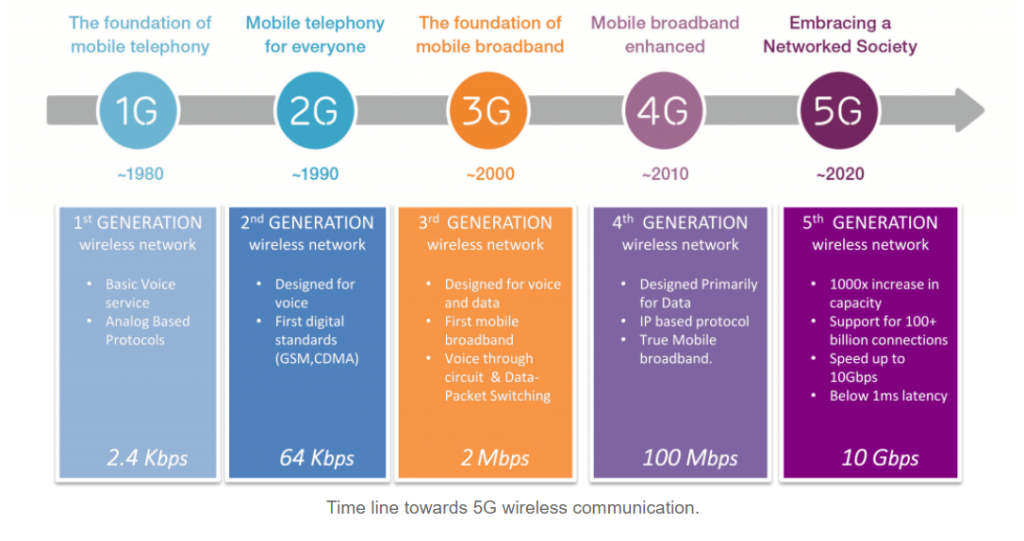
*Based on the Bloomberg classification of 491 TSX-listed equity ETFs, as at April 30, 2019.

If you would like to remain updated about the latest information on the cannabis industry and other related news, simply follow our blog and sign up for our newsletter.

Cyber Security Best Practices: What the Future Holds

When it comes to cyber security best practices, the future is bright. Learn what’s in it for you and how you can improve your cyber security.

Cyber crime is expected to cost more than $6 trillion by the year 2021. That’s right. $6 trillion. Cyber security is our first line of defense against hacks, intellectual property theft, identity theft, stolen data, and ransomware attacks. Evolve ETFs takes a look at the future of cyber security, security best practices, and predictions about industry trends, as well as areas for potential investment.

Cyber Security by the Numbers

You probably know that cyber crime is a threat to personal data, but digital threats also come with a steep financial impact for companies worldwide.

Here Are Some Cyber Crime Statistics Collected by Evolve:

• There will be 20.4 billion connected devices by 2020
• Over 9 billion records have been lost/stolen around the world since 2013
• 5 million records are lost/stolen every month
• 438,000 records are lost/stolen every hour
• The average loss after a cyber attack can be as much as $29 billion

Cyber Crime Can Take Various Forms:

• Some cybercriminals are after sensitive data that can be used to commit fraud, such as credit card information, social security numbers, and bank accounts.
• Financially-driven hackers seek to make money from cyber attacks by demanding a ransom to remove malware that shuts down networks.
• Hacktivists might break into a network/computer to convey messages or release sensitive information that could harm companies or governments.
• Terrorists may even take advantage of cyber technology in order to hack systems or networks of financial institutions, governments, and intelligence agencies.

Basic Computing Techniques That Can Help Individuals and Companies Stop Cyber Attacks:

Complete all software and computer updates: Often, software or computer updates can include ways to better protect your device. When you postpone or refuse to update your computer or phone, you risk leaving yourself vulnerable to advancing tactics that cybercriminals are using.
Password management: A strong password is the best way to protect your data. Creating a strong password that is not only at least eight characters long, but has both upper- and lower-case letters, numbers and symbols can help to protect you. Additionally, it’s crucial that you periodically update your password and that you do not use the same password for multiple logins.
Be alert to phishing scams: While some phishing scams are obvious, some could appear trustful. This is why you should always steer on the side of caution if you’re contacted by a stranger and are asked for personal information.
Avoid downloading files from unknown sources: Regardless of what you’re trying to download, ensure that you’re using a trusted site. Downloading files from an untrusted site may cause you to accidentally download a virus or malware.

Most cybercriminals usually target larger companies. However, it would be beneficial for you to keep your data and privacy protected.

Cyber Criminals and Network Hacks

The weapons used by cybercriminals these days often consist of “bots” that scan networks to look for vulnerabilities. According to Forbes, any company or organization can be a target. From private individuals to banks, credit rating organizations, retail chains, investment firms, and hospitals, every business needs to stay informed about cyber crime.

Similarly, cyber hackers have successfully used “botnets” to stage denial of service (DDoS) attacks and cripple entire networks. Some may demand a ransom in order for them to grant access back to their targeted company.

One real-life example of this type of hacking occurred in 2016 when a botnet attack targeted Domain Name System (DNS) provider Dyn. The attack crippled internet platforms across Europe and North America.

In any case, we know that cyber security is absolutely essential, especially as we become more connected and IoT devices become synced to our entire lives. Whether it’s connecting our phones to our cars, having smart technology in our home, or even working remotely, it’s allowing for more opportunities for cyber criminals to take advantage. That’s why users must be aware of what advancements can help protect them or their business.

Proper Cyber Security Consists of Four Key Areas:

Security analytics: The approach of not only monitoring but reviewing network activity, but traffic to limit breaches.
Threat intelligence: Reviewing information that has already been collected by others in the industry and evaluating how that information can help protect users.
Cloud security: Implementing a number of policies, procedures, or tools to ensure protection.
Mobile security: Ensuring that all mobile devices such as smartphones, tablets, or laptops are not only updated, but is able to protect sensitive data.

Most technology experts are looking toward Artificial Intelligence (AI) as the key to identifying and stopping cyber threats.

Artificial Intelligence, Machine Learning, and Cyber Security

Machine Learning is a means by which machines can learn tasks by analyzing large amounts of data and then predicting patterns or behaviour. In theory, artificial intelligence and human intelligence should produce the same results, according to Vinods.com.

If you think that artificial intelligence is not that common, think again. Many of us already have AI technology in our homes in the form of digital assistants like Amazon Alexa or Google Home. These devices learn your preferences by storing voice commands, analyzing the data, and then predicting your patterns.

AI and Cognitive Security

The next generation of cyber superheroes may, in fact, be a machine. They will be taught to process large amounts of data, in record time, and then make predictions about cybercriminal activity. It’s a concept called cognitive security.

Like a crime scene, there is always evidence left behind like fingerprints, DNA or tire tracks. Cybercriminals are no different. After a breach, analysts can uncover the digital breadcrumbs left behind and use the data to predict future attacks or even identify possible culprits.

Likely AI Components Involved in Securing our Data:

Web Applications: Firewalls that can predict threats and block them by learning how to spot anomalies.
Networks: Computer networks that can monitor system-to-system communications and detect unusual activity.
Endpoint Data: Securing end-user devices such as smartphones, laptops, desktops, and tablets. Artificial Intelligence (AI) can be used to create rules, collect data, and then run algorithms that will detect threats, and even contain them.

How AI Can Help Protect Against Cyber Crime

The future of cyber security will involve both hardware and software that can scan networks as well as perform behavioural analytics (looking at patterns of past cyber events) and real-time detection of anomalies (attacks as they happen).

Another element will be the implementation of machine-learning solutions to secure private customer information that is stored on various computers and cloud networks. Examples could be patients in a healthcare network, customers of financial planning or investment firms, and credit bureaus.

The final element of cyber security will include behavioural biometrics.

It’s a fancy term for monitoring the humans who access computer networks, such as employees. A large percentage of hacks are the result of employees who expose networks to cybercriminals. Employees engage in all sorts of risky behaviours on network computers. Activities like downloading music or software from unsecured websites, clicking malware links on social media platforms, and clicking on phishing links in emails, can all leave networks vulnerable to attacks.

Cyber Security Best Practices and the Future of Investing

As cyber threats increase, so too will the need for experts who can fight these digital criminals. Companies will be looking to improve their cyber security systems and develop best practices. Whether it’s experts designing AI hardware or software, cyber security firms provide services to local and global organizations with expected spending to explode over the next 5-10 years. Evolve ETFs recognizes the upward trajectory of this sector and capitalizes on this opportunity with their cyber security fund.

Evolve Cyber Security ETF

The Evolve Cyber Security Index Fund (CYBR.B) invests in companies that are involved in this endeavour. This fund was Canada’s Top Performing equity ETF in 20181 . For more information about this cyber security ETF, click here.

Visit the Evolve ETFs website to learn more or contact us today.

Sign up for our newsletter to get the latest news and industry updates.
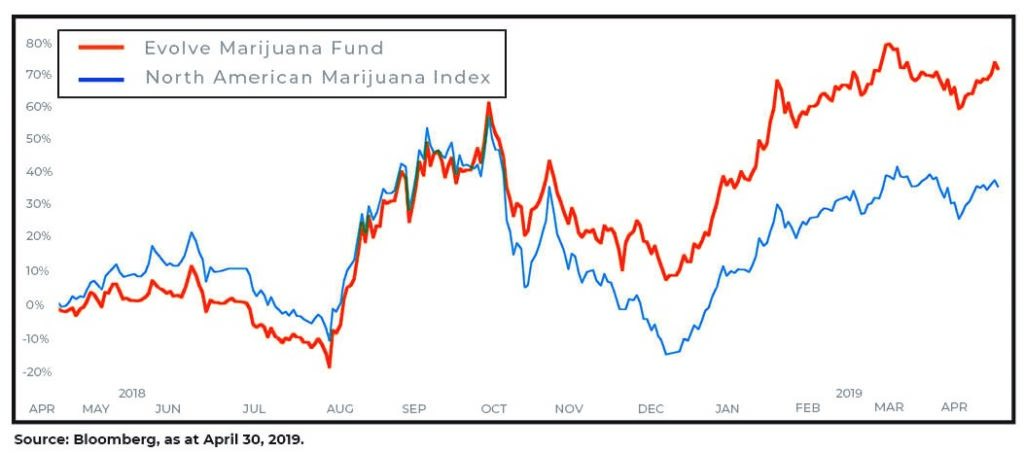
Follow us on social media: LinkedIn | Twitter | Facebook | Instagram | YouTube

1 Based on the Bloomberg classification of 510 Canadian unlevered equity ETFs, as at December 31, 2018.

Commissions, trailing commissions, management fees and expenses all may be associated with exchange-traded funds (ETFs). Please read the prospectus before investing. The indicated rate of return is the historical annual compounded total return including changes in per unit value and reinvestment of all distributions and does not take into account sales, redemption, distribution or optional charges or income taxes payable by any security holder that would have reduced returns. ETFs are not guaranteed, their values change frequently and past performance may not be repeated.

Actively Managed Cannabis ETFs Have Distinct Advantages Over Passive Strategies

The actively managed Evolve Marijuana Fund (TSX: SEED) has significantly outperformed its passively managed counterparts, as well as the marijuana benchmark index.

When it comes to investing in the cannabis industry, active management has many distinct advantages over passive management.

While a passive index provides investors with broad exposure to the market, the underlying truth is that active managers have the flexibility to make investment decisions, compared to passive managers who are restricted to investing in a benchmark index over which they have no control over stock selection.

This is particularly true in the rapidly emerging cannabis sector in which market moving events unfold rapidly as they are driven by news, corporate announcements, mergers and acquisitions as well as other unanticipated developments in a continuously evolving regulatory environment.

Active Managers Can Take Defensive Action in an Emerging Cannabis Industry

Though growing rapidly, the relatively immature cannabis sector can be susceptible to a higher degree of uncertainty in comparison to more mature segments of the market.

As a result, active managers in the sector can take defensive action and sell the stocks of troubled companies or make changes to their portfolio in the wake of volatility or if they believe the market may decline. It’s important to note that passive managers do not have the same degree of flexibility.

In fact, passive managers can be held hostage to the fortunes of troubled companies that are part of a benchmark index, even if they foresee those troubles ahead of time. Therefore, passive managers may have to endure index volatility to the detriment of investors, whereas active managers can make tactical shifts in asset allocation.

Markets Are Not Always Efficient

Passive managers argue that the markets are efficient and that it is difficult to outperform an index. On the other hand, active managers believe that the markets possess mispricing opportunities which can be leveraged to outperform the index. These opportunities can be leveraged by active managers who have the skills and experience to analyze individual securities when making their investment decisions.

Fees and Costs Vary

One of the biggest arguments against active management is the higher fees associated with it. While true, it must be noted that fees and expenses vary widely for both active and passive management. At the end of the day, investors need to look at the returns they receive relative to the fees they pay. When investing in emerging sectors like cannabis, active managers can find “diamonds in the rough” that can provide strong returns. Conversely, the performance of passive managers is dictated by the index.
We believe that generating superior risk-adjusted returns will come down to picking the right stocks in the cannabis sector. Capitalizing on such opportunities can only be achieved through active management.

Winning with Evolve’s Actively Managed Cannabis ETF – Evolve Marijuana Fund (TSX: SEED)

The experienced management team of Evolve ETFs believes that the dispersion in returns between cannabis companies that succeed and those that do not at any point of time is very wide. The firm’s active management approach includes re-thinking the portfolio whenever deemed necessary. This involves making tactical portfolio shifts whenever the market warrants.

The firm employs an investment process that combines quantitative techniques, fundamental analysis and risk management in managing its cannabis portfolios.

The Evolve Marijuana Fund (TSX: SEED) has Significantly Outperformed its Passively Managed Counterparts, as well as the Marijuana Benchmark Index

According to the Bloomberg classification of 491 TSX-listed equity ETFs, the Evolve Marijuana Fund (TSX: SEED) has remained the top performing TSX-listed equity ETF over the past one year1 since February 28, 2019. SEED has also more than doubled the performance of the North American Marijuana Index as of April 30, 2019.


Annual Total Returns3 (as at April 30, 2019)

Ticker

Evolve ETF & Index

1 Year

Since Inception2

SEED

Evolve Marijuana Fund

71.37%

44.85%

NAMMAR

North American Marijuana Index

35.15%

18.85%

Source: Bloomberg, as at April 30, 2019.

Introducing the World’s First ETF Investing in the U.S. Cannabis Industry – Evolve U.S. Marijuana ETF (NEO: USMJ)

The new Evolve U.S. Marijuana ETF (NEO: USMJ), launched on April 17, 2019, is also actively managed. It may invest in equity securities of companies listed domestically and globally, and other companies, with business activities in the U.S. recreational and/or medical marijuana industry. USMJ is denominated in Canadian dollars and incorporates a dynamic foreign-exchange strategy to hedge back to the Canadian dollar, at the discretion of Evolve ETFs.

About Evolve ETFs

With assets under management of over $475 million, Evolve is Canada’s fastest-growing ETF provider since launching its first suite of ETFs on September 20, 2017.  As a leader in thematic ETFs, Evolve specializes in bringing innovative ETFs to Canadian investors. Evolve’s suite of ETFs provide investors with access to (i) long term investment themes, (ii) index-based income strategies, and (iii) some of the world’s leading investment managers.  Established by a team of industry veterans with a proven track record of success, we create investment products that make a difference.

Click here for more information about the Evolve Marijuana Fund (TSX: SEED) and the Evolve U.S. Marijuana ETF (NEO: USMJ).

Visit the Evolve ETFs website to learn more or contact us today.

Sign up for our newsletter to get the latest news and industry updates.

Follow us on social media: LinkedIn | Twitter | Facebook | Instagram | YouTube


1 Based on the Bloomberg classification of 491 TSX-listed equity ETFs, as at April 30, 2019.

2 Performance since inception of SEED on February 12, 2018, as at April 30, 2019.

3 The rates of return shown in the table are used only to illustrate the effect of the compound growth rate and are not intended to reflect future values of the ETF or returns on investment in the ETF. Total return performance calculations reflect performance from April 30, 2018 to April 30, 2019 on a trailing basis and are subject to change daily.

Commissions, trailing commissions, management fees and expenses all may be associated with exchange-traded funds (ETFs). Please read the prospectus before investing. The indicated rate of return is the historical annual compounded total return including changes in per unit value and reinvestment of all distributions and does not take into account sales, redemption, distribution or optional charges or income taxes payable by any security holder that would have reduced returns. ETFs are not guaranteed, their values change frequently and past performance may not be repeated.


5 Artificial Intelligence Trends That Will Change Your Life in 2019

Technology is advancing, it’s no secret. With all of the change that is happening, it’s important for consumers to stay on top of what innovations may be on the horizon. This year specifically, artificial intelligence (AI) is expected to hold many impressive changes that both businesses and consumers will be able to take advantage of.

2019 appears to be the year where we get our robot servants’ names mixed up and electric cars seem to be the way to go when purchasing a new vehicle. Among all of the technological advancements that are impacting our day-to-day lives, artificial intelligence is one to pay attention to. Since innovation is moving at a very fast pace, we’ve compiled a list of the top 5 AI trends that will affect individuals in 2019.

New and Improved Chatbots

You may have already noticed how popular chatbots are becoming. Whether you’re starting a chat on a webpage for additional information or support, they seem to be popping up everywhere. One example is how Sephora, the personal care and beauty store, launched a chatbot in 2016 to help users find the right products while boosting their user-experience.

Source: Forbes

While many chatbots have limitations, they are expected to grow in intelligence through machine learning. No longer will they only be able to answer generic questions relating to store hours, but they will be able to be much more helpful and reliable.

AI Recognizing and Explaining Images

In addition to AI being used to enhance user experience, as mentioned above, it’s also being used to provide information to users. Specifically, artificial intelligence is allowing users to gather information by simply uploading an image to a program. One example of this is Google Lens that was designed by Google. Google Lens is an image recognition technology that provides more information and data about a detected object.

As this technology continues to improve throughout 2019, the uses are endless. As seen below, photo recognition can allow us to learn about the world around us. In fact, it has even been used to recognize ailments, which we’ll discuss later.

Source: Digital Trends

Misinformation Identification

As technology improves, so does the ability to create false information. Not only is this because so many individuals have the means to spread information and media, but changing technology can even make the information that is published appear factual, regardless of if it is. One example of this is how Buzzfeed worked with Jordan Peele to create a PSA on misinformation. Displaying how individuals can use enhanced imagery of Obama to make it look like he is speaking.

ABC News Exclusive

Source: Good Morning America, YouTube

However, technological advancements in regards to AI can help detect misinformation too. Specifically, how artificial intelligence can help prevent ‘fake news’ from circulating. This is possible as AI programs are created and designed to detect patterns of spam, malware, inappropriate or false content. Major companies such as Facebook are employing practices similar to this to help regain user trust.

Innovative Health Initiatives 

As we mentioned, AI is getting smarter about your health. With advancing technologies, doctors have been able to take advantage of AI as a way to better help their patients in a timelier manner.  This is through algorithms and data being programmed to detect, identify, and even diagnose various ailments. One example is how artificial intelligence is already used to recognize early eye disease in diabetic patients. When image-processing algorithms are programmed and perfected, the possibilities are endless.

AI-Enabled Chips

AI depends on specialized processors. As a result, developers are now coming out with specialized chips designed to run AI systems. Among a number of uses, the chips will be used to complete processes such as language processing, computer vision, and speech recognition. In fact, Qualcomm has announced that they are launching a new line of chip-based AI solutions for smart speakers and audio applications.

Artificial Intelligence Trends are Impacting Day to Day Lives

It’s not surprising to hear how artificial intelligence is continuing to impact consumers every day. Whether it’s teaching users about the world around them or making processes simpler and faster, AI technology will continue to excel in the near future.

If you’re interested in investing in innovative technologies such as artificial intelligence, consider the Evolve Innovation Index Fund (EDGE). Learn more about this innovation and technology ETF by clicking here.

Stay updated with the latest information on artificial intelligence and other related industry news. Follow our blog and sign up for our newsletter.

Evolve Launches the World’s First ETF Investing in the U.S. Cannabis Industry: Evolve U.S. Marijuana ETF

Evolve U.S. Marijuana ETF is Will Begin Trading on the NEO Exchange on April 17, 2019

TORONTOApril 16, 2019 /CNW/ – Evolve Funds Group Inc. (“Evolve“) is pleased to announce that it has filed its final prospectus to launch the Evolve U.S. Marijuana ETF (“USMJ“).  USMJ will be the world’s first ETF focused on the U.S. marijuana industry. Units of ticker symbol USMJ have been approved for listing on the NEO Exchange (“NEO”) and will begin trading on April 17, 2019.

USMJ is designed to provide investors with long-term capital appreciation by actively investing in a diversified mix of equity securities of public issuers that are involved in the U.S. marijuana industry where state and local laws regulate and permit such activities. Evolve will act as portfolio manager for USMJ, providing investors with breadth and depth of expertise in the cannabis space, as exemplified through the performance of the Evolve Marijuana Fund (“SEED“), seen in the chart below.

“The cannabis opportunity in the U.S. is similar to that of Canada a couple of years ago, but in many respects has the potential to be exponentially larger,” said Raj Lala, President and CEO at Evolve. “In the U.S., 10 states have legalized recreational use and 33 states have legalized medical use. Given the population in the U.S. compared to Canada, there are some U.S. cannabis companies generating more revenue than Canadian producers, albeit with much smaller market caps.”

A passive index provides investors with broad exposure to the market, however, active management is essential in the burgeoning cannabis space given the ongoing regulatory environment and the significant volatility of the cannabis sector.

USMJ may invest in equity securities of companies listed domestically and globally, and other companies, with business activities in the U.S. recreational and/or medical marijuana industry. Evolve will employ an investment process that combines quantitative techniques, fundamental analysis and risk management to the portfolio. USMJ will be denominated in Canadian dollars. USMJ will incorporate a dynamic foreign-exchange strategy to hedge back to the Canadian dollar, at the discretion of Evolve.

SEED is Canada’s top performing TSX-listed equity ETF over the past one year, ending March 29, 2019SEED is Canada’stop performer out of 508 equity ETFs listed on the TSX.1 Evolve’s portfolio management team has generated a return of 58.43% over this period, and more than doubled the performance of the North American Marijuana Index since inception of SEED.

Annual Total Returns2 (as at March 29, 2019)

Ticker

Evolve ETF & Index

1 Year

Since Inception

SEED

Evolve Marijuana Fund

58.43%

42.61%

NAMMAR

North American Marijuana Index

31.48%

19.39%

Source: Bloomberg. Performance since inception of SEED on February 12, 2018

“We believe there are significant near-term catalysts that will cause the U.S. market to expand rapidly,” said Elliot Johnson, Chief Investment Officer at Evolve ETFs and Portfolio Manager for SEED and USMJ. “There are several laws currently making their way through Congress that would expand legalization of recreational cannabis and give those companies better access to banking and capital. The U.S. will be positioned to become the largest cannabis market globally.”

About Evolve Funds Group Inc.

With assets under management of over $450 million, Evolve is Canada’s fastest growing ETF provider since launching its first suite of ETFs on September 20, 2017.  As a leader in thematic ETFs, Evolve specializes in bringing innovative ETFs to Canadian investors. Evolve’s suite of ETFs provide investors with access to: (i) long term investment themes; (ii) index-based income strategies; and (iii) some of the world’s leading investment managers.  Established by a team of industry veterans with a proven track record of success, we create investment products that make a difference.  For more information, please visit www.evolveetfs.com.

Join us on social media: Twitter | LinkedIn | Facebook

As ranked by the Bloomberg Canadian TSX-listed equity category, as at March 29, 2019.

The rates of return shown in the table are used only to illustrate the effect of the compound growth rate and are not intended to reflect future values of the ETF or returns on investment in the ETF. Total return performance calculations reflect performance from March 30, 2018 to March 29, 2019 on a trailing basis and are subject to change daily.

Commissions, management fees, expenses and applicable sales taxes all may be associated with an investment in the exchange traded funds managed by Evolve Funds Group Inc. (the “ETFs”). The indicated rates of return are the historical annual compounded total returns including changes in per unit value and reinvestment of all dividends or distributions and do not take into account sales, redemption, distribution or optional charges or income taxes payable by any securityholder that would have reduced returns. ETFs are not guaranteed, their values change frequently and past performance may not be repeated. The prospectus contains important detailed information about the ETFs. Please read the prospectus before investing.

Certain statements contained in this news release constitute forward-looking information within the meaning of Canadian securities laws. Forward-looking information may relate to a future outlook and anticipated distributions, events or results and may include statements regarding future financial performance. In some cases, forward-looking information can be identified by terms such as “may”, “will”, “should”, “expect”, “anticipate”, “believe”, “intend” or other similar expressions concerning matters that are not historical facts. Actual results may vary from such forward-looking information. Evolve undertakes no obligation to update publicly or otherwise revise any forward-looking statement whether as a result of new information, future events or other such factors which affect this information, except as required by law.

SOURCE Evolve ETFs

For further information: Evolve ETFs, info@evolveetfs.com, t. 416.214.488, tf. 1.844.370.4884; MEDIA CONTACT: Keith Crone, kcrone@evolveetfs.com, 416.572.2111

Related Links

https://www.newswire.ca/news-releases/evolve-launches-the-world-s-first-etf-investing-in-the-u-s-cannabis-industry-evolve-u-s-marijuana-etf-829330920.html

www.evolveetfs.com

Data Security: What Businesses and Individuals in Canada Need to Know

The EU adopted the Data Protection Directive in 1995. The law regulated the processing of personal information in the EU and although the EU enacted the Directive, individuals and companies were not bound by it. As time passed, many saw the need for change, and in 2016, the General Data Protection Regulation (GDPR) was adopted by the EU Parliament which replaced the Data Protection Directive 95/46EC. This law into force on May 25, 2019 in the EU and has affected companies globally since it acted as a single unifying system that controlled the online privacy of EU citizens.

Since the GDPR can affect international businesses, it’s critical that Canadians know how they will be affected if they would like to continue to operate in the EU market.

Source: Ecosultancy

The Privacy Rights of an EU Citizen

With the introduction of the GDPR, Canadians dealing with EU citizens need to know that they will require different consents for different users. Unlike the Data Protection Directive of 1995, the GDPR has a wider reach. Impacting international companies conducting business in the EU. As a business interacts with individuals in the EU, the first thing they need to know is that GDPR upholds individual rights on personal data for EU citizens. The focus is for businesses to show that data use is fair, transparent and permitted by a user. So as Canadian consent laws have long been flexible when it comes to collecting personal information from users, caution should be taken.

As such, EU citizens are entitled to the following rights, even if they are interacting with a Canadian business or organization:

  • The ability to access their data,
  • The ability to restrict the processing of data,
  • The ability to request an explanation on automated decisions,
  • The ability to ask how data is being used,
  • The ability to ask for errors to be rectified,
  • And the ability to request for their data to be removed under Right to Erasure, or otherwise known as the right to be forgotten.

Among the rights that the GDPR provides EU citizens, it’s important to highlight Article 17 (Right to Erasure). Article 17 allows users to request for a data controller to erase personal data in a certain situation without undue delay. While there are a number of reasons for why someone would request for their data to be removed, some common reasons are; the personal data is no longer relevant or necessary, the data was unlawfully processed, or that the data was collected in relation to Article 8 (child’s consent in relation to information society services). Displaying the presence of measures to correct errors in the user’s data when requested.

Data Breach Notification

In addition to the privacy rights that the GDPR provides EU citizens, it also has regulations relating to data breaches. Specifically, it requires international companies to inform EU users of any data breach. Where possible, users should receive notifications from the company within 72 hours. The only exception to this law is if the breach impacts the freedom and rights of users.

In terms of processing companies, they are required to report any breaches to the company that controls the data. When it comes to international data transfers, the general data protection regulation Canada restricts this. An exception is provided for businesses with adequate protection for the information.

Data Protection Officers

With the adoption of the GDPR, businesses will also have to employ a data protection officer (DPO). This is true if the company performs regular and systematic data monitoring on a large scale. The officer will work as an enterprise security leadership role and will ensure that there is not only a company data protection strategy, but that the company is complying with GDPR requirements. With this being said, officers must have expert knowledge of data protection laws and practices to ensure the company is abiding by rules and regulations.

Source: VPNGeeks

The GDPR and PIPEDA

While the GDPR was adopted by the EU it did impact Canadian businesses dealing with a European market. Even though Canada had similar regulations that were in effect prior to the GDPR such as Canada’s Anti-Spam Legislation (CASL), the GDPR is said to pose many similarities to the Personal Information Protection and Electronic Documents Act (PIPEDA). PIPEDA came into force on January 1, 2001, and 10 fair information principles were created for businesses to follow:

  • Accountability in terms of being responsible,
  • Identifying the purpose of why someone’s data is being collected,
  • Ensuring consent,
  • Limiting collection of what data is collected,
  • Limiting use, disclosure, and retention of data,
  • Accuracy in terms of keeping information up-to-date,
  • Safeguards to keep information secure,
  • Openness to users,
  • Allowing access to individuals requesting to review what data collected,
  • Allowing individuals to challenge compliance.

Source: Office of the Privacy Commissioner of Canada: Enforcement of PIPEDA

Compliance in Canada

Compared to other countries, Canada is way ahead in compliance with data protection regulations. As a leader in privacy regulation, the country has put in place data governance policies. Whether it’s abiding to other protection regulations or updating our own, Canada is focused on data protection and data breach reporting.

Source: 2017 Survey with Canadian businesses on privacy-related issues

If you would like to consider investing in cybersecurity, the Evolve Cyber Security Index Fund (CYBR.B) invests in companies that are involved in this endeavor. This fund was Canada’s Top Performing equity ETF in 2018. To learn more about this cyber security ETF, click here or visit our website.

Stay updated with the latest information on data, security, and other related industry news. Follow our blog and subscribe to our newsletter.

What the Future Holds: Exciting New Car Technologies

Automobiles are on the cusp of massive leaps in technology that at one time we could only dream about. As the population shifts in age and buying power, automakers must take this, as well as changing government oversight into consideration if they want to stay profitable. While vehicles will go under vast transformations internally, the cars of tomorrow might look similar to what we’re used to now. The main difference would be its innovative offerings.

Below, are five of the coolest new car technologies that are closer than you may think.

Self-Driving

It’s been a buzzword for more than a decade. However, with the drastic advancement of technology, autonomous cars are now well within sight. In fact, Google has been working on it for years with real-world applications in a few west coast cities. While many automakers are beginning to experiment with it, many still wonder how feasible the driverless car could be.

Self-driving vehicles may seem like a cool trend to follow, but many are looking towards technological advancements as being something to boost safety. As 94 – 96% of all U.S. automobile crashes are due to driver error; fatigue, distraction, or even intoxication, it’s anticipated AVs may be able to decrease the risk of an accident happening. Specifically, how the instrumentation installed in an automated vehicle could have the capability to process 320 trillion instructions per second (unfathomably faster than a human being can), to make driving safer.

When this sensory intelligence is combined with the oncoming wave of ‘vehicle communication’, it is expected that new technology will be able to address 95% of the reasons behind car crashes. With plans to allow AVs to learn as they drive on roads, they may be able to harness the power to inherently map where pedestrians, sidewalks, and hazards typically lurk. This innovation is something that the American people, and Congress, will not be able to ignore forever.

car technology, CARS, future cars

Vehicle Communication

As mentioned above, the concept of ‘vehicle communication’ is quickly gaining traction in the industry. The basic concept is that software would be able to give cars the ability to ‘talk’ to each other through something called ‘V2V Communication’. This preventative action alone has the ability to address 79% of accidents.

Cars would now be able to warn each other about traffic conditions. An example would be when a car runs a red light at an intersection and preemptively warns the surrounding vehicles to take defensive action.

Similarly, ‘Vehicle to Infrastructure’, or V2I, would give cars the ability to communicate with traffic lights, road signs, and even traffic management systems to establish best routes.

Currently, Ford and chip maker Qualcomm have already begun production on ‘C2VX’ (vehicle to everything), a cellular-based technology. This will give Ford vehicles an enhanced picture of the road while accounting for street signs, markers, other cars and traffic information to essentially paint a nearly perfect picture.

connected cars, CARS, connectivity of cars

Source: Liz Slocum, Connected Car Security and the Future of Transportation

Augmented Reality

The concept of augmented reality in regards to vehicles is not farfetched. As it has already been present in vehicles since BMW’S heads up windshield displays, where speed and RPM’s are projected onto the windshield to keep the drivers focus on the road, it’s widely accepted and desired.

But what is different now is how technology and augmented reality can be used to enhance information and command. Specifically, how ‘overlays’ can be placed in a drivers line of sight to provide them with a form of ‘robot vision’. Allowing the vehicles GPS directions, highlighted roads or routes, or other driving information to be easily visible without the need to look at a screen.

As well, passengers may be able to enjoy smart windows that function as a touchscreen. These windows would allow passengers to click on real-life objects to find out their distance, information and even provide them with the ability to draw on top of the landscape. One example is how the Mercedes F 015 concept is expected to allow lower door panels to display the virtual world outside or function screens for media and entertainment.

Energy Storing Panels

The future of cars is undoubtedly electric as the market steadily distances itself from fossil fuels. The concept of ‘storing’ energy in cars has been in use since hybrids began implementing regenerative braking. But now the cars of the future are expected to be able to store energy in every usable part of the vehicle.

This is possible through body panels that will be equipped with battery cells to store solar and kinetic energy created by the movement of the car. Nanotechnology will provide the ability to wrap smart coatings on the cars as well. This will enable cars to get more power from the electric motor and avoid wasting power from the main batteries when it is at a stand-still.

Voice Command

Currently, you can talk to your car but what if you could talk to your car? Car manufacturers are now forming partnerships with companies like Amazon to integrate the Alexa platform into their vehicles. Ford, BMW, and VW have all partnered with Amazon to enable their cars infotainment systems to function just like your Amazon Echo does at home.

You will be able to play songs, control navigation and essentially walk through every part of your car’s screen that would normally require you to take your eyes off the road. With this technology, you could even speak to your smart devices at home before you arrive.

In comparison, Mercedes is implementing their own version called MBUX, where users will begin their commands with “Hey Mercedes” to gain the system’s attention. Mercedes claims that the system will have the ability to learn and preemptively suggest things based on your prior behaviour.

But even if your car doesn’t have Alexa, Apple CarPlay and Android Auto are quickly ascending as standard features in new models. These features enable your car’s screen to closely mirror your phone’s screen and allow for easier, user-friendly operation of apps and functions. This change continues to prove itself as being successful since many car companies continue to discover that drivers prefer the sophistication and attractiveness offered by phone manufacturers.

cars, car, automobile

New Car Technologies: A Safer and Less-Boring Drive

With these automotive innovations just around the corner, road trips will certainly be a completely different experience. Not only will the driving experience change, but accidents and fatalities linked to road accidents will dwindle closer and closer to zero.

New car technologies will undoubtedly need to earn public trust prior to being adopted. However, the inevitable benefits should quickly outweigh the fear of change.

To stay up to date on all emerging technologies and how they can be incorporated into your portfolio, sign up for our newsletter.

Interested in investing in emerging technologies and automotive innovations, you may want to consider the Evolve Innovation Index Fund (EDGE) and the Evolve Automobile Innovation Index Fund (CARS).

EDGE, innovation etf

future cars, automobile innovation, CARS

Join us on social media: Twitter | LinkedIn | Facebook | Instagram | YouTube


The Cannabis Industry Growth Wave: How the Top-Performing Equity ETF on the S&P/TSX, Evolve Marijuana ETF (TSX: SEED), is Making Waves

Ever since the legalization of cannabis for recreational and licensed medical use in Canada last October, the hype of “buying on mystery” has waned, following a brief period of volatility among marijuana stocks. There is now a higher degree of certainty as to where the sector is heading. Investors are beginning to focus on investing in more established companies which have the potential to ride the forecasted wave of growth in the sector.

In fact, “valuations are realigning with fundamentals as investors become more interested in actual operating businesses with real customers, brands and access to markets,” says Elliot Johnson, Chief Investment Officer at Evolve ETFs and Portfolio Manager for the Evolve Marijuana ETF (TSX: SEED).

As the sector begins to mature, it is experiencing a spate of M&A and other corporate transactions as more established companies strive to build economies of scale and gain access to product supply.

For instance, since legalization was officially announced in July 2018, among the transactions that have taken place are:

  • Constellation Brands Inc., the parent company of Corona beer and other alcoholic drinks, make a $4 billion investment in Canopy Growth Corp;
  • U.S. cigarette maker Altria investing $2.4 billion in Cronos Group;
  • Aurora Cannabis Inc. acquiring CanniMed Therapeutcs Inc. and MedReleaf Corp. in all Canadian transaction;
  • Molson Coors Canada partnering with The HEXO Corp. to produce and distribute non-alcoholic, cannabis-infused beverages; and
  • Aurora Cannabis Inc. announcing that it will buy closely held Whistler Medical Marijuana Corp., one of Canada’s original 10 licensed producers.
  • HEXO Corp. announced plans to acquire Newstrike Brands Ltd. in an all-share transaction valued at $263 million.

More Regulations to Come in the Canadian Cannabis Industry

Although the industry is starting to mature, and recreational and medical cannabis are currently legal in Canada, the evolving regulatory environment will have a bearing on the success of some cannabis companies.

For instance, while the rules around retail distribution are becoming clearer at the provincial level, the illegal market still dominates the retail trade – which means that greater controls are necessary; as well as the establishment of more retail outlets in Provinces like Ontario.

Incidentally, lower prices for marijuana on the black market is the primary reason for higher sales through the retail channel. According to StatsCan, the average all-in market price paid for legal cannabis flower was $9.70 per gram in the fourth quarter of 2018, compared to an average price of $6.51 per gram on the illegal market. Part of the reason for higher prices on the legal market is due to government taxation.

In addition, The Federal government announced last year that it will be introducing regulations surrounding the manufacture and sale of edible products infused with cannabis. These regulations are expected in the fourth quarter of this year, although pending Federal elections in October could delay any action on the issue. The implementation of the regulations could have a direct impact on the Molson Coors Canada-The HEXO Corp. and the Altria-Cronos Group transactions.

Concurrent with developments in the Canadian market, several countries are taking Canada’s lead in legalizing cannabis consumption. This development will give established Canadian cannabis companies a competitive advantage in participating in the global growth of the industry.

Evolve Marijuana ETF (TSX: SEED), Top-Performing TSX-Listed Equity ETF*

As the cannabis industry goes through its early stages of growth, it is prudent to consider investing in actively managed marijuana ETFs, like the Evolve Marijuana ETF (S&P/TSX: SEED), which uses a diligent risk management process to select marijuana stocks with the best growth potential.

With a return of 48.5% over the 12-month period ending February 28, 2019, net of fees, SEED is the top performing equity ETF out of 504 equity ETFs listed on the S&P/TSX*. Its performance during the same period is more than double that of the North American Marijuana Index which returned 22.6%.

*As ranked by the Bloomberg Canadian TSX-listed equity category, as at February 28, 2019.

Evolve Marijuana ETF Performance, SEED, Marijuana ETF, Cannabis Investment, NAMMAR

For more information about participating in the growth potential of the Evolve Marijuana ETF (TSX: SEED), please contact your financial advisor or visit our website.


The rates of return shown in the table are used only to illustrate the effect of the compound growth rate and are not intended to reflect future values of the ETF or returns on investment in the ETF. Total return performance calculations reflect performance from February 28, 2018 to February 28, 2019 on a trailing basis and are subject to change daily.

Since inception of SEED on February 12, 2018

Commissions, management fees, expenses and applicable sales taxes all may be associated with an investment in the exchange traded funds managed by Evolve Funds Group Inc. (the “ETFs”). The indicated rates of return are the historical annual compounded total returns including changes in per unit value and reinvestment of all dividends or distributions and do not take into account sales, redemption, distribution or optional charges or income taxes payable by any securityholder that would have reduced returns. ETFs are not guaranteed, their values change frequently and past performance may not be repeated. The prospectus contains important detailed information about the ETFs. Please read the prospectus before investing.

Evolve Marijuana ETF, SEED, Marijuana ETF, ETF Webinar


Did you enjoy this article? If you did, we have more where that came from. Visit our blog, listen to our podcasts, and watch our videos for the latest on the cannabis industry and the investment world.

An on-the-ground view from the Canadian International Auto Show

Billed as the “Future is here,” the 2019 Canadian International Autoshow being held February 15 to 24, at the Metro Toronto Convention Centre, did not disappoint. It has clearly become a mainstream event.

I had the opportunity to attend the show on its opening day, February 15 and was immediately struck by the prominence of big brand internet companies. Both Netflix and Amazon Prime had a huge advertising presence.

Kijiji Autos raised an interesting proposition with its advertisement: Will ride sharing go the way of Airbnb? The potential evolution of this idea is worth following as ride sharing continues to evolve.

Although the show had displays of more than 1,000 cars, trucks, SUVs, concept cars, exotics, classics, muscle cars, fully electric and autonomous vehicles, a few key areas stood out.

Electric Vehicles remain prominent

It was evident that electric vehicles (“EVs”) continued to gain prominence. A company called “Flo” displayed a charging station that could be installed in homes as well as others that are being placed across North America. Flo’s equipment can charge any model of EV.

Image source: www.flo.com  

It was amazing to note that the range of EVs are getting much longer. For instance, the Kia Soul EV has a range of up to 385km, whereas the Nissan Leaf has range of up to 363km.

With the evolution of charging technology, we should be on the look-out for fast charging to become mainstream. This technology could enable 150km to be charged in approximately 5-10 minutes. Developments like this will be the tipping point for EVs to become competitive with gas-powered vehicles for range and long distance utility.

One setback, however, is that big brand EVs are still very pricey. For example, the price of the Audi e-tron currently starts at $90,000.

Hydrogen, an emerging power source

Electrically-powered vehicles were not the only alternative fuel source on display. Hydrogen power is set to become more widespread. The Hydrogen Fuel Cell vehicle market is predicted to grow at 8.12% CAGR during 2019 to 2023, according to Global Hydrogen Fuel Cell Vehicle Market 2019 Industry Report published by “Market Research Future”.

Toyota displayed its hydrogen fuel cell, while Hyundai showcased a model of its Hydrogen car, which is in pre-production.

Hybrids, an affordable choice 

Some affordable choices in the hybrid category were on display. These include the Kia Optima hybrid, priced at $30,000 and the Kia Niro hybrid at $25,000.

In my opinion, it is simply a matter of time before all cars have some form of electric drivetrain. As a result, hybrids and EVs might come to dominate sooner than people expect.

Screens everywhere, but blank ones too

Another big theme at the Autoshow is that screens were everywhere. Most dashboards are now digital. The only problem is that when the cars are turned off all you can see is a big black screen, which in my opinion spoils the car show.

Biggest trend in new car technology? Super-sized screens

Another problem with digital dashboards is that it is hard to discover what you can do because what you see on screen changes all the time. Maybe I’m old fashioned but I like knobs and dials.

A few examples of vehicles with dashboard screens include the Land Rover 4, which even has a rear view mirror that displays a video image from a rear-facing camera. Mercedes also has a good looking, very wide full screen dash board, whereas Jaguar showed off a car with a 2-screen dashboard plus a CD player. Dashboards aside, the CD player is step back into the past.

The Evolve Automobile Innovation Index ETF (CARS) provides investors with access to global companies that are involved in developing electric drivetrains, autonomous driving or network connected services for automobiles.

The Future of Cyber Security: Here’s What We Can Expect

Cyber security is an important component of tech today, with a market valued at almost $250 billion. Similar to the overall tech industry, cyber security has a market in almost every industry. As more company information is stored online, the more demand there is for cyber security solutions to secure it.

The Future of Cyber Security

However, the field didn’t grow without being able to adapt to new markets and to new demands. Similar to how tech’s future is constant flux, the future of cyber security is almost unpredictable. New security methods may emerge, as well as new requirements for companies to protect consumer and employee information.

The one thing that’s certain to be in the future of cyber security is profit. Keep reading below for some quick predictions on where cyber security is headed into the future.

New Requirements May Increase Investments Into Cyber Security

Continued controversies over major tech companies’ handling consumer data may motivate new legislation around cyber security. New requirements may be handed down regulating how companies store and secure information.

Those requirements are likely to exceed the security measures already in place. Companies may be forced to invest heavily in their cyber security divisions to conform to the law, which can lead to a sudden injection of cash in the near future.

Hacks, Leaks, and Big Data Dumps Are In the Future

Previous years saw major leaks and hacks costing companies their customer’s information – and their reputation. Even more, it can cost consumers their sense of safety, their security, and in the worst cases, it can cost them stability in their lives. Leaked information is valuable because hackers can use it to steal money and sensitive information from people.

That hasn’t changed at all. Hackers will continue to target major websites to gain access to litanies of user accounts. The only difference is they will face new issues trying to get their hands on the users’ personal information.

Two-factor authorization has become mainstream for consumers and new back-end security protocols and security methods, such as the use of AI, will debilitate hacking attempts.

However, that doesn’t mean everything is secure as hackers will always try to find ways around security setups. The role of cyber security professionals is to always stay one step ahead of the cybercriminal.

Don’t Be Threatened: Here’s a List of Cyber Threats to Watch out for in 2019

In 2018, the United States recorded 31,465 data breaches, surpassing the global average of 24,615. Not only are cyber security threats becoming more prevalent, but they are also becoming more expensive. By 2021, the cost of cybercrime is expected to reach $6 trillion per year.

Below are some cyber threat predictions for 2019.

Ransomware

Ransomware has been a lucrative business for criminals for several years. Cybercriminals use their malicious software to block users from their computers and networks unless they pay a huge ransom and many companies are forced to pay. In fact, ransomware damages are expected to reach USD $11.5 billion by 2019 and USD $20 billion by 2021.

The frequency of ransomware attacks is expected to increase to increase as well – shifting from a business being attacked every 14 seconds by the end of 2019 to every 11 seconds by 2021.

Phishing

In the past years, phishing attacks have been on the rise and becoming increasingly harder to detect.

For example, early in 2018, malware was sent through a MailChimp phishing campaign. Hackers used compromised accounts in MailChimp to send out malicious email blasts full of malware.  Because MailChimp is a well-established and trusted email marketing provider, it is more likely these emails will bypass spam filters and get into the inbox of unsuspecting individuals.

Cybercriminals spend a lot of time creating emails that look like they are coming from trusted sources like your cable company or your boss. Be vigilant by always being on the lookout for suspicious emails.

Never click a link without first hovering over the target URL to confirm the correct domain. It is better to call a company or person to confirm they sent an email first before you click.

Source: Propeller, 2018

Crypto Jacking

With the rise of Bitcoin and other cryptocurrencies, so too is the rise of cryptocurrency mining.

Cryptojacking is like a hijacking. Someone uses your computer to mine for cryptocurrency without your consent. Hackers do this by sending malicious links or infecting an online ad or website with code that begins the mining process.

Just in the first quarter of 2018, there were nearly 2.9 million crypto-mining attempts. Most of the time, victims don’t know that they have been hacked. Often, the only hint that this is happening is a computer that is running slower and a big energy bill that will come in the mail at some point.

Prevent cyber threats by installing ad-blocking or anti-crypto mining extensions on all your web browsers. And of course, be wary of suspicious attachments and links.

Final Thoughts on Cyber Security and Cyber Threats

There isn’t a single industry or field that has a completely predictable future. Political turmoil has upended the typical market expectations found in every industry. In times like these, it’s the industries that are acclimated to change that end up on top. Cyber security is one of those fields. Hackers are constantly changing the ways they try to illegally gain access to information. Cyber security constantly changes so it can keep up. In fact, investors who get in when times are uncertain may make the most profit.

Cyber threats are becoming increasingly more sophisticated and harder to detect. Ransomware and phishing, especially, continue to be tools used by cybercriminals because of their high success rate. Be vigilant and keep on top of online security best practices to protect your data and your wallet against malicious attacks.

Cyber security’s consistent growth makes the sector a viable opportunity for investors who want to diversify their portfolio through an ETF such as the Evolve Cyber Security Index ETF (TSX: CYBR).

banner CYBR


Did you enjoy this article? If you did, we have more where that came from. Visit our blog for the latest on disruptive technologies and the investment world.

2019 Market Predictions

The Year of Ubiquitous Digitization

A plethora of factors – from demographic shifts to potentially uncertain market conditions – will contribute to increasing demand for ETFs from a broad cross-section of Canadians, resulting in ETF sales outpacing mutual fund sales in 2019.

Source: National Bank Financial; Strategic Insight, SIMFUND Canada. As at November 30, 2018

Technological innovation, ubiquitous digitization, increasing cybercrime and solutions to combat it, volatile markets, rising interest rates, and investors’ desire for competitive risk-adjusted returns will all play a role in the rapid growth of the ETF industry.

Here are 10 trends we see influencing growth in the ETF industry in 2019.

1. ETFs Will Grow Faster Than Mutual Funds

Inflows into ETFs are expected to surpass inflows into mutual funds in 2019, maintaining a trend that started in 2018. Increasing penetration rates, evidenced by total ETF assets as a percentage of total mutual fund assets growing marginally year-over-year for more than five years now, will come from growing acceptance of ETFs among Canadians, particularly Generations X and Y.

2. Growing Millennials Will Create Product Demand

The shift in the demographic composition of the North American population, represented by tech-savvy Millennials outnumbering baby boomers for the first time in five decades, will give rise to companies striving to satisfy their growing demand for products and services. This will lead to strong growth in thematic ETFs, with exposure to companies targeting the unique needs of Millennials.

3. More Educated Investors Will Lead To Greater Demand For ETFs

The enhanced focus on investor education, in combination with the inherent benefits of investing in ETFs, such as liquidity, transparency, lower fees, bulk ordering and transactional ease, will lead to greater adoption of ETFs by all demographic categories, including the wave of Millennials who are more inclined to be DIY investors. These trends will put ETFs on the path of faster growth.

4. Demand For Active ETFs Will Rise Amidst Volatility

Actively-managed ETFs will continue to dominate new issues in 2019 on the back of increasing demand for professionally managed active products. In 2018, 93% of asset classes incurred losses, heightening the need for active solutions in the midst of volatile markets.

5. Rising Interest Rates Will Fuel Demand For Fixed Income ETFs

Rising interest rates will lead to increasing demand for fixed income ETFs which can potentially provide higher yields than traditional fixed income investment products. Demand will come largely from ageing baby boomers and their parents seeking reliable income streams.

6. Need For Advice Will Increase

Demand for advice will rise to meet the needs of investors seeking to navigate uncertain market conditions. Discretionary portfolio management and full-service wealth advisors will be the primary beneficiaries, although a hybrid advisor-robo model will also gain increasing traction in the quest for lower fees and increased efficiency.

7. AI Will Make Greater Inroads

Artificial intelligence (AI), the “demon” that rivals human intelligence will make greater inroads into our lives in 2019 – from our homes to social media, hospitals, industries, cars, and a host of other applications. As AI evolves, it will no doubt encroach our lives in an unprecedented way but at the same time will be able to track our behaviour and invade our privacy. AI will also present its own risks, including cybercrime which is the number one risk in our rapidly digitizing world. From an investment standpoint, AI will present enormous opportunities for thematic ETFs targeting the sector.

8. Canadians May Have Their First Autonomous Car Experience

Canadians will likely have their first autonomous car experience in 2019, with a technician at the wheel. Google’s self-driving car and Uber’s pilot project of driverless cars will pave the way for the autonomous car experience.

9. Internet Connectivity Will Rise Dramatically

By the end of 2019, 50% of the world’s population will have internet access, compared to 20% a decade ago. While internet penetration rates are substantially higher in the developed world, connectivity rates are growing at a relatively faster pace in the developing world. This trend will be a boon for Internet-related businesses and services.

10. Canadians Will Become More Aware of GDPR

Most individual Canadians who do not know about GDPR (General Data Protection Regulation) will be aware of it by the end of 2019. The series of laws that were approved by the EU Parliament in 2016 came into effect on May 25, 2018, aimed at bringing data protection legislation into line with new ways that data is now used. The implementation of GDPR, though a business initiative, will have a direct impact on individual privacy.

5 Transformations Bringing the Financial Services Sector into the Future

The financial services industry has proven remarkable adaptability to changing technologies, all the more evident with the current rise of FinTech. Companies and investors alike should take note of the financial sector’s shifting efforts toward furthering innovation. Here we explore five of these transformations already taking place now.

Biometrics and virtual reality

The way we interact with technology is constantly changing. Manufacturers are always looking for ways to make these interactions more convenient, all while prioritizing security.

Biometrics and other innovative methods of authentication like voice identification are being implemented on a larger scale, having a significant impact on the financial services sector. With convenience being among top priorities for consumers, these technologies are becoming mainstream even for apps containing sensitive information relating to finance.

Virtual reality is trending in the gaming world, but it won’t be long before daily responsibilities and tasks will move into this virtual landscape as well. The experience of managing bank accounts and monitoring investments might receive a radical update.

Blockchain

Blockchain isn’t just for bitcoin anymore. A true disruptive technology, blockchain is completely changing the way that financial institutions are moving forward.

Exciting applications for blockchain within the financial services sector include improving the accuracy of share trades and facilitating smart contracts.

Another key aspect of blockchain technology is its implications for making secure transactions, which is of the utmost importance for financial-services-oriented products.

Digital-only banks

While banks began adopting digital portals for their customers years ago, digital-only banks are one of the newest trends in financial services technology.

Younger demographics are drawn to these banks that not only offer intuitive user interfaces but compete with traditional business models that are starting to appear archaic to younger generations.

Banks without brick-and-mortar locations may scare away traditional customers, but features such as zero overdraft fees and competitive interest gains are very attractive.

Artificial intelligence

Machine learning is a growing trend in financial services that have the potential to impact multiple areas of the industry.

Improvements in artificial intelligence have allowed for an unmatched level of fraud deterrence. Systems with advanced learning functions can adapt and react to the ever-changing methods hackers employ to commit fraud.

Customer service is another area of financial services that will benefit from advances in artificial intelligence. Watch for automated systems that will be able to communicate with customers over the phone or through chat interfaces in a way that is nearly indistinguishable from a human.

Big data

With the proliferation of all these new digital platforms, the question remains: what do we do with all this data?

Analytics are being used to better assess risk values when determining loan options for customers. Customer service is also being improved with the ability to parse customer surveys and determine overall satisfaction.

Customer data is more available than it ever has been and financial services will be using that data to get an edge in a competitive marketplace.

Source: Loginworks

Ahead of the curve

The financial services sector’s longevity will be determined by its ability to accommodate changing technologies and customer needs. This adaptability is evidenced in up-and-coming investment products like ETFs, which allow for portfolio diversification and capitalize on innovative trends in finance and other industries.

EDGE banner


Did you enjoy this article? If you did, we have more where that came from. Visit our blog for the latest on disruptive technologies and the investment world.

What to Expect for the Future of Robotics

Recent technological advancements in robotics and automation have been truly remarkable. For example, Boston Dynamics has successfully created Atlas, a robot that can probably beat you at a game of tag with its incredible parkour ability.

Artificial intelligence has differentiated itself as one of the major trends that will shape the future of robotics and automation. Other themes for the next decade in robot technology will be reliability, autonomy, and responsiveness.

The applications for robots extend far beyond manufacturing assembly lines. Here we explore how robotics will intersect with our lives in unexpected ways.

Rescue efforts and medicine

Scientists and engineers have made significant strides in creating robots with the ability to swim, having potentially life-saving applications.

These robots, such as EMILY (Emergency Integrated Lifesaving Lanyard) can be deployed on rescue missions in areas that are inaccessible or dangerous to humans. Another notable example is nanorobots that can swim in a person’s bloodstream to facilitate the elimination of harmful toxins and deliver drugs to hard-to-reach areas of the body.

Education

The popularity of online learning has shown how innovation has been transformative for education. The advancement of robotics promises to illustrate this even further.

In the near future, robot teaching assistants will become commonplace, helping to alleviate the need for teachers in areas where they are scarce. Systems’ ability to develop empathy through the power of artificial intelligence will be a determining factor in the success of robotics’ integration with teaching.

Home assistance

Innovation has always been motivated by the prospect of better serving us humans. The Internet of Things is by far one of the most important tech innovations in recent years. Even by using Amazon’s Alexa for a few minutes is enough to experience its powerful potential.

In the near future, home robots and smart home appliances will all work seamlessly together. Robotic assistants may replace maids, with the ability to clean, cook, and maintain the home. Cloud technology would allow these robots to learn new skills and improve on anticipating our needs.

Manufacturing and prosthetics

By far, one of the coolest upgrades coming to the human species is the ability to wear exoskeletons. This robotic gear increases your strength, improves your balance and greatly reduces physical limitations that hinder many.

Right now, these exoskeletons are already boosting worker performance in the manufacturing industry. For example, in August 2018, Ford gave EksoVest exoskeletons to 75 workers at 15 of its factories globally, following successful trials of the technology. Exoskeletons are also being produced for paraplegics and other individuals with disabilities. As wearable tech improves and becomes more accessible, we may even expect it to play an increasingly important role in athletics.

Policing

This trend is already a prominent part of the robotics industry. Robots are very useful for surveying and securing property. But, robots can do more than passively monitor for criminal activity.

Robot police may one day be able to respond to and trigger certain systems based on a particular threat. Artificial intelligence within identification systems will work to reduce the number of mistakes that can occur within police work.

Investing in innovation

Robotics is one of many tech trends captivating the interest of investors, given the promising developments taking place in this sector and the opportunity for diversification it provides.

The Evolve Innovation Index ETF (EDGE) gives investors exposure to a number of key players in robotics and automation, among other emerging industries.

EDGE banner


Did you enjoy this article? If you did, we have more where that came from. Visit our blog for the latest on disruptive technologies and the investment world.

Cyber Security Trends to Watch in 2019

The average cost of a data breach rose 6.4 percent in 2018, reaching $3.86 million. These costs have been rising year over year for some time now.

Experts predict one business will fall victim to a ransomware attack every 14 seconds by 2019, and every 11 seconds by 2021. 44% of businesses claim they do not have an overall information security strategy. Ransomware attacks on hospitals are predicted to increase 5X by 2021.

As data breaches and other cyber security threats continue to make headlines, the demand for superior data protection only rises. Business leaders are looking towards increasing their cyber security measures.

Overall, the total number of records compromised in the first half of 2018 was 3,353,172,708. That figure marks an increase of 72 percent over the first half of 2017. Not surprisingly, the amounts of records breached every day, hour, minute and second also surpassed the totals observed a year earlier. What is remarkable is that all of these figures more than doubled between 2017 and 2018.

The nature of cyberthreats in the age of artificial intelligence is changing. If you want to ensure your data is protected in the new year, these are the major developments in cyber security you need to know.

Artificial intelligence as a double-edged sword

One of the biggest trends in cyber security has to be the use of artificial intelligence. AI technology has made significant strides over the last few years, and many businesses are now adopting it.

Cyber security is just one of the many areas in which applying AI makes sense. Machines can be trained to look for patterns and carry out routine tasks that would take humans hours to perform, allowing for better detection of potential security threats.

But, AI is also a double-edged sword. Cyberattacks in 2019 are likely to use even subtler means of gaining access to information, which could include the use of AI.

2019 Cyber Security Trends
Source: Symantec, 2018

Ransomware will continue to be a major threat

When it comes to cyberthreats, ransomware is among the most feared. This type of threat essentially takes a computer’s infrastructure as hostage.

Avoiding ransomware attacks like the WannaCry crisis will continue to be a top priority for businesses. Updating systems, patching them, and creating regular back-ups are all important defence measures.

Cyberthreats and the Internet of Things

The Internet of Things has expanded exponentially in recent years. As more connected devices emerge, they generate more data than ever before.

The soaring production of insecure internet-of-things (IoT) devices is creating widespread cybersecurity vulnerabilities. ‘The Big Data Bang’ is an IoT world that will explode from 2 billion objects (smart devices which communicate wirelessly) in 2006 to a projected 200 billion by 2020, according to Intel.

This also provides ample opportunity for hackers. As connected networks continue to grow, this provides hackers with a larger attack surface. As our devices and appliances get smarter, the need for data security becomes greater than ever before.

Gartner forecasts that approximately 453 million wearable devices will be shipped worldwide in 2022, up from roughly 179  million in 2018. Wearables include smartwatches, head-mounted displays, body-worn cameras, Bluetooth headsets, and fitness monitors.

Demand for cyber security professionals

The cyber security industry has had a spotlight on it in 2017 and 2018, thanks to a number of high profile data breaches.

There is currently a talent shortage in the field, making cyber security professionals a hot commodity. To meet the growing demand for individuals trained in cyber security, IT and Technology leaders are calling for increased efforts to create specialized cyber security programs and certifications in higher education.

Cybercrime will more than triple the number of job openings to 3.5 million unfilled cybersecurity positions by 2021, and the cybersecurity unemployment rate will remain at zero percent.

At the internal company level, business leaders are calling for increased employee education on how to understand, identify and address data security threats.

Data security objectives becoming business objectives

Patching and application testing are two of the oldest topics in cyber security. They are also two of the most important. Businesses may finally realize their importance in 2019.

If businesses recognize the importance of these two tasks, they should look to further allocate the funding and time needed to prevent loss from data breaches. The process of doing so will not only increase data security but job creation and innovation as well.

Global spending on security awareness training for employees is predicted to reach $10 billion by 2027, up from around $1 billion in 2014. Training employees how to recognize and defend against cyber attacks is the most under spent sector of the cybersecurity industry.

Employee training may prove to be the best ROI on cybersecurity investments for organizations globally over the next 5 years.

Are you ready for 2019?

The cyber security industry is poised for continued growth and innovation in order to address the growing frequency and sophistication of cyber attacks. Consumers and business leaders alike will need to exercise caution and forward thinking in an increasingly connected world.

This is great news for investors looking into this sector. The industry’s consistent growth makes the sector a viable opportunity for investors who want to diversify their portfolio through an ETF such as the Evolve Cyber Security Index ETF.

banner CYBR


Did you enjoy this article? If you did, we have more where that came from. Visit our blog for the latest on disruptive technologies and the investment world.

Why Gender Diversity Should Be a Priority for Investors

Investors seeking to maximize their return on investment tend to look beyond factors like annual reports and financial statements. Many investors are now looking to put their money towards socially conscious investments and taking into account factors such as gender diversity. In addition to promoting necessary social change, prioritizing gender diversity likely produces tangible benefits and better corporate returns.

Here are some of the reasons why gender diversity is an important consideration for business owners, executives, and investors alike.

Upholding gender diversity policies is not just optional – it’s necessary

Most publicly traded companies now have gender diversity policies in place. On December 31, 2014, most of the securities regulatory authorities across Canada implemented Rule Amendments to National Instrument 58-101 Disclosure of Corporate Governance Practices and Form 58-101F1 Corporate Governance Disclosure.

The amendments are intended to increase transparency for investors and other stakeholders regarding the representation of women on boards of directors and in senior management. This transparency is intended to assist investors in making investment and voting decisions and will apply to all non-venture issuers reporting in the participating jurisdictions.

The Rule Amendments requires non-venture issuers to provide annual disclosures on:

  • Policies regarding the representation of women on the board,
  • The board’s or nominating committee’s consideration of the representation of women in the director identification and selection process,
  • The issuer’s consideration of the representation of women in executive officer positions when making executive officer appointments,
  • Targets regarding the representation of women on the board and in executive officer positions,
  • The number of women on the board and in executive officer positions, and
  • Director term limits and other mechanisms of renewal of the board.

Failure to uphold the “comply or explain” rules set by the Canadian Securities Administrators (CSA) may have consequences on both the business dealings of companies and their public relations.

Gender diversity yields stronger financial results

According to Delivering through Diversity (2018) by McKinsey & Company, companies in the top-quartile for gender diversity on their executive teams were 21% more likely to have above-average
profitability than companies in the fourth quartile. For ethnic/cultural diversity, top-quartile companies were 33% more likely to outperform on profitability.

Research also shows that diverse board membership enhances company performance and market reputation. The greatest financial benefits of diversity come when there is between 40% and 60% female representation in the C suite and on boards.

Technology companies are notorious for lacking gender diversity, but there are signs that Silicon Valley is becoming more inclusive. For instance, in July 2017, the leading electric car manufacturer Tesla welcomed Ebony Media CEO Linda Johnson Rice to the board, who is the second woman out of a group of nine board members and the first African-American to hold that role.

Considering ESG factors may lead to smarter investments

More and more investors are looking at ESG (environmental, social and governance) factors when thinking about where to put their money. These factors not only appeal to the conscience, but they also play a part in helping your stocks be “future-proof”.

Whether looking into investing in a mutual fund or an emerging industry like the clean technology, investors need to do their due diligence. In addition to companies’ logistics of production and five-year business plans, gender diversity should also be a decision-making factor for investors. Companies that lead in gender diversity tend to perform well with regard to other indicators of success.

Why gender diversity

Gender diversity will position companies for the future

Whether you are starting or operating your own company, or simply looking to invest in one, gender diversity should be high on your list of considerations. Organizations that encourage a diverse workforce at all levels of their business are more likely to prosper and endure as they reflect the reality of a diverse marketplace. An ETF may help provide access to the gender diversity theme through a diversified portfolio.

Why gender diversity


Did you enjoy this article? If you did, we have more where that came from. Visit our blog for the latest on disruptive technologies and the investment world.

Why the Marijuana Industry is Poised for Major Growth

The marijuana industry has experienced significant growth in the past few years as its medical and recreational applications have continuously expanded. Due to the promise of this emerging sector, investors have been increasingly drawn to marijuana stocks and ETFs.

Here we discuss recent developments in the marijuana industry that are behind this rise in public interest, particularly among investors.

Recreational legalization and Canada as a world leader

The cannabis sector is quickly becoming an international market, now with Canada in a position of leadership. In October, Canada became the second country to legalize recreational cannabis use after Uraguay, and the first G7 country to do so.

It seems that Mexico will soon follow, as their incoming government submitted a bill on November 8, 2018, to create a medical marijuana industry and allow its recreational use, part of a crime-fighting plan that would make Mexico one of the world’s most populous countries to legalize the drug.

These changes have the potential to create a major market for legal cannabis in North America.

In October 2018, the Ontario Securities Commission (OSC) Investor Office commissioned a survey of over 2,000 Canadians from across the country, helping identify who would be most likely to invest in the cannabis sector, as well as the most likely to express interest in investing in the sector:

Source: OSC, Nov. 2018

With this much interest in an emerging sector, it can be difficult to know which companies to buy, not to mention determining a suitable allocation of each in building a portfolio.  These factors may help reinforce the reasoning for selecting a diversified, actively managed investment product, such as an ETF.  Let the professionals conduct the due diligence, analysis and research of these companies to select what they deem as the best companies to hold.  While Canadian cannabis companies are in the spotlight now, opportunities may exist outside of Canada as we approach globalization.  A product that offers global exposure may provide investors with geographical diversification and additional capital appreciation.

Increased legalization for medicinal use

While legal recreational marijuana use is climbing slowly in the United States, more than half of the country has legalized the use of medicinal cannabis for treating conditions such as forms of cancer, epilepsy, anxiety and AIDS. With such widespread legalization comes the need to increase supply for those seeking relief. Once cannabis reaches general household acceptance as an effective alternative to opioid use, we will witness a boom in the medicinal cannabis sector.  This boom should extend globally.

The rise of cannabis tourism

Cannabis tourism is on the rise, with an influx of tourists choosing to visit states where recreational cannabis has been legalized. In fact, the Colorado Tourism Office (CTO) announced that Colorado set all-time records for total visitors, visitor spending and tax generation in 2015 (one year after legalization), welcoming 77.7 million visitors who spent $19.1 billion and generated $1.13 billion in state and local tax revenue. Nevada retailers sold nearly $200 million in recreational cannabis sales in the first 6 months after its legalization.

It is estimated that Canada could eventually generate as much as $2 billion in annual tourism revenue related to the cannabis industry. This will take time as retail stores become established in provinces, such as Ontario.

This shows us how other industries such as travel and tourism currently benefit from cannabis legalization and the lucrative opportunity it presents.

Marijuana-infused beverages

In discussions on how it should be regulated, marijuana is often compared to industries such as alcohol and tobacco. With the growing number of cannabis beverages hitting the US market, the marijuana industry can actually be seen as a complement to the beer industry. In Canada, investments from Constellation Brands and Molson-Coors have generated interest and created a ‘buzz’ in these products.  It is expected that edibles and cannabis-infused beverages will reach the market by October 2019.

In light of a recent drop in beer sales reported by major labels, this partnership could supply just the boost the beer industry needs.

Soft drink companies are reportedly considering similar partnerships, seeing as the marijuana industry is predicted to eclipse the soda industry by 2030 should it reach nationwide legalization in the U.S. by that time.

Development of innovative products

Not everyone is keen on the idea of smoking marijuana, which is why the sector is showing a major focus on creating new means for people to consume cannabis without having to burn or inhale it. Marijuana is now available in the form of edibles, lotions, or through vaping as an alternative to more traditional methods.

the marijuana industry

Among the fastest-growing industries

According to Arcview Market Research in partnership with BDS Analytics, despite federal prohibition, the U.S. legal cannabis industry experienced 31% growth in 2017 to reach $8.5 billion. Nationwide spending in the U.S. is forecasted to be over $23.4 billion in 2022, growing at a 22% compound annual growth rate over the five-year forecast period.

With so many complementary businesses benefitting from this growth (everything from cannabis packaging to cannabis importation and exportation), the marijuana sector provides a diverse set of investment opportunities. As the first G7 country to legalize, Canada is currently at the forefront, however, the greater opportunity may exist in years to come with globalization.

Investing in the future

Predicting industry trends means staying ahead of the curve and up to date with the latest developments in disruptive industries. The Evolve ETFs website provides investors with resources such as videos and infographics to help make the intricacies of the cannabis industry easier to understand.


Did you enjoy this article? If you did, we have more where that came from. Visit our blog for the latest on disruptive technologies and the investment world.

ETFs and Thematic Investing

For investors, what differentiates exchange-traded funds (ETFs) and what potential needs do they fill?

Elliot Johnson, Chief Investment Officer and Chief Operating Officer at Evolve ETFs, shares his thoughts on innovation in the field and the advantages of thematic investing.


Thematic Investing - Elliot Johnson


1. What draws your investors to ETFs?

Johnson: We’re building innovative products that are investing in growing asset classes and offering people investment opportunities that cannot easily be found elsewhere. Unlike traditional mutual funds, ETFs typically have advantages like liquidity, price transparency in the secondary market, and a lower fee structure.


2. How do your ETFs fill a gap in the market?

Johnson: We conduct extensive research into industries being disrupted by technological advances, but in ways that are outside the pure tech industry. We have thematic funds like EDGE, our innovation index ETF, which encompasses six industries including robotics and big data. CARS, our automotive innovation ETF, includes self-driving technology and artificial intelligence.


3. What do you say to some critics who call thematic investing a gimmick?

Johnson: You look at the internet and no one says “that’s thematic”, because it’s so dominant in our lives. The public doesn’t think of it as a theme anymore. What thematic investing really means is that it’s an early-stage trend, built with a long-term investment thesis. We are trying to find investment products that are here to stay and grow over time.


4. How are you looking at overall trends that transcend beyond sectors?

Johnson: A great example is cyber security – the hardware, software and professional services. It’s a corporate spending priority because every CEO is terrified of a data breach that can have a detrimental impact on their stock prices. To that end, we have CYBR, Canada’s first cyber security ETF. As the world becomes increasingly digital, the value these companies provide will only grow.


5. If we think of tech broadly, what sector has big potential for disruption?

Johnson: I would have to say genomics. It’s a fascinating area and makes up one of the six categories of EDGE, our innovation ETF. It’s also an area where the potential for further advances is so huge that we’re really just scratching the surface. The human genome is the ultimate big data project.


6. Where do you see the greatest opportunities in this sector?

Johnson: Overall, R&D spending is growing rapidly. Most of the techniques seem to be heavily weighted toward oncology research. Cancer therapies are well-suited to an approach that is based on genomics. I also think the development of new kinds of food and pest-resistant crops show the breadth of genomic research and its potential to transform how we live.


7. You mentioned self-driving technology, which will disrupt many industries. Is there a particular industry that will be initially affected the most?    

Johnson: I believe that long-haul trucking will be an early user of autonomous vehicles. Logistically, companies know the route the vehicle will take and are able to map the roads in advance. Creating a vehicle that is able to drive anywhere in the world is a much more complex undertaking.


8. Last year, The Economist published a piece called “The world’s most valuable resource is no longer oil, but data”. Do you agree?

Johnson: There’s no doubt. Look at the most valuable companies in the world right now. It’s not Exxon anymore. Facebook and Google are purely data companies. Amazon, Apple and Microsoft sell products, but data allows them to service their customers and provides an indication of what products to launch into the marketplace. We have big data and cloud computing as one of the six categories of our EDGE ETF because this is where the world is going. Big data, data science, machine learning, artificial intelligence – they’re all part of this theme.


9. How does thematic investing fit within a portfolio?

Johnson: Our view on this is that these themes are going to be the growth drivers in your portfolio like tech was in the dot-com years. But nowadays tech stocks are crowded with large market caps. As an investor, you need to look more broadly at where the growth is coming from. If it’s derived from a particular theme, for example, Google and the driverless car, then you should consider obtaining access to that area.


EDGE banner


This content was produced by The Globe Content Studio.  The Globe and Mail’s editorial department was not involved. 

Commissions, management fees and expenses all may be associated with an investment in the exchange traded funds managed by Evolve ETFs (the “ETFs”). The prospectus contains important detailed information about the ETFs. Please read the prospectus before investing. This communication is intended for informational purposes only and is not, and should not be construed as, investment and/or tax advice to any individual.

How Big Data is Powering Business

The presence and impact of big data in the modern world is growing exponentially as the Internet of Things (IoT) expedites the creation of new data with data sources shifting beyond just the computer screen to household appliances, wearable devices, smart cities, self-driving and electric cars, and more.

So first of all, what is big data? According to the Harvard Business Review, big data refers to the vast volumes and types of information that companies can now collect and process using increasingly high-tech systems.

In the past, primarily big businesses used big data, largely due to the high costs of the technology used to collect and analyze data. However, today, there are cost-effective and efficient ways to collect, store, analyze, and transfer vast amounts of information that has opened the doors to businesses of all sizes across all industries.

Read more to understand the current state of big data, its capabilities and what it means for how businesses perform.

Adapting to consumer needs and trends

Companies can accumulate vast amounts of consumer data; however, it’s what companies do with the data that is significant. Analyzing big data for trends and insights allow companies to better understand consumer interests, which is essential in assessing whether they are meeting market needs and making improved strategic decisions.

The closer the market can predict consumer habits, the better the market is at meeting the needs of consumers. In an age where technology is businesses’ main mode of engaging with consumers and subsequently providing them with what they want, big data becomes an essential function of our daily lives.

Whether the result of analyzing consumer trends or surveys and questionnaires, businesses are turning to big data to know where they stand with their customers and learn how to serve them better.

Big data business
Source: SAS

Comprehensive reporting on performance

As the sophistication of data advances, businesses have access to more comprehensive reports regarding their performance. Back in the day, surveys were conducted in person, taking weeks or months to be returned and subsequently analyzed. People were hired to conduct the surveys, read them, and formulate conclusions.

Now, however, artificial intelligence and marketing software can do this almost instantaneously. The only thing businesses need to do is direct the technology on what it should be looking for.

Predicting interests and tailoring experiences

Online advertising is getting increasingly personalized. Information on customers’ previous search and browsing history, past purchases, and website interactions are collected and used to infer things about them, such as their tastes and interests to make recommendations that are more likely to appeal to them.

This is clear with applications like Spotify, which use algorithms based on previous listening history to determine other songs and playlists that the listener might also like. People are in general agreement that these algorithms are successful in picking music that they enjoy.

This same technology extends into the realm of advertising on sites like Google and Amazon, which often suggest products that the consumer may not necessarily have thought of, but might interested in purchasing based on previous searches and purchases. This is beneficial to consumers in the sense that nearly every site they view is providing them with an experience tailored to them.

Investing in innovation

Big data is one of many tech trends captivating the interest of investors, given the promising developments taking place in this sector and the opportunity for diversification it provides.

The Evolve Innovation Index ETF (EDGE) gives investors exposure to a number of key players in big data and cloud computing.

EDGE banner


Did you enjoy this article? If you did, we have more where that came from. Visit our blog for the latest on disruptive technologies and the investment world.

The Evolution of the Automobile Industry: What to Expect in the Future

Curious about what the future has in store for the automobile industry? Want to know which trends and major innovations are forecasted for the next wave of motor vehicles?

In this article, we cover the major developments in automobile innovation that are expected to transform the industry over the next ten years. Read on to learn just how different your commute will look in the near future.

Wi-Fi enablement in every car

While Bluetooth appears to be standard in most vehicles today, only a select few car models are Wi-Fi enabled. For the models that do, these updates can be a costly addition. This is expected to change in the next few years as more and more automobile makers continue advancing in-car connectivity tech and rolling out many new technology features in their cars.

Once 5G networks are up and running you’ll be able to connect any smartphone via WiFi to your car every time you sit behind the wheel. You’ll be able to easily call people, play music, and connect to the Internet for your personal and professional needs.

Increase in assistive driving technology

While we’re not at full levels of autonomous driving yet, we can expect major updates in assistive driving technology to take shape over the next couple of years. Nifty assistive driving features such as adaptive cruise control, self-braking systems, and lane keep assist will increasingly become the norm for all new vehicles.

The U.S. and Canadian governments made rear-view camera systems mandatory for all new cars starting this year, and it’s only a matter of time before we start seeing similar announcements made for other safety technologies.

With the integration of new sensor technology, tasks like switching lanes will become safer and easier.

Electric car ownership will dramatically increase

Right now, electric cars are few and far between on most roads. But, this is expected to change. And while most of these models are costly, plug-in cars are slated to become more affordable in the next few years as automobile makers work to reduce their environmental impact. It’s projected that the presence of these cars on the road will dramatically increase – electric vehicle ownership is expected to grow to 125 million by 2030, largely spurred by government policy.

Fully autonomous cars will hit the market

Industry titans like Tesla and Google have stated that self-driving cars should hit the market within the next 4 to 5 years. The biggest challenge of this implementation will be making sure that self-driving cars can easily communicate and recognize human-piloted cars on the road. But by this point, assistive technology in human-piloted cars could be sophisticated enough that they would be able to avoid self-driving cars should the potential for collision arise.

Fully autonomous cars will likely not be made available to major markets until after a few years of fine-tuning as there are many legal implications and liability issues that will need to be addressed before these cars are deemed road-ready. However, by 2028, we might finally be seeing these cars become integrated into personal and public transit.

Interested in investing in automotive innovation?

Are you captivated by innovative and disruptive technologies and how they will affect our future? Investors looking to diversify their portfolio can capitalize on the promising advancements currently shaping the future of the automobile industry.

The Evolve Automobile Innovation Index ETF (CARS) provides investors with access to global companies that are involved in developing electric drivetrains, autonomous driving or network connected services for automobiles.


Did you enjoy this article? If you did, we have more where that came from. Visit our blog for the latest on disruptive technologies and the investment world.

The Appeal of Active Investing in ETFs

When it comes to Exchange-Traded Funds (ETFs), there are typically two management approaches: active investing or passive investing.

Passive investing is an investment strategy that tracks a given index over the long-term, involves limited daily management of the portfolio and often comes with lower fees. With active investing, portfolio managers monitor the portfolio regularly and buy and sell based on how the market is performing, in an effort to outperform a benchmark and better control risk.

When does active investing make the most sense?

Evolve ETFs’ President and CEO, Raj Lala, and Ryan Domsy, Vice-President & Portfolio Manager – Fixed Income at Foyston, Gordon & Payne, Inc. (“FGP”) discuss the main benefits. FGP is the sub-advisor to the Evolve Active Core Fixed Income ETF (FIXD) and the Evolve Active Canadian Preferred Share ETF (DIVS).


Active Investing in ETFs


1. Where is active investing increasing in popularity?

Lala: Active ETFs have been growing at a rate of about 40 per cent a year for the last five years. More financial advisors and direct investors are seeing the value of active management in the ETF space. When we started Evolve, we wanted to focus on active management for certain asset classes like preferred shares or emerging markets. Active management makes a ton of sense from a risk and return perspective as investors may benefit from superior stock selection through investment process and risk management. About 20 per cent of assets in the ETF space are actively managed.

Domsy: Where active investing makes the most sense is in markets where passive investing actually forces increased risk-taking. A more complex marketplace usually brings with it more inefficiencies, like lack of information on certain companies. Financial managers can take advantage of these inefficiencies to get better returns. Typically active management can be used in any environment.


2. What are the benefits of active management in ETFs vs. mutual funds?

Domsy: While you are starting to see certain mutual fund companies decreasing their overall fees, ETFs are still typically going to be cheaper.

Lala: Another big point is that they are easier to transact for an advisor. This especially applies for fee-based discretionary advisors who like an ETF and want to spread it across their entire client base. It’s a lot easier to do that with an ETF than with a mutual fund, where they still have to do manual transactions.


3. When are investors better off with active management?

Lala: According to last year’s SPIVA report card, 93 per cent of Canadian equity funds that were actively managed underperformed their benchmark over the last year, 91 per cent underperformed over three years. So when you look at areas like the Canadian equity market, odds are that you’re better off owning a passive ETF. But if you look at the fixed income market, there are areas like duration and indebtedness that active management can really help better returns by reacting to and anticipating external factors.

Domsy: Yes, I think it also allows strategic control, which is incredibly valuable. For instance, even now, as we enter into potential trade wars, good active managers have started to position themselves more towards companies that are getting the majority of their growth domestically. Those types of decisions and analysis can provide advantages in the market. For example in a rising rate environment, active management for fixed income can help investors better realize their goals by managing portfolio risk while enhancing returns.


4. Can you explain a little further about the advantages of active management in areas like core fixed income and preferred shares?

Domsy: Active management is uniquely important to the fixed income space—made up of bonds and preferred shares—because of the complexity of individual securities. For both bonds and preferred shares, the most important feature of active management is that you can avoid the debt of companies that are becoming a larger portion of an index. Passive investors automatically have to hold the debt of the company until a rebalancing period.


5. What does a good active manager do in this case?

Domsy: Avoid the companies where these higher debt loads are increasing the risk profile, so as a result, the portfolio is actually safer. A lot of people think active management is all about enhancing the returns, but often times what we do is focused around limiting risk and keeping the overall portfolio safer. Active managers have the ability adjust their sector allocation and better position portfolios to minimize the impact from rising rates.


This content was produced by The Globe Content Studio.  The Globe and Mail’s editorial department was not involved. 

Commissions, management fees and expenses all may be associated with an investment in the exchange traded funds managed by Evolve ETFs (the “ETFs”). The prospectus contains important detailed information about the ETFs. Please read the prospectus before investing. This communication is intended for informational purposes only and is not, and should not be construed as, investment and/or tax advice to any individual.

How Genomics is Revolutionizing Healthcare

Imagine a world where we could easily pinpoint the exact causes of complex diseases such as cancer, heart disease, and diabetes, allowing us to determine the proper treatment faster and with more accuracy. Genomics is taking us one step closer to this future.

Transformed by the success of the Human Genome Project in 2003, genomics is an emerging, innovative field that aims to understand how organisms’ complete DNA sets work in relation to the environment around them.

Read more to learn all about genomics, how it relates to genetics, and how the field can change the way we approach the treatment of complex diseases.

What is genomics?

A genome refers to the entirety of a living organism’s DNA sets. Genomics seeks to understand the makeup of the DNA code and how it can be harnessed to solve real-world challenges.

Genomics vs. genetics

Genomics and genetics are closely related. While genomics looks at the entirety of an organism’s genes, genetics studies DNA closely and how the code it carries affects organisms’ traits.

Genetics can help explain why some people inherit diseases like Cystic Fibrosis or Huntington’s Disease.

Genomics looks at more complex diseases such as cancer, diabetes or heart disease, which are caused by a combination of genetic, environmental, and lifestyle factors.

How will genomics impact the world?

Genomics can pave the way for the development of new treatments and help with early detection of life-threatening diseases and help us understand why certain people are more prone to specific diseases.

Impacts of genomic medicine

Genomic medicine has a number of life-saving applications. To name a few:

  • Genomics has helped to identify a particular genetic mutation responsible for about 4% of Cystic Fibrosis cases, leading to the development of a drug that has proven effective in treating individuals with this mutation.
  • The field of pharmacogenomics uses a person’s genome to determine whether or not a specific therapy will work for them.
  • With help from genomics, researchers are developing a non-invasive test that would help determine early on if a heart transplant recipient’s body is rejecting the donor organ.
  • Genomics also helps study illnesses caused by E-coli contaminations as well as infectious disease outbreaks such as the Ebola virus.

Genomics
Source: IBM Corporation

The future of genomics

Genomics continues to advance and evolve. Future goals for genomic research include:

  • Continuing to understand the function of genes and the factors regulating them
  • Predicting an individual’s risk of getting certain diseases
  • Determining further ways to detect, diagnose, and treat diseases
  • Comparing the similarities between the genome sequences of different species

Investing in innovation

Are you captivated by innovative and disruptive technologies and how they will affect our future? Investors looking to diversify their portfolio can capitalize on a promising sector like genomics and play a key role in financing the next wave of technological advancement.

The Evolve Innovation Index ETF (EDGE) provides investors with exposure to a number of key players advancing the field of genomics.

EDGE banner


Did you enjoy this article? If you did, we have more where that came from. Visit our blog for the latest on disruptive technologies and the investment world.


How Robotics and Automation are Changing the World

Did you know there are now more than 100,000 chatbots on Facebook alone? Advances in artificial intelligence (AI) and machine learning capabilities are behind the rapidly increasing adoption of robotics and automation in many industries.

Breakthroughs in AI are powering self-driving cars, chatbots, and other promising technologies. Investors are beginning to take notice.

Here we provide an overview of the transformations taking place as a result of robotics and automation, and how investors can tap into these disruptive markets.

Robots are becoming smarter than ever

It’s difficult to think about robots without picturing classic images from science fiction, but we’ve in fact lived with them for many years already. The most prominent example has been the use of robotics on manufacturing lines.

New breakthroughs in AI are driving robotics even further. The technology that powers your Amazon and Netflix recommendations are the same as what self-driving cars rely on.

The robots of the future are going to be smarter than ever. They’ll eventually be able to fix themselves, teach each other, and so much more. Some robots are already strikingly human-like in their appearance and semblance of emotions. Although truly sentient robots may still be years away.  Researchers are exploring how we are already forging emotional connections with robots so we can expect questions of robot-human interaction to be central issues in future engineering.

Automation will be everywhere

For now, robots are taking over tedious manual labour, which allows people to free up time and focus on complex jobs that cannot be automated. However, the way robotics and artificial intelligence are going, almost anything has the potential to be automated. We’re already seeing customers adopt AI use with their personal devices, such as Google Assistant, Amazon’s ‘Alexa’, Samsung’s ‘Bixby’, Apple’s ‘Siri’ and Microsoft’s ‘Cortana’. The infiltration into the home has begun, the next step is to automate processes through the use of robotics ie. from making beds to cleaning dishes. Tasks considered too advanced for robots right now will become the work of robots of the future.

This may sound a little far-fetched, but it’s already happening. AI and robotic systems are being trained to “look” at pictures, flip burgers like Flippy, read stories like Luka, write code, and more.

Where does this leave people?

Robotics will push economic growth forward and take over low-skill jobs. Humans will occupy jobs that require “soft skills,” like critical thinking and problem-solving. Many experts predict this will mean wider access to higher-wage jobs.

The price of robotics will also begin to fall as more and more companies race to adopt the technology and improve upon it. This will make incorporating automation and robotics easier than ever for companies.

Future

How can you invest in the automation revolution?

Robotics and automation are growing fields. Despite some people expressing concerns about job loss due to automation, the outlook for the future in the midst of these new waves of innovation is overall an optimistic one.

Investors looking to diversify their portfolio may capitalize on this promising sector and play a key role in financing the next wave of technological advancement.

Exchange Traded Funds (ETFs) are one of the best ways to gain exposure to these disruptive industries while adding diversification.

The Evolve Innovation Index ETF (EDGE) provides investors with exposure to a number of key players at the forefront of innovation in robotics and automation.

EDGE banner


Did you enjoy this article? If you did, we have more where that came from. Visit our blog for the latest on disruptive technologies and the investment world.

Why the Future of Driving is Electric

As at the end of June, there are over 4 million electric cars sold worldwide with another million expected to be added by end of the year. This significant growth shows just how popular and promising the market is for electric cars.

Keep reading to learn about the distinct types of electric cars currently disrupting the auto industry, and how the market presents a unique opportunity to consumers, businesses and investors.

What distinguishes electric cars from regular cars?

The term “electric vehicle” (EV) actually encompasses three kinds of electric cars. Each type of vehicle has its advantages and disadvantages regarding range, emissions and affordability.
The three types are:

  • Battery Electric Vehicle (BEV)
  • Hybrid Electric Vehicle (HEV)
  • Plug-in Hybrid Electric Vehicle (PHEV)

EV types

BEVs are entirely powered by electricity; there is no fuel in these cars. They need to be charged via external sources of electricity or by a process known as regenerative braking (in which the car’s motor slows down the vehicle to recover energy).

HEVs are a hybrid of electric and standard vehicles. They contain a fuel tank and a classic engine along with an electric battery and motor. However, their main energy source is not electric; it’s standard fuel. These cars can vary in how “electrified” they are, some models making use of their battery more than others.

PHEVs are similar to HEVs, the difference being that they are mostly powered by electricity instead of classic fuel. The vehicle’s combustion engine is used when electric power is running low, also providing the car with a longer range than BEVs.

Electric vehicle costs are coming down

Despite experiencing exponential growth in recent years, the EV industry is still in its early stages. With fuel prices soaring and many countries pledging to ban gas cars in the near future, the push for electric vehicles is propelling this industry and its technology forward.

Experts predict that these cars will be as affordable as traditional cars within 7 years, and that battery manufacturing could triple in the next four years.

The rise of electric vehicles provides opportunities for businesses and investors

The implications of the electric vehicle market extend far beyond the manufacturing of the cars themselves. Businesses and investors can engage with this growing industry in a number of ways.
Businesses should consider investing in charging stations at their locations. This commitment to sustainability would attract customers, as well as provide direct revenue if clients pay to charge their vehicles.

Investors could also consider companies looking to further innovation in EV technologies, these encompassing automotive, energy and tech companies alike.

At the forefront of innovation

The very thought of electric vehicles used to exist primarily in science fiction. Today they’re a reality, and will soon become commonplace, given their increasing affordability.

With a clearer understanding of how EVs work and how their technology is reshaping the auto market, consumers can better decide whether an EV might be the right car for them, and investors can get a better idea of why they should be engaging with this growing sector.

The Evolve Automobile Innovation ETF (CARS) provides investors with exposure to some of the top players in the electric vehicle market, this including manufacturers of cars and batteries, as well as energy companies.


Did you enjoy this article? If you did, we have more where that came from. Visit our blog for the latest on disruptive technologies and the investment world.

Blockchain Is Disrupting the Business World More Than We May Realize

Early in 2018, Blockchain was one of the hottest buzzwords in tech, largely due to the rise of Bitcoin. The buzz around the concept of Blockchain tended to subside with the decrease in Bitcoin’s value; however, many still do not know what the blockchain is and what its implications are for businesses.

A blockchain is essentially a record of digital transactions. By use of cryptography, data is contained in blocks, each block linked to the one before it, such that data cannot be altered.

It’s important though to understand that blockchain has applications other than just cryptocurrencies. Some companies are beginning to utilize blockchain within their business model to provide Blockchain-as-a-Service (BaaS).

To learn more on how blockchain technologies are at the forefront of industry change, keep reading below:

Healthcare

Healthcare is a massive industry that generates more private data than any other. Federal law (namely the Personal Information Protection and Electronic Documents Act in Canada and the Health Insurance Portability and Accountability Act in the US) requires health organizations to protect patient records. Failing to protect medical records can bankrupt healthcare businesses from fines alone.

It was easy to secure patient records back when paper was the norm, but in the digital age, the healthcare industry has had to keep up with changing technologies. Digital storage of patient records brings with it an added set of security concerns.

Blockchain tech is helping move the healthcare industry forward by promoting intra-organizational data sharing, all while protecting said data from potential data breaches.

Source: Data Art, 2018

Distributed networks store data with blockchain tech. This means organizations don’t need to worry about costly databases.

The blockchain breaks data across the network, preventing it from being intercepted by cybercriminals. In the event of a data breach, cyber thieves would only be able to obtain a small piece of the information and not enough for it to be comprehensible.

Smart contracts

Smart contracts secure business transactions without the need for legal intervention. They also have applications in mobile and desktop software development.

Companies trading complex securities like bonds and stocks can write smart contracts, the terms of which are written in code on a decentralized blockchain network. The network then verifies whether parties have fulfilled their conditions before executing the contract. This process cuts out the middle-man in business dealings and ultimately saves money.

Smart contracts can be thought of as the self-checkout machines of complex trading.

These contracts also have a role in traditional business. Management can put together smart contracts to set out clear expectations for employees, using a blockchain to track whether the conditions of a contract were met before releasing employee payments.

Investors can even use blockchain-backed smart contracts to buy blockchain-created cryptocurrency futures.

Blockchain technologies are evolving

Blockchain is still very new, and its integration into various business functions will be a subject of much-continued thought and debate. However, as current trends would show, blockchain applications are likely to transform multiple industries by adding security, transparency and efficiency.

There may be benefits to investing in the industries that will be first to integrate with blockchain.

The Evolve Innovation Index ETF conveniently unites these industries such as big data, cloud computing, and healthcare into a simple ‘one stop solution’ for investors looking to capitalize on future innovation and disruption.


EDGE banner


Did you enjoy this article? If you did, we have more where that came from. Visit our blog for the latest on disruptive technologies and the investment world.

Why Investors Are Looking to the Cannabis Industry

Are you looking to diversify your portfolio by investing in some non-traditional companies? Or maybe you really love cannabis and are looking to position your investment in an industry you’re passionate about.

With legalization in Canada on October 17, surprisingly some complexities still surround the cannabis industry (ie. edibles, vaporizers, cannabis-infused beverages), investing in the space can seem somewhat tricky.

We’ve simplified things by providing all the insights you’ll need to get started investing in an industry with a predicted growth of 34.6% from now to 2025.

Why should you invest in the cannabis industry?

2018 cannabis report, Deloitte

If you’re drawn towards the cannabis industry because of personal use or belief in its medical properties, you’re not alone.

Canadians spent 5.7 billion dollars on marijuana products in 2017 alone!

Many people are investing their hard earned money in the cannabis industry.

2018 cannabis report, Deloitte

The marijuana industry has the potential to be far-reaching

When the before mentioned areas of marijuana do achieve legalization in Canada and perhaps on a wider global scale, other industries will expand accordingly. For example, the market for accessories such as child-safe marijuana bottles and bags will grow amid safety concerns regarding edibles.

These simple accessories are in fact pivotal to avoiding further cases of children being hospitalized after consuming edibles. The selling of legal marijuana edibles will be contingent on whether a product’s packaging has been deemed sufficiently childproof and has been approved by the government.

Investing in manufacturers of these accessories and other offshoots of the marijuana industry is also a potentially rewarding strategy.

2018 cannabis report, Deloitte

Before you invest

If you have a particular sector in mind or even a particular company, make sure you do your research before you invest. There are many sites that may provide you with helpful information and insights on the marijuana industry that can help simplify your personal research.

When researching individual companies, looking into their corporate values can be a helpful indicator of whether they’d be a good fit for your investment.

Subscribing to content and news sources within the marijuana sector is a great way to stay informed about current trends and top performers in the space, which is vital in such a nascent industry that’s constantly changing.

Your investment strategy

The average cannabis user spent about C$1,200 spent on the drug last year, mostly on non-medical marijuana, according to Reuters.

Sometimes you need more than an article to help you figure things out, especially when it comes to a complex topic like investing.

Ensure to contact your investment advisor or visit the Evolve website which provides investors with resources such as videos and infographics to help make the intricacies of the cannabis industry easier to understand.


Did you enjoy this article? If you did, we have more where that came from. Visit our blog for the latest on disruptive technologies and the investment world.

5 Technologies that Will Shape the Future of the Auto Industry

According to predictions from the 1960s’ The Jetsons, we should be well on our way to driving in flying cars. Despite the abundance of recent innovations in the automobile industry, flying cars remain beyond us.

But, there are a number of innovative car technologies that are already improving our lives. We can expect these 5 innovative car technologies to become fully realized in the near future.

1. Autonomous cars

Driverless car technology has improved leaps and bounds over the last few years.  According to The Verge, it’s expected that we’ll see some of the first autonomous cars built without traditional controls like steering wheels and foot pedals, but we won’t see fully autonomous vehicles out on the roads for another 5 to 10 years.

However, we might not have to wait as long for semi-autonomous driving to become mainstream.

In its current state, self-driving technology is best suited to smaller areas where it’s easier to regulate traffic, such as college campuses and retirement communities.

That means autonomous cars will tend to be restricted to rural areas in busy city centres with low population density for safety reasons.

Automatic emergency braking systems are an example of autonomous vehicle technology currently being integrated into cars. Cars with this function can override driver controls to brake when they deem necessary.

This feature may sound scary, but it’s proven to enhance in-car safety. If you’re about to back into another vehicle, the sensors on the car will automatically apply the brakes.

2. Biometric car access

The switch to keyless entry has already taken off, found in most car models today. However, you should expect to see another change in how we access our vehicles.

By applying the same technology from the iPhone X, biometrics is set to take over the automotive industry. Soon, all you’ll need to enter your vehicle is your fingerprint. With the rise of retina scanners, it won’t be long before you’ll be able to use your eye instead.

3. Comprehensive car tracking

While much of the new emerging car tech is going to benefit the consumer, comprehensive car tracking will probably play less in the favour of the driver, and more in the favour of insurance firms and governments.

However, a benefit could be insurance firms’ charging of lower fees for drivers who voluntarily have their cars fitted with tracking devices. But, it’s anyone’s guess as to whether this kind of tech will remain on a voluntary basis.

4. Customized marketing

We’ve all read articles about how companies are tracking our behaviour online for customized and targeted marketing.

As our vehicles become connected to the internet too, we may expect to see targeted marketing based on driving behaviour such as frequent destinations.

5. Remote car shutdown

Remote car shutdown technology allows for the shutting down of stolen cars. This has the potential to save many lives and reduce police chases.

As we become more and more familiar with the concept of remote car shutdowns, our ideas about car security are sure to change.

Car Robber with Flashlight

Interested in investing in automotive innovation?

These emerging technologies form the basis of a strong long-term investment thesis. The Evolve Automotive Innovation ETF (CARS) provides investors with access to global companies that are involved in developing electric drivetrains, autonomous driving or network connected services for automobiles.


Did you enjoy this article? If you did, we have more where that came from. Visit our blog for the latest on disruptive technologies and the investment world.

The Rapid Rise of Social Media Companies

Facebook, Twitter, and other social media platforms have become the modern way by which millions of people connect with each other every day. With over 2 billion users, Facebook is the biggest player in the space. This comes with a market capitalization of $499 billion.

Word of mouth has always been one of the best forms of advertising for businesses. In the age of social media, the supposed reach of word of mouth has increased exponentially, a single post potentially garnering tens of thousands of retweets. Keep reading to learn more about the astounding growth achieved by social media companies in just the past decade.

Rapid growth

Since the invention of the telegraph in 1792, society has only sought ways to communicate faster and over greater distances. The invention of the telephone and the radio (still in use today, albeit more advanced) in the early 1890’s came next.

After the creation of the Internet and e-mail came the early forms of social media. With the first chat rooms, blogging sites, and networking sites providing the ability to create profiles, social media as we know it was born.

MySpace and LinkedIn established themselves in the early 2000s. YouTube pioneered video sharing in 2005. Then, in 2006, came Facebook and Twitter.

Facebook dominates the social media space

Facebook has the most active users of any social media platform, and it also owns Instagram and WhatsApp. These two platforms have a younger user base and are perhaps a useful hedge against the increasingly ageing Facebook population.

A significant contributor to Facebook’s commercial success has been its advertising platform, second only to Google Ads. Facebook is also advantaged in the virtual reality market with its acquisition of Oculus (maker of the Oculus Rift) in 2014.

Reason for caution

Facebook experienced the biggest ever one-day market value loss this past summer after news of a poor financial forecast. The company cited a levelling out of the number of people actively surfing the Internet. Twitter and Snapchat also reported declining user numbers.

This took place at the same time as the strengthening of privacy regulations in European markets, making the sustained growth of user activity more difficult in these regions.

Growth is still happening in some markets outside the US, but it seems that social media companies are looking at other ways of growing their business. Companies are shifting their focus away from attracting new users and towards providing more value to its existing user base in creative ways. This adaptation to changing consumer desires means that social media companies aren’t going anywhere.

A time to invest

Facebook continues to be the major player in social media and does not appear to be letting recent setbacks change that. All things considered, it has a sound business model and a diversified set of platforms.

Interested in innovative and disruptive trends like social media? The Evolve Innovation Index ETF (TSX: EDGE) provides investors with access to global companies across a broad range of industries.

EDGE banner


Did you enjoy this article? If you did, we have more where that came from. Visit our blog for the latest on disruptive technologies and the investment world.

Responses to Cybercrime Give Investors Potential Growth Opportunity

The impact of cybercrime, from stolen personal data to business attacks, is massive and rising.

A report by McAfee and the Center for Strategic and International Studies says cybercrime costs the world’s economy $600 billion a year. Other estimates from cybersecurity experts put the total much higher, and say it could reach $6 trillion by 2021.

Technology is being used to both perpetrate and defend against cyber threats. Raj Lala, President and CEO of Evolve ETFs, explains how investors can respond.


1. Why did Evolve decide to launch CYBR, Canada’s first cyber security exchange traded fund?

Lala: Cybercrime is going to increase, therefore the demand for cyber security services should follow suit. There is serious growth opportunity in this space. CYBR provides investors with that opportunity, by investing in global companies that are involved in the cyber security industry.

2. What types of companies are in the CYBR portfolio?

Lala: There are companies like Palo Alto and Symantec that people may have heard of, but also companies that may not be known to many because they work in the background, like Checkpoint. CYBR invests in companies that provide hardware, software and consulting services to many Fortune 500 companies. Organizations simply don’t have the human capital to deal with this size of an undertaking, so they work with the types of specialized companies that we have in the CYBR portfolio.

3. Who should consider investing in a cyber security ETF?

Lala: Anyone who thinks the need for cyber security is going to continue. The value of an ETF is to take a more diversified approach, so this allows investors to be exposed to the market without having to pick just one company. It could also add diversity to the technology equity bucket if people are looking to broaden their exposure to technology stocks outside of social media or hardware manufacturer companies.

4. How much is cyber security spending expected to increase?

Lala: About $100 billion is being spent on cyber security services, and that’s expected to grow at about 20 per cent a year. And while it seems like a lot, it’s a drop in the bucket compared to what’s being lost due to cybercrime. I doubt you will ever hear a CEO say, even after a bad financial quarter, “We need to cut back on our cyber security spending”. It’s just too important, and it’s really a non-discretionary spend.

5. We are living in a hyper-connected world now, from our personal devices to the Internet of Things. How vulnerable is everyone to cybercrime?

Lala: There is just so much connectivity. Currently, there are 20 billion devices connected to the internet, and that number is expected to grow to 50 billion by 2020. There is going to be so much more opportunity for cybercriminals to hack into our lives, whether they be personal or corporate. Today we have attacks executed by more sophisticated cybercriminals, and these are only going to increase. Every second, 12 people online become victims of cybercrime, totalling more than 1 million victims around the world every day.

6. What are the top three cyber security challenges facing CEOs?

Lala: I saw an interesting statistic recently from the IBM X-Force Threat Intelligence Quarterly, which stated that the majority of cybercrime comes from an internal source. So I’d say that’s number one. Companies now need to be concerned about internal threats as well as external threats. Next would be the shortage of human capital to help fend off and deal with cybercrime. And lastly would be trying to stay ahead of cybercriminals.

7. How has the increase in cybercrime changed the way businesses conduct themselves?

Lala: With increased threats comes increased awareness of their impact. More companies are recognizing cyber security as an area of the utmost importance, which needs attention and serious investment. Once a company has a breach or is hacked, you’ve effectively lost customer confidence and trust. Every CEO out there wants to avoid that scenario and is most likely putting money behind protecting their business and increasing shareholder value.

CYBR invests primarily in equity securities of companies located domestically or internationally that are involved in the cyber security industry through hardware and software development. Learn more at evolveetfs.com/CYBR


This content was produced by The Globe Content Studio.  The Globe and Mail’s editorial department was not involved.

Commissions, management fees and expenses all may be associated with an investment in the exchange traded funds managed by Evolve ETFs (the “ETFs”). The prospectus contains important detailed information about the ETFs. Please read the prospectus before investing. This communication is intended for informational purposes only and is not, and should not be construed as, investment and/or tax advice to any individual.

6 Ways Big Data Will Change the Business World

If you’re someone who likes keeping up to date on the latest trends in tech, then big data needs to be on your radar.

Big data is fundamentally changing the way businesses in many industries operate. Keep reading to learn about six big data transformations taking place in the business world.

1. Marketing Strategy

The world of marketing has been evolving over the past few years. Thanks to big data, marketers have the ability to compile large amounts of information about prospects and gain better insights as to who their customers are.

Big data and analytics can help marketers improve their search engine optimization and create more impactful content by providing detailed insights into performance. With this vast repository of information at their disposal, marketers are able to develop more targeted campaigns and initiatives and get the most out of their budget.

2. Dark Data

If you’re not familiar with the AI world, then the term dark data might be new to you. Dark data refers to data stored in repositories that have not been analyzed or processed. The way dark data is stored makes it difficult for analysis to be performed on it. However, big data is making it increasingly possible for complex data management systems such as those storing dark data to become more accessible to everyone.

3. Sports

The sports world can also benefit from the revolutionary use of big data. With the help of connected devices and data analytics, coaches are able to assess athletes’ performance in revolutionary ways and make decisions based on the accessible information. This is especially true in sports such as Formula 1 where pit crews use big data in vast quantities to analyze every aspect of the race.

4. Chatbots

You’ve probably already encountered chatbots or digital assistants at some time or another. Beyond being a great customer service tool, the applications for chatbots at the enterprise level are equally promising. Big data is facilitating the implementation of more advanced Chatbots.

5. Disaster Response

Big data can save lives when it comes to disaster response and recovery planning. Emergency response teams can access and analyze real-time traffic systems, sensors, cameras, water quality, urban planning documentation and much more. This would also give them better tools to plan and predict what can be done in case of a disaster.

6. Healthcare

Imagine if potentially illuminating patient information was available to doctors everywhere. With big data, this can be possible. Shared data (i.e. medical histories, DNA profiles) between healthcare professionals could be used to further life-saving research efforts. Data acquired from wearable devices could even be used to help make predictive diagnoses.

Big Data Transformations: The Bottom Line

The transformations within these six sectors are a testament to how business is changing in light of new disruptive technologies.

Within this innovative technology lies the basis of a strong investment thesis. Diversified investment products such as the Evolve Innovation Index ETF (TSX: EDGE) provide investors with access to companies involved in big data and cloud computing.

EDGE banner


Did you enjoy this article? If you did, we have more where that came from. Visit our blog for the latest on disruptive technologies and the investment world.

Innovation & Disruption: “The Next 20 Years in 45 Minutes”

Innovation & Disruption:

“The Next 20 Years in 45 Minutes”

Highlights from the TMX and MoneyShow Toronto panel discussions

Innovative and disruptive industries are advancing technology at an exponential rate. In mid-September, industry experts joined Raj Lala, President & CEO of Evolve ETFs, to discuss the trajectory and predictions for some of these industries. Audiences at the TMX and Toronto’s MoneyShow gathered to gain insight on recent developments in Artificial Intelligence (A.I.), robotics & automation, big data, self-driving & electric vehicles, cyber security, and social media.

Guests learned about how these disruptive trends are being positioned within ETFs (Exchange-Traded Funds) as we enter the Fourth Industrial Revolution.

Guests gather to learn about disruptive & innovative trends coming in the next 20 years.

“Innovation has always been a long-term, key driver of global economic growth,” said Raj Lala, “Investors need better tools to gain exposure to the themes that are shaping the world. The Evolve Innovation Index ETF (TSX Ticker: EDGE) combines today’s most transformational themes into a single diversified portfolio of disruptive industries. We believe this balanced approach makes it easy for investors to benefit from emerging industries and trends in a simple one-stop solution.”

Featured speakers for ‘20 Years in 45 Minutes’ at the MoneyShow Toronto. (Left to right) Nik Badminton, Futurist; Ted Graham, Head of Innovation at GM; Elliot Johnson, Chief Investment Officer at Evolve ETFs; Robert Hudyma, Professor at Ryerson University; Raj Lala, President & CEO of Evolve ETFs (Host).


Interested in evolving investment products that match the evolving tech landscape?

The Evolve Innovation Index ETF (EDGE) provides investors with access to global companies that are involved in innovative or disruptive trends across a broad range of industries.

EDGE banner

Your Guide to Cyber Security Investments in 2018

Data breaches and hacking threats are undeniably one of the biggest problems in the business world today.

This has lead to considerable efforts in the development of cyber security solutions, be it hardware, software or consulting services. The increased demand for cyber security makes investing in the space a lucrative opportunity for venture capitalists and those interested in thematic investing.

Like with other investments, investors want to do your research before jumping in.

Keep on reading.

1. Understand the Value of the Market

Cyber security spending is expected to reach a record $114 billion this year and forecasted to hit $165.2 billion by 2023. Experts expect it to grow at a compound annual growth rate (CAGR) of 10.7 percent.

Cyber security growth chart

Nearly every company that gets hacked usually bolsters their security following a breach. This ensures a constant need for advanced solutions that will deter future attacks.
Assessing the market based on existing market indicators and prospects will help you understand why it’s worth it to invest in cyber security.

2. Determine the Risks

Investing in cyber security has its own fair share of risks too. A factor to take into consideration is how companies stack up with their competition. Staying informed on the top players in the cyber security space – their commonalities and differentiators – may help ensure you’re holding the most valuable option for your portfolio.

It’s also important to monitor whether clients of the cyber security companies in which you’re investing are experiencing data breaches. Cyber attacks are bound to happen, and if they are successful in causing a data breach for one of the companies in question, this can play out poorly for the shares of the security firm if they’re at fault.

The Evolve Cyber Security ETF (CYBR) provides portfolio rebalancing on a quarterly basis and is the only Canadian ETF that invests primarily in equity securities of global companies involved in the cyber security industry.

banner CYBR

3. Identify the Players

Determining the top performers in the cyber security services industry is key for making an informed investment in the space.

A good example is Palo Alto Networks (NYSE: PANW). This company is known for its next-generation firewalls that power over 30,000 companies and their customers. The company’s revenue is expected to grow by 23 percent in 2018.

CyberArk (NASDAQ: CYBR) is also a notable player to consider in your cyber security investment portfolio. The company helps to protect companies from internal threats, such as spies and disgruntled employees.

Fortinet (NASDAQ: FTNT) is known for its application controls, firewalls, and anti-malware services. It has a broad range of services to meet the needs of both small and large organizations.

Diversified approach

An ETF may provide a diversified approach, with exposure to a number of cyber security companies including those named above. This approach helps you avoid risks associated with single stock selection. A cyber security ETF can also be seen as a diversifier within the technology sector, as it provides exposure to securities outside of the traditional social media and/or software, hardware manufacturing bucket.

Cyber Security Investment – Final Thoughts

As the threat of cyber attacks is increasing, cyber security companies are on the frontline of defence. This means constantly developing new technologies to help their clients prevent internal and external threats.

This consistent growth makes the sector a viable opportunity for investors who want to diversify their portfolio. If you are interested in thematic investments, please speak with your financial advisor or visit the Evolve ETFs website to learn more.

Disruptive Products and Industries in 2018

As technology continues to evolve and grow, it’s no surprise that an influx of new products and solutions are hitting markets in many verticals.

Companies must embrace digital transformation or face becoming obsolete. No industry is safe from tech disruption.

Read on to learn about 5 disruptive products that are seeing fast growth and widespread use in 2018!

  1. Future Cars

The evolution of motor vehicles varies thanks to changes in technology. For example, the mass production of the first hybrid car, the Toyota Prius, marked the beginning of the hybrid revolution in 1997. With it, car manufacturers began to seek sustainable options for travel.

Since then, we’ve seen that evolution continue. Look no further than self-driving electric cars like the Tesla Model X. The car industry has seen a huge shift. In decades prior, consumers focused on sports cars and speed. Consumers in 2018 are captivated by technology, innovation, and sustainability.

  1. Blockchain and Cybersecurity

Blockchain technology powers cryptocurrencies such as Bitcoin.

Interest in blockchain technology has remained strong as more commercial businesses are beginning to accept cryptocurrency payments.

Blockchain has an obvious financial component. The technology also has an inherent cybersecurity connection, taking a unique approach to storing and transferring data. This helps to ward off cyber attacks. For this reason, large corporations such as Lockheed Martin have taken on blockchain as a cybersecurity tool.

  Google Play icon    Anchor button

  1. Social Media

Big players in social media like Facebook have had a profound effect on marketing. The data collected on such platforms allows for increased personalization of communications and campaigns.

This trend is merging with another recent tech trend: home-based virtual assistants. Consumers are becoming more familiar with these conversational assistants as they become much more wide-spread. Google Home and Amazon’s Alexa are advancing a tech revolution in advertising and sales from the data they collect daily from users.

  1. Robotics and Medicine

Robotics is next on our list of disruptive trends. Robotics and automation are breaking into many industries, including the medical field.

While doctors work hard to diagnose and treat patients, robotics might give them a helping hand. Take for example the Xenex, a disinfecting robot that uses automation. It destroys microorganisms that lead to hospital-acquired infections, such as C-diff or MRSA.

  1. Genomics

Speaking of medicine, genomics is another sector of the medical field that is being disrupted by technology. Bluebird Bio is leading the revolution in gene therapy by addressing disease at the genetic level, editing the gene to promote cancer immunotherapy and correcting genetic mutations that may cause disease.

The company uses integrated product platforms to potentially treat, and hopefully cure, a broad range of serious diseases.


What’s the Next Big Trend in Disruptive Products?

These five products and industries are just the tip of the iceberg when it comes to new disruptive technology that is entering the market! Staying on top of technology trends can help businesses grow and help investors know when certain disruptive products are going to take off.

Interested in evolving investment products that match the evolving tech landscape? The Evolve Innovation Index ETF (TSX: EDGE) provides investors with access to global companies that are involved in innovative or disruptive trends across a broad range of industries.

5 Major Innovations in Technology in 2018

There is a technological theory, called Moore’s Law, which suggests that technological innovation has accelerated at an exponential rate, and will only continue to do so, as previous technologies form the foundations of more and more new technology.

Looking out into 2018, it’s easy to see that this is true. We are on the precipice of so many improvements and innovations in technology.

5 Major Innovations in Technology in 2018

Conceptual futuristic technology digital light abstraction. High resolution illustration 10604.

Below you’ll find 5 areas where innovations in technology will have the biggest impact in the near future.

    1. Breakthroughs in Robotics

You have heard of the work the scientists at Boston Dynamics have been doing in robotics. Videos of their strange 4-legged robot dogs opening doors and getting kicked around haven’t stopped going viral for the last year or so.

But there’s so much more beyond hype here. They’re still a long way away from creating robots that would prove useful in consumer’s homes, but BD’s robots will soon be a valued addition on factory floors for major manufacturers.

Last year Softbank bought Boston Dynamics (and its robots) from Google.  It will be interesting to see how their robotics program develops over the next couple years.

  1. Blockchain and Other Cryptography

The term “blockchain” has been tossed around lately, but without a great understanding of what it actually means. In the most basic terms, a blockchain is a form of digital encryption used to protect cryptocurrency transactions from fraud and data thievery.

This encryption tool is extremely powerful, and can even protect data from hackers using quantum computers. It is expected this technology will be used in other industries in the near future.

  1. Self-Driving Cars

Self-driving cars faced a setback in the eyes of the public with that Uber accident in Arizona, but the truth is self-driving cars are still extremely safe, and they’re the future.

Most of the costs associated with transportation fall at the driver’s feet, so the economic incentive to create driverless cars is there. It’s not a matter of “if,” just a matter of when.

  1. Cancer and Genomics

The National Institute of Health has recently completed what is now known as the Pan-Cancer Atlas. Researchers completed a detailed analysis of over 10,000 tumours from 33 different types of cancer.

From this analysis, researchers now have comprehensive information, at the molecular level, of how, when, and why cancer arises in humans. With this information, clinicians and scientists may be able to fundamentally alter conventional cancer treatments for the better.

  1. Fog Computing, Cloud Computing and the Internet of Things (IoT)

Right now, cloud computing is having its heyday. Services like Dropbox or iCloud house servers that we can store data on no matter how far we are away from it. The drawback here is that the distance creates delays in load speeds and response times between computers.

Fog computing aims to bring our data storage systems back closer to us, negating these problems. As the number of wirelessly connected items in our household grows, we’ll be able to distribute data and processing across several devices as close to the user as possible. Imagine using your dishwasher doubling as a server tower, for example.


Want to Invest in New Technology?

This article has only given you a glimpse into the innovations in technology we’re on the cusp of. If you’re looking to get in on the ground floor of innovative tech across the board, you might be interested in our EDGE ETF, which provides investors access to global companies from innovative or disruptive industries, including: cyber security, future cars, genomics, big data & cloud computing, robots & automation and social media.

Elliot Johnson | Chief Investment Officer, Chief Operating Officer | ejohnson@evolveetfs.com

The untapped potential of blockchain technology

Blockchain is one of those buzzwords that everyone seems to be using these days, but many don’t fully understand or comprehend the transformative potential of this technology, which is poised to be responsible for a global market valued in excess of US $60 billion by 2024.

Now in the mainstream, thanks to the rise of bitcoin and other cryptocurrencies, the term blockchain refers to the use of a decentralized and digital public ledger in which transactions are recorded chronologically. It is distinct from other forms of transaction tracking as a blockchain is not maintained by one central authority or server. Instead, a copy of the blockchain lives on every device connected to the network.

It’s important to emphasize the potential of blockchain goes way beyond just cryptocurrencies. There are transformative applications for the technology in a range of traditional industries including:

  • Finance
  • Identity and cybersecurity
  • Verification of ownership (such as contracts and licensing)
  • Digital record keeping (such as medical records)
  • Supply chains

Notably, in August 2017, ten of the world’s largest packaged goods and food companies representing more than US $500 billion in annual global sales, including Walmart and Dole Food Company partnered with IBM to integrate blockchain into their supply chains.

At Evolve ETFs, we recently launched LINK – Canada’s first actively-managed blockchain ETF. In preparation for the launch of this fund, we have been conducting extensive research into both the technology itself and the broader sector for some time. The fact is, this is a technology that will be used in all kinds of industries for all kinds of applications – and we are talking about real products from real companies, including common household names like Microsoft and IBM.

When selecting companies for the fund, there are a number of different factors we look at.

  1. The first half of our fund is invested in large-cap technology companies with active projects, products, or services built using blockchain technology.
  2. The second half of our fund is invested in small-cap companies that are solely focused on blockchain.

The reason for this is simple: if you only invest in pure plays, you miss out on the larger companies that are best positioned to integrate blockchain into existing product lines, and if you only invest in large caps, you miss out on the upstart companies that may eventually grow to dominate their sector. Just think of the internet boom of the late 1990s: if you exclusively invested in small caps, you missed out on the growth of companies like Apple. For every pure play like Amazon or Priceline that dominates their sector today, there was also a Pets.com or Excite@Home that didn’t fare so well.

This is also one of the main reasons we believe active management will make a difference in the sector. In every industry, there are companies who lead and companies who follow –that is particularly evident in blockchain. We are not investing in companies that have simply added “blockchain” to their name. This means conducting extensive due diligence with every company included in our portfolio, ensuring they are developing viable blockchain products and services, led by a credible management team and financing plan.

It’s important to exclude companies that don’t offer legitimate blockchain-related products and services. Should a company no longer meet our criteria, we have the ability and the responsibility as active managers to make a change at any time. Passively managed blockchain ETFs simply do not have this flexibility. We can also put up to 10% in private equity and may participate in pre-IPO and IPO financing rounds, which can’t be done in a passive index-based investment vehicle.

In a sector that seemingly evolves by the day, this flexibility is critical for long-term success.

Elliot Johnson | Chief Operating Officer | ejohnson@evolveetfs.com

A changing industry on display at the Canadian International Autoshow

I’ve been bullish on the future of the automotive industry for some time, but while visiting the 2018 Canadian International Autoshow last month, it occurred to me that the future of the car may be arriving faster than I ever expected. Now to be clear, I’m not referring to a specific brand, a specific model, or even a specific technology. What has changed is something more significant – consumer sentiment towards the industry.

In days gone by, auto show visitors would crowd around the expensive sports cars or the concept cars that never had a hope of coming to market. These vehicles were the ones highlighted by manufacturers as the centrepiece of their displays, likely behind a rope or glass panel display. You didn’t have a hope of actually being able to sit in one, but they still captured your attention. This year, though, things have changed. The crowd simply wasn’t gathering around the Mercedes-AMG display.

Instead, those attending this year’s show were captivated by technology – the basis underpinning autonomous, connected, electric and shared vehicles. The crowds around electric cars were not only bigger than other types of vehicles, but people were actually engaged on the issues and interested in learning more about the technology. I overheard a myriad of discussions around battery sizes, the difference in range between models, and the available tax incentives.

Chevrolet Volt

Statistics will say that only 1% of vehicles on the road today are electric, but statistics don’t tell the whole story. When I say people at the auto show were interested in technology, I’m not referring to casual observers gawking at a high-end Tesla. What I overheard was high information shoppers looking at mass-market electric vehicles: the Nissan Leaf, the BMW i3, the Chevrolet Bolt and Chevrolet Volt. Electric vehicles may finally be on the cusp of going mainstream.

There was a similar sentiment in the air when it came to autonomous and shared vehicles. No, there weren’t any true “self-driving” cars at the Toronto auto show, but one vehicle that saw significant interest was the Cadillac CT6 and its Super Cruise feature. Technology still isn’t at the point where a lawyer can spend their commute on a computer billing $500 an hour, but as far as semi-autonomous vehicles are concerned, it’s a game changer.

Like other semi-autonomous driving systems, it can accelerate, brake, steer, and essentially drive the car without driver input. But where it stands apart is in Cadillac’s driver attention system. There are sensors on the top of the steering wheel column designed to track your gaze. If you are not paying attention to the road ahead, the vehicle will try to regain your attention before disengaging entirely. It’s a novel solution to the issue of drivers not paying attention while the technology continues to develop.

The other feature unique to Cadillac’s implementation is it will only function on divided, limited access freeways that have previously been lidar-scanned and mapped by GM. This might be seen as a drawback compared to some other semi-autonomous systems on the market today which will operate on practically any road – like Tesla’s Autopilot feature – but it also provides one answer to the question of how self-driving cars will find their way around in suboptimal conditions.

This means the vehicle is constantly comparing detailed high definition mapping data with real-life conditions, and adjusting accordingly. It’s not a stretch to imagine a future where vehicles are all connected to the cloud; these types of Lidar maps could be crowdsourced from thousands of vehicles and uploaded in real time, creating a reliable map backup for autonomous vehicles without requiring an auto manufacturer to actually map the entire continent themselves.

Now think about what happens if we combine crowdsourced maps with the shared vehicle revolution. Just before the Toronto Autoshow, GM announced they would expand their car-sharing business Maven to Canada for the first time, with approximately 40 vehicles in the City of Toronto. GM is now the second vehicle manufacturer to offer their own carsharing service in Toronto, following in the footsteps of Car2Go – a service recently purchased by Daimler.

Something big is happening in the auto industry, and auto show season provides us with a look at just how quickly technology is evolving. If the crowds I saw are anything to go by, consumer interest is evolving too.

Elliot Johnson | Chief Operating Officer | ejohnson@evolveetfs.com

As an investor, is it time to get in on the marijuana sector?

There’s no doubt Canadian investors are getting excited about the marijuana sector – it’s new, it’s rapidly changing, and the growth prospects are encouraging.

In Canada alone, as many as 500,000 people are expected to use marijuana or cannabis-based products for medical purposes by 2021, representing demand for some 150,000 kg. And while many companies active in the sector got their start catering to the medicinal market, the forthcoming legalization of recreational marijuana has cemented Canada’s place in the world as the center of marijuana investment.

Marijuana is different than other new and emerging sectors of the economy because we know significant demand already exists for marijuana and marijuana-related products. Deloitte estimates the Canadian recreational market is valued at over $5 billion but could double or even quadruple in the next few years. For every dollar spent on medical cannabis products, there could be as much as $10 spent on recreational products. Large companies like Constellation Brands, best known for their portfolio of beer, wine and spirit brands, are making strategic investments that bet on the sector being the next big thing.

The biggest uncertainty for players in the sector is how smoothly the recreational market will transition from the dark shadows of the black market to the bright lights of Bay Street. The market expects recreational sales in Canada to begin in mid-to-late 2018, following the passage of Bill C-45 at the federal level and the establishment of a retail market at the provincial level. With each province is taking their own distinct regulatory framework, some may start retail sales while others are still working on the details. Other countries contemplating a similar move are watching and will learn from our experience.  Will the legal market be able to meet demand? Will the black market drive down prices, impacting growth in the legal market?

We believe some companies will be able to step up, adapt to changing circumstances, and meet the demands of the marketplace – but others may not be able to stay relevant, especially when considering Canada is not the only market where demand is expected to boom. More than a dozen other countries are moving forward in terms of legalizing either medical or recreational use. Even in the United States, where marijuana remains illegal under federal law, nine states and the District of Columbia have now approved legislation permitting the recreational use of marijuana, while 29 states, DC, Puerto Rico and Guam allow for the use of medical marijuana.

We are close to a tipping point where there are enough viable companies, enough diverse global markets, and enough investor interest to create a lasting spotlight on the sector. But as an investor looking to enter the sector, how do you make a smart bet? How do you know which companies will be sustainable over the long term? How do you adapt to rapidly changing regulatory conditions?

When we set out to create the Evolve Marijuana ETF, we asked ourselves the same questions. It quickly became clear this is a sector where active management can make a difference. To make this product truly effective, our investment team utilizes discretionary authority on a day-to-day basis to make changes.  The old buy-and-hold approach to investing simply doesn’t hold a lot of value in a new, emerging, and unproven sector.

How are we going to maximize the flexibility offered by active management? For starters, unlike passive funds, we can participate in private offerings or initial public offerings, getting in on day one. With consolidation afoot in the sector and more expected to come, we can adjust our holdings immediately in response to industry mergers and acquisitions. We can look closely at the fundamentals of companies, including their liquidity, and then hold companies anywhere from $25 million to $5 billion+ in value.

We see growth potential in both the medicinal and recreational markets. While most attention these days tends to be focused on the recreational side, there are many innovative approaches to medicinal marijuana that may fly under the radar of investors. This includes companies developing alternative forms of standardized delivery for medicinal purposes, which can be anything from cannabis oils to pills and capsules. The regulatory framework for medicinal products, in many countries, is well established and less volatile than on the recreational side, making for a more stable investment.

There is also the ability to invest globally – given the current regulatory climate, most US companies are presently off limits for our fund – but other markets have upside potential as well. We are currently investing in some Australian companies, and as other countries begin to participate in the marijuana market, we will consider those investments provided they meet our criteria – we have a global mandate. As active managers, we will make sure that we understand where these companies fit in their respective markets, and the ability of their management teams to deliver on the promises to investors.

It’s yet to be seen whether the sector lives up to its full potential, but the results in other states and countries have been encouraging. The State of Colorado was one of the first jurisdictions in the world to legalize the sale and use of recreational marijuana, and despite uncertainty caused by the federal ban, the industry collected $1 billion in revenue from the recreational market in 2016 alone. In 2017, revenues grew to $1.5 billion – providing $240 million in tax revenue for the state. Can this success be replicated in Canada – only the second country to legalize recreational marijuana after Uruguay – and elsewhere in the world? Only time will tell.

2018 ETF Predictions

As we proceed into 2018, I think it’s important to briefly take a look in the rearview mirror at 2017.

The global ETF industry is over US$4.5 trillion in assets (source: ETFGI as at November 30, 2017), compared with US$3.3 trillion at the end of 2016 — therefore, the global ETF industry grew by more than a trillion dollars last year. As a comparison, in 2016, ETF assets grew by approx. US$522 billion, meaning global ETF growth last year was almost twice the amount of the previous year.

2017 inflows hit record highs in many countries around the world and Canada was no exception – ETFs in Canada finished the year with C$26 billion inflows, a 56% increase over the previous annual record set in 2016. ETF assets exceeded C$147 billion, which averages over 20% growth per annum for the last 10 years. Yet still, are only 1/10th the size of our mutual fund industry and only 3% of the U.S. ETF industry.


CANADIAN ETF GROWTH (Source: NBF and Bloomberg)


On a personal level, I decided to launch an ETF business at the beginning of 2017 and within nine months we gave birth to our first suite of eight ETFs. Many of my friends thought I should reconsider entering into the space given a large number of issuers and 600 ETFs in the market. But I stand by my belief that there is still room for issuers that launch:

  • Innovative products tied to active management – where active can make a difference, and;
  • Thematic index-based ETFs tied to long-term investment trends which surround topics many of us talk about with family and friends, such as the latest hack, the growth of electric vehicle, or empowering women in the workplace.

Given my 20+ years of financial services experience, I have been fortunate to make many friends in the industry and work alongside some incredible people. Some of those people have joined me at Evolve – and I can honestly say it`s been so satisfying to build a company with a team of smart, dedicated, and hardworking professionals.

However, even with innovative products, and a great team – it is still going to be challenging. Much like the mutual fund industry of the 1990s if you have good quality products and execute a strong business plan you can succeed.

I think 2018 will be another solid year for the ETF industry. As more investment advisors transition towards fee-based/discretionary practices, this increase will lead to greater inflows to ETFs. It’s rare for an investment advisor to tell me they are adding more mutual funds to their practice – but much more common for them to say they’re adding ETFs to their practice. By my account, roughly 20% of investment advisors are actively using ETFs. My view is this amount will double over the next few years.

Prediction 1:

Actively-managed ETFs will continue to thrive. While actively-managed ETFs only make up about 15-20% of the market, I feel more advisors will allocate – especially in areas where active management can truly make a difference. Some of these areas include emerging markets, small to mid-cap equities, preferred shares, and high yield. Active management also provides investors with the opportunity to outperform their benchmark – which they`re guaranteed to underperform with a passive strategy.

Prediction 2:

Smart beta growth will stall. How many more ways can we slice and dice a dividend portfolio? Some of these strategies have become so complicated that they’re impossible to explain to clients.

Prediction 3:

The big three Canadian ETF issuers (iShares, BMO, Vanguard) will continue to garner 80% of the asset flow. But as the 20% grows in dollar terms there will be more opportunities for the rest of us.

Prediction 4:

Thematics will increasingly resonate. Investors and their advisors will appreciate their investment value and its potential to be an alpha generator in portfolios.

Prediction 5:

Environmental, Social and Governance (ESG) mandates will catch on. It’s starting to in the US. Over $800 million in ESG ETFs there. Most millennials want their investments to have a positive social impact. As we begin the largest wealth transfer in history, this segment of the investment population will not just gravitate to ESG portfolios but also in the form of an ETF.

You’ll notice my predictions do not surround market performance. I don’t have a crystal ball – so I’ll leave that to the portfolio managers. Cryptocurrency, marijuana, and lithium were themes that dominated the media in 2017, and have been topics of conversation at every year-end holiday party last year. It will be interesting to see how these conversations – and what other themes will emerge in 2018.


Raj Lala | President & CEO | www.evolveetfs.com

At the rate the auto industry is changing, how long until cars drive themselves?

The auto industry is going through an evolution.

There is a common belief that change will happen overnight: someone will finally perfect self-driving technology, an electric battery with extended range will hit the market, and suddenly all non-autonomous, gas and diesel vehicles will become obsolete, quickly vanishing from the roads. The reality is much more complicated – change is happening now, and it’s happening faster than you think. The vehicles we drive are gradually becoming autonomous, connected, electric and shared.

As the portfolio manager of Canada’s first exchange-traded fund (ETF) dedicated to automotive innovation, two specific trends have caught my attention: the increased adoption of electric drivetrains and the growth of self-driving technology. While major automakers are playing an important role, the most exciting part of this evolution is the number of independent suppliers and start-ups that are trying to be the first to make a major breakthrough. It’s reminiscent of Silicon Valley in a previous era.

The shift to electric drivetrains has been gradual. While Tesla continues to grab the spotlight with flashy product announcements like the new Roadster and their Semi Truck, hybrid vehicles are continuing to grow in both popularity and market share. The hybrid vehicle itself isn’t a new concept: one of the best-known hybrid vehicles, the Toyota Prius, has been on the road in Japan since 1997 and in North America since 2000. During that time, substantial incremental improvements have been made to battery technology.

That may be one reason why Volvo announced earlier this year that they are moving to an all-electric product lineup by 2019, representing a substantial shift towards electric vehicles. More recently, Volkswagen Group announced a commitment to offer an electric or hybrid option for each of the company’s 300 vehicle models by 2030. This commitment extends to all 12 of Volkswagen’s brands, including high-performance subsidiaries: Audi, Porsche and Lamborghini.

There is enough potential in the drivetrain sector that one of the largest parts suppliers, Delphi Automotive, recently split into two companies: Delphi Technologies, focused exclusively on the powertrain segment, including electric drivetrains; and Aptiv, which will focus on the electronics required to power self-driving vehicles. This focus was made even clearer in October when Aptiv acquired nuTonomy, a startup that has been working with ride-sharing service Lyft to test self-driving cars on the streets of Boston.

Self-driving vehicles aren’t as close to full-scale commercialization as they may seem, at least judging by media headlines, but many of the underlying technologies required to enable autonomous vehicles have been commercially available for some time. In the 2009 model year, Ford introduced Active Park Assist. This feature originally enabled a car to parallel park itself but was later expanded to include support for perpendicular reverse parking. Many other manufacturers have also developed similar features.

Even without the full adoption of self-driving, vehicle safety is increasing. For example, auto manufacturers were able to implement the park assist feature thanks to the introduction of backup cameras in higher-end vehicles. It was originally billed as a premium convenience option for drivers. The safety benefits of increased rear visibility led regulators in both Canada and the United States to require the inclusion of backup cameras in all new passenger vehicles sold, starting in May 2018.

While much of the attention in this space seems to be focused on passenger transportation, I think it is more likely that autonomous technology finds staying power in the commercial transportation sector. Tesla has received significant attention for the Autopilot feature in their line of passenger cars, but I am particularly interested in the potential incorporation of the technology in their forthcoming Semi Truck. A number of major North American retailers have already placed orders for the electric truck, including Walmart and Loblaws. Orders should increase as additional companies embrace the idea of low-carbon transportation.

Unlike passenger transportation with its unpredictable routes and destinations, many shipments in the retail industry are between a fixed distribution centre and specific store locations. If a truck frequently drives between these two points using the same route, it substantially reduces the number of variables that would have been overcome to enable self-driving. It could be the perfect way for Tesla to showcase the full potential of their Autopilot technology.

Ironically, the only predictable thing about this sector is its unpredictability. Established automakers, innovative startups and industry disruptors are all investing unprecedented amounts in R&D for the technologies that will power the autonomous, connected, electric and shared vehicles of the future. The Evolve Automobile Innovation Index ETF (TSX: CARS) provides investors with the opportunity to benefit from the momentum of the overall sector, not just a single company.

Elliot Johnson | Chief Operating Officer | ejohnson@evolveetfs.com