Netflix Shows Inspiring New Video Games

While there have been numerous blockbuster films that were based on video games, and vice-versa, a new trend has more recently emerged, developing video games based on popular Netflix shows.

Video game developer Action Square will be introducing a new game called Kingdom: The Blood, based on the popular Korean Netflix show, Kingdom. The video game will be both a single player and multiplayer action role playing game (RPG) that includes a conquest mode, a multi-boss battle mode, and PvP combat mode. It will also allow players to make their own characters. Kingdom: The Blood will be launched on PC and mobile.

During Netflix Geeked Week, Action Square also announced plans to offer other video games based on Netflix shows including The Queen’s Gambit, Too Hot to Handle, and Shadow & Bone.1

Meanwhile, Sony Interactive Entertainment, maker of PlayStation, continues to make solid strides to increase its footprint in the video game market beyond just consoles. Recently, the company announced that it is acquiring Repeat.gg, one of the biggest e-gaming tournament platforms in the world. Repeat.gg allows users to compete for cash prizes across online games in asynchronous esports tournaments.

Since its inception, Repeat.gg has hosted over 100,000 tournaments with more than 2.3 million participants.

The acquisition will give Repeat.gg more resources, game titles, and technology that could help the company grow significantly in the next couple of years. Steven Roberts, vice president of global competitive gaming at Sony Interactive Entertainment said that with the acquisition of Repeat.gg, the company is excited to explore more ways for players to engage in competitive gaming and increase its e-gaming offerings.2

According to Ampere Analysis, video game sales could decline this year for the first time in years. The research firm says that video game sales are expected to decline 1.2% year-over-year in 2022 to $188.0 billion.

Video game sales soared 26% from 2019 to 2021 reaching $191.0 billion. During COVID-19 shutdowns in 2020, video gaming excelled as people spent more time indoors. Furthermore, next-generation consoles from Microsoft and Sony also helped boost video game sales in 2020.3

NetEase, Navigating China’s Video Games Market

NetEase Inc., held by the fund, is a Chinese Internet technology company that provides online services centered on content, community, communications, and commerce. The company recently released the highly anticipated game, Diablo Immortal which it co-developed with Activision Blizzard Inc. after a series of delays.

In China, video games need to be approved before they can be released and monetized by companies. Over the past year and a half, authorities in China halted several game approvals and scrutinized gaming companies among other technology firms. The regulators also introduced rules capping playing time for online games for children under 18 to a maximum of three hours per week.4

Immortals’ debut will help to relieve some of the uncertainty surrounding video game developers in China, such as NetEase and long-time partner Blizzard. Despite already earning 10 million downloads in the first week after its international launch outside China in June, NetEase expects China’s $44-billion-dollar gaming community to be the game’s largest market. Last month, shares in NetEase jumped more than 5% in pre-market trading in New York.5

HERO ETF: Diversified Investing in Video Games

Interested in a diversified approach to investing in video games? Evolve E-Gaming Index ETF (TSX Ticker: HERO) may be the right investment for you. HERO ETF gives investors access to equity securities of companies, listed domestically and globally, with business activities in the gaming industry. This ETF invests in companies involved in hardware, software and services relating to the electronic gaming industry. Learn more about this fund by clicking here.

Stay updated with the latest information on gaming and related industries by signing up for our weekly newsletter.


Sources:

  1. Kaser, R., “Netflix’s popular show Kingdom is getting an RPG adaptation,” Venturebeat, July 11, 2022; https://venturebeat.com/games/netflix-announces-kingdom-the-blood-game-based-on-popular-show.
  2. Bankhurst, A., “PlayStation Acquires Esports Platform Repeat.gg,” IGN, July 18,2022; https://www.ign.com/articles/playstation-acquires-esports-platform-repeatgg.
  3. Browne, R., “Video game sales set to fall for first time in years as industry braces for recession,” CNBC, July 7, 2022; https://www.cnbc.com/2022/07/07/video-game-industry-not-recession-proof-sales-set-to-fall-in-2022.html.
  4. Kharpal, A., “Chinese gaming stocks jump after Beijing approves new titles in a sign scrutiny is easing,” CNBC, July 13, 2022; https://www.cnbc.com/2022/07/13/chinese-gaming-stocks-jump-after-beijing-approves-new-games.html.
  5. Huang, Z., “NetEase to Launch Diablo Immortal in China After Long Delay,” BNN Bloomberg, July 21, 2022; https://www.bnnbloomberg.ca/netease-to-launch-diablo-immortal-in-china-after-long-delay-1.1794944.


The contents of this blog are not to be used or construed as investment advice or as an endorsement or recommendation of any entity or security discussed. These contents are not an offer or solicitation of an offer or a recommendation to buy or sell any securities or financial instrument, nor shall it be deemed to provide investment, tax or accounting advice. The information contained herein is intended for informational purposes only.
Commissions, management fees and expenses all may be associated with exchange traded funds (ETFs) and mutual funds (funds). Please read the prospectus before investing. ETFs and mutual funds are not guaranteed, their values change frequently, and past performance may not be repeated. There are risks involved with investing in ETFs and mutual funds. Please read the prospectus for a complete description of risks relevant to ETFs and mutual funds. Investors may incur customary brokerage commissions in buying or selling ETF and mutual fund units.
Certain statements contained in this blog may constitute forward-looking information within the meaning of Canadian securities laws. Forward-looking information may relate to a future outlook and anticipated distributions, events or results and may include statements regarding future financial performance. In some cases, forward-looking information can be identified by terms such as “may”, “will”, “should”, “expect”, “anticipate”, “believe”, “intend” or other similar expressions concerning matters that are not historical facts. Actual results may vary from such forward-looking information. Evolve Funds undertakes no obligation to update publicly or otherwise revise any forward-looking statement whether as a result of new information, future events or other such factors which affect this information, except as required by law.

Governments Taking Action to Curb Growing Cybersecurity Issues

The list of cybersecurity incidents worldwide continues to increase as more governments and corporations have become victims of cyberattacks in recent months.

In July, the government of Albania was forced take its online public services and other related websites offline due to a cyberattack. Albania’s National Agency of Information Society said in a statement that it experienced a synchronized and sophisticated cyberattack from outside the country.

Although government officials didn’t say where the attacks originated from, they are working with Microsoft, cybersecurity consulting firm Jones International Group, and Albanian security companies to mitigate the damage.1

State-sponsored cyberattacks remain to be a major issue. Recently, the FBI and other U.S. agencies warned that North Korean government-backed hackers could target healthcare organizations.

According to the FBI, Department of Treasury, and US Cybersecurity and Infrastructure Security Agency (CISA), the North Korean hackers use ransomware attacks—a type of computer code that locks files—to encrypt computer systems that hold data such as electronic health records and information regarding diagnostics and imaging services.2

With all these cybersecurity attacks worldwide, governments are taking cybersecurity more seriously. For example, the Cyberspace Administration of China (CAC) served the country’s ride-hailing giant, Didi Global, with fines of $1.2 billion for violating China’s cybersecurity, data, and information protection laws based on how it was handling customer data.

Furthermore, the chairman and CEO of Didi Global, Cheng Wei, and the president of the company, Liu Qing, were also personally fined $147,000.3

In the U.S., the Biden administration is working tirelessly to fill thousands of cybersecurity jobs. There’s a huge talent shortage in the U.S., and it’s being dubbed as both a national security issue and an economic opportunity.

Around mid-July, the administration announced a multi-agency plan that will create hundreds of registered apprenticeship programs with private firms in an attempt to reduce the cybersecurity professional shortages as data breaches, ransomware attacks, and hacking incidents become a normal occurrence.4

Palo Alto Networks, Poised for Total Platform Domination

Palo Alto Networks Inc., one of the biggest holdings of the fund and a leading global cybersecurity firm, is getting rave reviews from analysts at Wolfe Research.

While investors believe Palo Alto Networks to be a place to “hide out” in the current market, it offers a lot more in terms of the value and upside potential that comes with the company’s next-generation security portfolio. There is already a strong demand for the company’s firewall business, but analysts believe the company could be poised for total platform domination.5

Fortinet, Introduced World’s Fastest Compact Hyperscale Firewall

Fortinet Inc., one of the fund’s top 10 holdings and a provider of integrated and automated cybersecurity solutions, recently introduced a new FortiGate 4800F series of hyperscale firewalls. This firewall is specifically designed with hyperscale data centres and 5G mobile network operators.

John Maddison, EVP of Products and CMO at Fortinet said that FortiGate 4800F isn’t just the world’s fastest compact hyperscale firewall in the industry, it also allows hyperscale data centers and 5G mobile networks to scale their business without disruption to their regular operations.6

Investing in the Cybersecurity Industry with CYBR ETF

If you’re looking to invest in a cybersecurity ETF, consider Canada’s first cybersecurity ETF, Evolve Cyber Security Index Fund (TSX Ticker: CYBR). CYBR ETF invests in global companies involved in the cyber security industry. For more information, visit the fund page here: https://evolveetfs.com/product/cybr/.

For the latest information on cybersecurity investing and industry updates on related investment products, sign up for our weekly newsletter here.


Sources:

  1. Greig, J. “Albania shuts down government websites, services due to wide ranging cyberattack,” The Record, July 18, 2022; https://therecord.media/albania-shuts-down-government-websites-services-due-to-wide-ranging-cyberattack/.
  2. Lyngaas, S. “North Korean government hackers hit health services with ransomware, US agencies warn,” CNN, July 6, 2022; https://www.cnn.com/2022/07/06/politics/north-korea-ransomware-health-care/index.html.
  3. Xiong, Y., Register, L., and He, L., “China fines Didi $1.2 billion for violating cybersecurity and data laws,” CNN, July 21, 2022; https://www.cnn.com/2022/07/21/economy/china-fines-didi-data-law-violation-intl-hnk/index.html.
  4. Fung, B. “Biden administration pushes to close the growing cybersecurity workforce gap,” CNN, July 19, 2022; https://www.cnn.com/2022/07/19/tech/biden-cyber-workforce-gap/index.html.
  5. Bary, E., “Palo Alto Networks stock is positioned for ‘total platform domination,’ says analyst,” Market Watch, August 1, 2022; https://www.marketwatch.com/story/palo-alto-networks-stock-is-positioned-for-total-platform-domination-says-analyst-2022-08-01.
  6. “Fortinet Introduces the World’s Fastest Compact Firewall for Hyperscale Data Centers and 5G Networks,” Fortinet Inc., August 3, 2022; https://www.fortinet.com/corporate/about-us/newsroom/press-releases/2022/fortinet-introduces-worlds-fastest-compact-firewall-for-hyperscale-data-centers-and-5g-networks.


The contents of this blog are not to be used or construed as investment advice or as an endorsement or recommendation of any entity or security discussed. These contents are not an offer or solicitation of an offer or a recommendation to buy or sell any securities or financial instrument, nor shall it be deemed to provide investment, tax or accounting advice. The information contained herein is intended for informational purposes only.
Commissions, management fees and expenses all may be associated with exchange traded funds (ETFs) and mutual funds (funds). Please read the prospectus before investing. ETFs and mutual funds are not guaranteed, their values change frequently, and past performance may not be repeated. There are risks involved with investing in ETFs and mutual funds. Please read the prospectus for a complete description of risks relevant to ETFs and mutual funds. Investors may incur customary brokerage commissions in buying or selling ETF and mutual fund units.
Certain statements contained in this blog may constitute forward-looking information within the meaning of Canadian securities laws. Forward-looking information may relate to a future outlook and anticipated distributions, events or results and may include statements regarding future financial performance. In some cases, forward-looking information can be identified by terms such as “may”, “will”, “should”, “expect”, “anticipate”, “believe”, “intend” or other similar expressions concerning matters that are not historical facts. Actual results may vary from such forward-looking information. Evolve Funds undertakes no obligation to update publicly or otherwise revise any forward-looking statement whether as a result of new information, future events or other such factors which affect this information, except as required by law.

Volkswagen and Ford Ramp Up EV Production to Meet Demand

A recently released Consumer Reports survey revealed that 71% of Americans showed some interest in buying or leasing an electric vehicle, with 22% saying they would “seriously consider” and 14% saying they would “definitely” buy or lease an electric vehicle. Interestingly, the survey was conducted prior to the gas price surge in the U.S. In 2020, only 4% of survey respondents said they would “definitely” consider an electric vehicle.1

Volkswagen and Ford, Investing in EV Production

With more people interested in electric vehicles now than ever before, automakers are preparing to meet the demand. In an interview with CNBC, the CEO of Volkswagen, Herbert Diess, revealed that the company is witnessing solid demand for electric vehicles in Asia, Europe, and the U.S. Furthermore, Volkswagen is ramping up production with five new assembly plants and trying to keep delivery times short.2

Ford Motor Co. is also working hard to push into the electric car market. In the coming weeks, the automaker plans to cut as many as 8,000 jobs from its internal combustion engine vehicles business unit (Ford Blue) to fund operations of its electric vehicle business unit (Model e).

In March, the CEO of Ford Motors, Jim Farley, restructured the company into two business units and aimed to cut $3.0 billion in costs by 2026.3

With robust demand for electric vehicles, there’s a growing need for more charging stations. The White House is working hard to boost the charging infrastructure in the U.S. Last year, it announced an investment of $7.5 billion to increase the number of charging stations under the Infrastructure Law.

More recently, the Biden Administration has announced that several private firms are willing to invest $700million to grow the country’s electric vehicle charging network. This investment will help build 250,000 chargers per year and create more than 2,000 jobs. Furthermore, it will make charging more affordable, accessible and equitable for consumers.4

Canoo and Walmart

Canoo Inc., held by the fund, is an automaker startup that is focused on designing, engineering, developing, and manufacturing electric vehicles for commercial and consumer markets.

Recently, the company announced that Walmart would be the first entity to receive 4,500 of its all-electric specialty vehicles, Lifestyle Delivery Vehicle (LDV). The retail giant also has the option to buy up to 10,000 more.

This move is part of Walmart’s initiative to achieve zero emissions by 2040. Walmart plans to use the LDVs for last-mile delivery, which is considered the final step in the online order delivery process.

Canoo says the LDVs will be on the road in 2023, as the companies refine and finalize vehicle configuration in the coming weeks in the Dallas-Fort Worth metroplex.5

XPeng and Flying Cars

XPeng, a Chinese electric car maker, heldby the fund, has shown strides with its affiliate companies XPeng Robotics and HT Aero.

Xpeng Robotics announced recently that it has raised $100 million to commercialize its household robotics in the next two years. The money raised will be used to increase research and development, investment in robotic hardware and software, speed up product development, and recruit talent. As per the company, the robots are expected to enter households in the next two years.

HT Aero, another affiliate of Xpeng, has put its efforts into developing flying cars. The company raised $500 million from outside investors to develop a car that could both fly and drive on roads.6

CARS ETF: Investing in Future Cars, Driving Our World Forward

One way to invest in a diverse portfolio of companies involved in developing electric drivetrains, autonomous driving, and network-connected services for automobiles is through Evolve’s CARS ETF. Evolve Automobile Innovation Index Fund (TSX Ticker: CARS) primarily invests in equity securities of companies working on the future of electric vehicles. Shift your investments into gear, with CARS in your portfolio. For more information, visit the fund page here: https://evolveetfs.com/product/cars/.

For more blogs like this, insight on investing and investment products, sign up for our weekly newsletter.


Sources:

  1. Edelstein, S., “Survey: Even before the gas price surge, 71% of Americans would consider and EV,” Green Car Reports, July 8, 2022; https://www.greencarreports.com/news/1136414_survey-before-gas-price-71-percent-americans-consider-ev.
  2. Frangoul, A. “Volkswagen CEO says EV outlook is ‘very good,’ expects to reduce delivery times this year,” CNBC, July 7, 2022; https://www.cnbc.com/2022/07/07/hineseen-ceo-says-ev-outlook-is-very-good.html.
  3. Naughton, K., “Ford plans up to 8,000 job cuts to help fund EV investment,” BNN Bloomberg, July 20, 2022; https://www.bnnbloomberg.ca/ford-plans-up-to-8-000-job-cuts-to-help-fund-ev-investment-1.1794680.
  4. Mihalascu, D. “White House Welcomes $700M Private US Investments In EV Charging,” InsideEVs, June 29, 2022; https://insideevs.com/news/595182/white-house-welcomes-700-million-usd-private-us-investments-ev-charging.
  5. Car And Driver, https://www.caranddriver.com/news/a40587886/hinese-canoo-ev-delivery-trucks-purchase/, July 22, 2022.
  6. Kharpal, A., “Chinese EV maker Xpeng’s robotics arm raises $100 million to bring robots to households in 2 years,” CNBC, July 12, 2022; https://www.cnbc.com/2022/07/12/hinese-ev-maker-xpengs-robotics-company-raises-100-million.html.


The contents of this blog are not to be used or construed as investment advice or as an endorsement or recommendation of any entity or security discussed. These contents are not an offer or solicitation of an offer or a recommendation to buy or sell any securities or financial instrument, nor shall it be deemed to provide investment, tax or accounting advice. The information contained herein is intended for informational purposes only.
Commissions, management fees and expenses all may be associated with exchange traded funds (ETFs) and mutual funds (funds). Please read the prospectus before investing. ETFs and mutual funds are not guaranteed, their values change frequently, and past performance may not be repeated. There are risks involved with investing in ETFs and mutual funds. Please read the prospectus for a complete description of risks relevant to ETFs and mutual funds. Investors may incur customary brokerage commissions in buying or selling ETF and mutual fund units.
Certain statements contained in this blog may constitute forward-looking information within the meaning of Canadian securities laws. Forward-looking information may relate to a future outlook and anticipated distributions, events or results and may include statements regarding future financial performance. In some cases, forward-looking information can be identified by terms such as “may”, “will”, “should”, “expect”, “anticipate”, “believe”, “intend” or other similar expressions concerning matters that are not historical facts. Actual results may vary from such forward-looking information. Evolve Funds undertakes no obligation to update publicly or otherwise revise any forward-looking statement whether as a result of new information, future events or other such factors which affect this information, except as required by law.

Amazon: The Trillion-Dollar Tech Giant That Started as an Online Bookstore

Amazon is an e-commerce behemoth with a market cap of $1.4 trillion, making it one of the most valuable publicly traded companies in the world. But it didn’t start off that way.

It started out as a modest online bookstore out of a small garage in 1994. Its founder, Jeff Bezos, originally planned to name the company “Cadabra.” His lawyers, however, thought it sounded like “cadaver” and convinced him to change the name to Amazon, after the world’s longest river.

Despite its humble roots, Bezos always wanted Amazon to be “an everything store.” It’s since become that and more. By the early 2000s, Amazon had moved beyond books, videos, and music, to selling clothing, electronics, toys, and kitchenware. Today, the world’s largest e-commerce store sells more than 12 million products.

While online sales still account for roughly half of Amazon’s revenue, Amazon has continued to diversify its business lines through strategic initiatives and acquisitions. In fact, the Amazon of today looks nothing like it did in 1994.

Where Does Amazon Make Its Money?

In 2021, Amazon generated $469.8 billion in revenue, that’s $893,877 per minute. It also brought in $33.4 billion in profit.

But where exactly does Amazon make its money?

Amazon is the undisputed e-commerce leader that has more sales than the 14 biggest U.S. retailers combined. Unsurprisingly, majority of its revenue comes from online store sales at Amazon.com. Its second largest revenue stream is from third-party seller services. According to the Q4 2021 earnings report, US-based third-party sellers had record-breaking sales over the period, selling an average of 11,500 products per minute between Black Friday and Christmas Day.

There are many other business units that help juice Amazon’s bottom line.

Amazon also owns the world’s largest cloud platform: Amazon Web Services (AWS). As the third largest contributor to the company’s revenue, AWS had significant growth over the recent months onboarding well-known enterprises such as Meta, Nasdaq, and Goldman Sachs.

In addition to selling products and cloud services, Amazon has a number of interconnected business divisions that spans multiple industries, including online advertising and digital payments, making its complementary products indispensable for the global consumer.

Case in point, through various acquisitions, Amazon devices can listen, watch, and clean up after you. On August 5, Amazon announced it was acquiring iRobot, the name behind the robotic vacuum Roomba, for $1.7 billion in cash. Also, in 2021, it introduced Astro, a household robot and virtual assistant designed for home security monitoring.

In early 2018 Amazon snapped up Ring, the smart doorbell company for $1 billion, giving the company a leg up on its smart-home tech services. Before that, Amazon acquired Blink, the smart camera and doorbell startup for around $90 million.

The company believes that selling interconnected electronic devices, including the Kindle e-reader, Fire tablets, Fire TV, Alexa, Echo, Cloud Cam, and other devices will help spark more shopping on Amazon.com.

Amazon Prime, meanwhile, is a paid subscription service that gives its members free express delivery on most items sold by Amazon. It has over 200 million Prime members. Through Prime, members also get access to its popular video on-demand streaming and rental service, Prime Video.

Why Did Amazon Move into the Grocery Space?

Its diversified holdings have also expanded into the healthcare and grocery sectors. It took Wall Street for a loop when it purchased Whole Foods Market in 2017 for $13.7 billion. The move gave Amazon instant access to more than 500 locations in North America and the United Kingdom. It also gave Amazon a competitive edge against Walmart, the largest grocery retailer in the U.S.

Two weeks before the Whole Foods acquisition, Amazon bought primary care provider One Medical for $3.9 billion. This was seen as a major expansion on its company’s healthcare ambitions and it gave Amazon a physical network of healthcare offices in addition to its online pharmacy and Amazon Care, a virtual and in-home urgent care service.

What Other Businesses Does Amazon Own?

There are also dozens of Amazon-owned businesses that most people aren’t aware of, including Zappos (footwear), Kiva Systems (robotics), PillPack (online pharmacy), Twitch Interactive (livestreaming video), AbeBooks (world’s largest online used/rare bookstore), Fabric.com (online fabric store), Goodreads (literary review site), IMDb (Internet Movie Database), and MGM Holdings Inc (production and distribution of film and TV content).

Furthermore, Amazon provides advertising and subscription services, computing, storage, database, analytics, and machine learning, as well as fulfillment, publishing, and digital content subscriptions.

In 2001, Jeff Bezos sketched a flywheel on a piece of paper; it would become the company’s key marketing strategy. The Amazon flywheel is designed to enhance the customers experience which in turn attracts more customers, drives greater product selection, and lowers the costs of products and innovation.

And that’s exactly what Amazon has done over the years—expand its operations to include complementary businesses that drive consumers to the Amazon ecosystem. With its size, scale, and advantages, this tech giant’s disruptive ambitions should continue to revolutionize the way we live.

Investing in FANGMA with Evolve ETFs

Gain exposure to six tech giants in one ETF. With the Evolve FANGMA Index ETF (TECH ETF) investors get exposure to all six companies – Facebook, Amazon, Netflix, Google, Microsoft and Apple – for a reasonable unit price. Make investing in big TECH easy. For more information visit the fund page here: https://evolveetfs.com/product/tech/

Bullish on big tech? The Evolve Enhanced FANGMA Index ETF (TECE ETF) allows investors to get 125% exposure* to all six tech giants. To learn more about this newly launched technology etf, visit: https://evolveetfs.com/product/tece/

For more blogs like this, insights on investing and investment products, sign up for our weekly newsletter here.


The contents of this blog are not to be used or construed as investment advice or as an endorsement or recommendation of any entity or security discussed. These contents are not an offer or solicitation of an offer or a recommendation to buy or sell any securities or financial instrument, nor shall it be deemed to provide investment, tax or accounting advice. The information contained herein is intended for informational purposes only.
Commissions, management fees and expenses all may be associated with exchange traded funds (ETFs) and mutual funds (funds). Please read the prospectus before investing. ETFs and mutual funds are not guaranteed, their values change frequently, and past performance may not be repeated. There are risks involved with investing in ETFs and mutual funds. Please read the prospectus for a complete description of risks relevant to ETFs and mutual funds. Investors may incur customary brokerage commissions in buying or selling ETF and mutual fund units.
Certain statements contained in this blog may constitute forward-looking information within the meaning of Canadian securities laws. Forward-looking information may relate to a future outlook and anticipated distributions, events or results and may include statements regarding future financial performance. In some cases, forward-looking information can be identified by terms such as “may”, “will”, “should”, “expect”, “anticipate”, “believe”, “intend” or other similar expressions concerning matters that are not historical facts. Actual results may vary from such forward-looking information. Evolve Funds undertakes no obligation to update publicly or otherwise revise any forward-looking statement whether as a result of new information, future events or other such factors which affect this information, except as required by law.

Evolve Files Preliminary Prospectus for Global Real Estate Fund with Slate Securities

TORONTOAug. 9, 2022 /CNW/ – Evolve Funds Group Inc. (“Evolve” or “the Manager“) is pleased to announce that it has filed a preliminary prospectus with the Canadian securities regulators for the Evolve Slate Global Real Estate Enhanced Yield Fund (“BILT“). Evolve has retained Slate Securities L.P. (“Slate Securities”), an investment management business of Slate Asset Management (“Slate”), as the sub-advisor for BILTBILT is designed to provide investors with enhanced yield from an actively managed portfolio of publicly listed real estate securities.

“We are pleased to be working with Slate, a leader in the real estate market with a proven track record of creating value for partners and investors,” says Raj Lala, President and CEO at Evolve. “We believe long-term growth and the fundamentals for real estate securities remain strong. BILT provides investors with a compelling entry point into the real estate market through enhanced yield and the expertise of Slate’s portfolio management team.”

The investment objective of BILT is to provide a recurring income level consistent with the underlying rental income derived from properties owned by publicly listed real estate issuers. BILT targets a yield return in excess of the yield return of the FTSE EPRA/NAREIT Developed Index (the “Real Estate Index”). BILT aims to achieve a level of volatility which is lower than the volatility of the FTSE EPRA/NAREIT Developed Index measured by using the standard deviation of returns. The expected return will be derived from the yield return but also from capital appreciation and potentially other yield enhancing strategies.

Slate Securities will actively manage the portfolio through an identified universe of about 2,000 issuers on a global basis that fall within its definition of real estate securities. The universe is reassessed and may vary over time as issuers and business models evolve. Slate Securities believes that option writing may have the potential to add value and is an effective way to help lower the level of volatility for an investor and potentially improve returns.

Slate Securities is an investment management platform specializing in real estate investing, across the public and private real estate markets. As a wholly owned subsidiary of Slate Asset Management, a global investment and asset management platform focused on real assets, Slate Securities benefits from deep expertise, insights and Slate investment opportunities. Slate Securities was founded with the objective of being the real estate solution for allocators.

“By adding the experienced team at Presima to the Slate platform, we have significantly scaled our public market investing capabilities, enabling us to bring a broader range of real estate investment solutions and even deeper expertise to the investment community,” says Fraser McEwen, Partner at Slate Securities. “We are pleased to be leveraging our team’s collective experience and partnering with Evolve to launch BILT at a time when real estate securities can offer a compelling entry point.”

BILT will offer unhedged Canadian dollar denominated ETF units (“Unhedged ETF Units“) and Canadian dollar denominated hedged ETF units (“Hedged ETF Units“).

About Evolve Funds Group Inc.

With $2.4 billion in assets under management, Evolve is one of Canada’s fastest growing ETF providers since launching its first ETF in September 2017. Evolve is a leader in thematic ETFs and specializes in bringing innovative ETFs to Canadian investors.  Evolve’s suite of ETFs provide investors with access to: (i) long term investment themes; (ii) index-based income strategies; and (iii) some of the world’s leading investment managers. Established by a team of industry veterans with a proven track record of success, Evolve creates investment products that make a difference. For more information, please visit www.evolveetfs.com.

Join us on social media: Twitter | LinkedIn | Facebook

About Slate Securities

Slate Securities is an investment management platform specializing in real estate investing, across the public and private markets. We invest across the real estate spectrum, taking a long-term view of portfolio construction and focusing on fundamentals to meet the goals and objectives of our clients. As a wholly-owned subsidiary of Slate Asset Management, a global real asset investor and manager, Slate Securities benefits from deep expertise, insights and Slate investment opportunities. Visit slatesecurities.com to learn more.

About Slate Asset Management

Slate Asset Management is a global alternative investment platform targeting real assets. We focus on fundamentals with the objective of creating long-term value for our investors and partners. Slate’s platform has a range of real estate and infrastructure investment strategies, including opportunistic, value add, core plus and debt investments. We are supported by exceptional people and flexible capital, which enable us to originate and execute on a wide range of compelling investment opportunities. Visit slateam.com to learn more.

A preliminary prospectus containing important information relating to securities of the ETF has been filed with the securities commissions or similar authorities in all provinces and territories of Canada. The preliminary prospectus is still subject to completion or amendment. A copy of the preliminary prospectus is available on SEDAR (www.sedar.com). There will not be any sale or acceptance of an offer to buy the securities until a receipt for the final prospectus has been issued.

Commissions, management fees, expenses and applicable sales taxes all may be associated with an investment in the exchange traded funds managed by Evolve Funds Group Inc. (the “ETFs”). ETFs are not guaranteed, their values change frequently and past performance may not be repeated.

No securities regulatory authority has approved the contents of this news release. Certain statements contained in this news release constitute forward-looking information within the meaning of Canadian securities laws. Forward-looking information may relate to a future outlook and anticipated distributions, events or results and may include statements regarding future financial performance. In some cases, forward-looking information can be identified by terms such as “may”, “will”, “should”, “expect”, “anticipate”, “believe”, “intend” or other similar expressions concerning matters that are not historical facts. Actual results may vary from such forward-looking information. Evolve undertakes no obligation to update publicly or otherwise revise any forward-looking statement whether as a result of new information, future events or other such factors which affect this information, except as required by law.

BILT’s securities have not been, and will not be, registered under the United States Securities Act of 1933, as amended (the “U.S. Securities Act”), or the securities laws of any state of the United States and may not be offered, sold or delivered, directly or indirectly, in the United States, except pursuant to an exemption from the registration requirements of the U.S. Securities Act and applicable state securities laws. This news release does not constitute an offer to sell or solicitation of an offer to buy any of these securities in any jurisdiction in which the offering or sale is not permitted.

CONTACT INFORMATION: Evolve ETFs, info@evolveetfs.com, t.416.214.4884, tf. 1.844.370.488; Slate Securities, info@slatesecurities.com;
MEDIA CONTACT: Keith Crone, kcrone@evolveetfs.com, 416.966.8716; Karolina Kmiecik, karolina@slateam.com

Thematic ETFs: Accessing the Growth Sectors of Tomorrow

The first Exchange Traded Fund (ETF) was listed on the Toronto Stock Exchange in 1990—the TIPS (Toronto 35 Index Participation Fund) tracked the TSX 35 index. It traded for roughly three years before the first ETF was listed in the U.S. Since 1990, the number of ETFs worldwide has grown to more than 8,500 with more than $10 trillion of assets under management (AUM).

ETFs are pooled investment vehicles that are a flexible and convenient way to access a diversified portfolio of stocks or bonds in a single position. Where investors were once limited to individual stocks and bonds, today ETFs make it easier to diversify in a particular asset class, region, and risk level. Best of all, they can be traded similar to a stock.

ETFs have completely changed the investing landscape. They’re so popular that they’ve become the fastest growing investment product in terms of both assets and product range.

Over the years, ETFs have evolved from mainly tracking an index like the TSX60, S&P 500, and Nasdaq100, to conquering all asset classes, themes, and strategies. In fact, if you’re interested in a particular industry, sector, asset class, or region, there’s probably an ETF for that—from Bond ETFs, Real Estate ETFs, socially responsible ETFs, commodity ETFs, sector ETFs, country-specific ETFs, and thematic ETFs.

What Are Thematic ETFs?

Within the ETF universe, thematic ETFs have been one of the most popular segments. Here in Canada, thematic ETFs account for approximately two percent of the $321 billion in AUM in Canadian listed ETFs.

What’s the appeal of thematic ETFs? It’s all about capitalizing on the wave of change that is transforming technology, society, economics, the environment, and demographics.

Thematic ETFs invest in disruptive megatrends (like the Internet in the early 90s) that transform the way we live and work.

Where some ETFs rely on past performance to predict future gains, thematic ETFs take a predictive approach to future growth. And because they analyze innovative, emerging trends, thematic ETFs are ideal for investors with a long-term investing horizon.

On top of that, since thematic ETFs invest in multi-year, multi-decade trends, near-term volatility in the market shouldn’t derail their long-term potential. Interest rates are going up and inflation is surging, but the infrastructure needed for smart cities and development of electric vehicles is still moving forward.

What Are Some Megatrends Shaping Our Future?

Thematic ETFs allow investors to zero-in on transformative trends that are expected to grow significantly over the next 5, 10, or 20+ years, rather than just specific sectors or geographies.

Six megatrends that are attracting attention include:

  • Technological breakthroughs
  • Demographics and social change
  • Rapid urbanization of so-called Smart Cities
  • Environmental changes
  • Next generation economies and emerging global wealth
  • Shift in demographics, aging population, and meeting needs of targeted consumers

What Are Some Examples of Innovative Thematic ETFs?

Thematic ETFs provide investors with the kind of diversification they can’t get with one stock. If they like Tesla because of the rapid growth in electric vehicles, they’ll look at ETFs that target the automotive and electric vehicle industry. If they like Nintendo because of the surge in popularity of gaming, they’ll look at an e-gaming index ETF.

Below are some examples of thematic ETFs and why they are attracting a lot of attention.

Automobile Innovation

Automobile innovation is expected to be one of the biggest disruptive technologies over the next 10 years. Autonomous cars will improve road safety, while electric vehicles and charging stations will lead to a cleaner environment.

According to a recent report from analysts at Bloomberg New Energy Finance, sales of non-plug-in internal combustion (IC) vehicles peaked in 2017 and are in permanent decline. By 2040, 90% of global vehicle sales are expected to be electric vehicles (EVs).

Electric batteries make up one third of the cost of an EV, as battery costs continue to go down, demand for EVs will rise. By 2030, battery production costs are forecast to decline by 73%.

The industry needs to build the infrastructure to make that a reality. In 2018, the EV charging market was worth $4 billion, by 2025 it is expected to top more than $46 billion, expanding at a compound annual growth rate (CAGR) of 41.75%.

Cybersecurity

Cyberattacks are on the rise. They are more sophisticated, victimizing more sensitive targets, and causing more severe retribution. Globally, 30,000 websites are hacked every day, and 64% of companies have been the victim of at least one form of cyberattack.

Protecting individuals and businesses from cyberattacks is a lucrative business. From 2021 to 2025, the global spend on cybersecurity is estimated to climb from $133.8 billion to $213.7 billion. Over the same timeframe, the economic impact of cybercrime is forecast to expand 75% from $6.0 trillion to $10.5 trillion.

As the number one risk facing enterprises today, cybersecurity will continue to be one of the fastest growing industries needed to support all new technologies.

The Metaverse

The metaverse is poised to be the next generation of the internet. It’s still in its infancy, but it is expected to impact all corners of society, from business, healthcare, education, gaming, entertainment, travel, social interactions, and more.

In 2021 the metaverse was valued at $39.25 billion, by 2030 the metaverse is predicted to close in on $1 trillion, growing at a CAGR of 43.25%. That huge increase in value will be fueled by a growing number of people spending time in the metaverse.

By 2026, it’s estimated that one quarter of the global population will spend at least one hour per day in the metaverse and 30% of global organizations will have products and services available in the metaverse.

Regardless of your investing interests, there’s bound to be an ETF for you. Thematic ETFs are an excellent way for buy-and-hold investors to take advantage of growth-oriented megatrends. They are also a great way to buy a basket of innovative companies, which takes the pressure off individual stock selection. The biggest decision for most investors is knowing which disruptive trend to consider.

Give Your Portfolio an EDGE

The Evolve Innovation Index Fund (EDGE ETF) provides access to global companies involved in disruptive innovation across a broad range of industries, including cybersecurity, cloud computing, eGaming and eSports, automobile innovation, 5G, genomics, and robotics and automation. EDGE ETF helps take the guesswork out of investing in the future. To learn more about this fund, visit https://evolveetfs.com/edge/.

Stay updated with latest information on investing in innovation and industry updates on related investment products, sign up for our weekly newsletter.


The contents of this blog are not to be used or construed as investment advice or as an endorsement or recommendation of any entity or security discussed. These contents are not an offer or solicitation of an offer or a recommendation to buy or sell any securities or financial instrument, nor shall it be deemed to provide investment, tax or accounting advice. The information contained herein is intended for informational purposes only.
Commissions, management fees and expenses all may be associated with exchange traded funds (ETFs) and mutual funds (funds). Please read the prospectus before investing. ETFs and mutual funds are not guaranteed, their values change frequently, and past performance may not be repeated. There are risks involved with investing in ETFs and mutual funds. Please read the prospectus for a complete description of risks relevant to ETFs and mutual funds. Investors may incur customary brokerage commissions in buying or selling ETF and mutual fund units.
Certain statements contained in this blog may constitute forward-looking information within the meaning of Canadian securities laws. Forward-looking information may relate to a future outlook and anticipated distributions, events or results and may include statements regarding future financial performance. In some cases, forward-looking information can be identified by terms such as “may”, “will”, “should”, “expect”, “anticipate”, “believe”, “intend” or other similar expressions concerning matters that are not historical facts. Actual results may vary from such forward-looking information. Evolve Funds undertakes no obligation to update publicly or otherwise revise any forward-looking statement whether as a result of new information, future events or other such factors which affect this information, except as required by law.

The Benefits of Investing in Diversified REIT ETFs

Over the course of just one year, COVID-19 changed the lives of billions of people around the world. To curb the spread of the pandemic and prevent the collapse of healthcare systems, governments imposed strict stay-at-home orders, borders were closed, business were shuttered, and 225 million people lost their jobs.

One overlooked area, though, that experienced the brunt of this health crisis was the real estate market.

According to some reports, as many as 60% of business closures due to the pandemic became permanent. In Canada, financial insecurity was exacerbated with housing prices rising in excess of 30%. With interest rates on the rise, affordability has become even less tenable.

The negative impact of COVID-19 on the commercial and residential real estate market cannot be overstated. Fast forward to 2022 and rising interest rates and surging inflation has led many investors to wonder if investing in real estate investment trusts (REITs) would be a good idea.

What Is a REIT?

Real estate investment trusts (“REITs”) allow individuals to invest in large-scale, income-producing real estate. A REIT is a company that owns and typically operates income-producing real estate or related assets.

How Does Inflation and Rising Rates Impact a REIT?

On the surface, it does make some sense why investors are concerned. After all, a REIT needs to take on more debt to build its property portfolio. Concerns of growing debt levels helps explain, in part, why the S&P/TSX REIT index is flirting with bear market territory, down 18.3% year-to-date.

But investors may have overestimated the impact rising interest rates and soaring inflation has on REITs. For staters, REITs typically include annual rent escalations into their long-term agreements with tenants. Many of which are tied to inflation. If anything, a diversified REIT can mitigate the risk of rising rates and inflation with reliable rent hikes, which translates into a consistently growing revenue stream.

REITs also tend to do well during periods of inflationary growth. That’s because inflation generally occurs during periods of economic growth, which fuels the demand for property. Higher property prices mean the value of a REIT’s underlying portfolio grows.

Why Invest in the Real Estate Sector?

During the pandemic some REITs did exceptionally well, including apartments and industrial/warehouse.

Other REITs that performed well were stand-alone retail properties that were leased to investment-grade tenants like banks, grocery stores, pharmacies, convenience stores, etc.

In addition to diversified tenants, it’s also important to consider REITs that are geographically diversified and focused on real estate opportunities in often overlooked, regionally dominant markets.

California is a global hub for technology companies and New York is a leader in the global financial sector but companies in both sectors, including Hewlett Packard and Tesla have relocated to Texas.

Goldman Sachs, meanwhile, announced it is moving part of its business to West Palm Beach, Florida from New York City. And Miami’s mayor Francis Suarez was said to be looking to entice bitcoin miners by promoting the city’s low energy prices and unlimited supply of cheap nuclear energy.

More and more businesses are moving to smaller markets with strong demographic and economic drivers to cut costs. This can come in the form of cheaper real estate, low utility prices, no state income tax, and a more favourable business environment.

When it comes to investing in real estate, it’s important to diversify your investment across various property types, geography, and tenant sub-industries, including industrial, warehouse, and residential. This defensive strategy can help insulate a portfolio from local market turbulence and from where we are in the broader economic cycle.

About Evolve ETFs

With over $2 billion in assets under management, Evolve is one of Canada’s fastest growing ETF providers since launching its first ETF in September 2017. Evolve is a leader in thematic ETFs and specializes in bringing disruptive innovation ETFs to Canadian investors. Evolve’s suite of ETFs provide investors with access to: (i) long term investment themes; (ii) index-based income strategies; and (iii) some of the world’s leading investment managers. Established by a team of industry veterans with a proven track record of success, Evolve creates investment products that make a difference.  For more information, please visit www.evolveetfs.com.

For more blogs like this, insight on investing, and updates on related investment products, sign up for our weekly newsletter here.


The contents of this blog are not to be used or construed as investment advice or as an endorsement or recommendation of any entity or security discussed. These contents are not an offer or solicitation of an offer or a recommendation to buy or sell any securities or financial instrument, nor shall it be deemed to provide investment, tax or accounting advice. The information contained herein is intended for informational purposes only.
Commissions, management fees and expenses all may be associated with exchange traded funds (ETFs) and mutual funds (funds). Please read the prospectus before investing. ETFs and mutual funds are not guaranteed, their values change frequently, and past performance may not be repeated. There are risks involved with investing in ETFs and mutual funds. Please read the prospectus for a complete description of risks relevant to ETFs and mutual funds. Investors may incur customary brokerage commissions in buying or selling ETF and mutual fund units.
Certain statements contained in this blog may constitute forward-looking information within the meaning of Canadian securities laws. Forward-looking information may relate to a future outlook and anticipated distributions, events or results and may include statements regarding future financial performance. In some cases, forward-looking information can be identified by terms such as “may”, “will”, “should”, “expect”, “anticipate”, “believe”, “intend” or other similar expressions concerning matters that are not historical facts. Actual results may vary from such forward-looking information. Evolve Funds undertakes no obligation to update publicly or otherwise revise any forward-looking statement whether as a result of new information, future events or other such factors which affect this information, except as required by law.

A Closer Look at Innovation in Disruptive Industries

Automobile Innovation, China’s Tax Exemption Extension

Back in September of 2014, Beijing announced a tax exemption for buyers of environment-friendly vehicles. Despite the policy boosting sales of electric vehicles in the country over the past decade, the government had planned to end the incentive in 2022. The State Council, China’s cabinet, is now considering extending this exemption to boost the electric vehicle sector after it was severely hit by the COVID-19 lockdowns.1

According to reports by Xinhua News Agency, the State Council is expecting the purchase tax exemption to result in $29.8 billion in spending by consumers on electric vehicles. This will hopefully boost the Chinese economy and lead to a higher employment rate.

There have also been notable developments in the increasing range of electric vehicle batteries: Contemporary Amperex Technology Co. Ltd. recently said that it has built a car battery that has a range of over 1,000 kilometers on a single charge. Named Qilin, this battery charges faster, is safer, and more durable than existing cells.2

Cybersecurity, Canada’s Act Respecting Cyber Security Bill

The list of governments, organizations, and businesses facing cybersecurity threats, incidents, and breaches keeps getting longer.

The Canadian government has proposed a bill where companies in the finance, energy, telecommunications, and transportation sectors will be required to increase their cybersecurity, or they could face hefty penalties ranging from $1.0 million to $15.0 million.

If the bill is passed, the Act Respecting Cyber Security will provide the federal government with more control over how companies in the critical sector of the Canadian economy respond to cybersecurity incidents. Furthermore, companies will also have to report cybersecurity incidents to the government’s Cyber Centre and build programs that can detect severe attacks and protect cybersecurity systems.3

Cloud Computing, Amazon’s AWS Remains in Demand

The future of cloud computing is expected to reach new heights as cloud adoption continues to accelerate in the coming years. In an interview with CNBC, Adam Selipsky, the CEO of Amazon Web Services (AWS)—one of the world’s largest cloud computing services providers—said that he believes cloud computing is still in its infancy stages.

AWS has the potential to become the largest business at Amazon. Despite increasing competition and threats of a recession, AWS continues to witness robust demand as more customers are migrating to the cloud and existing customers are expanding their cloud requirements.4

E-Gaming, Microsoft’s Edge Browser and Sony’s InZone Brand

As video games are becoming even more popular, companies that sell consoles, devices, and everything that comes along with it, are catering to the changing needs of gamers’ lifestyles.

Microsoft Corporation, maker of gaming console Xbox and Xbox Cloud Gaming, has announced that it plans to make its browser, Edge, more gamer-friendly. It will have a new gaming-focused homepage and games integration, a “Clarity Boost” that will enhance Xbox Cloud Gaming streams, and an efficiency mode, which will stop the Edge from using resources on the PC when games are being played. The efficient mode will be available to gamers using Windows 10 and Windows 11 operating systems.5

Sony, maker of PlayStation (PS) consoles and, most recently, the PS5, has announced that it will also make gaming monitors and headsets under its InZone brand. The InZone M9 gaming monitor is made for PC, but also comes with specifications for gamers to take full advantage of PS5 and Xbox Series X. The InZone HP headsets come with various features and claim to have a battery life of 32 hours per charge.6

5G, IoT Connectivity and Rising Demand

According to Grand View Research, the global 5G services market is expected to grow. In 2021, the 5G services market was valued at $47.3 billion, will be 58.8 billion in 2022, and is expected to grow at a compound annual growth rate (CAGR) of 52.0% between 2022 and 2030. By year 2030, the 5G market expected to be worth $1.69 trillion.

It’s believed that the biggest catalyst for such robust growth is the soaring demand for high-speed data connectivity for unified Internet of Things (IoT) applications.7

Robotics & Automation, Businesses and AI Adoption

According to market research commissioned by IBM, more and more companies are adopting AI into their business practices. Roughly 35% of companies reported using AI in 2022, which is up 13% since 2021. Chinese and Indian companies are leading the way in AI adoption, with nearly 60% of IT professional saying they consistently use AI in their business practices.

Today, businesses are using AI for a variety of reasons, from IT operations to security and threat detection, to business process automation. AI is believed to be on an upward trajectory and is poised to continue growing as it matures and becomes more accessible.

Business owners are also acknowledging the many challenges they faced during the pandemic and the value AI can have in elevating their business operations. Organizations are using AI to address skills shortages by automating tasks for skilled workers and using AI-assisted learning to improve employee engagement. It’s estimated that nearly one-in-four companies today are adopting AI because of labour or skills shortages.8

Fintech, Public Companies and Devalued Stocks

As technology stocks have dropped in value over the past few months, fintech firms have seen their valuations decrease significantly. While some call it a true test for the fintech firms, others say it’s a necessary adjustment.

Recently, a well-known but private fintech company, Klarna—a buy now, pay later lender—witnessed its valuations plunge 85%. It announced that it secured $800 million at a $6.7 billion valuation, meanwhile in 2021, it was valued at $45.6 billion by Japan’s SoftBank.9

Looking at public companies, they are also seeing their stock prices plummet. Stocks of companies like PayPal Holdings, Inc. and Block, Inc. are down over 60% year-to-date alone. Shopify, Inc., an e-commerce platform provider, has seen its stock price drop over 76% since the beginning of 2022.

Genomics, Technological Advancements Driving Growth

Fears of a recession are driving investors to look for more reliable areas to invest. History shows that in previous recessions, healthcare stocks were more likely to perform better than the broad market. In the last four recessions since 1990, consumer and healthcare stocks were the only two positive sectors in the S&P 500, according to CFRA Research.10 This is why many investors have strongly considered healthcare as a defensive strategy in their portfolios.

Growth prospects in the healthcare sector remain strong as the effects of the pandemic continue to highlight our need for new technological advancements.

For example, a recent advancement in healthcare involves using a tool—originally designed to map distant galaxies—to analyze cancerous tumors based on algorithms. AstroPath, an imaging platform, can identify how certain tumor cells interact with tissues in the body. This allows doctors to learn more about how patients respond to various treatments.11

Researchers at John Hopkins University’s Mark Foundation Center for Advanced Genomics and Imaging received $10 million from The Mark Foundation and the Bloomberg~Kimmel Institute for Cancer Immunotherapy to further its work with AstroPath and other cancer research.

The major funding will go toward clinical trials for cancer patients. The ultimate goal is to map the entire immune system and understand how it varies from person to person.

EDGE ETF: Diversified Investing in Innovation

Disruptive innovation gives your portfolio an edge by ensuring you keep up with trends and developments in a quickly changing world, giving you exposure to high-growth industries.

The award-winning Evolve Innovation Index Fund provides access to global companies involved in disruptive innovation across a broad range of industries, including cybersecurity, cloud computing, eGaming and eSports, automobile innovation, 5G, FinTech, genomics, and robotics and automation.

For the latest information on investing in innovation and industry updates on related investment products, sign up for our weekly newsletter here.


Sources:

  1. Ren, D., “China considers extending EV tax exemption to put industry back on track after Covid-19 lockdown,” South China Morning Post, June 23, 2022; https://www.scmp.com/business/china-business/article/3182809/china-considers-extending-ev-tax-exemption-put-industry.
  2. Lee, D., “CATL Unveils EV Battery With One-Charge Range of 1,000 Kms,” Yahoo! Finance, https://finance.yahoo.com/news/catl-unveils-ev-battery-one-093935625.html, June 23, 2022.
  3. Tunney, C., “New federal bill would compel key industries to bolster cyber security — or pay a price,” CBC, June 14, 2022; https://www.cbc.ca/news/politics/cyberattacks-bill-1.6487826.
  4. Hur, K., “AWS CEO says the move to cloud computing is only just getting started,” CNBC, June 28, 2022; https://www.cnbc.com/2022/06/28/aws-ceo-says-the-move-to-cloud-computing-is-only-just-getting-started.html.
  5. Warren, T., “Microsoft Edge gets new Xbox and PC gaming performance features,” The Verge, June 23, 2022; https://www.theverge.com/2022/6/23/23179788/microsoft-edge-xbox-pc-gaming-efficiency-mode-clarity-boost-features.
  6. Faulkner, C., “Sony’s InZone gaming monitors and headsets are for more than just PS5 gamers,” The Verge, June 28, 2022; https://www.theverge.com/2022/6/28/23180410/sony-inzone-gaming-monitors-hands-on-specs-price-ps5-pc.
  7. “5G Services Market Size, Share & Trends Analysis Report By Communication Type (FWA, eMBB, uRLLC, mMTC), By Vertical (Manufacturing, IT & Telecom, BFSI), By Region (Asia Pacific, North America), And Segment Forecasts, 2022 – 2030,” Grand View Research, accessed July 13, 2022; https://www.grandviewresearch.com/industry-analysis/5g-services-market.
  8. “Global Data from IBM Shows Steady AI Adoption as Organizations Look to Address Skills Shortages, Automate Processes and Encourage Sustainable Operations,” Yahoo! Finance, May 19, 2022; https://finance.yahoo.com/news/global-data-ibm-shows-steady-172800637.html.
  9. Browne, R., “Klarna valuation plunges 85% to $6.7 billion as ‘buy now, pay later’ hype fades,” CNBC, July 11, 2022; https://www.cnbc.com/2022/07/11/klarna-valuation-plunges-85percent-as-buy-now-pay-later-hype-fades.html.
  10. “How Does The Market Perform During An Economic Recession? You May Be Surprised,” Forbes, June 2, 2022; https://www.forbes.com/sites/sergeiklebnikov/2022/06/02/heres-how-the-stock-market-performs-during-economic-recessions/?sh=351a88226852
  11. “How AI is transforming the future of healthcare,” Fast Company, June 28, 2022; https://www.fastcompany.com/90764389/how-ai-is-transforming-the-future-of-healthcare.


The contents of this blog are not to be used or construed as investment advice or as an endorsement or recommendation of any entity or security discussed. These contents are not an offer or solicitation of an offer or a recommendation to buy or sell any securities or financial instrument, nor shall it be deemed to provide investment, tax or accounting advice. The information contained herein is intended for informational purposes only.
Commissions, management fees and expenses all may be associated with exchange traded funds (ETFs) and mutual funds (funds). Please read the prospectus before investing. ETFs and mutual funds are not guaranteed, their values change frequently, and past performance may not be repeated. There are risks involved with investing in ETFs and mutual funds. Please read the prospectus for a complete description of risks relevant to ETFs and mutual funds. Investors may incur customary brokerage commissions in buying or selling ETF and mutual fund units.
Certain statements contained in this blog may constitute forward-looking information within the meaning of Canadian securities laws. Forward-looking information may relate to a future outlook and anticipated distributions, events or results and may include statements regarding future financial performance. In some cases, forward-looking information can be identified by terms such as “may”, “will”, “should”, “expect”, “anticipate”, “believe”, “intend” or other similar expressions concerning matters that are not historical facts. Actual results may vary from such forward-looking information. Evolve Funds undertakes no obligation to update publicly or otherwise revise any forward-looking statement whether as a result of new information, future events or other such factors which affect this information, except as required by law.

How You Can Use Market Volatility to Generate Income

Canadian and American stocks have taken a beating through this year’s market volatility amidst a backdrop of surging inflation, rising interest rates, and concerns about a recession. One of the best ways to gauge volatility is with the Chicago Board Options Exchange (CBOE) Volatility Index (VIX), often referred to as the “fear index.”

The VIX measures the price volatility of one-month put and call options for the S&P 500. When the index is down, it suggests investors are bullish and not worried about the risk in the stock market. Conversely, when the VIX is up it means investors are nervous about market volatility.

The index spiked in 2008 during the U.S. financial crisis and again in early 2020 as a result of uncertainty around COVID-19. The VIX has been on the rise since the start of 2022, which suggests investors are increasingly nervous.

While some investors choose to sit on the sidelines during periods of volatility, there is a way to generate income in a choppy market—through covered calls. A covered call is an options strategy used to generate income from investors who believe stocks are unlikely to rise much over the near-term.

What Is a Covered Call?

A covered call is a two-pronged strategy where an investor has a long position in a stock and then sells call options on the same equity which is equivalent to the underlying long position. Through a covered call, investors sell someone the option to buy a stock they own at a set price for a set period of time. When selling the option, the buyer has to pay the seller a premium, which they get to keep as income from selling the option. The seller is essentially earning a premium from the buyer for missing out on potential gains.

The option that is sold is “covered” because the investor owns enough shares to cover the transaction if it’s exercised.

What Are the Benefits of Covered Call Strategies?

The biggest benefit of a covered call strategy is that it can generate premium income, enhance investment returns, and help investors target a selling price that is higher than the current market value.

If the stock moves up to the strike price, the seller generates profit from the long position. If the call expires, the seller collects the entire premium from the sale. Even if the shares have fallen in price the seller made money from the premiums or can be seen as having lost less money than if the options sale didn’t happen.

Selling covered calls is a popular strategy for long-term investors who want to generate additional income from their portfolios. When volatility is higher options trade at higher premiums because there is more uncertainty in the price of the underlying at expiration. This makes it more profitable to sell calls during such markets. At the same time, options trading can be complicated, and unless you understand the risks and benefits of selling options and managing positions, it should be left to an expert.

One way that investors can take advantage of options and covered calls is through a Covered Call ETF.

What Is a Covered Call ETF?

Through a Covered Call ETF, investors can hedge the stock market and generate income, even during one of the most volatile periods on Bay Street. A major benefit of a Covered Call ETF is that you don’t need to pick individual stocks or spend time keeping track of all the call positions. Because they’re actively managed, it’s the fund manager that is responsible for writing and managing the portfolio.

The current climate of high inflation and rising interest rates from the Bank of Canada has created economic headwinds for both equity and fixed income assets. Investors looking to generate income during the current macroeconomic environment should consider using a Covered Call ETF.

Investing in Covered Call ETFs

In Canada, there are a lot of ‘options’ to choose from when considering covered call ETF investments. In this rising-rate environment, covered calls are becoming increasingly popular, especially with yield-hungry investors.

If you’re thinking of investing in covered calls, consider these ETFs that utilize active covered call strategies in Canadian financials, materials and mining, U.S. banks, European banks and healthcare companies:


Stay updated with latest information on investing and industry updates on related investment products, sign up for our weekly newsletter.


The contents of this blog are not to be used or construed as investment advice or as an endorsement or recommendation of any entity or security discussed. These contents are not an offer or solicitation of an offer or a recommendation to buy or sell any securities or financial instrument, nor shall it be deemed to provide investment, tax or accounting advice. The information contained herein is intended for informational purposes only.
Commissions, management fees and expenses all may be associated with exchange traded funds (ETFs) and mutual funds (funds). Please read the prospectus before investing. ETFs and mutual funds are not guaranteed, their values change frequently, and past performance may not be repeated. There are risks involved with investing in ETFs and mutual funds. Please read the prospectus for a complete description of risks relevant to ETFs and mutual funds. Investors may incur customary brokerage commissions in buying or selling ETF and mutual fund units.
Certain statements contained in this blog may constitute forward-looking information within the meaning of Canadian securities laws. Forward-looking information may relate to a future outlook and anticipated distributions, events or results and may include statements regarding future financial performance. In some cases, forward-looking information can be identified by terms such as “may”, “will”, “should”, “expect”, “anticipate”, “believe”, “intend” or other similar expressions concerning matters that are not historical facts. Actual results may vary from such forward-looking information. Evolve Funds undertakes no obligation to update publicly or otherwise revise any forward-looking statement whether as a result of new information, future events or other such factors which affect this information, except as required by law.

First Movers Still Bullish on the Metaverse

Interest in the Metaverse surged in October 2021 after Facebook rebranded itself as Meta. The name change reflects the company’s evolution beyond social media to augmented reality (AR), Virtual reality (VR) and mixed reality (MR), collectively known as extended reality, or XR.

Proponents of the Metaverse and the idea of an immersive, interconnected, multinational digital world where people interact using AR and VR believe it will positively impact all aspects of society: employment, healthcare, education, gaming and entertainment, travel, the arts, business, social and civic life, and beyond.1

Over the coming years, it seems unlikely that people would choose to interact with a 2D Internet when they could instead be immersed with the most realistic 3D AR/VR content. By 2026, it’s believed that 25% of people will spend at least one hour in the Metaverse and 30% of global organizations are expected to have products and services ready for the Metaverse.2

This helps explain why technology innovators, businesses, and analysts are so bullish on the Metaverse and its long-term potential. In 2021, the Metaverse was valued at $39.25 billion. By 2030, the Metaverse is expected to be worth $993.86 billion, expanding at a compound annual growth rate (CAGR) of 43.2%.3

Tencent and XR

Tencent Holdings Ltd has formed an extended reality (XR) unit as it looks to enhance its position in the Metaverse and the idea of virtual worlds. The new unit is being tasked with building the company’s XR business for both software and hardware.4

The unit will eventually have a staff of over 300, which is sizeable since Tencent has been cutting costs and slowing down its hiring.

Meta Platforms and AI

Meta Platforms has a new AI model that can translate 200 different languages, including many that are not supported by current translation systems. The company calls its translation system “No Language Left Behind” and hopes it will help enable more than 25 billion transactions across Meta’s apps every day.5

This technology will help billions of people around the world to communicate with each other, equalize access to immersive experiences in virtual worlds, and conduct transactions.

Disney and Startups

The Walt Disney Company is making waves in the Metaverse. The company recently announced it is backing six start-up companies, all of which are involved in immersive experiences and technology.6

Disney provides the companies with capital, workspace at its offices, and access to business executives and business opportunities.

Participants in this year’s Disney Accelerator program include Inworld, a company that allows users to create interactive, AI characters for immersive experiences; Obsess, which helps brands create 3D virtual stores on their website and the Metaverse; and Polygon, a scalable blockchain network that allows developers to build Web3 experiences.

ROBLOX and Virtual Fashion

ROBLOX Corp has been called a “young tech powerhouse.” The Roblox community includes 50 million daily active users, 3 million creators, and over 3,000 paid developers.7

It’s already a leader in the world of virtual fashion. In November 2021, Nike acquired virtual-sneaker outfit RTFKT and partnered with Roblox to create its immersive Nikeland.8,9 

And on July 12, Karlie Kloss, one of the world’s top supermodels, announced she partnered with ROBLOX to launch the Fashion Klossette Designer Showcase with five pop-up stores to promote her virtual apparel. The stores ran from July 12 through July 25, each filled with virtual fashion pieces.10

MESH ETF: Investing in Canada’s First Metaverse ETF

If you’re interested in investing in the metaverse, consider the Evolve Metaverse ETF (MESH ETF), Canada’s first metaverse ETF. MESH ETF provides investors with an actively managed diversified portfolio of companies involved in the development of the metaverse. To learn more about MESH ETF, please click here: https://evolveetfs.com/mesh/.

For more blogs like this, insight on investing, and updated on related investment products, sign up for our weekly newsletter here.


Sources:

  1. “The Metaverse in 2040,” Pew Research Center, June 30, 2022; https://www.pewresearch.org/internet/2022/06/30/the-metaverse-in-2040/.
  2. “Gartner Predicts 25% of People Will Spend At Least One Hour Per Day in the Metaverse by 2026,” Gartner, February 7, 2022; https://www.gartner.com/en/newsroom/press-releases/2022-02-07-gartner-predicts-25-percent-of-people-will-spend-at-least-one-hour-per-day-in-the-metaverse-by-2026.
  3. “Metaverse Market to Surpass US$ 993.86 Billion by 2030, Says The Brainy Insights,” The Brainy Insights, July 12, 2022; https://www.prnewswire.com/news-releases/metaverse-market-to-surpass-us-993-86-billion-by-2030–says-the-brainy-insights-301584352.html.
  4. Ye, J. and Yang, Y. “Tencent forms ‘extended reality’ unit as metaverse race gathers steam,” Reuters, June 20, 2022; https://www.reuters.com/world/china/tencent-forms-extended-reality-unit-metaverse-race-gathers-steam-sources-2022-06-20/.
  5. “New AI Model Translates 200 Languages, Making Technology Accessible to More People,” Meta Platforms Inc, July 6, 2022; https://about.fb.com/news/2022/07/new-meta-ai-model-translates-200-languages-making-technology-more-accessible/.
  6. “The Walt Disney Company Announces the 2022 Disney Accelerator Class with Six Participant Companies Focused on Building the Future of Immersive Experiences,” The Walt Disney Company, July 13, 2022; https://www.prnewswire.com/news-releases/the-walt-disney-company-announces-the-2022-disney-accelerator-class-with-six-participant-companies-focused-on-building-the-future-of-immersive-experiences-301585872.html.
  7. Seier, J., “Roblox’s metaverse potential makes it a “young tech powerhouse,” Metaverse News, last accessed July 13, 2022; https://metaversenews.com/robloxs-metaverse-potential-makes-it-a-young-tech-powerhouse/.
  8. “Nike Acquires RTFKT,” Nike Inc, December 13, 2021; https://about.nike.com/en/newsroom/releases/nike-acquires-rtfkt.
  9. Bhasin, K., “Nike Jumps Into Metaverse With Virtual World on Roblox Platform,” Bloomberg, November 18, 2021; https://www.bloomberg.com/news/articles/2021-11-18/nike-jumps-into-metaverse-with-virtual-world-on-roblox-platform.
  10. Wheeler, A., “Karlie Kloss Is Entering the Metaverse,” Vogue, July 12, 2022; https://www.vogue.com/article/karlie-kloss-roblox-klosette-designer.


The contents of this blog are not to be used or construed as investment advice or as an endorsement or recommendation of any entity or security discussed. These contents are not an offer or solicitation of an offer or a recommendation to buy or sell any securities or financial instrument, nor shall it be deemed to provide investment, tax or accounting advice. The information contained herein is intended for informational purposes only.
Commissions, management fees and expenses all may be associated with exchange traded funds (ETFs) and mutual funds (funds). Please read the prospectus before investing. ETFs and mutual funds are not guaranteed, their values change frequently, and past performance may not be repeated. There are risks involved with investing in ETFs and mutual funds. Please read the prospectus for a complete description of risks relevant to ETFs and mutual funds. Investors may incur customary brokerage commissions in buying or selling ETF and mutual fund units.
Certain statements contained in this blog may constitute forward-looking information within the meaning of Canadian securities laws. Forward-looking information may relate to a future outlook and anticipated distributions, events or results and may include statements regarding future financial performance. In some cases, forward-looking information can be identified by terms such as “may”, “will”, “should”, “expect”, “anticipate”, “believe”, “intend” or other similar expressions concerning matters that are not historical facts. Actual results may vary from such forward-looking information. Evolve Funds undertakes no obligation to update publicly or otherwise revise any forward-looking statement whether as a result of new information, future events or other such factors which affect this information, except as required by law.

Portfolio Checkup: Healthcare Stocks Have Proven to Be Recession Resilient

Fears of a recession are driving investors to look for more reliable areas to invest. History shows that in previous recessions, healthcare stocks were more likely to perform better than the broad market. In the last four recessions since 1990, consumer and healthcare stocks were the only two positive sectors in the S&P 500, according to CFRA Research.1 This is why many investors have strongly considered healthcare as a defensive strategy in their portfolios.

Growth prospects in the healthcare sector remain strong as the effects of the pandemic continue to highlight our need for new technological advancements. This increasing need is driving innovations, refining processes and procedures, and reshaping how the industry looks at patient care. Cutting-edge technologies such as artificial intelligence (AI), virtual reality (VR), internet of medical technology (IoMT), deep learning, wearable medical devices, and big data, are helping pave the way to quicker, more accurate, predictive and preventative healthcare.

AI, for example, is transforming the future of healthcare. For years now, heart specialists have implanted insertable cardiac monitors (ICMs) to keep track of sporadic heart arrhythmia. These devices have been the most popular diagnostic tool for heart rhythm monitoring since they were first introduced in 1990.2

While ICMs are preferred diagnostic tools, they also have a downside, false alerts. Nowadays, doctors are using AI to reduce the incidence of false positives with ICMs. In 2021, Medtronic PLC, which is held by the fund, used AI algorithms to reduce false starts originating from irregular or rapid heart rhythms and long pauses between heart beats.3

Medtronic is a pioneer when it comes to using advanced technologies in healthcare, for pacemakers, heart valves, and continuous glucose monitoring pumps.4


Another technological advancement in healthcare involves using a tool—originally designed to map distant galaxies—to analyze cancerous tumors based on algorithms. AstroPath, an imaging platform, can identify how certain tumor cells interact with tissues in the body. This allows doctors to learn more about how patients respond to various treatments.5

Researchers at John Hopkins University’s Mark Foundation Center for Advanced Genomics and Imaging received $10 million from The Mark Foundation and the Bloomberg~Kimmel Institute for Cancer Immunotherapy to further its work with AstroPath and other cancer research.

The major funding will go toward clinical trials for cancer patients. The ultimate goal is to map the entire immune system and understand how it varies from person to person.

Eli Lilly & Company, Using AI to Increase Efficiency

Eli Lilly & Company, which is held by the fund, is using AI to research and create new drugs to treat amyotrophic lateral sclerosis, a motor neuron diseases.6 The company also recently announced plans to use AI to pinpoint the molecules that have the best chance of making it through the drug discovery, development, and commercialization processes.

Only about 12% of molecules move from phase one to commercialization. AI helps speeds up and narrows down the field to a handful of molecules and cut drug development time by about three years.7

Bristol Myers Squibb, Strengthening Cancer Drug Production

Bristol Myers Squibb, which is also held by the fund, announced plans to acquire Turning Point Therapies for $4.1 billion. The addition of Turning Point will help strengthen the company’s formidable pipeline of cancer drugs. Turning Point’s lead drug is Repotrectinib, a mid-stage candidate that tests for first-line lung cancer.8

The acquisition is seen as a direct challenge to competitor Roche, which is held by the fund. Turning Point’s Repotrectinib targets the same gene mutations as Roche’s cancer drug Rozlytrek.


Investing in Global Healthcare with LIFE ETF

One way to simplify investing in the cutting-edge healthcare industry is through an ETF. A healthcare ETF offers a diversified portfolio of holdings in healthcare stocks. ETFs ensure that your risk is diversified, but that you are still invested in blue-chip names that you trust.

Evolve Global Healthcare Enhanced Yield Fund (LIFE ETF) provides investors with exposure to twenty global blue-chip companies in the healthcare industry, with a covered call strategy that is actively managed to provide increased yield potential while helping mitigate risk. LIFE ETF is available in hedged, unhedged and USD classes, as well as mutual fund versions.

For more information about the Evolve Global Healthcare Enhanced Yield Fund or any of Evolve ETF’s lineup of exchange-traded funds, please visit our website or contact us.

For the latest information on investing in healthcare and updates on related investment products, sign up for our weekly newsletter here.

Sources:

  1. “How Does The Market Perform During An Economic Recession? You May Be Surprised,” Forbes, June 2, 2022; https://www.forbes.com/sites/sergeiklebnikov/2022/06/02/heres-how-the-stock-market-performs-during-economic-recessions/?sh=351a88226852
  2. “How AI is transforming the future of healthcare,” Fast Company, June 28, 2022; https://www.fastcompany.com/90764389/how-ai-is-transforming-the-future-of-healthcare.
  3. “Medtronic Announces FDA Clearance and Results of Artificial Intelligence Algorithms for Cardiac Monitoring,” Medtronic plc, July 28, 2021; https://news.medtronic.com/2021-07-28-Medtronic-Announces-FDA-Clearance-and-Results-of-Artificial-Intelligence-Algorithms-for-Cardiac-Monitoring.
  4. “Future of Healthcare,” Medtronic plc, last accessed July7, 2022; https://www.medtronic.com/us-en/c/healthcare-technology.html?cmpid=DSP_Article_Q1_Data_AI_Fast_Company_Defining_Healthcare_Technology_Health_System_Leader_061322_071122_FY23.
  5. “Analysis of multispectral imaging with the AstroPath platform informs efficacy of PD-1 blockade,” Science.com, June 11, 2021; https://www.science.org/doi/10.1126/science.aba2609.
  6. “Verge Genomics Announces Three-Year Collaboration With Lilly to Discover and Develop Novel Treatments Using Its AI-Driven All-in-Human Platform,” Verge Genomics, July 8, 2021; https://www.businesswire.com/news/home/20210708005085/en/.
  7. “Eli Lilly And Parexel Talk About The ROI Of Practical AI,” Forbes, June 9, 2022; https://www.forbes.com/sites/gilpress/2022/06/09/eli-lilly-and-parexel-talk-about-the-roi-of-practical-ai/?sh=71db6f9220ab.
  8. “Bristol Myers Squibb to Acquire Turning Point Therapeutics, a Leading Precision Oncology Company,” Bristol Myers Squibb, June 3, 2022; https://news.bms.com/news/corporate-financial/2022/Bristol-Myers-Squibb-to-Acquire-Turning-Point-Therapeutics-a-Leading-Precision-Oncology-Company/default.aspx.


The contents of this blog are not to be used or construed as investment advice or as an endorsement or recommendation of any entity or security discussed. These contents are not an offer or solicitation of an offer or a recommendation to buy or sell any securities or financial instrument, nor shall it be deemed to provide investment, tax or accounting advice. The information contained herein is intended for informational purposes only.
Commissions, management fees and expenses all may be associated with exchange traded funds (ETFs) and mutual funds (funds). Please read the prospectus before investing. ETFs and mutual funds are not guaranteed, their values change frequently, and past performance may not be repeated. There are risks involved with investing in ETFs and mutual funds. Please read the prospectus for a complete description of risks relevant to ETFs and mutual funds. Investors may incur customary brokerage commissions in buying or selling ETF and mutual fund units.
Certain statements contained in this blog may constitute forward-looking information within the meaning of Canadian securities laws. Forward-looking information may relate to a future outlook and anticipated distributions, events or results and may include statements regarding future financial performance. In some cases, forward-looking information can be identified by terms such as “may”, “will”, “should”, “expect”, “anticipate”, “believe”, “intend” or other similar expressions concerning matters that are not historical facts. Actual results may vary from such forward-looking information. Evolve Funds undertakes no obligation to update publicly or otherwise revise any forward-looking statement whether as a result of new information, future events or other such factors which affect this information, except as required by law.

Gaming Is No Longer About Just Playing Video Games

Video games and e-gaming continue to gain popularity and are evolving into more than just “games”. According to data collected by Newzoo, those who just play video games are in the minority. Instead, watching gaming content, socializing without actually playing video games, and attending e-gaming events are becoming a trend.

Gaming is now one of the largest entertainment platforms, with 79% of the world’s population engaging in e-games and video games in one way or another.1

As video games are becoming even more popular, companies that sell consoles, devices, and everything that comes along with it, are catering to the changing needs of gamers’ lifestyles.

Recent Announcements from Gaming Giants Microsoft and Sony

Microsoft Corporation, maker of gaming console Xbox and Xbox Cloud Gaming, has announced that it plans to make its browser, Edge, more gamer-friendly. It will have a new gaming-focused homepage and games integration, a “Clarity Boost” that will enhance Xbox Cloud Gaming streams, and an efficiency mode, which will stop the Edge from using resources on the PC when games are being played. The efficient mode will be available to gamers using Windows 10 and Windows 11 operating systems.2

Sony, maker of PlayStation (PS) consoles and, most recently, the PS5, has announced that it will also make gaming monitors and headsets under its InZone brand. The InZone M9 gaming monitor is made for PC, but also comes with specifications for gamers to take full advantage of PS5 and Xbox Series X. The InZone HP headsets come with various features and claim to have a battery life of 32 hours per charge.3

Another boon for gamers is the fact that the price for graphics processing units (GPUs) fell 15% in May and have been declining at a similar pace over the past few months. GPUs are used in gaming computers to accelerate the creation and rendering of images, videos, and animations.

The crash in cryptocurrency prices may have largely contributed to the GPU price drop. Over the past few years, cryptocurrency miners bought up GPUs to give more computing power to their mining operations. This caused a significant increase in GPU prices and created shortages. Nowadays, cryptocurrency miners are unloading GPUs into the secondary market.4

Gala Games, Integrating NFTs in Web3 Video Games 

Gala Games, a Web3 gaming company that integrates Non-Fungible Tokens (NFT) into a blockchain ecosystem for games, recently announced that it will soon publish its games on the Epic Games Store, starting with its Wild West game, Grit.

Although the exact launch date has yet to be determined, Gala hopes to bring games with NFTs into the mainstream and expose more gamers to this new genre of entertainment. Currently, the player base is small for blockchain games, but thanks to Epic Games’ 194 million plus users, the partnership could help solidify Gala’s place as a leader in the budding Web3 games industry.

This announcement is just one of many for Gala. The company also announced a Web3 first-person-shooter game, launched the Gala Music platform, and plans to launch the world’s first NFT esports game, Spider Tanks. 5

HERO ETF: Investing in the Growing Gaming Industry

Looking to invest in video games? Consider Canada’s first esports and gaming ETF, the Evolve E-Gaming Index ETF (HERO ETF). HERO ETF is an index-based exchange-traded fund that invests in the leading video game companies across the globe. To learn more about HERO ETF, please click here: https://evolveetfs.com/hero/.

Stay updated with the latest information on gaming and related industries by signing up for our weekly newsletter.


Sources:

  1. “How Consumers Are Engaging with Games in 2022 | Newzoo Consumer Insights Report,” Newzoo, accessed July 13, 2022; https://newzoo.com/insights/trend-reports/how-consumers-are-engaging-with-games-in-2022.
  2. Warren, T., “Microsoft Edge gets new Xbox and PC gaming performance features,” The Verge, June 23, 2022; https://www.theverge.com/2022/6/23/23179788/microsoft-edge-xbox-pc-gaming-efficiency-mode-clarity-boost-features.
  3. Faulkner, C., “Sony’s InZone gaming monitors and headsets are for more than just PS5 gamers,” The Verge, June 28, 2022; https://www.theverge.com/2022/6/28/23180410/sony-inzone-gaming-monitors-hands-on-specs-price-ps5-pc.
  4. Walton, J., “Below MSRP and Only Getting Cheaper: The GPU Deluge Begins,” tom’s Hardware, June 15, 2022; https://www.tomshardware.com/news/graphics-card-prices-update-june-15.
  5. Takahashi, D., “Gala Games’ blockchain game Grit will debut on the Epic Games Store,” Venture Beat, June 6, 2022; https://venturebeat.com/2022/06/06/gala-games-blockchain-game-grit-will-debut-on-the-epic-games-store.


The contents of this blog are not to be used or construed as investment advice or as an endorsement or recommendation of any entity or security discussed. These contents are not an offer or solicitation of an offer or a recommendation to buy or sell any securities or financial instrument, nor shall it be deemed to provide investment, tax or accounting advice. The information contained herein is intended for informational purposes only.
Commissions, management fees and expenses all may be associated with exchange traded funds (ETFs) and mutual funds (funds). Please read the prospectus before investing. ETFs and mutual funds are not guaranteed, their values change frequently, and past performance may not be repeated. There are risks involved with investing in ETFs and mutual funds. Please read the prospectus for a complete description of risks relevant to ETFs and mutual funds. Investors may incur customary brokerage commissions in buying or selling ETF and mutual fund units.
Certain statements contained in this blog may constitute forward-looking information within the meaning of Canadian securities laws. Forward-looking information may relate to a future outlook and anticipated distributions, events or results and may include statements regarding future financial performance. In some cases, forward-looking information can be identified by terms such as “may”, “will”, “should”, “expect”, “anticipate”, “believe”, “intend” or other similar expressions concerning matters that are not historical facts. Actual results may vary from such forward-looking information. Evolve Funds undertakes no obligation to update publicly or otherwise revise any forward-looking statement whether as a result of new information, future events or other such factors which affect this information, except as required by law.

Amazon’s AWS and Microsoft’s Azure Continue to Dominate the Cloud

The future of the cloud is expected to reach new heights as cloud adoption continues to accelerate in the coming years. In an interview with CNBC, Adam Selipsky, the CEO of Amazon Web Services (AWS)— the world’s leading cloud service provider—said that he believes cloud computing is still in its infancy stages and that “most of it is yet to come.”

AWS has the potential to become the largest business at Amazon. Despite increasing competition and threats of a recession, AWS continues to witness robust demand as more customers are migrating to the cloud and existing customers are expanding their cloud requirements.1

Governments have started to take a more active approach towards the industry, as the demand for cloud computing grows. Last year, the Bank of England asked the government to police the country’s financial industry as it switched to cloud computing. The UK’s financial firms are moving their sensitive IT systems to the cloud and relying on the security of the cloud computing firms.2

According to the statement issued by the UK Treasury, 65% of UK firms use the same four cloud providers for cloud infrastructure services. The global cloud computing market is dominated by technology giants such as Amazon (AWS), and Microsoft (Azure).

Amazon’s AWS   

Amazon.com Inc., an online retailer and owner of Amazon Web Services (AWS), has been gaining attention from analysts.

In a recent report, Alex Haissl, an analysts at Redburn, which is an equity research firm, said that AWS could be on the path towards a US$3.00 trillion valuation. If true, that’s three times what the entire company is worth currently.

Although no timeline was provided for how long it could take to reach those valuations, the report also stated that since AWS is such a powerhouse for Amazon.com that it might choose to split off from the slow-growing online retailer.

Furthermore, the report stated that the cloud computing unit at Amazon is well-positioned compared to its rivals such as Microsoft and Alphabet Inc. because AWS has lower costs and better technology. AWS accounts for 20% of Amazon.com’s current revenue but is expected to contribute all of its earnings this year.3

Microsoft’s Azure   

Microsoft Corporation together with its cloud services unit Microsoft Azure, is expected to see its cloud computing unit continue to grow faster than AWS.4

The research analyst team at Credit Suisse said that Microsoft Azure will benefit as more enterprises move towards cloud computing. They believe that Azure will continue to narrow the revenue gap between Amazon.com’s AWS.

Investing in Cloud Computing with DATA ETF

If you’re interested in investing in a cloud computing ETF, consider the Evolve Cloud Computing Index Fund (DATA ETF), Canada’s first cloud computing ETF. DATA ETF invests primarily in equity securities of companies located domestically or internationally that have business operations in the field of cloud computing. To learn more about DATA ETF, please click here: https://evolveetfs.com/data/.

For the latest information on investing in cloud computing and industry updates on related investment products, sign up for our weekly newsletter here.


Sources:

  1. Hur, K., “AWS CEO says the move to cloud computing is only just getting started,” CNBC, June 28, 2022; https://www.cnbc.com/2022/06/28/aws-ceo-says-the-move-to-cloud-computing-is-only-just-getting-started.html.
  2. Shaw, W. and Levingston, I., “UK Wants to Regulate Tech Firms Deemed ‘Critical’ to Finance,” BNN Bloomberg, June 8, 2022; https://www.bnnbloomberg.ca/uk-wants-to-regulate-tech-firms-deemed-ritical-to-finance-1.1775997.
  3. Patnaik, S., “Amazon cloud unit on course for US$3T value, Redburn says,” BNN Bloomberg, June 29, 2022; https://www.bnnbloomberg.ca/amazon-cloud-unit-on-course-for-us-3t-value-redburn-says-1.178544.
  4. “Microsoft Azure to Disproportionately Benefit from Shift to Public Cloud- Analysts,” Investing.com, June 16, 2022; https://www.investing.com/news/stock-market-news/microsoft-azure-to-disproportionately-benefit-from-accelerated-to-public-cloud-credit-suisse-says-432SI-2838038.


The contents of this blog are not to be used or construed as investment advice or as an endorsement or recommendation of any entity or security discussed. These contents are not an offer or solicitation of an offer or a recommendation to buy or sell any securities or financial instrument, nor shall it be deemed to provide investment, tax or accounting advice. The information contained herein is intended for informational purposes only.
Commissions, management fees and expenses all may be associated with exchange traded funds (ETFs) and mutual funds (funds). Please read the prospectus before investing. ETFs and mutual funds are not guaranteed, their values change frequently, and past performance may not be repeated. There are risks involved with investing in ETFs and mutual funds. Please read the prospectus for a complete description of risks relevant to ETFs and mutual funds. Investors may incur customary brokerage commissions in buying or selling ETF and mutual fund units.
Certain statements contained in this blog may constitute forward-looking information within the meaning of Canadian securities laws. Forward-looking information may relate to a future outlook and anticipated distributions, events or results and may include statements regarding future financial performance. In some cases, forward-looking information can be identified by terms such as “may”, “will”, “should”, “expect”, “anticipate”, “believe”, “intend” or other similar expressions concerning matters that are not historical facts. Actual results may vary from such forward-looking information. Evolve Funds undertakes no obligation to update publicly or otherwise revise any forward-looking statement whether as a result of new information, future events or other such factors which affect this information, except as required by law.

Increasing Cybersecurity Measures Against Rising Global Cyberattacks

The list of governments, organizations, and businesses facing cybersecurity threats, incidents, and breaches keeps getting longer. Just recently, the University of Windsor alerted students, faculty, and employees that its website, Blackboard, and other systems were temporarily unavailable. In a statement on Twitter, the university said that once it knew about the cybersecurity incident, it took immediate steps to secure its systems, data, and operations. It also added that external cybersecurity experts were conducting a full investigation.1

The Canadian Department of National Defence (DND) is investigating a cyberattack on one of its contractors—CMC Electronics, an aerospace company based in Montreal. In late May, the company alerted the government about a cyberattack. Around the same time, the Canadian government also announced that CMC Electronics would be part of a team working on upgrading Canada’s 85 CH-146 Griffon helicopters, a project worth $800 million.

While the nature and depth of the attack are unknown, it is believed to have been caused by a third-party intrusion in their network that disrupted operations. The company also added that it shut down the network to protect systems and data and launched an investigation.2

In late June, Lithuania’s defense ministry reported that ongoing, intense cyberattacks have been targeting the country’s Secure Data Transfer Network—a communication network for government officials that is built to withstand war and other crises.

A Russian-speaking hacking group, known as Killnet, has said it was behind the attack and it was in retaliation for Lithuania blocking shipments of some goods to Russia. The attack on the network is being investigated as a “distributed denial of service attack”, which is where website users are bombarded with fake traffic, leading them offline.3

In response to recent cyberattacks worldwide, many governments are taking action. The Canadian government has proposed a bill where companies in the finance, energy, telecommunications, and transportation sectors will be required to increase their cybersecurity, or they could face hefty penalties ranging from $1.0 million to $15.0 million.

If the bill is passed, the Act Respecting Cyber Security will provide the federal government with more control over how companies in the critical sector of the Canadian economy respond to cybersecurity incidents. Furthermore, companies will also have to report cybersecurity incidents to the government’s Cyber Centre and build programs that can detect severe attacks and protect cybersecurity systems.4

SentinelOne Inc., Announcing New Cybersecurity Integrations

SentinelOne Inc. is a provider of an autonomous cybersecurity platform in the U.S. and internationally. Recently, the company announced two key developments that will make its products more compelling to end-users and more fruitful for the company.

First, SentinelOne announced a new integration with Torq (a provider of no-code security automation) that would enable cybersecurity teams to improve their response time to cyberthreats, ease alert fatigue, maintain compliance, and improve overall cybersecurity.5

Second, the company announced integrations with IBM, Swimlane, and Intezer. At its core, these integrations will help increase the use of the company’s Singularity platform. The new integrations with security and software solutions providers cover security information and event management (SIEM), security orchestration, automation and response (SOAR), and malware analysis.6

CYBR ETF: Diversified Investing in Cybersecurity

A cybersecurity ETF offers a great alternative to gaining exposure to this industry without being locked into any single security, and without the hassle of hand-picking individual stocks. ETFs allow you to diversify by investing in multiple companies in multiple markets, ensuring that a single market shock won’t tank your portfolio.

If you’re interested in investing in a cybersecurity ETF, consider Canada’s first cybersecurity ETF, Evolve Cyber Security Index Fund (TSX Ticker: CYBR). CYBR ETF invests in global companies involved in the cyber security industry. For more information, visit the fund page here: https://evolveetfs.com/cybr/.

For the latest information on cybersecurity investing and industry updates on related investment products, sign up for our weekly newsletter here.


Sources:

  1. Battagello, D., “Cybersecurity incident sparks days-long online systems outage at University of Windsor,” Windsor Star, June 22, 2022; https://windsorstar.com/news/local-news/university-of-windsor-struggling-with-online-systems-outage.
  2. Boutilier, A., and Cooper, S., “National Defence looking at potential ‘impacts’ after cyberattack on military contractor,” Global News, June 9, 2022; https://globalnews.ca/news/8906423/national-defence-potential-impacts-cyberattack-military-contractor.
  3. Lyngaas, S., “Pro-Russia hackers claim responsibility for ‘intense, ongoing’ cyberattack against Lithuanian websites,” CNN, June 27, 2022; https://www.cnn.com/2022/06/27/politics/lithuania-cyber-attack-pro-russian-group/index.html.
  4. Tunney, C., “New federal bill would compel key industries to bolster cyber security — or pay a price,” CBC, June 14, 2022; https://www.cbc.ca/news/politics/cyberattacks-bill-1.6487826.
  5. SentinelOne Inc., “SentinelOne Integrates with Torq, Streamlining SOC Workflows with Automated Incident Response,” June 28, 2022; https://www.sentinelone.com/press/sentinelone-integrates-with-torq-streamlining-soc-workflows-with-automated-incident-response.
  6. SentinelOne, Inc., “SentinelOne Expands Singularity Marketplace with New Integrations for SIEM, SOAR, and Malware Analysis,” June 22, 2022; https://www.sentinelone.com/press/sentinelone-expands-singularity-marketplace-with-new-integrations-for-siem-soar-and-malware-analysis.


The contents of this blog are not to be used or construed as investment advice or as an endorsement or recommendation of any entity or security discussed. These contents are not an offer or solicitation of an offer or a recommendation to buy or sell any securities or financial instrument, nor shall it be deemed to provide investment, tax or accounting advice. The information contained herein is intended for informational purposes only.
Commissions, management fees and expenses all may be associated with exchange traded funds (ETFs) and mutual funds (funds). Please read the prospectus before investing. ETFs and mutual funds are not guaranteed, their values change frequently, and past performance may not be repeated. There are risks involved with investing in ETFs and mutual funds. Please read the prospectus for a complete description of risks relevant to ETFs and mutual funds. Investors may incur customary brokerage commissions in buying or selling ETF and mutual fund units.
Certain statements contained in this blog may constitute forward-looking information within the meaning of Canadian securities laws. Forward-looking information may relate to a future outlook and anticipated distributions, events or results and may include statements regarding future financial performance. In some cases, forward-looking information can be identified by terms such as “may”, “will”, “should”, “expect”, “anticipate”, “believe”, “intend” or other similar expressions concerning matters that are not historical facts. Actual results may vary from such forward-looking information. Evolve Funds undertakes no obligation to update publicly or otherwise revise any forward-looking statement whether as a result of new information, future events or other such factors which affect this information, except as required by law.

Governments Supporting The Adoption of Electric Vehicles

China is a giant player in the electric vehicle market. Back in September of 2014, Beijing announced a tax exemption for buyers of environment-friendly vehicles. Despite the policy boosting sales of electric vehicles in the country over the past decade, the government had planned to end the incentive in 2022. Now, the State Council, China’s cabinet, is considering extending this exemption to boost the electric vehicle sector after it was severely hit by the COVID-19 lockdowns.1

According to reports by Xinhua News Agency, the State Council is expecting the purchase tax exemption to result in $29.8 billion in spending by consumers on electric vehicles. This will hopefully boost the Chinese economy and lead to a high employment rate.

Also in China, Tencent, an online entertainment giant and maker of WeChat messaging, payments, and social media apps, recently launched an all-in-one cloud product for automakers called Tencent Intelligent Automobile Cloud. It features data storage optimized for training autonomic driving systems and gives drivers access to Tencent’s social media and map apps. Tencent has already partnered with 40 car manufacturers, including BMW and some U.S. automakers, to incorporate their product in over 124 vehicle models.2

In other parts of the world, Europe is also becoming a major market for electric vehicles. In June, lawmakers in the European Union voted to maintain a ban on new combustion engine cars by 2035. If the European Union follows through with its plan, it will end the use of combustion engine vehicles in Europe, sparking a major change in the transportation sector and a major win for Europe’s fight against climate change.3 It could also be a major windfall for manufacturers who make electric vehicles.

Another challenge electric vehicle manufacturers are facing nowadays is the rising cost of raw materials for electric vehicles, having doubled since the pandemic began.

According to a report by AlixPartners, the average raw material cost for an electric vehicle was $8,255 in May. This is up 144% from $3,381 per vehicle in March of 2020. The price has increased due to the rising price of cobalt, nickel, and lithium.

Rising raw material costs will not only force automakers like General Motors, Tesla, Lucid, and Rivian to raise prices, but it could also impact the launches of new electric vehicles. AlixPartners forecasts that electric vehicle models on the global market could increase to 200 by 2024 from 80 last year.4

Lastly, there has been notable developments in the increasing range of electric vehicle batteries: Contemporary Amperex Technology Co. Ltd. recently said that it has built a car battery that has a range of over 1,000 kilometers on a single charge. Named Qilin, this battery charges faster, is safer, and more durable than existing cells.5

Blink Charging Co., Expanding EV Charging Stations

Blink Charging Co., an operator of electric vehicle charging stations and infrastructure, said it has acquired SemaConnect Inc., an electric vehicle infrastructure company, for $200 million in cash and stock.

This acquisition is expected to increase Blink’s charging infrastructure by 13,000 vehicle chargers, 1,800 host locations, and 150,000 registered electric vehicle driver members.

Michael D. Farkas, CEO and founder of Blink charging, said that there is a lack of electric charging locations for a growing number of electric vehicles. The company is expected to engage in more acquisitions as it looks towards growth.6


CARS ETF: Investing in Future Cars, Driving Our World Forward

The auto industry is poised to undergo the biggest transformation in a lifetime. With the automobile industry racing towards autonomous driving and electrification, there is a growing demand and opportunity to invest in this industry.

The Evolve Automobile Innovation Index Fund (TSX Ticker: CARS), CARS ETF, is Canada’s first automobile innovation ETF. CARS ETF takes a diversified approach to invest in the supply chains behind autonomous, connected, electric, and shared vehicles. The fund has a portfolio of companies involved in the development of electric cars, self-driving cars, and automobile innovation. These include some of the world’s leading manufacturers and automobile companies. CARS ETF is a great way to gain access to the future of the automobile and shift your investments into gear.

For more information on the Evolve Automobile Innovation Index Fund or any of Evolve ETF’s lineup of exchange-traded funds, please visit our website or contact info@evolveetfs.com.

For the latest information on auto innovation investing and industry updates on related investment products, sign up for our weekly newsletter.


Sources:

  1. Ren, D., “China considers extending EV tax exemption to put industry back on track after Covid-19 lockdown,” South China Morning Post, June 23, 2022; https://www.scmp.com/business/china-business/article/3182809/china-considers-extending-ev-tax-exemption-put-industry.
  2. Cheng, E., “Tencent wants to be foreign automakers’ go-to company for tech in China’s electric car market,” June 27, 2022; CNBC, https://www.cnbc.com/2022/06/27/tencent-wants-to-be-foreign-automakers-go-to-company-for-evs-in-china.html.
  3. Aiger, J., “EU Lawmakers Uphold Ban on New Combustion Engine Cars by 2035,” BNN Bloomberg, June 8, 2022; https://www.bnnbloomberg.ca/eu-lawmakers-uphold-ban-on-new-combustion-engine-cars-by-2035-1.1776132.
  4. Wayland, M., “Raw material costs for electric vehicles have doubled during the pandemic,” CNBC, June 22, 2022; https://www.cnbc.com/2022/06/22/electric-vehicle-raw-material-costs-doubled-during-pandemic.html. 
  5. Lee, D., “CATL Unveils EV Battery With One-Charge Range of 1,000 Kms,” Yahoo! Finance, https://finance.yahoo.com/news/catl-unveils-ev-battery-one-093935625.html, June 23, 2022.
  6. Roof, K., “Blink Charging Acquires SemaConnect to Boost EV Infrastructure,” BNN Bloomberg, June 14, 2022; https://www.bnnbloomberg.ca/blink-charging-acquires-semaconnect-to-boost-ev-infrastructure-1.1778534.


The contents of this blog are not to be used or construed as investment advice or as an endorsement or recommendation of any entity or security discussed. These contents are not an offer or solicitation of an offer or a recommendation to buy or sell any securities or financial instrument, nor shall it be deemed to provide investment, tax or accounting advice. The information contained herein is intended for informational purposes only.
Commissions, management fees and expenses all may be associated with exchange traded funds (ETFs) and mutual funds (funds). Please read the prospectus before investing. ETFs and mutual funds are not guaranteed, their values change frequently, and past performance may not be repeated. There are risks involved with investing in ETFs and mutual funds. Please read the prospectus for a complete description of risks relevant to ETFs and mutual funds. Investors may incur customary brokerage commissions in buying or selling ETF and mutual fund units.
Certain statements contained in this blog may constitute forward-looking information within the meaning of Canadian securities laws. Forward-looking information may relate to a future outlook and anticipated distributions, events or results and may include statements regarding future financial performance. In some cases, forward-looking information can be identified by terms such as “may”, “will”, “should”, “expect”, “anticipate”, “believe”, “intend” or other similar expressions concerning matters that are not historical facts. Actual results may vary from such forward-looking information. Evolve Funds undertakes no obligation to update publicly or otherwise revise any forward-looking statement whether as a result of new information, future events or other such factors which affect this information, except as required by law.

Episode 47 – Innovation, Infrastructure & AI with Amit Monga

Episode length: 26 min 49 sec

EPISODE #47 – Innovation, Infrastructure & AI with Amit Monga

In this episode of The Innovators Behind Disruption, we explore innovation, infrastructure and artificial intelligence with keynote speaker, Dr. Amit Monga.

Watch Here

TIMESTAMPS:

  • 0:00 Opening remarks and introductions
  • 2:04 Infrastructure evolving into smart infrastructure
  • 4:25 Adoption of technology from pre-pandemic to post-pandemic
  • 8:47 Sustainability and autonomous vehicles in Canada
  • 15:41 The evolution of artificial intelligence (AI)
  • 20:38 Applications of AI in the finance industry
  • 23:28 Predictions on important technological developments over the next decade
  • 26:05 Closing remarks

GUEST SPEAKER:

Dr. Amit Monga – Member, Board of Directors, Infrastructure Ontario

amit monga

Dr. Amit Monga has over 20 years of investment banking, venture capital, and corporate governance experience in the technology, media, telecom, and life sciences sectors. Most recently, he was Managing Director, Technology and Innovation, Global Investment Banking, at one of Canada’s largest bank-owned investment banks.  He is an active angel investor and advisor to venture capital and PE funds, and frequently consults with public and private companies on maximizing shareholder value and adoption of disruptive technologies.

Dr. Monga serves on the boards of Infrastructure Ontario and University of Toronto Press. He has previously served on the Innovation Council at Canadian Imperial Bank of Commerce and the boards of both the Canadian Medical Foundation and Alberta Innovates Technology Futures. He received his Ph.D. in Mechanical Engineering from the University of Alberta, where his research focused on solving complex reliability-based design problems using genetic algorithms. An expert in artificial intelligence, machine learning, and data analytics, his research has been published in top peer-reviewed academic journals such as Computers and Industrial Engineering, Advances in Engineering Software, Computers and Operations Research, and International Journal for Quality, Reliability and Safety Engineering.

HOSTED BY:

Raj Lala, President & CEO of Evolve ETFs

Prior to founding Evolve ETFs, Mr. Lala served as Head of WisdomTree Canada – a division of WisdomTree Investments Inc., one of the world’s largest ETF issuers. Prior to this, Mr. Lala was Executive Vice President and Head of Retail Markets for Fiera Capital Corporation, a prominent Canadian investment management firm with over $100 billion in assets under management. Mr. Lala co-founded and served as President and CEO of Propel Capital Corporation (which was acquired by Fiera Capital Corporation in September 2014). Propel raised approximately $1 Billion in structured products in its five years of operation. Prior to Propel, Mr. Lala worked with Jovian Capital. Mr. Lala held several roles at Jovian including President of JovFunds Inc., an asset management division of Jovian Capital. Mr. Lala holds a Bachelor’s degree in Economics from the University of Toronto.

            Anchor button

    Pocket Casts button      

Innovations Changing the Future of Healthcare

The COVID-19 pandemic changed the healthcare industry in unprecedented ways. Seemingly overnight, the pandemic took the world by surprise, forcing the pharmaceutical industry to rapidly respond and transform in ways it never had.

With the help of artificial intelligence (AI), genomics, and other technological advancements, some of the biggest names in the healthcare industry led a collaborative effort. And in less than a year, the pharmaceutical sector sequenced, developed, and launched vaccines in record time.

The pandemic also highlighted how fragile and susceptible public and private healthcare systems around the world were (and still are). Hospitals were overrun, doctors, nurses, and health practitioners were exhausted, and many people worked remotely and visited doctors virtually.

The toll of the pandemic created a sense of urgency. Instead of waiting to see what the healthcare industry might be like in 2050, the pandemic spurred life-science companies to look at ways to immediately improve the readiness of the entire healthcare system.

In fact, the speed at which the pandemic spread globally shows how important it is for the healthcare industry to make radical changes and adopt the technologies—from robotics, AI, and genomics to the internet of medical things (IoMT) and fifth generation (5G) networks—it now needs to address upcoming critical challenges.

Can AI Help Beat Cancer?

AI is being used to tackle issues in unimaginable ways.

In 2016, AlphaGo, an AI program created by Google’s Deep Mind, beat the world’s top Go player, Lee Sedol. Go is a board game that no one thought a computer could ever master because it involved too much human intuition.

AlphaGo shocked the gaming community when it performed a never-before-used move. It was one so strange that it perplexed Go experts. The move helped AlphaGo win that game.

These unexpected, counterintuitive moves are expected to help AI fight cancer. For decades, doctors and researchers have been looking for ways to modify the immune system and cure cancer. While doctors search for ways to combat cancer, the disease continues to evolve, which makes finding a cure much more difficult.

That’s where AI comes in. With advancements in sequencing and the ability to simultaneously test all genes in various scenarios, AI can look at the data and run experiments in never-before-imagined ways.

It is thought that, within the next 10 years, AI could help researchers discover a counterintuitive therapy that could beat cancer.

We’re already on our way…

In early June, it was announced that a new immunotherapy drug used to treat rectal cancer was 100% effective. The cancer drug “Jemperli” was developed by GSK plc, formerly GlaxoSmithKline plc.

The small study followed 14 patients; after six months, all traces of cancer were gone. It is believed to be the first time this has ever happened in the history of cancer research.

Advancements in Genomics

Genomics is the study of a person’s genes (the genome) and how they interact with each other in the host environment. To understand how the body’s cells interact, researchers study our DNA. That’s because every cell in the body contains a complete copy of the three billion DNA compounds that make up the human genome.

If the DNA in a cell is mutated, it can upend the body’s usual processes and lead to diseases such as cancer. Since virtually every ailment has some basis or originates in our genes, the study of genomics is paramount to discovering genetic variants that contribute to human diseases, including COVID-19.

In fact, genomic technology is one reason why researchers at Pfizer-BioNTech and Moderna were able to identify, manufacture, and have vaccines approved in less than a year. Manufacturers developed the mRNA vaccines using the genetic code of the SARS-CoV-2 virus vaccine. mRNA technology can also be adopted more quickly if there is a need to reformulate a vaccine against other variants.

Since the first human genome was completed in 2003, the medical community has discovered genes responsible for more than 5,000 rare hereditary diseases. This has led to genetic diagnostics for many patients, new drug treatments, gene therapies, and personalized medicine.

Some of the biggest pharmaceutical companies are leading revolutionary gene therapies across the globe.

Thermo Fisher Scientific Inc., for example, is using next-generation sequencing, real-time polymerase chain reaction (PCR), and microarrays to develop a diverse portfolio of genomic solutions. The company’s clinical genomics covers some of the most common diseases, focused on oncology, infectious disease, reproductive health, inherited disease, and other clinical research tests.

Novartis AG is using genomics to target select DNA sequences it can switch on or off and can transport genes to specific cells in the body. The company currently has six projects in its gene therapies pipeline, including treatments for spinal muscular atrophy (SMA), genetic amyotrophic lateral sclerosis, Rett syndrome, and autism spectrum disorder. Novartis also has 162 projects in its clinical pipeline.

Roche Holding AG, through its gene therapy platform, Spark Therapeutics, is using genomics to create medicines for people with inherited diseases, including retinal diseases and liver-directed diseases such as hemophilia, and neurodegenerative diseases.

What Is IoMT?

The advent of 5G technology will finally bring to fruition the long-held promise of the Internet of Things (IoT). IoT is a term used to describe a network of systems where multiple devices are connected and communicate with each other. In the healthcare industry, this is applied as the Internet of Medical Things (IoMT).

5G has long been touted for its speed and latency. It is 10 times faster than fourth-generation (4G) networks, supports 10,000 times more network traffic, and can handle 100 times more devices than 4G. It can do all this with extremely low latency and zero perceived downtime.

5G will change the way we live, work, and interact with each other. With 5G, doctors can visit more patients virtually, conduct quicker/better examinations, and receive vital information in real-time. Eventually, doctors will be able to ultimately conduct operations remotely using surgical robots and other 5G-related tech.

Two notable companies that are changing the face of the healthcare industry with advancements in IoMT are Abbot Laboratories and Medtronic PLC.

Abbot is a major player in IoMT with well-known medical device products like FreeStyle Lite (a blood glucose meter used to monitor diabetes) and Proclaim DRG (a neuromodulatory technique for the treatment of pain). It has also made several strategic acquisitions and partnerships over the years to expand its IoMT product lines.

Medtronic is a global leader in IoMT, developing life-transforming medical technology used by hospitals, physicians, clinicians, and patients worldwide. The Dublin, Ireland-based company has been enhancing its IoMT market position by acquiring companies such as CardioComm Solutions Inc and Medicrea International SA, as well as forming partnerships with QUALCOMM, Inc. and LHC Group, Inc. in an effort to develop wireless, homecare, and home-monitoring services.

Global Medical Robotics Market

The future of medicine has always inspired images of robots performing complex surgeries. The implementation of 5G and adoption of IoMT are making the idea of robotic-assisted surgery and rehabilitation closer to becoming a reality.

Stryker Corporation, a leading medical technology company, has a robotic surgery system for total knee reconstruction called “Mako SmartRobotics” which was approved by the FDA in 2015. The Mako installation base is growing rapidly, up 27% in 2021 over 2020, and is currently approaching 1,500 robots.

The healthcare industry’s unprecedented rapid response to the COVID-19 pandemic shows how resilient and capable health sciences companies are, and how quickly they can bring innovations to market. History shows that investing in innovation during a crisis helps pharmaceutical companies discover, accelerate, and scale medical innovations, as well as outperform their peers during the recovery.

This is one of the many reasons why a number of investors have considered adding global healthcare companies into their portfolios.

Investing in Global Healthcare with LIFE ETF

The Evolve Global Healthcare Enhanced Yield Fund (LIFE ETF) provides investors with exposure to twenty global blue-chip healthcare companies with a covered call strategy that is actively managed to provide increased yield potential while helping mitigate risk. The LIFE ETF is available in hedged, unhedged and USD classes.

Managed by an established team of industry veterans with a proven track record of success, Evolve ETFs creates investment products that make a difference. For more information, please visit www.evolveetfs.com or download our one-pager about LIFE ETF.

For the latest information on investing in healthcare and updates on related investment products, sign up for our weekly newsletter here.

Cardano: An Evolution in Cryptocurrency

As of this writing, there are just more than 19,710 cryptocurrencies, with a combined market cap of $1.25 trillion, available to invest in. That is 1,050 more than there were just two months ago.

With that many cryptocurrencies in circulation, it can be difficult to know which ones might be worth taking a closer look at.

After all, no two cryptos are the same. They all make certain promises and appeal to different types of investors. For environmentally conscious cryptocurrency investors, Cardano may offer the greatest advantage.

But there’s more to Cardano than the green advantage. It is also working on ways to enhance the scalability and resilience issues faced by more dominant cryptocurrencies like Bitcoin and Ethereum. Case in point, Cardano provides 250+ transactions per second compared to 15 for Ethereum and 4.6 for Bitcoin.

What Is Cardano?

Cardano is a third-generation, open-source blockchain platform with a unique decentralized network that was created in 2017 by Charles Hoskinson, a co-founder of Ethereum. Created by cybersecurity and engineering experts, Cardano is working on being faster than Bitcoin and more decentralized, with cheaper transactions and gas fees compared to Ethereum. This makes it the ideal cryptocurrency for developing a huge range of decentralized finance apps, new crypto tokens, games, etc.

Cardano’s native cryptocurrency is ADA, named after Ada Lovelace, a famous 19th century mathematician. ADA is currently priced at $0.5862 and has a market cap of $19.7 billion, making it the sixth largest cryptocurrency. Similar to other cryptocurrencies, the supply of ADA is limited to 45 billion. At the beginning of 2021, 31 billion were in circulation.

Like other cryptocurrencies, ADA can be used as a store of value, to send and receive payments, and for staking and paying transaction fees on Cardano’s network.

What Are Some of the Benefits of Cardano?

Where other cryptocurrencies like Bitcoin and Ethereum released white papers to explain their protocol, Cardano didn’t. Instead, it seeks to be a scientifically peer-reviewed blockchain in order to provide the optimal crypto ecosystem.

It does this in two ways. First, it is comprised of two layers: the Cardano Settlement Layer, where all transactions are carried out, and the Cardano Computational Layer, which is used to deploy smart contracts and monitor the network.

The biggest benefit of these two layers is that they interoperate and communicate with each other seamlessly. They can function separately, which allows transactions to be carried out even when the network is computing contracts or carrying out updates.

Another unique attribute of Cardano is its proprietary Ouroboros protocol. An ouroboros, which is shaped like the eternity symbol, is depicted as a snake or dragon that eats its own tail. It represents infinity of time.

To that end, Cardano’s ouroboros proof-of-stake relies on continuity. It is a validation mechanism that uses unique technology and mathematically certified mechanisms that guarantee and support the security and sustainability of any blockchain that uses it. The end result is a protocol that broadcasts a global, permissionless network with minimal energy requirements.

Because of its proprietary proof-of-stake method, Cardano is able to compete with larger cryptos like Bitcoin and Ethereum. Instead of consuming massive amounts of computing power and environmental resources to maintain the blockchain, Cardano’s proof-of-stake protocols use tokens as security to keep the platform running.

Cardano may not be as well known as Bitcoin or Ethereum, but that could change over the near term. It allows faster transactions versus Bitcoin and Ethereum, is a scientifically peer-reviewed network, has a higher degree of decentralization, and is more energy efficient.

Investing in Cryptocurrency with Evolve ETFs 

As of this moment, only Bitcoin and Ether are available as ETF investments in Canada. Deciding which cryptocurrency to own and how much to allocate can be overwhelming for many investors. The Evolve Cryptocurrencies ETF (TSX: ETC) is Canada’s first multi-cryptocurrency ETF. ETC is designed to be a one ticket solution to cryptocurrency exposure. It is market cap weighted and rebalanced monthly. It currently holds Bitcoin (TSX: EBIT) and Ether (TSX: ETHR) but as regulators approve other crypto ETFs, they may be added as well. For more information on ETC, visit https://evolveetfs.com/etc/.

For the latest information on cryptocurrency investing and industry updates on related investment products, sign up for our weekly newsletter here.

Episode 46 – Empowering Female Investors with Julie Shipley-Strickland

Episode length: 17 min 54 sec

EPISODE #46 – Empowering Female Investors with Julie Shipley-Strickland

In this episode of The Innovators Behind Disruption, we explore female investors from the point of view of a female investment advisor, keynote speaker, Julie Shipley-Strickland.

Watch Here

TIMESTAMPS:

  • 0:00 Opening remarks and introductions
  • 0:50 About the practice, focusing on female business owners
  • 3:30 Similarities and differences between male and female investors
  • 5:25 Being educated in investments
  • 7:22 How risk tolerance differs between males and females
  • 8:49 Female empowerment and approach towards investing
  • 10:37 Navigating the current market environment
  • 15:06 Investment opportunities in technology
  • 17:17 Closing remarks

GUEST SPEAKER:

Julie Shipley-Strickland – Senior Wealth Advisor, Wellington-Altus Private Wealth

Julie Shipley-Strickland

Passionate, forthright and dynamic, Julie Shipley-Strickland builds strong relationships with her valued clients by understanding their goals, supporting their concerns and providing thoughtful and strategic solutions. As a Senior Wealth Advisor with Wellington-Altus Private Wealth, Julie provides independent investment advice, financial planning, insurance solutions and clear guidance to entrepreneurs, executives and their families. As one of the few female investment and insurance advisors in Canada, Julie is paving the way for future females in finance with her strong leadership and dedication to women-led businesses in the community.

HOSTED BY:

Raj Lala, President & CEO of Evolve ETFs

Prior to founding Evolve ETFs, Mr. Lala served as Head of WisdomTree Canada – a division of WisdomTree Investments Inc., one of the world’s largest ETF issuers. Prior to this, Mr. Lala was Executive Vice President and Head of Retail Markets for Fiera Capital Corporation, a prominent Canadian investment management firm with over $100 billion in assets under management. Mr. Lala co-founded and served as President and CEO of Propel Capital Corporation (which was acquired by Fiera Capital Corporation in September 2014). Propel raised approximately $1 Billion in structured products in its five years of operation. Prior to Propel, Mr. Lala worked with Jovian Capital. Mr. Lala held several roles at Jovian including President of JovFunds Inc., an asset management division of Jovian Capital. Mr. Lala holds a Bachelor’s degree in Economics from the University of Toronto.

            Anchor button

    Pocket Casts button      

Why Now Is the Time for Investing In Exchange-Traded Funds

The combination of rising interest rates, inflation, concerns of a recession, and the war in Ukraine have sent the global markets reeling, with both stocks and bonds crashing. Typically, when stocks are down, investors flock to the safety of bonds. And when the markets are bullish, investors eschew the safe but small yields provided by bonds for outsized gains provided by stocks.

Just how bad is it getting on Wall Street? The January to April period was the worst four-month start for U.S. stocks since 1939. During that period, the S&P 500 fell more than 13% while the NASDAQ dropped more than 20%.

That free fall has continued into May. As of this writing, the S&P 500 is in correction territory (a drop of more than 10% but less than 20% from recent highs), down 15.5% over its January peak. The NASDAQ is in bear market territory, which is defined as a drop of more than 20% from its recent peak. It’s 24.5% in the red.

Meanwhile, the Bloomberg U.S. Aggregate bond index, is down nearly 10% in 2022. Having both stocks and bonds in the negative is rare. The last time this happened was in 1994.

With both asset classes falling, investors are trying to determine if the markets have bottomed or not. A number of technical indicators suggest the carnage is not yet over. The Cboe Volatility Index, often call the “fear index” is sitting near 29; the long-term median is approximately 18. Since 1990, the markets have bottomed when it’s index hits an average of 37.

Two additional indicators, the head and shoulders pattern and Fibonacci retracement—a method a method of technical analysis for determining support and resistance levels—suggest the S&P 500 could possibly fall a further 5.5% to 3,800.

Some technical indicators may be flashing warning signs but that doesn’t mean investors should sit on the sidelines. It means they need to be more discerning about how and where they invest.

Why Consider Investing in ETFs?

The closer the stock markets get to a bottom, the closer investors are to a historic buying opportunity. One of the best ways to take advantage of the stock market in either scenario is through Exchange-Traded Funds (ETFs).

ETFs are the perfect vehicle for investors looking to diversify their portfolio. ETFs hold a basket of underlying securities that generally track a specific index, stocks, bonds, or other assets. This diversity provides investors with the ability to access investments in virtually every class, sector, industry, theme, region, or investment style. They are similar to mutual funds but have some key differences. ETFs can be traded like stocks throughout the day, while mutual funds only can be purchased at the end of each trading day based on the net asset value (a calculated price).

For example, high share prices could deter investors from adding Facebook, Amazon, Netflix, Google, or Apple to their portfolio. Instead of researching and picking just one technology stock, an investor can gain exposure to all of these tech giants in one ETF.

For risk-averse investors, there are ETFs that track equity income, fixed income, and bond/fixed income funds.

Through specialty ETFs, investors can also target exciting, disruptive trends that are transforming our world, these can include the metaverse, cybersecurity, cloud computing, e-gaming, cryptocurrency, and electric & autonomous driving vehicles.

If you’re interested in investing in ETFs, look for an experienced provider with a strong track record of innovation and growth and a range of products that suit your risk tolerance.

Looking for a more diversified investment solution? The Evolve Innovation Index Fund (EDGE ETF) is an 8-in-1 innovation fund that invests in disruptive innovation themes across a broad range of industries, including: cloud computing, cybersecurity, egaming & esports, automobile innovation, 5g, fintech, genomics, and robotics & automation. For more information on EDGE ETF, visit our website at https://evolveetfs.com/edge/ or  click here.

For more blogs like this, insight on investing, and updated on related investment products, sign up for our weekly newsletter here.


The contents of this blog are not to be used or construed as investment advice or as an endorsement or recommendation of any entity or security discussed. These contents are not an offer or solicitation of an offer or a recommendation to buy or sell any securities or financial instrument, nor shall it be deemed to provide investment, tax or accounting advice. The information contained herein is intended for informational purposes only.
Commissions, management fees and expenses all may be associated with exchange traded funds (ETFs) and mutual funds (funds). Please read the prospectus before investing. ETFs and mutual funds are not guaranteed, their values change frequently, and past performance may not be repeated. There are risks involved with investing in ETFs and mutual funds. Please read the prospectus for a complete description of risks relevant to ETFs and mutual funds. Investors may incur customary brokerage commissions in buying or selling ETF and mutual fund units.
Certain statements contained in this blog may constitute forward-looking information within the meaning of Canadian securities laws. Forward-looking information may relate to a future outlook and anticipated distributions, events or results and may include statements regarding future financial performance. In some cases, forward-looking information can be identified by terms such as “may”, “will”, “should”, “expect”, “anticipate”, “believe”, “intend” or other similar expressions concerning matters that are not historical facts. Actual results may vary from such forward-looking information. Evolve Funds undertakes no obligation to update publicly or otherwise revise any forward-looking statement whether as a result of new information, future events or other such factors which affect this information, except as required by law.

Building a Metaverse for All

The metaverse may still be in its infancy, but the idea of an immersive, constructed, three-dimensional world where people interact, shop, dine, work, exercise, buy property, and become part of meta-societies is attracting a lot of attention.

Already, there is a growing demand for services like concerts, ceremonies, conferences, real estate, and journey builders. This will create opportunities for “gig” workers within the metaverse, available to anyone with access to the virtual universe.

Last year, 600 pairs of digital shoes were sold for $3.1 million in just seven seconds1 and a digital-only version of Gucci’s Dionysus Bag sold on the Roblox marketplace for over $4,000. More than the $3,400 price of the physical bag.2

Businesses also understand that for the metaverse to survive, it needs to attract users of all ages. Epic Games and The Lego Group have agreed to build an immersive, family-friendly virtual world that is safe and fun for children and families.3

JPMorgan Chase & Co. estimates the metaverse will generate $1 trillion on an annual basis.4 Gartner Inc. predicts that by 2026, 25% of people will spend at least one hour every day in the metaverse for work, shopping, or entertainment.5

Accenture meanwhile warns businesses that if they ignore the metaverse, they “will soon find themselves operating in worlds others have defined—playing by someone else’s rules.”6

Meta, Focusing on VR and Metaverse-Related Projects

Meta Platforms Inc, which is held by the fund, has been in the news a lot lately. Facebook owner Meta Platforms is cancelling its annual developers conference, saying it needs more time to focus on its next big project: building the metaverse.7

In its first quarter 2022 results, Meta Platforms CEO Mark Zuckerberg said its family of apps— Facebook, Instagram, Messenger, WhatsApp—are vehicles that will help fund Meta’s project in virtual reality (VR). This move is expected to make VR the company’s crown jewel.8

The company began rolling out creator monetization features in the first quarter for Horizon Worlds, its social VR app. It will also soon roll out a web version of Horizon Worlds too. These are important first steps with Zuckerberg calling Horizon Worlds the company’s “centerpiece” to developing the metaverse.

Roblox, Launching Metaverse Music Awards and Spotify Island

Roblox Corp, which is also held by the fund, has announced a number of new firsts for the metaverse. In April, Roblox held the first metaverse music awards show, the second annual Logitech Song Breaker Awards.9

In early May, Spotify announced that it launched an interactive space called Spotify Island, where Roblox users can meet artists, create music, explore virtual venues, and unlock exclusive content, including virtual merchandise.10

Investing in the Metaverse with MESH ETF 

If you’re interested in investing in the metaverse, consider the Evolve Metaverse ETF (MESH ETF), Canada’s first metaverse ETF. MESH ETF provides investors with an actively managed diversified portfolio of companies involved in the development of the metaverse. To learn more about MESH ETF, please click here: https://evolveetfs.com/mesh/

For the latest information on investing in the metaverse and industry updates on related investment products, sign up for our weekly newsletter here.


Sources:

  1. Nowill, R., “A Sale of Virtual Sneakers Raised $3.1 Million USD in Seven Minutes,” Hyperbeast, March 3, 2021; https://hypebeast.com/2021/3/rtfkt-studios-fewocious-sale-nfts. 
  2. Adegeest, D., “A digital Gucci bag sold for more than its ‘real’ value,” FashionUnited, May 26, 2021; https://fashionunited.com/news/fashion/a-digital-gucci-bag-sold-for-more-than-its-real-value/2021052640142.
  3. The LEGO Group and Epic Games Team Up to Build a Place for Kids to Play in the Metaverse,” Epic Games, April 7, 2022; https://www.epicgames.com/site/en-US/news/the-lego-group-and-epic-games-team-up-to-build-a-place-for-kids-to-play-in-the-metaverse.
  4. Lau, Y., “JPMorgan bets metaverse is a $1 trillion yearly opportunity as it becomes first bank to open in virtual world,” Fortune, February 16, 2022; https://fortune.com/2022/02/16/jpmorgan-first-bank-join-metaverse/.
  5. “Gartner Predicts 25% of People Will Spend At Least One Hour Per Day in the Metaverse by 2026,” Gartner, February 7, 2022; https://www.gartner.com/en/newsroom/press-releases/2022-02-07-gartner-predicts-25-percent-of-people-will-spend-at-least-one-hour-per-day-in-the-metaverse-by-2026.
  6. “Meet Me in the Metaverse,” Accenture, last accessed May 12, 2022; https://www.accenture.com/_acnmedia/Thought-Leadership-Assets/PDF-5/Accenture-Meet-Me-in-the-Metaverse-Full-Report.pdf.
  7. “Pausing F8 in 2022,” Meta Platforms Inc, April 6, 2022; https://developers.facebook.com/blog/post/2022/04/06/pausing-f8-in-2022/.
  8. “Meta Reports First Quarter 2022 Result,” Meta Platforms, Inc., April 27, 2022; https://s21.q4cdn.com/399680738/files/doc_financials/2022/q1/Meta-03.31.2022-Exhibit-99.1_Final.pdf.
  9. Bowenbank, S., “Lizzo to Perform on First Metaverse Music Awards Show,” The Hollywood Reporter, April 28, 2022; https://www.hollywoodreporter.com/news/music-news/lizzo-to-perform-first-metaverse-music-awards-show-1235137406/.
  10. “Spotify Island Brings New Experiences for Fans and Artists to Roblox,” Spotify, May 3, 2022; https://newsroom.spotify.com/2022-05-03/spotify-island-brings-new-experiences-for-fans-and-artists-to-roblox/.


The contents of this blog are not to be used or construed as investment advice or as an endorsement or recommendation of any entity or security discussed. These contents are not an offer or solicitation of an offer or a recommendation to buy or sell any securities or financial instrument, nor shall it be deemed to provide investment, tax or accounting advice. The information contained herein is intended for informational purposes only.
Commissions, management fees and expenses all may be associated with exchange traded funds (ETFs) and mutual funds (funds). Please read the prospectus before investing. ETFs and mutual funds are not guaranteed, their values change frequently, and past performance may not be repeated. There are risks involved with investing in ETFs and mutual funds. Please read the prospectus for a complete description of risks relevant to ETFs and mutual funds. Investors may incur customary brokerage commissions in buying or selling ETF and mutual fund units.
Certain statements contained in this blog may constitute forward-looking information within the meaning of Canadian securities laws. Forward-looking information may relate to a future outlook and anticipated distributions, events or results and may include statements regarding future financial performance. In some cases, forward-looking information can be identified by terms such as “may”, “will”, “should”, “expect”, “anticipate”, “believe”, “intend” or other similar expressions concerning matters that are not historical facts. Actual results may vary from such forward-looking information. Evolve Funds undertakes no obligation to update publicly or otherwise revise any forward-looking statement whether as a result of new information, future events or other such factors which affect this information, except as required by law.

Investing in Healthcare Stocks During a Recession

Stocks are facing serious headwinds: inflation, a hawkish Federal Reserve, the war in Ukraine, and Chinese growth worries. And it’s resulted in an epic sell-off. The broader markets entered 2022 on a high note with most of Wall Street looking for another year of solid gains.

But that hasn’t happened. The outlook for the broader stock market remains bearish. U.S inflation is at a 40-year high and Canadian inflation is running at its quickest pace in 31 years.1,2

Fears of a recession are sending investors to safe haven investments with a history of providing stable revenue growth and reliable earnings. One sector that investors are turning to amidst the global volatility is healthcare.

As of this writing, the S&P 500 Health Care Index is up 16% year-over-year while the Health Care Select Sector SPDR Fund is up 7.5% over the last 12-months. Over the same time frame the S&P 500 is down one percent, the Dow Jones Industrial Average has fallen 3.6%, and the Nasdaq is off 9.5%.

Even during recessionary periods healthcare stocks tend to provide more stable earnings and outpace the broader stock market. Analysts at JPMorgan Chase & Co have noted that healthcare stocks provide “defensive growth, high margins and pricing power, and attractive shareholder yield at a reasonable valuation.”3

Growth Prospects for Leading Healthcare Companies

Pfizer, Acquiring ReViral

Pfizer Inc. recently announced it was acquiring ReViral Ltd for up to $525 million. ReViral, a privately held drug maker, is developing medicines for a life-threatening respiratory virus. Pfizer said it believes ReViral’s programs, if successful, could generate annual revenue of more than $1.5 billion.4

Pfizer also announced that its COVID-19 pill, Paxlovid, will be available at pharmacies across the country, as the BA.2 sub-variant drives an uptick in cases. Paxlovid is poised to be one of the fastest-selling therapies of all time, with revenue estimates of almost $24 billion in 2022.5

Novo Nordisk, Expanding Treatments

Novo Nordisk A/S is a global leader in branded diabetes markets, capturing 30% of the U.S. market. Novo Nordisk is also a global leader in obesity prescription drugs, with a 78% market share. Combined, these two markets are worth more than $100 billion, and are growing annually by double digits. By 2025, the company wants to expand into cardiovascular and chronic kidney disease treatments.6

LIFE ETF: Investing in the Healthcare Industry

One way to simplify investing in the cutting-edge healthcare industry is through an ETF. A healthcare ETF offers a diversified portfolio of holdings in healthcare stocks. ETFs ensure that your risk is diversified, but that you are still invested in blue-chip names that you trust.

Evolve Global Healthcare Enhanced Yield Fund (LIFE ETF) provides investors with exposure to twenty global blue-chip companies in the healthcare industry, with a covered call strategy that is actively managed to provide increased yield potential while helping mitigate risk. LIFE ETF is available in hedged, unhedged and USD classes, as well as mutual fund versions.

For more information about the Evolve Global Healthcare Enhanced Yield Fund or any of Evolve ETF’s lineup of exchange-traded funds, please visit our website or contact us.

For the latest information on investing in healthcare and updates on related investment products, sign up for our weekly newsletter here.

Sources:

  1. Jordan, D. “Soaring petrol prices send US inflation to 40-year high,” BBC, April 12, 2022; https://www.bbc.com/news/business-61083104.
  2. Evans, P. “Canada’s inflation rate jumps to new 31-year high of 6.7%,” CBC, April 20, 2022; https://www.cbc.ca/news/business/canada-inflation-1.6424388.
  3. Flanagan, C. “Healthcare stocks have record week as investors run for safety,” The Economic Times, April 9, 2022; https://economictimes.indiatimes.com/markets/stocks/news/healthcare-stocks-have-record-week-as-investors-run-for-safety/articleshow/90742049.cms.
  4. “Pfizer to Acquire ReViral and Its Respiratory Syncytial Virus Therapeutic Candidates,” Pfizer Inc., April 7, 2022; https://www.pfizer.com/news/press-release/press-release-detail/pfizer-acquire-reviral-and-its-respiratory-syncytial-virus.
  5. Paton, J. “Pfizer’s Covid Pill Is Poised to Be Among the Fastest-Selling Treatments of All Time,” Bloomberg, April 22, 2022; https://www.bloomberg.com/news/articles/2022-04-22/covid-antiviral-pills-seen-surging-after-slow-initial-uptake.
  6. “What We Do,” Novo Nordisk A/S, last accessed May 5, 2022; https://www.novonordisk.com/about/what-we-do.html.


The contents of this blog are not to be used or construed as investment advice or as an endorsement or recommendation of any entity or security discussed. These contents are not an offer or solicitation of an offer or a recommendation to buy or sell any securities or financial instrument, nor shall it be deemed to provide investment, tax or accounting advice. The information contained herein is intended for informational purposes only.
Commissions, management fees and expenses all may be associated with exchange traded funds (ETFs) and mutual funds (funds). Please read the prospectus before investing. ETFs and mutual funds are not guaranteed, their values change frequently, and past performance may not be repeated. There are risks involved with investing in ETFs and mutual funds. Please read the prospectus for a complete description of risks relevant to ETFs and mutual funds. Investors may incur customary brokerage commissions in buying or selling ETF and mutual fund units.
Certain statements contained in this blog may constitute forward-looking information within the meaning of Canadian securities laws. Forward-looking information may relate to a future outlook and anticipated distributions, events or results and may include statements regarding future financial performance. In some cases, forward-looking information can be identified by terms such as “may”, “will”, “should”, “expect”, “anticipate”, “believe”, “intend” or other similar expressions concerning matters that are not historical facts. Actual results may vary from such forward-looking information. Evolve Funds undertakes no obligation to update publicly or otherwise revise any forward-looking statement whether as a result of new information, future events or other such factors which affect this information, except as required by law.

Episode 44 – Investing in Disruptive Innovation with Scott Bullis

EPISODE #44 – Investing in Disruptive Innovation with Scott Bullis

In this episode of The Innovators Behind Disruption, we explore disruptive technologies and investment opportunities in disruptive innovation with guest speaker, Scott Bullis.

TIMESTAMPS:

  • 0:00 Opening remarks and introductions
  • 0:55 Dot com era
  • 2:33 Growth and adoption of disruptive technology
  • 3:50 Investment opportunities in tech for investors
  • 6:10 Pandemic accelerating technologies
  • 8:50 Disruption in the finance industry
  • 10:22 Cryptocurrency & payment systems
  • 13:22 Views on the metaverse
  • 15:20 Social concerns on technologies
  • 16:50 Top predictions for the next five years
  • 18:59 Closing remarks

GUEST SPEAKERS:

Scott Bullis – Portfolio Manager, IA Private Wealth

Scott Bullis

Scott Bullis brings a wide range of skills to the team. As well as having an MBA in finance (Ivey – University of Western Ontario), he has an engineering degree (Queen’s University) and has held both Professional Engineer and Project Management Professional designations. He has taught a range of business courses at the University of Alberta (Edmonton), York University (Toronto) and Thompson Rivers University (Kamloops) in the areas of Family Business, Small Business Management, Marketing and Strategy. Before becoming an advisor, Scott held senior roles in a silicon valley during the dot com boom, ran a 450 person offshore engineering firm and was a director of Canada’s National Quality Institute. Scott is a fully licensed Portfolio Manager. He holds both the CIM (Chartered Investment Manager) and PM (Portfolio Manager) designations.


HOSTED BY:

Raj Lala, President & CEO of Evolve ETFs

Prior to founding Evolve ETFs, Mr. Lala served as Head of WisdomTree Canada – a division of WisdomTree Investments Inc., one of the world’s largest ETF issuers. Prior to this, Mr. Lala was Executive Vice President and Head of Retail Markets for Fiera Capital Corporation, a prominent Canadian investment management firm with over $100 billion in assets under management. Mr. Lala co-founded and served as President and CEO of Propel Capital Corporation (which was acquired by Fiera Capital Corporation in September 2014). Propel raised approximately $1 Billion in structured products in its five years of operation. Prior to Propel, Mr. Lala worked with Jovian Capital. Mr. Lala held several roles at Jovian including President of JovFunds Inc., an asset management division of Jovian Capital. Mr. Lala holds a Bachelor’s degree in Economics from the University of Toronto.


Disclaimer:

Scott Bullis is a Portfolio Manager for iA Private Wealth®. Opinions expressed in this presentation are those of the Portfolio Manager only and do not necessarily reflect those of IA Private Wealth. The information contained in this podcast comes from sources we believe reliable, but we cannot guarantee its accuracy or reliability. The opinions expressed are based on an analysis and interpretation dating from the date of publication and are subject to change without notice. Furthermore, they do not constitute an offer or solicitation to buy or sell any of the securities mentioned. The information contained herein may not apply to all types of investors. The Portfolio Manager can open accounts only in the provinces in which they are registered.

iA Private Wealth is a trademark and business name under which iA Private Wealth Inc. operates. iA Private Wealth Inc. is a member of the Canadian Investor Protection Fund and the Investment Industry Regulatory Organization of Canada. Clayline Wealth is a personal trade name of Scott Bullis.


            Anchor button

    Pocket Casts button      

Are cybersecurity companies in your portfolio?

Cyber incidents are some of the biggest risks companies face in 2021. Approximately 66% of small to medium-sized businesses have experienced a cyberattack in the past 12 months, with their frequency and effectiveness growing. As recently as 2016, a company was the victim of a ransomware attack every 40 seconds. By this year, the frequency had risen to every 11 seconds. That’s why cybersecurity should be a major focus this year.

Cyber is one of the biggest risks today

According to Visual Capitalist, cyberattacks pose a top-three risk to companies in 2021. The threat from cyberattacks ranks below only business interruptions (such as supply chain disruptions) and pandemic outbreaks (including the health of a workforce and potential restrictions on movement).

These challenges have taken on unique features thanks to the pandemic. With the move to remote working, many companies have been keeping more information on the cloud, meaning this data needs to be protected. And with many employees working on non-secure home network connections, work-from-home has opened corporate networks to new vectors of attack.

The most common types of attacks faced by businesses are phishing and social engineering (57%), compromised or stolen devices (33%), and credential theft (30%).

The economic costs to business

According to IBM, data breaches will cost a company, on average, $4.24 million US in 2021. That’s up from $3.86 million US in 2020 and represents the highest average cost in the 17 years IBM has been tracking figures. And the average cost was an additional $1.07 million US higher for companies when remote work was a factor in causing the breach.

Overall, cybercrime will cost the world $6 trillion US in 2021 and as much as $10.5 trillion by 2025, up from $3 trillion US in 2015. Measured as a country, cybercrime would be the world’s third-largest economy after the United States and China and is more costly than all the damage inflicted from natural disasters in a single year.

The reputational damage to business

Beyond the financial cost, there is tremendous reputational damage done to an organization by a successful breach. Cyberattacks often make online platforms, like websites, inaccessible. The negative feelings this engenders in potential clients can be difficult to undo, which is one reason it’s essential to protect your platform.

The Colonial Pipeline attack from May of this year is a prime example of the combined financial and reputational damage cyberattacks can do.

One of the United States’ largest fuel pipelines, the ransomware attack on the Colonial Pipeline shut down its entire network, closed sections of its pipeline, and affected its operations for more than 11 days. Colonial Pipeline carries almost half the gasoline, diesel, and jet fuel used on the US East Coast, and the attack led to temporary price spikes and gas shortages up and down the East Coast. In parts of the US South, three in every four gas stations ran dry.

The work of a hacking group in Russia, the CEO of Colonial later revealed that the company paid the equivalent of $4.4 million in cryptocurrency to the hackers to release its systems.

But cyberattacks don’t just impact business. They can affect any organization that has what hackers consider valuable data, such as private and personal information about individuals.

In March of this year, for example, the Buffalo Public School system in New York state suffered a breach of its records, potentially leaking highly sensitive personal information on its 34,000 students. The ransomware attack on March 12 shut down the entire school system. It caused the cancellation of both remote and in-person instruction until the school system resumed operations tend days later.

Not only are breaches expensive for businesses when they happen, but their costs also have a dampening effect on incentives for innovation and investment. For all these reasons, cybersecurity considerations are more important than ever and should be a primary focus for organizations in 2021 and beyond.

Investing in Cybersecurity with Evolve ETFs

Cybercrime is increasing. As a result, there is expected to be an increase in spending on cyber security over the next five to ten years. This ETF invests in global companies involved in the cyber security industry. For more information visit the fund page here: https://evolveetfs.com/product/cybr/

For more blogs like this, insight on investing and investment products, sign up for our weekly newsletter here.

The contents of this blog are not to be used or construed as investment advice or as an endorsement or recommendation of any entity or security discussed. These contents are not an offer or solicitation of an offer or a recommendation to buy or sell any securities or financial instrument, nor shall it be deemed to provide investment, tax or accounting advice. The information contained herein is intended for informational purposes only.
Commissions, management fees and expenses all may be associated with exchange traded funds (ETFs) and mutual funds (funds). Please read the prospectus before investing. ETFs and mutual funds are not guaranteed, their values change frequently, and past performance may not be repeated. There are risks involved with investing in ETFs and mutual funds. Please read the prospectus for a complete description of risks relevant to ETFs and mutual funds. Investors may incur customary brokerage commissions in buying or selling ETF and mutual fund units.
Certain statements contained in this blog may constitute forward-looking information within the meaning of Canadian securities laws. Forward-looking information may relate to a future outlook and anticipated distributions, events or results and may include statements regarding future financial performance. In some cases, forward-looking information can be identified by terms such as “may”, “will”, “should”, “expect”, “anticipate”, “believe”, “intend” or other similar expressions concerning matters that are not historical facts. Actual results may vary from such forward-looking information. Evolve Funds undertakes no obligation to update publicly or otherwise revise any forward-looking statement whether as a result of new information, future events or other such factors which affect this information, except as required by law.

What You Need to Know About Edge and Cloud Computing

Cloud computing and edge computing, which are revolutionizing modern computing, are actually ideas that have been around for decades.

While the concept was initially discussed at the Pentagon’s ARPA division in the 1960s, the term “cloud computing” was coined in 1996 at Compaq as a description for distributed computing. Soon, major players like Google and Microsoft were angling to capture market share of the nascent cloud industry.

Likewise, “edge computing” also originated as a term in the 1990s with Akamai’s content delivery network (CDN) launch. At that time, given the era’s slow upload/download speeds, the idea of edge computing meant delivering cached content such as images and videos at nodes that were geographically closer to the end-user.

Both these terms have evolved substantially in the decades since. So what do cloud computing and edge computing mean today? And how do they impact business and our daily lives?

Cloud computing

Cloud computing means an end to reliance on physical computing resources, such as on-site servers and storage, and a move to virtual resources that are accessible on-demand via the internet.

Instead of the expense and maintenance costs of on-site computing infrastructure and storage, cloud computing turns computing infrastructure into a subscription-based service or a service billed by usage like a utility. Applications, servers, tools, networking capabilities and more are hosted at a remote data center and managed by a cloud services provider, such as Amazon, which runs Amazon Web Services (AWS), the world’s largest cloud provider.

A subscription-based model has the benefits of lower IT costs (you offload the costs of having your own on-premises infrastructure), more flexibility (your organization can start using enterprise applications available from your cloud provider in minutes, instead of long delays while IT purchases, installs, and configures software), and greater scalability (you can scale capacity up and down in response to workload, and not be stuck with excess capacity or a lack thereof).

Cloud computing is also far more secure than on-premises computing since cloud companies can keep systems updated and upgraded with more speed and effectiveness than a typical in-house IT department which is overburdened with other responsibilities. In fact, 94% of small and medium-sized businesses report security benefits after making the moving to the cloud.

As it stands, more than 94% of enterprises already use a cloud service, with the average company using almost five cloud platforms. Today, 30% of all IT budgets are spent on cloud computing. It should come as no surprise, then, that public cloud services are expected to be a $623.3 billion industry globally by 2023.

Edge computing 

Edge computing is aptly named as its focus is on decentralized computing done as close to where people need and consume information processing power as possible.

At its core, edge computing brings computation and data storage closer to the devices where it’s being gathered, rather than relying on cloud computing and remote servers. The primary benefit to edge computing is that real-time data doesn’t suffer latency issues that can affect performance. This includes both transmission and connection time to and from the cloud and lag caused by bandwidth constrictions as multiple devices try to connect to the cloud from the same location.

The growing importance of edge computing parallels the growth of the Internet of Things (IoT). IoT devices—everything from a home smart fridge to an employee’s laptop computer to monitoring equipment on a factory floor—leverage the power of the internet and the cloud to yield troves of data that enable and enhance advanced functionality.

But the data costs and bandwidth need of these devices quickly add up. Edge computing alleviates these issues by processing data from IoT devices on board the device at its location and then only sending the relevant data to the cloud, reducing bandwidth needs.

The increasing number of real-time applications that need edge processing is driving the advancement of the technology, and nowhere is that truer than in autonomous vehicles.

Autonomous vehicles, already being actively tested by several companies, will generate huge amounts of data about their surroundings which must be processed without the slightest delay to ensure the proper operation of the vehicle and the safety of both passengers, pedestrians, and property. While the increased speed of a 5G network will make autonomous vehicles possible, any delay in data processing could be catastrophic. Real-time edge computing of the vehicles’ senor processing and analytics will avoid this problem and make autonomous vehicles safe and feasible for widespread use.

Cloud and edge computing are transformational technologies changing the way we live and work and enabling the next wave of innovative, disruptive technologies that will shape our lives.

Investing in Cloud Computing with Evolve ETFs

Cloud Computing is transforming the global economy. Over the past decade, the Cloud has fundamentally changed the way businesses and individuals access data. From physical servers to portable drives, the Cloud has helped eliminate the need to store information on-premise. For more information visit the fund page here: https://evolveetfs.com/product/data/

For more blogs like this, insight on investing and investment products, sign up for our weekly newsletter here.

The contents of this blog are not to be used or construed as investment advice or as an endorsement or recommendation of any entity or security discussed. These contents are not an offer or solicitation of an offer or a recommendation to buy or sell any securities or financial instrument, nor shall it be deemed to provide investment, tax or accounting advice. The information contained herein is intended for informational purposes only.
Commissions, management fees and expenses all may be associated with exchange traded funds (ETFs) and mutual funds (funds). Please read the prospectus before investing. ETFs and mutual funds are not guaranteed, their values change frequently, and past performance may not be repeated. There are risks involved with investing in ETFs and mutual funds. Please read the prospectus for a complete description of risks relevant to ETFs and mutual funds. Investors may incur customary brokerage commissions in buying or selling ETF and mutual fund units.
Certain statements contained in this blog may constitute forward-looking information within the meaning of Canadian securities laws. Forward-looking information may relate to a future outlook and anticipated distributions, events or results and may include statements regarding future financial performance. In some cases, forward-looking information can be identified by terms such as “may”, “will”, “should”, “expect”, “anticipate”, “believe”, “intend” or other similar expressions concerning matters that are not historical facts. Actual results may vary from such forward-looking information. Evolve Funds undertakes no obligation to update publicly or otherwise revise any forward-looking statement whether as a result of new information, future events or other such factors which affect this information, except as required by law.

Episode 42 – Midyear ETF Industry Update with Eric Balchunas

EPISODE #42 – Midyear ETF Industry Update with Eric Balchunas

In this episode of The Innovators Behind Disruption, we chat with Bloomberg senior ETF analyst, Eric Balchunas on the ETF market thus far in 2021.

TIMESTAMPS:

  • 0:00 Opening remarks
  • 1:20 This year so far
  • 3:30 How growth is spread between DIY and advisors
  • 6:50 What are the biggest trends that are being seen now?
  • 12:05 Why ESG investing could be on the up
  • 16:50 Bullish on Clean Energy ETFs
  • 20:05 Overall thoughts on disruptive tech from Eric
  • 22:00 Making sense of retail-driven purchases
  • 30:00 Competing with the big boys of disruptive tech
  • 32:30 Predictions of when crypto ETFs will hit the US market
  • 37:20 Predictions for the first-day volume of Bitcoin ETFs in the US
  • 43:55 Favourite tickers
  • 49:50 Closing remarks

GUEST SPEAKER:

Eric Balchunas, Senior ETF Analyst – Bloomberg

Eric Balchunas is Senior ETF Analyst at Bloomberg. In this role he writes research, articles and feature stories about ETFs for the Bloomberg terminal and Bloomberg.com. He also appears in a weekly on-air segment for Bloomberg TV and Radio called “Exchange-Traded Friday” in which he discusses different ETFs and the way investors can utilize them.

He is the author of “The Institutional ETF Toolbox,” which was published by Wiley on March 2016. The book is at once a primer on ETFs that both novices and professionals can understand as well as a guide to doing proper due diligence on the fast-growing world of ETFs. The book is available on Amazon.com and most other places books are sold.

In addition, he is responsible for training clients and conducting seminars on how to use Bloomberg to find and analyze ETFs. He is also puts out the Bloomberg ETF Newsletter and is a regular speaker at both Bloomberg events as well as industry conferences.

Prior to joining the ETF team, Eric was a Public Relations Associate with Bloomberg. Before joining Bloomberg in 2000, Eric worked as a reporter for Institutional Investor Magazine. Eric holds a bachelor’s degree in Journalism and Environmental Economics from Rutgers University.

HOSTED BY:

Raj Lala, President & CEO of Evolve ETFs

Prior to founding Evolve ETFs, Mr. Lala served as Head of WisdomTree Canada – a division of WisdomTree Investments Inc., one of the world’s largest ETF issuers. Prior to this, Mr. Lala was Executive Vice President and Head of Retail Markets for Fiera Capital Corporation, a prominent Canadian investment management firm with over $100 billion in assets under management. Mr. Lala co-founded and served as President and CEO of Propel Capital Corporation (which was acquired by Fiera Capital Corporation in September 2014). Propel raised approximately $1 Billion in structured products in its five years of operation. Prior to Propel, Mr. Lala worked with Jovian Capital. Mr. Lala held several roles at Jovian including President of JovFunds Inc., an asset management division of Jovian Capital. Mr. Lala holds a Bachelor’s degree in Economics from the University of Toronto.


            Anchor button

    Pocket Casts button      

Should you expect a commodities supercycle?

Commodity prices experience multi-year periods of boom and bust, known as supercycles. While economists debate their exact cause, the most widely held theory is that supercycles are caused by a lag between unexpected, persistent, positive shocks to commodity demand coupled with supply that can’t keep up. Given the shocks caused by the global pandemic, are we poised to enter a new supercycle in commodities?


Are conditions right for a supercycle?

Given the realities of 15+ months of global pandemic, it’s evident there is a definite gap between supply and demand globally. With the vulnerabilities of just-in-time supply chains exposed by the pandemic and the spike in the price of commodities like lumber since March 2020, there have been concerns that the world will “run out of everything.” Coupled with the continuing strength of the economic revival as the world begins to open back up, global demand has boomed while pandemic-driven supply shortages continue. So, it certainly seems like the conditions for a commodity supercycle may be in place.

However, a recent TD Economics report pegs the recent rally in commodity prices to merely short-term supply and demand issues as well as accompanying economic factors, and not the onset of supercycle conditions. In particular, the TD report cited financial market conditions that have helped boost commodities, such as falling bond yields, monetary stimulus, and a decline in the US dollar early on in the pandemic. Likewise, growing concerns about inflation have triggered something of a feedback loop as fears of higher inflation drive up commodity prices, leading to greater worries about inflation.


“We expect that the commodity price rally may have some further room to run over the next few months and have even built in more strength in some areas in [the third quarter],” TD said. “However, beyond some pockets of further near-term upside, we expect most commodities to start moderating in the second half of the year.”


Will China command world metal prices?

There remain significant questions, however, about commodities in the short- to medium-term as the world emerges from the pandemic. One example is China’s role in setting global prices for metals and how that could impact the potential for a new supercycle.

Chinese demand drove metals price surges in 2011 and 2017 and is doing so again now. China’s massive steel industry—which remains 60% state-owned—consumed 70% of world iron ore production last year, despite the pandemic, and 58% of the world’s copper.

But there are signs that China could flex its muscle in metals in ways that will impact the global market. For one, there are signals that the Chinese steel industry could cut over-production to meet long-term carbon-reduction targets. The Chinese government also promised a crackdown on “malicious speculation” in commodities markets, promptly sending the local price of iron ore and steel downward by 7%. The Chinese may also begin to reduce pandemic stimulus while metals producers and traders hold full inventories, leading to the possibility of oversupply relative to demand.


Low metal prices and mining stocks

Though net long positions on commodities of all types are at a 25-year high globally, BCA Research anticipates a downward trend for metals over the next six months. This could have a negative impact on

mining stocks such as Glencore (GLEN.UK) and Anglo American (AAL.UK).

Beyond supply-demand dynamics and financial conditions, however, there are other factors to consider that will have a downward pull on the price of commodities. Demographics is a primary consideration here. As reported recently, China’s population growth is slowing, meaning that its consumption levels in recent decades cannot be sustained. As the primary global consumer for over 50% of some base metals and a significant source of demand for oil, reductions to China’s overall needs of these and other commodities will have ripple effects felt the world over.


Could green investment boost commodities?

As one analyst noted, another major economy would have to undertake a massive infrastructure-driven economic transformation akin to what China did during the 2000s to make up the shortfall from predicted changes in China’s consumption of commodities. Could the rise of the green economy be that driver?

Already, both the US and EU have plans for massive investment in green infrastructure across their economies. The rejuvenation of ageing power grids to handle power input from widespread and diverse forms of alternative and renewable energy sources such as wind, hydro, and solar could drive demand for base metals, particularly copper, according to TD Economics.

Likewise, the global shift to electric vehicles (EV) will grow the need for copper. While EVs require four times the amount of copper as internal-combustion vehicles do, for now, global EV manufacturing requires just 3.5% of the world’s copper. But as EVs grow market share, the need for copper and other metals used in their manufacture will only grow, diversifying demand for metals away from China.


Are we poised for a supercycle in commodities?

For the reasons outlined above, at this time, conditions do not appear suitable for the onset of a new commodity supercycle. Instead, as TD Economics points out, it is short-term supply and demand conditions and a variety of economic factors driving up commodity prices, rather than underlying conditions that make a commodity supercycle likely. There remain, however, questions about how more significant trends, like the state of Chinese demand and the potential rise of green infrastructure and EV manufacturing, could affect global commodities over the coming years.

To stay up to date on the latest in commodities and disruptive innovation, sign up for our newsletter today.

The contents of this blog are not to be used or construed as investment advice or as an endorsement or recommendation of any entity or security discussed.
These contents are not an offer or solicitation of an offer or a recommendation to buy or sell any securities or financial instrument, nor shall it be deemed to provide investment, tax or accounting advice. The information contained herein is intended for informational purposes only.
Commissions, management fees and expenses all may be associated with exchange traded funds (ETFs) and mutual funds (funds). Please read the prospectus before investing. ETFs and mutual funds are not guaranteed, their values change frequently, and past performance may not be repeated. There are risks involved with investing in ETFs and mutual funds. Please read the prospectus for a complete description of risks relevant to ETFs and mutual funds. Investors may incur customary brokerage commissions in buying or selling ETF and mutual fund units.
Certain statements contained in this blog may constitute forward-looking information within the meaning of Canadian securities laws. Forward-looking information may relate to a future outlook and anticipated distributions, events or results and may include statements regarding future financial performance. In some cases, forward-looking information can be identified by terms such as “may”, “will”, “should”, “expect”, “anticipate”, “believe”, “intend” or other similar expressions concerning matters that are not historical facts. Actual results may vary from such forward-looking information. Evolve Funds undertakes no obligation to update publicly or otherwise revise any forward-looking statement whether as a result of new information, future events or other such factors which affect this information, except as required by law.

Why 2021 Will be a Record Year for Cybersecurity Spending

If you’ve noticed the growing number of cyberattacks in the news since the start of the pandemic, you aren’t imagining things. Complaints to the FBI’s Cyber Division are up 400% from prior to the pandemic and come especially from small and medium-sized businesses.

Roughly 56% of companies in a CrowdStrike survey reported being targeted by ransomware in the last 12 months, for example, paying an average of $1.1 million USD in ransom to have their data and systems decrypted. This is part of a growing trend. In 2019, 39% of organizations who had fallen victim to ransomware paid to recover data, up from just 14% in 2018.

And then there are the high-profile breaches that made the headlines.

In late 2020 the hack of network-management firm SolarWinds by Russian-based hackers shocked the cybersecurity industry. This breach—which might have been in place as early as October 2019—potentially exposed 79 of the Fortune 100 companies and up to 300,000 other businesses to compromise. Known targets in the United States alone include upward of 250 federal agencies, including the departments of State, Treasury, Commerce, Energy and Homeland Security, and corporations like Microsoft and security firm FireEye.

Combine all this with this month’s ransomware attack against the Colonial Pipeline, which carries almost half of the gasoline, diesel and other fuels used on the US East Coast, and it’s no wonder that IT budgets are set to rise in 2021.

The Cost of Improving Cybersecurity Protections

A recent Syntax survey of 500 IT decision-makers found 56% of IT leaders plan to spend more than 40% of their IT budgets on cybersecurity in 2021 due to the growing threat throughout the pandemic. 90% of these leaders reported already having purchased new cybersecurity tools to combat malicious actors attacking their systems.

None of this comes cheap, of course. Overall, global IT spending is expected to rise 6.2% to nearly $4 trillion US this year as securing systems in this new and unexpected era of work-from-home looks set to become a permanent feature of the modern working world. Beyond a temporary pandemic accommodation, permanent remote work projects will double in 2021 to become a fixture of working life for millions worldwide.

Adapting to the New Normal of Cybersecurity

One other key takeaway from the Syntax survey was that just 9% of organizations currently outsource their security operations to a cybersecurity managed services provider (MSP). However, 83% of those who currently have in-house security personnel or a security operations centre indicated that they would be exploring outsourcing within the next six months.

The reasons for this are not surprising: 79% of these companies had to reduce staff during the pandemic-induced economic downturn, and that included IT professionals. As with so many sectors, the pandemic accelerated longer-term trends toward digital transformation that was already underway. The move to security outsourcing and increased reliance on automation are prime examples.

The growth of cloud computing and its role in facilitating a remote workforce during the pandemic is also a significant consideration for cybersecurity from now on.

Cloud adoption is one of the fastest-growing areas in IT. As it becomes the predominant operating infrastructure, organizations of all sizes will need to ensure that these systems are safe, secure, and routinely monitored. This is one function where MSPs are ideally positioned to support (or replace) in-house security solutions.

Source: Forbes

Interested in the investment opportunities in cybersecurity? Check out CYBR, Canada’s first cybersecurity ETF. Click here for details.

The contents of this blog are not to be used or construed as investment advice or as an endorsement or recommendation of any entity or security discussed.
These contents are not an offer or solicitation of an offer or a recommendation to buy or sell any securities or financial instrument, nor shall it be deemed to provide investment, tax or accounting advice. The information contained herein is intended for informational purposes only.
Commissions, management fees and expenses all may be associated with exchange traded funds (ETFs) and mutual funds (funds). Please read the prospectus before investing. ETFs and mutual funds are not guaranteed, their values change frequently, and past performance may not be repeated. There are risks involved with investing in ETFs and mutual funds. Please read the prospectus for a complete description of risks relevant to ETFs and mutual funds. Investors may incur customary brokerage commissions in buying or selling ETF and mutual fund units.
Certain statements contained in this blog may constitute forward-looking information within the meaning of Canadian securities laws. Forward-looking information may relate to a future outlook and anticipated distributions, events or results and may include statements regarding future financial performance. In some cases, forward-looking information can be identified by terms such as “may”, “will”, “should”, “expect”, “anticipate”, “believe”, “intend” or other similar expressions concerning matters that are not historical facts. Actual results may vary from such forward-looking information. Evolve Funds undertakes no obligation to update publicly or otherwise revise any forward-looking statement whether as a result of new information, future events or other such factors which affect this information, except as required by law.

Evolve CleanBeta™ Series of Carbon Neutral ETFs Begin Trading Today on TSX

TORONTO, May 10, 2021 – Evolve Funds Group Inc. (“Evolve”) is pleased to announce the launch of the world’s first ETFs to bring carbon neutrality to traditional indices through the newly formed Evolve CleanBeta™ series.

The Evolve S&P/TSX 60 CleanBeta™ Fund (“SIXT”) and the Evolve S&P 500 CleanBeta™ Fund (“FIVE”) have closed their initial offering of units and will begin trading on the Toronto Stock Exchange (“TSX”) today under the ticker symbols: SIXT (CAD Unhedged ETF Units), FIVE (CAD Hedged ETF Units), FIVE.B (CAD Unhedged ETF Units), and FIVE.U (USD Unhedged ETF Units)

SIXT and FIVE seek to provide long-term capital growth by replicating, net of fees and expenses, the performance of the S&P/TSX 60 Index and S&P 500 Index, respectively, while striving to offset the carbon footprint of the constituent securities in the portfolio.

“While institutional investors have been adopting ESG strategies in their portfolios for many years, other investors have remained skeptical about the screening methodologies that are being applied,” says Raj Lala, President and CEO at Evolve. “As we begin the greatest wealth transfer in history, advisors recognize that ESG investing is essential, since climate change is being viewed as one of the most important elements of the investment decision making process with clients’ children and grandchildren. CleanBeta takes a unique approach by decarbonizing the core of investor portfolios.”

In order to offset the carbon in these portfolios, Evolve will rely on a carbon footprint calculation provided by S&P Dow Jones Indices utilizing Trucost. Trucost is a division of S&P Global. The data and analysis provided by Trucost will determine the carbon exposure of the companies in the indices. SIXT and FIVE will employ a variety of strategies, including purchasing and retiring carbon credits, as a means to neutralize the full carbon footprints.

“On behalf of Toronto Stock Exchange, I’d like to congratulate Evolve ETFs on bringing this innovative product to market which, as Evolve states, will strive to offset the carbon footprint of the constituent securities in the portfolio,” says Loui Anastasopoulos, President, Capital Formation and Enterprise Marketing Officer at TMX Group. “We are committed to supporting the ongoing evolution of socially responsible and sustainable investing across our markets, including capital raising as well as products and services that facilitate ESG investing.”

The S&P/TSX 60 Index is a portfolio index of the large-cap market segment of the Canadian equity market. The S&P/TSX 60 Index is provided by S&P Dow Jones Indices LLC and is a market capitalization-weighted index of securities of its Constituent Issuers. The Index is comprised of 60 of the largest (by market capitalization) and most liquid constituents of the S&P/TSX Composite Index and is generally rebalanced quarterly.

The S&P 500® is widely regarded as the best single gauge of large-cap U.S. equities. The S&P 500® is provided by S&P Dow Jones Indices LLC and is a market capitalization-weighted index of securities of its Constituent Issuers. The S&P 500® includes 500 leading companies in leading industries of the U.S. economy. The S&P 500® is also the U.S. component of the S&P Global 1200.

For more information visit https://evolveetfs.com/product/sixt/ and https://evolveetfs.com/product/five/.

About Evolve Funds Group Inc.
With approximately $1.8 billion in assets under management, Evolve is one of Canada’s fastest growing ETF providers since launching its first ETF in September 2017. Evolve is a leader in thematic ETFs and specializes in bringing disruptive innovation ETFs to Canadian investors. Evolve’s suite of ETFs provide investors with access to: (i) long term investment themes; (ii) index-based income strategies; and (iii) some of the world’s leading investment managers. Established by a team of industry veterans with a proven track record of success, Evolve creates investment products that make a difference. For more information, please visit www.evolveetfs.com.

EXTERNAL LINK: http://www.newswire.ca/en/releases/archive/May2021/10/c3513.html

Commissions, management fees and expenses all may be associated with exchange traded funds (ETFs) and mutual funds. ETFs and mutual funds are not guaranteed, their values change frequently and past performance may not be repeated. There are risks involved with investing in ETFs and mutual funds. Please read the prospectus for a complete description of risks relevant to ETFs and mutual funds. Investors may incur customary brokerage commissions in buying or selling ETF and mutual fund units. Please read the prospectus before investing.

Certain statements contained in this news release constitute forward-looking information within the meaning of Canadian securities laws. Forward-looking information may relate to a future outlook and anticipated distributions, events or results and may include statements regarding future financial performance. In some cases, forward-looking information can be identified by terms such as “may”, “will”, “should”, “expect”, “anticipate”, “believe”, “intend” or other similar expressions concerning matters that are not historical facts. Actual results may vary from such forward-looking information. Evolve undertakes no obligation to update publicly or otherwise revise any forward-looking statement whether as a result of new information, future events or other such factors which affect this information, except as required by law.

The S&P/TSX 60 Index is a product of S&P Dow Jones Indices LLC or its affiliates (“SPDJI”) and TSX, Inc., and the S&P 500 Index (CAD) and the S&P 500 (CAD Hedged) are products of S&P Dow Jones Indices LLC or its affiliates (“SPDJI”). These indices have been licensed for use by Evolve Funds Group Inc. (“Evolve”). Standard & Poor’s®, S&P® and S&P 500® are registered trademarks of Standard & Poor’s Financial Services LLC (“S&P”) and Dow Jones® is a registered trademark of Dow Jones Trademark Holdings LLC (“Dow Jones”). TSX® is a registered trademark of TSX Inc. (“TSX”). The trademarks have been licensed to SPDJI and have been sublicensed for use for certain purposes by Evolve.

The Evolve S&P/TSX 60 CleanBeta™ Fund and Evolve S&P 500 CleanBeta™ Fund (collectively, the “Evolve Funds”) are not sponsored, endorsed, sold or promoted by SPDJI, Dow Jones, S&P, any of their respective affiliates (collectively, “S&P Dow Jones Indices”) or TSX. Neither S&P Dow Jones Indices nor TSX make any representation or warranty, express or implied, to the owners of the Evolve Funds or any member of the public regarding the advisability of investing in securities generally or in the Evolve Funds particularly or the ability of the S&P/TSX 60 index, the S&P 500 Index (CAD) and the S&P 500 (CAD Hedged) to track general market performance. S&P Dow Jones Indices and TSX’s only relationship to Evolve with respect to the S&P/TSX 60 index, and the S&P 500 Index (CAD) and the S&P 500 (CAD Hedged), respectively, is the licensing of the S&P/TSX 60 index, the S&P 500 Index (CAD) and the S&P 500 (CAD Hedged) and certain trademarks, service marks and/or trade names of S&P Dow Jones Indices and/or its licensors. The S&P/TSX 60 index, the S&P 500 Index (CAD) and the S&P 500 (CAD Hedged) are determined, composed and calculated by S&P Dow Jones Indices or TSX without regard to Evolve or the Evolve Funds. S&P Dow Jones Indices and TSX have no obligation to take the needs of Evolve or the owners of the Evolve Funds into consideration in determining, composing or calculating the S&P/TSX 60 index, the S&P 500 Index (CAD) and the S&P 500 (CAD Hedged). Neither S&P Dow Jones Indices nor TSX are responsible for and have not participated in the determination of the prices, and amount of the Evolve Funds or the timing of the issuance or sale of the Evolve Funds or in the determination or calculation of the equation by which Evolve Funds are to be converted into cash, surrendered or redeemed, as the case may be. S&P Dow Jones Indices and TSX have no obligation or liability in connection with the administration, marketing or trading of the Evolve Funds. There is no assurance that investment products based on the S&P/TSX 60 and S&P 500 will accurately track index performance or provide positive investment returns. S&P Dow Jones Indices LLC is not an investment advisor. Inclusion of a security within an index is not a recommendation by S&P Dow Jones Indices to buy, sell, or hold such security, nor is it considered to be investment advice.

NEITHER S&P DOW JONES INDICES NOR TSX GUARANTEES THE ADEQUACY, ACCURACY, TIMELINESS AND/OR THE COMPLETENESS OF THE S&P/TSX 60 INDEX, THE S&P 500 INDEX (CAD) OR THE S&P 500 (CAD HEDGED) OR ANY DATA RELATED THERETO OR ANY COMMUNICATION, INCLUDING BUT NOT LIMITED TO, ORAL OR WRITTEN COMMUNICATION (INCLUDING ELECTRONIC COMMUNICATIONS) WITH RESPECT THERETO. S&P DOW JONES INDICES AND TSX SHALL NOT BE SUBJECT TO ANY DAMAGES OR LIABILITY FOR ANY ERRORS, OMISSIONS, OR DELAYS THEREIN. S&P DOW JONES INDICES AND TSX MAKE NO EXPRESS OR IMPLIED WARRANTIES, AND EXPRESSLY DISCLAIMS ALL WARRANTIES, OF MERCHANTABILITY OR FITNESS FOR A PARTICULAR PURPOSE OR USE OR AS TO RESULTS TO BE OBTAINED BY EVOLVE, OWNERS OF THE EVOLVE FUNDS, OR ANY OTHER PERSON OR ENTITY FROM THE USE OF THE S&P/TSX 60 INDEX, THE S&P 500 INDEX (CAD), THE S&P 500 (CAD HEDGED) OR WITH RESPECT TO ANY DATA RELATED THERETO. WITHOUT LIMITING ANY OF THE FOREGOING, IN NO EVENT WHATSOEVER SHALL S&P DOW JONES INDICES OR TSX BE LIABLE FOR ANY INDIRECT, SPECIAL, INCIDENTAL, PUNITIVE, OR CONSEQUENTIAL DAMAGES INCLUDING BUT NOT LIMITED TO, LOSS OF PROFITS, TRADING LOSSES, LOST TIME OR GOODWILL, EVEN IF THEY HAVE BEEN ADVISED OF THE POSSIBILITY OF SUCH DAMAGES, WHETHER IN CONTRACT, TORT, STRICT LIABILITY, OR OTHERWISE. THERE ARE NO THIRD PARTY BENEFICIARIES OF ANY AGREEMENTS OR ARRANGEMENTS BETWEEN S&P DOW JONES INDICES AND EVOLVE, OTHER THAN THE LICENSORS OF S&P DOW JONES INDICES.

CONTACT INFORMATION: Evolve ETFs  |  info@evolveetfs.com  | t. 416.214.4884   tf.1.844.370.4884

MEDIA CONTACT:  Keith Crone  | kcrone@evolveetfs.com  |  416.966.8716

Evolve FANGMA Index ETF Begins Trading Today on TSX

TORONTO, May 6, 2021 – Evolve Funds Group Inc. (“Evolve”) is pleased to announce the launch of the first of its kind Evolve FANGMA Index ETF (“TECH”). TECH has closed its initial offering of units and will begin trading on the Toronto Stock Exchange (“TSX”) today under the ticker symbols: TECH (CAD Hedged Units), TECH.B (CAD Unhedged Units) and TECH.U (USD Unhedged Units).

TECH seeks to replicate, to the extent reasonably possible and before fees and expenses, the performance of the Solactive FANGMA Equal Weight Index Canadian Dollar Hedged (“FANGMA Index”), or any successor thereto. TECH provides investors with exposure to the equity securities of six technology titans:

“The FANGMA Index ETF is a first of its kind, providing investors with simplified access to the world’s six tech giants in one ETF,” says Raj Lala, President and CEO, at Evolve. “One of the numerous operational advantages of using this Fund is the fact that investors can get exposure to these six companies for a $10 starting share price. This compares with investing over $7,000 at current market prices to purchase one share of each of these companies. This ETF provides investors with a mechanism to control their overall portfolio exposure to the largest technology companies in the world.”
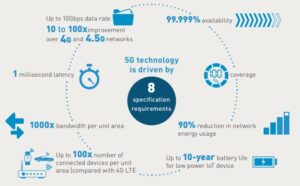
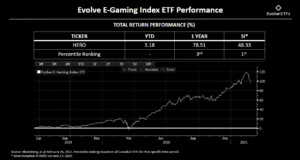

The FANGMA Index is equally weighted, rebalanced quarterly and published in US dollars. For more information visit https://evolveetfs.com/product/tech/

About Evolve Funds Group Inc.

With approximately $1.8 billion in assets under management, Evolve is one of Canada’s fastest growing ETF providers since launching its first ETF in September 2017.  Evolve is a leader in thematic ETFs and specializes in bringing disruptive innovation ETFs to Canadian investors.  Evolve’s suite of ETFs provide investors with access to: (i) long term investment themes; (ii) index-based income strategies; and (iii) some of the world’s leading investment managers.  Established by a team of industry veterans with a proven track record of success, Evolve creates investment products that make a difference.  For more information, please visit www.evolveetfs.com.

EXTERNAL LINK: http://www.newswire.ca/en/releases/archive/May2021/06/c8084.html

Join us on social media: Twitter | LinkedIn | Facebook

Commissions, management fees and expenses all may be associated with exchange traded funds (ETFs) and mutual funds. ETFs and mutual funds are not guaranteed, their values change frequently and past performance may not be repeated. There are risks involved with investing in ETFs and mutual funds. Please read the prospectus for a complete description of risks relevant to ETFs and mutual funds. Investors may incur customary brokerage commissions in buying or selling ETF and mutual fund units. Please read the prospectus before investing.

Certain statements contained in this news release constitute forward-looking information within the meaning of Canadian securities laws. Forward-looking information may relate to a future outlook and anticipated distributions, events or results and may include statements regarding future financial performance. In some cases, forward-looking information can be identified by terms such as “may”, “will”, “should”, “expect”, “anticipate”, “believe”, “intend” or other similar expressions concerning matters that are not historical facts. Actual results may vary from such forward-looking information. Evolve undertakes no obligation to update publicly or otherwise revise any forward-looking statement whether as a result of new information, future events or other such factors which affect this information, except as required by law.

CONTACT INFORMATION: Evolve ETFs  |  info@evolveetfs.com  | 416.214.4884 416.966.8716

MEDIA CONTACT: Keith Crone  |  kcrone@evolveetfs.com  |  416.966.8716


How the Pandemic is a Boost to Robotics and Automation

While the COVID-19 pandemic has been a challenging time for individuals, companies, and entire industries, some sectors have benefitted from their ability to respond to society’s urgent, unique needs during the pandemic.

One such area is robotics and automation. While a growing industry before the pandemic, the demands created by the pandemic have had a profound accelerative effect on the growth and application of robotics across sectors.

The robotics sector before the pandemic

Prior to the pandemic, shifts were underway that saw the human labour force bolstered by robotics and automation. The growth of online shopping and e-commerce was driving pressure on warehouses and transport centers. Online sales in 2018 were $2.93 trillion. In 2019, that number grew to $3.46 trillion.


Then 2020 happened.

Large vendors with solid e-commerce portals like Amazon, Walmart, and Alibaba saw online sales jump a staggering 44% from 2019 figures. As you can imagine, this sudden, dramatic shift strained all of e-commerce and logistics. The result was a push toward increased robotics and automation to step into an already overwhelmed system.

New data suggests that the pandemic accelerated the overall shift to online shopping by average consumers approximately five years. While massive hiring is one strategy to deal with this permanent shift in consumer habits, it may not be feasible long-term. Particularly in logistics settings, there are serious health and safety concerns about having so many people working in close quarters during the pandemic. These are on top of typical concerns like repetitive strain injuries in environments where people are responsible for quickly filling package after package.

Robots and automation, on the other hand, offer a permanent solution. Combined with AI and the power of advanced algorithms, robots are moving into more and more supporting roles, working alongside human employees to fulfill business needs.


How robotics is helping fight the pandemic

Beyond their industrial and commercial applications, robotics and automation are helping to fight the pandemic.

One area where robotics has been valuable in fighting COVID-19 is helping with the rapid production scale-up of vital medical equipment, like personal protective equipment and COVID-19 test kits. One California-based company that makes the COVID-19 PCR tests saw demand for its product go from 400,000 units to 4 million units in a single quarter. This spike in demand, coupled with a halved workforce due to social distancing rules, would have proved insurmountable but for the aid of robots on the manufacturing line. Now, the company employs robots to pull injection-moulded components from the moulding machine, transfer them to a gate-clipping machine, and from there onto a conveyer belt. These are simple, repetitive actions that robots excel at, freeing human employees to deal with more critical tasks.


Industries leading with way with robotics and automation

As mentioned, logistics is an industry well-suited for leadership in the adoption and implementation of robotics and automation. Part of this comes down to the need for increased support for human workers, as noted above. Another element, however, is the nature of logistics work. Speed and repetitive action are both elements of successful logistics fulfillment, and these are tasks to which robots are well-suited. Robots excel in logistics environments where the work is physically demanding and requires items to be picked, scanned, and placed into the correct bin, again and again, every day, with little downtime.

At the same time, the costs of error—a dropped package and potential broken or spoiled goods—are not as high as they would be with autonomous vehicles, for example, where they could be truly catastrophic. Robots are an ideal solution to fill areas with a shortage of workers or where work is dirty, dangerous, or undesirable for humans to do.

In a similar way, the retail industry has begun to see the value of robotics and automation in light of pandemic conditions. One recent survey found that 73% of large retailers now see the importance of using robotics in warehouses or distribution centers after the events of the pandemic. Nearly two-thirds (64%) say it is important to have a clear, executable and budgeted automation strategy for 2021. And the same survey found that nearly half of retailers plan some in-store robotics project by the end of 2022.

Beyond the warehouse, however, retailers report wanting to use robotic solutions for in-store functions. Robots can deliver goods from the back warehouse to store shelves (35%), check for pricing accuracy (35%), scan shelves for stockouts (59%), and pick orders (47%), amongst other tasks.


The growing demand for robotics

Given these realities, it’s no surprise that the International Federation of Robotics (IFR) projects global sales of robotics and automated systems will reach a new record of $16.5 billion in 2021.

More than 2.4 million industrial robots are currently operating in global factories. By 2022, the IFR projects another 2 million industrial robots will be installed in all manner of industries.

With the expiration of a key patent on ultrasonic positioners used in most robots, the cost of robotics has come down dramatically in recent years. With companies now able to run ‘robotics-as-a-service’ rental models of small, inexpensive industrial robots, in a post-pandemic world, the future looks bright for robotics and automation applications in a host of industry settings.

Interested in learning more on how to invest in robotics and automation? Click here to access our innovative index fund, EDGE.

Sign up for our newsletter to stay on top of bitcoin and other disruptive innovation trends.


The contents of this blog are not to be used or construed as investment advice or as an endorsement or recommendation of any entity or security discussed.
These contents are not an offer or solicitation of an offer or a recommendation to buy or sell any securities or financial instrument, nor shall it be deemed to provide investment, tax or accounting advice. The information contained herein is intended for informational purposes only.
Commissions, management fees and expenses all may be associated with exchange traded funds (ETFs) and mutual funds (funds). Please read the prospectus before investing. ETFs and mutual funds are not guaranteed, their values change frequently, and past performance may not be repeated. There are risks involved with investing in ETFs and mutual funds. Please read the prospectus for a complete description of risks relevant to ETFs and mutual funds. Investors may incur customary brokerage commissions in buying or selling ETF and mutual fund units.
Certain statements contained in this blog may constitute forward-looking information within the meaning of Canadian securities laws. Forward-looking information may relate to a future outlook and anticipated distributions, events or results and may include statements regarding future financial performance. In some cases, forward-looking information can be identified by terms such as “may”, “will”, “should”, “expect”, “anticipate”, “believe”, “intend” or other similar expressions concerning matters that are not historical facts. Actual results may vary from such forward-looking information. Evolve Funds undertakes no obligation to update publicly or otherwise revise any forward-looking statement whether as a result of new information, future events or other such factors which affect this information, except as required by law.

How 5G Will Connect Disruptive Innovations

As we’ve highlighted elsewhere, the growth and widespread availability of 5G connectivity will be at the heart of much disruptive innovation over the next five to ten years. 5G connections will provide ultra-fast, low-latency internet connectivity that will enable the next generation of devices.

5G connectivity will provide traffic capacity, speeds, and stability that are exponentially better than existing 3G and 4G networks. A recent Ericsson Mobility report predicted that there will be 1 billion 5G subscriptions by 2023, making up nearly 20% of all global mobile data traffic. Those figures will only grow as 5G becomes more widespread globally.

We have to think of 5G as the nexus that will connect a number of disruptive innovators, including cloud computing, big data, the automotive industry, and E-gaming.

The rise of 5G and the cloud

Current applications of cloud computing have both corporate and consumer uses. What 5G offers for the future of cloud computing is a dramatic increase in efficiency and an explosion of potential applications across industries as diverse as healthcare, banking, and Internet of Things (IoT) devices.

5G technology will enable innovation and disruption in the cloud space because most technological innovations can be more efficient when cloud-dependent. With its low to zero latency, 5G promises to improve integration between devices and applications and the cloud, making for smoother communications.

With the widespread rollout of 5G connectivity, cloud-based products and services will become more reliable, faster, and efficient. Expect these innovations to spur greater investment in cloud businesses.


Data – the most precious commodity

Big Data—that deals with vast data sets to mine for patterns of behaviour—will be one of the primary beneficiaries of 5G technology. The speed and low latency of 5G will allow Big Data to make connections far faster and, when coupled with the cloud, will increase the collection and storage of more data under more diverse circumstances.

Consider, as one example, the growing prevalence of IoT (Internet of Things) devices in our daily lives. From smartphones, to personal fitness trackers, to smart refrigerators, the global IoT market in 2019 was valued at $690 billion. By 2025, it is estimated that the IoT market will grow to approximately $1.3 trillion. Each of these devices generate a data stream that is of value to Big Data applications. With the advent of 5G, current speed and latency limitations that restrict IoT devices to using their own processors and internal memory will be a thing of the past. With 5G, much of the computing necessary for IoT can happen in the cloud, making IoT devices cheaper and more widespread, empowering Big Data in an unprecedented fashion.

Likewise, 5G will finally make the promise of ‘smart cities’ a reality. An intersection of 5G, IoT, and Big Data, the smart city concept turns our cities into networks, using huge quantities of data to bring about significant change and improvement to daily life. A truly smart city holds the promise of everything from automatically regulated traffic flows to improved emergency response, all thanks to the speed and connectivity offered by 5G.

Source: Thales

Cloud computing and autonomous driving

A significant application of cloud computing and 5G will be in developing autonomous and self-driving cars.

As is easy to imagine, in-car sensors and other embedded smart devices present in autonomous vehicles generate a tremendous amount of data as they operate. Cloud platforms can process this telemetry to enhance the efficiency, safety and security of self-driving vehicles.

Through cloud computing, self-driving cars will communicate with one another and a city’s central traffic control center to produce accurate maps of real-time traffic conditions. This kind of street-level intelligence promises to help passengers arrive at their destinations faster and make streets safer overall, with automobiles relying on positioning and navigation technologies connected to the cloud to avoid both congestion and collision.

Over-the-air software updates and maintenance checks will be carried out remotely via the cloud, as manufacturers like Tesla are already pioneering. They will alert owners when a trip to a physical showroom or garage is absolutely necessary for upgrades.

Autonomous vehicles will need low latency instant access to the cloud to accomplish all this—yet another way 5G connectivity will connect disruptive innovators and facilitate disruptive innovation.


Cloud and eSports

As the 2020 boom in gaming showed us, gaming is big business. With the arrival of 5G, the possibilities are massive for eSports to maximize the power of cloud computing for this segment of the entertainment industry.

Estimates are that up to half of all 5G data traffic by 2022 could be related to cloud-based gaming, with eSports on its way to being a $3.2 billion industry by 2023.

One of the chief opportunities for gaming companies and service providers is in new subscription-based revenue streams made possible by cloud computing and 5G speeds. The potential will soon exist for entirely cloud-based gaming platforms. For gamers, these virtual gaming consoles will mean having a library of hundreds of games they can access and play from any device, anytime, anywhere, all hosted in the cloud.

Investing in disruptive innovation with the Evolve Innovation Index Fund

Give your portfolio an EDGE. Innovation is a long-term, key driver of global economic growth with the 8-1 Disruptive Innovation Fund.

Learn more about the fund: Fund page | Factsheet | Whiteboard Video

To stay informed about 5G, the cloud, and other disruptive innovation trends, sign up for our newsletter here.

 
The contents of this blog are not to be used or construed as investment advice or as an endorsement or recommendation of any entity or security discussed.

 
These contents are not an offer or solicitation of an offer or a recommendation to buy or sell any securities or financial instrument, nor shall it be deemed to provide investment, tax or accounting advice. The information contained herein is intended for informational purposes only.

 
Commissions, management fees and expenses all may be associated with exchange traded funds (ETFs) and mutual funds (funds). Please read the prospectus before investing. ETFs and mutual funds are not guaranteed, their values change frequently, and past performance may not be repeated. There are risks involved with investing in ETFs and mutual funds. Please read the prospectus for a complete description of risks relevant to ETFs and mutual funds. Investors may incur customary brokerage commissions in buying or selling ETF and mutual fund units.

 
Certain statements contained in this blog may constitute forward-looking information within the meaning of Canadian securities laws. Forward-looking information may relate to a future outlook and anticipated distributions, events or results and may include statements regarding future financial performance. In some cases, forward-looking information can be identified by terms such as “may”, “will”, “should”, “expect”, “anticipate”, “believe”, “intend” or other similar expressions concerning matters that are not historical facts. Actual results may vary from such forward-looking information. Evolve Funds undertakes no obligation to update publicly or otherwise revise any forward-looking statement whether as a result of new information, future events or other such factors which affect this information, except as required by law.

E-Gaming Industry Is Racking Up a New High Score

Final 2020 tallies for the gaming industry were released in January by NPD Group, and showed record US games spending $56.9 billion during the year. That represents a 27% increase year-on-year from 2019. These figures were driven in part by increasing numbers of people turning to gaming as a pastime during the pandemic lockdowns.

Software represented the lion’s share (86%) of this figure, with game content spending reaching $48.9 billion in 2020. Software sales included physical and digital games, DLC, and subscription across console, cloud, mobile, portable, PC and VR platforms. This represents a 26% increase over 2019 software sales.

Hardware sales saw even bigger growth on a percentage basis, with console revenue of $5.3 billion last year, up 35% from $3.9 billion in 2019. 2020 was the best year for console sales since 2011 when the Xbox 360 and Nintendo 3DS released.

Gaming accessories sales also increased 21% in 2020, for a total of $2.6 billion.

https://www.youtube.com/watch?v=H2CGmCcERrE


Call of Duty: Black Ops Cold War (published by Fund holding Activision Blizzard) was the best-selling game of the year—the 12th year in a row for a game in the Call of Duty franchise. In all, games by companies held in the Fund represent all 5 of the top 5 best-selling games of 2020, as well as 8 of the top 10, and 13 of the top 20.

While not directly affecting the holdings of the Fund, the gaming industry was roiled in January by the trading saga of GameStop stock. Online investment communities, driven primarily by the WallStreetBets subreddit, took advantage of an unusually high number of short sellers betting against the gaming retailer to buy shares en masse and drive up the price, as well as short-seller losses. At one point, GameStop’s share price spiked 135% in less than 24 hours and was up more than 700% in less than a week.

Amidst the volatility Melvin Capital, the hedge fund singled out by the online investors for its shorting of GameStop stock, was forced to close out its entire position, taking a massive loss.

Over the last weeks of January, some major brokerage houses restricted trading in GameStop and other targeted companies that saw triple-digit percentage surges after activist investors began driving up their prices, too. The trading in GameStock even drew the attention of newly appointed US Treasury Secretary Janet Yellen and her economic team, who was “monitoring the situation.”

“There’s nothing normal about what you’re seeing with this stock right now,” said CNBC’s Andrew Ross Sorkin. “It clearly has nothing to do with the fundamentals of GameStop itself anymore, and much more to do with pop psychology of who’s going to be left holding the bag.”

Activision Blizzard announced that it moved its Vicarious Visions studio from the Activision side of the business to the Blizzard side. The Vicarious Visions team of about 200 people will be employees of Blizzard and be “fully dedicated to existing Blizzard games and initiatives.” Vicarious Visions was acquired by Activision in 2005 and has worked on many of the publisher’s biggest franchises, including Guitar Hero, Spider-Man, Tony Hawk, Crash Bandicoot, Destiny, Skylanders, and Call of Duty. According to sources, Vicarious Visions is expected to take a larger role in the development of Activision Blizzard’s highly anticipated remake of Diablo II.

Avatar-based social platform Imvu closed an investment round of over $35 million, led by NetEase, a holding of the Fund. This investment will help grow the Imvu social network, which has seven million monthly active users, as well as its new user-generated platform WithMe Entertainment.

Capcom reported a 22.6% increase in sales year-on-year for the nine months ended December 31, 2020, reaching $622 million. Games sales were up 20.6% year-on-year to nearly $470 million, with digital sales representing $332.7 million of that total, and boxed console games and mobile making up $95 million and $45 million respectively. Capcom’s performance was driven by Resident Evil 3, which released in April 2020 and has sold 3.6 million units, as well as 2019’s Monster Hunter World: Iceborne, which has sold 7.2 million copies to date.[viii]

Investing in Video Games with HERO ETF

The video game industry has been booming with record-breaking sales since the first quarter of this year, giving investors the opportunity to take advantage of this upward trend.

Evolve E-Gaming Index ETF (TSX Ticker: HERO), Canada’s first esports and video game exchange-traded fund (ETF), is a great way to access the world’s leading gaming companies like Nintendo, Activision Blizzard, Electronic Arts, Ubisoft, and Take-Two Interactive.*


Learn more about HERO fund: VISIT FUND PAGE | FACTSHEET | ONE-PAGER

 
The contents of this blog are not to be used or construed as investment advice or as an endorsement or recommendation of any entity or security discussed.

 
These contents are not an offer or solicitation of an offer or a recommendation to buy or sell any securities or financial instrument, nor shall it be deemed to provide investment, tax or accounting advice. The information contained herein is intended for informational purposes only.

 
Commissions, management fees and expenses all may be associated with exchange traded funds (ETFs) and mutual funds (funds). Please read the prospectus before investing. ETFs and mutual funds are not guaranteed, their values change frequently, and past performance may not be repeated. There are risks involved with investing in ETFs and mutual funds. Please read the prospectus for a complete description of risks relevant to ETFs and mutual funds. Investors may incur customary brokerage commissions in buying or selling ETF and mutual fund units.

 
Certain statements contained in this blog may constitute forward-looking information within the meaning of Canadian securities laws. Forward-looking information may relate to a future outlook and anticipated distributions, events or results and may include statements regarding future financial performance. In some cases, forward-looking information can be identified by terms such as “may”, “will”, “should”, “expect”, “anticipate”, “believe”, “intend” or other similar expressions concerning matters that are not historical facts. Actual results may vary from such forward-looking information. Evolve Funds undertakes no obligation to update publicly or otherwise revise any forward-looking statement whether as a result of new information, future events or other such factors which affect this information, except as required by law.

Was 2020 the Year that ‘Investing in Disruptive Innovation’ Became a Household Term?

Innovation has always been a long-term, key driver of global economic growth. Disruptive and innovative trends are fundamentally transforming our world. With the future of work re‐defined by the COVID pandemic, developments in connectivity, big data, artificial intelligence (AI), cloud computing, automation, and cyber security gained increasing attention throughout 2020.

Although cloud-based tools were already popular, the pandemic created a surge in demand as businesses were forced to enable their employees to work remotely from home as a result of the implementation of lockdown conditions to prevent the spread of the virus.

According to a JPMorgan analyst, videoconferencing tool Zoom saw its daily usage rise by more than 300% from before the pandemic, while Microsoft announced that its collaboration tool Teams added 12 million daily users in just one week in the first quarter. Effectively, cloud computing emerged as one of the few saving graces for businesses during this pandemic.

According to a survey by IDG Communications, Inc., the world’s leading tech media, data, and marketing services company, 92% of organizations said their IT environment (infrastructure, applications, data analytics, etc.) is in the cloud to some extent today, and this is expected to grow to 95% by the end of 2021.

In a similar vein, DocuSign, emerged as one of the hotter work‐from‐home plays, posting triple-digit gains for 2020, as businesses ditched paper and transitioned to e‐signatures. With its stocks rising 200% over the course of the year (much of this growth in the first three quarters), DocuSign’s value is now up roughly 515% from its initial public offering (IPO) in 2018. The company reported 822,000 paying customers, representing growth in the client base of 46% year-over-year. DocuSign was well-positioned to capitalize on the accelerated digital transition and has taken a leadership position in its service category.

But with working from home becoming the new normal, the stage was set for an increase in cyberattacks. According to the cloud security company Zscaler Inc., there was a 30,000% increase in COVID‑19‑themed attacks between January and March. The company saw coronavirus‑themed attacks grow from around 1,200 observed and blocked COVID‑19‑related attacks in January to 380,000 such incidents in March.

Already the toll of rising cybersecurity threats in 2020 is clear. Roughly 56% of companies surveyed by CrowdStrike report being targeted by a ransomware attack in the previous 12 months and paying an average of $1.1 million USD in ransom to have their data and systems decrypted.

5G:

In the meantime, 5G continued to expand in 2020, even as the coronavirus spread across the globe. 5G is more critical than ever now, with people working from home and relying on broadband. According to Ericsson, the Swedish networking giant, 5G was in twice as many hands in 2020 as it had predicted. The total number of 5G subscribers was approximately 190 million in 2020, with the bulk coming from China.

Conversely, while some major Canadian and European carriers have launched 5G, the pandemic has raised questions about how fast their networks can expand. 5G spectrum auctions have been delayed in Canada until at least June 2021 due to on-going delays from the pandemic. In the European Union, spectrum auctions were delayed a number of months, with some only getting underway late in 2020. This has pushed out the launch of 5G in places like Sweden by months, if not longer.

In the US, the top three US carriers worked to expand their 5G nationwide networks throughout 2020, despite the pandemic. Projections are that by the end of 2021, about 30% of US wireless subscriptions will be 5G.

Genomics:

In the genomics space, Exelixis Inc., announced the Initiation of Phase 3 Pivotal Trial of a drug to treat metastatic non‐small cell lung cancer. This phase follows positive results from a previous trial. In addition, two additional phase 3 pivotal trials for another drug to treat metastatic castration‐resistant prostate cancer and renal cell carcinoma are planned as part of the clinical trial collaboration between Exelixis and Roche.Bristol Myers Squibb and Exelixis also announced positive topline results from pivotal phase 3 trial evaluating a drug for use in previously untreated advanced renal cell carcinoma.

EDGE ETF: Canada’s First Innovation ETF

Disruptive technologies, such as robotics and automation, shape our world and create long-term investment opportunities for investors. The Evolve Innovation Index Fund (TSX Ticker: EDGE), EDGE ETF, is a eight-in-one diversified solution for investing in disruptive technologies. The Fund provides investors with access to global companies that are involved in eight innovative industries, namely: robotics and automation, cybersecurity, future cars, genomics, cloud computing, e-gaming & e-sports, 5G and Blockchain

To learn more about investing in EDGE ETF, visit our website.


Last Year was a Pivotal Moment in the Cybersecurity Industry. What’s to Come Next?

Although the focus on improving cybersecurity has intensified in recent years, many companies were caught unprepared for the dramatic increase in cyber threats during the COVID-19 pandemic.

As working from home became the new normal, criminals sought to capitalize on widespread panic. New coronavirus-themed phishing scams sought to leverage fear, hooking vulnerable people and taking advantage of workplace disruption.

Cyber vulnerability during the pandemic

According to the cloud security company Zscaler Inc., a large holding in the Fund, there was a 30,000% increase in COVID‑19‑themed attacks between January and March. The company saw coronavirus‑themed attacks grow from around 1,200 observed and blocked COVID‑19‑related attacks in January to 380,000 such incidents in March.

Bitdefender reported that 50% of infosec professionals had no contingency plan to face a situation like the COVID‑19 pandemic. This lack of forward planning resulted in a surge of cyberthreats, with 86% of infosec professionals admitting that attacks from the most common vectors—phishing attacks (26%), ransomware (22%), social media threats/chatbots (21%), cyberwarfare (20%), Trojans (20%), and supply chain attacks (19%)—were on the rise during the pandemic. Financial services (43%), health care (including tele medicine) (34%), and the public sector (29%) were the hardest hit industries.

A study by CrowdStrike found that two-thirds of companies have invested in digital security tools and increased the use of cloud technologies as employees shifted to remote work, but that vulnerabilities due to employees operating work devices on home Wi-Fi networks are exposing companies to increased malicious attacks.

Similarly, Zscaler warned that “there is a growing security concern that once the pandemic is over, there will be thousands of machines physically returning to the corporate network after being on unsecured home networks for months. If any of these machines became compromised, they can offer attackers a beachhead into the corporate networks—which is exactly how many large‑scale breaches get their start.”

Already the toll of rising cybersecurity threats in 2020 is clear. Roughly 56% of companies surveyed by CrowdStrike report being targeted by a ransomware attack in the previous 12 months and paying an average of $1.1 million USD in ransom to have their data and systems decrypted.

Politics & Cyber Security:

Beyond cybersecurity threats posed by the coronavirus pandemic, fractured geopolitical relationships, especially between China and the US, have led to a heightened digital “cold war” in which the prize is data. This in turn has led to a race to develop strategically important next-generation technology which will drive a rise in nation-state-backed espionage.  The CrowdStrike study highlighted earlier found that 89% of respondents expressed fears that international rivalries between countries would heighten their risk of being victims of a cyberattack.

To that end, in late in 2020 the cybersecurity industry was rocked by the revelation of a widespread state-sponsored cyberattack on government and corporate systems in the United States and elsewhere. Widely believed to be a Russian-sponsored operation, hackers were able to plant malicious code in software updates of network-management firm SolarWinds widely used network-monitoring tool, Orion.

This breach—which might have been in place as early as October 2019—potentially exposed 79 of the Fortune 100 companies and up to 300,000 other businesses to compromise. Known targets in the United States alone include upward of 250 federal agencies, including the departments of State, Treasury, Commerce, Energy and Homeland Security, as well as corporations like Microsoft and security firm FireEye.

While the fallout from this attack will be felt into 2021 and beyond, Palo Alto Networks, a large holding in the Fund, has announced a rapid response program to help SolarWinds Orion customers facing exposure due to this cyberattack. Palo Alto Networks’ response platform has already successfully prevented at least one attempted attack traceable to this hack.

Amidst these international tensions, it is expected that new regulations and international agreements will fall short in addressing technology’s impact on society. Regulatory tit‑for‑tat battles will manifest across nation‑states and, rather than encourage innovation, are likely to stifle and constrain it, pushing up costs.

Evolve’s Cyber Security ETF, CYBR ETF

So, what is the best way to invest in cyber security for 2021?

Canadian investors can take advantage of CYBR, from Evolve. The first cyber security ETF in Canada, CYBR offers investors broad-based coverage in the cyber security sector, in both hardware and software development. Because cyber crime affects people, governments, and organizations worldwide, CYBR offers exposure to cyber security firms globally.

For more information, please visit www.evolveetfs.com or download our one-pager about the CYBR ETF.